Updates to SAP’s Integration Certification Program for Partner-Built Solutions

I am excited to share important updates regarding the integration certification program for partner-built solutions, managed by the SAP Integration and Certification Center (SAP ICC).

Find the right SAP-certified solution for your business

As SAP accelerates our strategy around applications, data, and AI, these certification enhancements will help ensure our growing ecosystem is aligned—both technically and directionally—with our clean core, cloud-forward, and AI-ready approach. 

A framework designed around partner and customer needs 

SAP is committed to delivering business innovations across applications, data, and AI. With this update, we have listened closely to partners and customers and introduced enhancements that make it easier for partners to validate their solutions while maintaining SAP’s high standards: 

  • Empowering customers to leverage data-driven business and enterprise AI—securely and at scale 
  • Supporting intelligent apps, seamless cloud connectivity, and adoption of SAP Business Technology Platform (SAP BTP)
  • Adhering to SAP’s “clean core” extensibility guidelines, ensuring future-ready, upgradable integrations

Integration certification and the new interoperability review 

Our refreshed framework offers two clear paths for partners.

Integration certification (use-case based) 

  • For partner solutions aligned with SAP strategic priorities (SAP BTP-based, using SAP Business AI, clean core, public cloud, and intelligent apps)
  • Certification awarded for specific use cases that adhere to SAP strategic priorities for integration, data, and development guidelines
  • Benefits include certified status, branding rights, and access to go-to-market support, with clear guidance and transparency throughout the process

Interoperability review (open and inclusive) 

We are especially excited to introduce the interoperability review, a new open program designed in response to partner and customer feedback.

  • Open to all partner and independent software vendor (ISV) solutions, including those that may not be eligible for integration certification
  • Showcase technical compatibility with SAP solutions through compliance with technical integration standards 
  • Solutions listed as interoperable on SAP Notes and receive detailed review summery
  • Helps partners demonstrate interoperability and SAP compliance to customers.

This new interoperability review reflects our commitment to listen to the SAP ecosystem and enable more partners and ISVs to participate, fostering innovation across our platform. 

How this benefits partners and customers  

For partners:

  • Easier access to SAP’s integration framework, even if formal certification is not applicable
  • Clear pathways for strategic alignment and accelerated development of maintainable, future-ready solutions
  • Co-marketing visibility for certified solutions

For customers: 

  • Access to a broader set of partner solutions that are future-ready, upgradable, and compliant with SAP’s clean core standards
  • Confidence in interoperability and technical quality across SAP’s business application landscape
  • Faster adoption of data-rich solutions built on robust foundations

Looking forward 

The new framework, planned to launch in Q3 2026, is designed to empower partners, build trust with customers, and accelerate innovation across SAP’s platform.

Our Partner Ecosystem Success team will support this transition throughout the second half of 2026. Partners can preview the criteria for the integration certification and the interoperability review in the SAP Integration Certification framework reference guide or reach out to your SAP partner manager or the SAP ICC team with questions. 


Karl Fahrbach is chief partner officer of SAP SE.

Get news, stories, and highlights delivered weekly via the SAP News Center newsletter

AI in Healthcare: SAP and Fresenius Accelerate Digital Healthcare Delivery

WALLDORF SAP SE (NYSE: SAP) and Fresenius today announced that both companies intend to enter a strategic partnership to accelerate innovation for stronger digital healthcare delivery.

Create tangible value across every part of your business with AI from SAP

Together, the companies plan to create the digital backbone for a sovereign, interoperable and AI-supported healthcare system. The solutions will combine the expertise of Fresenius, one of the world’s largest healthcare companies, with future-oriented SAP technologies and meet high requirements for data sovereignty, security and regulatory compliance. The plan is to provide an open, integrated and data‑driven digital health ecosystem that enables hospitals and medical facilities worldwide to use AI securely and to handle health data responsibly.

Digital sovereignty for healthcare

SAP and Fresenius plan to jointly build an individual, scalable healthcare platform that enables connected, data-driven healthcare processes. Based on this, the companies will develop joint, future-oriented and AI-supported healthcare solutions to sustainably increase quality, transparency and efficiency across the entire care chain and set new standards for digital innovation in the healthcare sector. The foundation will be proven SAP technologies and products such as SAP Business Suite, SAP Business Data Cloud (SAP BDC), SAP Business Technology Platform (SAP BTP) and SAP Business AI. These core elements help create a unified, compliant, open and expandable base for the more-secure exchange and use of data as well as for operating AI models in a controlled environment.

Together, the companies also plan to build a sovereign, European solution for an integrated healthcare ecosystem that supports the integration of modern hospital information systems (HIS) based on SAP’s “AnyEMR” strategy. Interfaces based on open industry standards such as HL7 FHIR will enable the more-seamless connection of HIS, electronic medical records (EMRs) and other medical applications.

“With SAP’s leading technology and Fresenius’ deep healthcare expertise, we aim to create a sovereign, interoperable healthcare platform for Fresenius worldwide. Together, we want to set new standards for data sovereignty, security and innovation in healthcare. Thanks to SAP, Fresenius can harness the full potential of digital and AI-supported processes and sustainably improve patient care,” says Christian Klein, CEO and Member of the Executive Board of SAP SE.

“Together with SAP, we can accelerate the digital transformation of the German and European healthcare systems and enable a sovereign European solution that is so important in today’s global landscape. We are making data and AI everyday companions that are secure, simple and scalable for doctors and hospital teams. This creates more room for what truly matters: caring for patients,” adds Michael Sen, CEO of Fresenius.

As part of the joint transformation project, both companies plan to invest a mid three-digit million euro amount in the medium term to consistently drive the digital transformation of the German and European healthcare system through the use of digital and AI-supported solutions.

The partnership is implemented through various forms of collaboration. These include joint investments in startups and scaleups, joint technological developments and close cooperation within coordinated governance structures between the two companies.

Visit the SAP News Center. Get SAP news via LinkedIn and Bluesky.

Media contact:
Dana Roesiger, +49 62277 7 63900, dana.roesiger@sap.com, CET
SAP Press Room; press@sap.com

Sign up for the SAP News Center newsletter to get stories and highlights delivered each week

This document contains forward-looking statements, which are predictions, projections, or other statements about future events. These statements are based on current expectations, forecasts, and assumptions that are subject to risks and uncertainties that could cause actual results and outcomes to materially differ.  Additional information regarding these risks and uncertainties may be found in our filings with the Securities and Exchange Commission, including but not limited to the risk factors section of SAP’s 2024 Annual Report on Form 20-F.
© 2026 SAP SE. All rights reserved.
SAP and other SAP products and services mentioned herein as well as their respective logos are trademarks or registered trademarks of SAP SE in Germany and other countries. Please see https://www.sap.com/copyright for additional trademark information and notices.

Global Perspective and Digital Insight at Danish Vaccine Manufacturer

AJ Vaccines is accelerating its digital foundation with a new cloud platform and advanced IT solutions from SAP.

SAP Cloud ERP: An out-of-the-box enterprise management solution

With sales to 86 countries, 450 employees from more than 30 nationalities, and production of vital vaccines against diseases such as diphtheria, tetanus, whooping cough, tuberculosis, and bladder cancer, AJ Vaccines is a significant player in global vaccine preparedness.

Since the Statens Serum Institut (SSI) sold its vaccine production in 2017 and it was taken over by AJ Vaccines, the organization has transitioned from a public entity to a private pharmaceutical company based in Copenhagen.

From legacy to cloud and compliance

After the divestment from SSI, AJ Vaccines inherited an SAP system from the late 1990s, which was designed more for a public health organization than a pharmaceutical company.

“We were left with an outdated system that didn’t really fit our needs as a private player in a global market,” Michael Kvistholm, head of IT at AJ Vaccines, said. “That’s why we decided to go all-in on a cloud solution with SAP S/4HANA Cloud. We carried out a pure standard implementation from scratch (greenfield) in a RISE with SAP setup and now have a modern, flexible, and scalable cloud ERP platform that supports our entire business.”

The decision was made to ensure a platform that matches the company’s needs and future growth.

“We have reduced our technological debt and consolidated our systems, gaining a more intuitive and user-friendly platform so we can work more efficiently and securely—while also meeting the high standards for quality, traceability, and documentation required in our industry,” he explained.

Everyday examples: efficiency and user-friendliness

Since implementing SAP S/4HANA Cloud in October 2025, AJ Vaccines has gained a unified platform that creates new opportunities to optimize and integrate processes across the company. The solution provides a solid foundation for better data quality and workflows, enabling improved management, increased transparency, and more effective decision-making.

The IT department has gained an overview and reduced complexity with SAP LeanIX, a tool for mapping and managing the company’s entire application landscape and ensuring governance across both SAP and non-SAP solutions. SAP Cloud ALM is used for project management and lifecycle management, so releases, testing, and documentation are handled efficiently, and compliance is always top-notch.

During the implementation, AJ Vaccines used SAP Signavio and based its approach on SAP standard processes, which brought several advantages.

“We’ve saved a lot of hours by using standard test cases from SAP Signavio, which is our platform for process mapping, modelling, and optimization,” said Kvistholm. “We’ll also use these tools for other projects across the company.”

At the same time, SAP Enable Now—for change management and end-user training—has made learning for existing staff and onboarding new employees easier.

“We’ve created over 100 training videos so all employees can quickly find answers and learn new workflows—it’s been a huge success,” Kvistholm confirmed.

Kvistholm also looks forward to early 2026, when the recruitment process will be digitized with SAP SuccessFactors. Finally, he and his team will carefully consider the new opportunities created by SAP Business Technology Platform. The platform enables rapid development and integration of new solutions and apps, allowing IT to support business needs flexibly, and, among other things, consolidate other platforms: “There’s really no reason to pay double,” as Kvistholm put it.

Change management and the foundation for the future

AJ Vaccines is focused on formalizing its superuser organization and strengthening governance around master data.

“We need to clean everything up and keep things in order,” Kvistholm said. “SAP has become the foundation for our continued digitalization. From now on, it’s about seeing how we can get SAP spread even more out throughout the company.”

Advice for other companies

Kvistholm emphasized the importance of management support and a narrow scope: “It’s about staying focused and achieving a fundamental implementation—and then continuously carrying out smaller improvement projects. That is and will be the key to our success.”


Ellen Vig Nelausen is an integrated communications expert for SAP Regional Communications.

Get the latest news and stories from the SAP News Center delivered to your inbox weekly

AI Agents: Bridging the Gap Between Models and Reality

General-purpose AI models are powerful. But on their own, they struggle to interact with the outside world. In this clip, we unpack why productive AI agents must plug into real IT and business systems, connect via APIs, and sit on a strong integration layer to actually get work done in the enterprise.

🎧 Full episode → https://sap.to/605877Ibj

#AIAgents #EnterpriseAI #SAP

2025 Is the Last Year Online Shopping Starts with a Search Bar, Not a Sentence

During this holiday season, 58% of Gen Z and millennials say they would trust an AI agent to compare prices and recommend the best option. This marks the beginning of a monumental shift in how consumers shop and a new challenge for retailers in creating customer loyalty.

Deliver AI-enhanced unified commerce experiences that drive profitable growth

Seismic shifts are not new for retailers—back in 1999, e-commerce was still an afterthought. By 2000, everything changed as retailers went all-in on digital.

In 2025, we are living in yet another pivotal year. This holiday season might feel familiar as you scroll through deals, compare brands, and race to beat shipping deadlines. But beneath the surface, something far more transformative is happening. The year 2025 will likely be the last consumers shop as they do now.  

Agentic AI is reshaping commerce by making shopping faster, smarter, and effortless. Discovery is moving from people browsing their favorite brands to intelligent orchestration. Instead of opening 10 tabs to hunt for the right deal, shoppers will simply ask: “Find me the highest rated black, puffy winter coat, size 10, under $200 that ships in two days.”

The agent will handle the rest—scanning thousands of options, validating reviews, confirming delivery timelines, even factoring in loyalty perks. That future isn’t tomorrow; it’s already here, and by next holiday season, most shopping journeys will begin, evolve, or end with AI agents.

While this type of shopping creates convenience for shoppers, it creates a challenge for retailers that have focused on brand campaigns and poured millions of dollars into advertising to be the “brand of choice” in the discovery process. Decades of investment into SEO, paid traffic, and brand recognition are losing their edge. While not abandoning these strategies entirely, they must evolve for the AI-first world.

However, there is something that hasn’t changed over the course of decades: the need to create loyal customers who make repeat purchases and give the greatest share of their wallets. This, too, is more challenging than ever. In fact, 72% of consumers report that this holiday season they will only stay loyal to brands that consistently meet their needs in the moment.

Creating customer loyalty in the age of agentic commerce means conquering two critical fronts:

  • Optimizing for discoverability: Agents will favor retailers that make buying seamless.
  • Creating customer loyalty post-purchase: With discovery being augmented by AI agents, humans will now give their ongoing loyalty based on post-purchase experiences. On-time delivery, easy returns, and rewards that feel personal are the new battleground for brand equity.  And with agents learning from human behavior, exceeding shopper expectations post-purchase can ultimately impact a brand’s likelihood of being recommended in the discovery phase.

The question remains: how do we move from esoteric AI conversations to practical strategies?

Discovery and loyalty: How to win in the age of agentic AI

  • Make your catalog agent-ready: Treat AI as a new kind of shopper. Ensure product feeds are rich, structured, and machine-readable, complete with attributes, use-case-driven descriptions, real-time pricing, and accurate inventory. Clean, structured product data is now the foundation of intelligent discovery.
  • Create solutions, not just SKUs: AI-driven traffic behaves differently. Design bundles, add-ons, and value stacks that solve specific problems and allow agents to match shoppers with outcomes, not just product lists.
  • Build trustworthy, accessible information: Operationalize trust by surfacing verified reviews, transparent pricing, sustainability details, and clear return policies. Make this data accessible through well-structured APIs, not scraping, so agents and humans see the same reliable truth.
  • Let prediction power personalization: Use unified data and AI to predict what customers want before they act, enabling real-time next-best-actions across email, SMS, push, in-app, and other emerging channels. This predictive intelligence turns fragmented campaigns into connected, personalized experiences that deliver higher engagement and revenue.
  • Make loyalty the thread that ties every experience together: Loyalty is no longer a program. It’s a relationship. Use every interaction to tailor meaningful, emotional moments that adapt, remember, and feel consistent across channels in order to help convert agent-driven traffic. Then, use personalized exclusives and perks to foster high-value relationships with those new customers.
  • Deliver on your promises, every time: Eighty-eight percent of customers leave a brand after one bad experience. That’s why operational reliability is the new loyalty. Bring order, inventory, payments, and fulfillment into alignment, so customers receive what they were promised, when they were promised. Loyalty now begins at checkout.
  • Prepare for the new return economy: Agent-driven buying makes it easy for consumers to purchase first and decide later. Set clear limits to protect margins and reduce friction in the returns journey because a seamless return can build more loyalty than the purchase itself.

SAP is already helping brands prepare for this future with AI-enabled technologies across commerce, loyalty, order management, and customer engagement.

A brand already building for the future

Global sports brand Mizuno offers a glimpse ahead. Historically reliant on seasonal campaigns, Mizuno wanted a more sustainable way to engage its diverse customer base across 10 product categories and multiple channels. Mizuno unified its customer data and used AI to create personalized journeys, turning one-off interactions into long-term relationships.

The results speak for themselves:

  • 52% year-over-year (YoY) increase in active customers
  • 62% increase in revenue from premium customers
  • 35% increase in customer win-backs
  • 33% increase in the number of orders

SAP: A partner built for scale, stability, and growth

As customer behavior evolves and AI reshapes what’s possible, one thing remains constant: SAP’s commitment to helping brands win their biggest commercial moments. This year’s holiday results make that clearer than ever. We’re not just helping brands plan for peak season—we’re helping them execute it with precision, intelligence, and confidence.

Nearly 20% YoY growth in total messages sent underscores the trust brands place in SAP Emarsys to deliver at scale. Mobile and emerging channels surged—in-app (+61%), SMS (+32%), push (+27%), and inbox (+91%) all saw significant YoY gains—as brands met customers exactly where they were browsing and buying. Omnichannel maturity accelerated with brands using a richer mix of channels to create connected, high-value experiences across every stage of the shopping journey. And with 100% uptime and flawless reliability, teams executed independently and confidently, even during their highest-volume moments.

Paired with exceptional commerce performance, the story becomes even more compelling: brands used more intelligent engagement to guide shoppers toward higher-value purchases (+18% YoY average order value) and ultimately drove substantial YoY revenue growth (+40% gross merchandise value)—all powered by a CX portfolio that delivered uninterrupted performance with 100% uptime through the holiday shopping rush, ensuring we’re here for our customers when it matters most.

This is what partnership looks like: scale, intelligence, reliability, and results so brands can focus on creating exceptional customer experiences, not managing technology.

Looking ahead

The year 2025 will be remembered as the last holiday season where brand mattered more than the overall experience.

This year, 39% of shoppers report a positive impact of AI on their retail experience and 48% of shoppers would support brands bringing more AI into their buying experience. This sets the stage for growth in 2026 as AI agents deliver relevance, trust, and immediacy, making shopping simpler, smarter, and more satisfying for people everywhere.

The brands that win won’t be the ones shouting the loudest. They’ll be the ones using SAP to be most discoverable, dependable, and unforgettable.

By anticipating needs and creating better, personalized journeys, AI will enhance every stage of commerce. And SAP is here to make that future happen.


Balaji Balasubramanian is president and chief product officer for SAP Customer Experience.

Sign up for the SAP News Center newsletter to get stories and highlights delivered each week

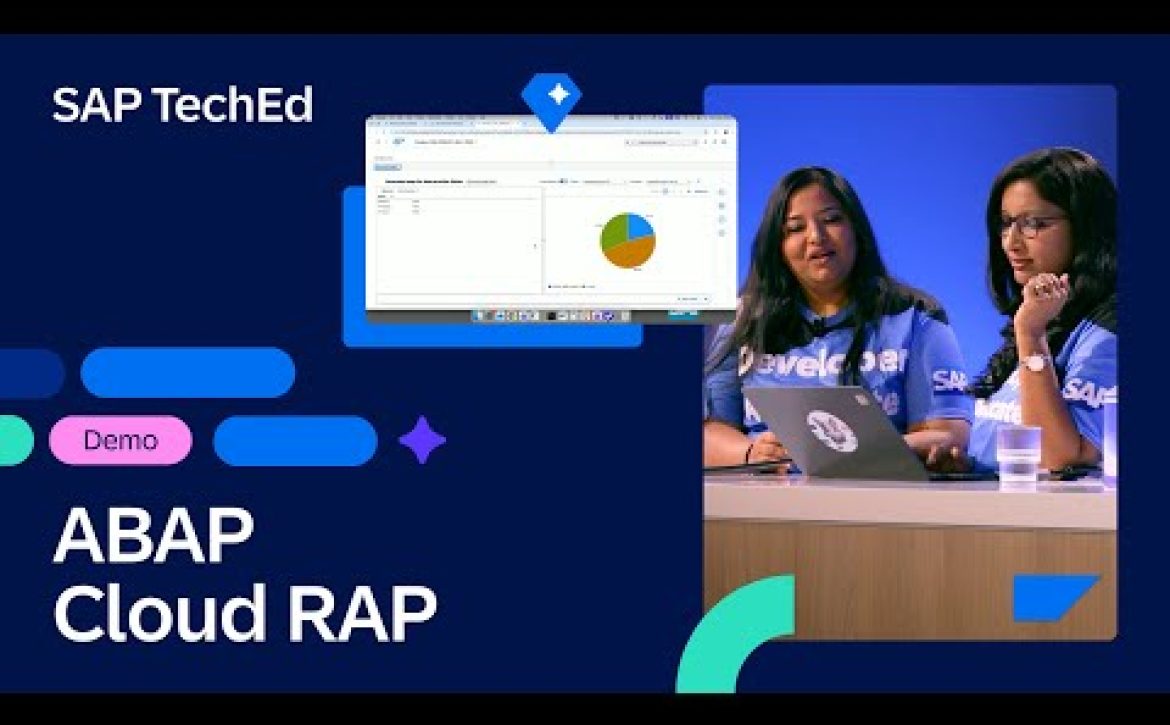
Developer Demo: ABAP Cloud RAP | ISLM Recos, ABAP AI SDK & Review Booklets | SAP TechEd 2025

See ABAP Cloud RAP power recommendations and AI lookups – then generate analytics “review booklets” end-to-end without leaving ADT.

In this SAP TechEd demo, we extend an in-house shopping cart to help new hires get laptops and phones faster, now with product recommendations built on ABAP Cloud RAP. You’ll see how an ISLM machine-learning scenario (trained on the equipment request dataset) plugs directly into a RAP behavior definition, returning ranked suggestions at input time.

We then add a second AI pattern using the ABAP AI SDK: a Gen AI scenario that calls a foundation model to fetch concise product reviews from the web. Prompts, triggers, and results are orchestrated inside ADT, so developers stay in one flow – no tab-hopping.

To close the loop with insight-to-action analytics, we showcase the new Review Booklet capability in ABAP Cloud analytics. From an analytical cube + queries bound via InA, a wizard generates the review booklet app and opens the Review Booklet Designer to tailor pages, measures, and layouts. The result is a Fiori app where business users slice, dice, and save views, like top suppliers, in minutes.

Speakers:
Shilpa Shankar, Developer Advocate, SAP
Sheena M K, Developer Advocate, SAP

00:02 – Scenario intro: equip new hires; recos in shopping cart
01:06 – Wire ISLM into RAP (behavior def, side effects, JSON call)
02:10 – ABAP AI SDK: Gen AI scenario for web product reviews in ADT
03:49 – New: Review Booklet generator in ABAP Cloud analytics
05:02 – Wizard → Designer: generate app, bind via InA, configure pages

Watch all SAP TechEd replays: https://sap.to/60577O6x9
Explore ABAP Cloud & SAP BTP: https://sap.to/60587O6xi

Follow us on social:
LinkedIn: https://sap.to/60597O6xc
Instagram: https://sap.to/60507O6xY
Facebook: https://sap.to/60517O6xl
Threads: https://sap.to/60537O6xW

About SAP:
As a global leader in enterprise applications and business AI, SAP stands at the nexus of business and technology. For over 50 years, organizations have trusted SAP to bring out their best by uniting business-critical operations spanning finance, procurement, HR, supply chain, and customer experience. For more information, visit: https://sap.to/60547O6xo

#SAPTechEd #ABAP #ABAPAISDK

From Cost to Capability: Why External Talent Is Your Competitive Edge

As organizations accelerate digital transformation and confront widening skills gaps, external workers—once seen primarily as a cost-containment measure—are now a strategic source of agility, innovation, and expertise, giving businesses the competitive edge they need to thrive in an AI-driven economy.

External talent already represents a significant share of the labor: about 20% in the UK and 40% in the U.S., with projections reaching 50% globally by 2050. This surge reflects the growing demand for specialized skills and flexible cost structures.

A new global study sponsored by SAP and conducted by Economist Impact captures this shift. Drawing on insights from more than 2,000 C-suite executives across industries, the report, “From Cost to Capability: Redefining External Workforce Strategy in 2025,” reveals how the external workforce is evolving from a transactional resource into a core capability that drives adaptability and resilience in the AI era.

The findings underscore a critical imperative: organizations must rethink how they engage talent, integrate technology, and foster collaboration across procurement, HR, and finance to unlock the full potential of external workers.

From cost to capability: a strategic pivot

In 2023, nearly one-third of organizations cited risk reduction as their primary reason for using contingent labor and service providers. By 2025, that number dropped to just 6%. Today, cost efficiency (74%) and access to specialized skills (62%) dominate the list.

Create value where it counts most with smarter spending

Cost efficiency is no longer about short-term savings. It’s about managing broader business risks, from financial exposure to talent scarcity. As Professor David Ulrich of the University of Michigan notes in the report, “To mitigate risk, businesses need to reduce fixed costs, and labor is often a high fixed cost that needs to be seen as a source of growth.”

Leaders increasingly view external talent as a long-term solution for project-based and technology-driven work, especially in fast-moving fields like AI, automation, and data science. Looking ahead, 64% of executives plan to expand their talent networks within three to five years, up from 54% last year—clear evidence that external workforce strategies are becoming integral to workforce planning.

Building a holistic talent ecosystem

Economist Impact’s research points to the rise of holistic talent supply chain management—a model that unites HR, finance, and procurement to forecast talent needs, close skills gaps, and treat the workforce as a dynamic ecosystem rather than a fixed headcount.

This evolution builds on the themes from previous Economist Impact Procurement Imperative reports, where procurement shifted from cost controller to strategic orchestrator of risk, sustainability, and innovation. Forward-looking organizations now embrace “total talent management” models that integrate people, platforms, and partners while aligning culture and communication across internal and external teams.

Breaking down silos and embedding digital tools for real-time visibility will be essential to managing an integrated, skills-based workforce that adapts quickly to business needs—while ensuring external workers feel valued and connected to enterprise goals.

Procurement at the center of workforce transformation

Procurement leaders are moving beyond sourcing and compliance to orchestrate entire talent ecosystems built on governance and collaboration. Yet the function faces challenges: confidence in procurement’s workforce management skills fell from 51% in 2024 to 43% in 2025, reflecting the complexity of its expanded scope.

CFOs and COOs are also taking a more active role, linking external workforce oversight to financial, compliance, and ESG performance. This trend echoes Economist Impact’s “The Resilient Edge: Procurement in an Era of Polycrisis” report, which showed procurement’s remit expanding as risk management becomes central to business strategy.

To succeed, procurement must double down on visibility, digital integration, and strategic alignment. Platforms that unify workforce data—from contingent contracts to skills mapping—will enable teams to balance cost optimization with agility and governance.

AI: driving agility and accountability

Artificial intelligence is reshaping how organizations manage external talent. According to the report, 68% of procurement leaders cite AI proficiency and ethics as their top development priority over the next 18 months. AI can predict workforce needs, automate sourcing, and fill gaps in emerging fields like agentic AI and automation. The payoff: higher productivity and faster decision-making.

But AI also raises a critical questions: who benefits from efficiency gains? How should productivity improvements be measured? Answering these will require new cost models and shared accountability across the enterprise.

As seen in earlier Economist Impact research, AI is once again a catalyst for transformation, redefining how organizations manage, measure, and mobilize external talent.

The external workforce of the future

The evolution of the external workforce underscores a broader truth: agility, capability, and collaboration now define competitive advantage.

Organizations that treat external talent as a strategic asset—integrating governance, data, and culture across internal and external teams—will be best positioned to respond to technological change and seize new opportunities.

To meet these demands, companies are turning to solutions like SAP Fieldglass and SAP Ariba, which help connect procurement and external workforce management. These solutions can deliver the visibility, intelligence, and agility needed to manage today’s dynamic workforce ecosystem.


Gordon Donovan is global vice president of Research, Procurement, and External Workforce at SAP.

Sign up to receive weekly news highlights from the SAP News Center

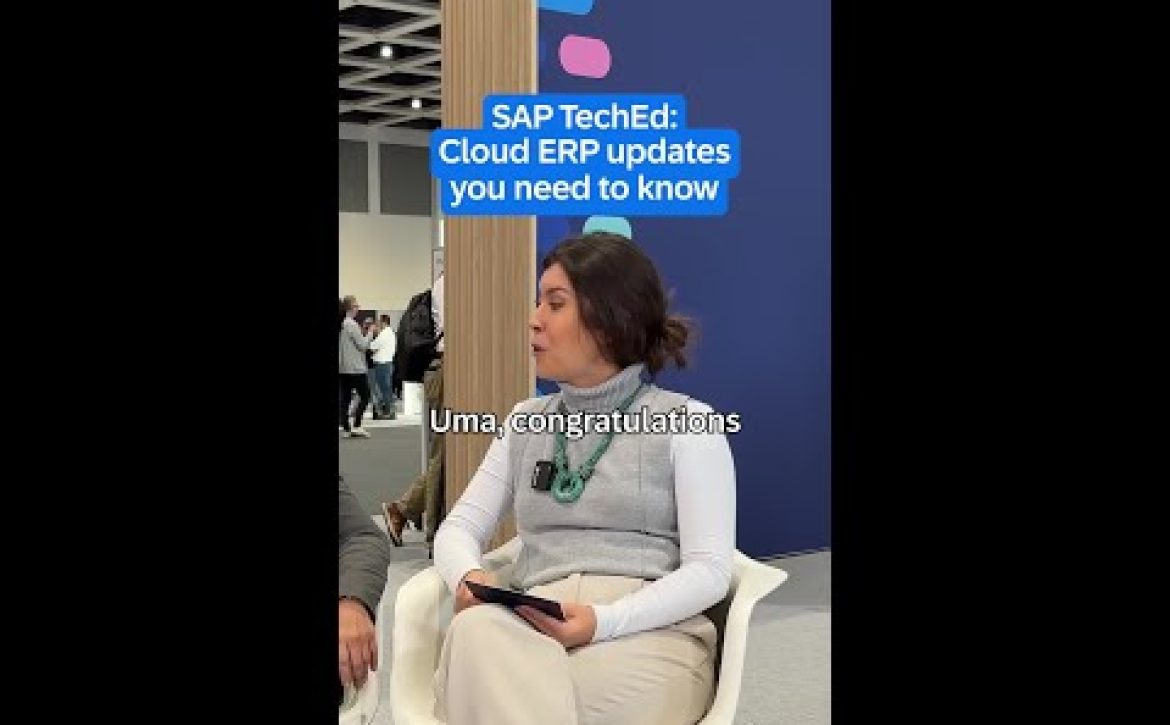
Cloud ERP Updates You Need to Know | #SAPTechEd 2025

Learn about the SAP Cloud ERP Private 2025 Release and all the exciting new innovations from SAP Developer Advocate, Uma Rani.

📰 Get the news here: https://sap.to/60567ORUp

#SAPTechEd #S4HANA #CloudERP

Finance as the Conductor: SAP Introduces AI Innovation at SAP Connect

Finance professionals have proven their resilience through volatility, from shifting interest rates to evolving regulatory landscapes, putting intense pressure on leaders to make faster and smarter decisions.

Deep research AI and role-based assistants, coupled with SAP Business Suite innovations, take efficiency to new heights

However, the pace of change has made traditional approaches, like best-of-breed point solutions, no longer sufficient to help finance teams keep up.

That is why the future of finance technology should act as an orchestra, not disjointed soloists.

Finance teams require a unified experience where applications, data, and AI work seamlessly together. With SAP Business Suite, these elements come together as one orchestra, enabling finance to operate in harmony and deliver outcomes that point solutions alone cannot achieve. This means not only faster close and stronger liquidity, but also tighter compliance and credible plans that hold up under change.

To strengthen collaboration across finance and bring innovation to the CFO’s office, SAP unveiled Joule’s next stage as the AI force at the center of SAP Business Suite’s value creation. A new generation of role-aware assistants in Joule are designed to partner with people in their specific business roles by tapping into the right agents behind the scenes for the job. For finance professionals, SAP introduced the next round of automation support using agentic AI.

SAP is embedding AI-powered reasoning directly into finance processes to automate routine work and elevate the strategic role of finance with the following new agents:

  • The Accruals Agent will calculate accruals and deferrals based on system data and present the accountant with a proposal for review, along with a detailed explanation of the calculation logic.
  • The Cash Management Agent will automate daily bank statement reconciliation tasks and recommend opportunities for optimization.
  • The International Trade Classification Agent will reason over product characteristics and trade regulations and act to classify goods for international shipping, recommending customs tariff numbers and commodity codes

By bringing automation to critical but repetitive finance processes, these agents underscore SAP’s commitment to equipping the office of the CFO with AI-driven innovation that strengthens resilience in an increasingly complex business environment.

Finance as the conductor of the enterprise

The role of the CFO has expanded far beyond closing the books or reporting quarterly earnings. Today, finance teams are expected to bring together data, processes, and people from the entire business to enable seamless collaboration.

With SAP’s AI-first, suite-first approach, applications and data flow seamlessly, allowing finance leaders to coordinate business operations with confidence. This unified foundation ensures that insights are not siloed, but instead shared across the enterprise, enabling faster and smarter decisions.

Take working capital management, one of the biggest pressure points for finance leaders: A recent Economist Impact survey of 480 CFOs found confidence levels were strong in almost all areas, including revenue, profit, and customer retention, but only 36 percent felt confident in their ability to achieve working capital targets. SAP Business Suite can help organizations meet their targets by automating manual work and enabling actionable decisions — all by leveraging dynamic, autonomous, and action-oriented solutions in SAP Business Suite.

When an organization manages incoming receivables, outgoing payables, as well as cash and inventory within SAP, that connected experience creates data that provides real-time visibility into liquidity through SAP Business Data Cloud.  That data fuels SAP Business AI to analyze situations, recommend actions, and even resolve issues like disputed invoices automatically, which would otherwise slow the cash collection process. And with the integration of Joule and intelligent agents, SAP Business AI not only automates, it senses, reasons, orchestrates, and acts — turning insights into outcomes that free capacity and accelerate the business.

As AI agents take on more of the behind-the-scenes work, finance professionals can step fully into their role as the conductor of the enterprise. They can guide strategy with foresight, aligning every function in harmony and shaping outcomes that extend far beyond revenue or cost goals.

CFOs and their teams can then move beyond reactive decision-making toward shaping strategy in real time. This will position their office as a driver of growth, resilience, and innovation.

Looking ahead

SAP is laying the foundation for a new era of autonomous finance, where routine processes are automated, insights are delivered in real time, and finance teams are empowered to focus on strategy and growth.

These innovations mark just the beginning of SAP’s commitment to helping businesses navigate an increasingly complex financial landscape with agility, intelligence, and confidence.


Lawrence Martin is chief product officer and head of Public Cloud Engineering at SAP.
David Imbert is head of Finance Product Marketing at SAP.

SAP Connect: Read the latest news, stories, and coverage from the event

Automate Sales Orders, Invoices & Purchase Requisitions in SAP Build | Build Better

Manual workflows are still a reality for many teams, but automation can offer a solution. Discover how SAP Build enables automation to streamline tasks and reduce human error.

With SAP Build automation, you can handle Excel-based sales orders, purchase requisitions, and invoices with AI-powered bots that automatically scan emails, validate data, and trigger SAP S/4HANA transactions. With prebuilt content from the SAP Build Store, setup is faster than ever, and the latest extensibility wizard helps you create SAP Build extensions directly from your cloud ERP.

SAP customers have already automated as much as 90% of their of annual invoices, saving over 8000 hours of manual work per year using SAP Build. Want to see how much time your team could save? Try SAP Build free for 30 days and start automating your most repetitive workflows today. https://sap.to/6057AKuqB

Previous Next
Close
Test Caption
Test Description goes like this