How do you turn a frustrated customer into a brand advocate really quickly? It starts with understanding, not just answering.
In this episode of SAP Spotlight on ANZ Tech, we dig into one of the most important moments in the entire customer journey: the first response. When something goes wrong, customers want to feel heard fast, and they want progress toward a real fix. A quick reply that misses the point can make things worse. A thoughtful first response that shows context, ownership, and a clear next step can change the tone of the relationship in minutes.
Our customer experience experts, Scott and Scott, explain why connected systems matter so much here. Customers get frustrated when they have to repeat themselves or re-share information you should already have, like purchase history, interaction timing, or previous case notes. That “repeat” moment signals that the experience is disconnected, and it makes customers feel like a ticket number instead of a person.
You will also hear how tying systems together can simplify feedback and speed resolution without cutting corners. When teams can see the full picture across channels, they can acknowledge the issue with context, ask fewer questions, and move straight to action. The result is less effort for the customer, faster time to resolution, and more opportunities to turn a complaint into loyalty.
👉 Download our Australian Engagement Report to turn engagement insights into retention wins: https://sap.to/6050B6me4g
Follow us on social:
LinkedIn: https://sap.to/6051B6me49
Instagram: https://sap.to/6052B6me4i
Facebook: https://sap.to/6053B6me4c
Threads: https://sap.to/6054B6me4Y
About SAP:
As a global leader in enterprise applications and business AI, SAP stands at the nexus of business and technology. For over 50 years, organizations have trusted SAP to bring out their best by uniting business-critical operations spanning finance, procurement, HR, supply chain, and customer experience. For more information, visit: https://sap.to/6055B6me4l
SAP is expanding its collaboration with UnternehmerTUM (UTUM), Europe’s leading center for entrepreneurship and innovation based at the Technical University of Munich (TUM). One of the latest outcomes of this collaboration is SafetyGuard, a prototype for automated safety inspections that combines artificial intelligence and robotics to detect workplace hazards and help companies comply with safety standards.
SafetyGuard was created as part of a program at UTUM’s Digital Product School—where teams of selected students work on real-world challenges—in just 12 weeks by a student team, “MIDAS,” and SAP Research & Innovation. This project illustrates just how effective cross-location collaboration with the ecosystem can be in rapidly creating prototypes as a foundation for product development at SAP.
Get more done faster and more efficiently with AI and agents that actually understand all your business processes and data
The objective of this particular prototyping project was to identify use cases in which robotics and AI could be seamlessly integrated into business processes. Based on its research and on user studies, team MIDAS pinpointed the reliable detection and documentation of safety risks as one such use case.
Safety inspections are essential in many industries, but they are often time-consuming and error-prone. SafetyGuard could change that: leveraging embodied AI, it makes inspections faster, more efficient, and more reliable, without increasing the workload for employees.
Embodied AI—the integration of artificial intelligence into physical robot systems—will be a focal point of investment and development work at SAP going forward.
SafetyGuard combines two technologies: modular robotics and AI-powered autonomy. In this prototype, robots, such as drones and humanoid systems capable of inspecting work environments without human intervention, are equipped with a specialized AI model that is trained, for example, to detect where protective equipment is missing and to automatically document safety-related incidents. What’s more, the robots can multitask. While they are carrying out inspections, they can transport materials and monitor machinery—an approach that combines efficiency gains with increased safety levels.
“SafetyGuard demonstrates just how effective our ecosystem approach is. In this project, an SAP team in Potsdam and a group of students in Munich joined forces and very quickly built a prototype that will have a real impact on product development,” Tobias Riasanow, head of Ecosystem Development at SAP Labs Germany, says. “It’s the perfect example of what SAP understands by ‘ecosystem development.’”
The project is also strategic to SAP in that SafetyGuard addresses real-life industry requirements and complements SAP’s solutions for environment, health, and safety management. The prototyping approach that led to SafetyGuard could therefore become part of the SAP portfolio in the future to help further reduce the time it takes to get from an idea to a product.
A close partnership
UnternehmerTUM (UTUM) (translates as “entrepreneurship”) was founded in 2002 and has become Europe’s largest center for innovation and business creation. Each year, its 500 employees support more than 120 scalable startups and 300 innovation projects. UTUM’s close links with leading industry partners create an environment in which new technologies can rapidly be deployed in real-world settings.
SAP has been working with UTUM since 2017. The non-profit organization is one of the founding partners of influential programs such as Digital Hub Mobility, Circular Republic, and Energy Innovation, which enable teams to test their ideas, validate them with partners, and hone them.
Programs with impact
To date, 13 prototypes have been developed for SAP under programs run by UTUM, all in close collaboration with product teams at SAP and directly related to their respective road maps. The programs offered by UTUM include:
Innovation Sprint: Here, students have just one week to work on prototypes for solving specific user challenges. The most recent sprint, The Future of Retail with SAP Joule, produced five such prototypes, including solutions for intelligent inventory optimization, virtual shelf monitoring, and retail assistance systems.
Digital Product School: This 12-week program for students is designed as a platform for developing executable software prototypes. One prototype created out of this program was Carbon Data Exchange, which is now part of SAP Sustainability Control Tower. Another is an application that makes it easier for developers to access the extensive documentation for SAP Field Service Management. Instead of wasting valuable time searching, they can simply type their questions into a chatbot and receive helpful answers, including code examples and direct links to the documentation they need.
Multistakeholder projects: Additional prototypes have been created in longer-term programs such as Digital Hub Mobility and Circular Republic. Programs like these bring together experts from companies, startups, and research institutions over several months and allow SAP to test innovations in real-world customer and partner environments at an early stage in their development.
Co-innovation gets results—faster
The collaboration between SAP and UTUM shows how quickly ideas can lead to tangible results when students, researchers, and SAP teams work together to apply scientific approaches to real-life industrial challenges. SafetyGuard is an example of how embodied AI innovations can be created and how different groups of experts can benefit from one another.
“SafetyGuard demonstrates the extensibility of SAP’s approach to embodied AI. SAP’s embodied AI layer integrates the business context and triggers actions across the suite. SafetyGuard’s AI-native, manufacturer-agnostic design is scalable across different use cases and enables multitasking, allowing, for example, robots to process safety incidents while performing other tasks such as industrial asset inspections. SafetyGuard is a proof point for SAP for the added value of using cognitive robotics in safety scenarios.”
Adelya Fatykhova and Dr. Łukasz Ostrowski, Initiators and Supervisors of the student challenge
SAP has once again been named a Leader in the 2026 Gartner® Magic Quadrant™ for Integration Platform as a Service (iPaaS), our sixth consecutive recognition.
We believe this recognition reflects our continued investment in a modern, scalable AI-ready integration platform that meets the needs of organizations operating across increasingly complex hybrid and multicloud landscapes.
This graphic was published by Gartner, Inc. as part of a larger research document and should be evaluated in the context of the entire document. The Gartner document is available upon request.
Why orgnizations continue to choose SAP Integration Suite
Integrate your business across SAP and third-party landscapes with a modern, scalable, secure IPaaS
Part of SAP Business Technology Platform (SAP BTP), SAP Integration Suite brings together API management, event‑driven architecture, process integration, and AI‑assisted development in one unified offering. It gives customers a reliable way to connect distributed systems, orchestrate workflows, and operate securely across hybrid and multi-cloud environments—whether those landscapes run primarily on SAP solutions or a mix of third‑party applications.
By using metadata, events, and APIs as its backbone, the suite provides an integration foundation that supports AI agents and increasingly autonomous enterprise processes. Organizations in manufacturing, logistics, retail, and other highly regulated industries rely on this foundation to maintain performance and stay compliant at global scale.
Innovation that scales with your business
Over the past year, SAP expanded its AI‑assisted capabilities to help customers move faster and operate with security and reliability. New AI-assisted features include anomaly detection, script optimization, traffic prediction, and integration‑flow generation. Combined with more than 4,000 prebuilt integration flows and over 250 connectors, organizations can accelerate design and reduce manual effort.
SAP Integration Suite now runs in more than 40 data centers worldwide, giving customers flexibility for in‑region processing and data‑sovereignty requirements. These enhancements help teams detect issues earlier, optimize performance, and shorten time‑to‑value across complex hybrid landscapes.
Accelerating agentic AI adoption
Gebr. Heinemann modernized its global retail checkout platform with SAP Integration Suite and advanced event mesh, enabling the company to process 300,000 price‑change events in 30 minutes without system degradation.
“Advanced event mesh has completely changed the way integration and process orchestration run. Everything works better.”
Benedikt Althaus, team lead, Integration Services and Platform Solutions, Gebr. Heinemann SE & Co. KG.
Shimano Europe benefits from the efficient, scalable, and future‑proof integration foundation of SAP Integration Suite to accelerate its go‑to‑market process. By streamlining integrations across systems, the company improves operational efficiency and enhances the overall customer experience through a more agile and reliable integration landscape.
“To accelerate the go-to-market process, we provided an effective and efficient integration platform with SAP Integration Suite, a future-proof and scalable solution that improves our customers’ experiences.”
Fernanda Ribeiro, IT application architect, Shimano Europe
Siemens AG relies on SAP Integration Suite to harmonize global reporting processes and ensure compliance with evolving regulatory requirements. By standardizing integrations across regions and supporting diverse country‑specific tax protocols, SAP Integration Suite helps Siemens streamline compliance operations and maintain consistent reporting quality worldwide. This foundation strengthens Siemens’ ability to adapt to changing regulatory environments with greater confidence and efficiency.
“Managing international tax requirements is much easier. It will be implemented around the globe.”
Andrea Spandau, head of Digital Tax Ecosystem, Siemens AG
Looking ahead
We believe this year’s recognition underscores our commitment to advancing SAP Integration Suite with deeper AI capabilities, more reusable business content, broader industry coverage, third-party adapters, and an improved developer experience. Our goal is to help customers automate more of their operations, innovate with confidence, and scale as their businesses evolve.
Gartner does not endorse any company, vendor, product or service depicted in its publications, and does not advise technology users to select only those vendors with the highest ratings or other designation. Gartner publications consist of the opinions of Gartner’s business and technology insights organization and should not be construed as statements of fact. Gartner disclaims all warranties, expressed or implied, with respect to this publication, including any warranties of merchantability or fitness for a particular purpose. Gartner and Magic Quadrant are trademarks of Gartner, Inc. and/or its affiliates.
Digitized production, logistics and sales with SAP Business One
How end-to-end digital processes ensure greater clarity and less coordination
Customer profile
Which company was digitized?
ECM and Profitec
Separate but shared supply chain
Distribution and manufacturing of coffee machines
100 employees
3 locations
„”We are Profitec and ECM. We develop and produce coffee machines for the perfect espresso.”“
Christian Seidel, Head of Administration, Profitec & ECM
software
What software was implemented?
SAP Business One
concept EDI process
conesprits Manufacturing App
conesprits WMS App
conesprits Fulfillment App
„”Previously we used paper forms, as is traditionally known in logistics. Today we work with tablets and scanners.”“
Maurizio Giesinger, Head of Production & Logistics
Overview
The companies ECM® Espresso Coffee Machines and Profitec develop and produce high-quality espresso machines for the international market.
As two legally separate companies with a shared value chain, they increasingly reached the limits of their existing ERP system: many manual processes, media breaks between production and logistics, and a lack of transparency in the warehouse.
With the introduction of SAP Business One and the conesprit Apps for Manufacturing, WMS and Fulfillment A seamless digital platform was created – including automated EDI process between the two companies.
The challenge
The shared supply chain of ECM and Profitec in particular led to unnecessary complexity and manual intermediate steps in the old system.
Separate systems with high coordination effort
No structured approach Storage location management
Unreliable Inventory data
No continuous Serial number traceability
Complexes internal sales and delivery processes
„”Profitec and ECM are two separate companies that access a common supply chain. In the existing ERP system, this has led to many complications and manual processes.”“
Christian Seidel, Head of Administration, Profitec & ECM
The solution: SAP Business One + Conesprit Apps
With SAP Business One as the central ERP platform, processes were standardized and simultaneously expanded in a targeted manner through conesprit Apps:
Automated EDI process between ECM and Profitec
Digital fulfillment terminal with connections to Modula as well as DHL & UPS
Paperless production with tablets and scanners
WMS-supported warehouse processes including automatic refill suggestions
Serial number tracking via scan in real time
Integrated document management based on Microsoft 365
Today, internal orders are generated automatically, stock levels are checked and reserved by the system, and delivery notes and invoices are transmitted and posted via EDI – without any media breaks.
How much does SAP Business One cost for medium-sized businesses?
We have compiled typical costs for SAP Business One for small and medium-sized enterprises here:
Get instant, context-aware answers with Joule, right inside your SAP workflow.
In this video, discover how the analytical insights capability in Joule transforms business intelligence into a conversational experience.
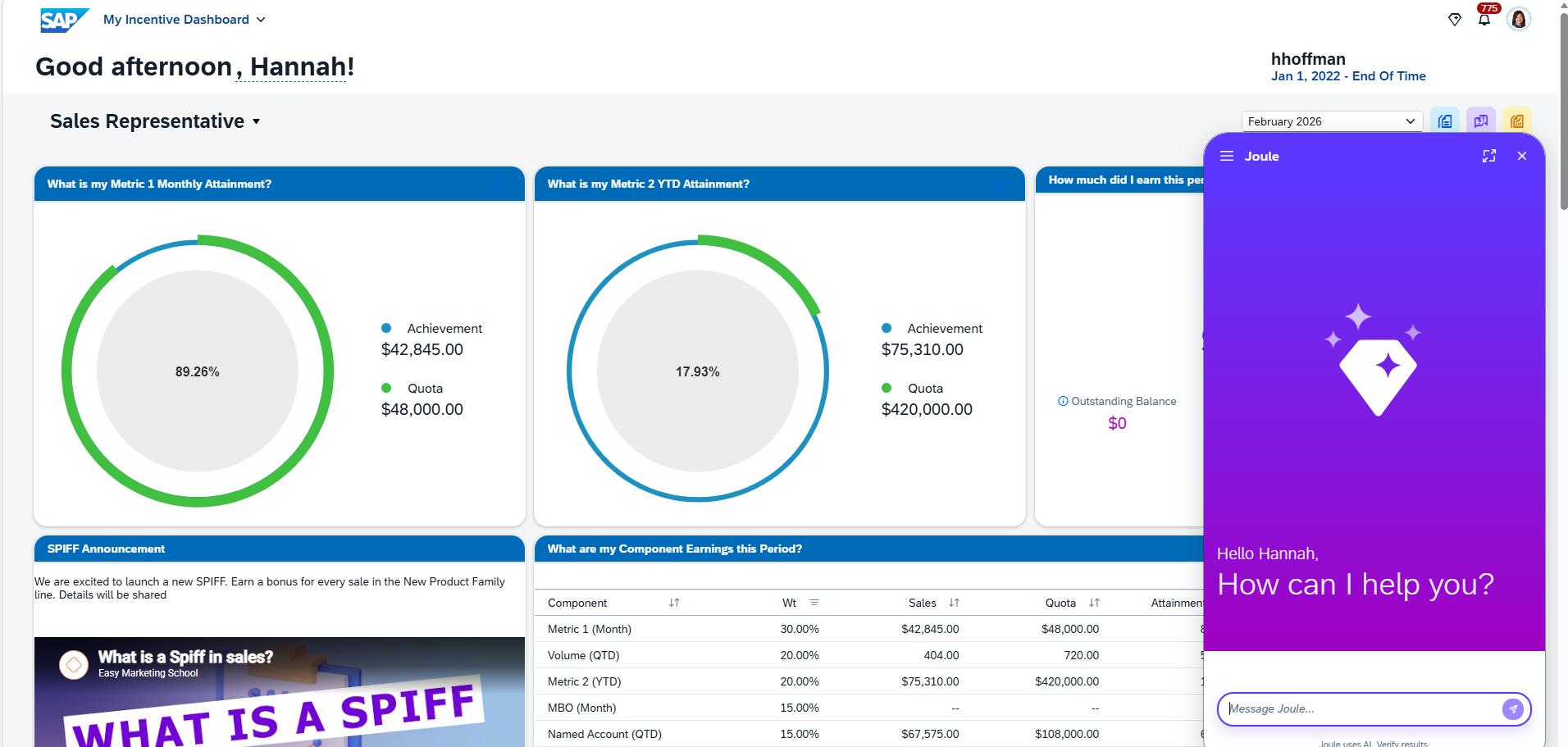
With Joule, charts, KPIs, and metrics appear where you work. Just ask in plain language, and Joule delivers governed, context-aware insights instantly. Powered by natural language processing in SAP Business Data Cloud, every answer is secure and relevant.
See how Joule moves you from question to action in seconds, and learn what’s next: combining SAP data with internal and external sources for even deeper insights. Whether you’re in finance, sales, or operations, Joule helps you make informed decisions faster, without leaving your workflow.
Learn more about the analytical insights capability in Joule at SAP Discovery Center: https://sap.to/6052hm31e
What happens when digital transformation meets dental care? Robert “RJ” Jerome, senior vice president and chief digital officer at Heartland Dental, reveals how SAP solutions contributed to the company’s technological journey.
See how Heartland Dental uses SAP cloud ERP to manage data across its dental practices
Heartland Dental is the largest dental support organization in the United States, with over 3,000 supported doctors in more than 1,900 supported practices across 39 states and Washington, D.C. But beyond numbers, what sets Heartland apart is its tight knit community and people culture. As Jerome shared, “The first thing I associate with Heartland is community; we’re doctor-led. In our support role, we don’t tell dentists how to practice. Our role is to make their lives easier—enabling dentists to concentrate on patient care.”
Making lives easier is a vision Heartland shares not only for its supported dentists but for its own operations. The company’s digital journey began “backwards” starting in 2018 with SAP Business Technology Platform (SAP BTP), instead of with ERP, to resolve disparate data from all over. Once SAP BTP was established and adopted by the organization, it then began to incorporate SAP Cloud ERP.
What makes this journey truly stand out is how Heartland is using technology to serve people, supported through seamless integration with tools like SAP Concur solutions, embedded AI—such as smart invoice management—and embedded analytics. These features are freeing up time and resources so teams can focus on what matters most: supporting doctors and improving patient care.
The team has rolled out SAP Build Work Zone across its supported practices and is investing in AI tools like Joule to help employees access information faster, automate repetitive tasks, and focus on what really matters—patient care and experiences. Jerome explained, “Just like we take the administrative burden off our supported doctors, SAP takes the tech burden off us, so we can focus on supporting doctors and their teams.”
Heartland’s next big milestone is going live with SAP S/4HANA Cloud Public Edition and taking AI a step further to automation.
Heartland Dental’s story shows that with the strategic adoption of technological innovations, it’s possible to build a future-ready healthcare support organization grounded in people and purpose.
Chris Putvinski is a communications specialist at SAP.
Connect with SAP News on LinkedIn to stay in the know
Welcome to our Expert Talk series! 🎙️ In this episode, Claudia Rosbach from Cloud ERP Product Success at SAP is joined by SAP Environment, Health, and Safety Management experts Leyi Liu and Mariya Krasteva from SAP to discuss key innovations in the SAP Cloud ERP Private 2025 release, showcasing how new capabilities improve efficiency, compliance, and employee well-being.
From a waste management perspective, Leyi explains:
✅ How end-to-end waste tracking supports compliance and cost transparency.
✅ New integrations with purchasing and inventory management.
✅ Business value through better cost allocation, reduced disposal expenses and improved traceability.
✅ Customer-influenced innovations driven by real market needs.
From an occupational health perspective, Mariya covers:
✅ Full integration of occupational health into the standard workplace safety solution.
✅ Support for health surveillance protocols, medical scheduling, and risk-based monitoring.
✅ Deep HR integration for a complete, compliant employee health history.
✅ New links between safety processes and SAP SuccessFactors Learning for proactive training.
Chapters:
00:12 Introduction and importance of SAP Environment, Health, and Safety Management
01:12 SAP Cloud ERP 2025 key innovations
02:37 Waste management integration with purchasing
04:20 Integrated waste processes with inventory management
05:17 Occupational health scope and new capabilities
07:58 Preventive health management and regulations
11:03 HR integration and safety culture
12:36 Learning integration and automation
14:11 Closing and outro
👉 Learn more about SAP Environment, Health, and Safety Management capabilities here: https://sap.to/60507hwMK
SAP Design Talks: Chuck Ames, UX Manager for Amazon Business, provides a behind-the-scenes look into Amazon’s design culture and explains how designers and product managers collaborate to deliver an innovative, seamless user experience.
Watch world-class design leaders from some of the most iconic brands share their stories and insights: https://sap.to/60597706P