Industry AI: Deep Industry Knowledge, Forward-Deployed Engineering, Measurable Value

Enterprise AI has reached an inflection point.

SAP Connect in 2026: Advancing the Autonomous Enterprise

But while there is enormous excitement about what AI can do, we are still measuring progress the wrong way. The number of models, pilots, or agents a company deploys tells us very little. What matters is whether AI transforms the core processes where business value is actually created.

Can it steer demand fulfillment to high-margin business when supply is disrupted? Can it help release a pharmaceutical batch without compromising quality and compliance? Can it resolve a critical maintenance issue before it turns into an outage?

This is where enterprise AI becomes real and where generic intelligence reaches its limits.

From pharmaceutical supply chains and manufacturing quality management to asset maintenance, trading, and retail, the hardest industry problems are deeply contextual. They are shaped by decades of interconnected processes, strict regulations, and operational constraints. Solving them demands more than a powerful model. It requires trusted business data, integrated processes, rock-solid governance, and a deep industry domain expertise–the very foundation upon which we are building SAP’s Industry AI. At the same time it demands a team which is obsessed with customer problem solving and world-class forward deployed engineers.

This convergence of industry depth and forward deployed engineering (FDE) is where the next wave of enterprise value will be unlocked.

Start with the value, not the technology

AI innovation too often turns into a search for problems to solve. We take the opposite approach: start with the customer’s desired business value and work backward.

Where is margin leaking? Why is there lost sales? What operational decisions take too long? What production deferment can be prevented?

The goal is no longer just incremental productivity for individual users. It is moving toward autonomous operations. Across industries, organizations need to compress the cycle between detecting an issue, simulating options and impact, deciding the right response, executing corrective actions, and learning from outcomes–in a compounding loop. What once took days can increasingly happen in minutes.

Through our forward-deployed engineering model, we co-develop tailored capabilities alongside customers. We solve high-stakes challenges that have no off-the-shelf answers, then turn those proven solutions into scalable software capabilities for entire industries. This is not innovation from a distance. It is built with the people who live these challenges every day.

Autonomous operations make this possible. Within clearly defined business guardrails, AI agents identify disruptions, model scenarios, evaluate trade-offs, orchestrate execution, and improve via feedback loops–with human experts firmly in the loop and on-the-loop to validate critical decisions and steer strategic direction.

Co-innovation as a catalyst for impact

The most valuable AI solutions are never built in isolation. They are forged inside live operating environments.

Takeda Pharmaceuticals, a global leader in research-based biopharmaceuticals, is applying this thinking to its future operating model.

According to Rebecca Kaufmann, senior vice president and head of Enterprise Platforms a Takeda Pharmaceuticals, “AI represents the key enabler for Takeda’s transformation for the future. We are combining the SAP industry and technology knowledge with our organizational real-life experience. The supply chain planning assistant will provide us with AI-detected root causes and AI-suggested remediation and also automated performance tracking resulting in a self-healing capability.”

That ambition–shifting from passive detection to systems that continuously learn, recommend, and self-heal—is taking hold across sectors.

Doehler, a global producer of natural ingredients for the food, beverage, life sciences, and nutrition industries, is already demonstrating what this looks like on the factory and logistics floor.

“Our people’s greatest value lies in deciding what to do next, and now they can focus entirely on that,” said Stephan Schissler, co-chief information officer at Doehler GmbH. “The Logistics Issue Resolution Agent detects the root cause, recommends the resolution, and turns a multi-hour firefight into a one-click decision. Our logistics team has recovered roughly a third of the time once lost to troubleshooting, and our processes are becoming self-resolving rather than exception-driven.”

These examples reinforce a decisive rule: AI delivers maximum return when it eliminates operational drag, freeing professionals to focus on judgment, strategy, and business outcomes.

AI that thinks like the industry

As AI moves from passive recommendation to intelligent execution, industry context becomes paramount.

The question is no longer whether an AI agent can take an action. The question is whether it understands which action is compliant, safe, and commercially viable within a specific environment and organizational guardrails.

  • In life sciences, autonomous manufacturing coordinates processes from design-to-release while strictly adhering to compliance-critical quality and compliance criteria.
  • In energy and natural resources, agents go beyond detecting maintenance alerts to dynamically schedule crews, stage spare parts, and rebalance operations.
  • In engineer-to-order manufacturing, systems orchestrate complex quotations, adapt production schedules, and accelerate new product introductions.

Deep industry context is what makes these outcomes trustworthy.

Building intelligence that compounds

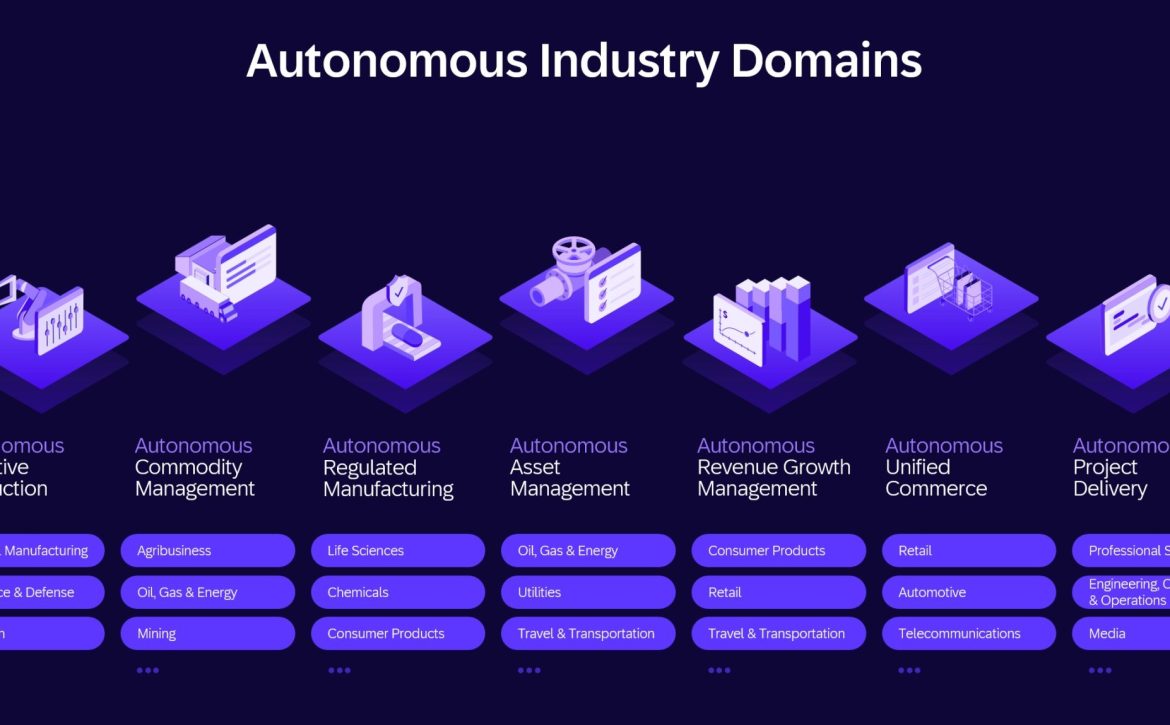
SAP’s Industry AI portfolio is focused across seven core domains: Autonomous Asset Management, Autonomous Commodity Management, Autonomous Adaptive Production, Autonomous Regulated Manufacturing, Autonomous Revenue Growth Management, Autonomous Unified Commerce, and Autonomous Project Delivery.

While the use cases differ, the principle is the same: sustainable value comes from end-to-end value streams, not optimizing functional silos.

 “Business performance depends on how quickly a company can respond when conditions change,” said Andre Bechtold, president of SAP Industries & Experiences and chief revenue officer of Industry AI at SAP. “By applying SAP’s industry knowledge across connected processes, Industry AI helps customers act earlier, limit disruption, and keep operations on track.”

The measure that matters

Coming out of SAP Connect in 2026, one message from our customer discussions was unmistakable: the ambition across sectors is to move past fragmented experimentation and embed agentic intelligence directly into mission-critical workflows.

Our initial wave of early adopter customers has proven the compounding power of this model: Customer friction points sharpen our agentic solutions, stronger agentic solutions strengthen standard, and stronger standards accelerate the time to value the next customer can achieve.

The future of enterprise AI will not be decided by who launches the most agents. It will be decided by who can bring intelligence into the decisions and workflows where business value is created every day.

When AI understands the industry, operates within trusted boundaries, and learns alongside human experts, autonomy stops being an abstract vision. It becomes a better way to run the business.

For a complete overview of the Industry AI innovations and product announcements unveiled at SAP Connect in 2026, see the SAP Connect Innovation News Guide and related SAP News coverage.


Dominik Metzger is president and global head of Industry AI at SAP.

SAP Connect: Read the latest news, stories, and coverage from the event

Next-Gen SAP Ariba is Live! | Top Announcements from Spend Connect 2026

Next-gen SAP Ariba is generally available. SAP Spend Connect 2026 had the customers, the demos, and the receipts to prove it.

Among the top announcements:
🟢 Next-gen SAP Ariba is generally available, and customers like IBM are already live
🤖 Joule Agents now collaborate across SAP Ariba and SAP Fieldglass in a single conversation
🤝 Oro Labs joins SAP as a new procurement orchestration partner

Get all the news from Spend Connect: https://sap.to/6058BGNZZC

#SAPConnect #AutonomousSpend #Joule

SAP’s New Industry AI Portfolio Tackles the Hardest Challenges Faced by Enterprises

Despite rapid advancements in frontier AI models, many enterprise problems remain hard to solve. The challenge goes beyond just accessing better AI-generated suggestions.

Solve complex business challenges and drive digital transformation with SAP

It’s about making consequential decisions inside complex processes that require a deep industry specific context of data, regulations, human workflows, and processes.

For example, tasks like deploying and coordinating thousands of field technicians to restore energy grids after a storm and reduce unplanned downtimes or like keeping critically important production lines running and service levels high despite global supply chain disruptions involve many difficult decisions.

“These problems are incredibly hard to solve,” says Dominik Metzger, president of Industry AI at SAP, because solving them demands immense organizational change, especially in highly regulated industries.

Frontier LLMs are not enough

There is a growing realization among business leaders that solving these challenges requires more than just a powerful AI language model. In these situations, AI must do more than generate suggestions. It needs to act on insights and context to support the execution of business processes. This requires agentic AI that can work with trusted business data, apply industry-specific knowledge, and take actions in ways that are reliable, explainable, and useful to the people closest to the work.

AI is most valuable when it understands the context in which decisions are made. Manufacturers need to balance demand, production capacity, supplier risk, and quality requirements. Energy companies need to manage assets, safety, sustainability, and regulatory obligations. Life sciences companies need to innovate while meeting strict compliance expectations.

To help solve the most complex problems facing large enterprise customers, SAP is bringing together 50 years of deep industry expertise, leading AI engineering know-how, and customer-facing forward-deployed delivery capabilities in one organization to combine forward-deployed engineering with strong productization capabilities.

This enables SAP to move beyond custom AI solutions and build, productize, and scale end-to-end AI transformations for industry-specific business problems.

Think of it this way: the Autonomous Enterprise is SAP’s strategic direction, SAP Business AI Platform is its foundation, and Industry AI acts as a highly focused customer transformation offering, solving industry-specific challenges for individual customers to generate substantial business value.

What makes Industry AI different

The Industry AI portfolio is built on three differentiators: first, more than 50 years of SAP’s industry and process expertise across 26 industries; second, the richness of SAP customers’ data footprint and ontologies in an existing system of record; and third, a dedicated forward-deployed engineering (FDE) workforce to solve problems that do not have off-the-shelf answers, customer by customer.

Forward-deployed engineering embeds AI specialists, such as data scientists and AI builders, directly with customers to solve high-value, industry-specific problems, rather than relying solely on packaged software. Metzger explains that forward-deployed engineering involves “getting obsessed with the problems of our customers” and immersing SAP’s agentic AI developers in the challenges these customers face. “Working directly with customers, we will build, deploy, and scale Industry AI applications to deliver tangible business value for our customers,” he says.

Lessons learned by building these tailored solutions with selected customers will be productized as a standardized platform offering for many more customers to deploy and use. This model allows fast scaling and delivery, while also building up SAP’s platform and solution portfolio of high-value agentic solutions that are close to customer needs and current industry priorities.

Getting up close with customers

SAP’s decision to establish Industry AI as a focused business offering reflects the conviction that true value from agentic AI is created in close collaboration with the industry experts who face specific business challenges every day. This proximity is the fastest way to identify the most critical problems, develop and test practical AI solutions, and refine them based on real-world experience. Most importantly, it allows to deliver tangible business value and prove the impact of AI in practice.

This approach helps reduce the gap between a promising idea and a solution. On the one hand, teams can move more quickly from identifying a need to deploying a solution that delivers measurable value. It also ensures that what is built reflects real-world needs rather than assumptions made far from the customer environment.

For SAP’s enterprise customers, the promise of the Industry AI offering is not simply smarter software. It is a more practical path to the Autonomous Enterprise. Instead of asking teams to adapt to generic tools, Industry AI can help bring deep intelligence into the processes people already use and the decisions they already make, while staying connected to the business data, controls, and applications that keep organizations running.

Benefits

Examples of these benefits are easy to describe. An energy provider avoids costly downtime by identifying a likely spare part demand early and recommending relevant suppliers. A retailer adjusts inventory positions and trade promotions based on simulated scenarios and real demand signals before stockouts occur. A pharmaceutical manufacturer ensures the safe and reliable release of life-saving drugs through a highly precise, high-quality, and fully automated batch release process.

That matters because it can help organizations move faster, improve quality, and free employees to focus on higher-value work. It can also help companies turn industry knowledge into a lasting advantage, especially as AI becomes a larger part of how businesses operate.

For SAP, the formation of the Industry AI unit represents a strategic leap, combining industry-specific expertise, end-to-end offerings, and a value-based offering in a way that is clearly designed to differentiate SAP from competitors.

SAP’s differentiation from other AI platform providers and more traditional forward-deployed engineering companies is not simply about providing custom AI services: the focus is on turning industry-specific expertise into scalable, repeatable offerings that can be deployed across customers, creating a more sustainable and differentiated model for delivering AI value.

Specifically, the Industry AI offering is positioned as an all-in-one commercial package, including platform consumption and cloud services, solutions, forward-deployed engineering, and expert support, with pricing based on real customer business value and a single contract.

It is based on SAP’s unique deep industry-specific knowledge, business AI platform, and knowledge graph, enabling tailored processes for customers. In addition, SAP’s approach is grounded in customers’ business logic, decades of experience and enterprise grade governance, all implemented in standard products, differentiating it from some recently announced market offerings.

What is frontier AI?

Frontier AI refers to the most advanced artificial intelligence models that represent the cutting edge of AI capabilities at any given time. These highly capable foundation models, generally implemented as very large language models, push the boundaries of what is possible with AI technology. They are typically characterized by their massive scale, multimodal capabilities, and ability to perform a wide variety of complex tasks across different domains.

As of mid-2026, models widely regarded as sitting at the frontier include Anthropic’s Claude Opus 4.8, OpenAI’s GPT-5.5, Google DeepMind’s Gemini 3.1 Pro, xAI’s Grok 4.3, and open-weight challengers such as DeepSeek V4 and Alibaba’s Qwen3.7-Max.

What comes next

As the World Economic Forum has highlighted, successful AI scaling depends not only on the technology itself, but also on practical changes to how people work, how decisions are made, and how organizations govern new capabilities.

SAP solves industry problems that generic AI—even if super powerful—cannot. Ultimately it is about enterprise and business process transformation, not AI deployment only. This then can redefine how AI transforms industries, by moving beyond isolated use cases toward autonomous, end-to-end agentic execution.

Subscribe to our newsletter to receive weekly news, stories, and highlights from the SAP News Center

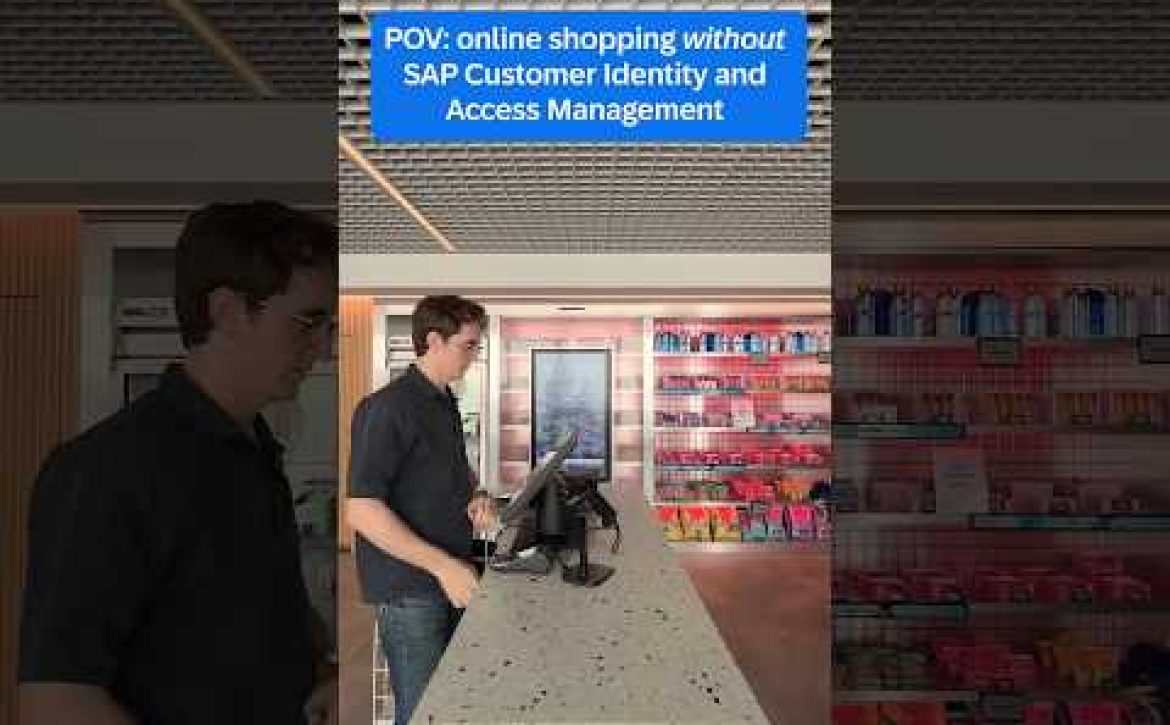
What online shopping friction really feels like 👀

An online store that forgets you doesn’t feel premium.

SAP Customer Identity and Access Management solutions help brands deliver smooth, secure access and more relevant customer experiences.

Explore more: https://sap.to/6053BELM73

#SAP #CustomerExperience #CIAM

Beautiful emerald-colored glacial rivers of Iceland, taken from a helicopter

SAP Completes Acquisition of Dremio

WALLDORF and AUSTIN — SAP SE (NYSE: SAP) today announced it has completed the acquisition of Dremio, an open, high-performance data lakehouse platform.

The acquisition accelerates agentic AI and expands customers’ ability to combine SAP and non-SAP data to run analytical and AI workloads in real time, with no data movement or conversion necessary, and with vastly improved economics for enterprise analytics.

For additional information about the acquisition, see the press release from May 2026.

Visit the SAP News Center. Get SAP news via LinkedIn and Bluesky.

Sign up for the SAP News Center newsletter to receive stories, highlights and updates each week

Media Contacts:
Alex Vaught, SAP, +1 (206) 678-5712, alex.vaught@sap.com, PST
Ilaina Jonas, SAP, +1 (646) 923-2834, ilaina.jonas@sap.com, EST
Daniel Reinhardt, SAP, +49 151 168 10 157, daniel.reinhardt@sap.com, CEST
SAP Press Room; press@sap.com

This document contains forward-looking statements, which are predictions, projections, or other statements about future events. These statements are based on current expectations, forecasts, and assumptions that are subject to risks and uncertainties that could cause actual results and outcomes to materially differ.  Additional information regarding these risks and uncertainties may be found in our filings with the Securities and Exchange Commission, including but not limited to the risk factors section of SAP’s 2025 Annual Report on Form 20-F. 
© 2026 SAP SE. All rights reserved.  
SAP and other SAP products and services mentioned herein as well as their respective logos are trademarks or registered trademarks of SAP SE in Germany and other countries. Please see https://www.sap.com/copyright for additional trademark information and notices.  

How Ericsson approaches data transformation for AI ✨

What does it take to drive data transformation in a large enterprise?

Malin Persson from Ericsson shares practical advice on for large enterprises: start with what drives the most business value, then work backwards to build the data foundation required to support and scale it.

A grounded perspective from someone leading transformation in a global organization.

Watch the replay: https://events.sap.com/fabric-of-data-and-ai/en_us/home.html?source=social-glo-orgsocial-bdcsurge

#SAPBusinessDataCloud #BDC #DataFabric #AI

Why So Many Wanted to Visit the SAP Experience Center at SAP Sapphire

The SAP Experience Center brought the “new SAP” to life at SAP Sapphire. It guided visitors through the story of a major sporting event—from early planning to game day—and ended with a special souvenir.

Andreas Wendel is very pleased with the outcome: a total of 11,200 visitors explored the SAP Experience Center at SAP Sapphire Orlando and Madrid. The self-contained exhibit drew customers, partners, SAP employees, media representatives, and analysts alike. Across the two identical centers, visitors also joined 123 guided tours.

“The rush of visitors was so great that, in Orlando, the line at times wrapped all the way around the center, which covers roughly 1,000 square meters,” says Wendel, head of Innovation Experience Services at SAP.

Get an impression of the SAP Experience Center at this year’s SAP Sapphire

So what was inside the oversized box in the middle of the show floor? What were visitors willing to wait more than an hour to experience?

Sports create an emotional connection

“This year, our task was to bring the Autonomous Enterprise to life,” Wendel says. “It’s a highly technical topic, and we talk a lot about artificial intelligence, agents, and Joule Assistants.” The team wanted to make tangible what CEO Christian Klein and other members of the Executive Board of SAP SE introduced in the keynote and what was demonstrated in sessions.

Planning began six months before SAP Sapphire, supported by experts from Strategy, Development, and Product Marketing. Over time, more partners, customers, and service providers joined the effort. Wendel estimates that close to 100 people contributed to the concept.

As the narrative thread, the team chose a major sporting event and the theme “From Competition to Collaboration”—a timely fit with the world’s largest soccer tournament taking place across the United States, Mexico, and Canada this year. “With so many technology discussions at SAP Sapphire, sports is a topic that resonates with people emotionally,” Wendel says. “We used a sports event to show how SAP solutions help plan and deliver an event of that scale.”

“For spectators, it’s an experience. But for a mega-event to run smoothly, all equipment and technologies around a stadium must work,” he adds. “We showed how Autonomous Asset Management helps ensure the infrastructure performs on the day of the event.”

A players’ tunnel, pipelines, and a robodog

Let’s take a tour of the SAP Experience Center with Wendel. We enter through a players’ tunnel and arrive in a skybox overlooking an imagined stadium for a major international soccer tournament. The first stop, “Plan the Game,” focuses on the big picture and shows how SAP brings AI, data, and applications together to orchestrate every aspect of a major sporting event.

Wendel explains how SAP solutions support the planning phase: “We show how customers can use our finance and planning solutions well ahead of the event. Agents and Joule Assistants help identify developments early and take action to stay within budget.”

His colleague Pranav Avadhanula, solution advisor for Finance and AI, demonstrates this with a real-world scenario. On a large screen, visitors see how Joule Agents can identify the best providers for the event’s security concept in Mexico and simulate different scenarios—including currency fluctuations between the Mexican peso and the U.S. dollar.

The next station, “Build the Stage,” highlights the work that happens behind the scenes before fans cheer. Modernizing a stadium requires precise planning, budget discipline, and seamless execution. SAP helps orchestrate everything—from staffing and travel to procurement—enabling the venue to be ready on time and on budget, supported by Autonomous Spend, Autonomous HCM, and Autonomous Project Delivery.

Another room focuses on applications that are invisible to visitors—but critical. One scenario in particular stands out and was likely the most frequently filmed by visitors: a dog-shaped robot from partner Boston Dynamics moving along a series of pipelines, automatically detecting leaks with sensors. Once identified and analyzed, the system triggers a digital repair order for the maintenance staff responsible.

“What resonates strongly is that we don’t just show digital solutions,” Wendel says. “We also demonstrate how embodied AI and robotics can support operations in the future—ideally through customer use cases. These physical elements make SAP solutions tangible and help reduce complexity.”

Another popular highlight is the “Hall of Fame,” where key customers are honored with their own trophies. “In Orlando, we had a tour with a customer. When employees saw their trophy, they cheered and took photos like at a Champions League final. That really showed how much detail went into the experience—it was simply incredible.”

More than just a jersey

The visit concludes in the fan shop. Under the theme “Monetize the Moment,” it demonstrates how organizers can generate revenue through merchandise. Visitors scan their SAP Sapphire badge and order a personalized jersey in one of two colors.

They then watch as a machine printed the jerseys with their chosen name and number. A humanoid robot from partner Aimbo Robotics sorts the finished items onto shelves. Despite high demand, jerseys are ready for pickup about two hours later.

The twist: the jerseys include an NFC chip. “If you tap your phone to it, you can access all SAP Experience Center content again,” Wendel explains. “So it’s not just a jersey—it extends the experience beyond the event.”

Wendel emphasizes that while the SAP Experience Center was built for SAP Sapphire, its elements are reused at other events or in one of the numerous permanent SAP Experience Centers. Parts of the setup are also stored for reuse. “Sustainability is very important to us,” he says.

Hard to top

The many months of preparation and the long evenings in the exhibition hall in the run-up to SAP Sapphire clearly paid off. Asked about the feedback, Wendel concludes: “Our concept makes SAP’s full portfolio and industry strength tangible. This year, many people told us: ‘Last year was already great, but you managed to top it.’ And that’s not easy.”

Experience SAP innovation firsthand

SAP Experience Centers bring innovation to life through real business scenarios, interactive showcases, and industry-specific storytelling. Across 31 locations worldwide, SAP connects applications, data, and AI to help turn complex business challenges into tangible solutions.

Interested customers and partners may explore SAP Experience Centers online, book a tour, or get an impression of SAP AppHaus.


This article was first published on the SAP employee portal.

Subscribe to the SAP News Center for the latest SAP news each week

Autonomous Asset Management | SAP Sapphire 2026

See how Autonomous Asset Management helps keep critical infrastructure running during high-pressure events.

At SAP Sapphire 2026, SAP showcased how Autonomous Asset Management can help organizations predict, adapt, and act in real time. In this demo, a global sports event sets the scene: stadium operations depend on power, connectivity, water, security, workforce coordination, and facility systems working together without disruption.

When SAP’s Alert Processing Agent detects a pressure deviation in the stadium water network, Joule helps launch an autonomous inspection workflow. Inspection robots confirm a small pipeline leak, while AI agents initiate maintenance notifications, assess workforce capacity, and recommend the best available technician through SAP Field Service Management. With human oversight in place, the repair is completed, logged for compliance and traceability, and reflected in SAP Asset Performance Management for future preventive maintenance.

This is Autonomous Asset Management in action: connected assets, intelligent maintenance, field service, and supply chain operations working as one system to help organizations reduce operational risk, improve uptime, and respond faster when every minute matters.

Chapters:
00:00 – Becoming an autonomous enterprise
00:10 – Autonomous Asset Management at SAP Sapphire
00:19 – Managing operations for a global sports event
00:27 – Detecting anomalies before disruption
00:39 – Launching an autonomous inspection workflow
00:55 – Moving from insight to maintenance action
01:05 – Rebalancing field service schedules with Joule
01:16 – Assigning the right technician
01:31 – Logging work for compliance and traceability
01:39 – Restoring asset status and improving prevention
01:47 – Innovations from SAP Sapphire 2026

Streamline asset management with Autonomous Asset Management from SAP:
https://www.sap.com/industries/autonomous-asset-management.html

Follow us on social:
LinkedIn: https://www.linkedin.com/company/sap/
Instagram: https://www.instagram.com/sap
Facebook: https://www.facebook.com/SAP/
Threads: https://www.threads.com/@sap

About SAP:
As a global leader in enterprise applications and business AI, SAP stands at the nexus of business and technology. For over 50 years, organizations have trusted SAP to bring out their best by uniting business-critical operations spanning finance, procurement, HR, supply chain, and customer experience. For more information, visit: https://www.sap.com/index.html

#SAPSapphire #Joule #AI

Business Travel Holds Steady as Travel Costs Rise

Business travel costs continued to climb in the first half of this year, driven in part by rising fuel prices and broader transportation pressures. However, according to SAP Concur data, companies around the world largely maintained their travel activity despite the higher prices.

The data suggests that while organizations are becoming more thoughtful about trip economics, most are still prioritizing in-person meetings and employee travel.

AI-powered travel and invoice solutions that unify data, simplify work, and drive business forward

Travel costs rose across most categories 

 According to SAP Concur global data from January 1–May 31, 2026, overall business travel costs increased across nearly every major category year over year. Airfare rose more than 8%, hotel rates increased nearly 6%, and car rental costs climbed roughly 5%.

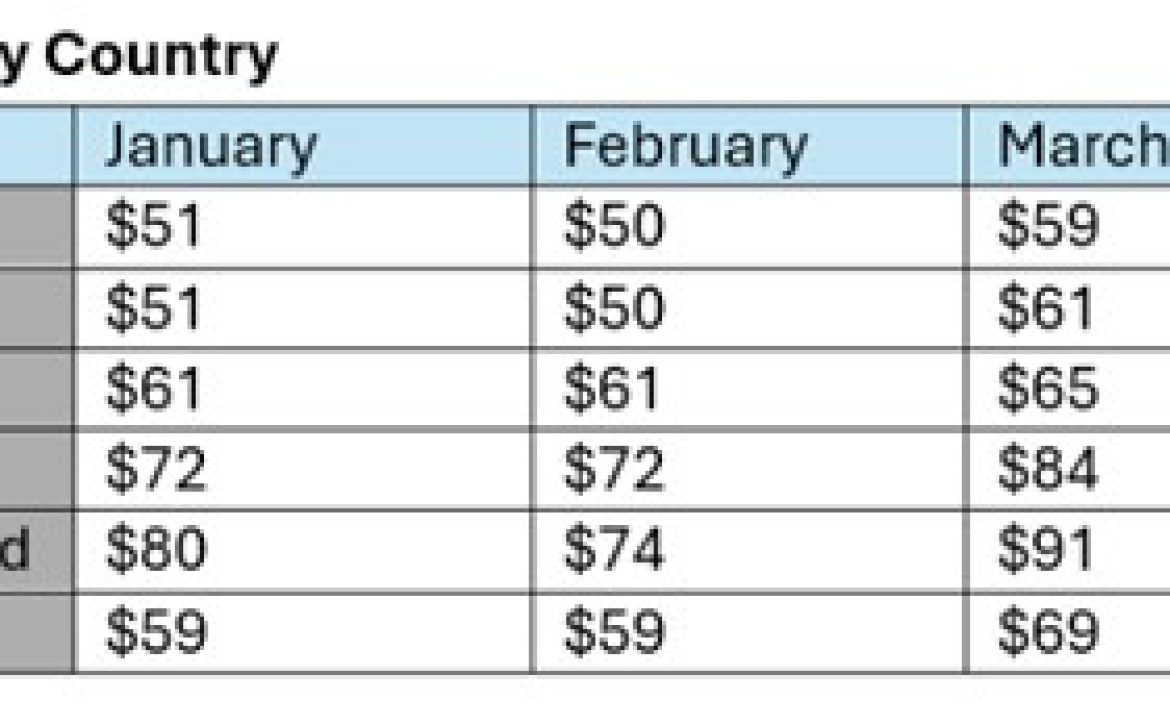
At the same time, the average cost of fuel-related expenses surged. The average transaction in Concur Expense in the gas category increased approximately 22% globally, rising from $50 in February to $61 in April with similar spikes seen in countries around the world. 

Transportation patterns shifted in select segments

Those increases are already influencing some travel decisions. While overall air and hotel booking volumes remained relatively flat year over year, there have been some shifts in how employees travel once they arrive at their destinations, as car rental bookings declined roughly 4% globally. Additionally, rail bookings increased approximately 4%, suggesting some organizations may be looking for more cost-effective or efficient transportation alternatives as fuel prices rise.

Premium travel demand remained strong

Even with costs rising, companies did not significantly reduce premium travel spending. Premium cabin bookings—including business and first class—increased about 9% year over year. By comparison, economy bookings remained flat, while premium economy bookings declined approximately 15%.

Companies are balancing traveler experience alongside budget pressures. For longer flights and international trips in particular, some organizations still view premium travel as a worthwhile investment.

What to watch in the second half of 2026

There are early signs that rising costs and operational disruptions could begin affecting demand, with significantly higher average airfares and reduced airline capacity in some parts of the world. The coming months will help determine whether these disruptions create a short-term adjustment or shape a broader shift in business travel behavior. For now, the data suggests companies are willing to absorb higher travel costs rather than scale back travel plans.

Research shows that business travel remains closely tied to professional opportunity and relationship building. In a recent survey conducted in the U.S. on behalf of SAP Concur, 90% of frequent business travelers say traveling for work has positively impacted their careers, underscoring the employee experience and retention benefits of continuing to prioritize business travel even as costs rise.

As organizations navigate higher travel costs in 2026, the data suggests many still view business travel as a worthwhile investment in relationships, employee development, and long-term growth.


Charlie Sultan is president of Concur Travel at SAP.

Sign up to receive weekly news highlights from the SAP News Center

Methodology: SAP Concur analyzed expense transactions tagged as “gas” in Concur Expense between January 1, 2026, through May 31, 2026, and equivalent time periods from 2025. SAP Concur analyzed air, rail, hotel, and car bookings in Concur Travel for trips booked and undertaken between January 1, 2026 and May 31, 2026 and the equivalent time period in 2025.

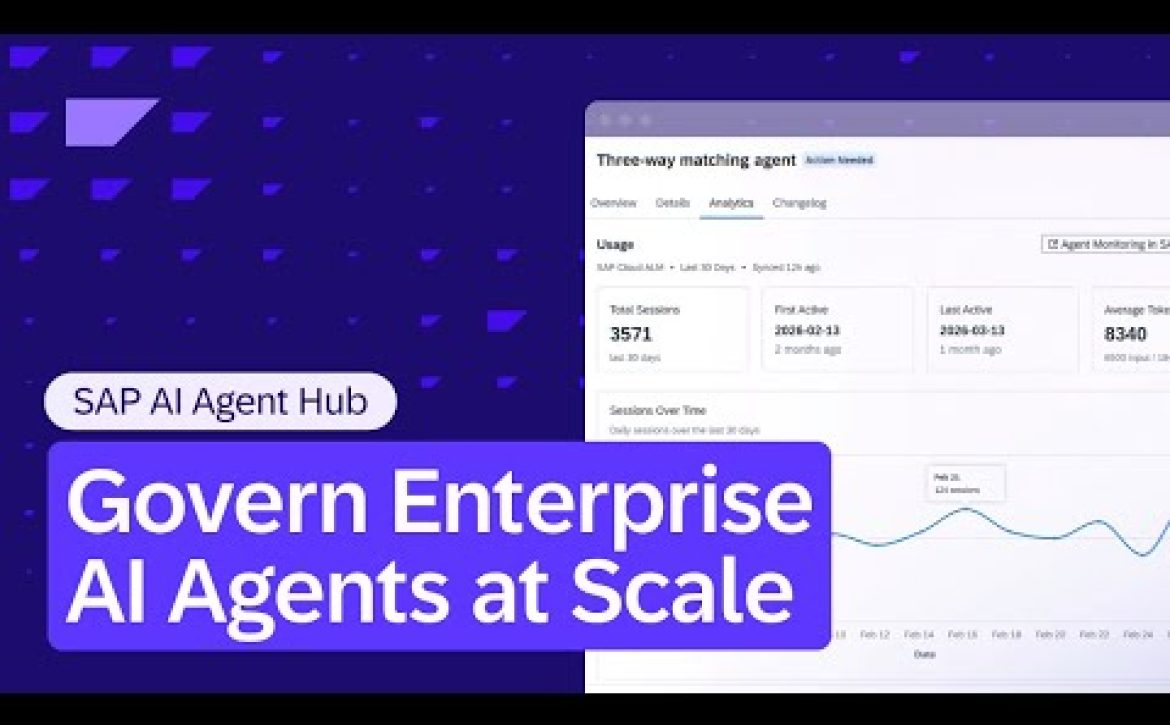
SAP AI Agent Hub: Govern Enterprise AI Agents at Scale | Overview

AI agents are multiplying fast. SAP AI Agent Hub helps you discover, manage, and govern them in one place.

As organizations adopt agentic AI across platforms, models, and MCP servers, visibility becomes essential. Without a clear view of how many agents exist, what they do, who owns them, and which business processes they support, teams risk duplicating work, increasing costs, and creating governance gaps.

In this video, see how SAP AI Agent Hub acts as a command center for enterprise AI agent management and governance. It helps make AI agents, AI models, and MCP servers visible across the full lifecycle — from planning and discovery to optimization and decommissioning. By grounding agents in architecture and business process context, SAP AI Agent Hub helps organizations understand how each agent contributes to business outcomes.

You’ll also learn how SAP AI Agent Hub maps agents to the business capabilities they support, the processes and applications they touch, and the data they access. With runtime verification and lifecycle governance, teams can strengthen compliance, improve control, and better understand workforce implications as AI agents become part of everyday operations.

Explore SAP AI Agent Hub:
https://www.sap.com/products/artificial-intelligence/ai-agent-hub.html

Follow us on social:
LinkedIn: https://www.linkedin.com/company/sap/
Instagram: https://www.instagram.com/sap
Facebook: https://www.facebook.com/SAP/
Threads: https://www.threads.com/@sap

About SAP:
As a global leader in enterprise applications and business AI, SAP stands at the nexus of business and technology. For over 50 years, organizations have trusted SAP to bring out their best by uniting business-critical operations spanning finance, procurement, HR, supply chain, and customer experience. For more information, visit: https://www.sap.com/index.html

#SAPBusinessAI #AgenticAI #EnterpriseAI

Previous Next
Close
Test Caption
Test Description goes like this