Strengthening Customer Experience Across the Lead-to-Cash Journey

Long before a customer becomes your customer, their engagement with your brand begins. Customer experience (CX) starts with early interactions like marketing engagement, product exploration, and initial conversations with sales teams.

Deliver results with an intuitive configuration process across every sales channel

These critical pre-purchase moments generate interest and open pathways toward deeper customer relationships. Organizations that convert interest into measurable outcomes with clarity, accuracy, and speed strengthen the overall customer experience, thereby boosting loyalty and bottom lines.

CX becomes even more meaningful as opportunities progress into clear agreements supported by accurate configuration, pricing, and quoting. This transition from opportunity to agreement represents one of the most consequential stages in the customer journey.

Lead-to-cash represents a coordinated motion across sales engagement, pricing precision, service alignment, and performance visibility. When these capabilities operate together, organizations deliver consistent customer experiences while maintaining operational clarity.

Eight years running: a leadership signal at the heart of lead-to-cash

Within the lead-to-cash journey, quoting connects sales engagement, performance management, service continuity, and ERP alignment. It represents a critical moment where customer intent is translated into accurate pricing, configuration, and agreement terms.

When SAP CPQ operates within SAP Customer Experience, it becomes part of a connected lead-to-cash motion that spans SAP Sales Cloud, SAP Service Cloud, sales performance management solutions, and SAP ERP. Sales teams engage with structured opportunity data and guided pricing logic. Service teams inherit full visibility into agreed terms. Performance leaders access insights grounded in accurate pipeline and quoting data.

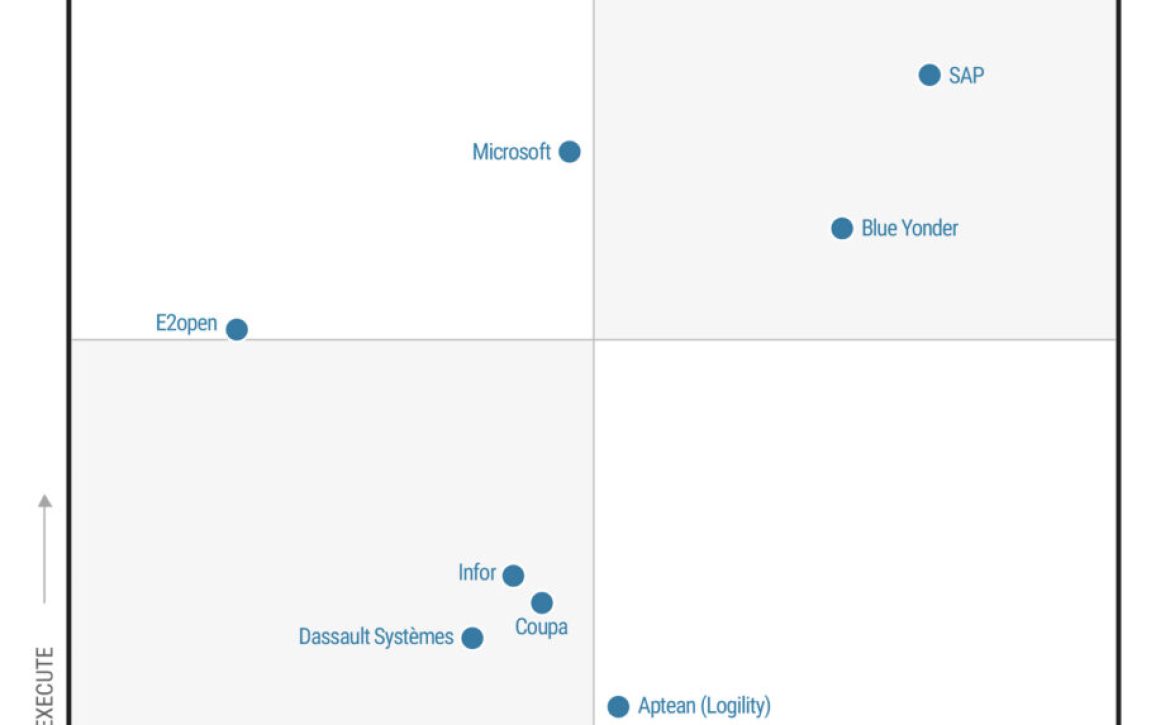
When it comes to this level of intelligent, real-time, connected processes, very few companies can compete. SAP was again recognized as a Leader in the 2025 Gartner® Magic Quadrant™ for Configure, Price, and Quote Application Suites. This marks the eighth consecutive year SAP has been positioned in the Leaders quadrant based on Ability to Execute and Completeness of Vision.

SAP CPQ supports organizations in producing accurate quotes — even in environments with advanced configuration and pricing requirements — helping accelerate sales cycles and improve sales execution across complex selling environments.

Extending CPQ leadership across SAP Customer Experience

In modern enterprises, quoting connects directly to demand generation, pipeline management, contract processes, fulfilment, and service delivery. SAP Customer Experience brings together commerce, customer data, marketing, sales, service, and sales performance management into an integrated portfolio designed to support truly connected customer journeys.

Within this portfolio, SAP CPQ plays a pivotal role in the lead-to-cash journey. When integrated with SAP CX solutions, it helps align pricing strategy, product configuration, customer agreements, and sales performance insights across the revenue lifecycle. The result is a more reliable transition from opportunity to revenue realization.

Connected lead-to-cash experience

For CX leaders, lead-to-cash is a core driver of experience differentiation and revenue execution. A connected lead-to-cash strategy ensures that:

  • Customer intent is translated into accurate configuration and pricing.
  • Sales engagements reflect approved pricing and product standards.
  • Customer agreements are consistently captured and supported across systems.
  • Sales performance and revenue outcomes remain visible and aligned across teams.

Business impact of connected lead-to-cash

Lead-to-cash determines how consistently organizations translate customer engagement into measurable outcomes.

By combining SAP Customer Experience capabilities with a CPQ solution recognized for its ability to execute and completeness of vision, organizations strengthen alignment across sales, pricing, service, performance management, and ERP systems, transforming engagement into measurable outcomes with confidence and precision.

In today’s environment, customer experience and operational precision are closely connected. Strength in one reinforces performance across the other.

You can learn more about how SAP CX connects SAP Sales Cloud, SAP CPQ, SAP Service Cloud, sales performance management solutions, and SAP ERP across the lead-to-cash journey here.


Sindy Conway is senior Product Marketing consultant for SAP Customer Experience.

For news and highlights delivered straight to your inbox each week, subscribe to our newsletter

Meet the Hasso Plattner Founders’ Award Finalists: “Emerging Ideas”

Six teams are competing for the highest employee recognition at SAP: the Hasso Plattner Founders’ Award. Starting this year, the Hasso Plattner Founders’ Award comes with a modified, more focused approach. It now consists of two categories: “Scaling Innovation” and “Emerging Ideas.” Both reflect a different type of breakthrough thinking and the various ways in which innovation drives SAP’s success. This year’s award theme is AI.

Following the presentation of the “Scaling Innovation” category finalists, we now turn to “Emerging Ideas,” which honors visionary concepts at an earlier stage—projects that explore new architectural directions, challenge established models, and open long-term strategic opportunities for SAP and its customers. The winners will be announced during the award ceremony on March 26, 2026.

SAP Cognitive Twin Enterprise (CTE)

Modern enterprises are very effective at monitoring their business and analyzing vast amounts of data, yet many still see untapped potential in safely testing complex scenarios end to end and turning insights into cross‑functional, policy‑aligned options before making mission‑critical decisions. SAP Cognitive Twin Enterprise (SAP CTE) addresses this gap by creating an AI‑powered digital brain built on a continuously updated model of the whole organization. It runs what‑if simulations and provides governed recommendations on SAP applications and data across finance, spend, supply chain, HR, and customer experience, with selective, low‑risk auto‑execution and human‑in‑the‑loop control for higher‑risk steps.

The business case is compelling. Organizations that combine digital twins with agentic AI at scale report double‑digit improvements in efficiency and cost, plus materially faster decision cycles. For a global industrial enterprise with approximately €40 billion in revenue, SAP CTE is modeled to systematically prevent margin leakage, excess working capital, and audit exposure, delivering an estimated €229 million or more per year in hard impact and risk-adjusted cash benefit. By maintaining a continuously updated representation of the business, companies can test scenarios before execution and dramatically reduce the risk of costly mistakes.


“>

Hasso Plattner Founders' Award Finalist: SAP Cognitive Twin Enterprise

SAP CTE’s real differentiator is its enterprise‑wide scope. It consolidates existing SAP capabilities and builds on SAP Signavio solutions, SAP Business Data Cloud, and SAP Knowledge Graph to maintain a shared semantic model of how the whole business runs. This cross‑domain intelligence lets Joule and AI agents optimize complex trade‑offs—such as cost versus service level versus carbon footprint versus operational risk—across all functions, rather than pushing problems from one silo to another. At the same time, SAP CTE provides a safe innovation environment: enterprises can trial new pricing strategies, network configurations, and workforce models in a production‑grade twin before agents execute changes in live systems.

SAP CTE represents a strategic shift in how enterprises operate. It turns SAP’s deep process knowledge, rich transactional data, and mature governance tooling into a differentiated position in a cognitive twin market that analysts expect to accelerate from US$36 billion today to US$150 billion by 2032, with 30%-40% annual growth. As an extensible platform, SAP CTE is designed to be the trusted operational brain for that future: new agents, scenarios, and data products plug into the same enterprise twin, allowing customers to expand autonomy and business impact over time without rebuilding their foundation.

“SAP CTE is more than an initiative: it’s our vision for a new era of connected intelligence. We’re bringing strategy, data, and execution into one continuous system of insight, so customers don’t just react to change—they anticipate what’s next and shape it. That’s how we win and grow together,” said Natalia Aksakova, Strategy & Portfolio at Global Finance and Administration.

Finalist fast facts

Submission Title: SAP Cognitive Twin Enterprise (CTE)
Team: Natalia Aksakova, Silvina Guastavino, Cvetelina Dizova, Dorothee Hofstetter, Ekaterina Pechenina, Janine Weissenfels, Holger Handel, Michael Emerson
Project: It explores an AI-driven cognitive model of the enterprise that connects data, planning, simulation, and AI agents into a governed decision-and-execution loop. It enables organizations to test scenarios, anticipate risks, and act proactively across finance, spend, supply chain, HR, and customer experience domains.
Impact: It positions SAP at the forefront of cognitive enterprise architecture by shifting from reactive systems of record toward predictive, simulation-driven, AI-supported decision-making and execution.

SAP Signavio Transformation Advisor

Organizations planning business transformations face a persistent bottleneck: identifying the right challenges to focus on and creating actionable initiatives is slow, costly, and heavily dependent on expert consultants and detailed knowledge of the organization. This traditional approach delays decision-making and increases risk in fast-changing markets, with analysis often taking weeks or months to complete.

SAP Signavio Transformation Advisor reimagines this workflow by using AI to extract business challenges and create actionable recommendations to solve them in minutes. The solution identifies business challenges in uploaded reports or via text input and instantly generates recommendations linked to process insights and best practices to make them addressable. By combining advanced language models with the SAP Signavio portfolio‘s process knowledge, it enables users to achieve in minutes what previously required weeks of manual effort while keeping users in full control.

Early results demonstrate significant impact. The tool cuts analysis time by up to 80%, enabling faster decision-making and reducing reliance on scarce consulting resources. Since launch, approximately 200 customers have tested the transformation advisor, validating its value across organizations at different maturity levels. The solution has proven valuable both for customer engagements and for internal use in preparing sales pitches.

The innovation lies in bridging strategic business challenges and operational processes in a way no existing tool does. It automatically identifies organizational pain points and links them to targeted process flows, best practices, and improvement opportunities within the SAP Signavio ecosystem. This seamless integration empowers leaders to move from insight to action in just a few clicks, aligning transformation initiatives with company strategy.

The team embraced a proactive and entrepreneurial mindset: it started with a pure technical proof of concept then moved to a prototype for internal demonstrations, general accessibility and testing, and ultimately a releasable feature. The team demonstrated both transparency and customer focus by responding early to pull from go-to-market and sales teams while clearly stating tool limitations at each stage.

“The real fun in developing such a solution lies in seeing your idea and your knowledge grow at the same time and getting a clear pull from the market early on. The best customer sessions were those where the tool was improved live during the interview. That combined is a clear signal that we are on the right track,” said Alex Cramer, product manager at SAP Signavio Next.

Finalist fast facts

Submission Title: SAP Signavio Transformation Advisor
Team: Alexander Cramer, Matthias Wiench, Shehab Shalan, Rolan Badrislamov
Project: It is an AI-powered solution that analyzes business inputs and generates structured, actionable transformation recommendations connected to SAP Signavio Process Insights.
Impact: It significantly reduces transformation analysis time, lowers reliance on manual consulting efforts, and enables organizations to move from strategy to execution faster and more confidently.

AURA (Asset Understanding & Reliability AI)

Field engineers maintaining critical infrastructure face a frustrating reality: reporting asset faults requires completing complex forms on mobile devices, scrolling through endless dropdowns and codes. At Transport for New South Wales (TfNSW), 300 users report 400 to 1,000 asset faults monthly through SAP S/4HANA, but the process is slow, manual, and error prone. A single classification mistake can send the wrong maintenance crew and delay urgent fixes.

AURA (Asset Understanding & Reliability AI) revolutionizes this workflow by combining SAP HANA Cloud vector engine, SAP AI Core, and generative AI into a single intelligent solution. Instead of completing eight or more complex form fields, engineers simply upload a photo of the fault; review an AI-generated report automatically populated with asset type, location, and recommended classification; and confirm submission—all within seconds.

The technology uses embedded text, semantic search, and geospatial data to analyze both images and historical fault reports. AURA cross-references similar cases in the knowledge base, suggests the most accurate fault category, and learns from user corrections over time. SAP Cloud Application Programming Model provides the secure foundation, SAP HANA geospatial content supports asset location intelligence, and AI models process text and images using SAP HANA Cloud vector engine for similarity matching.

Results demonstrate substantial operational impact. AURA delivers 80% faster fault reporting, fewer data entry errors and misclassifications, and improved response times. For TfNSW, this translates to safer infrastructure, reduced operational costs, and a future-ready foundation for predictive maintenance. The customer response validated the approach: TfNSW loved the proof of concept and agreed to proceed with AURA as an official project.

Beyond defect detection, AURA lays the groundwork for scalable AI asset intelligence. Future phases include building a knowledge graph to link asset relationships, a data product integrated into SAP Business Data Cloud for advanced reporting, and a self-learning model that continuously improves accuracy. This creates a repeatable, cost-efficient framework adaptable across industries.

The solution embeds responsible AI principles from inception. The model uses TfNSW-specific historical data to prevent bias, includes human review before submission, and explicitly handles uncertainty to avoid hallucinations. It ensures transparency and compliance with SAP’s responsible AI framework while empowering human decision-makers.

“We believe the future of AI is not replacing people, but elevating them,” said Ruth Peng, AI specialist from SAP HANA ANZ. “AURA equips every engineer in the field, from junior to expert, with the confidence to perform at their best.”

Finalist fast facts

Submission Title: AURA (Asset Understanding & Reliability AI)
Team: Ruth Peng, Shuba Dutta, Shonali Kellogg
Project: It uses AI-driven image recognition and enterprise integration to automate fault reporting in SAP S/4HANA. Engineers can upload photos of faulty assets and the system generates structured reports automatically.
Impact: It reduces reporting time by up to 80%, lowers classification errors, and improves operational efficiency in asset-intensive environments.


Sign up to receive weekly news highlights from the SAP News Center

How Doehler Unifies Global Data and AI-Ready Operations with SAP Business Data Cloud

Global food & beverage operations run on many plants, systems, and regulations, but decisions can’t wait on disconnected data and metadata.

Doehler uses SAP Business Data Cloud to unify worldwide operational and quality data, accelerate modeling, and deliver precise insights to the business. opening the door to AI and machine learning.

Learn more about SAP Business Data Cloud 👉 https://sap.to/6056hbixK

#SAPBusinessDataCloud #DataFabric

Joule: Performance That Scales | SAP Business AI

Scaling AI value across the enterprise is hard, unless it’s built to work across teams, systems, and functions.

In this video, see how Joule simplifies AI adoption by creating a consistent experience that inspires everyday use, woven into the systems employees already use and interoperable with third-party AI. Joule also delivers ready-made AI agents for every core function, powered by built-in business process expertise, so teams can collaborate cross-functionally and break through silos.

And when you need something tailored, Joule helps speed up custom agent builds with simple tools to define business context and connect to your systems, so you can move from AI vision to real business value faster, with reliable performance at scale.

Learn more about Joule 👉 https://sap.to/6050hT98Y

#Joule #AIAgents #SAPBusinessAI

SAP S/4HANA Cloud Public Edition Release 2602 | Key Updates for Finance, Strategic Insights, & More

Meet the SAP S/4HANA Cloud 2602 release, new AI-enhanced innovations designed to connect applications, data, and AI so teams can run faster, work smarter, and act with greater confidence.

This update introduces finance innovations designed to work end to end, including an accounting accruals agent that automates major parts of the accrual process to help teams close faster with greater accuracy and less manual effort. As of 2026, SAP Green Ledger embeds carbon border adjustments into finance processes to support carbon liability tracking and certificate management with smart automation and compliant insights from day one.

You’ll also see enhancements for margin and profitability analysis, with improved review booklets that add comparisons and AI insights to surface optimization opportunities.

Chapters:
00:00 – Apps, data & AI on one foundation
00:23 – 2602 release overview
00:51 – AI-driven financial close (accruals agent)
01:17 – Green Ledger & carbon border adjustments (2026)
01:37 – Margin & profitability enhancements
01:56 – Joule: natural language insights
02:09 – Billing & revenue recognition updates
02:30 – Sales productivity enhancements
02:53 – Wrap-up

Learn more about financial management with SAP: https://sap.to/6054hP2XY

5 Reasons Customer-Specific AI Will Outperform Generic AI in 2026

As enterprises move deeper into large-scale AI adoption, the conversation is shifting from experimentation to impact. Leaders are looking for outcomes they can trust, decisions that are consistent, and experiences that truly work for customers.

In 2026, AI earns its place when it is anchored in the realities of the business, shaped by enterprise data, processes, and lived customer interactions. Customer-specific AI brings intelligence directly into day-to-day operations, helping teams navigate complexity and support better decisions at scale while keeping human judgment firmly at the center. This is the shift shaping the next phase of AI adoption, moving from generic tools to intelligence that understands the business and grows stronger with every customer interaction.

1. Relevance beats raw intelligence in customer decisions

As AI becomes more central to customer-facing decisions, accuracy and relevance become non-negotiable. Generic models often lack the contextual understanding needed to interpret nuanced, exception-heavy customer scenarios. Customer-specific AI, trained on enterprise data, can recognize patterns unique to the organization—such as recurring dispute types, resolution bottlenecks, or region-specific service behaviors. According to SAP’s “Value of AI” report in collaboration with Oxford Economics, 36% of businesses say AI has already helped them address customer-related challenges, including improving customer engagement. This impact is strongest when intelligence reflects how customers actually interact with the business, rather than abstract assumptions.

2. Scaling complexity without losing control

Solve business challenges with innovations aligned with suite-first and AI-first strategies

Customer-specific AI proves most powerful where customer processes scale faster than manual intervention can keep up with. Returns, exchanges, dispute resolution, claims handling, and service exceptions span multiple systems, rules, and decision paths. AI that understands enterprise context can scale these processes without compromising consistency, governance, or accountability—enabling organizations to handle growing volumes while maintaining predictable outcomes and service quality.

3. Differentiation that compounds over time

Unlike generic AI capabilities that are broadly accessible, customer-specific AI is shaped by proprietary data, policies, and institutional knowledge. Over time, this creates intelligence that becomes deeply aligned with how the business operates—and increasingly difficult for competitors to replicate. The more the system learns from real customer interactions, the more it compounds as a durable source of differentiation.

4. Where customer-specific AI proves its value, from theory to practice

The impact of customer-specific AI is most visible in high-volume, exception-driven environments. A large European manufacturing and consumer goods organization illustrates this well through its approach to dispute, returns, and exchanges management. Operating across regions and product lines, the company faced long resolution cycles, inconsistent outcomes, and heavy manual effort. By deploying AI trained on its own historical disputes, order data, pricing rules, and resolution workflows, the organization embedded intelligence directly into its processes. Incoming claims were automatically classified, relevant documentation was surfaced, and resolution recommendations were generated based on prior outcomes and policies. Cases were routed efficiently, reducing back-and-forth and manual effort. Crucially, the system evolved with policy changes and customer behavior—augmenting human decision-making rather than replacing it. The result was a faster, more consistent, and scalable approach to managing customer disputes.

5. A cross-industry shift toward embedded intelligence

These principles extend well beyond dispute management. In manufacturing and supply chains, customer-specific AI supports fulfillment exceptions and service-level disputes. In financial services, it enables complaint handling aligned with regulatory frameworks. In healthcare, it supports decisions grounded in institutional protocols and patient journeys. In retail and services, it drives relevance by learning customer preferences, brand rules, and operational constraints. Industry observers increasingly note that AI’s next phase of growth will be driven by intelligence embedded into customer-facing processes—not stand-alone tools. According to SAP’s “Value of AI” report with Oxford Economics, the majority of businesses expect AI to become central to business processes, decision-making, and customer offerings by 2030, with only 3% saying otherwise.

In 2026, enterprises will judge AI less by novelty and more by its ability to deliver consistent customer and business outcomes. Customer-specific AI sits at the center of this shift because it weaves intelligence directly into how organizations operate and serve customers. This next stage of AI is not about removing human judgment—it is about strengthening it. By absorbing complexity and surfacing context-aware insights, customer-specific AI enables faster responses, greater consistency, and confident scaling of customer-centric decision-making. In an increasingly complex and customer-driven landscape, the true edge will belong to enterprises that invest in intelligence that genuinely understands their business.


Sindhu Gangadharan is head of Customer Innovation Services and managing director of SAP Labs India.

Sign up to receive weekly news highlights from the SAP News Center

Customer Service That Builds Loyalty (Not Frustration) | Scott Nelson

Great service isn’t just faster — it’s smarter and more human.

SAP’s Scott Nelson explains how AI can help teams resolve issues and earn loyalty.

Learn how to accelerate service growth: https://sap.to/6053CrB4F

🎧 More episodes of the Trending Chats podcast:
Watch on YouTube: https://sap.to/6055CrB4N
Listen on Spotify: https://sap.to/6056CrB44
Listen on Apple Podcasts: https://sap.to/6058CrB4A

#TrendingChats #CX #CustomerService

How SAP Can Help Companies Cut Waste And Achieve Extended Producer Responsibility (EPR)

Extended Producer Responsibility is a process that encourages companies to design more sustainable and recyclable products and manufacturing processes. It means companies are responsible for their products from the day they’re made to the when they are recycled or disposed of.

SAP Solutions can help you track this process, streamline it and properly grasp the opportunity that EPR offers.

What is extended producer responsibility (EPR)? https://sap.to/60507x0Ap

ASUG Tech Connect Joins Us from North America | Key Takeaways & Community Insights | SAP TechEd 2025

ASUG links live with SAP TechEd 2025! Hear community insights on AI, skills, and how to free up time to innovate with SAP.

In this highlight clip from SAP TechEd, ASUG connects live from Louisville to share what’s top-of-mind for the North American SAP community. You’ll hear how customers and practitioners are navigating real-world change: accelerating transformation while balancing skills, governance, and the growing role of AI.

The conversation captures the mood on the ground: less hype, more hands-on value. Speakers discuss how AI is in every conversation, the optimism (and anxiety) around changing roles, and a practical question: how do we put AI to work to make developers’ lives easier? You’ll also hear why skills and continuous learning are essential to deploy new technologies smoothly and deliver business impact, along with a look ahead at emerging areas (from UX to quantum and robotics) that will shape SAP landscapes over the next two years.

If you’re an IT leader, architect, or SAP practitioner, use this clip to brief stakeholders, focus enablement plans, and identify where ASUG community knowledge can help you move faster, without compromising on clean core and enterprise governance.

Speakers:
Geoff Scott, Chief Executive Officer, @ASUGtv
Muhammad Alam, Member of the Executive Board of SAP, SAP Product & Engineering

00:02 – Louisville: ASUG Tech Connect sync
00:49 – Why this Tech Connect matters: tech acceleration & community
01:08 – Today’s reality: AI pace, uncertainty & professional upskilling
01:41 – Less hype, more help: put AI to work for developers
02:31 – Skills & learning first; emerging tech and freeing time to innovate

Watch all SAP TechEd replays: https://www.sap.com/events/teched.html

Follow us on social:
LinkedIn: https://www.linkedin.com/company/sap/
Instagram: https://www.instagram.com/sap
Facebook: https://www.facebook.com/SAP/
Threads: https://www.threads.com/@sap

About SAP:
As a global leader in enterprise applications and business AI, SAP stands at the nexus of business and technology. For over 50 years, organizations have trusted SAP to bring out their best by uniting business-critical operations spanning finance, procurement, HR, supply chain, and customer experience. For more information, visit: https://www.sap.com/

#SAPTechEd #BusinessAI #ASUG

SAP Named a Leader in the IDC MarketScape for AI-Enabled Field Service Management Applications 2025

SAP has been named a Leader for the second time in the IDC MarketScape: Worldwide AI-Enabled Field Service Management Applications 2025 Vendor Assessment.*

Achieve efficient and sustainable field service operations with AI-assisted insights, advanced scheduling, and optimized workforce management

The IDC MarketScape vendor analysis model is designed to provide an overview of the competitive fitness of technology and suppliers in a given market. The research methodology utilizes a rigorous scoring methodology based on both qualitative and quantitative criteria that results in a single graphical illustration of each supplier’s position within a given market. The Capabilities score measures supplier product, go-to-market and business execution in the short-term. The Strategy score measures alignment of supplier strategies with customer requirements in a three to five year timeframe. Supplier market share is represented by the size of the icons.

According to the IDC MarketScape, “AI-enabled tools are revolutionizing field service management, transforming reactive operations into predictive excellence.”

Graphic: IDC MarketScape Worldwide AI-Enabled Field Service Management Applications 2025

SAP was recognized for the following strengths:

  • End-to-end field service management offering as part of the full enterprise suite: SAP Field Service Management is a fully integrated component of the SAP Business Suite, enabling end-to-end business process execution across planning, logistics, operations, finance, and customer service. It connects seamlessly with core SAP solutions such as SAP S/4HANA, customer experience, asset management, and supply chain management, ensuring that service delivery is fully aligned with enterprise-wide processes. This deep integration eliminates silos, enables real-time collaboration across departments, and supports consistent, efficient service execution across the entire value chain.
  • AI innovations and generative AI capabilities: SAP Field Service Management is infused with AI and generative AI to simplify and accelerate service delivery. SAP is able to support generative summaries of equipment history, work orders, and past service activities. SAP has established an embedded AI copilot for field service that enables users to execute commands, automate actions, and retrieve context-aware insights using conversational language with the benefit of boosting productivity and responsiveness across the service life cycle. SAP also has a robust auto-scheduling engine designed for complex, high-volume service operations.

Commitment to continuous innovation

Field service organizations face growing complexity, workforce shortages, and rising customer expectations that demand smarter, faster, and more connected service delivery. SAP continues to lead the market by integrating AI-driven insights, intelligent automation, and end-to-end connectivity across its portfolio.

SAP remains focused on enabling customers to:

  • Boost technician and dispatcher productivity
  • Drive customer-centric and revenue enabling operations
  • Reduce operational costs and accelerate complex workflows via intelligent automation and AI
  • Provide a connected and extensible platform for field service

SAP is proud to be recognized by the IDC MarketScape as a Leader in AI-enabled field service management. We remain committed to helping our customers run their service operations smarter, safer, and faster — combining data, applications, and AI to deliver measurable business outcomes and exceptional customer experiences.

Previous Next
Close
Test Caption
Test Description goes like this