Managing Recursive Data Structures with SAP RAP and Fiori Elements

Not all business data fits neatly into flat tables. Product catalogs, org charts, and account structures often rely on parent-child relationships that standard data models can’t represent well.

Business persons on meeting in the office.

AI Is Exposing Fragmented Systems in Financial Services

The biggest problem in financial services is not AI readiness, it’s structural complexity.

Video: How SAP and SAP Fioneer Are Shaping the Future

That was the takeaway from a recent conversation between SAP CFO Dominik Asam and SAP Fioneer CEO Matthias Tomann. Their conversation touched on topics like the future of financial services, the role of AI, and the growing importance of integrated enterprise platforms.

For decades, banks and insurers have built operating models around regulatory fragmentation, country-specific requirements, layered systems, and continuous workaround solutions. As a result, the industry is running on patchwork architecture that is expensive to maintain, slow to change, and fundamentally misaligned with how AI works.

Partnership built for financial services innovation

Since joining forces in 2021, SAP and SAP Fioneer have significantly expanded their joint capabilities for the financial services sector. As Tomann highlighted in the conversation, the partnership has already delivered substantial momentum for SAP Fioneer:

  • R&D investment increased by 120%
  • Annual software sales more than doubled
  • Major customers successfully transitioned to SAP Cloud ERP
  • The platform evolved into a richer, more scalable, and highly capable ecosystem

Together, the companies are combining SAP’s trusted cloud and data infrastructure with SAP Fioneer’s deep financial services expertise to help institutions simplify operations, modernize core systems, and prepare for the AI-driven future. 

Executives from both companies will be exploring these critical topics further at their annual SAP & SAP Fioneer Financial Services Forum 2026, which is now open for registration.

AI is not the starting point, data integration is

Everyone wants AI, but AI can only create value from integrated data, real-time access, and standardized processes. But most financial institutions still operate on the opposite: fragmented foundations. That reality will define the winners over the next five years.

The organizations that succeed will not be the ones experimenting with the most models. They will be the ones that establish unified, trusted, real-time enterprise data with strong governance. That is the real competitive advantage.

But even that is only part of the story. The next phase is not just about using AI to analyze better; it is about AI executing work.

We are now seeing a fundamental shift: from systems that store and report information to systems that act on that information in real time, orchestrating end-to-end processes across the business. This marks the transition to the Autonomous Enterprise, SAP’s vision for the future of business where AI does not just support decisions but increasingly drives execution, within clearly defined guardrails.

Financial services can no longer afford “patchwork architecture”

This shift makes one thing clear: The traditional approach to building IT landscapes is no longer viable.

For years, many financial institutions solved problems incrementally—another point solution, another integration layer, another workaround. But eventually every workaround becomes technical debt and integration is the single largest IT cost category.

Tomann made clear during the conversation that the emphasis must be on simplification rather than adding more complexity.

What SAP and SAP Fioneer are driving is not another modernization cycle. It is a structural shift toward comprehensive, integrated platforms and AI driven processes that replace fragmentation, not sit on top of it.

The result is a scalable financial services platform where core banking, lending, reporting, insurance, and analytics operate within an integrated architecture instead of disconnected silos.

Real-time finance is becoming a strategic requirement

Real-time capability is becoming foundational to competitiveness—whether it’s risk management, regulatory reporting, customer experience, fraud prevention, treasury operations, or AI-driven decision making.

Institutions that can act on integrated data instantly will have a major advantage over those still moving information between disconnected systems overnight. With integrated data and AI embedded in core processes, finance is moving toward continuous financial intelligence:

  • Forecasting becomes dynamic and always up to date
  • Risk is detected and assessed in real time
  • Closing processes become increasingly automated
  • Decisions are guided by AI based on live business context

Increasingly, AI assistants and agents take over execution of finance processes, from planning and risk management to invoicing and financial close, under strict governance. The role of finance shifts from reporting on the business to steering the business in real time.

AI will reward those who simplify

One of the most striking statements from Asam during the discussion is that SAP is already seeing 10x performance improvements from AI-driven process improvements. But it also highlights something many organizations still underestimate: just how much AI rewards those who standardize.

The more fragmented the processes and data structures are, the harder it becomes to operationalize AI at scale. In contrast, organizations with standardized platforms, harmonized data, and integrated workflows will accelerate much faster.

That is why modernization conversations today are no longer simply “IT projects.” They are business strategy discussions.

Future of financial services will be built on trust, scale, and intelligence

Financial services organizations are operating in an increasingly complex geopolitical and regulatory environment. Infrastructure decisions are no longer just about performance and cost, they are about compliance, security, operational resilience, and national requirements.

This is why scalable, enterprise-grade cloud platforms are becoming so critical.

The institutions that thrive in the next era of financial services will be the ones that can combine trusted data, integrated operations, AI-enabled processes, scalable infrastructure, and regulatory resilience into a single operating model.

The future of financial services will not be defined by isolated AI experiments. It will be defined by who can build the most intelligent, connected, and adaptable enterprise foundation for what comes next.

Learn more about SAP solutions for financial services here.


Kris Kowal, Banking Industry Leader at SAP.
Falk Rieker, Financial Services Industry Leader at SAP.

Subscribe to our newsletter to receive weekly news highlights from the SAP News Center

How Vodafone Uses SAP Business Data Cloud to Enable Governance

Really interesting takeaway from Ricard Rovira Marti from Vodafone.

Instead of replacing governance, SAP Business Data Cloud is helping enable it: by building a knowledge layer that keeps data connected and meaningful across systems.

A great example of how to balance innovation with control.

https://sap.to/6050BEJFpK

#SAPBusinessDataCloud #BDC #DataFabric #AI

SAP-RPT-1.5: Faster Predictions from Business Data

Turn structured business data into accurate predictive insights faster with SAP-RPT-1.5.

SAP-RPT-1.5 is a relational pretrained transformer model built for structured and relational business data. Unlike large language models designed for text or images, SAP-RPT models are purpose-built to understand how business data is connected, helping teams generate reliable predictions from tables, records, and relationships.

With in-context learning, users can provide a few example records directly in API calls to guide predictions without costly or complex model training. SAP-RPT-1.5 is designed to handle evolving schemas and missing values more robustly, helping teams move faster from data to insight.

Choose SAP-RPT-1.5 small for high-throughput, low-latency use cases, or SAP-RPT-1.5 large for high-accuracy predictions in more complex scenarios. Both are available in SAP’s generative AI hub.

👉 Learn more about SAP-RPT-1.5: https://www.sap.com/products/artificial-intelligence/sap-rpt.html

Follow us on social:
LinkedIn: https://www.linkedin.com/company/sap/
Instagram: https://www.instagram.com/sap
Facebook: https://www.facebook.com/SAP/
Threads: https://www.threads.com/@sap

About SAP:
As a global leader in enterprise applications and business AI, SAP stands at the nexus of business and technology. For over 50 years, organizations have trusted SAP to bring out their best by uniting business-critical operations spanning finance, procurement, HR, supply chain, and customer experience. For more information, visit: https://www.sap.com/index.html

#SAPBusinessAI #GenerativeAI #EnterpriseAI

Drive Better HR and Business Decisions with Faster Insights and Governed Data: How SAP Is Reinventing People Analytics

SAP’s internal IT organization—specifically its People Analytics team—acts as  “customer zero,” serving as the first adopter of new SAP products before they are introduced to the broader market.

Operating within a complex landscape that spans all aspects of ERP, including HR with SAP SuccessFactors HCM, SAP’s People Analytics team faced growing demand for HR data and insights—from HR, as well as Sales, Finance, and Operations. What started as a challenge soon became an opportunity for a more governed, self-service approach.

Centralized dashboards hit their ceiling

For years, SAP’s People Analytics function operated from a centralized model focused on the consumption layer: building, maintaining, and optimizing dashboards tailored to specific business requirements. The MyTeam Dashboard—a 360-degree view of workforce data available to every people manager at SAP, covering upcoming birthdays, salary, and performance information—became the company’s single most used report. That success was a testament to how much the business valued easy access and visibility into key HR data.

But it also revealed the limits of the model. As demand grew, the analytics team found itself permanently on the defensive, saying “no” far more than “yes,” managing backlogs of individual KPI additions, and negotiating timelines for incremental changes. Furthermore, data management, maintenance, and governance proved to be a challenge. The centralized dashboard approach could not scale to meet the breadth of data needs across an organization of SAP’s size and complexity.

Drive better people and business decisions across hiring, retention, pay, and more.

The solution: using data products with People Intelligence in SAP Business Data Cloud

SAP IT made a strategic decision to shift the center of gravity in its analytics architecture, moving to govern and open up the data layer beneath the consumption layer. At the heart of this change is the data product, a managed asset that ingests data from systems, transforms it, and exposes it in a governed, reusable form so downstream analytics can rely on consistent, trusted building blocks.

Data products fall into two categories: primary data products, which are sourced directly from transactional systems, such as a job structure data product from SAP SuccessFactors HCM, and derived data products, which combine these primaries to answer broader questions. An example of this is a total employee and external workforce data product that fuses multiple sources into a single, harmonized view.

This is where People Intelligence in SAP Business Data Cloud became transformative for SAP’s People Analytics team. Rather than building all foundational HR data products from scratch, People Intelligence delivers a catalog of pre-built, SAP-tested data products and derived insights directly on top of SAP SuccessFactors HCM. Workforce composition insights alone include 69 data products, encoding hundreds of joins, tested and documented by SAP product teams, which is complexity that even AI-assisted modeling tools cannot yet reliably replicate without extensive testing and governance work.

SAP IT’s approach is deliberate: adopt SAP-delivered data products out of the box, build differentiating derived products on top, and free IT capacity for what actually differentiates and optimizes SAP’s HR processes.

Data sensitivity is also top of mind for the SAP team. With People Intelligence, the same data product is made available in multiple “flavors”—a full PII (personally identifiable information) view and a mini view with common company-visible information—helping to ensure the right data reaches the right consumer in the right format. This is especially useful with regards to Works Council’s sensitivity requirements of PII data. This data governance can help humans and agents work with the data in a compliant way.

“There is a meaningful difference between data you can trust and data sourced informally,” Oliver Huth, head of Platform, Corporate Functions, & Analytics at SAP, states. “Building that trust at scale is what the shift to data products—powered by People Intelligence in SAP Business Data Cloud—is making possible for our teams at SAP.”

What’s changed and what’s coming

The outcome for both IT and the business is clear. SAP IT populated its internal data product catalog rapidly, reaching the critical mass needed for broad adoption. HR data that was previously locked behind dashboard requests now powers use cases across functions. For SAP’s business teams, the outcome is faster time to insight. Pre-built intelligent content in People Intelligence serves as an 80% starting point for business conversations, replacing blank-sheet requirement gathering with focused discussions. Leaders and managers can also access personalized KPI views through MyMetrics, choosing a KPI, seeing an overview and AI summary, and jumping to the dashboard if additional information is needed. Users can also turn to Joule to ask questions in natural language and get replies with visualized charts. This pre-built, self-service approach has significantly reduced the volume of HR data inquiries and dashboard requests

SAP’s next steps for People Intelligence include recreating the MyTeam Dashboard by composing it from the readily available data products.

In addition, SAP IT is very excited to adopt AI agents that can operate directly on top of governed data products, querying a variety of data including employee, salary, and skills. As Huth notes, “Investing in a data product strategy is the essential first step. It is what enables governed data access and produces AI-ready models as a result.” SAP’s standard development teams are currently building Joule Assistants and Joule Agents, including a People Intelligence Assistant to be released in November 2026

Learning from SAP’s experience

For HR and people analytics teams facing growing data demand, fragmented access, and the pressure to deliver more with less, SAP IT’s experience offers a clear road map: adopt People Intelligence in SAP Business Data Cloud, use SAP-delivered data products out of the box, invest now in a governed data product architecture, and treat intelligent content as a starting point. This can improve analytics delivery today and is the infrastructure that will make AI agents trustworthy tomorrow.

Learn more about People Intelligence.


Subscribe to the SAP News Center for the latest SAP news each week

Registration is open for #SAPTechEd 🎉

Join developers and technology leaders from around the world to learn, build, and connect. 🤝 See you there! 💙 https://www.sap.com/events/teched.html

SAP and Anthropic Plan to Bring Claude to SAP Business AI Platform

Enterprises don’t need to be rebuilt around AI. AI needs to be thoughtfully brought into the enterprise—in a way that respects what is already working and strengthens it. 

SAP Sapphire in 2026: Advancing the Autonomous Enterprise

SAP and Anthropic today announced plans to expand their collaboration to deliver advanced AI solutions to enterprise customers, making Claude, Anthropic’s AI model, a primary reasoning and agentic capability embedded across SAP’s AI-enabled solution portfolio, powered by Joule and Joule agents.  

Unveiled today at SAP Sapphire, Anthropic and SAP will collaborate to embed Claude’s agentic capabilities into the newly announced SAP Business AI Platform to advance SAP’s vision of the Autonomous Enterprise in the agentic AI era.

The collaboration builds on SAP’s more than 50-years of business application know-how across processes, data, and governance. This complements SAP’s open ecosystem approach to supporting any model and provides greater customer choice and flexibility to meet evolving AI requirements. 

Connecting directly to SAP Business AI Platform, Claude will empower agents to carry ​out tasks—from closing the books at quarter-end and answering complex employee leave questions to rerouting supplier orders mid-shipment—coordinating across SAP S/4HANA, SAP SuccessFactors and SAP Ariba solutions, and other systems via MCP.

“Our open platform means we’re tightly integrated with world-leading companies across our portfolio. Together with Anthropic, we’re building something uniquely valuable for our customers,” said Christian Klein, CEO of SAP SE. “The Autonomous Enterprise requires AI that understands business context and acts within the controls organizations depend on, and our partnership with Claude plays a key role in this.”

“We built Claude to support the work that helps businesses run: closing the books, rerouting delayed orders, or approving expenses, to name a few. With Claude on SAP Business AI Platform, that work happens inside the systems enterprises have already invested in, with the trust and governance SAP customers rely on,” Daniela Amodei, co-founder and president of Anthropic, said.

Claude brings additional agentic capabilities and connectivity to Joule

Joule from SAP is an AI-enabled business assistant that helps teams make faster, smarter decisions by embedding contextual, more secure AI directly into SAP and non-SAP business workflows. Now, SAP is expanding Claude’s capabilities to Joule with plans to integrate Anthropic’s advanced agentic AI capabilities across the newly announced SAP Business AI Platform.

With a deeper use of Claude and access to Anthropic’s frontier models, SAP customers can expect additional capabilities, such as:

  • Better reasoning on complex business tasks: Claude will empower agents to take real action for hundreds of thousands of SAP customers, across finance, ​​HR, procurement, and supply chain. Agents leveraging Claude connect to SAP Business AI Platform to understand business context grounded in SAP data, make ​​more accurate decisions, and operate safely within defined processes. For example, a Treasury Manager can ask Joule to prepare a CFO briefing for a bank meeting, and within minutes receive a completed presentation populated with live data and analysis as well as flagged financial risks. Work that previously took hours of manual effort now takes minutes. 
  • Agentic AI that understands business context: Claude works with business context from across SAP’s enterprise systems and other tools connected through MCP. It takes action step by step: looking up data, making updates, triggering approvals, moving a task forward. Anthropic and SAP will work strategically to build custom agents and agentic workflows in SAP—optimizing for key industries such as public sector, healthcare, education, life sciences and utilities. This combines SAP’s expertise in enterprise applications and AI with Claude’s reasoning and agentic capabilities.

Bringing AI into the systems enterprises already trust

As AI moves from advising to acting, trust is critical, especially in the enterprise and in regulated industries. Anthropic is bringing safe, reliable AI into processes that enterprises already trust. When AI adjusts an order, triggers a workflow, or makes a recommendation inside an SAP customer’s environment, it does so within the same controls that govern human decisions: the approvals, policies, and compliance frameworks already wired into SAP solutions.

Together, Anthropic and SAP plan on bringing this model to life by combining Claude with SAP’s depth and scale, helping organizations move from experimentation into the core of how their organizations operate.


Philipp Herzig is CTO and a member of the Extended Board of SAP SE.

SAP Sapphire in 2026: Discover our bold new vision for how businesses will run from now on

CX Lessons from ANZ Voices | SAP Spotlight on ANZ Tech

We took to the streets to find out: what makes a customer loyal, and what makes them walk away?

SAP Spotlight on ANZ Tech pairs unfiltered consumer feedback with specialist analysis on today’s biggest CX friction points.

Watch the full series here 👉 https://www.youtube.com/playlist?list=PL3ZRUb1AKkpTUN7q7L9Z_15OpNIEUAs25

Strengthening Customer Experience Across the Lead-to-Cash Journey

Long before a customer becomes your customer, their engagement with your brand begins. Customer experience (CX) starts with early interactions like marketing engagement, product exploration, and initial conversations with sales teams.

Deliver results with an intuitive configuration process across every sales channel

These critical pre-purchase moments generate interest and open pathways toward deeper customer relationships. Organizations that convert interest into measurable outcomes with clarity, accuracy, and speed strengthen the overall customer experience, thereby boosting loyalty and bottom lines.

CX becomes even more meaningful as opportunities progress into clear agreements supported by accurate configuration, pricing, and quoting. This transition from opportunity to agreement represents one of the most consequential stages in the customer journey.

Lead-to-cash represents a coordinated motion across sales engagement, pricing precision, service alignment, and performance visibility. When these capabilities operate together, organizations deliver consistent customer experiences while maintaining operational clarity.

Eight years running: a leadership signal at the heart of lead-to-cash

Within the lead-to-cash journey, quoting connects sales engagement, performance management, service continuity, and ERP alignment. It represents a critical moment where customer intent is translated into accurate pricing, configuration, and agreement terms.

When SAP CPQ operates within SAP Customer Experience, it becomes part of a connected lead-to-cash motion that spans SAP Sales Cloud, SAP Service Cloud, sales performance management solutions, and SAP ERP. Sales teams engage with structured opportunity data and guided pricing logic. Service teams inherit full visibility into agreed terms. Performance leaders access insights grounded in accurate pipeline and quoting data.

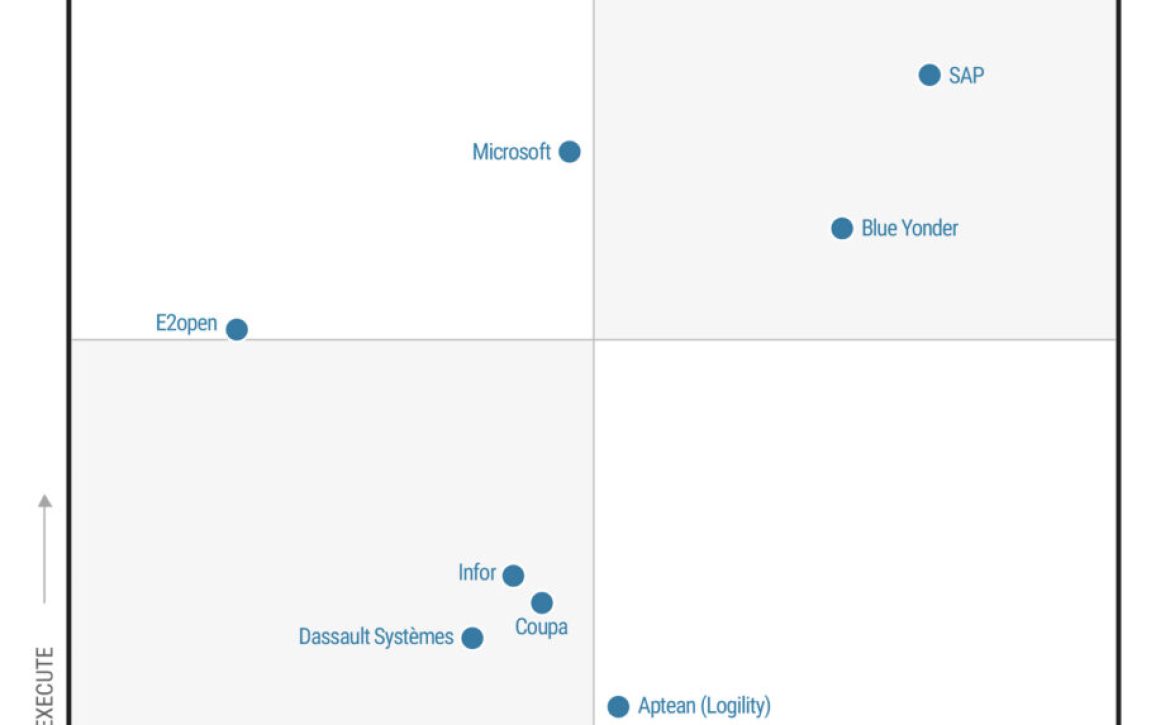
When it comes to this level of intelligent, real-time, connected processes, very few companies can compete. SAP was again recognized as a Leader in the 2025 Gartner® Magic Quadrant™ for Configure, Price, and Quote Application Suites. This marks the eighth consecutive year SAP has been positioned in the Leaders quadrant based on Ability to Execute and Completeness of Vision.

SAP CPQ supports organizations in producing accurate quotes — even in environments with advanced configuration and pricing requirements — helping accelerate sales cycles and improve sales execution across complex selling environments.

Extending CPQ leadership across SAP Customer Experience

In modern enterprises, quoting connects directly to demand generation, pipeline management, contract processes, fulfilment, and service delivery. SAP Customer Experience brings together commerce, customer data, marketing, sales, service, and sales performance management into an integrated portfolio designed to support truly connected customer journeys.

Within this portfolio, SAP CPQ plays a pivotal role in the lead-to-cash journey. When integrated with SAP CX solutions, it helps align pricing strategy, product configuration, customer agreements, and sales performance insights across the revenue lifecycle. The result is a more reliable transition from opportunity to revenue realization.

Connected lead-to-cash experience

For CX leaders, lead-to-cash is a core driver of experience differentiation and revenue execution. A connected lead-to-cash strategy ensures that:

  • Customer intent is translated into accurate configuration and pricing.
  • Sales engagements reflect approved pricing and product standards.
  • Customer agreements are consistently captured and supported across systems.
  • Sales performance and revenue outcomes remain visible and aligned across teams.

Business impact of connected lead-to-cash

Lead-to-cash determines how consistently organizations translate customer engagement into measurable outcomes.

By combining SAP Customer Experience capabilities with a CPQ solution recognized for its ability to execute and completeness of vision, organizations strengthen alignment across sales, pricing, service, performance management, and ERP systems, transforming engagement into measurable outcomes with confidence and precision.

In today’s environment, customer experience and operational precision are closely connected. Strength in one reinforces performance across the other.

You can learn more about how SAP CX connects SAP Sales Cloud, SAP CPQ, SAP Service Cloud, sales performance management solutions, and SAP ERP across the lead-to-cash journey here.


Sindy Conway is senior Product Marketing consultant for SAP Customer Experience.

For news and highlights delivered straight to your inbox each week, subscribe to our newsletter

Meet the Hasso Plattner Founders’ Award Finalists: “Emerging Ideas”

Six teams are competing for the highest employee recognition at SAP: the Hasso Plattner Founders’ Award. Starting this year, the Hasso Plattner Founders’ Award comes with a modified, more focused approach. It now consists of two categories: “Scaling Innovation” and “Emerging Ideas.” Both reflect a different type of breakthrough thinking and the various ways in which innovation drives SAP’s success. This year’s award theme is AI.

Following the presentation of the “Scaling Innovation” category finalists, we now turn to “Emerging Ideas,” which honors visionary concepts at an earlier stage—projects that explore new architectural directions, challenge established models, and open long-term strategic opportunities for SAP and its customers. The winners will be announced during the award ceremony on March 26, 2026.

SAP Cognitive Twin Enterprise (CTE)

Modern enterprises are very effective at monitoring their business and analyzing vast amounts of data, yet many still see untapped potential in safely testing complex scenarios end to end and turning insights into cross‑functional, policy‑aligned options before making mission‑critical decisions. SAP Cognitive Twin Enterprise (SAP CTE) addresses this gap by creating an AI‑powered digital brain built on a continuously updated model of the whole organization. It runs what‑if simulations and provides governed recommendations on SAP applications and data across finance, spend, supply chain, HR, and customer experience, with selective, low‑risk auto‑execution and human‑in‑the‑loop control for higher‑risk steps.

The business case is compelling. Organizations that combine digital twins with agentic AI at scale report double‑digit improvements in efficiency and cost, plus materially faster decision cycles. For a global industrial enterprise with approximately €40 billion in revenue, SAP CTE is modeled to systematically prevent margin leakage, excess working capital, and audit exposure, delivering an estimated €229 million or more per year in hard impact and risk-adjusted cash benefit. By maintaining a continuously updated representation of the business, companies can test scenarios before execution and dramatically reduce the risk of costly mistakes.


“>

Hasso Plattner Founders' Award Finalist: SAP Cognitive Twin Enterprise

SAP CTE’s real differentiator is its enterprise‑wide scope. It consolidates existing SAP capabilities and builds on SAP Signavio solutions, SAP Business Data Cloud, and SAP Knowledge Graph to maintain a shared semantic model of how the whole business runs. This cross‑domain intelligence lets Joule and AI agents optimize complex trade‑offs—such as cost versus service level versus carbon footprint versus operational risk—across all functions, rather than pushing problems from one silo to another. At the same time, SAP CTE provides a safe innovation environment: enterprises can trial new pricing strategies, network configurations, and workforce models in a production‑grade twin before agents execute changes in live systems.

SAP CTE represents a strategic shift in how enterprises operate. It turns SAP’s deep process knowledge, rich transactional data, and mature governance tooling into a differentiated position in a cognitive twin market that analysts expect to accelerate from US$36 billion today to US$150 billion by 2032, with 30%-40% annual growth. As an extensible platform, SAP CTE is designed to be the trusted operational brain for that future: new agents, scenarios, and data products plug into the same enterprise twin, allowing customers to expand autonomy and business impact over time without rebuilding their foundation.

“SAP CTE is more than an initiative: it’s our vision for a new era of connected intelligence. We’re bringing strategy, data, and execution into one continuous system of insight, so customers don’t just react to change—they anticipate what’s next and shape it. That’s how we win and grow together,” said Natalia Aksakova, Strategy & Portfolio at Global Finance and Administration.

Finalist fast facts

Submission Title: SAP Cognitive Twin Enterprise (CTE)
Team: Natalia Aksakova, Silvina Guastavino, Cvetelina Dizova, Dorothee Hofstetter, Ekaterina Pechenina, Janine Weissenfels, Holger Handel, Michael Emerson
Project: It explores an AI-driven cognitive model of the enterprise that connects data, planning, simulation, and AI agents into a governed decision-and-execution loop. It enables organizations to test scenarios, anticipate risks, and act proactively across finance, spend, supply chain, HR, and customer experience domains.
Impact: It positions SAP at the forefront of cognitive enterprise architecture by shifting from reactive systems of record toward predictive, simulation-driven, AI-supported decision-making and execution.

SAP Signavio Transformation Advisor

Organizations planning business transformations face a persistent bottleneck: identifying the right challenges to focus on and creating actionable initiatives is slow, costly, and heavily dependent on expert consultants and detailed knowledge of the organization. This traditional approach delays decision-making and increases risk in fast-changing markets, with analysis often taking weeks or months to complete.

SAP Signavio Transformation Advisor reimagines this workflow by using AI to extract business challenges and create actionable recommendations to solve them in minutes. The solution identifies business challenges in uploaded reports or via text input and instantly generates recommendations linked to process insights and best practices to make them addressable. By combining advanced language models with the SAP Signavio portfolio‘s process knowledge, it enables users to achieve in minutes what previously required weeks of manual effort while keeping users in full control.

Early results demonstrate significant impact. The tool cuts analysis time by up to 80%, enabling faster decision-making and reducing reliance on scarce consulting resources. Since launch, approximately 200 customers have tested the transformation advisor, validating its value across organizations at different maturity levels. The solution has proven valuable both for customer engagements and for internal use in preparing sales pitches.

The innovation lies in bridging strategic business challenges and operational processes in a way no existing tool does. It automatically identifies organizational pain points and links them to targeted process flows, best practices, and improvement opportunities within the SAP Signavio ecosystem. This seamless integration empowers leaders to move from insight to action in just a few clicks, aligning transformation initiatives with company strategy.

The team embraced a proactive and entrepreneurial mindset: it started with a pure technical proof of concept then moved to a prototype for internal demonstrations, general accessibility and testing, and ultimately a releasable feature. The team demonstrated both transparency and customer focus by responding early to pull from go-to-market and sales teams while clearly stating tool limitations at each stage.

“The real fun in developing such a solution lies in seeing your idea and your knowledge grow at the same time and getting a clear pull from the market early on. The best customer sessions were those where the tool was improved live during the interview. That combined is a clear signal that we are on the right track,” said Alex Cramer, product manager at SAP Signavio Next.

Finalist fast facts

Submission Title: SAP Signavio Transformation Advisor
Team: Alexander Cramer, Matthias Wiench, Shehab Shalan, Rolan Badrislamov
Project: It is an AI-powered solution that analyzes business inputs and generates structured, actionable transformation recommendations connected to SAP Signavio Process Insights.
Impact: It significantly reduces transformation analysis time, lowers reliance on manual consulting efforts, and enables organizations to move from strategy to execution faster and more confidently.

AURA (Asset Understanding & Reliability AI)

Field engineers maintaining critical infrastructure face a frustrating reality: reporting asset faults requires completing complex forms on mobile devices, scrolling through endless dropdowns and codes. At Transport for New South Wales (TfNSW), 300 users report 400 to 1,000 asset faults monthly through SAP S/4HANA, but the process is slow, manual, and error prone. A single classification mistake can send the wrong maintenance crew and delay urgent fixes.

AURA (Asset Understanding & Reliability AI) revolutionizes this workflow by combining SAP HANA Cloud vector engine, SAP AI Core, and generative AI into a single intelligent solution. Instead of completing eight or more complex form fields, engineers simply upload a photo of the fault; review an AI-generated report automatically populated with asset type, location, and recommended classification; and confirm submission—all within seconds.

The technology uses embedded text, semantic search, and geospatial data to analyze both images and historical fault reports. AURA cross-references similar cases in the knowledge base, suggests the most accurate fault category, and learns from user corrections over time. SAP Cloud Application Programming Model provides the secure foundation, SAP HANA geospatial content supports asset location intelligence, and AI models process text and images using SAP HANA Cloud vector engine for similarity matching.

Results demonstrate substantial operational impact. AURA delivers 80% faster fault reporting, fewer data entry errors and misclassifications, and improved response times. For TfNSW, this translates to safer infrastructure, reduced operational costs, and a future-ready foundation for predictive maintenance. The customer response validated the approach: TfNSW loved the proof of concept and agreed to proceed with AURA as an official project.

Beyond defect detection, AURA lays the groundwork for scalable AI asset intelligence. Future phases include building a knowledge graph to link asset relationships, a data product integrated into SAP Business Data Cloud for advanced reporting, and a self-learning model that continuously improves accuracy. This creates a repeatable, cost-efficient framework adaptable across industries.

The solution embeds responsible AI principles from inception. The model uses TfNSW-specific historical data to prevent bias, includes human review before submission, and explicitly handles uncertainty to avoid hallucinations. It ensures transparency and compliance with SAP’s responsible AI framework while empowering human decision-makers.

“We believe the future of AI is not replacing people, but elevating them,” said Ruth Peng, AI specialist from SAP HANA ANZ. “AURA equips every engineer in the field, from junior to expert, with the confidence to perform at their best.”

Finalist fast facts

Submission Title: AURA (Asset Understanding & Reliability AI)
Team: Ruth Peng, Shuba Dutta, Shonali Kellogg
Project: It uses AI-driven image recognition and enterprise integration to automate fault reporting in SAP S/4HANA. Engineers can upload photos of faulty assets and the system generates structured reports automatically.
Impact: It reduces reporting time by up to 80%, lowers classification errors, and improves operational efficiency in asset-intensive environments.


Sign up to receive weekly news highlights from the SAP News Center

Previous Next
Close
Test Caption
Test Description goes like this