Oliva Cigar: Crafting a Digital Legacy for the Next Century

For over a century, the Oliva Cigar Company has been a story of resilience, family, and an unwavering commitment to quality. Beginning with Melanio Oliva growing tobacco in Cuba in 1886, the family’s journey led them to Nicaragua, where they masterfully transformed their deep farming expertise into a world-renowned cigar brand. Today, Oliva remains a family-owned, fully vertically integrated enterprise, proudly controlling every step from seed to sale with a hands-on philosophy that has cemented its reputation for award-winning excellence.

But in a world of rapid change, even a legacy built on tradition must look to the future. To scale for its next chapter, Oliva embarked on a significant digital transformation, moving to the intelligent core of SAP S/4HANA Cloud Public Edition.

Scale without limits with modular ERP and built-in AI

A legacy outgrows its digital roots

For over a decade, SAP had been Oliva’s digital backbone, but the business has evolved dramatically. What was once a single-entity operation has blossomed into a complex, global enterprise with legal entities across the United States, Nicaragua, and Honduras, each with its own currency, tax laws, and compliance rules.

“The structural truth today is that Oliva Group isn’t one company anymore,” explained Eduard Bouten, COO, Oliva Group. “Our legacy system was built for smaller, simpler operations. It was a good fit a decade ago, but it was holding us back.”

Recognizing an inflection point, the team saw an opportunity. “We wanted to do better, to sell more, to be more efficient, and to use modern tools to help us out,” Bouten noted. The primary goal was clear: transform its data from a simple record into a decisive strategic asset.

A modern foundation for a legacy brand

Oliva’s search for a new ERP was guided by the need for a system that could master its multi-company complexity while providing a foundation for future growth. It chose SAP S/4HANA Cloud Public Edition because it offered a unified, intelligent platform managed entirely by SAP.

“SAP manages the infrastructure, the security, the upgrades,” Bouten said. “This allows our team to focus on our core passion, making exceptional cigars, not running servers.”

By adopting the system’s pre-configured best practices, Oliva is transforming its operations. It can now achieve real-time financial consolidation, slashing a three-week reporting lag to provide an instant, unified view across all entities. The new platform bridges the information gap between leadership in Miami and operations on the ground, delivering end-to-end supply chain visibility from raw tobacco to finished goods. This creates a single source of truth to power analytics and drive growth.

Building a partnership on trust

A project of this magnitude required a partner who could do more than just implement software. For Oliva, the choice of LeverX came down to one crucial element: trust.

“In these major projects, there’s always an imbalance of knowledge,” Bouten shared. “You need a partner who listens, understands your way of working, and can bridge what you need with the realities of the system.”

LeverX invested eight months in understanding Oliva’s unique business, earning that trust long before a contract was signed. “We believe LeverX is in our corner so we can be successful,” Bouten affirmed.

This commitment was echoed by the LeverX team. “Oliva’s story is one of heritage meeting ambition,” said Ken Garcia, senior client partner at LeverX. “Our goal was to be the partner they could trust to build a digital foundation that respects their legacy while fueling their future. With SAP, we’re providing them with the real-time insights and scalability to grow for generations to come.”

A foundation for innovation

With a solid, clean, and connected data foundation now in place, the conversation at Oliva is already turning to future innovations like business AI. But it’s taking a pragmatic approach, ensuring all stakeholders are confident in the new system first.

“Look at it like a pyramid,” Bouten concluded. “The bigger the base, the higher you can go. SAP is that base, which will allow us to peak higher.”

By establishing this trusted, unified system, Oliva is setting the groundwork for truly transformative technologies. It’s a testament to a company that understands lasting success—like a perfectly aged cigar—is built layer by layer, with patience, expertise, and an unwavering commitment to quality.

Sign up to receive weekly news highlights from the SAP News Center

Interview with Manish Prasad: “Touch Any Growth Lever in India and You’ll Find SAP There”

Few markets are evolving as rapidly as India right now. Manish Prasad, president and managing director of SAP Indian Subcontinent, oversees a market where 60% of the GDP already touches an SAP system. At the same time, AI investment is accelerating, manufacturing is moving up the national agenda, and India is turning out tech talent at scale.

About Manish Prasad

With more than two decades in technology and business, Manish Prasad leads SAP across India, Bangladesh, and Sri Lanka. He works closely with some of the region’s leading businesses, helping them navigate changing markets and make the most of new technology. 

A seasoned global leader, Prasad has worked across North America, the Middle East, Asia, and Australia, with experience spanning industries from metals and mining to automotive. Before SAP, he held senior roles at Wipro, Accenture, Dell, and Tata Steel. 

What makes India so strategically important for SAP right now?

Prasad: I would look at it through four pillars. The first is the macro economy. India is one of the fastest-growing major markets, with GDP growth in the 6.5% to 7% range and an economy of about US$4.15 trillion today. The aspiration is to reach somewhere between $6 trillion and $7 trillion by the end of this decade.

Agriculture, pharma, and services have traditionally been the main drivers. Now manufacturing is being added in a big way through the government initiative “Make in India.” As the country pivots toward manufacturing, SAP can become the nerve wire in that growth story.

How India drives SAP’s AI future

The second pillar is SAP. We are blessed to have a brand that resonates across the country. Touch any growth lever in this economy, and you’ll find an SAP element there—from national critical infrastructure to the large conglomerates driving growth. We have close to 14,000 customers today, but in the corporate segment alone, we see an addressable market of around 100,000 customers.

The third pillar is talent. India graduates 2.55 million STEM students every year, and about 16% of global AI talent comes from India. Customers across the globe understand that India will remain an extremely important supplier of talent.

And the fourth pillar is government: the push to improve governance, ease of doing business, policy, infrastructure, and logistics costs. Bring all those pieces together, and that is where India becomes unique.

So, India’s growth and SAP’s growth are increasingly connected?

Absolutely. About 60% of India’s GDP touches an SAP system in some form, which is why I say India’s growth story is mirroring SAP’s growth story. The momentum is also coming from the Indian consumer. The buying power of the average Indian is increasing rapidly, and about 70%–75% of what India produces is consumed in the country. When you have to serve 1.4 billion people, the economy keeps driving itself.

Who are SAP’s customers in India, and what do they need most now? 

SAP’s customer base in India spans large enterprises, the fast-growing corporate sector, and government. In the enterprise segment, that means working with some of the country’s best-known business groups, including Tata Group, Reliance Industries, and Adani Group. 

Government customers are focused on sovereignty: they want the benefits of SAP platforms, but they also want data and critical processes kept locally, especially in the context of AI.  

Enterprise customers, meanwhile, are past the proof-of-concept stage. They understand the value of AI; now they do not want to stop at a few pilots or hackathons. They want us to look at their processes end to end and show how the Autonomous Enterprise can improve their KPIs. Either way, the ask is the same: show us the value, and show us fast. 

What role does SAP India play in SAP’s global AI ambitions? 

First, we have extraordinary scale here. Whatever you touch in India involves millions, sometimes billions, of records. If an AI use case can move from proof of concept to full-scale deployment here, it proves the model is resilient and can be replicated globally. 

Second, we have the talent and partner ecosystem to adapt these technologies quickly and cost-effectively for real customer needs. We have seen this with SAP GROW: it has worked well in India because our people and partners can build the right extensions, make the product relevant for customers, and do it at an optimum price point. The same logic is now applying to AI. 

And third, our market shows how AI and human talent can grow together. This is not a story about AI replacing people. It is a story about AI complementing talent to create the next level of efficiency and growth. 

What makes India’s talent base distinctive? 

There is an absolutely positive mindset. India is a middle-class and lower-middle-class country. Many young people come into employment after growing up with constraints. When they get an opportunity, they do not want to miss it. That creates a competitive mindset and a hunger to do better—for their organizations, their families, and themselves. 

What SAP provides is the platform: a strong brand, fantastic products, clear leadership, and a market that is expanding in a big way. When those pieces come together, they create real excitement and enthusiasm within our talent. 

What are your biggest challenges? 

One challenge is that the ambition often starts at the top. Boards want to move fast on transformation, cloud, AI, and the Autonomous Enterprise, but in large Indian organizations, getting that vision through the system can take time. For SAP, the challenge is to reach the right executive level early and help turn that intent into something the business can actually implement. 

Then there is the question of reach. India is a huge market, and SAP can only do so much directly. To reach tier-two, tier-three, and tier-four cities, we need partners who understand the industry, the technology, and the customer conversation and who can move with velocity. 

Data sovereignty has also become a much bigger part of the conversation, especially with AI. Customers want to understand how local we are, how data is governed, and how business continuity is protected. That can slow the pace at which we want to move, but it is understandable. Events from the Russia war to the West Asia crisis to tariffs have made organizations think much more deeply about resilience as they adopt new technology. 

What do you want SAP India to be known for in three or four years? 

I would like SAP India to be seen as a market that contributes meaningfully to SAP’s growth. The ambition is for India to contribute 6%–8% of SAP’s growth. We may not be as large as the U.S. or parts of Europe in the near future, but we can become a significant growth engine in our own right. 

Just as important, India should create references that matter beyond India. When SAP brings major offerings such as the Autonomous Enterprise, SAP GROW, SAP Business Technology Platform, SAP Business Data Cloud, or SAP Business AI to market, we should be able to point to strong customer examples here that other markets can use, learn from, and replicate. We have already seen that with SAP GROW, including customers deploying in 50 days. Because the scale here is so large, a reference from India can become a proof point for SAP globally. 

What is the best part of your job right now? 

Representing SAP—and I really mean that. What gets me into the office every day is knowing that while we are helping our customers, those customers are helping move the needle for the nation. SAP is an underlying platform for that growth, and that gives me a real sense of pride, joy, and gratitude. The SAP team in India is making that happen every day, and that is what motivates me personally. 


Get the latest SAP news delivered to your inbox once a week

Is AI Making Leadership More Human? | AI Voices, Episode 6

Is AI making leadership more human? Discover why empathy, trust, and a growth mindset are becoming essential leadership skills in the age of AI.

In Episode 6 of AI Voices, host Jesper Schleimann, Head of Business AI at SAP EMEA, sits down with Sofia Tenreiro, CEO of Siemens Portugal, to explore how artificial intelligence is transforming leadership, business operations, and the way people work. As AI adoption accelerates, what does it take to lead teams through change while keeping people at the center?

Drawing on Siemens’ experience with industrial AI, Sofia explains how AI is moving beyond personal productivity to create real-world business value. From industrial automation and digital transformation to sustainability, the conversation explores why trusted data, reliability, and security matter when AI connects with the physical world. Sofia also shares how Siemens and Heineken used digital twin technology and AI to support a major sustainability project.

But successful AI transformation isn’t just about technology. It’s about people. Jesper and Sofia discuss why leaders must build trust, address employees’ concerns, and embrace a growth mindset to become “comfortable with the uncomfortable.” They explore how leading by example, encouraging collaboration, and investing in continuous learning can help organizations navigate rapid technological change.

Key takeaways from this episode include:

• Why AI is making human-centered leadership more important than ever
• How industrial AI differs from consumer AI and creates business value
• Why empathy, trust, and continuous learning are essential for AI adoption
• How leaders can model new behaviors and turn uncertainty into opportunity
• Why the “jagged edge of AI adoption” calls for personalized employee training rather than a one-size-fits-all approach
• How partnerships and cross-functional collaboration can accelerate innovation

Whether you’re a business executive, technology leader, or responsible for organizational transformation, this conversation offers practical perspectives on developing people, building confidence in AI, and leading with purpose.

Chapters
00:00 – Why People Are at the Center of AI
00:26 – Meet Sofia Tenreiro, CEO of Siemens Portugal
01:24 – Siemens’ AI Journey and Industrial Innovation
04:25 – Industrial AI vs. Consumer AI
07:40 – The Future of AI and Business Transformation
13:42 – AI, Digital Twins, and Sustainability
16:49 – Why AI Leadership Must Become More Human
19:32 – Building a Growth Mindset and Embracing Change
20:35 – Collaboration and Partnerships in the AI Era
22:14 – Why Leaders Must Lead by Example
23:43 – Continuous Learning and Personalized AI Adoption
26:09 – Final Thoughts on Leadership and AI

Explore how SAP Business AI helps organizations connect AI with real business context and processes: https://sap.to/6059BHTlD7

Follow us on social:
LinkedIn: https://sap.to/6050BHTlDC
Instagram: https://sap.to/6051BHTlDh
Facebook: https://sap.to/6052BHTlE6
Threads: https://sap.to/6053BHTlEB

About SAP:
As a global leader in enterprise applications and business AI, SAP stands at the nexus of business and technology. For over 50 years, organizations have trusted SAP to bring out their best by uniting business-critical operations spanning finance, procurement, HR, supply chain, and customer experience. For more information, visit: https://sap.to/6055BHTlED

#SAP #BusinessAI #AILeadership

How Joule Work and SAP Business AI Platform Are Powering the Next Generation of Business AI 

The stability and reliability of half the world’s electrical grid partly depend on equipment built and maintained by one company.

SAP Connect in 2026: Advancing the Autonomous Enterprise

Reinhausen has been innovating for over 100 years, and its spirit of invention continues as demand for its products grows at a stunning 20% a year.

The company also innovates with AI. They use it within their products to create customer value and to automate manual processes for employees. And they are adding more automation to help them meet growing demand amid skilled labor shortages. Reinhausen’s expertise in AI innovation is among the reasons the company joined SAP’s early adopter program for Joule Work.

“The Joule Work desktop early adopter program has delivered more momentum in just a few months than we saw in all the years before,” said Peter Wied, director of Complexity Management at Reinhausen. “What once required up to an hour of manual effort across our SAP S/4HANA environment is now accessible in seconds through natural language, fundamentally changing how our teams interact with business data.”

AI that answers complex business questions while running agent-driven workflows at scale

Soon, all SAP customers will enjoy the benefits of Joule Work when it rolls out later this month. We built it because the promise of AI goes far beyond text generation and fact-finding. It can help people make better decisions, informed by their data, and get answers to complex questions. SAP Business AI Platform ensures those answers are all grounded in the context of how a specific business runs.

These are advantages companies can only get from SAP because SAP Business AI Platform encodes decades of process and industry knowledge right into our applications, knowledge graph, and Joule Work. The platform also combines best-in-class third-party models with SAP’s own foundation models for ABAP code generation and predictions on structured data, alongside SAP’s proprietary domain models, which are pre-trained on SAP’s code, data models, and business processes.

This means every AI interaction can draw on the model best suited for the task—whether that’s generating clean code, predicting a business outcome, or answering a process question—with the accuracy and cost-efficiency that business-critical work demands. And through SAP Business Data Cloud, Joule Work accesses all the data it needs from a single unified source that breaks down silos and unifies data across SAP and non-SAP sources.

Now, SAP Reltio is generally available in SAP Business Data Cloud. It helps organizations eliminate fragmented records with a single trusted view of customers, suppliers, products, and employees across SAP and non-SAP systems.

But we know sharper decisions and reliable business answers are only part of the equation. Organizations need AI to take action and coordinate work across all their business processes. Earlier this year, Deloitte surveyed more than 500 leaders and found 74% said they would redesign or rebuild almost half of their business processes around AI agents.

Through the SAP Autonomous Suite, SAP provides a library of reliable, ready-to-use Joule Agents across every business function, so companies can hit the ground running. And Joule Work brings the most powerful business AI orchestration engine in the industry to run those agentic workflows at scale.

Build and connect anything

Joule Work and the SAP Business AI Platform provide an out-of-the-box competitive advantage for the AI era, but every company has its own unique advantages that should be strategically extended. This is why Joule Work’s Develop capability provides access to Joule Studio, soon to be generally available.

In Joule Studio, customers can customize and build Joule Agents with tools that embed process context and semantically rich data. They can also connect third-party systems with open standards because Joule Studio leverages over 11,800 pre-built business accelerators. Joule Studio is more than five times faster than do-it-yourself options, according to benchmarking done by Constellation Research.

With Joule Studio, anyone can describe what they want to build in natural language, while developers can use pro-code tools all in the same environment. New agents are deployed directly into Joule Work and inherit SAP security and governance.

Warehouse automation company KNAPP used Joule Studio to build an assistant that helps workers identify and solve problems without waiting for an expert. Issue resolution times have dropped by about 90%, while documentation and training times fell by about 80%.

In our industry, AI is not the future anymore; it is already happening. And that is exactly what our AI delivery pilot demonstrates every day. Our partnership with SAP makes complexity simple. When a problem appears on the warehouse floor, SAP Business AI Platform helps us solve it in seconds.

Florian Aufegger, Senior SAP EWM Solution Consultant, KNAPP AG

As organizations build and deploy more agents, governance also has to evolve from compliance checkpoints to an integral part of the entire agent life cycle. Trust remains the biggest barrier to AI adoption for 71% of technology buyers, according to BCG. This is why SAP AI Agent Hub, now generally available, helps organizations govern every agent, LLM, and MCP server across SAP and non-SAP environments. New capabilities, including SAP Signavio Agent Mining, measure the outcomes every agent delivers and identify opportunities to further optimize those outcomes.

Start scaling AI, and your business outcomes, today

BCG’s latest research found that the companies farthest ahead scaling AI deliver 2.4 times the revenue growth and 2.8 times the EBITDA growth of those falling behind.

Our customers, Reinhausen and KNAPP, show what that looks like up close: an hour of manual work reduced to seconds, and problems on the warehouse floor solved without waiting for an expert. Our goal is to make results like these repeatable for every SAP customer.

If you want to see more, the new SAP Connect virtual sessions are now live, and SAP TechEd starts October 27, in person and online. You can also request a demo of Joule Work and SAP Business AI Platform.


Brenda Bown is chief marketing officer for SAP Business AI Platform and Joule.

SAP Connect: Read the latest news, stories, and coverage from the event

Coming Soon: A Smarter, More Transparent Feedback Experience

At SAP, customer feedback has always been part of how we build our software. Our first products were developed in close collaboration with customers, and that same principle is still true today: we need to listen, understand the context, and turn feedback into product improvements that create real value.

The challenge is not whether we receive enough feedback—we receive a lot of it. The real challenge is making sure feedback reaches the right teams, with the right context, so it can create impact and customers can see where it goes.

What’s changing

On October 6, 2026, we are launching an enhanced Customer Influence experience, making feedback easier to submit, easier to follow from submission to resolution, and easier for SAP teams to act on. We’re also improving our feedback ecosystem by connecting customer feedback, usage insights, research, and market signals, so we can make better-informed decisions across SAP products.

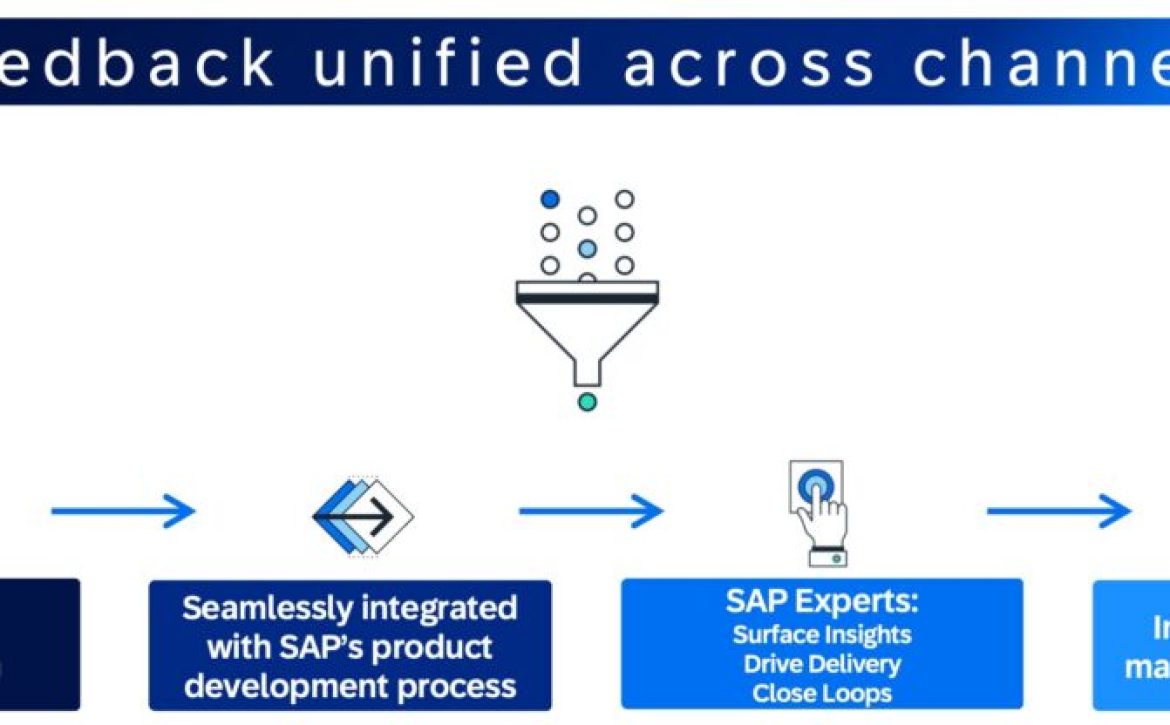
From feedback to innovation in the SAP feedback ecosystem 

Simpler access to customer influence

Soon, it will be easier than ever to dive into influencing SAP products via Customer Influence. S-users will find the feedback tool in the SAP for Me portal they already know, while P-users will enjoy direct access to the feedback system via an updated influence.sap.com.

A more intuitive experience

More intuitive navigation helps remove friction from the process while clear visibility into outcomes shows how your input drives innovation.

Real-time view of request status and voting 

How it works

Advances in AI, automation, and real-time data processing create an opportunity to work with feedback differently than in the past. Now we can identify patterns and route feedback to the right teams faster and at a much greater scale. Individual signals become collective insight that drives more meaningful, relevant improvements grounded in real-world feedback. That means our experts can spend less time processing information and more time acting on it and delivering outcomes that matter to your business.

Meanwhile, consistent, company-wide guidelines bring a standardized approach to handling, responding to, and acting on feedback across SAP’s portfolio, tools, processes, and teams.

While AI helps us meet customer needs more efficiently, people remain accountable for understanding the context, making prioritization decisions, and deciding what we build. That is important because feedback is not only data. It reflects human experiences behind real business challenges, and it takes human judgment to turn those signals into outcomes that genuinely matter.

What changes for you

These enhancements are about clear value—not replacing what works. All five Customer Influence services you know today continue within the improved feedback experience. For example, in SAP Continuous Influence, you can find your existing improvement requests in the new experience and use any existing bookmark links you have.

Here’s what you can expect:

  • Effortless feedback experience: simplified navigation, a more intuitive journey, and direct feedback service access for SAP for Me users
  • Clearer line of sight: transparency from submission to resolution, with progress tracking at every step and consistent updates
  • More influence: greater visibility into how your feedback shapes the SAP road map and contributes to product improvements
  • The right products: unified feedback, market analysis, and user research helping SAP deliver more of what matters most

The conversation continues

The momentum doesn’t stop here. We’re also exploring agentic assistance that helps customers structure feedback, suggests clearer wording, and guides them toward the most impactful way to share what they’re experiencing—making the act of sharing feedback feel less like a task and more like a conversation.

As the relaunch of Customer Influence approaches, look for more information about the release on influence.sap.com, including access and enablement resources.

In the meantime, you can explore current Customer Influence services and continue submitting your feedback at influence.sap.com.

This is a next step, not a final one—we are still building, and the feedback you continue to share will help us get this right.


Florian Heretsch is SVP and global head of SAP Product Experience.

Sign up to receive weekly news highlights from the SAP News Center

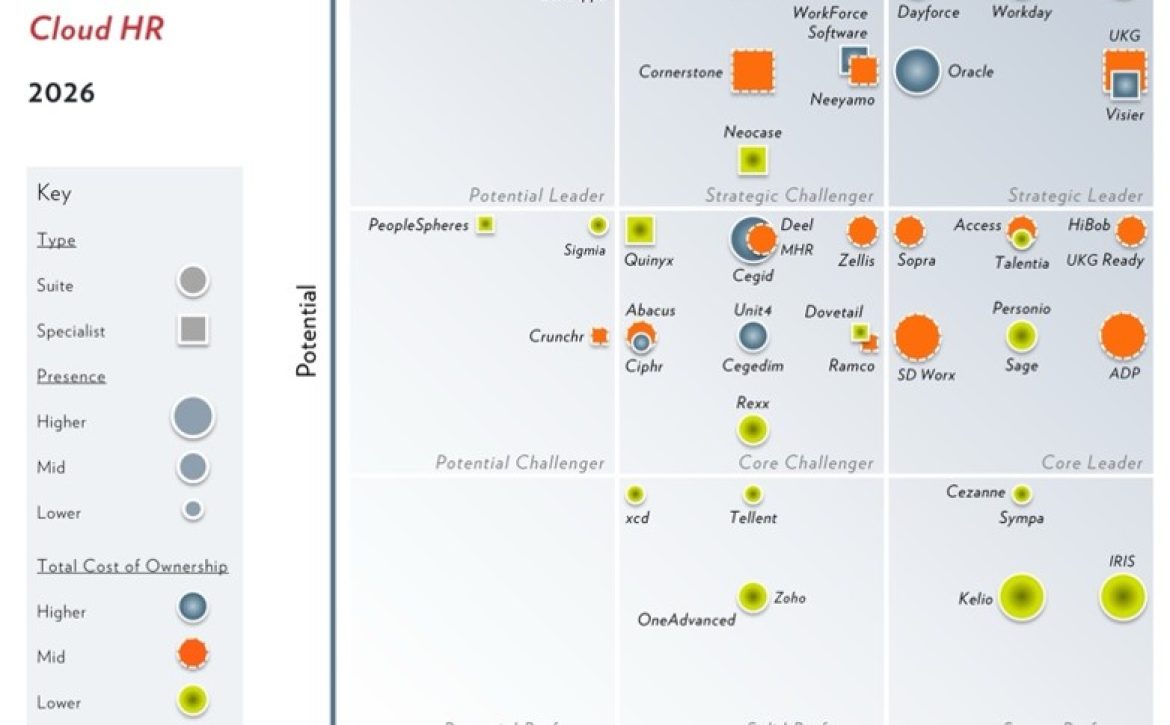
SAP Named a Strategic Leader in the 2026 Fosway 9-Grid™ for Cloud HR

SAP has once again been named a Strategic Leader in the 2026 Fosway 9-Grid™ for Cloud HR, reinforcing our position as a trusted partner for organizations navigating workforce transformation. We have continued to invest in our portfolio to deliver the HCM platform that organizations need to succeed in the future, bringing together trusted AI, reliable data, and critical HCM processes across the entire employee lifecycle. Our placement as a Strategic Leader reinforces our momentum and the value our customers see from our solutions.

As AI reshapes the way organizations attract, develop, and support talent, leaders need more than systems of record. They need intelligent solutions that help them understand what’s happening across their workforce, anticipate what’s next, and take action with confidence.

We believe this recognition reflects SAP’s continued investment in AI-powered innovation across SAP SuccessFactors solutions and our commitment to helping organizations build a more connected, intelligent, and proactive approach to workforce management.

“AI is rapidly expanding what HCM platforms can do, but buyers need providers that combine innovation with real operational depth and consistent execution,” said David Wilson, CEO and founder of Fosway Group. “SAP SuccessFactors has accelerated its rollout of AI features across HCM and expanded its integration with AI agents, offering more options to HR leaders. It is a Strategic Leader in the 2026 Fosway 9-Grid™ for Cloud HR, and SAP’s Excelling Trajectory in 2026 reflects its increased market performance and customer advocacy as well as continued innovation in both AI and core capabilities.”

Building the foundation for Autonomous HCM

This recognition comes at a pivotal moment for HR.

As AI continues to reshape work, organizations are moving beyond questions of efficiency and automation and focusing on a broader challenge: how to build more agile, adaptable, and resilient workforces.

At Success Connect, discover how SAP SuccessFactors unlocks the power of Autonomous HCM

The next era of HCM will be defined not by automating processes, but also by helping organizations make better decisions. That’s why we introduced our vision for Autonomous HCM earlier this year at SAP Sapphire.

As part of SAP’s broader vision for the Autonomous Enterprise, Autonomous HCM brings together trusted workforce and business data, embedded AI, and HR processes to help organizations connect workforce decisions more closely to business outcomes.

As skills requirements evolve and business priorities shift, leaders need more than workforce data. They need the ability to understand implications, evaluate options, and act quickly.

At its core, Autonomous HCM is about closing the gap between knowing and doing. By bringing together workforce data, business context, and AI, organizations can move from understanding workforce challenges to taking action on them.

Traditionally, organizations have relied on reports, dashboards, and manual processes to identify workforce issues and determine next steps. While these tools provide valuable insights, they often leave leaders to interpret information and coordinate actions across disconnected systems and processes.

Autonomous HCM envisions a different approach. By combining AI, workforce intelligence, and business context, organizations can surface recommendations, automate routine work, and help employees, managers, and HR teams take action directly within the flow of work.

Whether identifying emerging skills gaps, recommending learning opportunities, supporting hiring decisions, streamlining employee support, or helping managers respond to workforce trends, AI can help organizations move more quickly from insight to action and achieve better outcomes.

Turning AI into action

Over the past year, SAP has continued to invest in innovations that help organizations connect workforce insights with better decisions and outcomes, including:

Next month at Success Connect at SAP Connect, we’ll share new innovations and customer stories that demonstrate how organizations are using our solutions to adapt more quickly to change, create more agile workforces, and move toward the vision of Autonomous HCM.

Delivering meaningful outcomes

The journey toward Autonomous HCM is already underway for many organizations.

PostNL is using SAP SuccessFactors solutions and Joule to transform payroll and employee support experiences. By implementing AI capabilities, such as Explain Pay, the company has reduced payroll processing time by 90%, from five days to four hours, and expects to reduce payroll support costs by 80% while delivering faster, more personalized assistance to employees.

Frit Ravich is embracing AI as part of its broader workforce transformation strategy. Through SAP SuccessFactors solutions and Joule, the company is using AI to support talent acquisition, skills development, and employee growth while creating a more personalized and accessible employee experience. The company is also advancing its journey toward becoming a skills-based organization, using AI to help connect people with learning and development opportunities.

These examples highlight how organizations are using AI not just to automate work, but to improve decision-making, enhance employee experiences, and create measurable business value. They also demonstrate how the journey toward Autonomous HCM is already taking shape across organizations today.

Looking ahead

AI is creating new opportunities for organizations to rethink how work gets done and how people can thrive.

Our focus remains on helping organizations connect workforce insight with action through trusted data, embedded AI, and end-to-end HR processes. By bringing together workforce and business data in a unified foundation, SAP SuccessFactors solutions help organizations build toward Autonomous HCM and create better outcomes for employees and the business.

We are grateful to our customers whose trust, partnership, and innovation make recognitions like this possible.

Learn more about SAP’s position in the Fosway 9-Grid™ for Cloud HR and how SAP SuccessFactors solutions are helping organizations build the foundation for Autonomous HCM and the future of work. 


Subscribe to the SAP News Center for the latest SAP news each week

About the Fosway 9-Grid™
Fosway Group is Europe’s #1 HR industry analyst. The Fosway 9-Grid™ is a five-dimensional market analysis model that helps organisations compare solutions based on Performance, Potential, Market Presence, Total Cost of Ownership and Trajectory.
The Fosway 9-Grid™ for Cloud HR provides a unique assessment of the principal Cloud HR options available to organizations in EMEA. The analysis is based on extensive independent research and insights from Fosway’s Corporate Research Network of over 250 organizations, including BP, HSBC, PwC, Sanofi, Shell, and Vodafone.
Visit the Fosway website at www.fosway.com.

F1 Trivia with Mika Häkkinen and David Coulthard 🏎️

Formula 1 legends Mika Häkkinen and David Coulthard went head-to-head on F1 trivia!

From World Championship records to pit stop times, they proved that decades in motorsport don’t always help you remember the year Nico Rosberg won his title. 😉

#F1 #Formula1

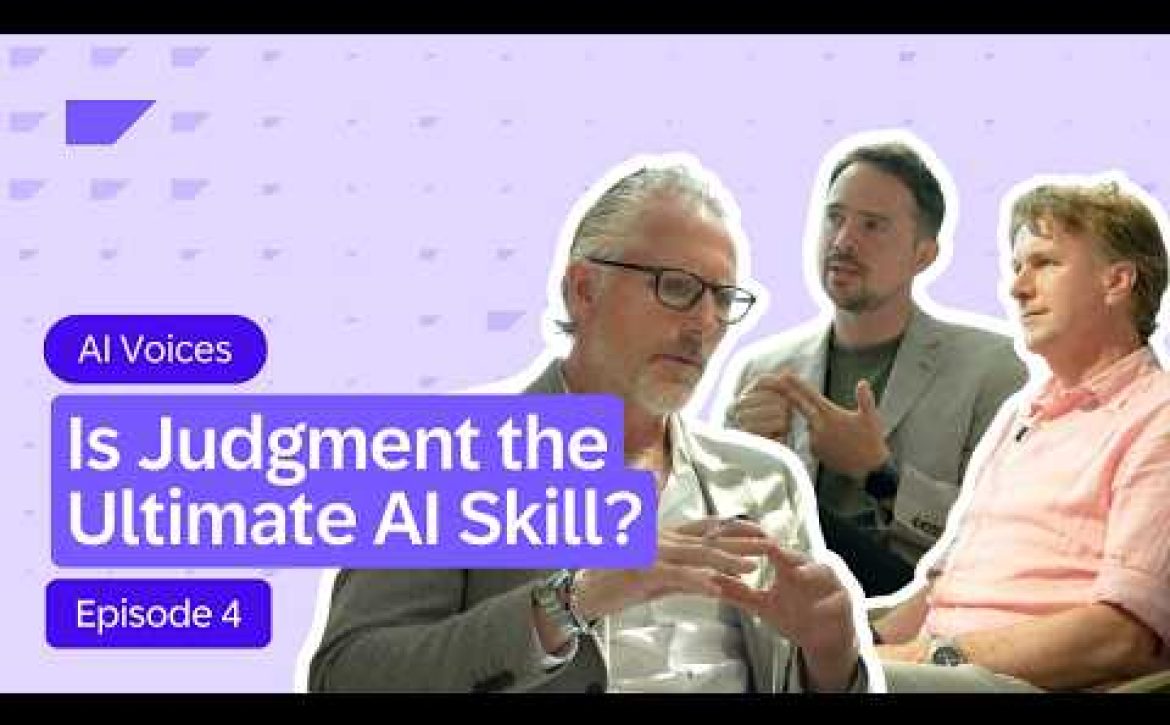
Is Judgment the Ultimate AI Skill? | AI Voices, Episode 4

AI adoption is moving from experimentation to enterprise impact. But what does it take to scale AI responsibly?

In this episode of AI Voices, host Jesper Schleimann, SAP’s Head of Business AI for EMEA, speaks with Ignacio Bonetto, Manager of Emerging Technologies at @DamenShipyardsYT, and Ronald Schippers, Managing Director of VNSG, the Dutch SAP User Group.

Together, they explore how organizations are moving beyond AI buzzwords and pilots toward real business value. The conversation looks at the shift from bottom-up experimentation to top-down strategic intent, the importance of change management, and why leaders must help teams build the confidence, literacy, and judgment needed to work effectively with AI.

You’ll hear first-hand perspectives on how AI is changing knowledge work in industries like shipbuilding, why access to information is no longer the main challenge, and how “decision compression” can help organizations accelerate processes and rethink business models. The discussion also explores the human side of AI: accountability, leadership, workforce readiness, and the growing need for professionals who can evaluate what is valuable, right, and wrong.

For business and technology leaders, this episode offers a grounded look at what it means to scale AI with purpose, governance, and human judgment at the center.

Explore SAP Business AI:
https://sap.to/6052B1P4EA

Chapters
00:00 – Decision compression and human accountability
00:23 – Welcome to AI Voices
00:53 – How AI adoption has changed
03:14 – AI across the Dutch SAP user community
05:04 – From shipbuilder to maritime solution provider
07:12 – Decision compression and business model change
09:37 – Preparing for the future of AI
10:51 – Cautious optimism around autonomous enterprise
13:17 – AI, context, and complex knowledge work
15:17 – Experts on demand and intent-driven work
16:42 – Leadership, intent, and accountability
19:12 – Moving from experimentation to strategic value
20:08 – Final advice: start now
21:09 – Closing thoughts

Follow us on social:
LinkedIn: https://sap.to/6053B1P4E7
Instagram: https://sap.to/6054B1P4EC
Facebook: https://sap.to/6057B1P41B
Threads: https://sap.to/6058B1P418

About SAP:
As a global leader in enterprise applications and business AI, SAP stands at the nexus of business and technology. For over 50 years, organizations have trusted SAP to bring out their best by uniting business-critical operations spanning finance, procurement, HR, supply chain, and customer experience. For more information, visit: https://sap.to/6050B1P41E

#SAPBusinessAI #EnterpriseAI #AILeadership

George Russell on Perfectionism, Mindset, And The Car He Didn’t Fit In | Significant Figures

@MercedesAMGF1 driver George Russell has spent his career being handed moments before anyone expected him to be ready.

A front-row start in a car that usually starts towards the back of the grid. A phone call on a Tuesday that put him in a Mercedes by the weekend. Grand Prix wins and a seat alongside the driver whose autograph he queued for as a nine-year-old. He will still tell you he has completed nothing yet. So what keeps a driver climbing when he is already near the top?

In the second episode of Significant Figures, George sits down with Jason Bell and Ariana Bravo to revisit the moments behind the numbers that have shaped his life so far.

There is 63, the racing number that was never really his. The 0.026 seconds that stood between him and pole position at his first race for Mercedes, in a car he could not physically fit inside. The 1.5 kilograms that took a Grand Prix victory away from him at Spa. The 0.04 that measures how closely he ran Lewis Hamilton across a full season.

And then his “Bring It” Number: the number George brings to the table himself, a single lap in the wet that he calls the greatest performance of his career. Because the numbers are only the beginning. The real story is what happened in the moments behind them.

Significant Figures is a new series about the people behind the public achievements – the pressure, relationships, turning points, and beliefs that shape their lives and careers.

🔔 Subscribe to watch Episode 3 and follow the series as more Significant Figures reveal the stories behind their numbers.

CHAPTERS:
00:00 – What’s To Come
01:08 – 63 – The Family Number
16:08 – 0.026 – The Mercedes Debut
28:05 – 1.5kg – The Win Taken Back
39:13 – 0.04 – Head To Head With Hamilton
49:19 – The Bring It Number
57:28 – Debrief

Follow us on social:
LinkedIn: https://sap.to/6052B1Ea0q
Instagram: https://sap.to/6053B1Ea0S
Facebook: https://sap.to/6054B1Ea0s
Threads: https://sap.to/6055B1Ea0t

About SAP:
As a global leader in enterprise applications and business AI, SAP stands at the nexus of business and technology. For over 50 years, organizations have trusted SAP to bring out their best by uniting business-critical operations spanning finance, procurement, HR, supply chain, and customer experience. For more information, visit: https://sap.to/6056B1Ea0Q

Why Product Development Needs a Digital Thread 🤝

Disconnected engineering, PLM, and ERP systems can slow product development and limit AI readiness.

In this SAP Partner Short, Stefan from CIDEON explains why integrating engineering data, product structures, PLM, and SAP ERP is becoming a strategic priority for discrete manufacturers, not just an IT challenge.

Hear how a connected digital thread can help improve transparency across the product lifecycle, from initial customer requirements to service. Stefan also shares how CIDEON connects engineering systems with SAP Cloud ERP, SAP S/4HANA Private Cloud, CAD integrations, and third-party PLM solutions to help data flow without interruption.

For manufacturers, this connection can support faster time to market, greater scalability, stronger KPI performance, and a more trustworthy data foundation for AI.

Learn more. 👉 https://url.sap/26q672

#SAP #DigitalThread #ManufacturingAI

Previous Next
Close
Test Caption
Test Description goes like this