Carbon fiber style background 3D illustration

A Symphony of Partnership to Ring in the Era of the Autonomous Enterprise

SAP partners attending Partner Summit at SAP Sapphire in Orlando got a sneak peek into a moment in history: the launch of the Autonomous Enterprise.

SAP Sapphire in 2026: Advancing the Autonomous Enterprise

During our event keynote, I took time to preview this exciting new venture, which was formally announced at SAP Sapphire, alongside our CEO and chairman of the Executive Board, Christian Klein.

We explored how the Autonomous Enterprise is SAP’s new north star and vision. It’s the future of business where AI transforms how people work and processes run.

Building on the Suite-as-a-Service foundation established last year at SAP Sapphire, SAP is reinventing itself for AI-native operations that move customers from point-solution AI to enterprise-wide autonomous operations.

With this launch, we’re also re-framing some of the misconceptions and hesitations that we know our customers have about AI.

AI isn’t technology for technology’s sake; it’s about driving outcomes, like real-time intelligence, automated end-to-end workflows, and continuous improvement—all important aspects that AI can deliver.

SAP partners are SAP’s force multiplier to bring the Autonomous Enterprise to life, expanding reach, credibility, and adoption. To help SAP partners evolve their practices to align with this vision, we also announced significant new investments in the partner ecosystem during the event.

SAP Business AI partner-led adoption program

The Partner Summit at SAP Sapphire in Orlando included the launch of a new offer that funds partners who activate, extend, build, and deploy SAP Business AI for customers. The SAP Business AI partner-led adoption program is a significant opportunity for partners to guide their clients to unlock the potential of SAP Business AI Platform.

At SAP Sapphire, SAP Executive Board Member and Chief Operating Officer Sebastian Steinhaeuser commented on our need to deepen our partner investments: “SAP pledges €100M to our partner ecosystem today to fast forward AI adoption and accelerate our customers path to the Autonomous Enterprise. Partners are able to tap into this fund when they support our customers in the adoption and consumption of SAP-delivered agents as well as by working with them to extend agents and build custom agents on our SAP Business AI Platform.”

The program has four packages:

  • Adoption: AI Assistant activated and deployed
  • Launch: Joule Studio partner-built custom agent or workflow/pro-code application
  • Performance: Joule Studio partner-built custom agent and workflow/pro-code application
  • Enterprise: Minimum of three Joule Studio partner-built custom agents and workflow/pro-code application

SAP will actively nominate customers with potential for this program. Partners can also reach out to SAP with their suggestions. If the customer qualifies, SAP will approve the proposed services, and the SAP partner will execute a statement of work with the customer and share the required documentation with SAP for funding.

SAP Business AI and data validated partner program

This new program distinguishes partners that demonstrate a holistic approach to SAP Business AI and data along with deep expertise and close alignment with our SAP Business AI and data strategy. Built on the foundation of the existing Competency Framework for the SAP PartnerEdge program and enhanced by SAP Business AI and data requirements, this designation signals to customers that these partners are capable and genuinely invested in delivering the full promise of the Autonomous Enterprise, including guidance with autonomous domain blueprint adoption and building agentic scenarios on SAP Business AI Platform.

Partner agent race to SAP TechEd

Building on the strong momentum of the partner agent race to SAP Sapphire, in which partners submitted more than 680 agents, SAP is inviting partners to join the next chapter of the program. Partner agent race to SAP TechEd spotlights enterprise-grade, secure, scalable, production‑deployed AI agents in live environments, built on SAP Business AI Platform.

For the partner agent race to SAP TechEd, agents must be:

  • Developed with Joule Studio and deployed to SAP Business AI Platform runtime
  • Deployed on SAP Business AI Platform using SAP Cloud SDK for AI and AI Foundation

Extensions of SAP-delivered agents must also be created with Joule Studio, and agents that only integrate via direct APIs or integration services for SAP BTP are out of scope for this project. SAP encourages partners to begin preparing eligible agents as soon as the timeline, evaluation criteria, and other details are released in the coming weeks.

End-to-end partner enablement strategy

SAP is introducing a structured enablement path that takes partners from awareness to action. SAP has combined large-scale enablement and market recognition programs to scale the partner ecosystem for the Autonomous Enterprise and SAP Business AI Platform.

The enablement plan includes a deep-dive Autonomous Enterprise curriculum for sales, presales, consultants, and developers. Partners can take advantage of hands-on workshops, regional innovation days in priority markets, and Hack2Build sprints focused on agent-based use cases. Dedicated Autonomous Enterprise and SAP Business AI Platform pages on SAP Partner Portal provide all the information partners need for success, regardless of where they are in their AI journey.

SAP will deepen this enablement strategy with the upcoming “AI era powered by the Autonomous Enterprise” learning, covering SAP Business AI Platform, Joule Studio, and more for learners who want hands-on platform experience. SAP will also host live webinars connecting partners directly to the Autonomous Enterprise narrative, platform strategy, and key commercial updates. Partners can find additional curated learning and enablement content on the Partner Zone at learning.sap.com.

A soundtrack for the future, a symphony of success

Closing out our keynote for Partner Summit at SAP Sapphire in Orlando, we underscored how critical our partners are to this moment.

Our focus is to enable partners to adopt and extend the Autonomous Enterprise and SAP Business AI Platform, accelerating ecosystem‑led growth in support of SAP’s AI‑first strategy. Our goal is ambitious: We want to see every SAP customer enjoy an AI experience with SAP in the next year. Let’s get them on the cloud and toward our vision.

Together, we’ll keep pushing the tempo, layering innovation, and building the soundtrack for the Autonomous Enterprise, ultimately creating a symphony of success for our customers.


Karl Fahrbach is chief partner officer of SAP.

SAP Sapphire in 2026: Discover our bold new vision for how businesses will run from now on

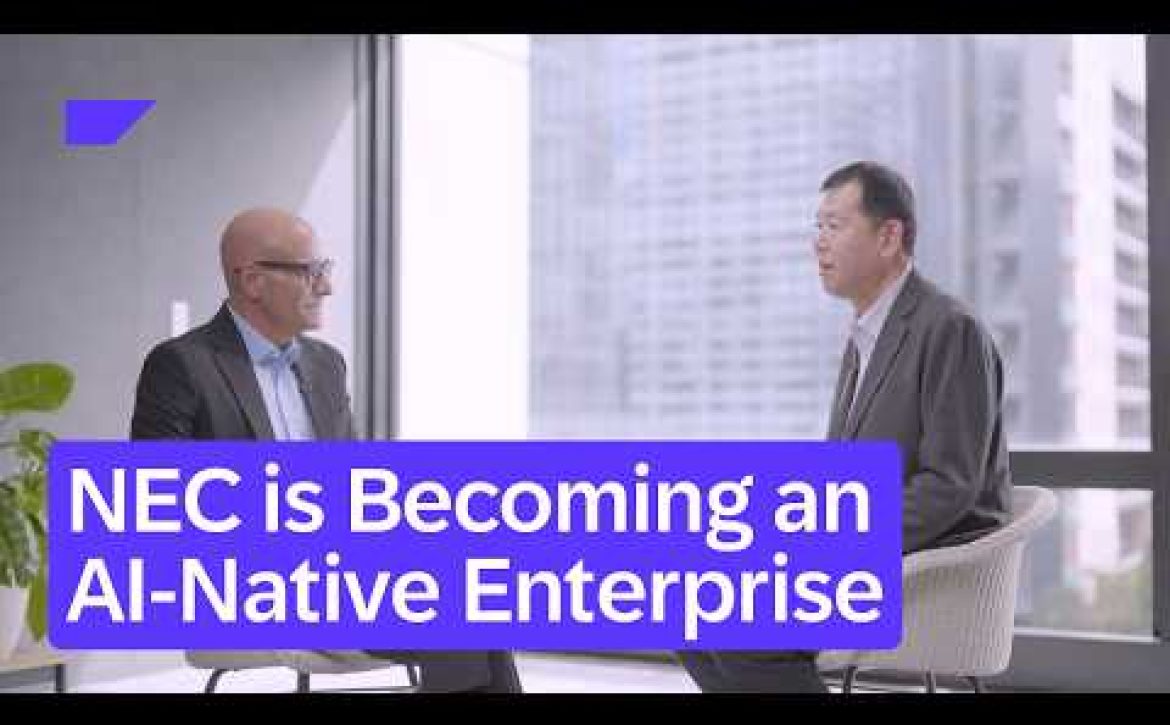
How NEC Is Becoming an AI-Native Enterprise with SAP

What does it take for a 125-year-old technology company to reinvent itself for the AI era? NEC is already taking that step, moving from continuous transformation to AI at scale.

Founded in 1899, NEC Corporation is one of Japan’s leading technology companies, operating globally across IT services, telecommunications, and digital infrastructure. Over the decades, the company has continuously adapted to new waves of technological change, but today’s shift is different. Artificial intelligence is not just another innovation cycle; it is redefining how organizations operate at their core.

For NEC, this means rethinking not only technology, but also how work gets done, how decisions are made, and how value is created.

In a recent conversation with Thomas Pfiester, head of Customer Engagement & Adoption and member of the Extended Board of SAP SE, NEC CIO Toshihiko Nakata shared how the company is approaching this challenge and why becoming an AI-native enterprise requires more than technology.

AI Is Causing Entry Level Roles to Evolve, Not Vanish—and CHROs Say the Stakes Are Rising

Since the release of ChatGPT as the first large language model in 2022, much of the conversation around AI and the future of work has focused heavily on what automation might eliminate: jobs, tasks, and early-career opportunities.

But new research from SAP and Wakefield* suggests a different reality is emerging. AI isn’t making early talent irrelevant. Instead, it’s accelerating how quickly they become productive, reshaping the earliest stages of work, and raising expectations far earlier in the employee lifecycle.

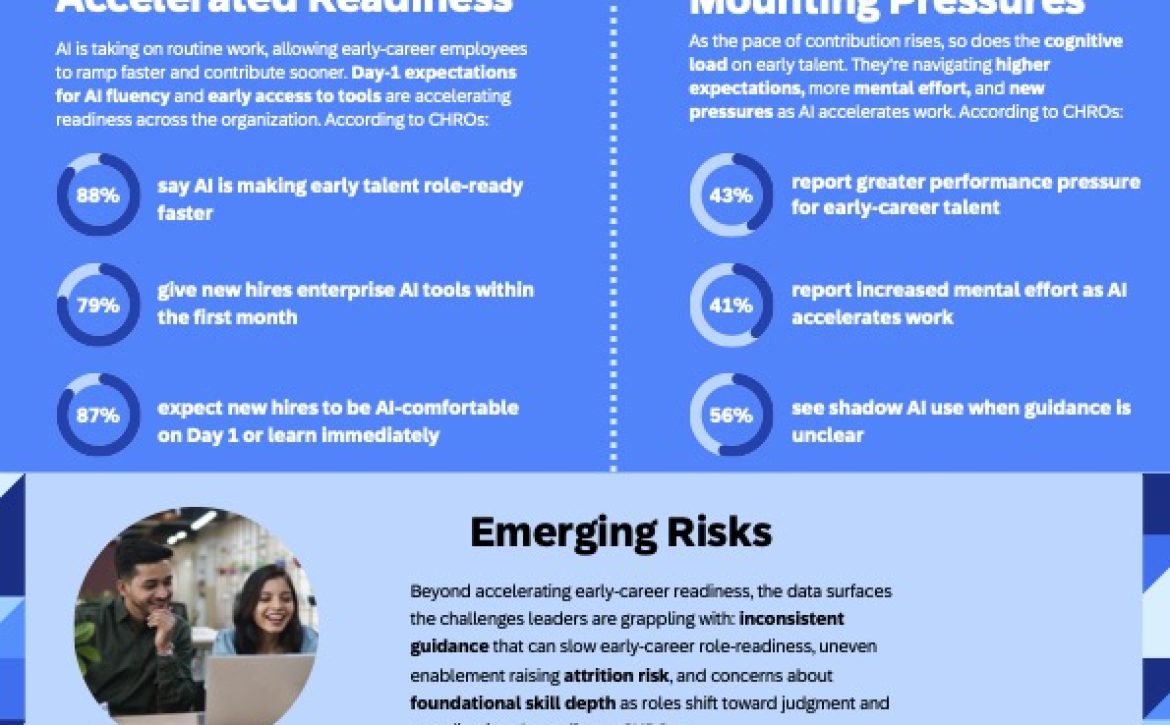
According to the findings, 88% of CHROs say AI is making early-career talent role-ready faster. This acceleration raises the stakes on both sides. While organizations benefit from faster productivity and earlier impact, early‑career employees are entering roles with heightened expectations and fewer traditional learning buffers—forcing leaders to rethink how success is defined and supported from day one.

AI as an accelerator of readiness

Entry-level roles have long relied on repetitive, lower-stakes tasks that helped new employees learn how work gets done. Today, AI automates much of that foundational execution.

This shift is increasingly common: 79% of surveyed CHROs report that their early-career talent receives enterprise AI tools within their first month on the job. Additionally, 87% expect new hires to be comfortable with AI on day one or learn the tools immediately after joining.

Drive the success of every employee and achieve organizational agility with AI

With AI absorbing traditional tasks, early-career talent is stepping into meaningful work sooner—and CHROs are already seeing the impact, with 56% reporting improved confidence and 55% citing increased productivity among those using AI.

This acceleration reflects themes we first explored in the 2025 SAP SuccessFactors Future of Work Predictions report, where we examined how AI might reshape entry‑level roles. As foundational tasks continue to be absorbed by AI, the question becomes not whether early‑career roles will exist, but how organizations can redesign them to build capability in new ways.

When productivity accelerates, expectations follow

As early talent ramps faster, the expectations placed on them are rising just as quickly. Several structural factors are contributing to this shift: organizations are hiring fewer early-career talent, and those who do join are expected to take on more complex work earlier in their tenure. Our upcoming research from our Future of Work Research lab makes this clear, as one research participant summarized, “Entry level roles used to be focused on mundane tasks—what should they do now? They bring an incredibly unique perspective; we want to hire early talent to challenge our norms and help us find better ways of working.”

But with AI removing the mundane work, it may also remove many of the gradual, hands-on learning moments that once helped new hires build experience over time.

With these rising expectations, it’s easy to see how the cognitive load of entry level roles could increase substantially. CHROs report heightened performance pressure and increased mental effort as new hires try to keep pace with AI-accelerated work. Some researchers refer to this dynamic as “AI brain fry,” the cognitive strain that comes from managing rapid, AI-driven workflow.

Together, these shifts create several risks for both employees and organizations:

  • Shadow AI use rises: 56%of CHROs say early-career talent turns to unsanctioned AI tools when formal guidance is unclear. This behavior may reflect entry-level hires trying to keep pace rather than intentionally breaking policy.
  • Inconsistent enablement creates talent risk: 44% of CHROs say uneven access to AI tools increases attrition risk, especially for early talent who may feel unable to live up to new performance expectations without tools to automate routine tasks.
  • Foundational skills may erode: Even as AI boosts productivity, 38%of leaders worry early-career talent are not building long-term skills like communication, critical thinking, judgment, and collaboration. That concern is echoed in qualitative feedback from HR leaders as well. As one noted, “We’ve observed gaps in professionalism in business settings for entry‑level talent, from collaboration and stakeholder management [to] ownership and accountability.”
Infographic: Click to Enlarge

Rethinking the first step into work

As traditional early‑career learning pathways narrow, organizations must now redesign how those learning moments happen. Our research points to several areas where HR leaders can intentionally strengthen the early-career ramp:

1. Build foundational skill development intentionally.

As repetitive tasks disappear, organizations have the opportunity to deliberately create new ways for early talent to build communication, collaboration, critical thinking, and decision-making skills. This can include structured, project-based experiences, clearer decision-making frameworks, and more frequent coaching that focuses on judgement and prioritization, not just task completion.

2. Design entry-level roles around higher-value work.

Early-career employees are capable of contributing more strategically when roles are designed with the right balance of scope and support. Redesigning entry‑level positions to include clear ownership—supported by explicit expectations, mentoring, and well‑defined guidance for decisions and escalation—helps early‑career talent build confidence while managing risk.

3. Establish AI governance from day one.

Without clear guidance, early talent may struggle to understand how to use AI responsibly. Introducing AI expectations during onboarding, reinforcing role-specific best practices, and normalizing manager-led conversations about AI use can reduce shadow AI and build trust in new technologies early on.

4. Ensure equitable AI access across teams and managers.

As expectations rise, uneven access to AI tools can quietly increase workload pressure and stress for early-career employees. Providing consistent access, training, and enablement helps ensure new hires are equipped to meet accelerated demands without increasing burnout or attrition.

The bottom line

AI isn’t eliminating early-career talent from the workforce; it’s reshaping the path they take to become effective and increasing the value of the work they contribute. While entry-level roles may be fewer, expectations for impact are higher, placing greater importance on pairing AI fluency with strong human skills. For new graduates, developing both will not only help them land a job but also enable them to contribute quickly and build lasting capabilities.

When early‑career talent becomes productive sooner, companies can move faster, innovate earlier, and operate more efficiently, but only if that speed is matched with structure, coaching, and intentional development. Organizations that navigate this transition successfully will ensure early talent doesn’t just ramp up faster, but also builds the judgment, collaboration, and critical‑thinking skills that AI can’t replace.

To stay on top of more upcoming research on the impact of AI on entry-level roles, visit our SAP SuccessFactors Future of Work Research Lab.


Lara Albert is chief marketing officer for SAP SuccessFactors.

Sign up to receive weekly news highlights from the SAP News Center

*The SAP AI Talent Survey was conducted by Wakefield Research (www.wakefieldresearch.com) among 100 US CHROs (or CPO equivalent) at organizations with a minimum annual revenue of $500m where employees are using AI-enabled tools in their day-to-day responsibilities, between February 19th and March 2nd, 2026, using an email invitation and an online survey.

How Aarini Consulting Builds Scalable AI Apps with SAP Build & CAP on SAP BTP

Enterprises need to adapt fast to changing customer demands, and Aarini Consulting is helping them do just that. In this video, discover how Aarini builds scalable, AI-enabled applications using SAP Build and SAP Cloud Application Programming Model (CAP) on SAP Business Technology Platform.

By adopting SAP Build and CAP, Aarini reduced technical debt, improved developer experience, and accelerated feature releases from quarterly to monthly. The result? Faster go-to-market, better product quality, and happier customers.

Learn how Aarini’s approach enables compliance, security, and integration across SAP and non-SAP systems, while paving the way for AI-driven automation and agentic capabilities.

Learn more about SAP Business Technology Platform: https://sap.to/6056B6D4dy

Follow us on social:
LinkedIn: https://sap.to/6058B6D4dK
Instagram: https://sap.to/6059B6D4dz
Facebook: https://sap.to/6050B6D4dM
Threads: https://sap.to/6051B6D4d3

About SAP:
As a global leader in enterprise applications and business AI, SAP stands at the nexus of business and technology. For over 50 years, organizations have trusted SAP to bring out their best by uniting business-critical operations spanning finance, procurement, HR, supply chain, and customer experience. For more information, visit: https://sap.to/6052B6D4dO

#SAP #SAPBuild #SAPBTP

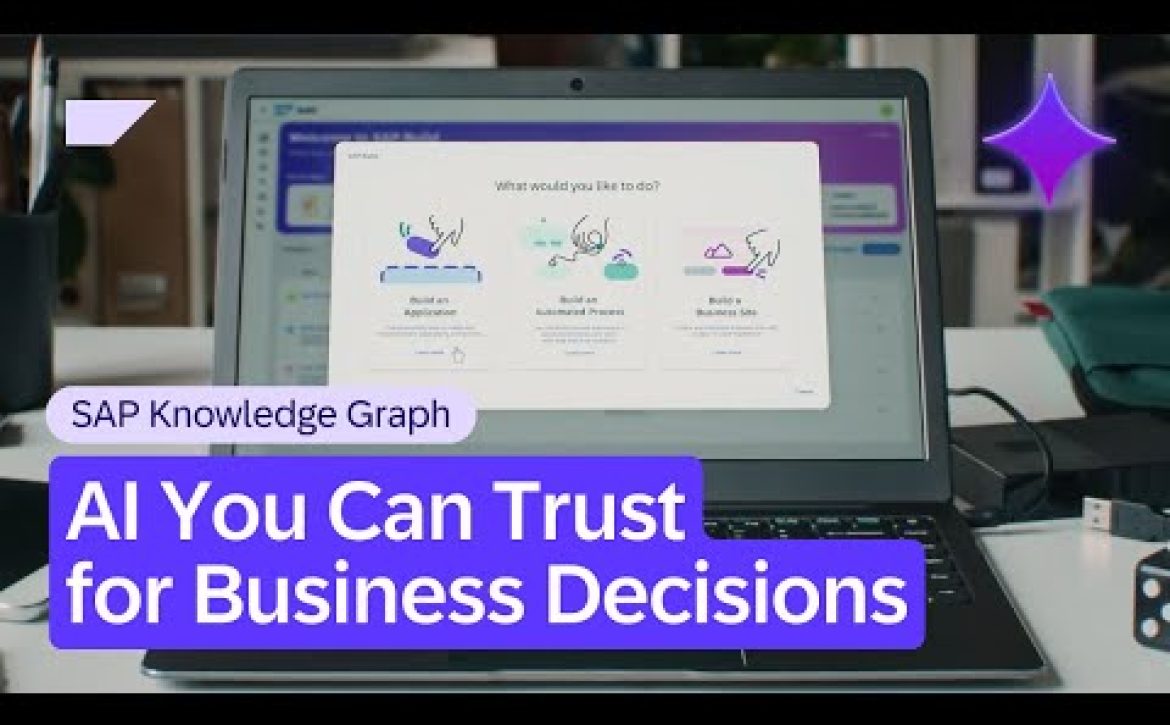
AI You Can Trust for Business Decisions | SAP Knowledge Graph

Stop second-guessing AI. SAP Knowledge Graph makes answers accurate and trustworthy.

AI can sound confident, but without context, it can lead to wrong decisions. In this video, see how SAP Knowledge Graph grounds AI in your business data, ensuring every response is relevant, accurate, and explainable.

With Joule and SAP Knowledge Graph, business users move from questions to actions without searching across systems. Analysts explore models faster, and developers access SAP data consistently, spending less time plumbing and more time creating.

SAP Knowledge Graph works behind the scenes, always up to date and maintained by SAP, so you don’t have to. It’s AI you can trust, built on the knowledge of your business.

Learn more about SAP Knowledge Graph: https://sap.to/6057ho6Ac

#SAP #BusinessAI #KnowledgeGraph

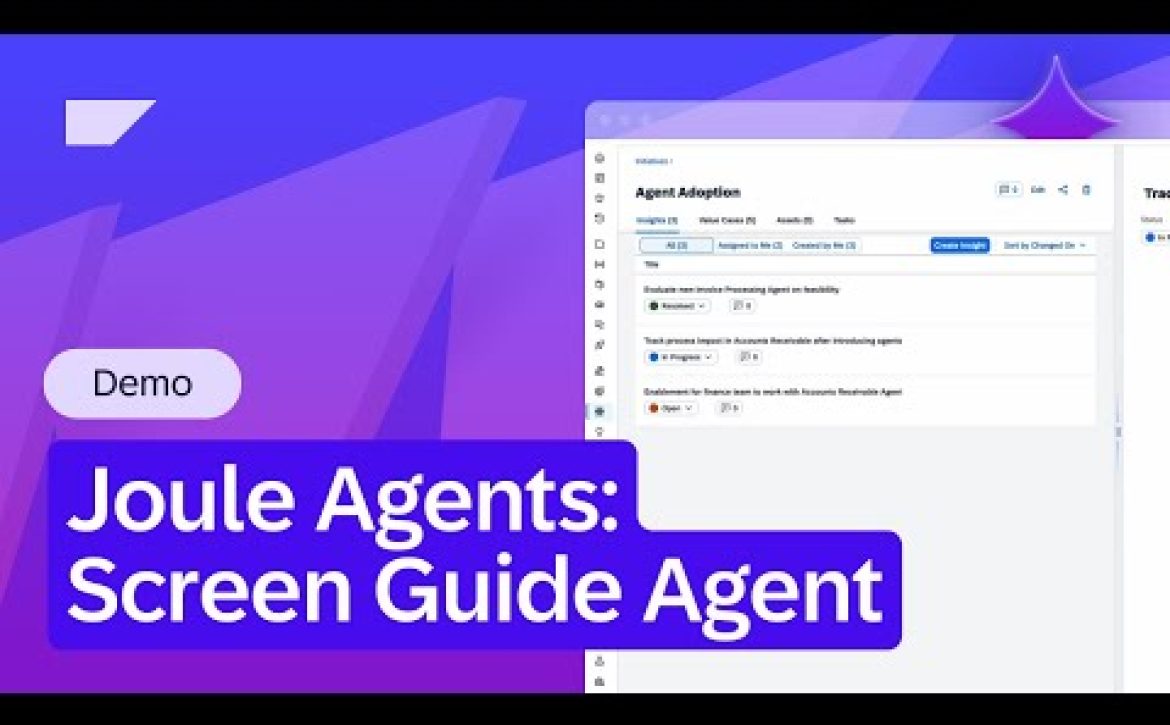
Joule Agents: Screen Guide Agent | Demo

Discover how to navigate SAP Signavio without needed in-depth technical expertise or extensive onboarding.

Understand how the Screen Guide Agent can explain any page the user is viewing, highlights what matters, lists available actions, and helps users interpret features in seconds – improving confidence and reducing onboarding effort.

Discover Joule Agents: https://sap.to/6058h4wza

#Joule #AIAgents #BusinessAI

One of the biggest regulatory overhauls in @Formula1 history? Bring it. @MercedesAMGF1

Nothing says uncertainty like a brand new @Formula1 season with new regulations. It’s unwritten. Unpredictable. 🏁

But the beauty of uncertainty? It brings opportunity. Our response is loud and clear: Bring it. 💪

🤝 @MercedesAMGF1

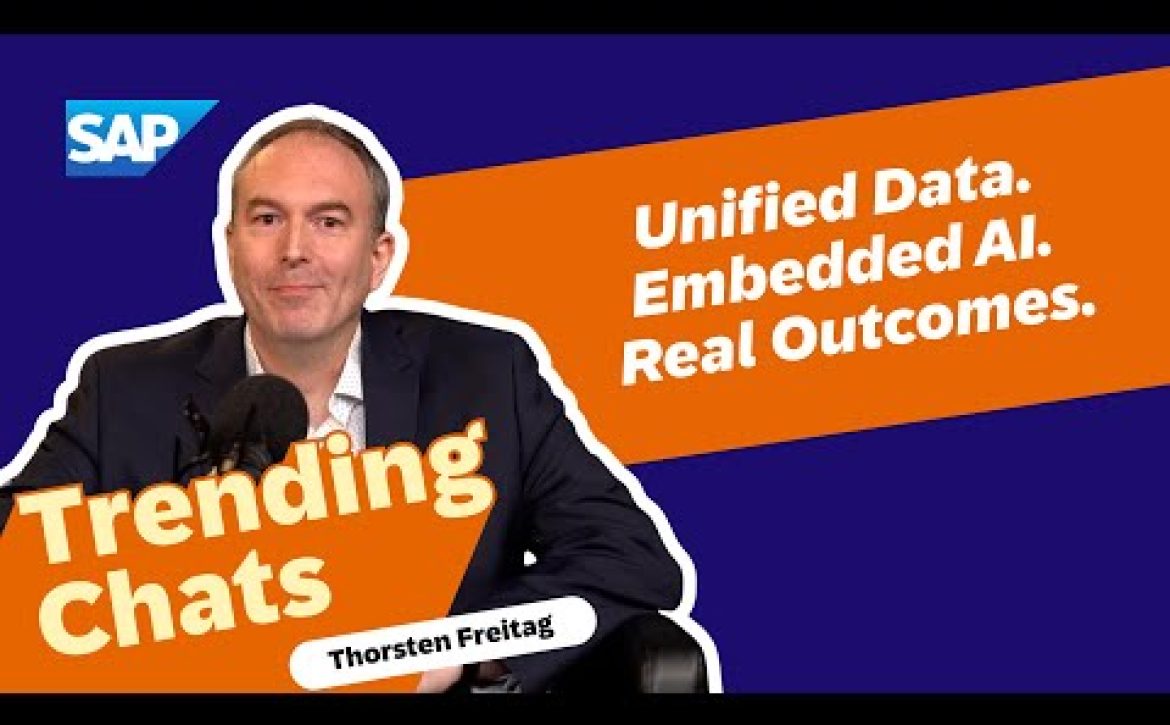
Trending Chats: Unified Data. Embedded AI. Real Outcomes with Thorsten Freitag

In this episode of Trending Chats, Thorsten Freitag, Chief Innovation Architect at SAP, breaks down SAP Business Data Cloud, unified data, Joule, AI agents and integrated Databricks, and explains how they work together in real life.

Discover how a semantic data layer, zero-copy architecture and embedded AI create a powerful flywheel that turns insights into action and enables agentic enterprise outcomes.

Chapters:
00:00 – Welcome + what customers need in real life
00:44 – The 3 layers: apps, data, AI (Joule + agents)
01:33 – Bringing AI + data together: BDC + AI Core
01:50 – Knowledge graph explained (the “subway map”)
02:19 – Embedded Databricks: notebooks + zero-copy SAP data
03:06 – Three takeaways for an agentic future

Explore SAP Business Data Cloud: https://www.sap.com/products/data-cloud.html

🎧 More episodes of the Trending Chats podcast:
Watch on YouTube: https://sap.to/6059CrDMW
Listen on Spotify: https://sap.to/6050CrDMo
Listen on Apple Podcasts: https://sap.to/6051CrDMU

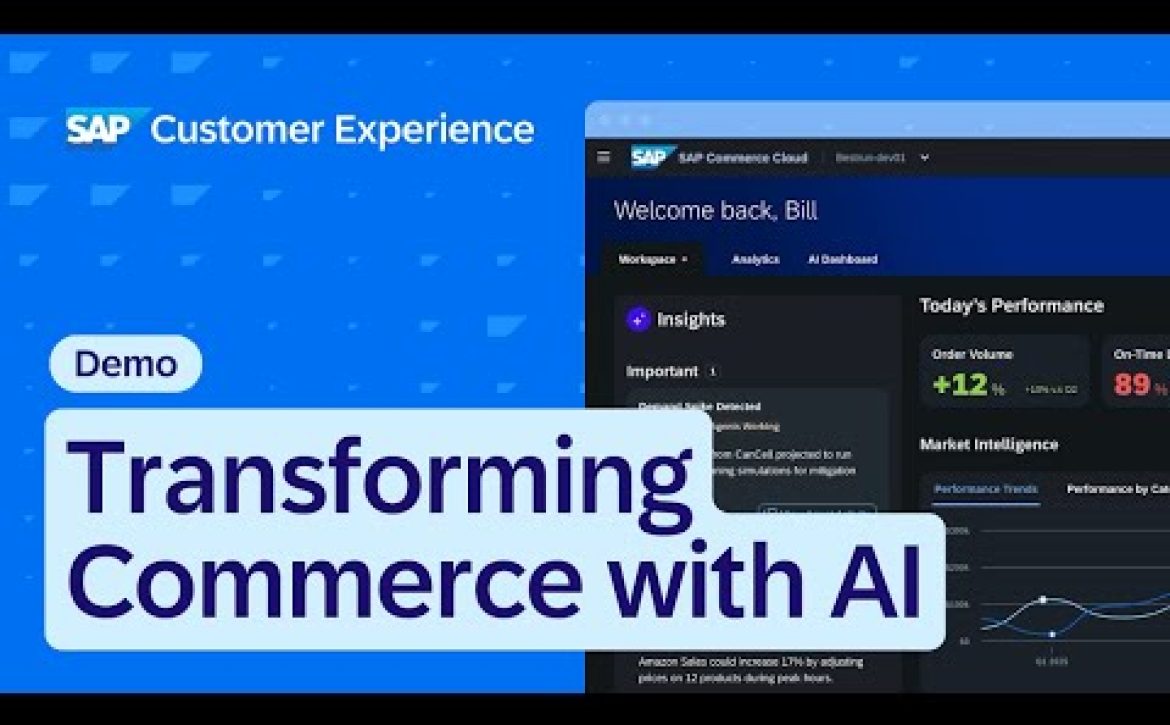
Agentic AI Is Reshaping Commerce: The Next Frontier of Discovery, Payments, and Trust

At NRF 2026, agentic AI was everywhere. At SAP, we’re moving beyond the hype and turning AI into real, scalable outcomes. Agentic AI represents a fundamental change in how commerce works, reshaping discovery, payments, fulfillment, and long-term customer loyalty.

Our vision for agentic commerce is bold. In our latest video, we showcase a future where humans and AI agents collaborate to drive intelligent recommendations, proactive operations, efficient business processes, and deeper customer relationships. While this vision points forward, SAP’s focus is firmly grounded in helping retailers take practical steps today. This isn’t about flashy demos of a distant future—it’s about building the foundation now for how consumers will buy and retailers will sell in the years ahead.

Unlike traditional AI systems that respond to prompts, agentic systems act on intent. They learn from preferences, make proactive recommendations, and can complete transactions on a shopper’s behalf. These agents are increasingly becoming the starting point of the buying journey, reshaping how brands compete for visibility, trust, and loyalty.

This evolution introduces both opportunity and risk. As AI agents mediate more interactions between brands and consumers, retailers must rethink how they capture intent, transact with agents, and deliver post-purchase experiences that reinforce trust.

How Embodied AI Powers Cognitive Robots and Streamlines Warehouse Operations

BITZER, a global leader in heat and cooling technologies, partnered with NEURA Robotics and SAP to showcase the potential of cognitive robots powered by embodied AI from SAP to transform and streamline warehouse operation.

Learn more: https://sap.to/6054CDoWq

00:00 – Winning Insights from BITZER
00:19 – Robotics
00:31 – Embodied AI x Cognitive Robots
00:35 – SAP Extended Warehouse Management
01:11 – SAP S/4HANA and SAP BTP
01:33 – What’s Next for BITZER?

Previous Next
Close
Test Caption
Test Description goes like this