In the latest episode, George Russel opens up about his journey to the @MercedesAMGF1 team, the scars that remain from replacing Lewis Hamilton on debut, and why he still feels he hasn’t achieved anything yet.
Watch the full episode of Significant Figures here: https://sap.to/6059B112T9
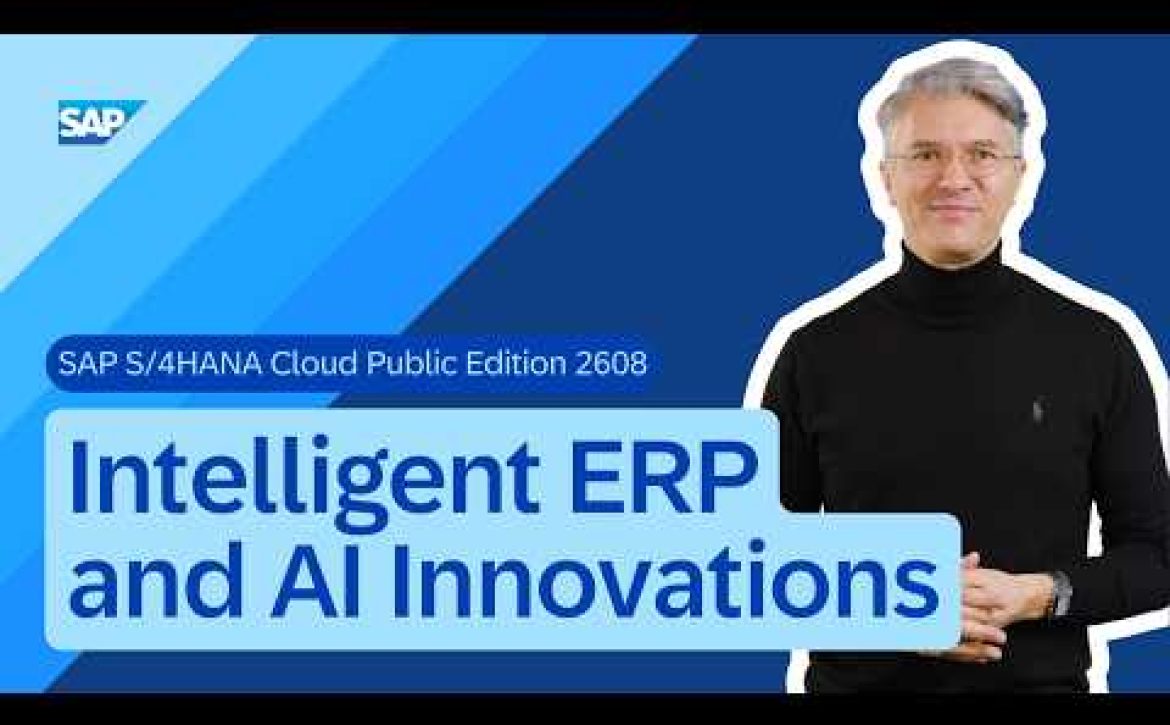
SAP S/4HANA Cloud Public Edition 2608 brings Business AI deeper into ERP, helping people work faster, reduce manual effort, and stay in control.
In this AI innovation overview, Yannick Peterschmitt from Cloud ERP and SCM Product Success explores how the 2608 release moves organizations closer to SAP’s vision of the Autonomous Enterprise. See how Joule Work, AI-assisted experiences, and intelligent agents are helping transform everyday ERP processes across user experience, professional services, environment, health, and safety, and finance.
You’ll see how SAP Business AI can support people in the flow of work, from using natural language to update business documents, to analyzing work in progress, to turning compliance documents into structured obligations, to preparing journal entries for review. These innovations help reduce repetitive work, improve decision-making, and give teams more time to focus on higher-value activities.
Highlights include:
🧠 Joule Work — Bring together business context, relevant insights, automation, and AI agents in one dynamic workspace built around user intent.
✨ AI-assisted easy fill — Update SAP business documents using natural language instead of entering data field by field.
📊 AI-assisted work in progress analytics and management — Analyze aging work in progress, surface critical insights, and generate executive summaries to support faster project financial decisions.
🦺 AI-assisted compliance management — Transform regulations, permits, and corporate policies into structured compliance obligations while keeping users in control.
📒 Journal entry agent — Interpret unstructured business information, recommend accounting data, and prepare journal entries for review.
Chapters:
00:00 Welcome & Introduction
00:23 Business AI and the Autonomous Enterprise
01:15 Joule Work
01:56 AI-assisted easy fill (User Experience)
02:34 AI-assisted work in progress analytics & management (Professional Services)
03:04 AI-assisted compliance management (Environment, Health & Safety)
04:01 Journal entry agent (Finance)
04:42 Closing Thoughts
• Read Yannick’s blog on AI Release Highlights in SAP S/4HANA Cloud Public Edition 2608 release:
https://community.sap.com/t5/enterprise-resource-planning-blog-posts-by-sap/unlock-ai-and-next-gen-cloud-erp-innovations-in-sap-s-4hana-cloud-public/ba-p/14434537
• Explore SAP Community:
https://sap.to/6055CIrvT
• Learn more about SAP Cloud ERP: https://sap.to/6056CIrvp
Follow us on social:
LinkedIn: https://www.linkedin.com/company/sap/
Instagram: https://www.instagram.com/sap
Facebook: https://www.facebook.com/SAP/
Threads: https://www.threads.com/@sap
About SAP:
As a global leader in enterprise applications and business AI, SAP stands at the nexus of business and technology. For over 50 years, organizations have trusted SAP to bring out their best by uniting business-critical operations spanning finance, procurement, HR, supply chain, and customer experience. For more information, visit: https://www.sap.com/index.html
The European Union took a landmark step with the EU Pay Transparency Directive, requiring employers to make pay practices more transparent and equitable. This represents a significant move toward greater accountability at a time when the gender pay gap across the EU still averages 11%, despite decades of equal pay legislation throughout Europe.
Now, the countdown is on. By June 7, all 27 EU member states are expected to adopt the directive into national law, marking what many HR leaders are calling “Day One” of a new era in workplace transparency.
But while the deadline is fast-approaching, many organizations are still far from operationally ready. Even though employers will be required to share pay information with both employees and candidates during the recruiting process, current practices suggest a significant gap. For example, across Europe, salary disclosure in job postings remains inconsistent and often limited, according to recent data.
For HR leaders, the challenge is no longer understanding the directive—it’s executing on it with confidence.
The barrier to execution
For many organizations, the challenge often starts with the state of their HR and compensation data. In multinational organizations, compensation data often spans multiple systems, payroll providers, spreadsheets, and local processes. Job classifications vary across countries, salary bands are not consistently defined, and workforce data remains siloed across regions.
As a result, many organizations struggle to produce consistent pay comparisons, define standardized salary ranges, explain compensation decisions clearly, and generate accurate reporting across multiple countries.
Without a connected and reliable workforce data foundation, pay transparency becomes difficult to operationalize at scale.
Explore the latest innovations in People Intelligence in SAP Business Data Cloud
The organizations making the most progress are focusing first on data consistency, workforce visibility, and connected HR processes.
This is where technology is becoming critical. AI can help organizations move beyond manual reporting by identifying pay anomalies, surfacing unexplained pay variance, and accelerating workforce equity analysis across large, complex data sets.
With pay transparency insights (generally available on June 5), a capability within the People Intelligence package in SAP Business Data Cloud, organizations can unify compensation and workforce data across systems while applying AI-assisted analysis to help identify inconsistencies, support explainable pay decisions, and improve reporting readiness.
Instead of relying on fragmented systems and disconnected reporting processes, organizations can move toward a more consistent and scalable approach to transparency.
Three areas HR teams need to execute now
With the right data foundation in place, organizations are better positioned to address the directive’s three major operational requirements.
1. Enabling employee pay transparency
Under the directive, employees have the right to request information about average pay levels by gender for comparable work. For many organizations, this immediately exposes data consistency issues. Comparable roles may be classified differently across countries or business units, while compensation data often lives in disconnected systems that were never designed to work together.
SAP SuccessFactors HCM helps organizations provide employees with pay transparency statements through SAP SuccessFactors Employee Central while supporting more consistent comparisons across worker groups. These statements can give clear insight into the employee’s annual pay and the average pay of the same worker category broken down by gender.
2. Preparing for candidate pay transparency
The directive also requires employers to disclose salary ranges in job postings or before interviews and prohibits asking candidates about salary history. While this may sound straightforward, many organizations are discovering they lack standardized pay ranges, consistent job architecture, or alignment between recruiting and compensation systems.
SmartRecruiters for SAP SuccessFactors allows organizations to display salary ranges directly within job postings and support more transparent hiring experiences. AI-driven recommendations can also help organizations establish more consistent pay ranges aligned to internal equity, external benchmarks, and evolving workforce needs.
3. Meeting gender pay gap reporting obligations
Mandatory gender pay gap reporting represents one of the directive’s most operationally demanding requirements. Annual reporting obligations begin in 2027 based on 2026 workforce data, meaning organizations need to prepare now.
For many HR teams, the challenge is turning complex, multi-country workforce data into accurate and defensible reporting. With pay transparency insights, organizations can use AI-assisted analysis to identify potential drivers behind pay gaps, surface workforce equity insights more quickly, and support more proactive decision-making before reporting deadlines arrive.
What HR should do now
The EU Pay Transparency Directive is not just introducing a new compliance requirement. It’s accelerating a broader shift toward continuous transparency in how organizations manage compensation, hiring, and workforce equity.
The organizations best prepared for this shift are taking action now to:
Unify workforce and compensation data
Standardize job and pay structures
Improve reporting readiness
Build more consistent, explainable compensation processes across the business
As transparency expectations continue to grow among employees, candidates, regulators, and business leaders, pay equity can no longer operate as a periodic reporting exercise. It is becoming an ongoing operational capability.
Watch the webinar replay to learn how to move from policy to execution and prepare your organization for EU Pay Transparency requirements at scale.
Maryann Abbajay is chief revenue officer for SAP SuccessFactors.
Subscribe to the SAP News Center for the latest SAP news each week
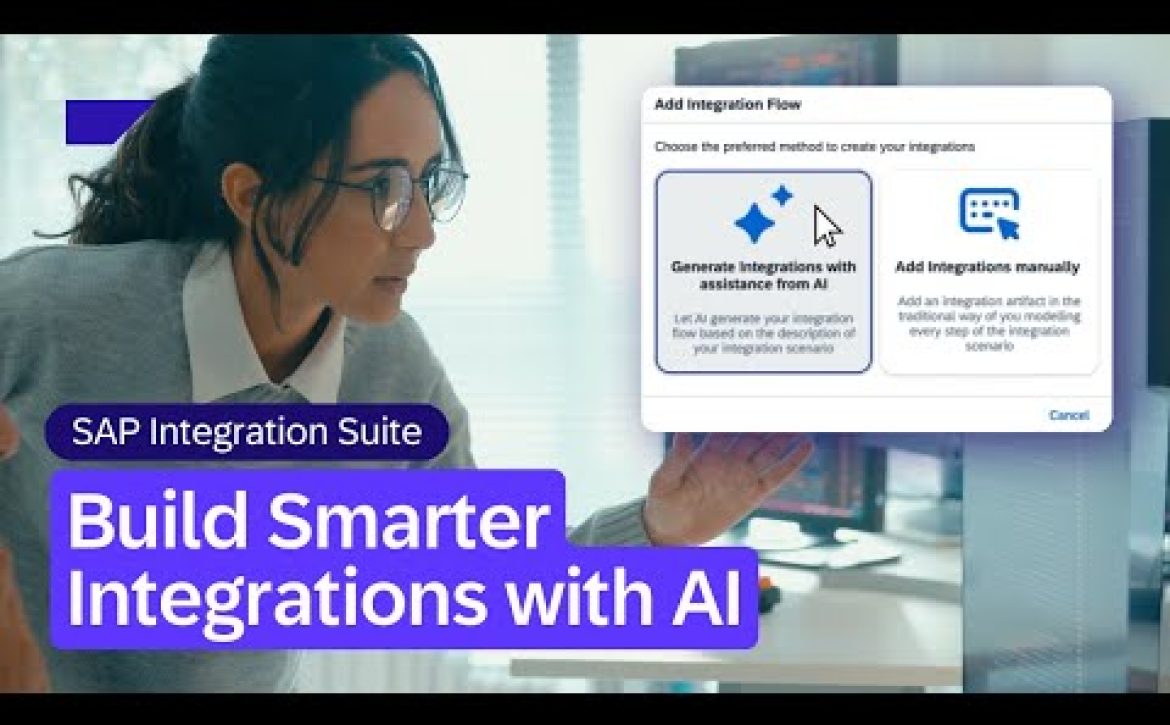
AI in SAP Integration Suite helps teams design, build, and operate integrations faster, with intelligence embedded from the start.
As enterprise landscapes become more complex, integration teams need a faster, more reliable way to connect systems, data, and processes across hybrid and multi-cloud environments. In this video, see how embedded AI capabilities in SAP Integration Suite support the full integration development lifecycle, from project discovery to live operations.
You’ll learn how Joule can recommend prebuilt integration content from SAP Business Accelerator Hub, helping developers start with proven assets instead of building from scratch. The video also shows how AI-assisted integration flow generation can turn natural language requirements into draft integration flows, helping teams move more quickly from business need to working design.
SAP Integration Suite also uses AI to improve quality and reliability. Intelligent script optimization provides best-practice recommendations for Groovy and JavaScript code, helping detect inefficiencies, reduce debugging, and improve integration performance from the start. Once integrations are live, anomaly detection helps identify unusual patterns early, while API volume forecasting supports capacity planning and helps teams prevent performance bottlenecks.
As agentic AI becomes more important to enterprise agility, SAP Integration Suite provides a foundation for connected, intelligent, and scalable integration. With innovations such as MCP server support, SAP helps unify intelligence and control across hybrid and multi-cloud landscapes.
Learn more about SAP Integration Suite: https://sap.to/6059B882v7
Follow us on social:
LinkedIn: https://sap.to/6051B882vh
Instagram: https://sap.to/6052B882a6
Facebook: https://sap.to/6053B882aB
Threads: https://sap.to/6054B882a8
About SAP:
As a global leader in enterprise applications and business AI, SAP stands at the nexus of business and technology. For over 50 years, organizations have trusted SAP to bring out their best by uniting business-critical operations spanning finance, procurement, HR, supply chain, and customer experience. For more information, visit: https://sap.to/6056B882aE
MADRID — SAP SE (NYSE: SAP) today announced at the SAP Sapphire event that Ericsson is moving from AI experimentation to enterprise-wide execution by building a unified business data fabric with the SAP Business Data Cloud solution.
SAP Sapphire in 2026: Advancing the Autonomous Enterprise
The approach enables the company to scale AI use cases across the business, accelerate decision-making and deliver measurable operational impact. By combining a governed data foundation with the Joule solution and this foundation, Ericsson is creating the enterprise architecture needed to make AI trusted, repeatable and scalable across its global operations.
Ericsson, which celebrates its 150th anniversary this year, provides mobile network infrastructure across 180 countries, with more than 40% of the world’s mobile traffic passing through its networks. As AI becomes central to both its technology road map and how it runs the business, Ericsson has prioritized building a strong, governed data foundation to support scalable and trusted AI.
“Once you scale AI, it stops being an AI problem—and becomes a data problem,” said Esra Kocatürk Norell, Vice President, Customer Experience, Enterprise IT at Ericsson. “That’s why we invested early in a business data fabric. With SAP Business Data Cloud, we can define what data means once—from revenue to market structures and access rules—and apply it consistently across the enterprise. That’s what allows us to scale AI in a way that is trusted, repeatable and delivers real business value.”
At the core of Ericsson’s approach is a federated data architecture that allows data to remain in place while centrally managing business semantics, governance and lifecycle policies. This reduces duplication, simplifies integration and ensures that consistent business definitions can be applied across both SAP software and non-SAP environments.
By focusing on high-impact use cases and organizing around end-to-end business processes rather than isolated solutions, Ericsson has moved beyond pilot projects to scaled deployment. Today, more than 85,000 users are live on unified Joule, supported by strong executive sponsorship and governance.
Ericsson is advancing its transformation on two parallel fronts. The first is modernization, including its transition to the RISE with SAP journey, the use of side-by-side extensions on SAP Business Technology Platform and a clean core approach that enables faster innovation without disrupting its ERP backbone. The second is what the company defines as “innovate and transform,” focused on unlocking tangible business value from data and AI to improve decision-making, increase efficiency and enable new forms of value creation.
SAP and Ericsson are also collaborating on AI co-innovation initiatives. One example is an intelligent goal recommendation capability developed within the SAP SuccessFactors portfolio. The solution generates contextual, business-aligned goals for employees, improving execution and reducing administrative effort. The capability is now being scaled more broadly, demonstrating how co-innovation can create value beyond a single organization.
“Ericsson’s approach shows how leading companies are moving from AI experimentation to execution by focusing on data, governance and business context,” said Manos Raptopoulos, Global President Customer Success Europe, APAC, Middle East and Africa at SAP SE. “Together, we are helping organizations unlock the full potential of AI at scale.”
Looking ahead, Ericsson expects its business data fabric to support increasingly advanced AI scenarios, including automated decision-making, improved productivity and new digital business models, while continuing to strengthen customer experiences in a rapidly evolving telecom landscape.
Most people wake up expecting the world to run. Lights turn on. Planes land. Hospitals run. Supply chains deliver. What feels seamless on the surface is powered by a vast network of systems, data, and business processes working in sync behind the scenes.
SAP Sapphire in 2026: Advancing the Autonomous Enterprise
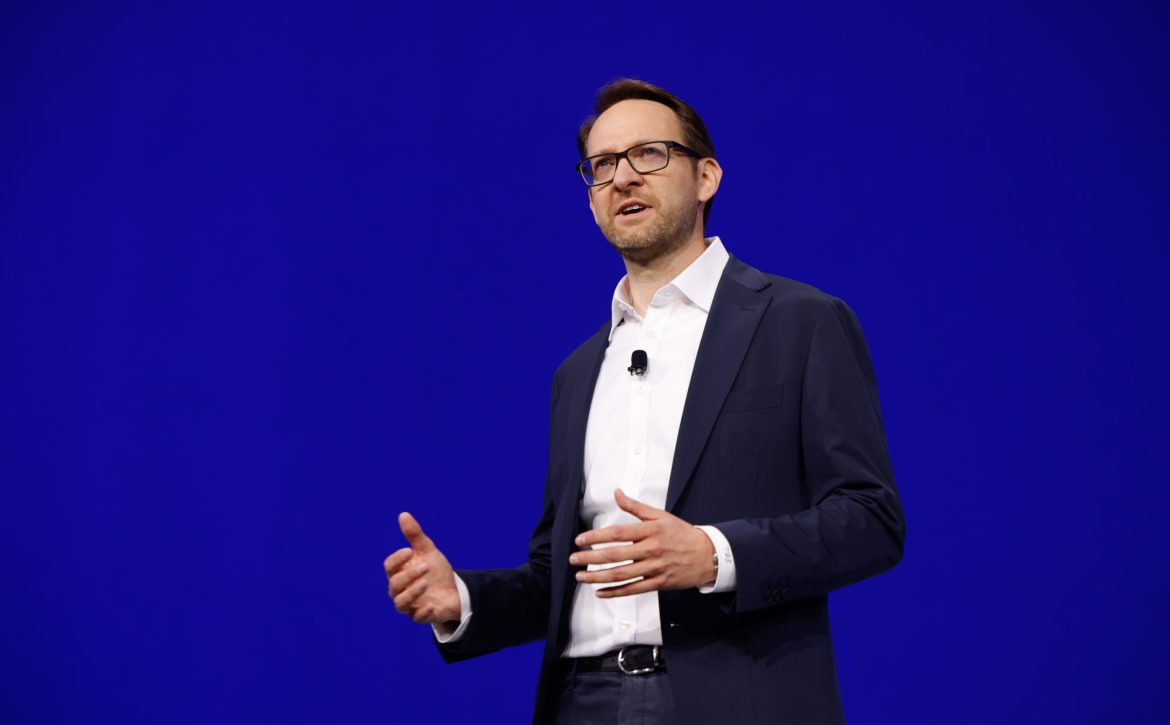
That idea framed a keynote at SAP Sapphire in Orlando, where Thomas Saueressig, chief customer officer and member of the Executive Board of SAP SE, and Jan Gilg, global president of Customer Success & Americas and member of the Extended Board of SAP SE, set out the company’s case for the Autonomous Enterprise.
Their message was clear: As AI moves from promise to practice, customers are no longer asking whether it matters; they are asking how to make it deliver measurable results across the business.
“Every day, billions of people wake up trusting that the world simply runs,” Saueressig said.
But making that happen is anything but simple. Saueressig pointed to the hidden complexity behind everyday routines — from power grids balancing supply and demand in real time to global supply chains moving goods across countries and continents. Enterprise operations, he argued, are the invisible backbone of modern life, even if most people never see them.
Gilg picked up that thread by focusing on the pressure customers now face as they try to translate AI ambition into business value. Excitement is high, he said, but so is urgency.
Customers want to scale AI across the enterprise and connect it to core processes where it can have tangible impact. But according to Gilg, the real obstacle is not the AI itself. It is the enterprise landscape around it.
“The elephant in the room: AI in the enterprise is complex,” he said, pointing to the disconnected applications and fragmented data many organizations still contend with.
That challenge led directly to SAP’s vision for the Autonomous Enterprise — one in which AI is embedded into business processes, connected through trusted data, and governed in a way that makes it reliable at scale.
Thomas SaueressigJan Gilg
The Autonomous Enterprise vision
“It’s this need for trusted, seamless integration that led us to our vision for the Autonomous Enterprise,” Gilg said.
He presented it not as a future concept, but as a practical operating model in which AI drives end-to-end execution within a trusted governance framework, with people remaining in control.
Saueressig cast SAP’s role as helping customers get there: “Our goal is to help you become an Autonomous Enterprise step-by-step. … We are making AI value real today.”
He linked that approach to RISE with SAP, SAP’s AI offerings, and the SAP Services and Support Portfolio with its Ssuccess plans, which are designed to help customers put innovation to productive use. The emphasis, he said, is on creating value throughout the transformation journey
“When you are fully committed to RISE with SAP, we are committed to support you at every step,” Saueressig said. That commitment spans even the most complex and hybrid landscapes, he said, stressing that no customer will be left behind.
Lockheed Martin: Readiness over transformation in a high-stakes environment
That customer-first approach set up the next part of the keynote, where customers took the stage to share firsthand how they are transforming their businesses in the real world — no theory, no abstraction, just practical experience.
Opening the customer round, Lockheed Martin positioned transformation not as an end goal, but to ensure constant readiness in one of the world’s most demanding environments.
“Transformation is not the goal. Readiness is for us,” said Maria Demaree, SVP and CIO of Lockheed Martin Corporation, stressing that the stakes are “human” when systems support national defense and allied missions. Readiness, she explained, means the ability to move “with speed, clarity, and confidence across the enterprise.”
Through its largest transformation investment in the company’s history, Lockheed Martin is redesigning processes end-to-end, connecting fragmented systems, and embedding AI into a model-based enterprise built on SAP.
Operating in a highly regulated environment with strict security and data requirements, the company is focused on reducing cycle times and improving responsiveness. Demaree emphasized that “transformation doesn’t start with technology. You must rethink your processes.” SAP’s role, she said, has evolved from vendor to trusted partner understanding Lockheed Martin’s business and the environment it works in.
Aeropuertos Argentina: From reactive winter operations to proactive AI-driven control
Aeropuertos Argentina made history by becoming the first Latin American customer to take the SAP Sapphire keynote stage. The company used the spotlight to share a hands-on example rooted in operational urgency and showed how a clean core and focused innovation can quickly deliver results.
Managing 90% of Argentina’s commercial flights, they need to keep airport operations running during severe winter weather. This has historically relied on manual, fragmented processes — driving up costs, safety risks, and environmental impacts. To address this, the company developed an AI agent called Smart Network for Operative Winter (SNOW) to orchestrate weather data, runway sensors, maintenance processes, and operational procedures.
“We passed from a reactive to a proactive model,” said Gustavo Sabato, Chief Information Officer of Aeropuertos Argentina, highlighting expected benefits, including a 16% cost reduction and lower CO₂ emissions. Time to value was fast: from idea to operation in 12 weeks, with rollout starting at two airports and expanding to six more this upcoming winter.
A key enabler was upgrading from SAP R/3 to SAP S/4HANA in 2023 and building the solution on SAP Business Technology Platform. While integrating multiple non-standardized data sources was challenging, the result is now that the company operates with “only one version of the truth,” said Sabato, and requires minimal manual intervention. The company plans to scale the approach beyond Argentina and into processes at other airports they manage elsewhere, reinforcing that strong technical fundamentals are essential to turn AI into real operational outcomes.
Exxon Mobil: Clean core and solid data foundation
ExxonMobil is rethinking how its operations will remain agile and nimble amid the rapid changes driven by the global shift toward new energy sources.
Bill Keillor, Vice President of ExxonMobil Global Services Company, said the energy giant launched a business-led transformation to simplify processes and unlock data that had become fragmented after decades of customization. “Our goal is not short-term optimization but long-term agility: standardizing on industry best practices, establishing a clean core, and becoming upgrade stable,” he said.
He emphasized that both the transformation and the company’s AI ambitions depend on a strong foundation. “If you can’t get this foundation right, you will continue to pay the price for it,” he said.
Keillor closed with three pieces of advice for any transformation: be crystal clear on strategy and align leadership behind it; put strong governance in place to enable fast, consistent decisions; and choose partners who challenge you and are in for the long run.
Levi Strauss: AI at scale
As Levi Strauss accelerated its shift toward a direct-to-consumer business, it recognized that greater speed and scale would require a lean technology landscape. Jason Gowans, Chief Digital and Technology Officer, said the company started by consolidating nine ERP systems into a single global foundation with RISE with SAP, standardizing processes and establishing a clean core.
That unified backbone now supports Levi’s ambitious AI strategy, with already more than 1,000 AI agents in production across the business. The impact is already visible; one example is wholesale order processing. While 80% of orders already flow through automatically, the remaining 20% — often submitted by smaller customers through handwritten notes, emails, or unstructured documents — previously took two to five days to process manually.
“Now, with the agents that we’ve built on top of SAP, that process takes 20 to 30 minutes,” Gowans said. For Levi Strauss, the lesson is clear: standardization does not limit agility; it makes it possible.
Migration powered by AI
These customer examples illustrated that transformation usually follows a shared path: modernizing the core, moving to the cloud, and unlocking innovation along the way.
SAP then showed how AI-powered agents can help customers accelerate that journey through a more integrated, AI-driven approach to transformation at scale. Migration and modernization assistants, which were announced in the global keynote, are designed to analyze systems, data, custom code, configuration, testing, and rollout as part of one connected process. By replacing fragmented manual work with coordinated automation, activities that once took weeks — from landscape analysis to custom-code assessment — can now be completed in a single weekend.
The world doesn’t break because of change
Gilg then widened the lens, arguing that every major technology wave brings uncertainty. But every one of these waves has in fact made the world better off by creating more jobs, new business models, and new revenue streams that people couldn’t imagine before. In the same way, he argued, enterprise software will become even more essential because of AI.
That is because the core needs of business remain the same: systems that work, people who care, and teams that collaborate. In Gilg’s framing, AI will not replace enterprise software. It will live inside it, embedded in the processes that keep companies running.
Saueressig brought the keynote back to its opening image: a world people trust to function. In a time of rapid change and unprecedented disruption, he asserted, resilience matters more than ever.
“The world doesn’t break because of change,” he said. “It breaks when change moves faster than resilience. And that’s where SAP comes in.” Underscoring the importance of people in times of change, he emphasized that beyond technology and AI, transformation remains deeply human, shaped by the people who build and use it. “The future isn’t written by AI. It is written by us,” he said.
SAP Sapphire in 2026: Discover our bold new vision for how businesses will run from now on
See the biggest SAP Sapphire Orlando 2026 keynote highlights in 14 minutes.
SAP leaders Christian Klein, Philipp Herzig, Muhammad Alam, and Sebastian Steinhaeuser introduce SAP’s vision for the Autonomous Enterprise, where AI agents, trusted business data, and enterprise-grade governance come together to help companies move faster, work smarter, and deliver better business outcomes.
Explore key announcements across SAP Business AI Platform, Joule Studio 2.0, SAP Business Data Cloud, AI Agent Hub, SAP Autonomous Suite, Joule Assistants and Agents, Joule Work, Industry AI, and new RISE and GROW with SAP offerings designed to accelerate AI adoption and ERP modernization.
Hear from SAP leaders and guests including:
• Christian Klein, Chief Executive Officer, SAP
• Muhammad Alam, Member of the Executive Board, SAP Product Engineering, SAP
• Philipp Herzig, Chief Technology Officer and Member of the SAP Extended Board, SAP
• Sebastian Steinhaeuser, Chief Operating Officer, Strategy & Operations and Member of the Executive Board, SAP
• Jeremy Barnum, Chief Financial Officer, JPMorganChase
• Ellen Svanström, Chief Digital & Information Officer, H&M
Chapters:
00:00 – Welcome to SAP Sapphire 2026
00:22 – Trusted AI for business outcomes
00:35 – SAP Business AI Platform
01:27 – Joule Studio 2.0 for AI agents
02:45 – SAP Business Data Cloud and context
04:19 – Predictive AI with RPT-1.5
05:06 – AI Agent Hub and governance
06:35 – Customer trust with JPMorganChase
06:48 – SAP Autonomous Suite
07:16 – Joule Assistants, Agents, and domains
09:07 – Company Memory and Financial Closing Assistant
09:54 – Joule Work and new user experiences
10:52 – Industry AI and H&M collaboration
12:40 – RISE and GROW with SAP
14:17 – Welcome to the Autonomous Enterprise
• Watch the full Global Keynote. 👉 https://youtu.be/9aa-etRsaLU
• Watch all SAP Sapphire replays on demand. 👉https://www.sap.com/events/sapphire.html
Follow us on social:
LinkedIn: https://www.linkedin.com/company/sap/
Instagram: https://www.instagram.com/sap
Facebook: https://www.facebook.com/SAP/
Threads: https://www.threads.com/@sap
About SAP:
As a global leader in enterprise applications and business AI, SAP stands at the nexus of business and technology. For over 50 years, organizations have trusted SAP to bring out their best by uniting business-critical operations spanning finance, procurement, HR, supply chain, and customer experience. For more information, visit: https://www.sap.com/index.html
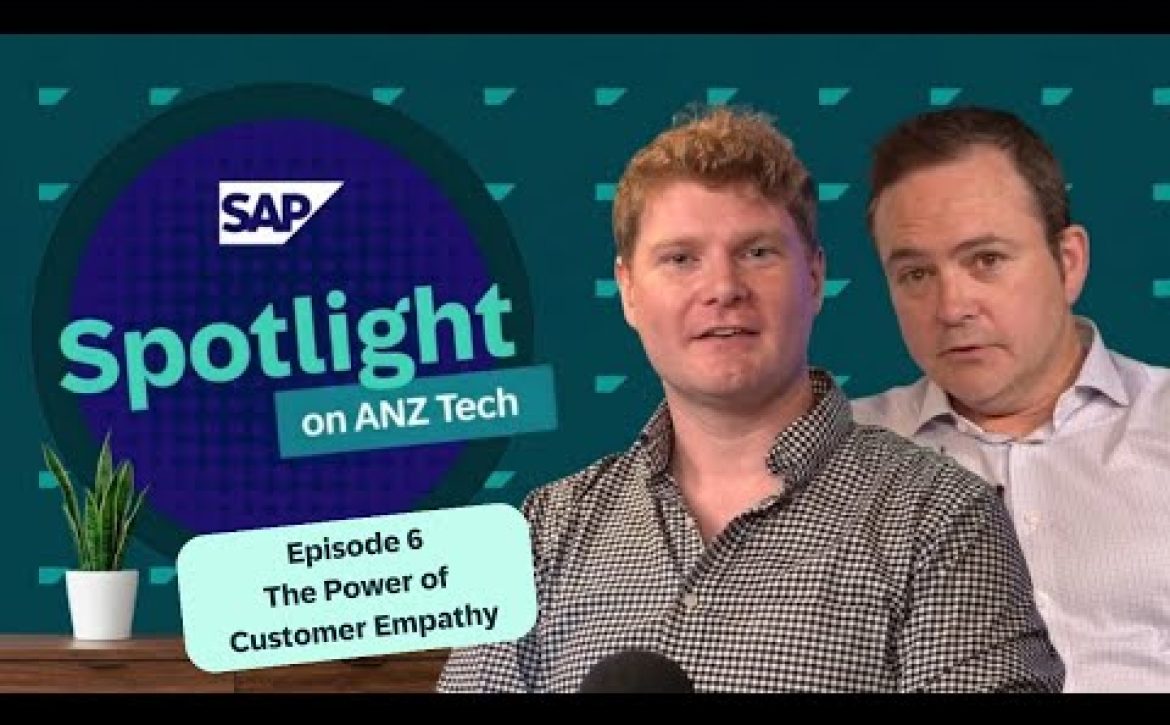
What is the biggest issue with how brands engage online today? Sometimes, it is a simple lack of empathy.
In this episode of SAP Spotlight on ANZ Tech, Jess asks shoppers about their biggest frustration with online brand engagement. One theme comes through clearly: brands can be brilliant at selling, then fall apart after checkout. Missing tracking updates, unclear return steps, slow responses, and “free returns” that suddenly are not free can turn a great first impression into a lasting trust issue.
Our customer experience experts, Scott and Scott, break down why after-sales experience is a loyalty maker or breaker. Organizations spend heavily to win a customer, but the data and information needed to support customers already exists. The difference is whether teams use it to keep customers informed through email, SMS, or notifications so people know what is happening and what to do next.
You will also hear the “Mirror Test”: are you providing the experience you would want to receive? When brands treat customers like people rather than transactions, they resonate more. That means setting clear expectations, communicating proactively, and making returns and support feel simple, fair, and human.
👉 Download our Omnichannel Loyalty Guide to start putting empathy at the centre of your strategy: https://sap.to/6055B6meCW
Follow us on social:
LinkedIn: https://sap.to/6056B6meCo
Instagram: https://sap.to/6057B6meCU
Facebook: https://sap.to/6059B6meCS
Threads: https://sap.to/6051B6meCt
About SAP:
As a global leader in enterprise applications and business AI, SAP stands at the nexus of business and technology. For over 50 years, organizations have trusted SAP to bring out their best by uniting business-critical operations spanning finance, procurement, HR, supply chain, and customer experience. For more information, visit: https://sap.to/6053B6meCv
Discover how SAP Logistics Management helps organizations run smaller and mid sized logistics sites with more agility, faster rollout, and lower total cost of ownership, while complementing high end operations managed with SAP Extended Warehouse Management and SAP Transportation Management.
Join host Olena, with SAP experts Jörg Michaelis (Head of Product Management for SAP Logistics Management) and Carsten Abel (Head of Strategy and Customer Engagement), as they explain why SAP introduced this solution, how it supports hybrid landscapes, and what is coming next across user experience, scalability, extensibility, and AI.
In this video, you’ll:
✔️ Learn why SAP built SAP Logistics Management and the market gap it addresses
✔️ See how customers can start in weeks and expand with a “grow as you go” approach
✔️ Understand the hybrid model, including how SAP Logistics Management can work alongside existing EWM or third party WMS
✔️ Explore what is planned for 2026, including regional scalability, languages, APIs, modular adoption, and selective use of agentic AI
✔️ Hear how mobile first execution supports warehouse operators with native iOS and Android apps
Whether you manage local distribution sites, technical warehouses, spare parts operations, pop up warehouses, or a network of smaller facilities alongside major distribution centers, this deep dive will clarify how SAP Logistics Management can help you standardize operations, reduce rollout friction, and keep pace with change.
Chapters
00:12 – Welcome and introduction
01:20 – Why a new solution? What market gap does SAP Logistics Management address?
03:40 – How does SAP Logistics Management ensure business agility?
06:08 – The strategic vision for 2026: UX, scalability, AI, and modularization
09:26 – The future of stockroom management, LE WM, and LE TRA
10:25 – The hybrid approach: Combining SAP Logistics Management with existing EWM solutions
10:37 – Agentic AI in logistics: Beyond simple automation
12:44 – Mobile first strategy: Empowering the warehouse operator on the floor
14:20 – The critical role of the partner ecosystem
15:26 – Wrap up and thank you
💬 Join deeper conversations in the SAP Community: https://community.sap.com
📧 Contact us anytime at insides4@sap.com
Follow us on social:
LinkedIn: https://www.linkedin.com/company/sap/
Instagram: https://www.instagram.com/sap
Facebook: https://www.facebook.com/SAP/
Threads: https://www.threads.com/@sap
About SAP:
As a global leader in enterprise applications and business AI, SAP stands at the nexus of business and technology. For over 50 years, organizations have trusted SAP to bring out their best by uniting business-critical operations spanning finance, procurement, HR, supply chain, and customer experience. For more information, visit: https://www.sap.com/index.html
Want more from AI than one-size-fits-all results? SAP AI Foundation helps you build, run, and integrate custom AI solutions at scale, so your business can stand out with AI that’s tailored to your needs.
In this video, you’ll see how AI Foundation acts as the operating system at the heart of SAP Business AI, giving you a unified environment to take AI from idea to impact, fast. Prepackaged AI can be a great start, but when your requirements are unique, you need the flexibility to create AI that fits your processes, your data, and your standards for security and compliance.
In this video, you’ll learn how to:
✨ Build and extend Joule experiences with custom skills and agents
✨ Create and orchestrate AI workflows in one unified environment
✨ Scale with security, compliance, and governance built in
✨ Ground AI in business context by connecting SAP and non-SAP data
Because context matters, AI Foundation helps you embed your custom AI solutions directly into business applications and connect them to the data that drives decisions. The result is trusted AI outcomes across the entire AI lifecycle, from building and running to integrating and scaling.
Chapters:
00:00 – Why prepackaged AI isn’t always enough
00:15 – Build, run, and integrate custom AI
00:22 – What AI Foundation is
00:34 – Extend Joule with custom skills and agents
00:43 – Create workflows with generative AI hub
00:54 – Govern AI operations securely
01:02 – Use SAP Document AI and SAP HANA Cloud
01:12 – Connect AI to apps and data
01:29 – Create value across the AI lifecycle
Learn how to build, run, and integrate AI agents and custom AI solutions at scale with AI Foundation: https://www.sap.com/products/artificial-intelligence/ai-foundation-os.html
Explore SAP Business AI: sap.com/products/artificial-intelligence.html
Follow us on social:
LinkedIn: https://www.linkedin.com/company/sap/
Instagram: https://www.instagram.com/sap
Facebook: https://www.facebook.com/SAP/
Threads: https://www.threads.com/@sap
About SAP:
As a global leader in enterprise applications and business AI, SAP stands at the nexus of business and technology. For over 50 years, organizations have trusted SAP to bring out their best by uniting business-critical operations spanning finance, procurement, HR, supply chain, and customer experience. For more information, visit: https://www.sap.com/index.html