What is SAP Build
Discover how to extend and automate your business applications with low-code, pro-code, and generative AI. Visit https://sap.to/6051UjhaV for more details.


Discover how to extend and automate your business applications with low-code, pro-code, and generative AI. Visit https://sap.to/6051UjhaV for more details.

FC Bayern uses innovative SAP tools to improve fan data management, customer interactions, and team performance.
Read the Newscenter article to learn more: https://sap.to/6056oohsi
00:07 How Digitalization Helps
00:31 What is FC Bayern?
00:39 SAP Solutions deployed by FC Bayern
01:25 Leveraging AI in the Future
#fcbayern #sap

From flying cars to robotic concierges and even the quest for longevity, artificial intelligence (AI) promises to transform our work and personal lives, like never before.
AI is pushing the boundaries of every realm, as we inch ever-closer to science fiction becoming reality. While the global AI market is rightfully expected to skyrocket and touch US$2.7 trillion, it is equally important for organizations to rapidly move beyond the exploratory phases to scaling enterprise-wide solutions that deliver tangible impact. Only then will we unlock the full potential of AI and drive the next wave of innovation.
To help customers keep pace with AI and other technology innovations, SAP continues to invest in its SAP AppHaus Network. SAP AppHaus empowers customers by turning cutting edge technology into real, tangible business value for organizations.
As an example, SAP recently created a “Business AI Explore Workshop,” which serves as a blueprint for organizations to go beyond the AI hype and determine how generative AI can deliver business value for them and their customers. It is available now and provides templates, collaborative tools, and step-by-step guidelines to help organizations define the best use cases for AI to drive impact and make a list of actionable steps to get started.
As part of SAP’s ongoing investment in the Silicon Valley, the company has built a new, enlarged SAP AppHaus at its Palo Alto campus. The space will host customer-facing activities that leverage SAP Business AI, SAP Business Technology Platform (SAP BTP), and other SAP technologies.
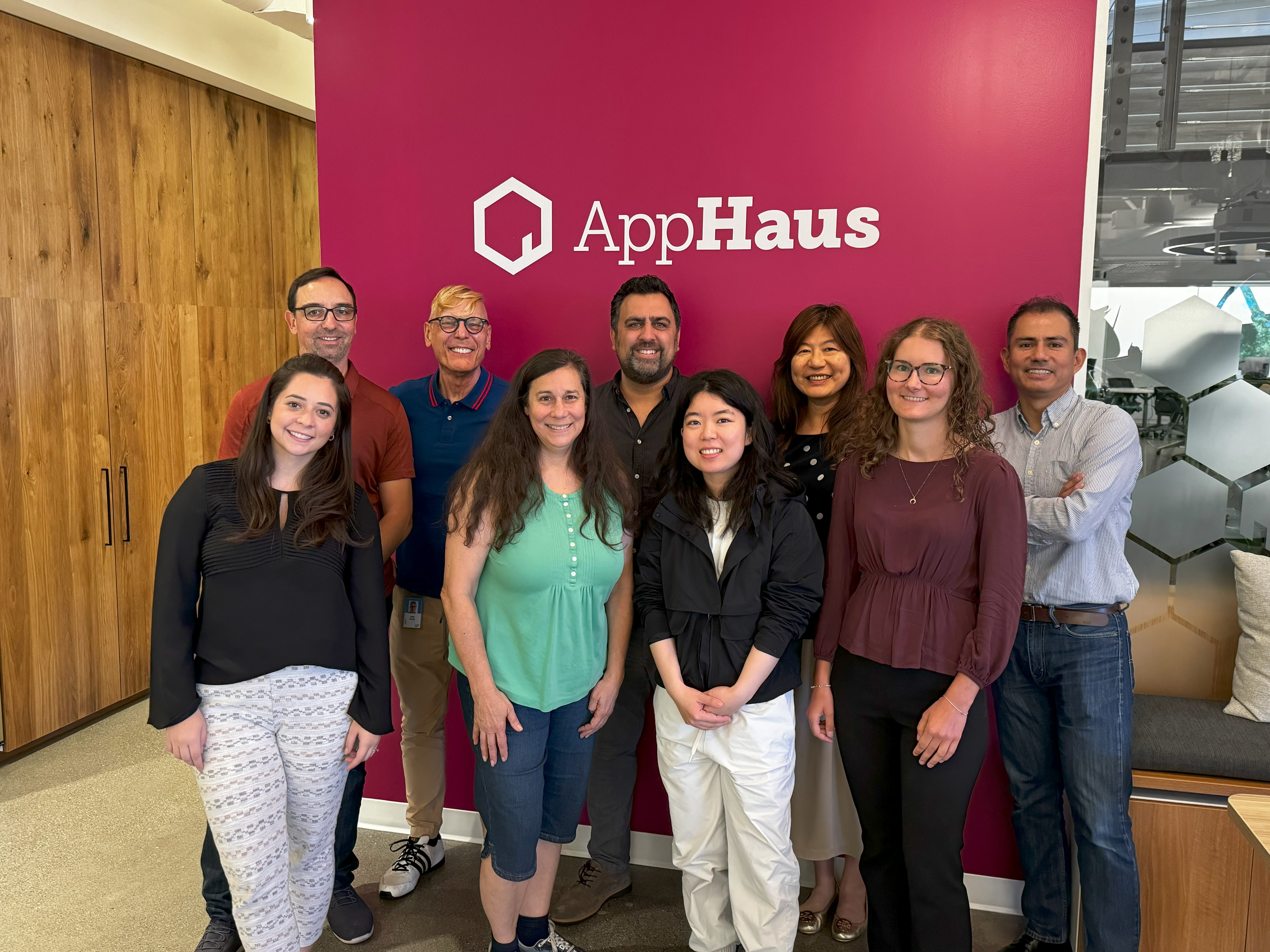
Opening today, SAP AppHaus Palo Alto is co-located with the SAP Experience Center, providing a holistic engagement space for customers and partners.
SAP AppHaus differentiates itself through its human-centered approach to innovation. By combining design thinking and enterprise architecture, SAP AppHaus supports customers through the entire journey — from ideation to deployment — and ensures a sustainable implementation of innovation in customers’ landscape.
SAP AppHaus is not simply a showcase for technology, but a creative space where SAP collaborates with customers to develop solutions that address their most pressing business problems. Using methodologies and tools that democratize human-centered design, SAP AppHaus network delivers ground-breaking solutions into the hands of people. All solutions are built on SAP BTP, allowing customers to easily take advantage of the platform’s best-in-class capabilities around automation, data and analytics, integration, and developer tools .
The newly renovated SAP AppHaus is part of a global network that consists of 24 SAP AppHaus locations: three run by SAP — in Palo Alto, Berlin, and Heidelberg — and the rest by partners around the world. The renewed Silicon Valley site is just the latest chapter in SAP AppHaus’ 10-year history of helping customers find the most compelling, sustainable value in new technology.
As technology writer Steven Johnson said,” If you look at history, innovation doesn’t come just from giving people incentives; it comes from creating environments where their ideas can connect.” Now Silicon Valley has a brand new space where inventors and business leaders can generate the next big thing.
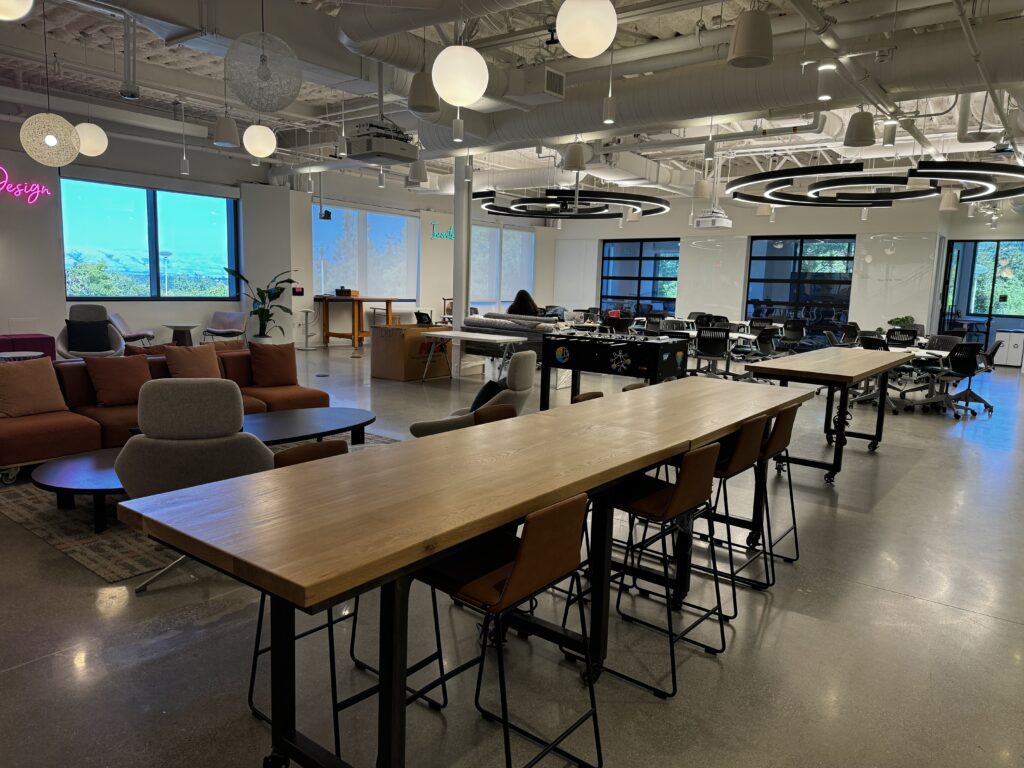
Last year marked the 10th anniversary of SAP AppHaus, celebrating a decade of successful co-innovation with customers. In honor of this milestone, Tim Brown, chair of IDEO and a pioneer of design thinking in business, said, “Congratulations to 10 years of SAP AppHaus! It is remarkable what you achieved. All your competitors tried it, but you succeeded.”
Kulmeet Bawa is chief revenue officer for SAP Business Technology Platform at SAP.
The sales journey is never over, and organizations focused on customer success understand this need to constantly deliver on customer expectations while highlighting new innovative opportunities to drive growth. This is a key element of our strategy for SAP Sales Cloud, which is why SAP is partnering with Gainsight.
As a leader in customer success and product experience software, Gainsight enables SAP customers to align sales and customer success efforts, delivering a seamless customer experience that boosts retention and drives revenue growth.
By integrating SAP Sales Cloud and Gainsight Customer Success, organizations can orchestrate connected customer journeys, leverage AI-powered automation, standardize workflows, and enhance strategic account planning, among other benefits.
This partnership seeks to redefine and enhance enterprise customer success strategies while reinforcing SAP’s commitment to intelligent CX.
To develop an effective customer program, organizations need the capability to integrate relevant data and intelligence. With a composable, plug-and-play framework approach in SAP Sales Cloud, organizations can seamlessly access and integrate Gainsight data within the SAP Sales Cloud solution, harmonized with the data and intelligence.
What does this partnership mean from Gainsight’s perspective?
“Gainsight has helped more than 2,000 companies, including many of the world’s top brands across industries, transform their operations and prioritize customer retention and growth,” said Chuck Ganapathi, COO and President at Gainsight. “Now, by delivering Gainsight’s unique human-first AI capabilities to SAP Sales Cloud, we’re empowering our joint customers to spend less time on administrative work and more time focusing on their clients. And this is just the beginning — we’re looking forward to deepening our collaboration with SAP and driving even more innovation together.”
The integration offers comprehensive insights into the customer journey, accessible to both sales and customer success teams within a single platform. A 360-degree customer view along with real-time data analysis and automated workflows and playbooks enable teams to proactively act on customer risks and expansion opportunities. It empowers the sales team to enhance and expedite the sales cycle, while enabling the customer success team to expand post-sale engagement strategies.
It’s also important to myself and my team to have a pulse check on the market, collaborating and validating with our user community, partners and industry analysts.
“Customer success is a strategy that requires data, intelligence and analytics to be successful,” explained Liz Miller, vice president and principal analyst at Constellation Research. “SAP and Gainsight are bridging the gaps that can form across the customer, revenue, and success ecosystem by intentionally bringing success data together with market intelligence to accelerate decision velocity and action. This partnership is focused on centering success on the customer by expanding the scope and scale of intelligence where sellers and successful leaders work.”
To put this all into context, let’s say a manufacturing company wants to increase customer retention and capture untapped revenue opportunities. Through this partnership, customer success managers can develop and align tailored customer goals and success plans with customized engagement and support strategies, expanding upsell and cross-sell opportunities. At the same time, sales reps can utilize in-depth data, such as customer satisfaction levels, and product usage patterns to refine and improve ongoing and future sales cycles.
The SAP and Gainsight integration is now available on SAP Store.
Ritu Bhargava is president and chief product Officer of SAP CX and Industries.
The 2024 Economist Impact report “Across the procurement-verse: Changing trends in the procurement function” highlights the trends transforming the role of procurement, from the evolving influence of procurement to driving sustainability and managing risk.
The SAP-sponsored report offers insights from more than 2,300 C-suite executives spanning multiple countries, regions and industries and examines the pressures facing today’s procurement teams. As these teams manage risks like geopolitical shifts, supplier threats, and liquidity risks, the surveyed executives emphasize an urgent motivation to improve their procurement operations through agile, innovative, and fast-paced solutions.
Today’s complex and uncertain business environment has pushed procurement teams to take matters into their own hands. Not only are they accelerating digitalization by adopting emerging technologies like AI, they are driving it by searching for ways to change the procurement operating model.
Procurement officers view driving innovation as one of their function’s chief objectives. Doing so will help them navigate risks and respond to an evolving consumer environment.
When procurement is truly influential, it is proactive. Teams that understand digitalization and the technologies being acquired have more impact in this area than those that are reactive. Over two-thirds (70%) of the survey respondents agree that procurement is actively involved in developing their wider organization’s digital transformation strategy — though whether this is true in the day-to-day may vary from business to business.
If procurement is to play a more integral role in businesses, changes to the function’s operating model are likely for some organizations, which is why the research also shows that procurement is accelerating its digitalization, including through the adoption of emerging technologies. Approximately 84% of executives are confident in their procurement team’s ability to apply technology successfully to automate some processes and shift attention to more strategic and complex tasks.
This ability to seamlessly integrate and adopt new solutions will be critical as
procurement teams work to balance capabilities, know-how, and expertise from suppliers to achieve the best possible results.
While innovation is at the core of many companies’ priorities, C-suite leaders are laser-focused on the solutions that enable their teams to be more efficient, cost-effective, and risk-averse.
More than half (57%) of the C-suite cite digitalization as the top strategic priority for their procurement teams. This emphasis may be fueled by recent advances in generative AI, which is the top technology trend (34%) executives plan to implement in the next 12 to 18 months.
Digitalization efforts can offer real-time capabilities that better address dynamic market challenges and make existing procurement processes more efficient. Data-driven insights allow for more actionable outputs in strategic decision-making and can even impact procurement’s role in engaging contingent labor. Augmented with AI, they can easily manage contingent labor by streamlining and standardizing recruiting processes like job advertising, resume scanning, expediting background checks, and more.
More efficient intake management also goes hand-in-hand with digitalization. While generative AI occupies the highest priority, intake management is only one percentage point behind it, making it the second-most likely tech trend to be piloted or implemented.
The top organizational risk for procurement was monetary uncertainty (49%), as macroeconomic risks can have a large impact on operational external risk. This is a potential factor as to why procurement teams are focused on risk as a longer-term priority.
Updates here can create opportunities like multi-sourcing, which can improve risk reduction and resilience amid growing external threats, and supplier diversity — driving market expansion through a more diverse supplier base. This can also reduce single-sourcing dependencies to mitigate risks against potential disruptions.
These possibilities prove how companies must make it a mission to improve the quality of data and the models needed to effectively analyze it. Subpar data directly hinders procurement’s ability to make good decisions, undermining its overall effectiveness and derailing successful digitalization before it takes hold.
No other strategic priority attracts nearly as many responses as a priority across all industries as digitalization. However, respondents also agreed on one other key topic: the role that AI will take in the digitalization journey.
Adoption of an AI strategy stands at the joint top of executives’ list of digitalization priorities for procurement, alongside spend analytics, both cited by 44%. Almost half (48%) of executives aim to use AI to improve procurement processes through source-to-pay and AI-enabled spend management and decision support.
As the main drivers for digital transformation in procurement, these two objectives are complementary. AI tools can read a contract to evaluate clauses and suggest how they can be improved. It can also enhance data management, streamlining the processes needed to make key procurement decisions.
Fully digitalizing procurement operations has been on the function’s agenda for several years, but it is a continuous challenge. It is a process that does not have an endpoint, particularly as technologies advance quickly. The leading technologies from just three years ago pale in comparison to what can be accomplished today, which require knowledge across software development, APIs, and AI.
Therefore, success in building a thorough and adaptable AI strategy requires top-level expertise. Acquiring the necessary skills could entail considerable organizational and cultural change in procurement and across the business — extending beyond the structural shifts and developing new ways of working to build these skills.
Across industries, procurement is already finding new ways to add value to the organization. But now that chief procurement officers and their teams are more consistently gaining a seat at the decision table, the challenge is to keep it.
The ongoing state of disruption offers ample opportunity for procurement teams to continue evolving and demonstrate their worth. Above all, improving collaboration with other business stakeholders will be the key to strengthening procurement’s role within the organization. Today’s technology-driven initiatives are as much a human challenge as they are a technology one, and when organizations are planning these initiatives it is clear that they need to consider people, process, and technology in equal measure to ensure success.
For more about the findings from this year’s Economist Impact report, tune in to this podcast hosted by Art of Procurement: What the Research Foretells About Procurement’s Vision, Priorities, and Opportunities.
Gordon Donovan is global vice president of Research, Procurement, and External Workforce at SAP.

UK supermarket chain J Sainsbury plc (Sainsbury’s) aims to further its Next Level Sainsbury’s plans and improve its commercial systems through a recently announced SAP collaboration. A new path for the retailer is established by the strategic partnership between SAP and Sainsbury’s, which focuses on modernizing commercial operations and boosting business flexibility. Sainsbury’s current systems […]
The post Sainsbury’s Transformation Fueled by SAP Collaboration appeared first on InsideSAP.
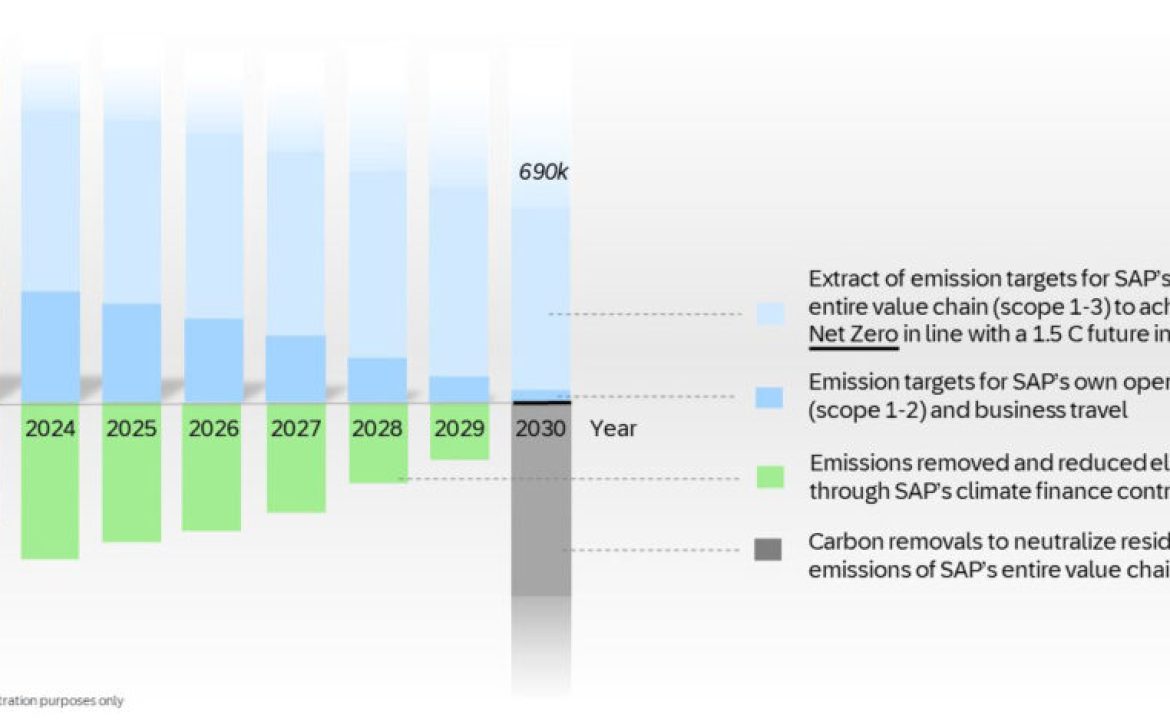
Starting in 2024, SAP is doubling down on its net-zero strategy by expanding its commitment to nature conservation and making financial contributions to climate projects.
The financial contribution will support carbon removal and carbon reduction projects:
This doubling down on its net-zero strategy follows SAP’s successful delivery on its pledge to become carbon neutral in its own operations in 2023 by balancing out unavoidable emissions with carefully selected carbon credits. While the company’s use of the statement “carbon-neutrality” will be discontinued, the dedication to reduce its carbon footprint and finance climate action beyond its own value chain remains strong.
Net zero is a state where the greenhouse gases going into the atmosphere are balanced by removal out of the atmosphere. There are a number of definitions of net zero and how companies can achieve it. SAP follows the Science Based Targets initiative’s (SBTi) Net-Zero Standard. Achieving net-zero emissions across our entire value chain means that all our emissions across all emission sources need to be either eliminated or, up to certain limits, compensated for. These emission areas, known as scopes, include those from our own operations, those generated by the energy we purchase to run operations, and finally, the largest area, external emissions such as those incurred by employee travel, items procured, and customer data center use.
SAP is on track to meet its 2025 goal of planting 21 million trees and has now raised its reforestation commitment.
By 2030, SAP will support trusted partners and communities to plant and protect a total of 25 million trees helping to conserve diverse forests. Furthermore, SAP will fund the conservation and rewetting of coastal and inland wetlands such as bogs and mangrove swamps. With these conservation initiatives and the increased reforestation pledge, SAP’s goal is to conserve more land than its offices and owned data centers occupy worldwide.
To ensure that selected projects deliver a positive outcome, SAP will continue to apply the rigorous and robust due diligence that has previously informed the selection of successful climate investments such as SAP’s long partnership with Livelihood Carbon Funds (LCF), where SAP has funded the planting of trees in Senegal, Rwanda, India, Indonesia, Guatemala, and Mexico.
SAP’s Climate Finance Contribution on the Path to Net Zero
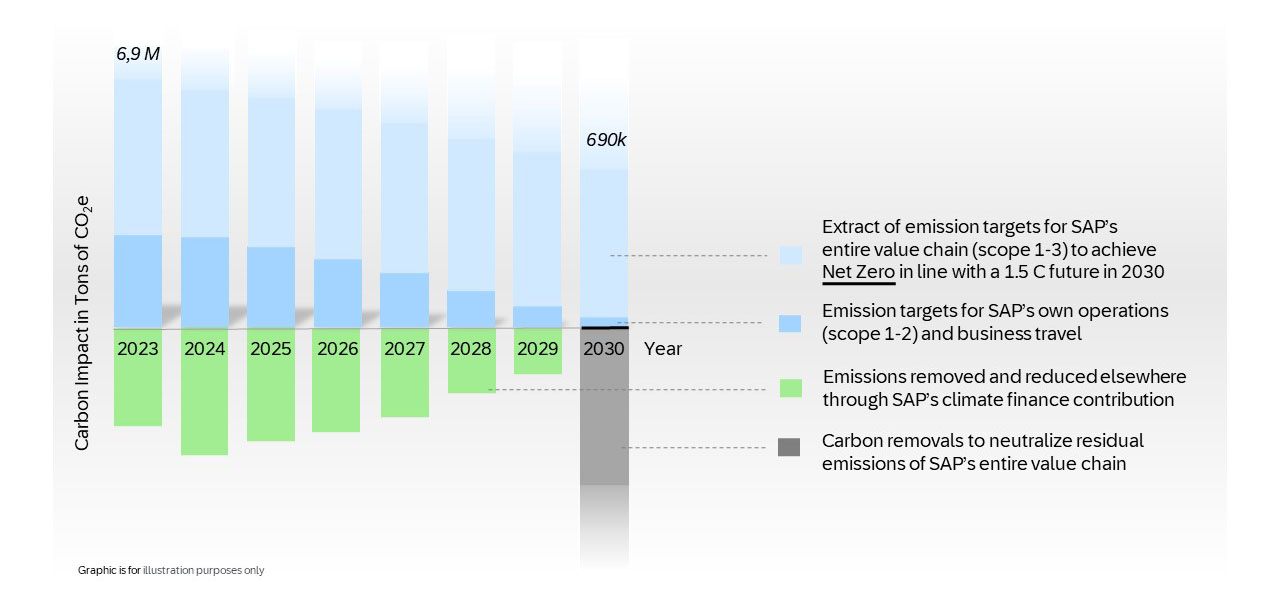
SAP firmly believes that financing climate projects beyond a company’s value chain should be an item on every corporate sustainability agenda. As long as it does not undermine current corporate decarbonization programs, the financial muscle of corporations can bridge the gap in parts of the world where fiscal finances are not robust enough to restore ecosystems and build resilient low carbon economies and livelihoods.
This financial contribution will provide quantifiable benefits to mitigate the effects of climate change beyond SAP’s own value chain with investments in projects that deliver a positive impact for the climate, for local and global populations, and for biodiversity.
The level of the financial contribution is determined by SAP’s own emissions in a given year and is disclosed in terms of carbon emissions, since costs for carbon projects can be subject to change.
With this financial contribution and increased commitment to land conservation and reforestation, SAP continues its journey to introduce meaningful measures to achieve net-zero in 2030, 20 years earlier than originally planned.
Financing climate projects at the same time as pursuing its corporate net-zero agenda allows SAP to take responsibility for emissions that cannot be avoided and actively mitigate climate change on a global level. Furthermore, the financial contribution will enable positive climate action on a far greater scale than SAP could achieve alone.
In the last 15 years, corporate sustainability at SAP has shifted perceptions on how corporations manage their own carbon emissions and how corporate sustainability agendas must be as actionable as they are accountable.
Since 2012, the SAP Integrated Report has shared information on SAP’s annual environmental performance and progress on corporate sustainability targets. SAP has led the way in showing that corporate sustainability is an integral part of business – not just an add-on to strategy or operations.
SAP’s carbon impact is one of the sustainability KPIs that are indicators of future performance and form the basis of compensation elements for members of the Executive Board of SAP SE. Today, sustainability is deeply embedded in SAP’s vision to bring out the best in every business. With its extensive portfolio of sustainability solutions, sustainability is anchored in SAP’s purpose to make the world run better and improve people’s lives.

Techies, listen up! 📢
Discover the world of digital twins where the physical and digital merge to unlock creativity and innovation. 🌟
Want to learn more about SAP Digital Manufacturing? Then join this learning journey: https://sap.to/6051V5Pix