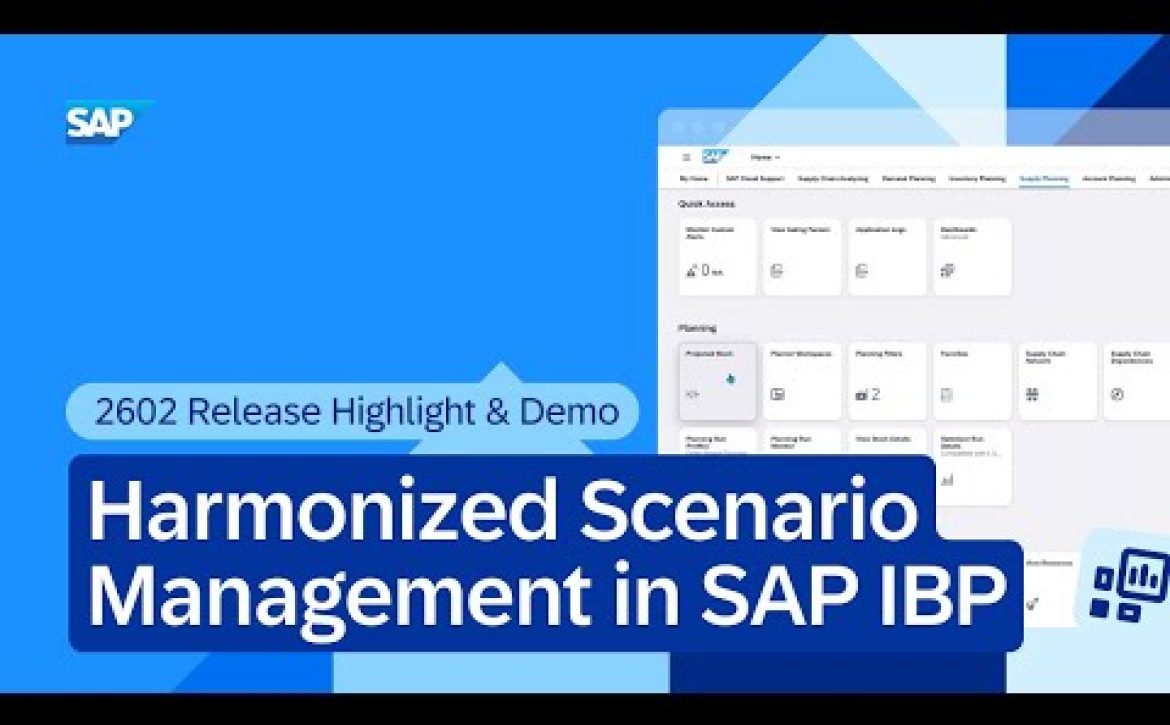
Harmonized Scenario Management in SAP IBP | 2602 Release Highlight & Demo

Discover harmonized scenario management in SAP IBP 2602: a new approach that unifies scenario planning across key figures (time series) and orders in one seamless workflow.

In this highlight tour, you’ll see a complete end-to-end scenario cycle driven from Planner Workspace: create a scenario (without running a simulation first), plan changes across demand and supply, run planning jobs that consider all scenario changes, compare outcomes, and promote results back to baseline. The result is a simpler way to test options. Move forward with confidence without juggling separate scenario types.

🧩 One scenario for key figures + orders — Work with time series planning data and order changes together to create a truly harmonized scenario.

🗓️ Better scenario lifecycle control — Create scenarios directly (no simulation required) and use a scheduled deletion date to manage scenario cleanup.

⚙️ Plan, simulate, and save, on top of scenarios — Run simulations on existing scenarios and choose to discard changes, save to another scenario, or save back to the current one.

🚀 Promote scenarios back to baseline (now for orders too) — Promote both key figure results and order data to baseline, and choose whether to promote all planning results or only interactive changes.

Chapters:
00:10 – What’s new: harmonized scenario management
00:29 – End-to-end scenario cycle in Planner Workspace
00:54 – Create a scenario (no simulation needed)
01:18 – Add order changes inside the scenario
01:43 – Run simulations on top of scenarios
01:56 – Execute planning run with scenario supply
02:14 – View order details in Planner Workspace
02:45 – Promote scenario to baseline (key figures + orders)
03:10 – Confirm changes promoted

• What’s new (Help Portal): https://sap.to/6051hBRlN

• Learn more about SAP Integrated Business Planning: https://sap.to/6053cGTA3

What a Payment Factory Is in SAP S/4HANA and When You Need One

A payment factory is a centralized approach to managing corporate payment processes across multiple systems, entities, and banks in SAP S/4HANA.

Designing Agentic Systems with a Human-Centered Approach

If you haven’t heard about AI agents, you might want to check if your Wi-Fi’s working, or maybe you really have been living under a rock. In just a short time, these digital co-workers—or assistants, copilots, and other nicknames—have taken center stage in tech. And the hype is real. Expectations for what AI agents can do are sky-high; some imagine they’ll soon run the whole show, making decisions for us while we sip our coffee. But do we really want them to do everything on their own? And can they actually do that?

As companies race to implement this new technology, they’re discovering it’s not all as smooth as envisioned. Following a recent Gartner report, high costs and fuzzy business value are creating speed bumps. As it turns out, the technology itself isn’t the problem, it’s how and why we use it. Like any shiny new gadget, AI agents only matter when they solve real problems that make people’s lives easier. So, what kinds of issues are they good at tackling? And how do we make sure we’re designing systems that serve actual humans and are not just chasing the latest tech trend?

That’s where things get interesting: deciding when you truly need an agent, how much freedom it should have, and what challenges and tasks it’s meant to address all while ensuring it genuinely helps people, instead of just ticking the “we use AI” box. The real magic happens when humans and agents team up, working side by side for the best results. How do we make the most of this human-agent partnership?

Create transformative impact with the most powerful AI and agents fueled by the context of all your business data

If you’re looking for a practical way to get started, the SAP AppHaus Joule Agent Discovery and Design workshops offer a hands-on approach to help tackle these exact questions. With a blend of human-centered design methods, these workshop formats put people first, working to ensure agentic systems aren’t just flashy but genuinely useful.

Want to try it out for yourself? Here’s how you can run your own workshops and define impactful agentic systems.

A toolkit to build human-centered agentic solutions

The Joule Agent workshops are offered as two different formats, each designed to guide you through a different stage of building effective agentic systems: the Joule Agent Discovery workshop and the Joule Agent Design workshop. Together, these workshops provide a hands-on, human-centered path for creating AI agents that can truly deliver value.

First stop: Joule Agent Discovery workshop

The Joule Agent Discovery workshop is a structured approach to uncover the most valuable opportunities for agentic technology. It focuses on real-world challenges and identifying where automation can make the biggest impact. In two to three hours, participants dive into questions such as: What specific inefficiency or challenge needs solving? What could be automated? Who would benefit most from automation? What needs to be achieved with the automation? How complex and variable is the problem at hand?

The workshop also introduces participants to agentic technology and examines how much the selected challenges would benefit from it. By the end of this workshop, participants identify one or more high-value use cases that are well-suited to agentic technology. This helps ensure that efforts are focused on meaningful improvements rather than adopting technology for its own sake.

Second stop: Joule Agent Design workshop

Next is the Joule Agent Design workshop, which brings together those closest to the process—end users and business experts—to define the details of the agent: its responsibilities, required skills, and how it will collaborate with people. The workshop follows a practical structure:

  1. Define the focus area: Clarify what target users need to achieve within the selected process and identify which aspects would benefit most from automation.
  2. Identify tasks to delegate: Use the metaphor of “hiring a super-specialist” to decide which responsibilities should remain with people and which can be assigned to agents. Exercises help determine how many agents are needed, the risks of automating certain tasks, and where consistency versus autonomy is required.
  3. Describe the super-specialist job: Draft a job description for each agent, outlining necessary skills and responsibilities.
  4. Instruct the super-specialist: Define the instructions or workflow, including information requirements, decision points, and where human involvement is needed.

By the end of the workshop, each agent is described in detail, including its tasks, required knowledge and tools, and an initial set of instructions. This forms the foundation for configuring the agent’s system prompt.

The workshop material also offers guidance on structuring the system prompt based on the gathered information, ensuring a smooth transition from workshop insights to practical implementation. The entire process is designed to be completed in a single day and can be conducted virtually in Mural.

Learning how to run these workshops

To help ensure that anyone can confidently run these workshops—no advanced degrees or secret codes required—a set of self-paced courses are available and can be completed at the individual pace of the learner:

  • Discovering High-Value Opportunities for Agentic AI: This course offers a comprehensive introduction to the Joule Agent Discovery workshop. It provides a clear, step-by-step guide, explains the exercises in detail, and gives practical advice on how to facilitate effective sessions. You’ll gain the skills to identify agentic opportunities and successfully lead your team through the process.
  • Spotting Agentic Opportunities in Practice: This short webinar also centers on the Joule Agent Discovery workshop, but it specifically highlights a practical method for assessing the agentic potential of automation ideas. Consider it your quick reference for making informed decisions about automation.
  • Designing Agentic Systems with a Human-Centered Approach: The latest addition to our curriculum, this course walks you through the Joule Agent Design workshop step by step. It covers each exercise, shares real-world examples, and offers facilitation tips. You’ll also learn how to adapt the workshop format for various time constraints and organizational needs.

All the resources required to facilitate these workshops are freely available on the innovation toolkit for AI website. Learners can simply visit the site, explore the materials, and start their agentic journey with confidence to turn ideas into new useful, human-centered AI solutions.


Karen Detken is an expert user experience designer at SAP AppHaus.

Sign up to receive weekly news highlights from the SAP News Center

Specification Management in SAP Integrated Product Development | Expert Talk

Explore the latest innovations in specification management in SAP Integrated Product Development (IPD). In this expert talk, Martin Stocker and Felix Reichle explore how SAP IPD integrates with SAP Cloud ERP, boosts collaboration, and leverages AI-powered search to accelerate product development. Discover new features, customer insights, and the roadmap for 2026.

Chapters:
00:00 – Introduction and agenda
00:48 – Integration of SAP IPD with Cloud ERP
05:20 – Latest updates in specification management
12:18 – AI-powered specification search demo
17:42 – Customer feedback and future roadmap

Learn more about SAP IPD 👉 https://sap.to/6050C8B04

SAP’s Evolving Human Rights Journey

Every Human Rights Day underscores a simple truth: lasting progress for people and their rights starts with each of us and thrives on intention, accountability, and collaboration.

SAP is committed to respecting and advancing human rights

At SAP, we act on our purpose to help the world run better and improve people’s lives through a responsible, people‑first approach to business. 

As a global technology leader, SAP recognizes that its operations, business relationships—including those with suppliers, partners, and customers—and the solutions it delivers can impact people and their rights. This impact can be both positive and negative as well as direct and indirect.

SAP has embedded human rights into its corporate sustainability strategy and in company governance, processes, policies, and engagement across the entire value chain. 

From strategic commitment to culture 

To ensure that SAP’s due diligence remains effective, the Human Rights Office within the Corporate Sustainability organization collaborates with the Human Rights Steering Committee and relevant Board areas. Ultimate oversight rests with the Executive Board of SAP SE.

This governance model provides the foundation for making human rights a shared, cross-functional responsibility rather than a standalone initiative. It translates into collaboration across the business:  the central human rights team working with People & Culture organization to ensure that all employees receive a living wage or to embed safeguards against child and forced labor in recruitment and people management processes.

Beyond formal structures, it is essential that all employees embrace respect for people and their rights as part of SAP’s culture and as a guiding principle in interactions with colleagues, business partners, and the communities in which SAP operates. Tailored capacity-building for critical roles for example in procurement, complemented by awareness sessions for all employees, helps us to get there by strengthening the understanding that day-to-day business activities influence human rights and that any adverse human rights impacts must be proactively identified and addressed.

“What began as policy commitments is becoming part of how we operate: step by step. It takes time and effort to shift from focusing solely on ‘risks to SAP’ to adding the consideration of ‘risks to people’ in our strategic and daily business decisions.”

Stephanie Raabe, Office of Human Rights and AI Ethics, SAP

Respecting human rights across the value chain

Turning commitment into practice requires structure across the business. SAP operates within a global ecosystem—tens of thousands of suppliers, hundreds of thousands of customers, and millions of users—where every connection carries both opportunity and responsibility.

To meet this responsibility, SAP runs a human rights due diligence program aligned with the UN Guiding Principles on Business and Human Rights, designed to identify, prevent, mitigate, and remedy potential impacts on people across its operations and relationships. The program’s core components include:

  • Ongoing risk assessment to identify and prioritize potential impacts on people
  • Preventive and remedial action embedded in policies, business processes, supplier and partner requirements, training, and targeted engagement
  • Speak Out at SAP, an independent, multilingual reporting channel available 24/7 to employees and external stakeholders
  • Transparent communication through the SAP Integrated Report and, its Modern Slavery Statements, and other channels

Across the value chain, SAP focuses on its:

  • Supply chain, setting clear expectations and contractual requirements to uphold human rights and labor standards, applying responsible sourcing practices, and engaging with selected high-risk suppliers regarding living wages.
  • Operations, focusing on ensuring non-discrimination, providing an inclusive, safe, and health-promoting workplace, maintaining fair recruitment and employment practices, and safeguarding confidential channels to raise concerns.
  • Products and services, advancing ethical AI by applying the SAP Global AI Ethics policy, as well as requiring that every AI use case undergo an AI ethics assessment to help prevent discrimination and ensure alignment with its principles.

“AI unlocks great potential for businesses, governments, and society, but also creates economic, political, and societal challenges depending on how it is used. For that reason, the human rights-centered SAP Global AI Ethics policy sets clear ethical standards for developing and applying AI, ensuring we create human-centered solutions that respect people and augment human capabilities.”

Vikram Nagendra, Office of Human Rights and AI Ethics, SAP

Continuously striving for progress  

Human rights due diligence is a journey of continual improvement. SAP regularly reviews the effectiveness of its human rights due diligence system to assess how well salient impacts are addressed.

While mitigation measures in SAP’s own operations have proven effective so far, these reviews have also highlighted the need to deepen our understanding of supply chain risks and to strengthen actions specifically aimed at addressing them. As a company, we also recognize the need to make our grievance channel more accessible to value chain workers, a challenge currently addressed through a pilot program. 

To remain transparent and accountable, SAP has published a second LkSG human rights-focused supply chain due diligence report, alongside the latest Modern Slavery Reports and Human Rights chapter in the 2024 SAP Integrated Report.

Looking ahead: Human rights as a shared responsibility  

In a rapidly evolving world, new regulations, emerging technologies, and rising societal expectations raise the bar for responsible business. Running an effective and efficient human rights due diligence system helps SAP stay ahead and mitigate legal, operational, and financial risks, while strengthening its reputation and leadership in ethical business practices. This approach builds trust with customers, partners, investors, and other stakeholders.

Most importantly, it empowers SAP to uphold and further human rights, a principle reaffirmed on this day. 

“Human Rights Day 2025 is a moment to celebrate progress, but also to recognize that the journey goes on. With the ambition to foster a just and inclusive economy where people and technology thrive together, SAP will continue to engrain human rights into how we operate and innovate”

Matthias Medert, Global Head of Sustainability, SAP

Paola Eugenio is a member of the Corporate Sustainability team at SAP.

Get the latest news and highlights delivered each week via the SAP News Center newsletter

How Free SAP Build Templates Help You Get Started Sooner | SAP Build Myth Busters

SAP Build gives you over 400 ready-made templates so you can go from idea to development to deployment right away. In this video, we show how the SAP Build Lobby helps you launch complete solutions for common business challenges, like processing orders with billing blocks. With Joule for Developers, you can use natural language to create and modify processes, scripts, and forms with no coding required. Try SAP Build for free today: https://sap.to/60557WuKP

What Are Cost Centers in SAP S/4HANA?

The cost center is an important area of responsibility in the company and plays a key role as master data.

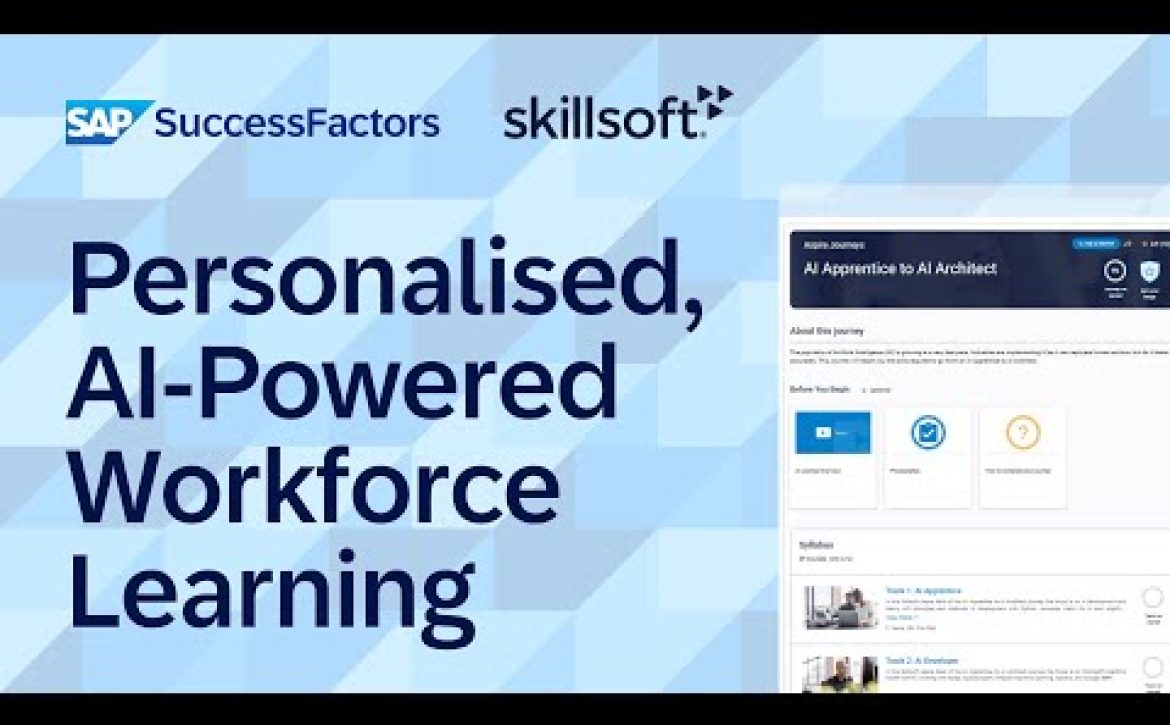
Personalized, AI-Powered Workforce Learning in SAP SuccessFactors with Skillsoft

The way we work is evolving fast – learn how SAP Content Stream by Skillsoft helps organizations build the skills that power business transformation.

In today’s rapidly changing workplace, skills development can’t wait. SAP Content Stream by Skillsoft, an SAP Solution Extension, enables continuous learning at scale—helping employees, teams, and organizations stay ahead through personalized, skills-based learning directly integrated into SAP SuccessFactors.

This video explores how SAP Content Stream by Skillsoft connects people with the skills that matter most. Learners can access over 350,000 expert-vetted courses spanning leadership, technology, and compliance—available in multiple formats to match diverse learning preferences. From short videos and practice labs to audiobooks and summaries, the platform makes learning flexible, inclusive, and measurable.

Powered by Skillsoft’s AI coach, CAISY™, learners can even practice real-world conversations and receive instant, personalized feedback—bridging the gap between knowledge and performance. For HR and L&D leaders, integration with SAP SuccessFactors delivers a unified experience: simplifying content management, tracking progress, and meeting global compliance needs in more than 30 languages.

With this joint innovation, SAP and Skillsoft empower organizations to close skills gaps faster, reduce redundant learning subscriptions, and increase ROI—all while supporting a culture of continuous growth.

Explore how SAP Content Stream by @skillsoft drives measurable workforce development:
https://sap.to/60507DycC

00:00 – Introduction
00:25 – The Changing World of Work
01:05 – Personalized Learning at Scale
01:50 – Inside SAP Content Stream by Skillsoft
02:30 – AI Coaching with Skillsoft CAISY™
03:00 – Integration with SAP SuccessFactors
03:25 – Empowering Continuous Learning

#SAP #SuccessFactors #ContinuousLearning

Databricks Data Scientist Tooling & MLflow, Explained

See how Databricks and SAP Business Data Cloud empower data scientists. Use SQL, Python notebooks, and MLflow to train, track, and apply machine learning directly on trusted business data.
🎧 Full episode → https://www.youtube.com/watch?v=11D4_p3d0Ww

SAP #Databricks #MachineLearning #MLflow

Submissions for the 2026 SAP Innovation Awards Are Open

SAP isn’t just shaping global business; it’s helping real people and teams turn fresh ideas into solutions that matter. With ERP-centric, cloud-based, and AI-enabled tools, organizations can navigate fast-changing times, spot opportunities, and avoid risks with confidence. The most meaningful innovations go beyond one person’s success. They ripple outward, inspiring others and making a real difference in communities and industries around the world.

This brings us to the 2026 SAP Innovation Awards, the yearly celebration that honors customers using SAP technologies to innovate with purpose and achieve meaningful outcomes. The awards recognize industry innovators and honor the individuals and teams who make transformations happen, amplifying their stories to a global audience.

Recognizing excellence: SAP Innovation Awards overview

Submissions for the 2026 SAP Innovation Awards are now open. Organizations utilizing SAP technologies to tackle real-world challenges are encouraged to submit their innovation stories today, demonstrating how these innovations help solve economic, environmental, and social challenges.

New avenues for growth and innovation

In the past, the SAP Innovation Awards have been described as a tribute to “bold innovators in challenging times.” This is even more true today, given changing global landscapes and the increasing necessity to telegraph—and circumvent—obstacles in advance, combined with the acceleration of AI and other groundbreaking technologies.

The 2026 SAP Innovation Awards have 16 total categories for innovators, with participants encouraged to select one of the following 11 to best describe their submitted transformation:

  • AI Excellence: For customers that are harnessing SAP Business AI to transform operations, elevate efficiency, and shape the future of work through intelligent automation and smarter processes.
  • Cloud ERP Champion: For customers that embrace SAP Cloud ERP to transform, future-proof, and unlock new avenues for growth and innovation.
  • Customer Experience Innovator: For customers that have transformed their businesses with cloud technologies, creating standout experiences that delight customers and fuel growth.
  • Financial Futurist: For customers that are leveraging our finance solutions to revolutionize financial processes, deliver new business models, optimize working capital, increase efficiency, and reduce risk.
  • People Experience Pioneer: For customers that are reimagining the employee journey through AI-enabled, cloud-powered transformation, crafting exceptional experiences that inspire and empower their workforce.
  • Procurement Visionary: For customers that are leveraging our spend management solutions to automate procurement processes and actively manage indirect and direct spend for better control, greater value, more savings, and operational efficiencies.
  • Services Superstar: For customers that have leveraged our services to accelerate their business goals by enabling organizational learning, increasing user adoption, enhancing productivity, and maximizing the overall value of their SAP solutions.
  • Supply Chain Catalyst: For customers that are using our supply chain management solutions to build strong, well-orchestrated supply chains. With SAP’s supply chain management solutions, companies can realize increased visibility across their supply chains, improve efficiency and compliance with regulations, and ensure customer satisfaction.
  • Sustainability Hero: For customers that are harnessing the SAP Sustainability portfolio and the power of connected apps, data, and AI for improved efficiency, streamlined compliance, and business growth for a sustainable and resilient future.
  • Technology Pathfinder: For customers that have implemented SAP Business Technology Platform (SAP BTP) to solve a business problem or unlock an innovative use case that results in a positive, measurable impact on the community or society.
  • Transformation Impact: For customers that are leveraging SAP Signavio solutions, SAP LeanIX solutions, and WalkMe solutions to generate business value and strengthen their transformation capabilities. These organizations are consistently advancing critical dimensions—such as processes, applications, people, and data—to ensure they remain resilient and well-prepared for the future.

It should be noted that, in 2026, the SAP Innovation Awards will no longer recognize the Partner Paragon category. Details surrounding partner recognition can be found here on the SAP Partner Portal site with more updates expected shortly.

Reshaping the planet

There are five remaining categories, and candidates are automatically entered based on their industry. The “Industry Leader” grouping is focused on customers that are reinventing business or industry models, streamlining operations, engaging customers or serving constituents in new ways, collaborating across ecosystems, and creating meaningful societal or environmental impact. This category is divided into the following areas:

  • Consumer Industries
  • Discrete Industries
  • Energy & Natural Resources
  • Public Services
  • Service and Financial Services Industries

A call for submissions, a call to action

Transformative change has become a regular, rather than a sporadic, occurrence. And it is the people on the ground who are not only generating this reframing but using the vast assortment of available tools to make these innovations accessible.

In the tradition of SAP, the 2026 SAP Innovation Awards will highlight those positively shaping business, culture, and the planet. This is your chance to showcase yourself as you help your organization and the world move forward.

I truly hope you will submit your innovative solution to the 2026 awards for the world to see and celebrate.


Sophia Mendelsohn is chief sustainability and commercial officer at SAP.

Sign up to receive weekly news highlights from the SAP News Center

Previous Next
Close
Test Caption
Test Description goes like this