How Metcash Transforms B2B Commerce with SAP Commerce Cloud

From paperwork to AI-powered personalization, Metcash is transforming B2B commerce in Australia with SAP Commerce Cloud.

Metcash, Australia’s leading wholesaler for independent businesses, built a scalable B2B marketplace called Sorted in partnership with SAP Commerce Cloud. What used to be paper-heavy and hard to track is now simpler, faster, and more transparent, helping customers find and procure products with line-level detail.

Search and AI play a central role. With more than 75% of customers using the search bar to discover new products, Metcash is investing in intelligent search, personalization, and AI-driven recommendations to help time-poor customers discover products faster and order more efficiently.

Sorted now processes around 48,000 transactions per week and connects over 3,500 suppliers. Metcash reports that ordering through Sorted delivers a 75% time savings for customers, boosting efficiency and strengthening customer engagement. The result is a future-ready platform designed to scale and support growth.

Learn more about SAP Commerce Cloud 👉 https://www.sap.com/products/commerce-cloud.html

Follow us on social:
LinkedIn: https://www.linkedin.com/company/sap/
Instagram: https://www.instagram.com/sap
Facebook: https://www.facebook.com/SAP/
Threads: https://www.threads.com/@sap

About SAP:
As a global leader in enterprise applications and business AI, SAP stands at the nexus of business and technology. For over 50 years, organizations have trusted SAP to bring out their best by uniting business-critical operations spanning finance, procurement, HR, supply chain, and customer experience. For more information, visit: https://www.sap.com/index.html

#SAP #SAPCommerceCloud #B2BCommerce

Staying Ahead of Packaging and Plastics Regulations with AI-Driven Capabilities: New Updates to SAP Responsible Design and Production

With the rapid expansion of regulations concerning packaging and packaging waste, such as the extended producer responsibility (EPR), and plastic taxes, organizations face the pressing challenge of adapting quickly to remain compliant and competitive.

Since 2021, SAP Responsible Design and Production has been SAP’s solution for calculating EPR fees across markets. At that time, the number of jurisdictions with installed mandatory EPR was around 60. By 2030, that number is expected to grow to 200.

Start acting on a circular economy and eliminate waste

With an evolving regulatory landscape, SAP has implemented new updates within the solution to help ensure that customers can navigate diverse reporting requirements, deadlines, and fees while increasing accuracy, reducing fees and exposure, and improving insights. Read on for updates about recent innovations and how the solution combines enterprise data with information about local and global regulations to help calculate obligations like the EU Packaging and Packaging Waste Regulation (PPWR).

Meet EPR regulations with a flexible, AI-driven, and configurable approach

To date, SAP Responsible Design and Production has supported customers in meeting EPR requirements with out-of-box report categories that are pre-configured based on country. However, the new global regulatory landscape necessitates a more flexible approach.

Enterprises need solutions that enable them to:

  • Understand obligations and quickly adapt to new or changing regulations.
  • Prepare the data, consolidating from many sources.
  • Prepare reports, which requires custom reporting logic based on specific business contexts; reuse of rules and fee structures across similar reporting schemes or producer responsibility organizations (PROs); and calculating EPR fees against shipments and printing the results on invoices to show customers the breakdown between product costs and indirect taxes.
Screenshot of SAP Responsible Production and Design, report calculation rules

To address these challenges, SAP Responsible Design and Production introduced user-defined reports to help enable customers to design their own sustainability reports, tailoring them to match unique regulatory logic, business context, and compliance requirements.

With new innovations in SAP Responsible Design and Production, users can:

  • Structure reports according to the specific rules, PRO requirements, and fee models relevant to their business.
  • Precisely narrow down to the packaging and transactional data that is being reported.
  • Satisfy complex requirements with multiple dimensions used in report output structure.
  • Integrate reports with external and third-party recyclability guidelines assessments.
  • Report and comply with the increasing number of PROs that have incorporated eco-modulated ERP fees with eco-modulation grading capabilities.

AI capabilities enhance efficiency and accelerate readiness

The SAP Sustainability portfolio can deliver AI-led operational transformation by capturing sustainability data at the source and embedding intelligence directly into core business processes, thereby enabling continuous improvement at scale. In SAP Responsible Design and Production, two AI cases involving user-defined reports are in beta testing:

SAP Responsible Design and Production, AI-assisted user-defined report explanations

This capability uses AI to analyze and describe how developed extended producer responsibility rules contribute to the assessment results of selected product packaging. During the development of user-defined report categories, EPR report specialists may struggle to understand why a given packaging was categorized in a certain way or not categorized at all. The AI use case is intended to help resolve and simplify an error-prone process by which specialists manually recheck packaging data and reevaluate rules.

SAP Responsible Design and Production, AI-assisted rule creation for user-defined reports

This capability uses AI to translate from regulatory language to system rules, empowering packaging compliance managers to create and validate EPR reporting rules faster and with higher accuracy. The AI use case is intended to help reduce manual effort, avoid costly compliance errors, and accelerate report readiness across markets.

Prepare for future compliance and competitive advantage using AI

The EU PPWR is coming, and most companies aren’t ready. PPWR introduces significant obligations for all economic operators placing packaged goods on the EU market. Brand owners, importers, packaging manufacturers, distributors, and digital marketplaces are all impacted. To mitigate risk and ensure readiness, businesses must take immediate action to assess and adapt packaging materials, data systems, and regulatory reporting.

The detailed packaging data management offered by SAP Responsible Design and Production will help enable organizations to efficiently handle PPWR compliance. With robust data capture and flexible reporting, companies can anticipate regulatory changes and maintain transparency throughout their packaging supply chain.

SAP Responsible Design and Production is working on Article 5 document of compliance capability, recyclability assessments using real product shipment data, so you can assess which changes have the biggest impact. Stay tuned for future announcements from SAP on this topic.

An ERP-centric framework for many business outcomes

By enabling organizations to build reports that align with their changing needs, SAP Responsible Design and Production can ensure that compliance remains agile, scalable, and future-ready. The solution can connect design, production, and regulatory demands to enable organizations to minimize waste, optimize costs, and adhere to global sustainability standards.

Unlike standalone compliance tools, SAP Responsible Design and Production operates within an ERP-centric framework, helping to ensure seamless integration with existing SAP solutions for product master data and transaction data.

Traditional, manually intensive processes are not enough to keep pace with regulations and ensure competitive advantage by unlocking data insights. One SAP Responsible Design and Production customer recently confirmed that using the solution was four times faster and less expensive than manual processes with a spreadsheet or using consultants.

With SAP Responsible Design and Production, your organization can be empowered to respond swiftly and confidently to regulatory changes, working to ensure compliance while freeing your teams to focus on business impact that matters.

Screenshot of SAP Responsible Production and Design

Listen to the recent webinar recording to discover how businesses can address upcoming PPWR requirements with SAP solutions.

Learn more about user-defined report capabilities here or request a demo of SAP Responsible Design and Production. Read these customer stories:


Gunther Rothermel is chief product officer for SAP Sustainability.

Get the latest SAP news delivered to your inbox once a week

How Associations Are Used in ABAP Programming

In ABAP, associations define how business entities relate to one another and enable navigation, lifecycle control, and UI integration in SAP Fiori applications.

Find Out the #1 PLM Mistake Companies Make

Sarah Mei Niesel from SAP had the chance to speak with Rolf, Managing Director of Cideon Software & Services, about the biggest mistake companies make when starting their PLM journey.

Learn more. 👉 https://sap.to/6059C7gRt

How Sovereignty in AI Influences Public & Industry Transformation | WEF26

Sovereignty is becoming a defining factor for organizations in the public sector and regulated industries. It’s the foundation for adopting AI in a trusted, responsible way — and for driving meaningful digital transformation.

This #WEF26, SAP’s CEO Christian Klein, Thomas Saueressig, SAP Chairman of the Supervisory Board Pekka Ala-Pietila, and global business leaders Dr. Ferri Abolhassan and Taha Bawa share insights on how full-stack sovereignty empowers organisations and how trust and data control fuel responsible AI adoption.

Learn more about SAP in Davos: https://sap.to/6050hBEa2

00:00 – Christian Klein, SAP
00:15 – Thomas Saueressig, SAP
00:22 – Taha Bawa, Goodwall
00:40 – Agile Transformation
00:51 – Dr. Ferri Abolhassan, Deutsche Telekom
01:06 – Pekka Ala-Pietila, SAP
01:25 – Full-stack Sovereignty

Why AI Without Humanity Is Incomplete

Artificial intelligence (AI) has moved far beyond experimentation. It is already reshaping how industries operate, how economies evolve, and how people experience work.

Create transformative impact with powerful AI and agents fueled by the context of all your business data

Recent McKinsey research shows that almost all organizations now use AI in some form, yet most are still at the beginning of scaling it responsibly and effectively. At the same time, there is no question that technological change continues to happen at a remarkable pace, and it demands careful guidance through constant organizational transformation, strong leadership, and the key ability to learn and unlearn.

I am convinced that the future will not be human versus AI, despite this still-dominant narrative. It will be determined by how effectively human insight, judgement, and expertise shape AI’s integration into work and society. The real opportunity lies in combining human and AI across creative and analytical domains, applying the right competencies in the right context.

Built on trust and ethical intent, AI can amplify human potential while inevitably transforming certain roles and tasks. The Intelligent Age is not about technological dominance, but about purposeful progress through human-AI collaboration.

The rise of human-AI power couples

Imagine working with a new colleague who has not been trained in a classroom but by algorithms processing vast datasets. Simply put, this AI teammate delivers speed, scale, and precision while you bring judgement, context, and creativity. Together, you achieve outcomes neither could deliver alone.

This is already happening across industries. The real differentiator is how well humans and intelligent systems complement each other’s strengths—mainly combining AI’s capacity for data-driven execution with human adaptability and vision. These human-AI power couples are becoming a new source of competitive advantage, able to solve problems faster, spot opportunities earlier, and innovate more boldly.

Yet this potential only materializes when people trust the AI tools they use: trust built not just on transparency, but on daily experience of systems that help them succeed.

Designing the new architecture of work

To set these human-AI power couples up for success, organizations must rethink the very architecture of work. Trust and collaboration are not enough if the underlying structures remain rigid. Traditional roles and hierarchies cannot keep pace with continuous technological change. Work will become increasingly fluid, shaped by skills, collaboration, and shared intelligence. Our time demands adaptive organizations that continuously learn and enable their teams to take on new challenges as they arise.

Consequently, this shift also places new expectations on leaders. As AI progresses, human leadership becomes increasingly important, not less. Leaders must design environments where human and artificial intelligence reinforce each other, and they must actively drive the effective use of AI to deliver business outcomes. This requires adopting a new model, in which leaders fluently manage integrated systems of people and AI agents. They are accountable not only for their human teams’ performance, but also for the limitations of the AI models they deploy. This means creating a working environment where experimentation is encouraged and where people feel supported as their roles evolve.

As shown in SAP’s own Future of Work research, employees express growing openness toward AI-enabled coaching and support. When AI takes on parts of the coaching role, leaders must focus on what only humans can provide: context, empathy, and the ability to inspire. AI can track progress, but it cannot build trust or shape culture.

The human skills that will shape the Intelligent Age

As humans and intelligent systems collaborate more closely, the skills people need will also continue to evolve. Research from the OECD and the World Economic Forum shows that skills have a shorter lifespan than ever before. Traditional job profiles no longer keep pace. The real differentiator is how quickly people can learn and keep up as technology advances.

A skills-led organization takes a holistic view of employees’ skills across the entire employee life cycle—from recruiting and learning to talent development and succession management. Its defining capability is the ability to adapt with speed to external changes and disruptions. A company can adjust required skills almost in real time. This is a prerequisite to staying competitive and responding quickly to customer and market needs.

AI is the catalyst for this adaptability: it identifies skill gaps in real time, personalizes learning journeys, and enables talent to move fluidly to where it is most needed. This turns skills management from a static process into a dynamic system, preparing a workforce that evolves alongside technology rather than being overtaken by it.

Culture as the true algorithm

At the same time, culture becomes equally decisive. Technology may accelerate change, but culture determines its impact. Responsible AI adoption depends on strong cultural foundations. A culture of trust enables people to take ownership and try new approaches without fear of failure. The goal is to have a workforce with a true growth mindset. A mindset that is defined by the inner drive to grow turns change from uncertainty into progress. It is the ability to learn and unlearn, to let go of outdated approaches and embrace new ones.

In fast-moving industries like technology, the pace of transformation is beyond any single person’s control; what can be shaped is how we respond to it. When curiosity and adaptation become a constant core element of organizational agility, change is met with confidence.

Building inclusive and forward-looking societies

When such strong organizational cultures guide responsible AI adoption, their influence naturally extends beyond the workplace, shaping how technology transforms societies, economies, labor markets, and education systems. Whether this shift leads to broader opportunity or deeper inequality depends on the decisions we make now.

AI is already widening access to learning, democratizing coaching, creating more opportunities, and enabling people to focus on meaningful, uniquely human work. The challenge now is to scale these gains, so the Intelligent Age drives shared progress—not deeper inequality—under a responsible, human-centric approach.

What matters now

In the Intelligent Age, technological progress will not wait—nor should it—but it does require leaders to redesign how work and organizations function so that human and artificial intelligence advance together.

This demands a radical rethinking of structures, skills, and leadership models to match the pace of innovation. Three imperatives stand out.

  • Design for trust: Ensure transparent governance and explicit human accountability, embedded in every stage of AI design; this is essential to building trust in human-AI collaboration.
  • Build human capability: Make continuous learning, upskilling, and mobility the default, powered by AI insights that connect talent to opportunity in real time.
  • Lead with humanity: Anchor empathy, purpose, and ethical judgment in every decision.

Technology can amplify performance and even inspire to think out of the box, but only when guided by clear intent and values. The future will favor organizations that reimagine work at the speed of technology—and keep humanity at its core.

AI will accelerate our potential, and while technology’s advance is largely unstoppable, it is our values and leadership that will determine how we respond to and guide its impact. AI without humanity is simply incomplete.


Gina Vargiu-Breuer is chief people officer, labor director, and a member of the Executive Board of SAP SE.

This piece originally appeared on the World Economic Forum website.

Get news, stories, and highlights delivered straight to your inbox each week via the SAP News Center newsletter

The Digital Ocean: In Conversation with the Biggest Cleanup Project in Human History

In a world where technology moves at lightning speed, I am fortunate to have a vantage point and a unique opportunity to see the connections business leaders make and the possibilities they create in defining moments for their industry.

Beyond Tech – Expanding Perspectives” is about their stories. With this series, I hope to provide a glimpse into the inspiring minds I encounter, capturing their ideas to spark insight and innovation.

For the first episode, I had the privilege of speaking with Nisha Bakker, director of Partnerships at The Ocean Cleanup, an organization proving that, with the right vision, evidence, and engineering, we can solve global challenges at scale.

Plastic is one of humanity’s greatest inventions and one of its most persistent problems. Durable, cheap, and versatile, it has transformed food security, medicine, logistics, and manufacturing. But that same durability means most of the plastic ever produced still exists today. And much of it has ended up where it shouldn’t: in our rivers, our oceans, our ecosystems—even our bodies.

Today, the world produces more than 430 million tons of plastic annually. Production is still rising, projected to grow 66 percent by 2040, even as waste management systems are overwhelmed. Only nine percent of plastic is recycled globally. A third is mismanaged, left to leak into the environment through open dumping, unregulated landfills, and littering. As a result, more than 109 million tons of plastic have accumulated in rivers and lakes, far more than the 30 million tons in the oceans themselves.

Rivers are the main conveyor belt carrying waste to the sea. In 2020 alone, 1.4 million tons of plastic flowed from rivers into the ocean. Without intervention, this will more than double by 2060. Just a thousand rivers account for 80 percent of this flow, largely in rapidly developing economies where growth, urbanization, and weak waste systems collide.

This is where The Ocean Cleanup has focused its mission. The organization aims to rid the world’s oceans of plastic through a comprehensive strategy that includes removing legacy plastic accumulated in the ocean and along coastlines while also stopping new plastic pollution from entering the marine environment. Their ambition is bold and unambiguous: to put themselves out of business by 2040.

Data, vision the difference in cleanup efforts

During our conversation, Nisha explained how the work is driven not only by passion, but by evidence. “You could look at a river, see the problem, and start removing plastic immediately,” she said. “But we first determine the best place to remove it, and then build the entire value chain around it—including recycling, operators, permits, and long-term partners. Data is what sets us apart.”

Behind every cleanup is an enormous amount of engineering and analysis. The Ocean Cleanup’s teams map political, economic, and social dynamics in each country with an affected river system. They deploy trackers to understand how fast plastic moves, where it gets stuck, and how seasonal changes from monsoons to dry months affect pollution flows. Cameras equipped with detection algorithms help quantify volumes and patterns. Modelling and simulations guide where to deploy Interceptor systems and how to scale them.

This foundation of data explains their success: more than 46 million kilograms of waste intercepted and removed from marine and freshwater environments, thanks to System 03, their towed ocean technology spanning over 2.2 kilometers, which can clean an area the size of a football field in five seconds; and over 20 Interceptor systems deployed across the world’s most polluted rivers. The organization recently unveiled plans to tackle up to a third of all plastic emissions from rivers through its 30 Cities Program, targeting urban centers with important waterways and major pollution problems.

But as Nisha stressed, cleanup is only one part of the solution. “We’re buying time for systemic change,” she told me. “Ultimately you need governments, producers, recyclers, and communities working together.”

There are signs of progress: more than 90 countries now have plastic bag bans; extended producer responsibility regulations are expanding; and negotiations toward a global plastics treaty have brought unprecedented international attention to the issue despite agreement remaining elusive.

The importance of systems

What struck me most in our discussion was the philosophy that drives The Ocean Cleanup. With employees from 40 nationalities, they are building bridges across sectors, disciplines, and geographies. They are proving what is possible when a global movement is anchored in evidence-based design and relentless experimentation.

At SAP, we recognize this mindset. Helping the world run better and improving people’s lives requires more than intention; it requires agile systems capable of putting insights at the fingertips of business. That’s why The Ocean Cleanup relies on SAP to deliver on its mission. Every hour they spend building business systems is an hour not spent developing ocean systems, river systems, or new engineering solutions. Our role is to provide a stable, integrated digital foundation so they can focus on innovation, not administration. Technology should accelerate impact and enable scale, not get in the way of it.

The same is true for every organization. Whether fighting pollution, reimagining supply chains, or transforming business models, the biggest breakthroughs happen when you combine purpose with technology that can support it. Clean, connected data, intelligent processes, and applications that automate what can be automated so people can focus on what matters most: This is why SAP is more relevant than ever.

The Ocean Cleanup shows what is possible when bold ideas meet the right technology and the right partnerships. This is exactly the type of conversation I look forward to bringing you through Beyond Tech – Expanding Perspectives, stories of inspiring minds that demonstrate that the future is not something we predict, but something we build together.


Manos Raptopoulos is global president of Customer Success, Europe, APAC, Middle East & Africa, and a member of the Extended Board at SAP.

Get news, stories, and highlights about SAP delivered straight to your inbox each week

BITZER Helps SAP Pioneer Project Embodied AI

BITZER plays a vital role in everyday life—delivering safety, health, and comfort around the globe.

Its advanced refrigeration, air conditioning, and heat pump technologies keep supermarket shelves, hotel rooms, and hospital operating theaters at the right temperatures, whatever the ambient temperature is. Its compressors are essential for storing medicines, preserving perishable goods in shipping containers, and processing frozen foods. And if that isn’t impressive enough, its technology keeps ice hockey players gliding across the ice and breweries fermenting yeast for your beer.

Headshot: Christian Stenzel, vice president of Organization and IT at BITZER
Image courtesy of BITZER

The company is a longstanding RISE with SAP customer and, like SAP, is constantly innovating its products to stay ahead. Christian Stenzel, vice president of Organization and IT at BITZER, has a clear vision for an SAP strategy that prioritizes integration and rapid adoption of AI: “Optimizing business processes is as important as product innovation at BITZER.”

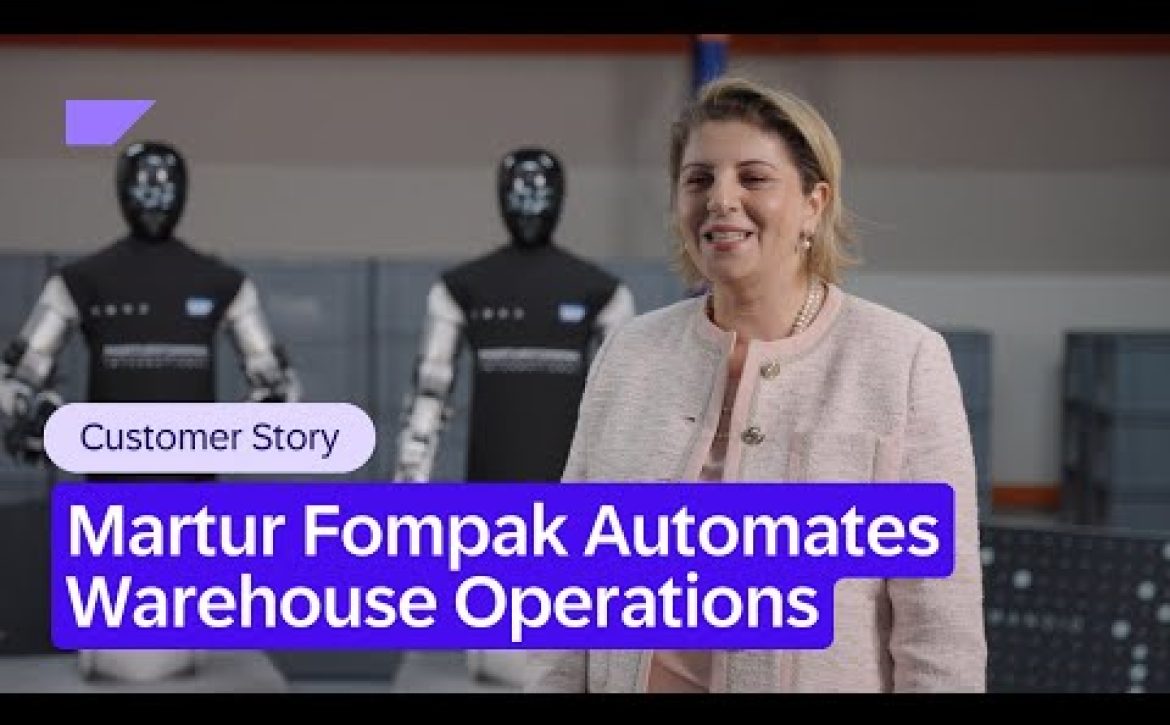
The SAP Research and Innovation team is equally committed to keeping SAP ahead by exploring new technologies and one team is currently dedicated to Project Embodied AI. Embodied AI combines artificial intelligence with a physical form, such as robots, that can perceive and act in the real world. Embodied AI agents take this a step further: extending the impact of SAP Business AI into physical operations by making robots cognitive.

To explore potential use cases where cognitive robots could bring value, the Project Embodied AI team invited a select group of forward-thinking leaders and innovation professionals from SAP customers to join its Physical AI and Cognitive Robots Exploration Council. And BITZER was one of them.

“Demand-driven production is key in our business,” said BITZER’s Stenzel, who immediately saw the potential value in using robots to meet demand fluctuations.

BITZER headquarters building
Image courtesy of BITZER

Running on SAP Business Technology Platform (SAP BTP) and SAP Extended Warehouse Management (SAP EWM) for SAP S/4HANA Cloud, already in place, BITZER already had the ideal software landscape to serve as a proof-of-concept test ground.

Before deployment, NEURA’s 4NE1, one of Europe’s most advanced humanoid robots, was virtually trained for the pick-task use case on NVIDIA Isaac Sim software.

Watch the video: SAP x NEURA x BITZER

A new benchmark for intelligent automation

This proof of concept for Project Embodied AI sets a new benchmark for intelligent automation in warehouses, Stenzel said. The results highlight:

  • Seamless integration: SAP EWM connected directly with physical warehouse operations, no costly middleware required.
  • True autonomy: Robots performed pick-tasks independently, demonstrating advanced task-level autonomy.
  • Agility and flexibility: Robots could enable demand-driven production, operating 24/7 to meet shifting needs.
  • Reliable processes: Orders of materials were automatically created, demonstrating how operational mistakes could be minimized.

A decisive step forward

Dr. Lukasz Ostrowski, head of Embodied AI and Robotics at SAP, heralded this proof-of-concept as a decisive step forward: “The proof of concept at BITZER is great first step for experiencing firsthand how the impact of SAP Business AI can be extended into physical operations. Further proofs of concept are planned as Project Embodied AI continues to assess the business value of embodied AI for customers.”

Business Data Cloud: SAP BDC Demystified with Dimitri Zarganakis | Trending Chats

Is SAP Business Data Cloud just a rebrand, or a real game-changer? In this episode of Trending Chats, Dimitri Zarganakis (NTT DATA) breaks down what BDC is, why it matters, and how it’s powering the future of Business AI.

From Delta Lake architecture to Databricks integration and Data-as-a-Service, we answer the top 3 questions customers are asking — and why BDC could be the engine of SAP’s next wave of innovation.

00:04 – Intro: What is SAP Business Data Cloud and why it matters
00:24 – Big question: game changer or “Datasphere rebrand”?
00:40 – What’s new: Delta Lake foundation + modern ingestion/storage
00:56 – Embedded Databricks: engineering + AI notebooks inside BDC
01:09 – Data products & insight apps: pre-built models, dashboards, faster time-to-insight
02:30 – Why businesses should care: BDC as the data foundation for SAP’s AI-driven future

What is SAP Business Data Cloud and why should I care? https://sap.to/6055CrD6x
What to know about SAP Business Data Cloud Data Products: https://sap.to/6056CrD6I

🎧 More episodes of the Trending Chats podcast:
Watch on YouTube: https://sap.to/6057CrD6L
Listen on Spotify: https://sap.to/6058CrD60
Listen on Apple Podcasts: https://sap.to/6059CrD6F

#TrendingChats #SAPBusinessDataCloud #SAPDatasphere

04/2025 Digitizing the SME Sector: Conesprit Wins Award Once Again

For the third year in a row, we have been honored with the SAP Net New Name Award. This award recognizes us for acquiring the highest number of new SAP Business One customers.

Each year, SAP presents this award to partners who stand out for their exceptional dedication to customer acquisition.

With our practical solutions and a clear focus on the digital transformation of small and medium-sized enterprises, we have managed to succeed in a highly competitive environment.

“This award reinforces our cloud-first approach, which provides our customers with cost-effective access to SAP technology. We thank our clients for their trust and Karsten Rachholz from SAP for the great partnership,” says Roman Douverne, Managing Director of Conesprit GmbH.

Contact:
conesprit GmbH
Steffen Kienzle
+49 7191 34 55 356
steffen.kienzle@conesprit.de

The post 04/2025 Digitizing the SME Sector: Conesprit Wins Award Once Again appeared first on SAP Business One Consulting.

Previous Next
Close
Test Caption
Test Description goes like this