From Cloud to Court: Wilson Runs Smarter and Faster with SAP

When Alex de Minaur steps onto the court in Flushing Meadows-Corona Park this month, with his Wilson Ultra v5 tennis racket, it represents much more than years of athletic preparation and training. From its origins at the Wilson Innovation Center in Chicago to the court at the US Open, the racket is the outcome of a concise and connected journey.

SAP empowers athletes, performers, teams, leagues, and venues worldwide

The hand-crafted stringing on the face of the racket, the customized design, the packaging and distribution, and the systems that enable each touchpoint are all part of a global supply chain that ensures the racket gets from the warehouse into the gear bag of the world No. 5 exactly when he needs it.

That journey—from raw materials and global suppliers through manufacturing, warehousing, customs, and last-mile delivery—is a supply chain story. And SAP helps power it.

The carefully curated racket, along with Wilson’s shoes, shirt, cap, and shorts de Minaur chooses to wear as he competes at the highest level, are just a few of the thousands of products Wilson manufactures and delivers to athletes and customers around the world.

Behind each product is an interconnected global operation spanning manufacturing, warehousing, retail, e-commerce, and B2B channels and a digital foundation that helps Wilson keep it all moving seamlessly.

Powering a global sporting goods business

Wilson is a global leader in sports equipment and apparel, with a legacy of more than a century of innovation across tennis, basketball, baseball, golf, and other sports. From developing high-performance equipment for the world’s best athletes to creating products for players at every level, Wilson combines deep sporting expertise, innovation, and craftsmanship to help athletes perform at their best.

For almost two decades, Wilson has trusted SAP to run its global operations, connecting hundreds of employees across finance, sales, logistics, warehousing, and other critical retail functions.

Wilson’s SAP landscape spans core enterprise resource planning (ERP), supply chain management, data and analytics, procurement, travel, global trade, integration and enterprise architecture. Its current environment includes SAP ERP Central Component (SAP ECC), SAP Analytics Cloud, SAP Datasphere, SAP Business Data Cloud, and SAP Business Technology Platform, as well as SAP Ariba, SAP Concur, and SAP LeanIX solutions, among others.

And Wilson’s SAP digital transformation is continuing. The company is preparing for a major SAP S/4HANA transformation beginning in 2027, which will unlock new capabilities across areas such as extended warehouse management (EWM), transportation, quality, and omnichannel operations. As part of its SAP S/4HANA journey, Wilson uses Joule to assist with code conversion marking the beginning of introducing AI-powered capabilities into its business operations

One connected foundation for a connected customer experience

Beyond professional athletes such as de Minaur that choose to utilize Wilson to perform on and off the court, Wilson’s global customers interact with the company in many ways—through retail stores, e-commerce, and B2B channels. Behind those experiences is a complex network of products, inventory, orders, warehouses, and business processes that need to work together.

Built for the pace of sport

The world of professional sports moves quickly. A tennis match can turn in a matter of seconds. Consumer goods organizations like Wilson run an equally dynamic and demanding global operation: designing, manufacturing, moving, and selling products to customers and athletes around the world.

A major event, such as a Grand Slam or a Wilson ambassador winning a tournament, can bring heightened demand for the products athletes use and fans want to buy. This requires Wilson to coordinate inventory, production, warehouses, retailers, and e-commerce across markets and respond quickly as demand changes. SAP solutions such as SAP Extended Warehouse Management, SAP Global Trade Services, SAP Concur and SAP Ariba provide Wilson with the digital foundation to run smarter, operate faster, and respond to the ever-changing demands running a global retail business

This September in New York fans will see Alex de Minaur compete with his trusted Wilson racket and adorn his new customized Wilson kit. What they won’t see is the integrated ecosystem and the multifaceted journey behind every single racket, every pair of shoes, every piece of apparel—and the SAP technology powering it.

Tennis is a game of preparation. When I walk onto the court, every detail matters—from how the racket feels in my hand to the kit I’m wearing. Knowing that Wilson and the technology behind their business makes sure everything is ready exactly when I need it, that’s the kind of confidence that lets me focus on competing at my best.

Alex de Minaur

Whether it’s a game of tennis or the demands of a global business, success depends on having everything working in harmony. With SAP, Wilson can perform at its best.

And on the court, Alex de Minaur knows he can trust that everything is in place when the moment matters most.

Subscribe to our newsletter to receive weekly news, stories, and highlights from the SAP News Center

AI in SAP S/4HANA Finance: 3 Practical Use Cases for Measurable Business Value

Artificial intelligence has become one of the most frequently discussed topics in enterprise finance.

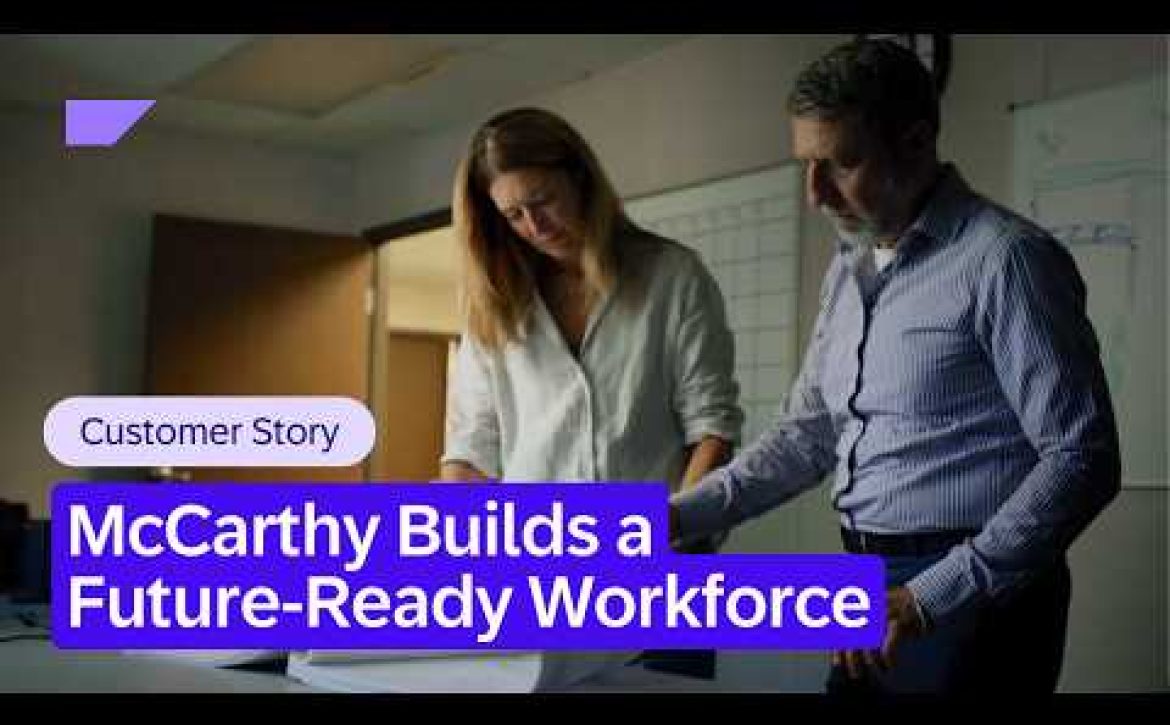
How McCarthy Builds a Future-Ready Workforce with SAP SuccessFactors

See how McCarthy Building Companies uses SAP SuccessFactors HCM to build an employee data foundation for growth, retention, and faster workforce decisions.

McCarthy Building Companies is a 100% employee-owned construction leader with 160 years of history and 8,000 employees across the United States. As the company continues growing, it needs to manage the complexity of a mobile workforce, 300 different unions, and employees moving from project to project across changing job sites.

With SAP SuccessFactors HCM, McCarthy has created a core source of truth for employee data. By going live with Employee Central, Onboarding, and Learning at the same time, the company built a foundation that helps leaders better understand employees, support growth, and make more informed workforce decisions.

That visibility matters in an industry where people are the product. McCarthy now has a more holistic view of its workforce, helping managers make better, faster decisions and support employee retention. While industry turnover is typically around 17% to 18%, McCarthy’s turnover is closer to 10%, a difference the company attributes to managers having better information about employees. For McCarthy, this is about more than improving HR today. It’s about building a platform for the future.

Learn how McCarthy Building Companies is building a future-ready workforce on an employee data foundation: https://sap.to/6057B1IvT7

Follow us on social:
LinkedIn: https://sap.to/6058B1IvTC
Instagram: https://sap.to/6059B1IvTh
Facebook: https://sap.to/6050B1Ivp6
Threads: https://sap.to/6051B1IvpB

About SAP:
As a global leader in enterprise applications and business AI, SAP stands at the nexus of business and technology. For over 50 years, organizations have trusted SAP to bring out their best by uniting business-critical operations spanning finance, procurement, HR, supply chain, and customer experience. For more information, visit: https://sap.to/6052B1Ivp8

#SAP #SAPSuccessFactors #HCM

Computer and network data connection

Digital Transformation Is Complex, But We Often Make It Harder Than It Needs to Be

Large transformation programs are complex by nature. But after years of working with difficult transformation programs, we have found that organizations often make that complexity much harder to manage than it needs to be.

Complexity is not always the problem. Unmanaged, and often self-created, complexity is.

A practitioner’s perspective

Some years ago, after helping turn around a large global SAP Customer Experience program, I was contacted by several customers asking a surprisingly simple question: what did you do differently?

My answer was a set of practical keys to success, which I refined through discussions and workshops with customers over the years. The pattern was remarkably consistent. Weak governance and pragmatic change management were recurring problems. But an even more fundamental issue appeared again and again: many organizations had invested in a solution without a sufficiently clear and shared understanding of what they wanted to achieve with it.

Once that first question is unclear, everything downstream becomes harder.

Start with the outcome, not the transformation

Transformation programs tend to generate activity very quickly.

Workstreams are created. Governance boards appear. Solution workshops are scheduled. Backlogs grow. Training plans are developed. New roles and responsibilities are defined.

All of that may be necessary. But before asking how to transform, organizations need to be able to answer a much simpler question: what are we actually trying to improve?

Strengthen your team with specialized expertise from the Advanced Success Plan

Is the ambition profitable growth? A fundamentally different customer experience? A new service or business model? Greater operational resilience? Better use of data across the enterprise? The ability to scale into new markets?

Without that shared value intent, different teams start optimizing different things. Business stakeholders describe desired outcomes, implementation teams focus on solution scope, and users are eventually trained on functionality without always understanding what should change in their daily work. The result can be a very busy transformation program with surprisingly little transformation.

Keep the business, solution, and people connected

Over time, I started using a simple model to explain this: the transformation triangle.

A transformation needs three perspectives to stay connected:

  • Business: Why are we changing? What outcomes, value drivers, processes, and measures matter?
  • Solution: What capabilities, technology, integrations, data, and implementation choices are needed?
  • People: Who needs to work differently, what support do they need, and how will adoption be sustained?

None of these works well in isolation. A technically excellent solution with weak business alignment becomes an expensive implementation. A strong strategy without a workable solution remains a presentation. And a well-designed process that people do not understand or adopt remains, at best, another PowerPoint slide.

This thinking later became part of the Cloud Mindset Workshop, available to order in the Advanced Success Plan version for SAP Customer Experience solutions. The workshop helps translate the business, solution, and people perspectives into practical topics covering business outcomes, governance, processes, rollout, change management, enablement, and adoption.

A skills gap is not always a training gap

This also changes how we should think about skills gaps.

The immediate reaction is often to provide more training or bring in more technical specialists. Sometimes that is exactly what is needed, but many transformation gaps are broader capability gaps.

A project may have excellent product experts but still struggle because nobody can translate business objectives into process priorities. A strong implementation team may still fail if decision rights are unclear. End users may know how to navigate a solution but not understand why their role has changed.

Skills therefore span all three sides of the triangle: business judgement, process knowledge, product expertise, data and integration capability, governance, change leadership, and adoption.

The objective should not be to create experts in everything. It should be to make sure the organization has the right capabilities at the right moment, and that those capabilities work together.

Governance should reduce complexity, not add to it

Governance is another area where organizations can accidentally create more complexity than they remove.

Good governance does not mean more meetings, more steering committees, or larger RACI matrices. It should make a few things very clear: Who decides? What needs to be decided? Based on which outcomes and measures? How are dependencies and risks escalated? And when should the plan change?

Governance needs to come early because execution becomes difficult when ownership, priorities, and decision-making remain ambiguous. The purpose of transformation governance is not to manage complexity for its own sake. The purpose is to make complexity manageable.

Autonomous CX raises the stakes

AI and autonomous capabilities add another dimension.

Autonomous CX can increasingly use AI agents across SAP Sales Cloud, SAP Service Cloud, SAP Commerce Cloud, and SAP Engagement Cloud to help interpret context, recommend actions, and execute parts of customer-facing processes.

That can remove effort and accelerate execution. But, increasing autonomy does not remove the need for business clarity, governance, process alignment, or people enablement. It increases it. This is also why AI initiatives need to stay connected to business outcomes, process design, governance, and adoption. The more autonomous the technology becomes, the less ambiguity the organization can afford. An AI agent can execute a process faster. It cannot decide what the organization should value, resolve unclear ownership, repair a broken operating model, or create trust by itself.

Most transformation challenges can be traced to a few recurring themes.

Organizations struggle to maintain alignment on outcomes, connect strategy with execution, close the right capability and adoption gaps, and establish governance that supports decisions rather than slowing them down.

The Advanced Success Plan for SAP Customer Experience solutions can help address these challenges in a structured way. The Cloud Mindset Workshop can provide a holistic overview of the key dimensions of transformation across business, solution, and people, using practical concepts and customer examples to help teams reflect on their own approach. From there, more focused expert-led services can go deeper where needed.

Clarify the value intent

Use value management, for example through the value management expert session, to align business stakeholders on outcomes, value drivers, and meaningful measures.

Understand the operating reality

Examine end-to-end processes, ownership, dependencies, and the capabilities required to deliver the intended outcomes. Services such as business process best practices can help teams assess and improve the way processes are designed and executed.

Close the relevant capability and adoption gaps

Bring in targeted expertise where it is needed. This can include services such as the time to value accelerator, technical expert services, AI-focused guidance to identify and apply relevant use cases, and focused support for organizational change and adoption to close both capability and adoption gaps.

Govern and adapt

Use the engagement plan and recurring checkpoints to review progress, make decisions, and adjust priorities as the transformation evolves.

Transformation will never become simple. But it can become understandable, governable, and executable. And in our experience, that is usually where success starts.


Raf Dille is product manager for the Advanced Success Plan for SAP Customer Experience.
Tara Tracey is global product owner for the Advanced Success Plan for SAP Customer Experience.

Get weekly updates from the SAP News Center, delivered straight to your inbox

What NASA’s Return to the Moon Can Teach Leaders About Transformation at Scale

At NASA, a moonshot is not a metaphor. It is an operating model.

Returning humans to the Moon—and building the foundation for an enduring presence in deep space—requires thousands of people, multiple government agencies, international partners, commercial providers, and highly complex systems to work together with extraordinary precision.

Unify every mission-critical function to drive government efficiency and innovation

During the SAP NOW event in Washington, D.C., Dr. Lori Glaze, associate administrator for NASA’s Human Spaceflight Mission Directorate, offered attendees an inside look at the Artemis program and the operational discipline behind it. I later joined Dr. Glaze for a conversation about managing complexity, sustaining momentum, and using emerging technology to support mission outcomes.

The discussion offered lessons that extend far beyond space exploration. For public sector organizations and enterprises undergoing their own transformations, NASA’s experience demonstrates how ambitious goals become achievable: one tested capability, one informed decision, and one coordinated team at a time.

Building momentum one mission at a time

NASA’s Artemis program is designed as a sequence in which every mission tests capabilities and generates knowledge for the next.

Artemis I, completed in 2022, successfully tested the Space Launch System rocket and the Orion spacecraft without a crew. Artemis II built on that foundation with the first crewed flight of the program, launching four astronauts in April 2026 for a nearly 10-day journey around the Moon before their safe return approximately nine days later.

During the mission, the crew tested Orion’s life-support and maneuvering systems, traveled farther from Earth than any humans before them, conducted scientific observations, and safely re-entered Earth’s atmosphere at nearly 24,000 miles per hour.

But the mission was not only about setting records. Every observation, test, and operational decision produced information that NASA can apply to what comes next.

“Each test flight in this program is going to inform the next steps of our mission,” Glaze said.

NASA is now preparing for Artemis III, targeted for 2027. The mission will test critical rendezvous and docking capabilities between Orion and commercial human landing systems developed by Blue Origin and SpaceX. Those tests are intended to reduce risk before Artemis IV, currently targeted as the program’s first crewed lunar landing mission in 2028.

This incremental approach offers an important transformation principle: Meaningful progress does not require solving the entire future at once; it requires designing each milestone to validate assumptions, reduce risk, and create a stronger foundation for the next decision.

Standardization creates the capacity to accelerate

Speed is often associated with moving quickly. At NASA, it also means reducing unnecessary reinvention.

Glaze explained that one of the agency’s priorities is standardizing the architecture supporting future Artemis missions. Although exploration frequently involves building something that has never existed before, NASA also needs repeatable systems and processes that can support a more regular cadence of missions.

“We want to do this over and over again, so we need to standardize our architecture,” she said. Standardization does not eliminate innovation. It creates the stable foundation upon which innovation can move faster.

NASA relies on an extraordinary range of technologies to support that complexity, including SAP solutions. But technology alone does not make a mission like Artemis possible. Its value comes from how effectively it connects people, processes, information, and decisions around a shared objective.

This is equally relevant to organizations modernizing their finance, workforce, procurement, supply chain, and operational systems. When information and processes remain fragmented across different platforms, teams spend significant time reconciling data, navigating interfaces, and recreating decisions.

A connected digital backbone can reduce that friction. It provides a shared operational foundation so that organizations can scale proven processes, introduce new capabilities, and respond to change without rebuilding the enterprise each time.

Complexity demands faster, better-informed decisions

The scale of the Artemis program is difficult to overstate.

NASA must coordinate launch vehicles, spacecraft, landers, spacesuits, scientific instruments, communications, logistics, personnel, budgets, commercial contractors, and international partners. Each element has its own timeline, dependencies, and risks—and all of them must ultimately come together at precisely the right moment.

Glaze said NASA is working to streamline decision-making by placing the right expertise closer to the work. Subject matter experts have been embedded with contractors and industry suppliers so that issues can be identified, evaluated, and resolved more quickly. The objective is to shorten the distance between insight and action.

That challenge is familiar across government. Leaders often have access to enormous amounts of information but lack a unified view of what is changing, where pressure is building, or which intervention will have the greatest impact.

Glaze identified this as one of the most promising applications for artificial intelligence: helping teams absorb large volumes of data, understand status across complex programs, and identify the areas that require attention.

For organizations, the opportunity is to move from systems that primarily document what has happened to systems that can help interpret conditions, anticipate risks, and support the next best action.

Autonomy works best when it expands human capability

NASA is already applying autonomous technology beyond administrative processes.

Robotic vehicles exploring the Moon and Mars can evaluate terrain, select safer routes, schedule scientific activities, manage communications, and avoid hazards with limited intervention from Earth. AI can also help researchers analyze the enormous scientific datasets generated by NASA missions and focus their attention on the most valuable discoveries.

These capabilities illustrate an important distinction: autonomy is not necessarily about removing people from the mission. It is about allowing technology to manage complexity at a scale and speed that enables people to make better decisions.

The same principle applies to the Autonomous Enterprise. Embedded AI can help coordinate routine processes, detect emerging issues, and recommend actions while keeping people responsible for judgment, accountability, and mission outcomes.

Partnerships turn ambition into capability

No single organization could accomplish the Artemis mission alone.

NASA’s architecture brings together government teams, commercial space companies, traditional aerospace manufacturers, international space agencies, scientific institutions, and military partners. Each contributes a specific capability to the larger mission.

For Artemis III, NASA is coordinating with Blue Origin and SpaceX on commercial landing systems. The Orion spacecraft includes a service module provided by the European Space Agency. Future lunar exploration plans also involve mobility systems, habitats, scientific instruments, and infrastructure developed through additional public-private and international partnerships.

This ecosystem is not adjacent to the mission; it’s how the mission gets done.

For public sector transformation, partnerships can provide specialized expertise and innovation that would be difficult for one organization to develop independently. But successful ecosystems require more than contracting. They require shared objectives, clearly defined responsibilities, trusted information, and mechanisms for making coordinated decisions.

Trust is the ultimate operating system

When I asked Glaze for her most important leadership advice, her answer was direct: surround yourself with smart people and trust them. “No one person can do these things,” she said. “They require thousands of people to achieve these amazing things.”

Technology, architecture, and process all matter. But none of them can substitute for teams that understand the mission and are empowered to act.

NASA’s progress under Artemis demonstrates what becomes possible when a bold vision is supported by disciplined execution. The agency is testing before scaling, standardizing where it can, bringing expertise closer to decisions, using technology to expand human capability, and building an ecosystem around a clearly defined mission.

Whether the objective is returning to the Moon, modernizing a government agency, or transforming a global enterprise, the lesson is the same: the most ambitious outcomes are achieved when people, data, processes, and partners move forward together.


Jamison Braun is senior vice president and managing director for U.S. Public Services at SAP America.

Subscribe to our newsletter to receive weekly news, stories, and highlights from the SAP News Center

F1’s Youngest Ever Championship Leader Takes You Inside His Mindset | Significant Figures

At just 18 years old, Kimi Antonelli was handed one of the biggest seats in Formula One. Since then, he has had to learn how to deal with the expectations of @MercedesAMGF1 , the pressure of being Italy’s next great hope, and the demands of competing at the very highest level of motorsport.

But what does that pressure actually feel like from the inside?

In the first episode of Significant Figures, Kimi sits down with Jason Bell and Ariana Bravo to revisit the moments behind the numbers that have shaped his life so far. There is the 0.222 seconds gap that led him to his first Formula One pole position. The 73 years since Italy last produced an F1 World Champion. The age at which his future changed forever. His racing number, 12, and the meaning it carries with him. And then his “Bring It” Number: the exclusive number Kimi brings to the table himself. Because the numbers are only the beginning. The real story is what happened in the moments behind them.

Significant Figures is a new series about the people behind the public achievements – the pressure, relationships, turning points and beliefs that shape their lives and careers. Next, George Russell takes his place at the table.

🔔 Subscribe to watch Episode 2 and follow the series as more significant figures reveal the stories behind their numbers.

CHAPTERS:
00:00 – What’s To Come
00:28 – Significant Figures: Ep.1
01:13 – 0.222 A Pole Position Story
05:27 – 73 An Italian Story
12:57 – 18 A Young Driver Story
25:16 – 12 A Race Number Story
34:10 – 101 Kimi’s Bring It Number

Follow us on social:
LinkedIn: https://sap.to/6058BEv2Xs
Instagram: https://sap.to/6059BEv2Xt
Facebook: https://sap.to/6050BEv2XQ
Threads: https://sap.to/6051BEv2Xv

About SAP:
As a global leader in enterprise applications and business AI, SAP stands at the nexus of business and technology. For over 50 years, organizations have trusted SAP to bring out their best by uniting business-critical operations spanning finance, procurement, HR, supply chain, and customer experience. For more information, visit: https://sap.to/6052BEv2Xa

Fall in Love with the Problem, Not the Solution: Rethinking AI for Real Impact

There is a lot of noise around AI right now. New tools, new models, new promises. Much of the conversation is focused on speed: how AI can help us write faster, code faster, produce faster. That matters, of course. But in a recent conversation with Casey West, lead developer advocate at Google Cloud, we explored a more interesting question: what if the real value of AI is not only that it helps us move faster, but that it helps us think better?

West made a point that stayed with me. Using AI simply to generate more output is only the beginning. The more powerful use case is to treat AI as a collaborator in the thinking process: something that can challenge assumptions, ask questions we might not have asked, and help us see a problem from a different angle. In that role, AI is not replacing judgment, it is creating useful friction around it.

That shift matters because the work of building technology is changing. Developers are no longer just writing deterministic logic and controlling every outcome in advance. Increasingly, they are working with systems that are creative, probabilistic, and less predictable by design. That opens up huge possibilities, but it also raises the bar. Quality, guardrails, metrics, and trust become even more important when software starts to reason in ways that are not always fully scripted.

The advice West offered to developers was simple and probably more durable than any specific tool or framework: fall in love with the problem, not the solution. The technologies will change. The models will change. The implementations will change. But the ability to understand a problem deeply, stay curious, and apply AI with judgment will remain valuable.

Why Partner Momentum Around SAP CX Matters Now

The Autonomous Enterprise is no longer a concept. It is being built and deployed right now. For SAP partners, this is a defining moment.

Across industries, customers are moving from pilots to production. They are investing in systems that can run pricing, orders, fulfillment, and service end-to-end, with AI actively driving decisions and outcomes. They are not looking for more tools. They are looking for results.

This is where SAP has a clear point of view. Customer experience (CX) only works when it is connected directly to execution.

Turn customer engagement into a growth engine

SAP Customer Experience is integrated with SAP Cloud ERP across pricing, order management, fulfillment, billing, and service. AI operates inside these processes using real business data. That means every customer interaction can reflect what the business can deliver.

This is the shift now underway, and it is creating immediate opportunities for partners.

SAP partners are the ones who bring this to life. They take product capabilities and turn them into working solutions that improve conversion, increase fulfillment accuracy, and reduce service cost.

The next wave of growth will be led by partners who move quickly and build on this foundation.

Customer experience is now measured by what gets done

Customer experience is no longer judged by engagement metrics alone. It is judged by outcomes. Customers expect:

  • Accurate pricing at the moment of purchase
  • Real product availability, not estimates
  • Orders that are fulfilled as promised
  • Service that resolves issues without repetition or delay

When these things work, the experience works. When they fail, the problem is immediately visible.

AI is increasing the speed of every interaction. It is also exposing execution gaps faster than ever before. If pricing, inventory, or order data are inconsistent, customers see it instantly.

This is why customer experience and execution can no longer be separated.

AI is now driving actions, not just insights

AI is already acting inside key business processes. As seen in the SAP Sapphire 2026 Innovation News Guide, in SAP CX today:

  • Marketing, content, and campaign assistants can orchestrate segmentation, content creation, and optimization based on live performance signals.
  • Commerce, merchandising, shopping, and order management assistants can connect discovery, conversion, and fulfillment to real-time inventory and pricing.
  • Sales assistants help guide deal qualification and deal execution by linking pipeline signals to pricing, availability, and fulfillment data.
  • Case and service management assistants help automate routine interactions while maintaining full context across orders, entitlements, and history.

These are not future scenarios. These capabilities are available and in use. But they only work when they are connected to trusted business data.

Without that, AI creates errors at scale. With it, AI drives measurable improvement.

Autonomous CX connects experience to execution

Autonomous CX connects core products and processes across the business, operating on a shared business context. It brings together SAP Commerce Cloud, SAP Sales Cloud, SAP CPQ, SAP Service Cloud, SAP Field Service, SAP Engagement Cloud for marketing, and SAP Cloud ERP across finance, supply chain, and order management.

This is not a set of disconnected applications. It is a unified system where customer interactions and operational processes run on the same data foundation. Pricing, inventory, orders, and service are consistent across every touchpoint.

As a result, AI can move from recommendation to execution, working to ensure that every interaction is grounded in what the business can deliver. It can also remove the integration gaps that slow down CX execution.

SAP CX partners are moving faster from projects to outcomes

This shift is changing what customers expect from partners. Customers are not asking for system implementations. They are asking for outcomes such as:

  • Faster time to deploy
  • Higher conversion rates
  • Improved order accuracy
  • Lower cost to serve

SAP provides a strong starting point with embedded assistants, standard integrations, and prebuilt industry scenarios. Partners are building on this to deliver complete solutions. This is where differentiation happens.

Where partners are creating value today

The opportunity is not theoretical. It is already visible in active partner work.

Across SAP CX:

  • The cloud ERP edition of SAP Commerce Cloud can connect storefront, pricing, ordering, and fulfillment in one model.
  • SAP Revenue Growth Management and SAP Retail Execution support trade planning and in-store performance.
  • Intelligent applications help package AI use cases across marketing, sales, and service.
  • SAP Service Cloud with partner integrations such as Parloa enables automated, context-aware service interactions.

SAP CX partners are turning these capabilities into repeatable offerings. Examples include:

  • Industry packages for retail and CPG combining commerce, pricing, and fulfillment
  • Preconfigured deployments of SAP Sales Cloud and SAP Service Cloud that reduce time to go-live
  • Integration connectors linking SAP CX with existing commerce, loyalty, and service platforms
  • Extensions to CPQ and sales workflows that improve deal margin and approval speed
  • Service automation scenarios that reduce manual case handling using real order and entitlement data
  • AI-driven discovery connected directly to SAP Commerce and SAP Commerce, order management

These are practical, deployable solutions that can deliver measurable results.

The ecosystem is expanding what’s possible

SAP is strengthening this model through partnerships. Recently announced partnerships with companies such as Amazon Web Services, Google Cloud, Parloa, and Vercel enable new interaction models like conversational commerce, AI-driven search, and composable digital experiences.

What matters is that these experiences connect back to SAP for execution. Orders, pricing, fulfillment, and service remain consistent across every channel. This gives partners the freedom to innovate on the experience layer while relying on SAP for reliable execution.

A new economic model for partners

The economics for partners are changing. With Autonomous CX, partners can build:

  • Industry solutions that can be reused and scaled
  • Implementation packages that shorten delivery timelines
  • Extensions and integrations that apply across customers
  • Ongoing services for AI optimization and governance
  • New offerings built around AI assistants, AI agents, and orchestration
  • Higher-value transformation programs that combine AI, data, and process design

This creates a more predictable and repeatable revenue model. It also strengthens long-term customer relationships.

Now is the time to act with SAP CX

Customers are making decisions now. They are selecting platforms and partners that can deliver AI-driven execution across customer experience. They are looking for partners who can:

  • Connect CX to ERP processes
  • Deliver solutions that work out-of-the-box and scale
  • Improve measurable business outcomes

SAP provides the foundation. The platform is in place. The capabilities are real. The next step is execution.

Partners who move now can define the use cases, build the offerings, and lead in their industries. The momentum is already building. This is the moment to accelerate it.

What partners should do next

To move from opportunity to execution, partners can act now.

SAP is not asking partners to start from scratch. The platform, capabilities, and ecosystem are already in place. The opportunity now is to build, differentiate, and lead.


Karl Fahrbach is chief partner officer at SAP.
Balaji Balasubramanian is president and chief product officer for SAP Customer Experience.

Receive weekly updates from the SAP News Center, delivered straight to your inbox

SAP Launches Joule in SAP for Me: An AI-Powered Gateway to Insights, Support, and Guided Actions

SAP introduces Joule in SAP for Me, a new, unified entry point to one of SAP’s most widely used customer portals. It’s smarter, simpler, and more intuitive.

Joule helps turn intent into autonomous action

SAP for Me is the digital tool for customers and partners to easily interact with SAP and get immediate guidance to the best solution. With this portal, users can access important alerts, metrics, and insights about their SAP product portfolio from a single access point. The integration of Joule in SAP for Me is not just a feature drop or a UX redesign. This is an inflection point in how customers access products, support, and self-service. 

We are moving from a click-and-search portal to a conversational, agent-driven enterprise ecosystem. For users, this is an experiential shift with significant business outcomes. By taking over the tedious work of clicking, searching, parsing, and diagnosing, Joule helps free up IT administrators, consultants, and business leaders to focus on what truly matters: driving innovation and scaling their business.

“The successful launch of Joule in SAP for Me is the result of strong collaboration, innovation, and a shared commitment to improving customer experience. It demonstrates how SAP continues to turn its AI strategy into real, tangible value, delivering solutions that are not only powerful but also practical and user-centric.”

Gerlinde Wallner, Organizational Change Manager and Coach, Strategy & Operations, SAP

What can users expect from this new unified, AI‑powered entry to SAP for Me?

  • Effortless navigation across the portal
  • Fast access to relevant information
  • Advanced self-service with guided support
  • Accelerated task execution without needing to know where to click

In their fast-paced business environments, users don’t have to search through complex menus or multiple touchpoints. Joule in SAP for Me can simplify their path to support. They can simply ask, explore, and act to experience personalized, conversational access to support, self-service, and key tasks in SAP for Me.

“Joule is transforming SAP support by making it more intuitive and intelligent. We can guide users conversationally to the right outcome—no searching, no guesswork—accelerate self-service and task execution, and deliver context-aware, personalized support directly within SAP for Me.”

Corinne Reisert, VP, Customer Support Experience SAP for Me, Global Customer Support, SAP

In addition to introducing Joule in SAP for Me, SAP takes advantage of AI-powered agentic case resolution, which brings AI agents into support workflows to help analyze new cases, detect duplicates, suggest routings, and draft responses. For select priority cases, AI agents can recommend replies, which helps reduce manual effort, improve triage accuracy, and shorten resolution timelines. This is available now to SAP customers.For more information, see agentic case resolution.

Joule in SAP for Me is being rolled out in phases as of May 2026, at no extra cost to customers.

“With SAP runs SAP, we show our customers how we scale agents across the enterprise to deliver real outcomes. Joule in SAP for Me exemplifies how conversational and agentic AI can fundamentally transform the way users operate and offer customers a simple and intuitive path to access SAP’s services and support.”

Benjamin Blau, Chief Process & Information Officer, SAP

While Joule in SAP for Me already helps deliver a simpler and more intuitive way to access information, support, and guided actions, this is just the starting point. As SAP continues to advance its AI strategy, customers can look forward to new scenarios, expanded agent capabilities, and deeper integration across services and support processes. This launch establishes the foundation for a more conversational and autonomous customer experience, one that will continue to evolve as SAP brings the next generation of AI-powered innovations to life.


Stefan Steinle is executive vice president and head of Global Customer Support at SAP.

Get weekly updates from the SAP News Center, delivered straight to your inbox

Why you should let data drive your digital strategy 📈

To understand your customers you can’t rely on general stats. Chris Luecke, host of Manufacturing Happy Hour shares how B2B suppliers can use data from platforms like SAP Business Network to stay visible and grow network engagement.

Learn more about SAP Business Network and sign up for a supplier account today: https://sap.to/6051B8n0al

#SAPBusinessNetwork #B2BManufacturing #SupplierSuccess

Previous Next
Close
Test Caption
Test Description goes like this