WALLDORF — SAP SE (NYSE: SAP) and Syngenta, a global leader in agricultural innovation, today announced a multiyear strategic technology partnership to accelerate AI-assisted innovation across Syngenta’s global operations.
Create transparent, resilient, sustainable food supply chains with SAP
The partnership will embed artificial intelligence at the core of Syngenta’s enterprise, modernizing operations and enabling accelerated innovation through advanced data analytics across the business — from manufacturing and supply chain to grower-facing products and services.
The agricultural industry continues to navigate challenges driven by climate variability, supply chain complexity and global uncertainty. By deploying AI-assisted tools enterprise wide, this partnership positions Syngenta to meet the challenge of feeding a projected 10 billion people by 2050 while unlocking faster innovation, stronger operational resilience and scalable impact across the business.
“AI is the catalyst for agricultural transformation and has quickly become a core competitive edge for Syngenta,” said Feroz Sheikh, chief information and digital officer at Syngenta Group. “Our partnership with SAP is transforming how we run the enterprise, modernizing core operations and unlocking new ways to work — a testament to our commitment to becoming an agriculture company with AI at its core.”
“Syngenta’s transformation sets a benchmark for digital innovation in agriculture,” said Philipp Herzig, chief technology officer at SAP SE. “Together, we’re demonstrating how cloud and AI technologies can drive sustainable growth and efficiency in one of the world’s most critical industries. This partnership will help Syngenta future-proof its operations to feed the world responsibly.”
Scaling an AI-First Operating Model for Agriculture
Syngenta’s transformation will begin with SAP Cloud ERP Private solutions, modernizing core operations across the value chain to deliver agility, resilience and scalability. The company’s ambition is clear: unlock innovation faster, strengthen its leadership in agriculture and future-proof operations against volatility.
Through the SAP Business Data Cloud solution, Syngenta will create a unified, more secure and scalable data foundation essential for real-time decision-making and AI integration. Combined with SAP Business AI and AI-assisted tools such as the Joule copilot, this will help the company explore smarter, faster decisions that drive operational efficiency and accelerate innovation. Additionally, Syngenta will be able to deliver better products and services to growers worldwide while enabling them to retain control and privacy over their proprietary information.
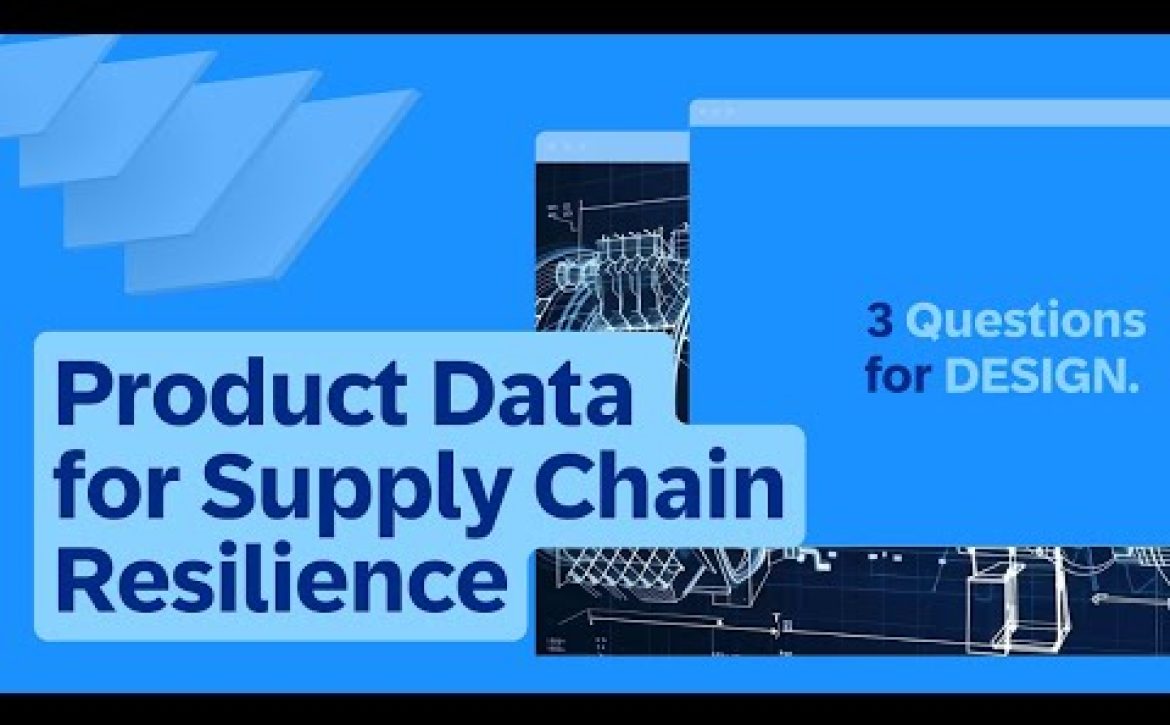
Product data drives what you order, how you produce, and how you stay compliant. When it’s wrong or siloed, supply chains become blind, fragile, and expensive: wrong materials get bought, production stalls, and risk rises.
In this video, we break down the difference between disconnected vs. connected product data, and why connecting it from day one helps every team work from a single source of truth.
Chapters:
00:00 – Product data powers the supply chain
00:39 – What breaks when data is wrong
01:06 – Where the trouble starts: design silos
01:46 – Connected data from day one
02:33 – The resilience takeaway
Learn more about product lifecycle management and connected product data. 👉 https://sap.to/6058Cupy2
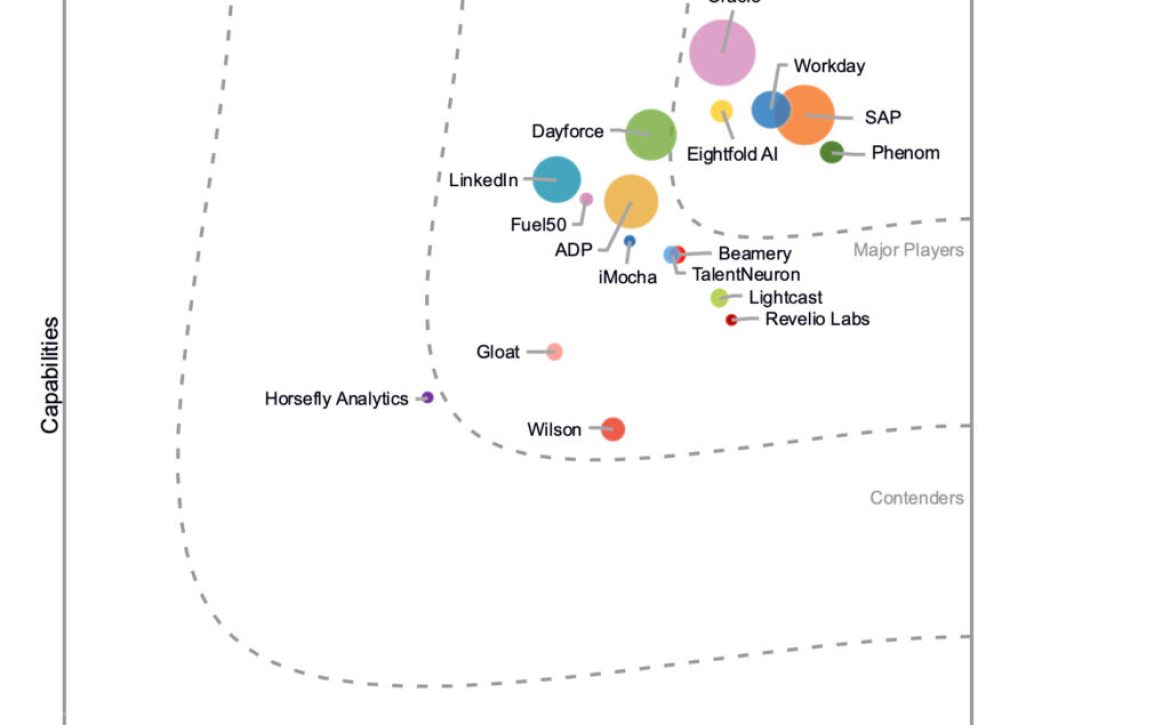
We’re thrilled that SAP has been named a Leader in the inaugural IDC MarketScape: Worldwide Talent Intelligence 2025 Vendor Assessment (doc #US52995425, November 2025). As organizations accelerate their shift to skills-based talent strategies, talent intelligence platforms are becoming mission critical to everything from workforce planning and hiring to mobility, development, and retention. We believe this recognition reflects SAP’s commitment to helping organizations build a dynamic, skills-driven workforce.
The IDC MarketScape for Worldwide Talent Intelligence evaluates vendors using the IDC MarketScape model, which incorporates quantitative and qualitative factors to assess vendors’ current capabilities and future road maps for delivering value to customers seeking talent intelligence. According to the report, SAP was recognized for strengths in “unified and integrated skills framework, embedded AI and analytics, and an open data ecosystem.”
IDC MarketScape vendor analysis model is designed to provide an overview of the competitive fitness of technology and suppliers in a given market. The research methodology utilizes a rigorous scoring methodology based on both qualitative and quantitative criteria that results in a single graphical illustration of each supplier’s position within a given market. The Capabilities score measures supplier product, go-to-market and business execution in the short-term. The Strategy score measures alignment of supplier strategies with customer requirements in a 3-5-year timeframe. Supplier market share is represented by the size of the icons.
Chasing innovation: powering the skills-based enterprise
At SAP, we have made consistent and strategic investments in skills, talent intelligence, and AI-driven workforce planning.
The talent intelligence hub is a unified skills framework embedded across the entire SAP SuccessFactors HCM suite. It empowers HR with an AI-driven, consistent skills foundation to help optimize talent processes, enrich personalized employee learning experiences, and accelerate skills development—enabling organizations to build an agile, future-ready workforce.
Make your workforce unstoppable with a flexible set of AI-powered applications
Building on this foundation, skills and intelligence capabilities can be leveraged across multiple product areas. SAP SuccessFactors Career and Talent Development helps transform career growth, internal mobility, and success into a single, AI-powered, skills-based solution, helping to give leaders clear visibility into workforce capabilities while guiding employees to personalized opportunities, so you can build, retain, and deploy the talent your strategy needs to win. SAP SuccessFactors Workforce Scheduling (generally available in 1H 2026) can enable optimized shift planning in manufacturing and production by helping to ensure the right people with the right skills are in the right place at the right time to help prevent the costly impacts of understaffing or overstaffing. And the People Intelligence package in SAP Business Data Cloud can bring together people, skills, and business data, from SAP SuccessFactors solutions and beyond, into actionable insights that help leaders make more informed people and business decisions.
We are also accelerating innovation with new Joule Agents to help automate repetitive tasks, guide employees with real-time, context-aware support, and enable accuracy across core HR processes, so that HR can focus on strategic people initiatives. The Performance and Goals Agent, now generally available, and the upcoming Career and Talent Development and People Intelligence Agents (both planned for 1H 2026) will deliver AI capabilities to help manage performance reviews, compensation planning, skills distribution, retention, personalized development, and succession. And with SAP’s acquisition of SmartRecruiters, we are strengthening our talent acquisition capabilities to deliver an even more unified, intelligence-driven hiring experience.
These innovations help organizations close skills gaps and empower employees with meaningful, data-driven growth opportunities, helping them thrive in an ever-changing workplace.
Customer insights: real outcomes from skills transformation
Our customers say it best when it comes to the impact of our skills-based innovations.
Capgemini, a global business and technology partner, is building a skills engine to support the employee lifecycle. “Skills are at the core of our company, as they support both clients and employees. Our promise to ‘get the future you want’ means thinking about future client needs and employee skills and career development. SAP SuccessFactors HCM is key in our skills-first approach to our people experience transformation,” Jihane Baciocchini, vice president and head of Talent Acquisition, Capgemini, said.
Grundfos, one of the world’s leading pump and water solutions companies, is utilizing the talent intelligence hub functionality of SAP SuccessFactors solutions to create a single source of skills information, enabling it to connect people and business needs in new ways. “There’s a consensus that what got us here won’t get us there: we need new skills and capabilities. And that’s where the talent intelligence hub in SAP SuccessFactors solutions comes in. It’s helping us build one skills foundation that feeds into critical decisions on talent—and transform skills into something we live and breathe every day,” Mads Kidmose, head of HR Technology and Data Foundation, Grundfos Holding A/S, said.
What’s next
This is a critical moment for HR leaders, as talent intelligence platforms are transforming how organizations hire, develop, and retain their workforce. Looking ahead to 2026, our focus remains on expanding skills-based capabilities and delivering AI solutions that can empower every organization to grow with confidence and thrive.
Learn how SAP SuccessFactors solutions can help turn skills into strategy and drive business success.
Lara Albert is chief marketing officer for SAP SuccessFactors.
Connect with SAP News on LinkedIn to stay up-to-date with all things SAP
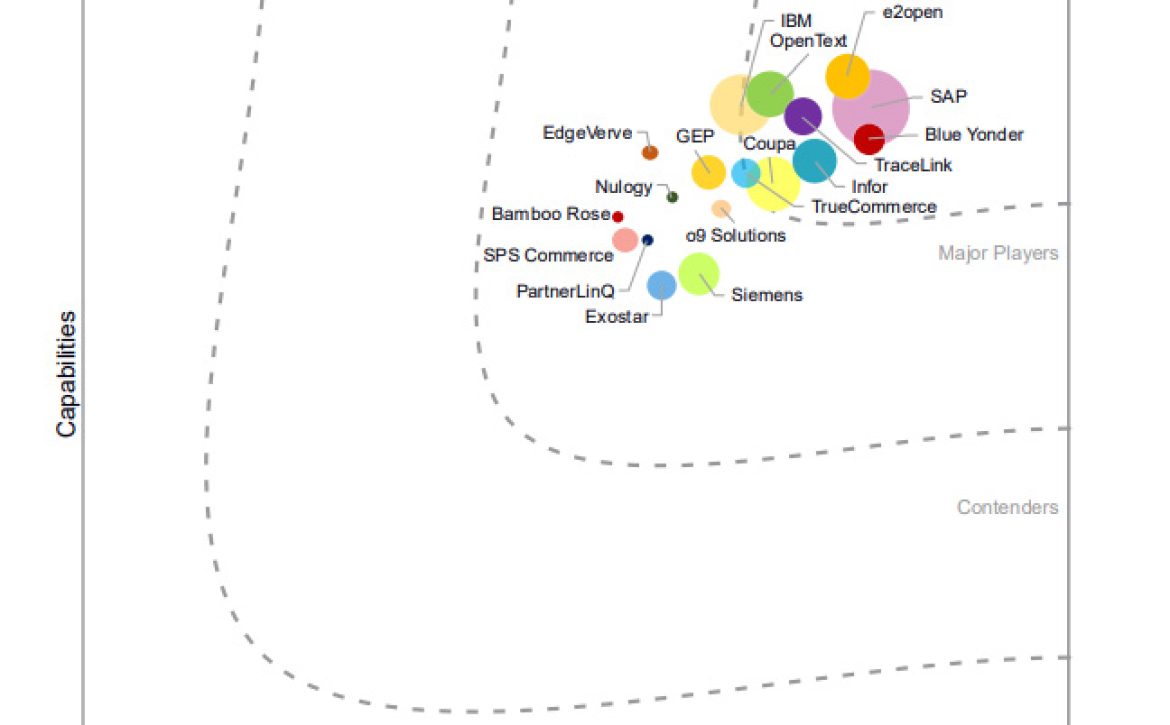
At SAP, we believe that the future of supply chain management lies in resilience, efficiency, and automation. Supply chain business is a network business; no company operates in isolation. To achieve this, it is imperative to gain visibility into supply chain risks and disruptions and deeply collaborate with all critical trading partners.
We believe this distinction reflects the strength of SAP Business Network—our entry in the MESCCN space—and the trust placed in the solution by companies around the world. It’s a milestone that underscores our commitment to helping businesses navigate complexity and build more connected, intelligent supply chains.
Source: IDC, 2025
A legacy of collaboration
SAP Business Network is the world’s largest B2B trading partner platform, supporting more than US$6.5 trillion in annual transactions. It can modernize how procurement and supply chain processes connect across companies, helping build stronger, more resilient supply chains and deliver on the customer promise.
The network traces its roots back to the Ariba Supplier Network, founded in 1996. Over the years, it has evolved to support a broad range of supply chain processes. In 2021, we unified our capabilities under the SAP Business Network brand, bringing together logistics, asset management, finance, sustainability, and talent-based networks into a single, comprehensive platform.
Today, millions of companies across 190 countries rely on SAP Business Network to digitalize transactions, share information, and discover trading partners. By leveraging AI and configurable business rules, the network helps close break points between buyers and suppliers—enabling greater visibility, operational efficiency, and compliance across the supply chain.
What the IDC MarketScape recognized
According to the IDC MarketScape, SAP Business Network’s positioning as a Leader is supported by several competitive strengths:
Comprehensive product features and road map: SAP Business Network offers an extensive range of features and functionality, covering all major B2B collaboration categories, including indirect and direct materials, MRO, logistics, finance, services, and sustainability. The network’s robust future road map enables continuous innovation, empowering businesses to stay ahead in a dynamic landscape.
Seamless integration and extensibility: The network demonstrates capabilities in integration, connecting SAP ERP, procurement, and supply chain modules while extending to other ERPs, customer applications, and cutting-edge technologies such as machine learning, AI, and blockchain.
Global reach and real-time collaboration: SAP Business Network enables trading partners to collaborate in real time across the globe across a wide breadth of business processes.
Automation through configurable business rules: SAP Business Network empowers businesses to automate essential processes by working to define and customize rules tailored to their specific needs. These configurable rules can streamline workflows, enforce compliance, and boost operational efficiency, reducing manual intervention.
Robust foundation and ecosystem: SAP Business Technology Platform (SAP BTP), combined with the broader SAP ecosystem, can provide a scalable and extensible secure foundation for seamless integration across procurement, supply chain, and finance processes.
We believe these strengths, as recognized by the IDC MarketScape, reinforce the value SAP delivers to organizations seeking to extend their business processes across the entire value chain.
Continuing to innovate on SAP Business Network
We believe this recognition by the IDC MarketScape reflects not only the strength of SAP today but also our commitment to ongoing innovation. We’re continuously enhancing the network to help companies collaborate more effectively, respond faster to change, and unlock new sources of value across their supply chains.
At SAP Connect, we shared how SAP Business Network is evolving to meet the demands of increasingly dynamic and interconnected business environments. Built on SAP Business Technology Platform, the network now offers a scalable data foundation, seamless integration with SAP Cloud ERP capabilities and third-party systems, and enhanced workflow customization through SAP Build solutions. This has enabled many innovative initiatives to incorporate Joule across the network, reimagining analytics, automation, and approvals with intelligent capabilities that will be continuously released starting in 2026.
We’re also further expanding integration with SAP Cloud ERP, SAP Ariba solutions, SAP Fieldglass solutions, and SAP Transportation Management to support end-to-end value streams. These enhancements can help streamline supplier onboarding, accelerate issue resolution, and improve sustainability tracking, empowering businesses to operate with greater agility and confidence.
Empowering businesses to realize the full value of collaboration
As multi-enterprise collaboration continues to evolve, we see tremendous opportunity to help organizations unlock new levels of agility, visibility, and efficiency. At SAP, we’re focused on making this journey as seamless and rewarding as possible.
Across industries, customers are already seeing the impact. ITP Aero, a leading aerospace manufacturer, is using SAP Business Network Supply Chain Collaboration to improve visibility and responsiveness across its supplier ecosystem. Similarly, Embraer, one of the world’s largest aircraft manufacturers, is leveraging SAP Business Network to streamline procurement and supply chain processes, enhancing operational agility and supplier engagement.
We’re investing in education, enablement, and intuitive user experiences to support companies as they expand their collaborative networks. Whether you’re a manufacturer, services provider, or supplier, our goal is to empower you to connect, collaborate, and grow with confidence—leveraging the full potential of SAP Business Network to help drive strategic outcomes across your value chain.
A strategic choice for the future
If you’re looking for a partner that offers both a robust multi-enterprise network and deep supply chain and procurement capabilities, SAP is the clear choice. Our unmatched integration with core SAP and non-SAP applications, combined with our strategic vision and global reach, makes us uniquely positioned to support your transformation.
As I shared in my recent article, we’re entering a new era of supply chain management—one defined by connected ecosystems, intelligent automation, and sustainable growth. SAP Business Network is at the heart of this transformation, helping businesses turn complexity into opportunity.
To our customers, partners, and the entire SAP community, thank you for your trust and collaboration. We believe this recognition from the IDC MarketScape is a shared achievement, and we’re excited to continue building the future of supply chain commerce together.
With the help of SAP AppHaus Network partner Flexso, Belgian steel wire producer Bekaert created a new AI Master Data Assistant with SAP AI Core in SAP Business Technology Platform (SAP BTP), and SAP SuccessFactors solutions.
Bekaert aspires to become a people- and data-driven company. This requires a thorough strategic and cultural transformation, in which artificial intelligence plays a crucial role. To get started, the company set priorities, leveraging the embedded AI capabilities already available in its existing HR solutions such as SAP SuccessFactors solutions. By focusing on a few embedded AI use cases and creating a stand-alone AI tool on top of that, it started exploring and seeing the AI benefits.
“AI is a means to achieve our goals, a logical extension of our HR strategy,” says Jorn Waterschoot, global head of HR Technology at Bekaert. “AI’s growing capabilities, cost-effectiveness, and versatility are transforming businesses by enhancing user experiences, enabling experimentation, and encouraging adoption. At Bekaert, these strengths are leveraged in HR while carefully managing hidden costs and focusing on end-to-end implementation to maximize AI’s potential. At Bekaert, the goal is to make AI feel like a candy store: once employees experience its versatility, they are encouraged to explore it further.”
Together with its long-standing partner and SAP AppHaus Network member Flexso, Bekaert worked along a human-centered approach to innovation to identify opportunities and use cases. One of these identified use cases was a stand-alone AI tool that Bekaert used for HR data improvement. This tool was not integrated in the existing software landscape and required of users to extract and import data.
To improve this laborious process, Flexso helped design and build a custom AI solution, called AI Master Data Assistant, with the help of SAP AI Core in SAP Business Technology Platform. This new solution has been fully integrated with SAP SuccessFactors solutions, using SAP Integration Suite. Currently, the solution uses a specific AI model from generative AI hub in SAP AI Core. However, the flexibility with various models offered through the generative AI hub capability would allow the partner to use another AI model for this solution in the future.
Who benefits from AI in HR at Bekaert?
The AI Master Data Assistant allows the Bekaert HR teams to enhance data quality by automatically identifying, correcting, and preventing errors in employee records. The assistant can detect inconsistencies, duplicates, and missing information, ensuring that all data is accurate, complete, and up-to-date. In practice, it means that users can enter natural language prompts to get proposals for improvement. Via chat-like conversations, they can standardize formats, correct errors, and validate entries in real time.
For innovation projects, Bekaert usually rolls out new solutions gradually first through a number of role-specific use cases, then deploy them indiscriminately across the organization. For the new AI Master Data Assistant, the HR business partners and HR admin roles benefitted first.
Flexibility for the future
As part of the global SAP AppHaus Network, Flexso always strives for a human-centered and sustainable co-innovation approach with its customers. It is about bringing innovation into the hands of people. David Pierre, AI practice lead at Flexso explains: “The AI world is developing so fast. So, the principle in our solution is that we are AI model agnostic. Today, we are using model GPT to support our use case. But if we have a better model in the future, then we can also switch to other models as they are all supported by SAP BTP.”
Imke Vierjahn is SAP AppHaus communications lead.
Get the latest SAP news delivered to your inbox once a week
I am proud to share that SAP Cloud ERP has once again been recognized as a Leader in the 2025 Gartner Magic Quadrant for Cloud ERP for Product-Centric Enterprises.
Gartner Magic Quadrant for Cloud ERP for Product-Centric Enterprises
For our customers—manufacturers, consumer goods leaders, and high-tech innovators—this recognition is more than a placement on a chart. We believe it reflects how SAP Cloud ERP is helping enterprises become more agile, resilient, and innovative in a world shaped by supply chain disruption, shifting customer expectations, and the imperative for sustainable operations.
This recognition comes to life in the stories of our customers.
Customer spotlight: FUWO
One example is FUWO, a fast-growing global manufacturer that turned to SAP S/4HANA Cloud Public Edition to unify its operations. By automating dozens of financial and supply chain processes, FUWO shortened its monthly close by nearly half, improved forecast accuracy by 30 percent, and boosted on-time delivery rates by 15 percent.
As Luo Jianyong, director of Business Transformation and IT at FUWO, explained: “SAP S/4HANA Cloud Public Edition has enabled us to automate our process from production to delivery. The resulting agility and efficiency have helped us gain greater trust and more collaboration opportunities with customers worldwide.”
And from a finance perspective, Director Zhao Ziqiu added: “In a market that changes rapidly, real-time data control gives us a critical advantage in decision-making.”
Why this matters now
Cloud ERP today must go far beyond core finance. Product-centric enterprises need end-to-end capabilities to manage design, manufacturing, supply chains, logistics, and sustainability in one integrated system. That’s why SAP Cloud ERP is not only the foundation of the SAP Business Suite, but also the gateway to the world’s largest business network, connecting companies to suppliers, logistics partners, and customers in real time. By extending processes beyond the enterprise, customers can anticipate disruption, improve resilience, and unlock new opportunities for collaboration.
These benefits come even faster with our new SAP Business Suite Suite packages. Out-of-the-box integrations such as SAP Integrated Product Development bring design, manufacturing, and supply chain closer together, reducing time to market while cutting complexity. Combined with SAP Business Technology Platform for integration, data harmonization, and AI-driven insights, enterprises gain the ability to both run intelligently today and continuously adapt for tomorrow.
Source: Gartner
When we speak to customers about SAP Cloud ERP, they appreciate our global network of partners that enable customers to scale, extend, and innovate. They highlight SAP’s strong road map for agentic AI, as well as comprehensive ERP capabilities that go far beyond core finance.
For us, recognition as a Leader is an important milestone, but not the end of the journey. Customers tell us they want deeper industry-specific functionality, simpler pricing, and even greater clarity in roadmaps. We are acting on that:
Industry depth: In 2025 we are delivering expanded capabilities for discrete manufacturing, consumer products, and high-tech.
Clarity and simplicity: With new commercial models, customers gain more predictable and transparent ways to adopt innovation.
Customer experience: Through our “Suite-First” approach, we are simplifying how customers consume innovations across ERP, supply chain, and spend management.
From cloud ERP to the suite
What makes SAP unique is that cloud ERP is not a standalone product, it is the doorway to the entire SAP Business Suite. By connecting processes across finance, supply chain, procurement, HCM and CX, we deliver outcomes that no single application can achieve in isolation. This is where SAP customers gain confidence: with harmonized data, AI at scale, and innovation that spans industries.
Looking ahead
We are proud of this recognition, but even more excited about what lies ahead. Together with our customers and partners, we are shaping the next decade of intelligent, modular cloud ERP – harmonizing data, automating at scale, and innovating across industries.
Gartner does not endorse any vendor, product or service depicted in its research publications and does not advise technology users to select only those vendors with the highest ratings or other designation. Gartner research publications consist of the opinions of Gartner’s research organization and should not be construed as statements of fact. Gartner disclaims all warranties, expressed or implied, with respect to this research, including any warranties of merchantability or fitness for a particular purpose. GARTNER is a registered trademark and service mark of Gartner and Magic Quadrant is a registered trademark of Gartner, Inc. and/or its affiliates in the U.S. and internationally and are used herein with permission. All rights reserved.
Growth, simplification, and artificial intelligence (AI) are no longer optional. That is the unmistakable signal from SAP’s Global Business Priorities Study, which surveyed nearly 12,000 executives across 20 markets and 31 industries. The results capture both urgency and possibility.
Across the world, 95 percent of companies say growth is a priority for the year ahead. Their top focus areas—including expanding market presence, broadening distribution through partners, and scaling operations—speak to leaders’ determination to create value in a climate of uncertainty and change.
From SAP Connect: Deep research AI and role-based assistants, coupled with SAP Business Suite innovations, take efficiency to new heights
In my engagements with customers, I see this reality every day. Companies everywhere want to grow, but they want to grow with confidence. They are looking for partners who understand their unique challenges, who support them with their long-term ambitions, and who can help them keep pace with rapid change.
Technology is central to this ambition. Nearly all respondents in the study rank simplifying work and improving processes alongside growth. Here, artificial intelligence stands out. Nine in 10 organizations have already made generative or agent-based AI a priority, and more than 70 percent have some form of AI in use. While concerns about data quality and talent remain, the message is clear: AI has moved beyond experimentation into the mainstream of how companies operate and unleash value.
From Frankfurt to Dubai to Singapore: How regional differences shape opportunities and risks
Regional differences tell a powerful story. In Europe, AI adoption comes with caution. Large enterprises put compliance, privacy, and transparency first, while many mid-market firms are still piloting solutions. In Asia-Pacific, the pace is different. Mid-market companies there already report strong AI use above global averages, and growth expectations run high. For them, AI is a way to seize advantage quickly in a fast-moving market.
These contrasts show why cultural intelligence matters so much for global leaders. Whether in Frankfurt, Singapore, or Dubai, I see how local realities, regulations, and expectations shape both risks and opportunities. In Europe, energy costs and geopolitical uncertainty drive supply chain strategies. In Asia-Pacific, digital adoption and market dynamism set a different pace.
Sustainability is another area where nuance matters. European companies place it near the top of their priorities, tracking or slightly exceeding global benchmarks. Asia-Pacific firms value sustainability but often rank it lower than growth and speed to market. Each is weighing trade-offs in its own context, creating exciting opportunities for SAP to bring the most relevant technology, data, and practices to each region to help organizations achieve both economic and environmental goals.
The through-line in all of this is agility. Supply chain fragility, geopolitical conflict, inflation, and regulation continue to test even the best-run organizations. Technology can enable agility, but only if leaders embrace change themselves, rethinking processes, investing in skills, and building cultures of continuous learning and exploration. Security and ethical standards must also be the cornerstones of every AI conversation.
Turning AI potential into outcomes by centering value creation and integration
I believe this is a time for grounded optimism. The appetite for growth is real and the technology to achieve it is more advanced than ever. Innovation is accelerating at an extraordinary pace, with daily breakthroughs showcasing the expanding potential of AI.
There is a recent example that demonstrates AI’s ability to process multi-step tasks for over 30 hours. This achievement highlights not only the rapid evolution of AI, but also how increasingly accessible and capable these technologies are becoming.
However, as AI systems grow more autonomous and context-aware, organizations must recognize that true value doesn’t come from raw capability alone. To harness AI effectively, especially in enterprise environments, a consistent semantic layer is essential. It ensures alignment among data, tasks, and outcomes, enabling AI to reason reliably across systems and scale impact without losing coherence.
Companies must also move beyond simply adopting AI to actively testing and refining applications to gain a significant advantage. Equally important is a deliberate approach to managing the human element of a transformation, rooted in structured and human-centric change management.
Realizing AI’s true promise requires a fundamental shift in how people, applications, and data connect. Success relies on deeply connecting every part of an organization’s business, delivering end-to-end transformational value. A seamless, integrated suite provides insight and agility, whether responding to a problem or ensuring readiness when opportunity knocks.
This is where SAP Business Suite is a game changer, integrating applications, data, and AI in a virtuous cycle that delivers tangible business outcomes. At our inaugural SAP Connect event earlier in October, we showcased new applications, strategic data partnerships with Google Cloud and Databricks, and a new network of role-based AI assistants in Joule across every line of business.
Altogether, our continuous innovation marks the beginning of a new era powered by self-reinforcing AI, data, and applications. By keeping customer needs and value realization at the center and leading with innovation, businesses can not only navigate uncertainty, but build a more resilient, intelligent, and sustainable future.
Manos Raptopoulos is chief revenue officer of APAC, EMEA, and MEE, and a member of the Extended Board of SAP SE.
SAP Connect: Read news, stories, and coverage from the event
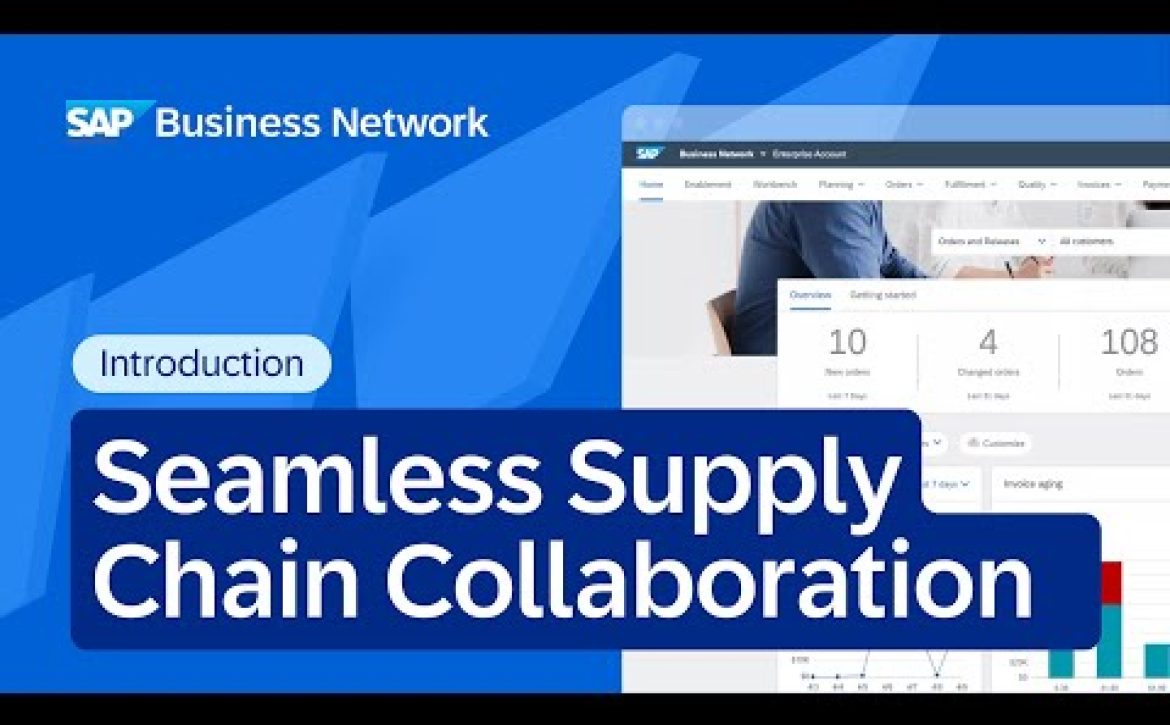
Discover how SAP Business Network connects buyers, suppliers, and logistics partners for smarter, faster, and more resilient supply chains.
In this introduction, see how SAP Business Network creates a single, unified platform for collaboration across your entire supply chain ecosystem. By connecting buyers, suppliers, manufacturers, and logistics providers in real time, the network enables seamless transactions, shared insights, and end-to-end visibility.
Learn how sharing a consistent, trusted view of orders, shipments, invoices, and inventory can streamline sourcing, improve supplier relationships, and reduce operational bottlenecks. SAP Business Network breaks down silos between trading partners, making it easier to respond to market changes, manage risks, and deliver on customer commitments—no matter the climate.
Whether you’re a procurement leader, supply chain director, or operations manager, you’ll gain insight into how SAP Business Network empowers you to act faster, work smarter, and build a more resilient business.
Learn more about SAP Business Network: https://sap.to/6059fqo47