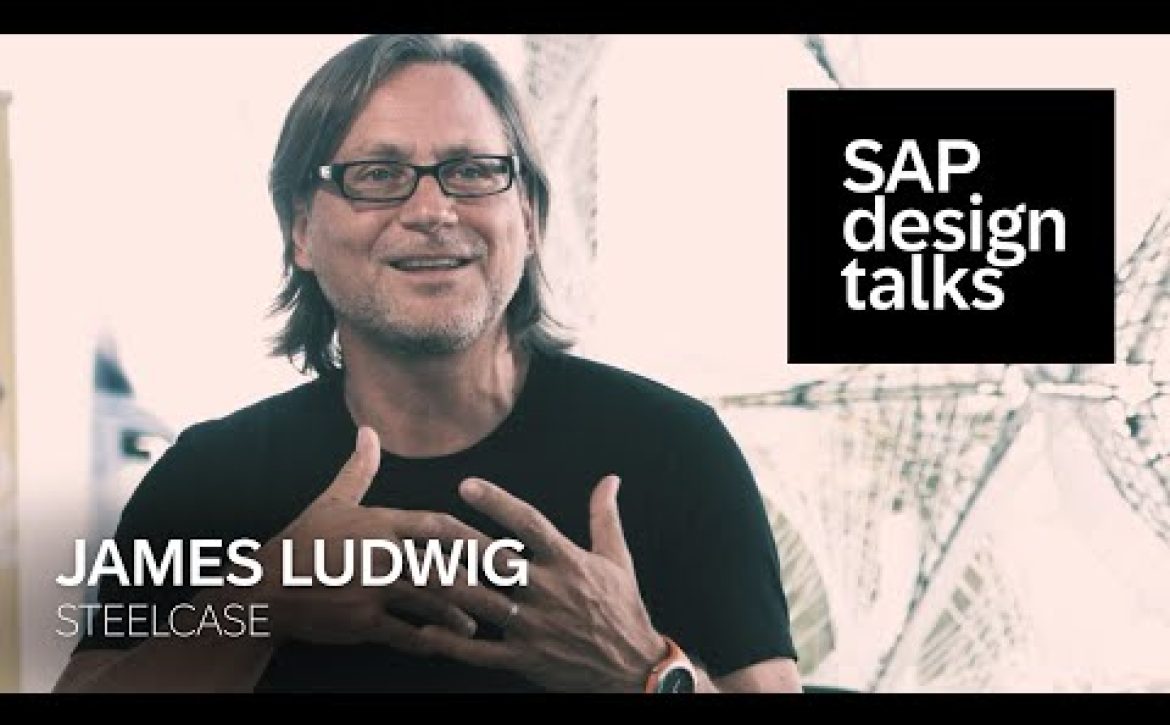
Working on the Problems of the Global 1000 – James Ludwig, Steelcase | SAP Design Talks

SAP Design Talks: Office furniture manufacturer Steelcase is creating products that don’t just push the boundaries of design and craftsmanship but serve as a platform to articulate identity. Be surprised by the insights from James Ludwig, Vice President, Global Design and Product Engineering for Steelcase Inc.

Watch world-class design leaders from some of the most iconic brands share their stories and insights: https://sap.to/605677LAK

Originally published on October 10, 2018

Introducing SAP Snowflake, New Data Fabric Innovations for SAP Business Data Cloud and SAP HANA Cloud

For decades, data has been the backbone of innovation. And in today’s AI-enabled economy, its role has never been more vital. Now, data must be delivered in a way that both people and AI agents can understand and act on with confidence.

Advancements in AI agents, data, and platform capabilities equip developers with the tools to drive business transformation

At SAP, we believe in creating an ecosystem that simplifies your data landscape and preserves the mission-critical business context of all of your data. This is made possible with a business data fabric.

This architectural approach marks the culmination of decades of progress — from cubes to warehouses to lakehouses — now converging toward a business data fabric architecture that brings the true meaning of data together for AI projects to succeed at scale.

Simplify your data landscape with a business data fabric

Earlier this year, we announced SAP Business Data Cloud (SAP BDC), making end-to-end business data fabric capabilities available for everyone that relies on mission-critical SAP data, including fully managed SAP Databricks.

This week at SAP TechEd Berlin, we announced the SAP Snowflake solution extension for SAP BDC that brings Snowflake’s data and AI capabilities directly to SAP customers.

Together with SAP BDC, this provides organizations with the flexibility to choose the right compute and storage for every data and AI workload — extending their business data fabric while maintaining governance, interoperability, and semantics. As a solution extension, SAP Snowflake will be available directly through SAP, providing a simplified operational experience for customers.

For many customers, integrating data across multi-cloud and hybrid environments adds complexity, especially when bringing transactional and analytical workloads together. Too often, that process comes with a hidden data tax: it strips away the business context and semantics that give data its meaning.

We recently announced SAP BDC Connect, a capability that gives customers bi-directional, zero copy data and metadata sharing in SAP Business Data Cloud with their existing Databricks and Google Cloud environments. Today, we are excited to announce SAP BDC Connect for Snowflake, making it dramatically easier for customers to harmonize and govern mission-critical data wherever it resides.

Connect all your data

As organizations simplify their data landscapes, building a trusted data foundation rooted in business context has become a top priority. A global survey of 1,200 business and technology leaders found that nearly half are heavily investing more in harmonizing business data, underscoring the growing importance of using data built on industry standards.

To help accelerate this progress, SAP delivers fully managed data products as a core component of SAP Business Data Cloud, now with new innovations that expand coverage and connectivity:

  • Data product studio: A new capability in SAP BDC allows users to create, model, and manage reusable data products using both visual tools and SQL-based transformations from a single workspace. Users can define schema, lineage, and logic to blend SAP and non-SAP data into governed assets with full version control and lifecycle management. It is a simpler way to cross-pollinate data products across lines of business and ensure a consistent definition of data across your business data fabric.
  • Additional SAP data products: New data products are now available through SAP BDC, spanning SAP Cloud ERP, SAP SuccessFactors, sustainability, and customer experience solutions and more — bringing even broader coverage across business domains.
  • Bi-directional data sharing: We announced data sharing between SAP BDC and SAP HANA Cloud, unlocking the value of data across both transactional and analytical workloads. Customers can reuse existing objects, such as SAP HANA calculation views, directly in SAP BDC — preserving business logic, KPIs, and governance as they extend models across their business data fabric.
GIF: Loop of data products studio demo

Amplify your agents and applications with an AI database

We’re expanding SAP HANA Cloud with new capabilities that make it the AI database for building agents and intelligent applications, helping developers connect and understand all types of data: structured, spatial, graph, vector embeddings, and more, all within a single in-memory engine.

Today, we’re expanding these multi-model capabilities with three major innovations that make it easier to build agentic AI experiences.

  • Expanded knowledge graph capabilities to enable accurate agents: SAP HANA Cloud knowledge graph engine will now enable customers to automatically generate knowledge graphs from SAP HANA Cloud metadata. The automated graph will include tables and columns and can demonstrate data relationships. These knowledge graphs are customizable and composable, so developers can review data mapping, modify the graph structure, execute a semantic search, and use it to ground agents with the business context it needs to reason accurately.
  • Model Context Protocol (MCP) support for SAP HANA Cloud: We’re expanding SAP HANA Cloud with Model Context Protocol (MCP) support, giving Joule Agents access to rich multi-model engines in SAP HANA Cloud. While SQL remains the default database standard, MCP allows Joule Agents to go beyond rows and columns to interface with unstructured data — understanding relationships, locations, and meaning across all data types. In practice, that means Joule Agents can navigate relationships between customers and suppliers, analyze geographic dependencies through spatial data, and perform semantic searches through vector embeddings.
  • Tabular AI capabilities: This integration with SAP AI Core allows users to run AI workloads such as forecasting, anomaly detection, and predictive modeling directly on structured business data from SAP HANA Cloud. Along with ready-to-use tabular AI models, customers also gain access to the SAP-RPT-1 AI model, a new transformer-based foundation model. Embedded natively in SAP HANA Cloud, this delivers predictions without task-specific pre-training, enabling developers to use simple SQL procedures to bring AI closer to their SAP data and generate semantically rich outputs.

Get started today

A business data fabric provides a deeply integrated ecosystem for all your data. And with SAP Business Data Cloud and SAP HANA Cloud, you have a fully managed solution for every data and AI workload that ensures business context remains intact across your data landscape.


Irfan Khan is president and chief product officer of SAP Data and Analytics.

SAP TechEd: Read news, stories, and coverage from the event

Ready for #SAPTechEd 2025?

Join us at #SAPTechEd Virtual, your gateway to the latest in AI, cloud innovation,
and developer tools, streaming live wherever you are. 🧑‍💻

Join us to learn more about SAP AI, SAP Business Data Cloud, SAP Integration Suite, and more! https://sap.to/60507K8mn

Conquering Uncertainty: At SAP Connect, SAP Business Suite Delivers

Led by SAP Executive Board Member Muhammad Alam, in charge of SAP Product & Engineering, SAP executives announced a string of business AI innovations, including role-aware Joule assistants, during the kickoff keynote at the inaugural SAP Connect event in Las Vegas this week. 

Deep research AI and role-based assistants, coupled with SAP Business Suite innovations, take efficiency to new heights

Against the backdrop of the event theme—”Connect Everything, Achieve Anything: Agents, Data, and the Business Suite”—they set out SAP’s vision for how SAP Business Suite, which combines AI, data, and applications, can transform enterprises and deliver unprecedented business value to customers despite global macroeconomic uncertainties. 

Unique times

“We are living in very unique times,” Alam said at the start of the keynote. “Unique in terms of the unpredictability we face from a geopolitical and macroeconomic perspective, and also unique in terms of the advancement in AI and the potential that carries for all of us.”  

He added, “Even the most significant challenges can be responded to, navigated, and—when approached the right way—turned into opportunities. And that’s exactly where SAP comes in. Because the best way to face uncertainty is with confidence that you can see what’s happening across your business and your network.” 

AI-Powered SAP Customer Experience: What’s New in Q3 2025

Today, success in customer experience is rarely defined by sweeping campaigns or one-time transactions. It is earned in the countless small moments that make up every interaction: a question answered instantly, a recommendation guided by intelligent insights, or a service engagement that anticipates a need before it is voiced.

Unite your business processes end to end with customer experience solutions from SAP

These moments are the building blocks of delivering seamless and memorable experiences — and lasting loyalty.

At SAP, we believe every touchpoint is more than a chance to meet a need. It is an opportunity to deepen trust, demonstrate value, and strengthen the relationship between customer and brand. That belief is at the heart of the SAP Customer Experience (SAP CX) portfolio — now infused with the power of AI.

Our Q3 2025 release reflects this vision. Intelligence is embedded across the entire customer journey. Generative AI helps service teams classify cases the moment they arrive. Autonomous agents in commerce guide customers to the right products with real-time stock visibility. For marketers, AI personalizes campaigns and generates segment descriptions and translations, ensuring relevance at scale. For sales teams, AI keeps data clean and actionable, eliminating duplicates and surfacing the right opportunities at the right time.

 AI isn’t just about efficiency alone; it is about elevating every interaction into a moment where trust can be deepened and loyalty earned.

Join us on October 6-8 at CX Connect at SAP Connect, where we will showcase these innovations and  how the latest AI-infused SAP CX solutions optimize operations, generate action-ready insights, and deliver delightful experiences at every step of the customer journey.

Here are the highlights from SAP CX in Q3 2025.

AI that drives results

From decision-making to customer engagement, AI-powered intelligence and agents streamline processes and remove friction. Teams gain the ability to respond faster, deliver smarter interactions, and grow with confidence while delivering customer experiences that feel effortless, reliable, and personalized.

SAP Service Cloud

  • Business information extraction in cases: Save time by automatically extracting registered product information from the case description, using pre-delivered elements for business information extraction.
Business information extraction in cases

SAP Sales Cloud 

  • Contact and individual customer duplicate checks: Maintain clean, accurate records by managing redundant contact and individual customer data. This generative AI capability checks for duplicates and returns a confidence score, leaving the decision-making in human hands.

SAP Emarsys 

  • AI-assisted product finder: Enable marketers to use natural language prompts and keywords to quickly search and locate products for targeted campaigns. Automatic product catalog sync ensures you are always working with the most up-to-date data.
  • AI-assisted segment description generator: Generate human-readable segment summaries to improve execution. This ensures that existing segments are easily discoverable with descriptions that are intuitive and straightforward.
  • AI-assisted campaign translator (pilot): Translate email campaign copy flexibly and seamlessly within the editing workflow. Localize product descriptions across languages to quickly build, optimize, and launch multi-language campaigns.
AI-assisted product finder

SAP Commerce Cloud 

  • Shopping Agent: Using product stock awareness to return real-time inventory data, the configurable Shopping Agent can display or hide out-of-stock products in its recommendations. This makes for smarter recommendations, reducing friction and abandoned carts. For B2B transactions, merchants can also choose whether the agent answers questions about bulk product availability.
Shopping Agent

SAP Revenue Growth Management

  • AI-assisted promotion creation: Create new promotions quickly by getting recommendations for promotion names, when to run a promotion, what products to include, which spend type to use, and recommendations for discount type.
AI-assisted promotion creation

Scale smarter with greater flexibility

Scaling efficiently while providing flexibility for customers means optimizing operations, offering expanded channel options, and extending visibility to customers and partners.

SAP Emarsys 

  • Microsoft Ads integration: Scale personalized ad experiences across the Microsoft Search Network, including Bing, Yahoo, AOL, and other Microsoft properties.
  • Conversational messaging for LINE (SAP Early Adopter program): After expanding our offering to WhatsApp in the Q2 release, we now support the popular conversational channel LINE, giving marketers a direct way to connect with customers in the channels they use every day and making it easier to turn engagement into conversion.

SAP Commerce Cloud 

  • Central order service: This feature for SAP Order Management foundation seamlessly integrates online and offline transactions, paving the way for flexible customer experience scenarios like “buy online, return in store” (BORIS) and “buy in store, return online” (BISRO).
  • Availability push: SAP Order Management for sourcing and availability now allows customers to proactively send real-time product availability information to external systems like webshops and marketplaces, ensuring they have the most current stock data without needing to request it.

SAP Sales and Service Cloud 

  • SAP Preferred Success: We are empowering our customers to make the most of their SAP investments with the business process management (BPM) masterclass. This interactive workshop helps participants pinpoint which processes to optimize, outsource, or remove for the greatest impact. Learn how to identify critical processes, define roles and responsibilities, and establish a sustainable approach to process governance.
  • Integration review V2: A comprehensive solution launch checklist for SAP Sales Cloud and SAP Service Cloud Version 2 integrations ensures successful rollouts and compliance with SAP best practices. The checklist systematically evaluates authentication mechanisms, interface configurations, middleware settings, and SAP Integration Suite implementation. 

SAP Enterprise Service Management

Updates to SAP Enterprise Service Management include:

  • Case summary enhancements: Sentiment trend and sentiment graph can now be enabled in the interaction summary for additional information on a customer. Internal and external case notes can be configured and used to generate the resolution summary overview.
  • Custom services: Gain more flexibility and extend capabilities without modifying the core application. Integrate external functionality into SAP Service Cloud V2 with custom services.
  • Template visibility and restrictions: Every document is also an opportunity to establish trust. Now you can strengthen document security by limiting template access to those who need it.

SAP Revenue Growth Management 

New to SAP Revenue Growth Management are:

  • Custom KPIs: Assess the performance of your account and promotion planswith custom KPIs, tracking metrics that suit your planning and reporting processes. Save time by creating KPI profiles to define a set of standard pre-defined KPIs.
KPI configuration
  • Promotion calendar export to PDF: Reduce uncertainty, lower costs, and build relationships with better alignment on annual promotions and EDLP agreements with customers. Key account managers can now share a promotion calendar and associated promotion details in a PDF file, making collaboration easier and decisions faster.

Trust advantage in AI-powered customer experience

AI is now woven into the fabric of the SAP CX road map, guiding how data, processes, and experiences come together. This deep integration sets the stage for a new era of customer engagement, one where intelligence anticipates needs, adapts in real time, and continuously strengthens loyalty at every touchpoint.

Learn more about what is new in SAP CX Q3 2025


Balaji Balasubramanian is president and chief product officer for SAP Customer Experience.

Join us at SAP Connect to discover how to maximize SAP solutions across every line of business with live demos and real-world case studies

Measure Your Clean Core Journey with Kernseife (Open Source!) | Unlocking SAP BTP

How clean is your core? With open-source tools like Kernseife, you can measure your journey to modern ERP.

Watch the full Clean Core episode: https://sap.to/6057AzrMt

#SAP #CleanCore #OpenSource

Navigating Your RISE with SAP Journey: Updates for SAP ERP, Private Edition, Transition Option

Earlier this year, SAP announced a new cloud subscription offering, SAP ERP, private edition, transition option, which is designed to help our largest and most complex customers plan and execute on their cloud transformation strategy.

RISE with SAP: Tailor your transformation to modernize your business with SAP Business Suite

Since these first announcements in February and March, we have received encouraging feedback from the SAP community.

Today, we are providing additional details about this offering to better support our customers and partners in evaluating it as part of their RISE with SAP transformation journey. We’re also pleased to share that customers that subscribe to a new instance of SAP ERP, private edition in 2025 – or have done so already – can take advantage of a special promotion for SAP ERP, private edition, transition option.

What is SAP ERP, private edition, transition option?

As part of the RISE with SAP journey, many organizations are transitioning to SAP S/4HANA Cloud Private Edition and SAP S/4HANA Cloud Public Edition to modernize their operations and stay competitive. SAP recognizes that our largest and most complex SAP ERP customers may not be able to complete this transformation by the end of extended maintenance for their installed SAP Business Suite 7 in 2030.

To support these customers, SAP has introduced SAP ERP, private edition, transition option – a time-bound subscription offering designed to provide business continuity from 2031 to 2033 while enabling a structured path to SAP Cloud ERP or SAP Cloud ERP Private.

The offering includes an SAP ERP cloud subscription for specified products – centered around SAP ERP Central Component on SAP HANA – and is combined with services designed to facilitate the transition to RISE with SAP via the max success plan (to be generally available in January 2026). It will help customers focus on the setup and optimization of their new and future system landscape. Business continuity services will cover elements like legal changes, security patches, and bug fixing. The specifics of which products are eligible are detailed in SAP Note 3591251.

Key prerequisites for adopting this offering

To take advantage of the SAP ERP, private edition, transition option, there are a few prerequisites to keep in mind:

  1. Move to SAP ERP, private edition: Systems must be migrated to SAP ERP, private edition on SAP HANA before December 31, 2030.  SAP strongly recommends this move now in order to start preparing systems based on the additional prerequisites outlined below.
  2. Database requirement: SAP HANA will be the only supported database for this offering.
  3. System size: Minimum 2 TB for systems subscribed with SAP ERP, private edition, transition option.
  4. Technical readiness: Systems must be prepared for the transition option, namely mitigation coverage for products not included in the new option. See SAP Note 3591251 for details.
  5. Max success plan: The transition option is only available in combination with the max success plan during 2031-2033, including additional transformation services. This success plan will be generally available in January 2026.

Pricing and promotions

SAP ERP, private edition, transition option will be a new subscription, priced at an uplift compared to the SAP ERP, private edition pricing valid end of 2030. The detailed conditions are outlined below:

SAP is offering a special promotion for customers that commit to SAP ERP, private edition by the end of 2025 or have done so already. These early adopters will be eligible to adopt the SAP ERP, private edition, transition option in 2031 under commercially equivalent terms to their then existing subscription.

Customers that sign up for SAP ERP, private edition in 2026 will receive a standard 20 percent uplift in pricing when switching to the transition option in 2031. For those who sign up in 2027 or later, the uplift is not yet disclosed, final pricing will be communicated only closer to availability to purchase in 2028. 

In all cases above, the max success plan fee will come in addition to the respective final price of the SAP ERP, private edition, transition option.

Call to action

Now is the time to act. If your organization anticipates needing more time beyond 2030 to complete its transformation to SAP Cloud ERP or SAP Cloud ERP Private, taking the first step in 2025 is critical. Here’s why:

  • Secure the 2025 promotion: Customers that sign up for SAP ERP, private edition by the end of 2025 (with a start date no later than 2026) will be eligible for a 1:1 move to the SAP ERP, private edition, transition option in 2031 — without any uplift. This provides a significant financial advantage and provides cost predictability for long-term planning.
  • Gain valuable lead time to prepare your systems and teams: Moving now to SAP ERP, private edition allows your organization to address technical prerequisites – such as migrating to SAP HANA and mitigating unsupported technologies like Java – at a manageable pace. It also gives your teams time to align on transformation goals and build internal readiness.
  • Reduce risk with a phased, structured transformation path: Starting now enables a smoother journey: first moving to SAP ERP, private edition, then leveraging the transition option if needed, and ultimately adopting SAP Cloud ERP or SAP Cloud ERP Private. This phased approach minimizes disruption and supports continuous business operations.
  • Ensure eligibility for the transition option: The transition option will only be available to customers that have already moved their systems to SAP ERP, private edition before the end of 2030. Acting now guarantees that your organization meets this prerequisite.

For most of our customers planning to complete their transformation by 2030, this option won’t be necessary. Nevertheless, this option is tailored for those requiring additional time and support due to the complexity of their systems.

Learn more

To learn more about this offering, please refer to the following resources:

  • Visit this SAP Support Portal page and SAP Note 3591251.
  • Reach out to your SAP account executive or partner contact to discuss how the SAP ERP, private edition, transition option fits into your transformation strategy.
  • On the future direction of the SAP Services and Support portfolio, including the max success plan to be available in January 2026, see here.

Stefan Steinle is executive vice president and head of Customer Support & Cloud Lifecycle Management at SAP.

Subscribe to the SAP News Center newsletter to get highlights and stories delivered straight to your inbox each week

Rethinking Time to Competency in the Age of AI

In today’s rapidly evolving workforce, onboarding new employees efficiently has become a critical competitive advantage. Every extra week it takes to train an employee is a week of lost productivity.

SAP Learning Hub: Everything you need to boost business success with continuous learning

The rise of AI is an opportunity not just to speed up learning, but to drive lasting organizational efficiency. A 2024 global survey by consulting firm Cegos found that 44 percent of employees already use AI-based learning, and 81 percent of HR leaders are integrating or planning to implement such technologies. This underscores the widespread adoption of AI in corporate learning, but it also raises a vital question: How can organizations ensure that the speed of learning does not come at the expense of depth and sustainability?

Time to competency matters

In corporate learning, time to competency is a central concept. It refers to the time it takes for employees to acquire the skills, knowledge, and confidence to perform their job effectively and independently. It is a critical metric, as shortening time to competency can boost productivity, reduce training costs, and provide a competitive edge. However, accelerated learning may prove counterproductive if the acquired knowledge is superficial or unsustainable.

AI is reshaping the learning experience

Whereas the human ability to learn has developed over millennia, AI capabilities have been developing in leaps and bounds over just a few years. When properly aligned with the best practices in how we learn, AI can transform the learning experience through three key dimensions: personalization, practice, and measurement. Consider, for instance, how field enablement for new sales employees demonstrates these dimensions in practice.

Personalized learning journeys drive engagement

First, AI-powered personalization drives higher engagement. Generative AI tools can help learners explore complex topics based on individual knowledge gaps. In the case of sales professionals, AI can analyze performance patterns and knowledge levels to create customized learning paths that focus precisely on the skills each individual needs to develop — whether product knowledge, negotiation techniques, or objection handling. This personalized approach leads to significantly greater knowledge retention and application as learning experiences become directly relevant to the role.

Accelerating skill development through simulated practice

Second, practice-based learning accelerates onboarding and skill acquisition. For example, sales professionals can use AI-powered simulators to practice customer conversations with virtual buyers who respond naturally to different pitches and approaches, while receiving instant feedback on their communication style, value proposition clarity, and response to objections. These simulated interactions build confidence before real customer engagements, drastically shortening ramp-up time.

Measuring and sustaining competency

Third, measurement ensures the knowledge truly sticks. Sustainable learning requires more than speed. It must embed deep understanding and long-term applicability. AI learning platforms track not just completion, but actual competency development through ongoing assessments. Repetitive, on-the-job training and immersive experiences can help reinforce knowledge. For instance, sales teams can utilize AI tools that analyze real customer interactions post-training, measuring how effectively new techniques are being applied and providing ongoing microlearning refreshers precisely when skills begin to fade — ensuring the investment in sales training delivers lasting performance improvement.

From skill gaps to strategic learning

Yet, even with these tools, learning and development professionals face challenges. The Cegos study reports that nearly half of HR professionals have difficulties adapting their training offerings quickly enough to meet actual needs. Employees, meanwhile, often feel their training needs are addressed too late. AI can close this gap by using learning analytics to identify skill gaps early and deliver timely interventions.

The real opportunity lies in balancing fast-track learning with long-term capability building. Companies must not only measure how fast employees reach competency, but also ensure the competency is durable. Key strategies include microlearning, adaptive content, mentorship, and integration of practical phases — all aimed at anchoring knowledge deeply while reducing unnecessary delays.

Ensuring lasting impact

To truly accelerate time to competency while ensuring deep, lasting understanding, companies need structured, scalable learning solutions. One such solution is SAP Learning Hub, which offers broad access to expert-led resources to both obtain and maintain SAP Certifications. Structured learning journeys support individualized pacing and continuous development, allowing employees to engage in professional growth without disrupting their daily responsibilities. By integrating SAP learning into everyday workflows, organizations can foster sustainable learning habits and equip employees with the skills needed for long-term performance.

In short, AI won’t replace human learning; it will enhance it, but only if we apply it with purpose. As leaders, we must measure success not just in speed, but in sustained capability.


Markus Marsch is global head of Product and Solution Learning for SAP Industries & Experiences.

Get the latest news delivered to your inbox each week via the SAP News Center newsletter

481826676

Launching SAP AppHaus Alliances, Partner Enablement Powered by SAP AppHaus

In close collaboration with the Partner Ecosystem Success organization and as part of the NEXTLEVEL SAP BTP & AI program, SAP AppHaus has built strong alliances with several SAP global strategic services partners (GSSPs). Since early 2024, SAP innovation experts have started to train and enable them to explore SAP Business AI with SAP AppHaus innovation methods.

The launch of the SAP AppHaus Alliances initiative aims to accelerate the innovation process to help bring the latest SAP technologies into the hands of SAP customers.

An initiative to upskill partners in the latest innovation methods

The SAP AppHaus Alliances initiative helps ensure method maturity of SAP partners, upskilling them with the innovation tools and resources they need to conduct workshops on the latest technologies such as SAP Business AI and agentic AI. Currently, the qualification process is exclusively available to partners enrolled in the NEXTLEVEL SAP BTP & AI program. Upskilling partners allows more SAP customers to benefit faster from the latest innovation tools and methodologies made available in the SAP AppHaus innovation toolkit.

SAP AppHaus aims to humanize business software and make innovation real

“In close collaboration with Partner Ecosystem Success, we launched the SAP AppHaus Alliances initiative because we want to bring the power of SAP’s latest technologies, such as SAP Business AI, into the hands of more customers—faster and with real business impact,” Kathrin Tarnai-Sindl, head of SAP AppHaus, said. “To do this, we train global SAP partners in the SAP AppHaus business AI methodology and equip them with curated workshop modules from our innovation toolkit. We are proud to support this important initiative with our proven methodologies and customer co-innovation experience.”

Who joined already?

Since its inception in April 2025, the following partners have already gained the qualification in SAP Business AI methods and tools provided by SAP AppHaus, with more partners joining regularly:

  • Delaware
  • Deloitte
  • DXC Technology
  • EY
  • HCL Tech
  • IBM
  • KPMG
  • NTT Data

Looking back and forward

The enablement activities stretch from virtual SAP Business AI inspiration sessions to onsite trainings, for employees and trainers, in different workshop methodologies. Currently, there have been more than 700 attendees, many of them consultants, and 100 AI-related use cases, of which 37 were identified and selected as part of the NEXTLEVEL program. Also, more than 10 SAP-validated partner use cases have been released in the SAP Partner Finder site to be found as so-called accelerator packages.

The different enablement formats are:

  • 90-minute virtual enablement sessions on the latest workshop formats available in the SAP AppHaus innovation toolkit
  • 60-minute virtual business AI Inspiration sessions to introduce and showcase available SAP AI technology
  • Train-the-trainer sessions on SAP Business AI explore and design workshops
  • Train-the-trainer sessions on SAP Business AI agent discover and design workshops

What started as a small pilot hosting road shows to partners within the NEXTLEVEL SAP BTP & AI program has evolved into a global initiative that was joined by SAP AppHaus in 2024. Enrolled partners can benefit from the proven co-innovation methodology and focus on use cases with high business value. They can learn how business solutions can be taken to the next level through the latest SAP technologies infused with artificial intelligence.

“The newly-launched SAP AppHaus Alliances initiative exemplifies our commitment to advancing skill development and co-innovation within our ecosystem,” Karl Fahrbach, chief partner officer, SAP, said. “Through strategic collaboration and rigorous training, we are enabling our partners to master and apply the latest SAP methodologies and technologies, such as SAP Business AI. As a result, SAP customers can unlock the full potential of our solutions and drive unparalleled business impact.”


Imke Vierjahn is communications lead for SAP AppHaus.

Stay in touch by following SAP News on LinkedIn

Customer Highlights: Real Transformation Stories | SAP Sapphire Madrid 2025

Hear directly from global business leaders in this highlight mashup of customer stories from across the SAP Sapphire Madrid keynotes! Discover how companies are partnering with SAP to drive transformation, navigate uncertainty, and build resilience for the future.

👉 DHL: Transforming a diverse global financial system landscape into a unified, cloud-based, standardized one, starting with a greenfield clean core setup, to boost efficiency and enable faster innovation.
👉 Blanka: Moving to the SAP Business Suite to support rapid global scaling, investing in a robust system to cover worldwide operations and relying on SAP for operational excellence.

👉 Amer Sports: Leveraged RISE with SAP for their Arc’teryx brand to manage massive D2C growth, valuing the fashion-specific solution, cost predictability, and foundation for their cloud and AI journey.

👉 BASF: Undertaking a major digital transformation in the chemical industry with RISE with SAP, moving from a monolithic system to a clean core, greenfield S/4HANA landscape to enable smart decisions with good data and AI, successfully piloting their agro business go-live.

👉 CAF: Adopting SAP Business Data Cloud with Databricks to connect their IT and OT worlds, aiming for sustainable mobility by optimizing maintenance and creating a “virtuous cycle” of positive results.

👉 DSM Firmenich: Post-merger, using a tiered approach with SAP Business Suite, GROW with SAP, and RISE with SAP to simplify a complex, fragmented landscape and foster a unified way of working across the new entity.

👉 Pandora: Chose RISE with SAP for scalability during peak seasons and to avoid building extensive in-house SAP capabilities, using Joule for Developers to accelerate their global transformation with a “crawl, walk, run, sprint” AI adoption strategy.

👉 Siemens Healthineers: As a global medtech leader, they are building on SAP, with future systems in the RISE environment, viewing the integrated toolchain as the digital backbone for continuous operational excellence.

These diverse stories showcase how SAP solutions are helping businesses of all sizes and industries to achieve their best.

Watch all SAP Sapphire replays on demand: https://sap.to/6052N2tcC

#SAPSapphire #CustomerSuccess #DigitalTransformation

Previous Next
Close
Test Caption
Test Description goes like this