Connecting Cargo: How Live Positioning Is Streamlining Supply Chains

Hapag-Lloyd has equipped 2 million shipping containers with tracking devices that transmit location data in real time. SAP uses this data in its ERP systems to help businesses identify potential delays and adjust their production schedules accordingly. Carriers, buyers, and production planners all over the world are benefiting.

Managing logistics operations has become increasingly challenging in recent years. The coronavirus pandemic and its repercussions caused unprecedented disruption across global supply chains, and today, hostilities in the Strait of Hormuz are severely hindering shipping traffic.

Gain supply and delivery assurance by tracking orders and shipments in real time

In situations like these, the only option many companies have to protect their manufacturing and delivery timelines from delays and uncertainties is to carry larger inventories. This inevitably leads to higher costs.

Now, a combination of container tracking technology and real-time data is revolutionizing supply chain visibility, enabling businesses to keep their inventories at efficient levels. Hapag-Lloyd, the world’s fifth-largest shipping company, provides live position data for its containers. SAP uses this information in its ERP systems and SAP Business Network Global Track and Trace cloud solution, connecting it to the shipment and material data that is stored there. Which means that, as well as being an SAP customer, Hapag-Lloyd is an SAP supplier and partner, too.

Karsten Schmidt, director and product owner of the Live Position and Track & Trace tools at Hapag-Lloyd, and Sven York Pohl, chief expert for Digital Adoption at SAP SE, discuss how the collaboration between the companies began, how it is benefiting users already, and what opportunities lie ahead.

Q: Tracking technology has advanced rapidly in recent years. What sparked the wave of innovation we’ve seen here?

Pohl: During the coronavirus pandemic, we experienced serious delays in the movement of goods and materials. And we realized that logistics processes need to be much more transparent.

Schmidt: Until recently, we could only track certain milestone events in sea shipping, such as a container arriving at a port or being loaded onto a ship. We knew when a container had been loaded onto a ship or when it left the Port of Hamburg, but if it failed to arrive in Munich as planned, we had no way of knowing what had happened to it.

Q: So how do you track containers today?

Schmidt: After the pandemic, we decided to equip all our dry containers with IoT tracking devices that continuously transmit location data. By mid-2024, we had fitted these devices to 90% of our container fleet. Since then, we have been able to track more than 2 million containers worldwide and provide position data every 15 minutes for shipments on land—and every six hours for shipments by sea. This means that our customers can check the precise location of “their” containers online in real time.

Q: How did the collaboration between Hapag-Lloyd and SAP begin?

Pohl: I was involved in an SAP transformation project at Hapag-Lloyd, which meant I had frequent meetings with Karsten. We realized early on that position data had immense potential, both for Hapag-Lloyd as a shipping company and for its customers. If you know exactly when an intermediate product will arrive, or how many days late it will be, you can plan your downstream production steps with pinpoint precision. And this obviously works best if position data is visible not only on a separate website, but also in the applications you use to manage your production and other business processes. So Karsten and I began discussing how we could feed position data into SAP ERP systems.

Q: Which SAP applications use this data?

Pohl: The SAP Business Network Global Track and Trace cloud solution offers companies transparent shipment information in real time along the entire supply chain. And it enables this data to be embedded natively in back-end systems. Which means, for example, that you can integrate automated alerts directly into SAP S/4HANA that show where a container is currently located. The data can also be leveraged in SAP’s cloud-based supply chain collaboration platform, SAP Business Network for Logistics, to seamlessly connect shippers with logistics services providers and carriers. And, aside from ensuring visibility, real-time data such as that provided by Hapag-Lloyd maximizes supply chain security and drives sustainability by enabling businesses to track materials from their source to the finished product.

Q: Who benefits most from Hapag-Lloyd’s tracking data?

Schmidt: Logistics managers, definitely. Because they need precise information about where their containers are located and when they will arrive. The tracking data also provides insights into how sustainable a transportation chain is. Warehouse planners benefit too, because they can keep inventory levels as low as possible, without them dropping too low. And as well as enabling carriers to plan their routes with maximum efficiency, tracking data can also help streamline and optimize payment processes.

Q: Would you say that the current conflict in the Middle East has highlighted the value—and necessity—of using tracking technology to plan shipping routes?

Schmidt: Absolutely. A huge number of containers have been transported from the Persian Gulf across Saudi Arabia to the Red Sea port of Jeddah to be shipped on from there. Our container tracking solution keeps me constantly updated on the land route I have chosen and on where my container is currently located.

Q: What happens if the container is held up somewhere? How does the system help?

Schmidt: That’s what we’re working on right now. Usually, when customers want to know where their container is, they call our customer service number. But with 15,000 containers held up in the Persian Gulf, we were unable to handle the sheer volume of inquiries we received by phone. So we gave all our customers access to our live positioning service, even those who had not booked it. The solution we implemented to deal with this exceptional situation showed us the potential that was there going forward to simplify our customers’ processes—and our own.

Pohl: Looking ahead, SAP users will be able to ask their software what options they have when shipments get held up, and what alternative modes of transportation are available to them.

Schmidt: If, for example, a ship is delayed and misses its scheduled rail connection, the system will provide a predictive service, telling the user whether onward transportation by truck is possible and how much longer the journey will then take.

Pohl: We will also use Joule, the flagship AI brand that is built into SAP’s cloud portfolio, for this service, so that users will be able to ask AI to suggest specific actions.

Schmidt: Obviously, when goods are transported over long distances, and especially by sea, you can never rule out delays entirely. But what we can do is remove that feeling of helplessness and of having no room to maneuver when events occur that are out of my control.

Hapag-Lloyd container tracking

  • Hapag-Lloyd has equipped 2 million standard containers with IoT tracking devices that transmit their current position in real time.
  • Customers can constantly monitor the position of their shipments online.
  • SAP integrates position data into its SAP Global Track and Trace cloud solution and embeds it in its cloud ERP back-end systems.
  • Looking ahead, when shipments are delayed, these systems will proactively suggest alternatives and recommended actions.
  • Joule will also help users make informed decisions that support efficiency in the supply chain.

Top image via Hapag-Lloyd

What Is the SAP Digital Payments Add-On?

The digital payments add-on was introduced in 2017, as a cloud-based software-as-a-service (SaaS) offering, hosted on SAP BTP.

How Capgemini Improves Customer Experience and Hiring Outcomes with SAP AI

Capgemini is using SAP AI to help customers improve experiences, accelerate hiring, and turn complex work into faster outcomes.

In this video, Capgemini shares how SAP AI capabilities are being applied across customer experience and workforce scenarios. In one SAP Commerce implementation, Capgemini used the SAP CX AI Toolkit with ERP data to improve product descriptions, search results, and recommendations. The result was a better digital experience for customers and improved sales outcomes for the business.

You’ll also hear how Capgemini approaches AI through an industry lens, using generative AI to improve transformation program delivery, enhance customer experience, and build use cases that connect SAP technology with partner ecosystems. The conversation also highlights SAP SuccessFactors, where SAP AI helps match job skills to business demand and reduce hiring time for organizations with seasonal workforce needs.

For business and technology leaders, the message is clear: AI works best when it is embedded into real business processes. With SAP AI, Capgemini is helping organizations move from isolated experiments to practical outcomes across commerce, HR, and industry-specific transformation.

Learn more about AI from SAP:
https://www.sap.com/products/artificial-intelligence.html

Follow us on social:
LinkedIn: https://www.linkedin.com/company/sap/
Instagram: https://www.instagram.com/sap
Facebook: https://www.facebook.com/SAP/
Threads: https://www.threads.com/@sap

About SAP:
As a global leader in enterprise applications and business AI, SAP stands at the nexus of business and technology. For over 50 years, organizations have trusted SAP to bring out their best by uniting business-critical operations spanning finance, procurement, HR, supply chain, and customer experience. For more information, visit: https://www.sap.com/index.html

#SAPBusinessAI #EnterpriseAI #CustomerExperience

Scaling AI with Ericsson and Joule | SAP Sapphire Madrid 2026

See how Ericsson is scaling AI with Joule, SAP Business Data Cloud, and a problem-first approach to transformation.

At SAP Sapphire Madrid 2026, Esra Kocatürk Norell, Vice President, Customer Experience, Enterprise IT at Ericsson, shares how AI is becoming central to both Ericsson’s technology road map and the way the company runs day to day. Esra from Ericsson joins SAP’s Manos to discuss the company’s 150-year history of innovation, its vision for limitless connectivity, and how AI, cloud, and advanced mobile networks are coming together to power the next wave of digitalization.

The conversation explores Ericsson’s approach to scaling AI: start with real business pain points, prioritize measurable outcomes, and apply AI where it can make a meaningful difference. Ericsson also shares how it has moved beyond isolated pilots, reaching 85,000 active live users on unified Joule through strong executive sponsorship, governance, and a clear focus on scalable use cases.

Ericsson also explains why data is foundational to AI at scale. With a business data fabric powered by SAP Business Data Cloud, Ericsson can define business meaning, manage access rules, and build reusable governed data products across AI, analytics, and applications. The discussion also covers Ericsson’s modernization with RISE with SAP, clean-core extensions on SAP Business Technology Platform, and co-innovation with SAP in human capital management.

Chapters:
00:00 – Welcome to SAP Sapphire Madrid
00:36 – Ericsson’s 150-year innovation journey
01:20 – AI, cloud, and advanced mobile networks
02:32 – A problem-centric approach to AI
03:17 – Scaling beyond isolated pilots
03:52 – Why AI at scale becomes a data challenge
04:18 – SAP Business Data Cloud and business data fabric
05:21 – Modernization with RISE with SAP
05:54 – Innovating and transforming with data and AI
06:27 – Co-innovation in human capital management
07:06 – Creating new ways of working with AI

Watch the full Customer Success Keynote. 👉 https://sap.to/6052B8Gphy
Watch all SAP Sapphire replays on demand. 👉https://sap.to/6056B8GphM

Follow SAP:
LinkedIn: https://sap.to/6058B8GphO
Instagram: https://sap.to/6059B8GphP
Facebook: https://sap.to/6050B8Gphu
Threads: https://sap.to/6051B8GphR

About SAP:
As a global leader in enterprise applications and business AI, SAP stands at the nexus of business and technology. For over 50 years, organizations have trusted SAP to bring out their best by uniting business-critical operations spanning finance, procurement, HR, supply chain, and customer experience. For more information, visit: https://sap.to/6053B8GphT

#SAPBusinessAI #SAPJoule #SAPSapphireMadrid2026

Interact with AI Agents in Joule | SAP Sapphire Madrid 2026

See how Joule helps people work with AI agents, apply judgment, and keep business-critical decisions moving.

At SAP Sapphire Madrid 2026, Philipp Herzig, Chief Technology Officer at SAP, demonstrates how teams can interact with AI agents in Joule when business exceptions require human judgment. After building a Sales Order Rescue Agent, the demo shows how the agent identifies a high-value sales order at risk due to a delivery delay that could trigger an SLA penalty.

Rather than automatically making a costly decision, the agent brings the exception back to the user. Through the new voice mode, the user can review the recommendation, weigh the impact on customer satisfaction, consider compliance, and decide whether to switch the shipment to airfreight.

The demo also shows how Joule can capture business context from that interaction. Once the user approves the decision, the agent speeds up the shipment and adds a new rule for comparable top-tier customer cases, helping reduce future interruptions while keeping people in control of critical decisions.

Watch the full Global Keynote: https://youtu.be/CocpyxAizwE?si=gDW8cldI-Xo1eq9k
Learn more about SAP Joule:
https://sap.to/6052B8DOb2

About SAP:
As a global leader in enterprise applications and business AI, SAP stands at the nexus of business and technology. For over 50 years, organizations have trusted SAP to bring out their best by uniting business-critical operations spanning finance, procurement, HR, supply chain, and customer experience. For more information, visit: https://sap.to/6056B8DObA

Follow us on social:
LinkedIn: https://sap.to/6050B8DOj6
Instagram: https://sap.to/6051B8DOjB
Facebook: https://sap.to/6052B8DOj8
Threads: https://sap.to/6053B8DOjD

#SAPJoule #SAPBusinessAI #SAPSapphireMadrid2026

Martur Fompak International Boosts Throughput and Efficiency with Intelligent Robotics Enabled by Joule and Embodied AI

MADRID SAP SE (NYSE: SAP) today announced that Martur Fompak International, a global leader in automotive seating and interior systems, has successfully deployed an autonomous intralogistics model enabled by the Joule solution and embodied AI capabilities from SAP—marking a significant milestone in the company’s journey toward intelligent, AI-driven manufacturing operations.

SAP Sapphire in 2026: Advancing the Autonomous Enterprise

In an industry rapidly shifting toward AI-powered operations, Martur Fompak International saw an opportunity to reimagine its material flow through the strategic implementation of technology. Building on the efficient, people-driven processes it already had in place, the company partnered with SAP and Humanoid—a UK-based robotics and AI company—to explore how integrating embodied AI–powered robotics could redefine material flow across its automotive manufacturing environment. Using Joule and embodied AI capabilities from SAP, Martur Fompak International now connects production signals and business context directly to autonomous execution, creating a context-aware automation system that prioritizes, picks and delivers materials while adapting in real time to changing business conditions.

Built on SAP S/4HANA and enabled by the SAP Extended Warehouse Management application, the solution enriches humanoid robots with real-time knowledge of tasks, attributes and exception handling. Guided by material data, storage locations, sequencing and production priorities provided via embodied AI, humanoid robots execute material flows across a live automotive manufacturing environment—identifying, transporting and delivering materials to the line while continuously confirming back into SAP solutions. Together with autonomous mobile robots (AMRs), the company has created a fully automated, scalable material flow that boosts throughput, improves accuracy and reduces reliance on manual coordination. By assigning repetitive, non-value-adding and physically demanding tasks to robots, Martur Fompak International is enabling its people to focus on safer, more meaningful and higher-value work that drives productivity and innovation.

“Our humanoid robot collaborates with digital production systems to ensure seamless coordination across order management, logistics and production, enabling scalable AI adoption and improving efficiency, consistency and operational resilience,” said Özlem Altınışık, Group Intelligent Technologies Director at Martur Fompak International. “The deployment of our humanoid solution, powered by an embodied AI layer and enabled through the Joule Studio solution, proves that combining cognitive autonomy with physical automation can transform execution, accelerate decisions and scale intelligent enterprise capabilities across the organization.”

“Martur Fompak International exemplifies what it means to turn AI ambition into real business value on the shop floor,” said Emmanuel Raptopoulos, Chief Revenue Officer, EMEA, MEE and APAC, SAP SE. “By embedding SAP Business AI directly into their physical operations, they are not only boosting throughput and operational resilience—they are setting a new standard for what an intelligent, AI-first factory looks like. This is exactly the kind of end-to-end transformation that defines the future of manufacturing. We are proud to congratulate Martur Fompak International on being named the sole winner in the AI Excellence category at the 2026 SAP Innovation Awards—a testament to their boldness in turning intelligent enterprise vision into real-world impact.”

Early results show increased throughput, fewer errors and a scalable, AI-driven intralogistics model. A future target of up to five times greater work efficiency has been set for mass production, with work orders expected to be completed faster, more consistently and with greater precision across production flows. With 400 daily production line feeds and 100% SAP software–driven decision making already in place, Martur Fompak International is advancing beyond traditional automation, pioneering a scalable, intelligent factory that represents a new standard for the automotive industry.

Looking ahead, Martur Fompak International plans to further expand its autonomous operations across additional production lines, leveraging SAP Business Technology Platform to scale AI-driven workflows and integrations—supporting both operational efficiency goals and broader sustainability commitments.

Visit the SAP News Center. Get SAP news via LinkedIn and Bluesky.

SAP Sapphire in 2026: Discover our bold new vision for how businesses will run from now on

Media Contact:
Ekin Tayali, +34 673019169, ekin.tayali@sap.com, CET
SAP Press Room; press@sap.com

This document contains forward-looking statements, which are predictions, projections, or other statements about future events. These statements are based on current expectations, forecasts, and assumptions that are subject to risks and uncertainties that could cause actual results and outcomes to materially differ. Additional information regarding these risks and uncertainties may be found in our filings with the Securities and Exchange Commission, including but not limited to the risk factors section of SAP’s 2025 Annual Report on Form 20-F.
© 2026 SAP SE. All rights reserved.
SAP and other SAP products and services mentioned herein as well as their respective logos are trademarks or registered trademarks of SAP SE in Germany and other countries. Please see https://www.sap.com/copyright for additional trademark information and notices.

ICYMI: The Top Announcements from the #SAPSapphire Keynote Stage 💙 ✨

From the Autonomous Enterprise to new Joule innovations, here are the top announcements unveiled at #SAPSapphire 2026. ✨

✅ The Autonomous Enterprise
✅ Joule Work
✅ SAP Autonomous Suite
✅ Industry AI
✅ SAP Business AI Platform

Read all the news 👉https://sap.to/6051BBQkH1

Low angle view of woman standing between commercial buildings using mobile phone.

AI Is Raising the Bar for Customer Experience: SAP and Google Cloud Are Building What Comes Next

Imagine your customer opening your app after receiving a personalized email offer. They are expecting a seamless experience.

SAP and Google Cloud Expand Partnership to Deploy Multi-Agent AI

Instead, they immediately encounter friction. They’re asked to repeat information they’ve already shared across multiple channels and departments. Then they see an offer for the item they just purchased, rather than something similar or new. And when they encounter an issue down the line, customer support doesn’t recognize their history.

Micro moments like these do not feel minor to customers anymore. They feel inexcusable. Customer expectations have changed faster than most brands can keep up. Customers now assume brands know who they are, what they need, and what’s happening right now. And they expect brands to act on that knowledge instantly.

At the same time, businesses are embracing a new era of AI. Dubbed “agentic AI,” it represents a paradigm shift where AI doesn’t just analyze or recommend products, but increasingly plans, decides, and acts through a network of agents. This creates a massive opportunity for customer experience (CX) leaders today, in particular marketers, who, according to McKinsey, are leading in AI adoption amongst business functions. But it also raises the stakes.

Because when AI moves faster than your data, systems, and processes, it exposes everything that’s broken. That tension—between rising expectations and disconnected reality—is exactly what SAP and Google Cloud are addressing together.

How Bosch Enhances Digital Manufacturing Monitoring with SAP Cloud ALM

See how Bosch streamlines monitoring and boosts efficiency with SAP Cloud ALM.

Monitoring complex manufacturing processes can be challenging, but Bosch found a smarter way. In this video, discover how Bosch uses SAP Cloud ALM to tackle monitoring issues in SAP Digital Manufacturing, reduce workload, and accelerate production line go-lives.

Learn how Bosch improved alerting, integration, and exception monitoring, cutting workload by up to 50% and improving service and support response times. With SAP Cloud ALM, Bosch ensures visibility, automation, and readiness for future features like real user monitoring, empowering its digital manufacturing landscape.

Learn more about SAP Cloud ALM 👉https://support.sap.com/en/alm/sap-cloud-alm.html

Follow us on social:
LinkedIn: https://www.linkedin.com/company/sap/
Instagram: https://www.instagram.com/sap
Facebook: https://www.facebook.com/SAP/
Threads: https://www.threads.com/@sap

About SAP:
As a global leader in enterprise applications and business AI, SAP stands at the nexus of business and technology. For over 50 years, organizations have trusted SAP to bring out their best by uniting business-critical operations spanning finance, procurement, HR, supply chain, and customer experience. For more information, visit: https://www.sap.com/index.html

#SAP #DigitalManufacturing #CloudALM

Next‑Gen SAP Ariba Is Here: Building the Foundation for Intelligent Procurement

In October 2025, at SAP Connect, we introduced next‑gen SAP Ariba and outlined a major shift in how procurement technology must evolve to meet today’s realities. Today, that vision becomes real.

I’m pleased to announce that next‑gen SAP Ariba is now available, marking the next phase in SAP’s journey to reimagine source‑to‑pay for the age of AI. This milestone represents the transition from announcement to execution, bringing a fundamentally rebuilt platform into customers’ hands.

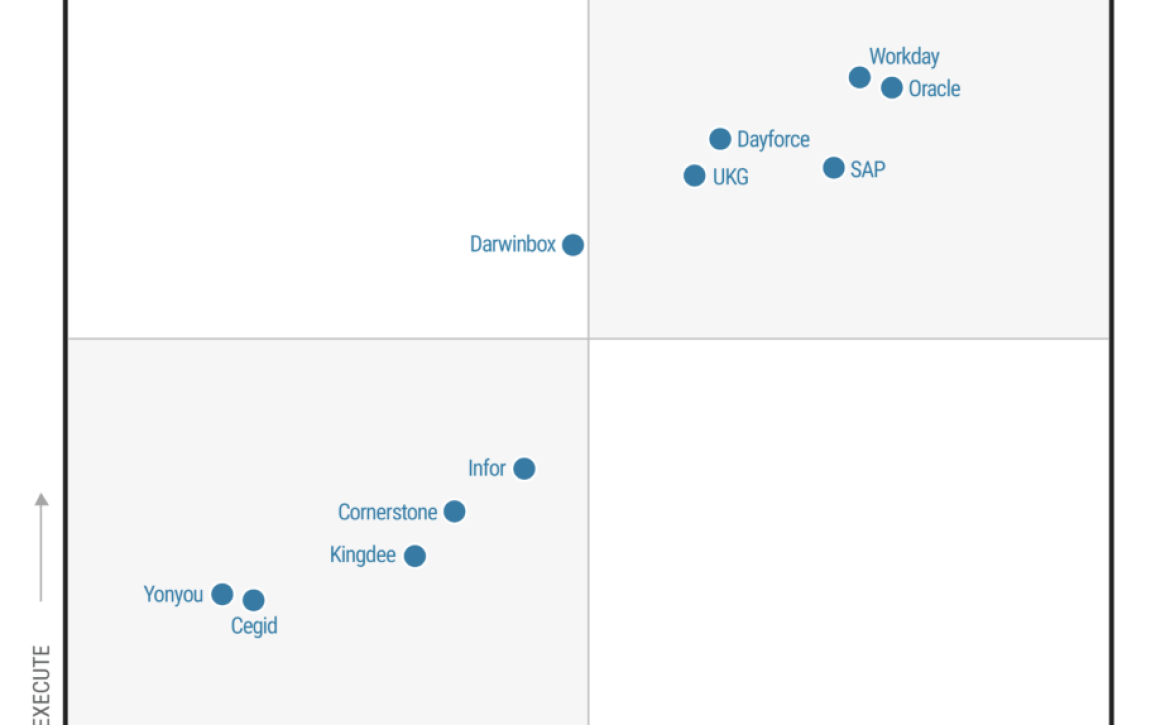
This milestone comes alongside strong industry recognition. SAP has been named a Leader in the 2026 Gartner® Magic Quadrant™ for Source‑to‑Pay Suites, an acknowledgment that aligns with the delivery of next-gen SAP Ariba and our continued focus on platform modernization and AI‑driven innovation at enterprise scale.

Why rebuilding the foundation matters

As procurement leaders know, AI’s potential is widely recognized, but its impact has often been uneven. Confidence is high, yet results depend on more than algorithms alone. AI only delivers value when it is supported by the right data, processes, and platform architecture. That belief shaped our decision to rebuild SAP Ariba from the ground up.

Independent analyst firm Ardent Partners describes next‑gen SAP Ariba as “a complete reengineering of the largest and most entrenched source‑to‑pay platform in the world,” emphasizing that this move goes far beyond adding AI features to legacy systems. Instead, it establishes the architectural foundation required for AI to operate reliably and at scale.

Experience the first AI-native source-to-pay suite designed to power the future of procurement

This aligns with what we consistently hear from customers that sustainable impact requires modernization at the core.

An AI‑native source-to-pay platform built on SAP Business Technology Platform

Next‑gen SAP Ariba is built on SAP Business Technology Platform (SAP BTP), providing a unified, real‑time data foundation across the source‑to‑pay lifecycle. This shift enables tighter integration with SAP Cloud ERP, improved extensibility, and faster innovation delivery.

By moving to SAP BTP, SAP Ariba can support open APIs, cross‑suite data consistency, and the responsiveness required for intelligent, AI‑driven procurement operations—capabilities that are increasingly expected of leading source‑to‑pay platforms but are difficult to achieve on legacy architectures.

Current next‑gen capabilities will continue to be delivered incrementally throughout 2026 and into 2027, giving customers flexibility to adopt innovation at a pace that aligns with their business priorities.

Embedded intelligence with Joule: moving from insight to action

A defining element of next‑gen SAP Ariba is the deep integration of Joule directly into procurement workflows. Rather than treating AI as an optional add‑on, next‑gen SAP Ariba can embed intelligence where work happens—supporting faster, more informed decisions while reducing friction across everyday processes.

Early capabilities include:

  • A Bid Analysis Agent, which can automatically evaluate complex bid scenarios, including total cost considerations
  • AI-assisted contract support to help automate routine inquiries, generate summaries, and provide instant access to contract details

These capabilities reflect a broader shift from systems that require constant manual input to platforms that actively support outcomes.

A more unified, intuitive procurement experience

Next‑gen SAP Ariba also addresses long‑standing fragmentation across the source‑to‑pay lifecycle.

Key improvements include:

  • SAP Ariba Intake Management, now globally available, providing a single entry point for procurement requests
  • A simplified SAP Fiori‑based user experience, delivered through a central launchpad
  • A modernized contract lifecycle, supported through integration with Icertis Contract Intelligence

Together, these improvements are designed to make procurement easier to engage with while working to ensure processes remain connected, compliant, and intelligent behind the scenes.

What this means for customers

For existing SAP Ariba customers, next‑gen SAP Ariba provides choice and continuity. Customers can:

  • Transition to next‑gen SAP Ariba on a voluntary basis.
  • Access next‑gen capabilities without commercial implications.
  • Run current and next‑gen environments in parallel during an active transition, reducing risk and disruption.

SAP is providing tools, services, and advance timelines to support a managed transition, allowing organizations to move forward with confidence rather than urgency.

The foundation for what comes next

Next‑gen SAP Ariba is not an endpoint, it is the foundation for the future of procurement.

With an AI‑native architecture, embedded agentic intelligence, and a unified user experience, this new generation of SAP Ariba helps organizations move beyond transactional efficiency toward smarter decisions, greater resilience, and measurable business outcomes.

As Ardent Partners observed, this rebuild has the potential to act as a catalyst—not just for SAP Ariba customers, but for the broader procurement technology landscape. By combining scale, data, and AI in a fundamentally new way, next‑gen SAP Ariba is helping define what modern source‑to‑pay platforms can deliver.

With the solution now available, we look forward to partnering with customers as they move from vision to value. Together, we can shape the future of intelligent procurement.


Baber Farooq is senior vice president of Product Marketing for SAP Ariba and SAP Fieldglass.

Receive weekly news highlights from the SAP News Center

Previous Next
Close
Test Caption
Test Description goes like this