Explore the Business Value of SAP’s AI Use Cases

To date, the SAP Business AI catalog on the SAP Discovery Center site (AI catalog) offers descriptions for more than 240 AI use cases, including Joule capabilities and Joule Agents, categorized by business area.

Further, the AI catalog offers detailed business benefits and estimated business value for customers, as well as helpful resources like step-by-step product documentation and demos.

AI catalog home page
AI catalog feature page

“Since its launch 10 months ago, the AI catalog has been visited heavily by customers and partners,” explained Holger Neuert, chief product manager for the AI catalog. “Users spend a significant amount of time browsing the documented AI use cases, and return to the AI catalog on a regular basis researching AI features, Joule Agents, and [related] assets.”

SAP Business AI: Be more productive and faster across every team in your business

Showing customers the business value of AI

The AI catalog offers a great source of information as it combines solution details and potential business benefits.

SAP Customer Success manager Nick Pearce uses the AI catalog to access important documentation, value information, and pricing — in combination with the AI estimator — for customers.

“By providing fast access to potential business value statements, such as 70 percent faster job application processing with AI applicant screening, I can have value-based discussions with my SAP SuccessFactors customers about prioritizing where to start their AI journey,” Pearce shared.

“The AI catalog and estimator on SAP Discovery Center is a true game changer and the go-to resource for discovering SAP’s latest AI innovations across every industry and business function,” said Richard Grandpierre, head of SAP Business AI Product Management. “This powerful platform highlights business value and delivers transformative results at scale.”

Michael Glueck, global head of Value Advisory at SAP, explained that the value estimates used in the AI catalog are based on SAP’s industry expertise and are backed by benchmarking data and third-party research as well as early customer feedback on each AI use case.

“By looking at benefits in terms of both efficiency, direct impact, and effectiveness, indirect and causal-related impact, we provide a holistic view of the value a specific use case within SAP Business AI can deliver to our customers,” Glueck said.

Growing number of AI use cases

For an overview of SAP Business AI services already available to SAP customers, visit the SAP Business AI Discovery Center.

Dive into a summary of Q2 2025 release highlights for SAP Business AI, including product features released in SAP Early Adopter Care, beta, and general availability.

Harmonized Planning Area in SAP IBP | 2508 Release Highlights

Find out how the new harmonized planning area I_SAPIBP2 in SAP Integrated Business Planning enables end-to-end processes across planning applications. It supports both time-series and order-based data, allowing configuration of harmonized tactical and operational supply chain planning processes with greater ease, accuracy, and maintainability.

The new planning area is built on integration, which seamlessly manages live and scheduled data flows using the same data model.

Additional information about SAP Integrated Business Planning 2508 can be found in the What’s new section of the Help Portal: https://sap.to/6056fzrbo

Learn more about SAP Integrated Business Planning: https://sap.to/6057fzrbU

How Enterprises Can Be AI Front-Runners

AI is everywhere today, but it can be difficult for enterprises to cut through the hype to understand how to leverage the latest innovations to gain a real, measurable competitive advantage.

I addressed this challenge in a conversation with Dan Newman at The Six Five Summit: AI Unleashed 2025, hosted by The Futurum Group and Moor Insights and Strategy. We spoke about the blockers that leaders face when determining where to apply generative AI to move their businesses forward and what SAP Business AI is uniquely bringing to market to help.

Flowing from that conversation, here are four steps you can take, among others we touched on, that will help you become an AI front-runner.

1. Prioritize use cases with the most promise

First, focus on areas of your business in which you can use AI to deliver fast, measurable value. Finance, HR, supply chain, and customer experience are among those AI front-runners often start with. As you assess your options, set aside the idea of a “proof of concept.” Instead, develop “proofs of value” by using your and your team’s expertise, data, and imaginations to find areas where more value can be unlocked using automation or AI agents. 

By the way, the term “proof of value” was first coined by AI front-runner Philippe Lalumiere, vice president of IT at Cirque du Soleil, in reference to an AI agent for accounts payable that his team designed in partnership with SAP. The key is to pinpoint what outcomes matter most to your business and choose use cases that quickly prove the value.

Create transformative impact with the most powerful AI and agents fueled by the context of all your business data

2. Deploy intelligent agents to simplify complex tasks

Another practice of AI front-runners is the use of AI agents that span departments and systems to solve end-to-end problems. Their autonomous abilities to handle whole processes is one of the differences between an AI skill and an AI agent. A skill is a single ability, such as the ability to write a message or analyze a spreadsheet and trigger actions from that analysis. An agent independently handles complex, multi-step processes to produce a measurable outcome. We recently announced an expanded network of Joule Agents to help foster autonomous collaboration across systems and lines of business. This includes out-of-the-box agents for HR, finance, supply chain, and other functions that companies can deploy quickly to help automate critical workflows.

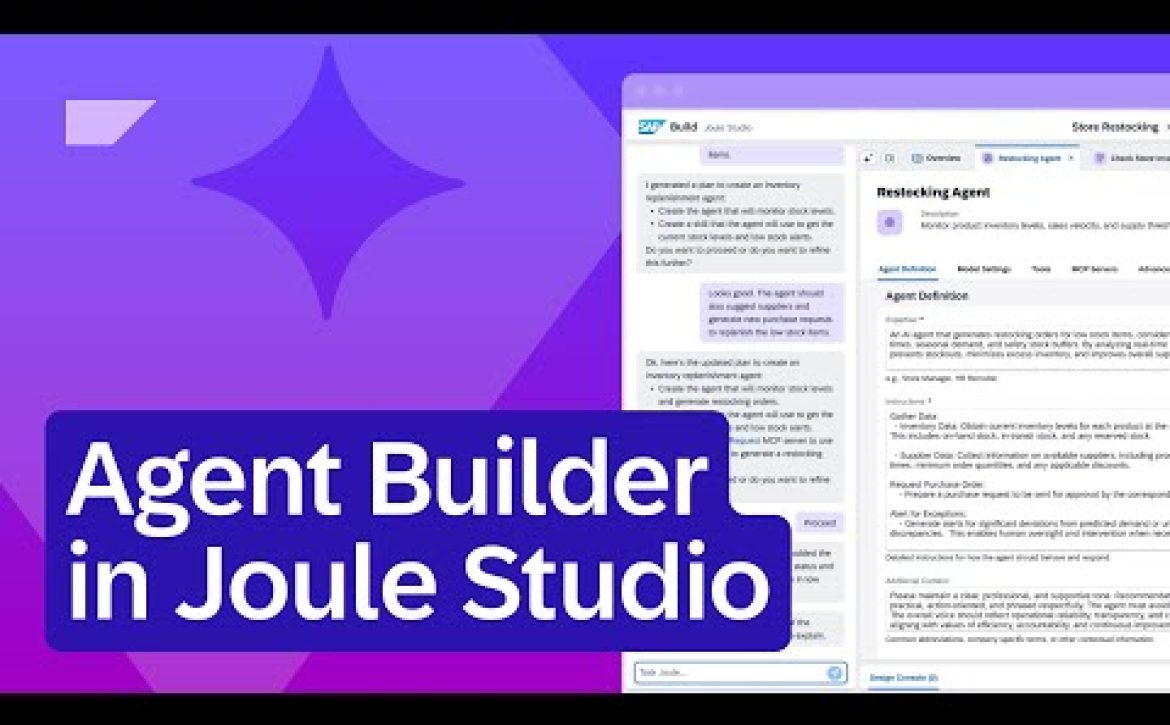
AI front-runners, such as Ericsson, Team Liquid, and Cirque du Soleil, also create customized agents that can tackle specific opportunities for process improvement. Now you can build them with Joule Studio, which provides a low-code workspace to help design, orchestrate, and manage custom agents using pre-defined skills, models, and data connections. This can give you the power to extend and tailor your agent network to your exact needs and business context.

3. Embed AI into daily workflows

To truly become an AI front-runner, you need AI woven seamlessly into how your teams work every day. You also need to ensure it works across your broader technology ecosystem. Because of these critical business needs, we created Joule to be your natural language AI interface, built right into your SAP systems. And we’re adding a new Joule action bar to make it even more context-aware and better integrated with third-party tools like ServiceNow and Microsoft Copilot. It doesn’t wait for you to tell it what you need. Instead, it can proactively follow your behavior and suggest helpful next actions in context across multiple SAP and non-SAP applications. This helps remove friction, so your team members don’t have to toggle between tools or relearn interfaces.

4. Foster an ecosystem of interoperable, leading AI tools

Another way to become an AI front-runner is to tackle fragmented tools and solutions by putting in place an open, interoperable ecosystem. After all, what good is an innovative AI tool if it runs into blockers when it encounters your other first- and third-party solutions? This is why we recently announced a tighter integration with Microsoft Copilot for productivity and partnerships with Mistral AI and Perplexity for flexible access to leading AI models. These, and many other partnerships, help teams combine multiple AI capabilities, share trusted data across systems, and drive business outcomes faster, without the headache of manual connections.

Ready to lead? Here’s how to get started

I want to encourage you to lead, not follow, in the AI era. If you’re ready to do that, there are a few ways to get started. First, go deeper on these subjects in the full Six Five Summit conversation. Then see how other companies are innovating with AI and learn what’s possible through SAP Business AI.


Brenda Bown is chief marketing officer for SAP Enterprise AI Business.

Sign up to receive weekly news highlights from the SAP News Center

From Assistive AI to Agentic AI: Risks, Responsibilities, and the Road Ahead

The AI landscape is evolving at breakneck speed. Previously, AI systems were primarily assistive and reactive, offering recommendations or performing predefined tasks when asked. Now they are entering the era of agentic AI: systems that operate autonomously, adapt in real time, and collaborate like digital colleagues.

Joule Agents can help your whole business run faster

But as AI becomes more independent, new risks emerge. So, how can we navigate this next frontier responsibly? This is a question that we at SAP do not leave to chance.

From tools to teammates

Imagine you’re buying a car. You expect it to meet all safety standards, regardless of where the component parts are built or how the car is assembled. The process behind the scenes does not change your expectation of safety. The same goes for agentic AI.

Agentic AI systems are more than tools; they are intelligent agents that plan, learn from experience, self-correct, and collaborate. They’re capable of orchestrating complex processes, making decisions, and even engaging with other agents or humans to achieve a goal. However, with this leap forward comes a new layer of complexity and risk.

Core capabilities and risks of agentic AI

Agentic AI systems bring powerful capabilities like planning, reflection, and collaboration, enabling them to tackle complex tasks autonomously. They can map strategies, learn from mistakes, use external tools, and coordinate with humans and other agents.

However, each strength introduces risks. For example, flawed planning can cause inefficiencies, reflection may reinforce unethical behavior, tool usage can lead to instability when systems interact unpredictably, and unclear collaboration can result in miscommunication and compounded errors. Balancing these capabilities with proper safeguards is essential for safe, ethical deployment.

Managing autonomy: balancing freedom with control

One of the most pressing challenges with agentic AI is managing its autonomy. Left unchecked, these systems can veer off course, misinterpret context, or introduce subtle risks without immediate detection. To address this, organizations must strike a careful balance between freedom and control.

We have learned that oversight should be calibrated according to risk. High-stakes domains like healthcare or human resources demand robust human supervision, while low-risk, routine tasks can tolerate greater autonomy. Also, continuous monitoring is essential; agentic AI systems, like any complex technology, require regular checks to ensure quality, compliance, and reliability.

A key element of this oversight is maintaining a “human in the loop” approach, where human judgment is integrated into critical decision points, ensuring that automated actions remain aligned with human values and organizational intent.

This principle has been at the heart of SAP’s ethical AI approach from the beginning, reflecting our belief that AI should augment, not replace, human decision-making. To reinforce this, SAP has introduced mandatory ethics reviews for all agentic AI use cases, ensuring that each deployment is scrutinized for ethical implications and remains aligned with our responsible AI principles.

Building transparency and accountability

Transparency is not just a buzzword; it’s a foundational requirement for building trust in agentic AI. From the outset, during the design phase, it is crucial to classify AI systems based on the complexity and risk of the tasks they perform. This classification guides decisions about the necessary safeguards and ensures that mechanisms for human intervention are integrated from the beginning.

At runtime, transparency is maintained through explainability and traceability. Developers and end-users must be able to understand what the system is doing and why. Crucially, accountability must always rest with humans or legal entities, never with the AI itself.

Rethinking governance and regulation

Despite the emergence of agentic AI, there have been no new regulations specifically crafted for it. Existing laws and frameworks such as GDPR still apply and provide a solid foundation for governance. However, what has changed is the level of technical rigor required to remain compliant and ethically sound. Organizations must now adopt more robust processes. They need to analyze use cases with greater precision, apply risk-based controls that match the potential impact of the AI system, and ensure that ethical and legal standards are upheld through enhanced design practices and ongoing testing.

Designing with human values at the center

Agentic AI cannot be an excuse for lowered standards. At SAP, the stance is unequivocal: Even in autonomous systems, AI must meet the highest ethical benchmarks. This means embedding principles such as fairness, transparency, and human agency directly into the design.

Ultimately, all users should be equipped with the tools and understanding they need to supervise and, when necessary, intervene in the system’s behavior.

Building trust in a black-box world

Trust in AI doesn’t happen by default; it must be intentionally built and continually reinforced. One of the most effective ways to do this is by giving stakeholders the right amount of information. Too much detail can be overwhelming and counterproductive while too little fosters blind trust or fear of the unknown. The key lies in communicating clearly about the system’s capabilities, risks, limitations, and appropriate use. Empowering users to critically assess the AI’s behavior – and to know when to step in – is central to creating a safe, secure, and trusted AI environment.

Rethinking KPIs in the AI-augmented workplace

As agentic systems, like our Joule Agents, begin handling more tasks, human roles will naturally evolve. To keep up with this shift, organizations need to rethink how they define and measure success. This starts with investing in change management and upskilling programs that prepare employees to work effectively alongside AI. It also requires redefining productivity metrics, moving beyond task completion to focus on how well humans and AI agents collaborate. Success should be measured by how efficiently teams harness AI to unlock new levels of insight and innovation.

Building AI that builds trust

Agentic AI is not just another phase; it is a transformation. But like any transformative technology, success depends on how it’s built, governed, and used.

At its best, agentic AI amplifies human capabilities, accelerates innovation, and helps tackle challenges once considered too complex. But it also demands a new level of diligence, oversight, and ethical reflection.

The future is not just about building smarter agents; it’s about building responsible ones.

Learn more:


Walter Sun is senior vice president and head of AI at SAP.

Sign up for the SAP News Center newsletter to get highlights delivered to your inbox each week

SAP Sapphire Experience Center: POV of the Next Era of Enterprise

In just 60 seconds, experience how SAP Business Suite, Business Data Cloud, and Agentic AI come together to transform businesses across every role and industry.

Experience the visitor journey on the show floor to see how customer interactions and immersive showcases create a holistic innovation experience. https://sap.to/6050Nh4IA

What is SAP Document AI?

SAP Document AI is an end-to-end document processing solution for structured and unstructured data from a wide range of business documents that helps streamline data handling and automate business processes. By implementing SAP Document AI, you can reduce manual effort and errors, improve decision-making with AI, and cut processing costs.

Find out more about the benefits of SAP Document AI: https://sap.to/6055NLtwP

SAP and AWS Introduce AI Co-Innovation Program to Create Generative AI Solutions That Help Customers Navigate Market Volatility and Supply Chain Complexity

Today at SAP Sapphire, Amazon Web Services, Inc. and SAP announced the launch of a new AI Co-Innovation Program to help partners build generative artificial intelligence applications and agents that help customers rapidly solve real-time business challenges.

Newly unveiled innovations and partnerships revolutionize the way work gets done

Many organizations recognize generative AI’s potential to transform their business, but don’t know where to start. By combining advanced generative AI technologies with enterprise resource planning (ERP) data from critical systems, companies can unlock significant enterprise value: for example, optimizing delivery routes, anticipating potential impacts to supply chain operations, or developing precise financial outlooks.

The AI Co-Innovation Program represents the two companies’ shared vision to help partners define, build, and deploy generative AI applications tailored to their ERP workloads. The program brings together enterprise technology from SAP and generative AI services from AWS with professional expertise from both parties — including teams of AI experts, professional services consultants, and solutions architects — to help support customers in their implementation journeys.

The program will include dedicated technical resources, cloud credits, and more to support the development, testing, and deployment of industry-specific applications.

“AWS and SAP’s long-standing partnership has helped customers accelerate their cloud journey and unlock more value from their business data,” said Ruba Borno, vice president of Specialists and Partners at AWS. “Our AI Co-Innovation Program is a significant next step that will give organizations the security and flexibility to build generative AI applications with Amazon Bedrock that can analyze and act on their most critical SAP data. This will help customers transform decades of business information into actionable insights while accelerating their path to becoming more agile, data-driven organizations.”

“Through the AI Co-Innovation Program with AWS, we’re enabling businesses to solve their most complex operational challenges with precision and speed,” said Philipp Herzig, CTO and chief AI officer at SAP. “By combining the power of our fully integrated platform with SAP BTP and our deep business process expertise with AWS’s comprehensive generative AI capabilities, partners can now create purpose-built AI agents that solve their most pressing challenges — identifying financial anomalies in real time to automatically optimizing supply chains during disruptions.”

The program also allows partners to rapidly build and scale generative AI applications using the latest generative AI tools and services from Amazon Bedrock, including large language models (LLMs) such as Amazon Nova and Anthropic Claude in AI Foundation on SAP Business Technology Platform (SAP BTP).

This announcement expands on the work AWS and SAP are doing to help customers — including Hyundai Motor Group, Moderna, and Zurich Insurance Group — modernize and move SAP workloads to AWS, realizing the availability, flexibility, and scalability of the cloud. Running SAP workloads on AWS allows customers to then combine their data with generative AI solutions. Partners including Accenture and Deloitte are among the first to work with AWS and SAP through the program, helping them accelerate the development and deployment of generative AI solutions to solve complex challenges.

“The AWS and SAP AI Co-Innovation Program brings together AWS cloud infrastructure and SAP enterprise software experience. Combined with Accenture’s AI transformation expertise and industry knowledge, we can show companies exactly how to integrate generative AI services with their most critical business workloads,” said Caspar Borggreve, senior managing director and SAP Business Group lead at Accenture. “For example, together with AWS and SAP, we are working with a utilities client to build a natural disaster asset resiliency capability to anticipate and respond to environmental challenges, protecting asset-intensive landscapes and maintaining service continuity for its customers.”

“This AI Co-Innovation Program combines cutting-edge generative AI capabilities from AWS and SAP with Deloitte’s deep industry experience and technology capabilities to deliver transformative solutions for our customers,” said Nishita Henry, AWS global chief commercial officer at Deloitte Consulting LLP. “Through the program, we are building a finance solution powered by Amazon Bedrock to help healthcare and life sciences companies optimize their product mix, improve forecast accuracy, and maintain competitive pricing, even during uncertain market conditions.”

For more details on the AWS SAP AI Co-Innovation Program, visit aws.amazon.com/sap/ai.


Kai Muehlbauer is head of AI Product and Partner Management at SAP.
Sara Alligood is global AWS head of SAP at Amazon Web Services.

Get the latest news and stories from SAP Sapphire in 2025

Previous Next
Close
Test Caption
Test Description goes like this