How to Extract Data into SAP BW/4HANA Using Generic DataSources

In this blog post, we’ll walk through extracting data from SAP S/4HANA using generic DataSources and transferring that data to SAP BW/4HANA.


In this blog post, we’ll walk through extracting data from SAP S/4HANA using generic DataSources and transferring that data to SAP BW/4HANA.

SAP continues to enhance its AI-driven technologies with a focus on empowering businesses through advanced solutions, as seen in the latest Q3 2024 updates on SAP AI solutions. SAP’s ongoing efforts to integrate artificial intelligence across its cloud applications showcase the company’s intent to drive productivity and efficiency for businesses globally. The latest innovations deliver […]
The post SAP AI Solutions: Q3 2024 Innovation Highlights appeared first on InsideSAP.

Join Cecilia Huergo as she showcases the latest advancements in SAP Build, including revolutionary GenAI capabilities that are transforming application development. Discover how to accelerate your SAP S/4HANA Cloud development projects with GenAI and Joule. This video walks you through adding custom fields, extending applications, integrating real data, and managing ABAP cloud projects using SAP Build and Joule. Learn practical steps to enhance productivity and streamline your development process.
Watch on Demand: https://sap.to/6053UQHd9
In this live coding demo, you’ll witness:
00:00 – Introduction to GenAI and Custom Fields
00:14 – Extending SAP Applications with Joule
01:05 – Creating Custom Fields and API Integration
02:09 – Developing Services with SAP Build Code – DEMO
Step-by-step instructions on developing business logic and services to connect to third-party services, enhancing productivity with Joule.
03:35 – Managing ABAP Cloud Projects and Key Takeaways
#saps4hana #sapbuild #ai

SAP Joule, the generative AI copilot, is at the forefront of SAP’s innovative AI advancements, introduced during SAP TechEd. SAP Joule’s evolution reflects a significant shift in how enterprises use artificial intelligence to enhance business operations. At SAP TechEd, SAP showcased new functionalities for Joule, highlighting its role in simplifying business processes through collaborative AI […]
The post SAP Joule Leads AI Advancements in Business Automation appeared first on InsideSAP.
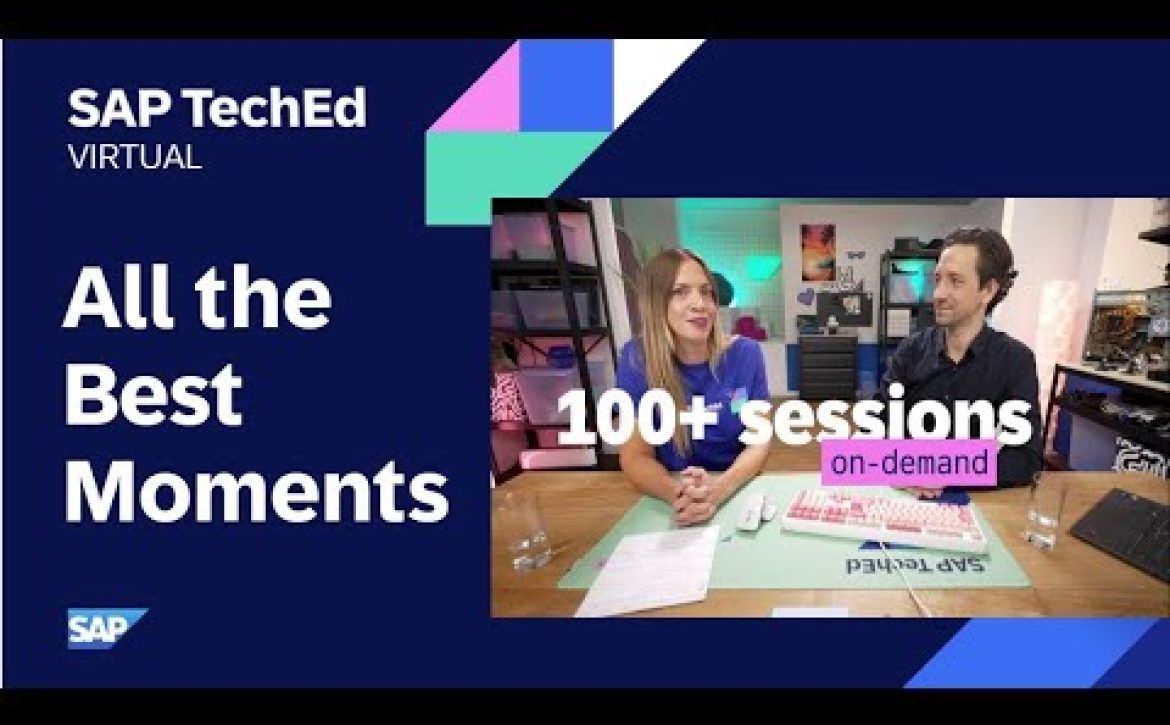
Relive the highlights of #SAPTechEd Virtual: https://sap.to/6052UL4yA
From groundbreaking innovations to expert insights, we explored the future of tech together. Watch the best moments on demand now!

Zespri, the largest kiwifruit marketer globally, has moved to the next stage of its digital transformation journey by upgrading its SAP S/4HANA digital core as part of its ongoing Horizon transformation program. Zespri’s partnership with SAP has been pivotal in enhancing the company’s operational efficiency and sustainability. The collaboration began in 2021 when Zespri initially […]
The post Zespri Enhances SAP S/4HANA Digital Core for Transformation appeared first on InsideSAP.
The global education goal, part of the United Nations’ Sustainable Development Goals (SDGs), remains significantly off track. Various reports, including from UNESCO and UN news, highlight the concerning trend that unless drastic changes occur the world will not meet its commitments to ensure inclusive and equitable quality education by 2030.
The world today is grappling with a polycrisis – a complex set of interconnected global challenges that impact economies, industries, and job markets simultaneously. From climate change and geopolitical tensions to technological disruptions and economic instability, these crises are reshaping the landscape of work, especially for young people. While youth unemployment remains high, employers worldwide are also struggling to fill critical roles, highlighting a significant skills gap.
According to the International Labour Organization (ILO), global youth unemployment was 13% in 2023, with many young people facing limited prospects for stable and decent work. On the flip side, the World Economic Forum (WEF) found that 44% of businesses report difficulties in finding talent with the right skills to fill jobs. This contrast reflects a deepening mismatch between the supply of young job seekers and the demand for skilled talent, which, if left unaddressed, will exacerbate both unemployment and the talent shortage.
To tackle this challenge, we must take a comprehensive, systems-based approach, focusing on five interconnected elements: economy, education, employability, equality, and the ecosystem. Together, these factors can help close the skills gap, reduce youth unemployment, and create pathways to decent work for all.
Economic growth remains a critical driver of job creation, but the quality and inclusivity of that growth matter. In many parts of the world, jobless growth has become a pressing concern, as economies expand without generating enough formal employment opportunities for young people. Youth unemployment continues to rise even in nations with positive GDP growth, indicating that inclusive economic policies and investment in key sectors are lacking (ILO, 2024).
Moreover, the alignment between economic growth and investment in education is critical. The Global Education Monitoring Report 2023 highlights that national budgets for education often fall short of the recommended 4%-6% of GDP that UNESCO advocates. Without adequate financial support, education systems cannot provide the skills and competencies needed to prepare young people for modern job markets, leaving many young workers without the necessary tools to succeed.
Education systems need to evolve to meet the changing demands of the workforce. The OECD – OCDE emphasizes the importance of embedding skills, knowledge, attitudes, and values into education systems to ensure that young people are prepared for lifelong learning. In particular, stackable credentials – modular qualifications that allow learners to build expertise over time – are becoming an essential component of successful education-to-employment transitions.
Despite the need for adaptable learning pathways, many education systems remain rigid and slow to adopt these models. However, countries that have embraced flexible learning, such as Germany with its robust vocational education and training (VET) programs, have been able to reduce youth unemployment significantly. The integration of industry-specialized learning and competency-based education is critical for preparing young people to thrive in an evolving workforce, particularly in sectors like technology and sustainability.
One of the most significant barriers to reducing youth unemployment is the skills mismatch – the gap between what young people learn and what employers need. The World Economic Forum’s Future of Jobs Report 2023 projects that 50% of employees will need reskilling by 2025 due to rapid technological advancements. Yet, traditional education systems are often not aligned with industry needs, leaving many young workers without the skills required for high-growth sectors.
Governments and businesses must collaborate to ensure that training programs are directly linked to market demand. Public-private partnerships, such as apprenticeship programs and industry-led training initiatives, can play a pivotal role in closing the skills gap. For example, in Switzerland, where education and training are tightly integrated with the labor market, youth unemployment is among the lowest in the world. Building a system that continually adapts to changing workforce needs is essential for improving youth employability.
Recent trends show that many young people increasingly prefer entrepreneurship over traditional employment, driven by the desire for independence and the ability to create change. A 2019 study by Deloitte found that 76% of millennials view entrepreneurship as a key vehicle for driving social impact. However, research highlights the need for robust support systems to help these young entrepreneurs succeed. The 2021 Global Entrepreneurship Monitor emphasizes that access to entrepreneurial education, mentorship, and skill development is critical for youth to thrive in their ventures.
Any strategy to reduce youth unemployment must prioritize equality, ensuring that opportunities are equally accessible to all young people, regardless of their background, gender, or location. Despite advances in education, women and marginalized communities continue to face barriers to entry in high-growth industries, particularly in STEM fields. According to UNESCO, only 35% of STEM graduates are women, highlighting the gender gap in science, technology, engineering, and mathematics.
Programs that specifically target underrepresented groups – such as mentorships and women-in-tech initiatives – can help diversify the talent pipeline. Furthermore, companies that emphasize inclusive hiring practices, gender parity, and equity in leadership are not only contributing to social justice but also benefiting from a more innovative and dynamic workforce. The data is clear: promoting diversity is a strategic advantage in the modern economy.
A thriving job market requires more than just a functioning economy and well-prepared workers – it needs a cohesive ecosystem where governments, businesses, educational institutions, and civil society work together efficiently. The OECD underscores the importance of synergy across the value chain, ensuring that all stakeholders are aligned toward the goal of reducing unemployment and fostering decent work.
Successful models of ecosystem collaboration, like those seen in Singapore, offer valuable lessons for other nations. In these countries, the government plays a central role in orchestrating cooperation between educational institutions and industries to ensure that young people are being trained in fields that are projected to grow. Such synergies foster an environment where young people can transition smoothly from education to employment and where employers can easily find the talent they need.
As respective leaders, SAP and UNICEF join forces to create innovative solutions to global skilling and workforce challenges with an aim to help young people transition to earning. Together, we’re generating inclusive opportunities for underserved young people worldwide, preparing them for decent work with the skills that employers need.
We expanded our partnership in 2022, with a three-year investment focused on impacting youth in Kenya, Nigeria, and South Africa through a new program that supports learning to earning pathways in growing digital and green economies. The program helps equip youth with the essential skills they need to flourish – wherever they may see their future. Further, it builds on UNICEF’s Generation Unlimited (GenU) signature program, Youth Agency Marketplace (YOMA), a platform developed by young Africans to tackle labor market challenges and increase youth agency across the globe. By the end of the first year, SAP and UNICEF’s GenU reached more than 600,000 youth, granting them access to foundational and digital skills opportunities that help young people unlock opportunities in the changing global economy.
One of the learn to earn pathways on YOMA is the SAP Educate to Employ initiative designed by SAP to help equip beneficiaries with essential competencies for the digital economy. The free initiative, implemented by the local non-profit UMUZI, focuses on developing skills, knowledge, attitudes, and values to help prepare candidates for employment. It also aims to assist employers in accessing diverse and certified talent, thereby accelerating digital transformation in each country through a skilled talent pipeline. More than 1,000 learners completed one or more foundational skills courses, while 165 learners completed over 400 hours of critical skills development training and achieved an SAP certification for technology consultant beginners. Additionally, 100 learners have completed their intermediate training on the SAP Learning site and are preparing for SAP-certified associate exams.
This multistakeholder approach underscores the power of partnership in addressing complex social challenges. By pooling expertise and resources, SAP, UNICEF’s GenU, and UMUZI are collectively ensuring that youth not only gain relevant skills but also access meaningful pathways to employment. These partnerships exemplify the collaborative frameworks needed to drive sustainable impact on a global scale. As digital and green economies continue to reshape the future of work, partnerships that unite private, public, and civil society actors will remain crucial in ensuring that marginalized youth are not left behind.
The polycrisis we face today demands multidimensional solutions that address both the supply and demand sides of the labor market. By focusing on the interconnected elements of economy, education, employability, equality, and ecosystem, we can create a comprehensive strategy to reduce youth unemployment and foster decent work for all.
Policymakers, business leaders, and educators must come together to close the skills gap, promote inclusive growth, and build resilient labor markets. The challenges are great, but so are the opportunities. With coordinated effort and sustained investment, we can build a future where young people have the skills, opportunities, and support they need to thrive in the global economy.
For more information on how SAP is helping the world run better and improving people’s lives all year round, visit sap.com/csr.

As part of a new partnership with Ambipar, SAP sustainability solutions are at the forefront of helping companies lower their carbon footprint and get closer to net zero goals. A step toward improving carbon management through technology is the collaboration between SAP and Ambipar, a business known for its environmental solutions. SAP’s partnership with Ambipar […]
The post SAP Sustainability Solutions Support Net Zero Efforts with Ambipar appeared first on InsideSAP.
WALLDORF — SAP SE (NYSE: SAP) today announced a partnership with Ambipar (B3: AMBP3; NYSE: AMBI), a global leader in environmental solutions with operations in 40 countries, to bring Net Zero as a Service to customers and support the fight against climate change.
Net Zero as a Service brings together a combination of SAP’s robust cloud solutions and Ambipar’s deep carbon credit generation and trading expertise to help customers seamlessly manage and offset carbon emissions.
“In partnering with SAP, we are bringing together two companies with a shared commitment to help organizations achieve net zero,” said Tercio Borlenghi Junior, CEO of Ambipar. “By combining SAP’s technology with Ambipar’s decarbonization expertise to create Net Zero as a Service, customers will have access to a simple but comprehensive solution that contributes to the low carbon economy.”
Net Zero as a Service can equip SAP customers globally with solutions for the entire decarbonization journey. SAP’s ERP-centric and AI-enabled solutions will provide end-to-end carbon management, allowing customers to establish a common data foundation, seamlessly measure emissions and make granular and timely decisions that are financially and environmentally sound. Customers can neutralize emissions by purchasing internationally certified carbon credits through Ambipar’s technology platform AMBIFY, available on the SAP Store, the online marketplace for SAP and partner offerings.
“SAP customers are increasingly seeking ways to measure and offset their carbon emissions,” said Adriana Aroulho, president of SAP Brazil. “Through Net Zero as a Service and our partnership with Ambipar, SAP is building on our commitment to deliver comprehensive sustainability management solutions and empowering our customers to become future-ready businesses.”
Ambipar is currently piloting Net Zero as a Service in its own operations, tapping into the power of SAP’s solutions as it aims to meet aggressive growth targets this year, before the service becomes widely available to SAP customers.
By leveraging SAP Sustainability solutions, Ambipar will establish a unified data foundation, breaking down silos across the business, and seamlessly measure and manage carbon emissions.
“Ambipar is undergoing a worldwide expansion and counts on SAP as a trusted IT partner as they scale,” said Aroulho. “Net Zero as a Service will support Ambipar’s growth objectives, while helping the company effectively streamline operations, drive innovation and manage its own environmental footprint. We are thrilled to bring this service to SAP customers.”
Visit the SAP News Center. Follow SAP at @SAPNews.
Media Contact:
Sybelle D’Marco, +1 (305) 490-6139, sybelle.d-marco@sap.com , ET
SAP Press Room; press@sap.com
This document contains forward-looking statements, which are predictions, projections, or other statements about future events. These statements are based on current expectations, forecasts, and assumptions that are subject to risks and uncertainties that could cause actual results and outcomes to materially differ. Additional information regarding these risks and uncertainties may be found in our filings with the Securities and Exchange Commission, including but not limited to the risk factors section of SAP’s 2023 Annual Report on Form 20-F.
© 2024 SAP SE. All rights reserved.
SAP and other SAP products and services mentioned herein as well as their respective logos are trademarks or registered trademarks of SAP SE in Germany and other countries. Please see https://www.sap.com/copyright for additional trademark information and notices.
Skills have become the cornerstone of many human resources practices—and one of the top HR trends in 2024. SAP’s HR researchers explored why both employees and organizations value a skills-based approach to people practices such as hiring.
According to findings from over five years of global research conducted by SAP SuccessFactors HR research scientists, 88% of employees would feel positively about skills-based people decisions in their organization. Along with employee satisfaction, HR and talent acquisition leaders see many potential benefits of the skills-based approach. For example, a focus on skills can support internal mobility, help realize employee potential, and make recruitment faster, easier, and more transparent.
So, what does “skills-based” mean? With a skills-based approach to human resource management, work is organized entirely around skills, from hiring and compensation to workforce planning, reskilling, and upskilling. Decisions are made based on skills and capabilities rather than traditional criteria like education or job experience.
Of course, there’s no universal blueprint that works for every scenario: there are multiple approaches to prioritizing skills in an organization. How skills-based practices are implemented depends on organizational culture, industry, labor regulations, and many other factors, but a great place to start is with skills-based hiring.
Skills-based hiring is an approach to recruiting new employees based on their skills and ability to perform a job instead of the formal qualifications listed on their resume or curriculum vitae (CV), such as education or previous job titles.
To understand why skills-based hiring works well for talent acquisition, we must consider the question what is talent acquisition? At its core, talent acquisition aims to address not just the current talent needs but also the long-term, strategic workforce plans. It can do so by predicting what skills the organization will require in the future to stay competitive, grow, and scale to future needs. Skills-based hiring can support a future-oriented talent acquisition strategy, thanks to:
Of course, there are still barriers to adopting the skills-based approach to hiring and recruitment. Sometimes, traditional criteria are necessary, such as when hiring for roles that require a specific degree or certification, like lawyers, doctors, and pilots. Candidates’ backgrounds and experience can also be crucial. Senior leaders may be chosen in part due to their industry or market experience; public relations leaders may be hired for their network and media contacts.
There are also many misconceptions about skills-based hiring. For instance, some believe that resumes are unsuitable for skills-based hiring because they’re structured around traditional criteria, such as education and past job titles. In reality, candidates can focus their CVs more on skills, and organizations can use applicant tracking systems and other recruitment software to analyze resumes and screen for the best applicants. In fact, thanks to the use of AI-enabled recruiting tools, skills can even be inferred from experience listed on resumes.
Finally, a widespread concern among talent acquisition leaders is how to make skills-based decisions equitably and efficiently. To do it fairly and thoroughly, they may need to research which skills are relevant for each role, devise custom skill assessments, and prepare job-specific interview questions rooted in the relevant skills. However, the recruitment process also needs to move along quickly, yield good results, and create a smooth candidate experience. So, although mindsets about skills-based hiring are changing, many talent acquisition leaders are still concerned about the efficiency of this approach. Thankfully, this is where technology can make a crucial difference.
Skills-enabling technologies have long been used in HR practices: online learning systems to help employees develop new skills and complete required training, job architectures that help define roles and the skills needed for them, and skill assessments to help understand the capabilities and skill proficiencies that people have. While some potential barriers to adopting a fully skills-based approach may exist for certain roles, AI can help empower organizations to hire the best talent with the skills needed to succeed. Using SAP Business AI for HR and SAP SuccessFactors solutions can provide organizations with multiple approaches to adopting skills that may fit their unique workforce and hiring needs.
The widespread adoption of AI in HR has opened up new capabilities in talent acquisition software while also optimizing existing functions. For example, with the SAP SuccessFactors Recruiting solution, talent acquisition teams can leverage AI to help them adopt skills-based hiring practices:
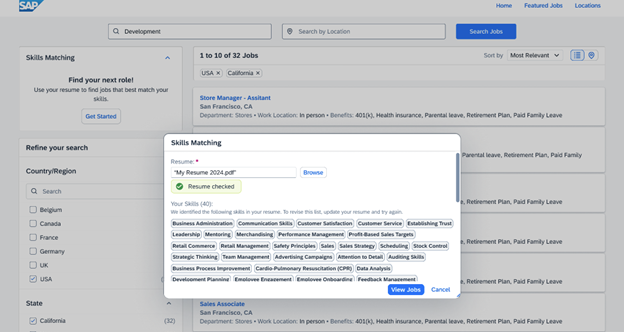
AI can be a true catalyst to an organization’s hiring potential, and many of our customers are already leveraging AI-enabled capabilities. If you’re curious how works, check out this FC Bayern customer story.
Skills-based hiring is an excellent way to recruit the talent your organization needs to thrive and stay competitive—today and into the future. The right recruitment software can make skills-based hiring intuitive, equitable, and efficient.
For a deep dive into our skills research, get the full report on making skills a reality in your organization and explore SAP SuccessFactors Recruiting.