How SAP FICA and SAP Convergent Invoicing Applies to B2C Businesses

Business-to-consumer (B2C) business involves the process of selling products and/or services directly to individual customers.



Business-to-consumer (B2C) business involves the process of selling products and/or services directly to individual customers.

With its ongoing commitment to sustainability, the German enterprise software giant will be investing more in climate projects and environmental conservation beginning in 2024 as part of the SAP net-zero strategy. The SAP net-zero strategy aims to balance the amount of greenhouse gases entering the atmosphere with the amount being removed, which is in line with the Science […]
The post SAP Net-Zero Strategy Expands Beyond Carbon Neutrality appeared first on InsideSAP.


SAP’s recent acquisition of WalkMe is a significant development in the enterprise software landscape.

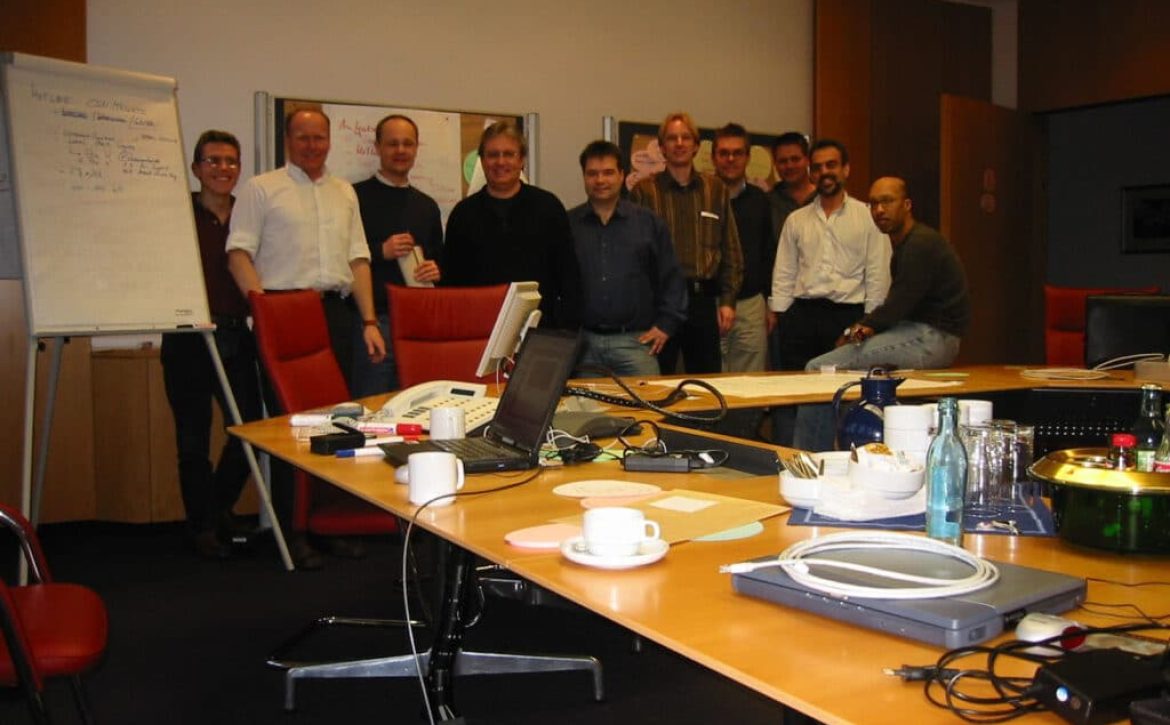
In a July 1995 e-mail announcing SAP’s International Demonstration and Education System (IDES), a demo system for the SAP R/3 client-server software (release 3.0 and later), project manager Dietmar Pfaehler asked employees not to expect miracles of the new system and acknowledged that it was not yet error-free. “The data is far from perfect,” and “the new help scripts are not yet available,” he wrote. Nevertheless, the project team had “reached its first milestone in terms of providing a system that contained plenty of realistic data.” Adding that there was “enormous demand for a fairly stable 3.0 system that people could work with,” he commented that “many of us will certainly find it helpful to have a well-maintained 3.0 system to play around with and test.”
IDES was initially modeled on an international company with multiple subsidiaries. Complete with a demo guide, it helped users familiarize themselves with SAP R/3 functions and with the organizational and integrated process structures that the SAP R/3 system covered. With data being added all the time, the IDES model companies felt very lifelike, and users had plenty of scope to test the various application areas.
“IDES wasn’t just a system, it was a new philosophy – a revolution in demo and training,” says Marcelo Cura Daball, who joined the team in late 1995 and played a key role in shaping the development of IDES. “The system behaved like a real customer system. It looked like a real customer system. That was new, and the customers loved it,” he recalls.
SAP built IDES to provide its developers with a test environment that would double as a basis for international training systems, customer workshops, and prototyping. “The basic idea,” Cura Daball explains, “was that our salespeople, in presales for example, would give a demo in the same system SAP used for customer training. And that, after a training course, customers could go home and repeat the training exercises with the same data they had used in their course.”
Pfaehler was the mastermind behind IDES and is credited with developing the business concept for the new system. A seasoned sales professional, he was an institution at SAP, says Cura Daball, and had connections across the globe. While the content for IDES was developed at company headquarters in Walldorf, Germany, Pfaehler also received support from colleagues all over the world; the system was then translated and made available to the local subsidiaries. Many customers provided real business data – such as BOMs – for the system, and the team worked with genuine, albeit anonymized, addresses.
But getting the system up and running was by no means a walk in the park. Time and again, Pfaehler had to ask for more specialists and more support from SAP’s subsidiaries. He argued that “at the very least” he needed a team of 12 developers, plus another two employees to continuously add and manage data and to update the IDES system. He also needed access to additional employees from SAP subsidiaries on a project basis, as he explained in a September 1995 letter to the Executive Board of SAP SE, in which he put forth the case for getting the staffing he required: “The IDES team could potentially become a training ground for the next generation at SAP, a place for our people to gain specialist business expertise and learn how to model customer scenarios and implement SAP systems as part of our project business. Employees of this kind are few and far between at SAP, but demand for them will grow in the future.”
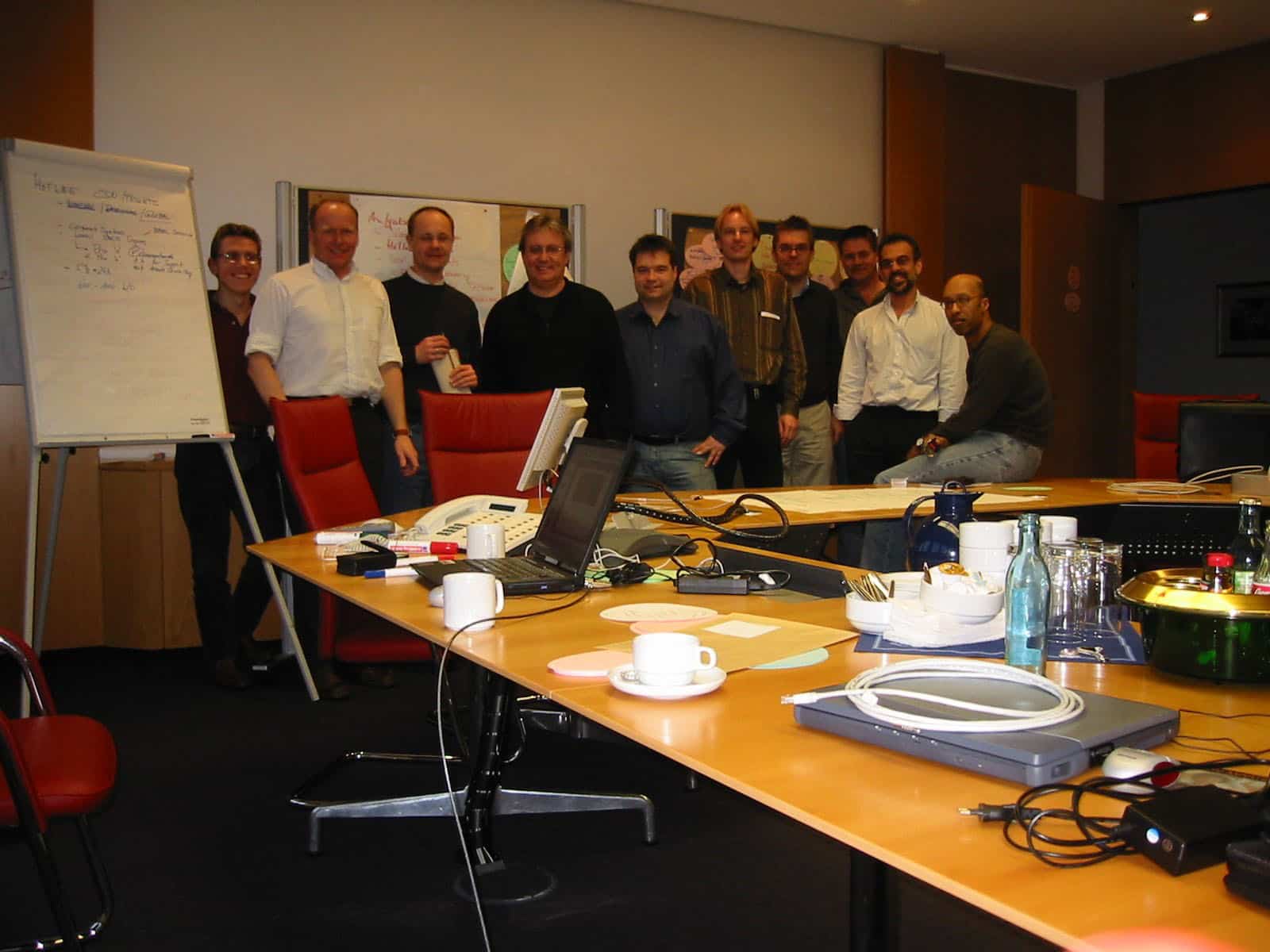
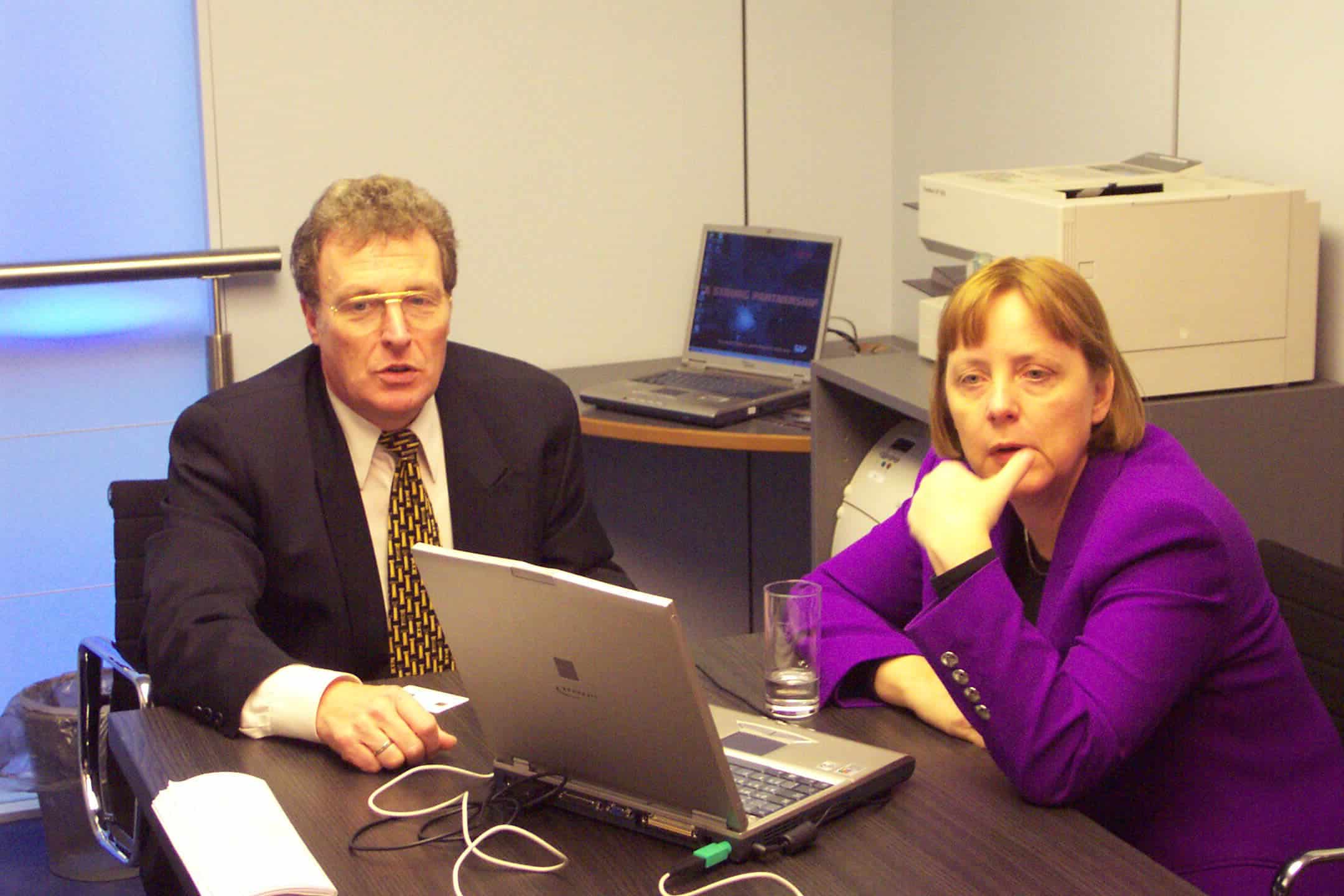
IDES was shipped to the first customers in the spring of 1996 and was soon able to simulate the more than 1,000 business processes that could be mapped in SAP R/3. Initially, the focus was on finance, materials management, and sales. IDES allowed users to learn about the system in their own familiar working environment, using examples that were specific to their company. The IDES team grew, and it was not long before they were building around 800 customer-specific demos – per week – as Gerhard van der Beck says. During this period, Training, Demo, Consulting (TDC), a dedicated IT team responsible for making system copies and handling the technical maintenance of the IDES systems, was also set up. Having established IDES and seen it through to its initial milestones, Pfaehler left SAP (although he rejoined the company at a later date) and van der Beck, ably supported by Cura Daball, took over as head of the IDES team.
SAP co-founder Hasso Plattner liked the IDES idea – even more so when Cura Daball and van der Beck suggested putting the system outside the firewall and using it to demonstrate that SAP software could run on the Internet. “To do this, we had to reduce the complexity and radically streamline the system,” van der Beck says. “Hasso was thrilled when we managed to reduce highly complex transactions involving multiple screens and subscreens down to the bare minimum. Now, for the first time, SAP users could create an order by navigating two screens and making just a few clicks,” Cura Daball adds.
“Customers who purchased an SAP license could install an IDES system free of charge,” says Jan Krell, who, with Thomas Habersack, was responsible for delivering the system. However, the team’s main clients remained Sales and Presales, who used IDES to show customers what SAP could do.
IDES continued to evolve over the years. As the Internet’s popularity increased, the system’s name changed slightly – from “International Demonstration and Evaluation System” to “Internet Demonstration and Evaluation System” and, starting in 1999, it gave customers, partners, and prospects a way of trying out mySAP.com online. According to SAP’s 1999 Annual Report, IDES was also expected to “reduce sales and marketing costs in the medium term.”
Because the IDES team relied on specialists from other departments and on instructors and students to enter, manage, and update the IDES data and to test the system after each update, it remained relatively small, never numbering more than 30-35 members. “At times, our colleagues were amazed at what we managed to do with so few people,” says Thomas Schulze, who was responsible for IDES documentation. “Being able to say you’d spent six months on the IDES team testing and learning the applications was a real door-opener. You learned so much on that team, and it was a real advantage when applying for positions within SAP. Many of those who worked on IDES in the early days stayed at SAP and built a career here,” he adds. Proof enough that Pfaehler’s wish for IDES to become a “training ground for the next SAP generation” came true.
“As a long-serving sales and presales employee and – more particularly – as a former SAP customer, I’ve always understood the importance of having examples that are clear and easy to follow. The IDES project gave us our first-ever opportunity to provide those examples to all our employees – and later also to our customers – to explain how the system’s complex processes worked and make them simpler to learn and understand.
Even now, many years later, it still feels great to know that so many different people from our vast SAP family came together to create IDES, and that an amazing team was there to take up the reins and continue the work we started.
I’m proud of SAP and IDES and of everything we achieved with it. And I’m grateful to everyone who worked on it and enhanced it over the years.”
– Dietmar Pfaehler
As the 1990s drew to an end, a new level of complexity was emerging, driven largely by the arrival of SAP’s New Dimension products – CRM, SCM, business intelligence, and others. With SAP transforming into a multi-product company, even the IDES team was stretched to its limits. “As a demo team, we had to cover the entire product portfolio, which meant dividing topics between us and specializing,” Krell says. But, as Schulze adds, “There was simply no way that we could maintain that level of complexity in the long term,” .
At the same time, SAP’s new head of marketing Marty Homlish, who joined the company in 2000, was pushing – with Plattner’s backing – for “our demo system to be better and more appealing,” van der Beck says.
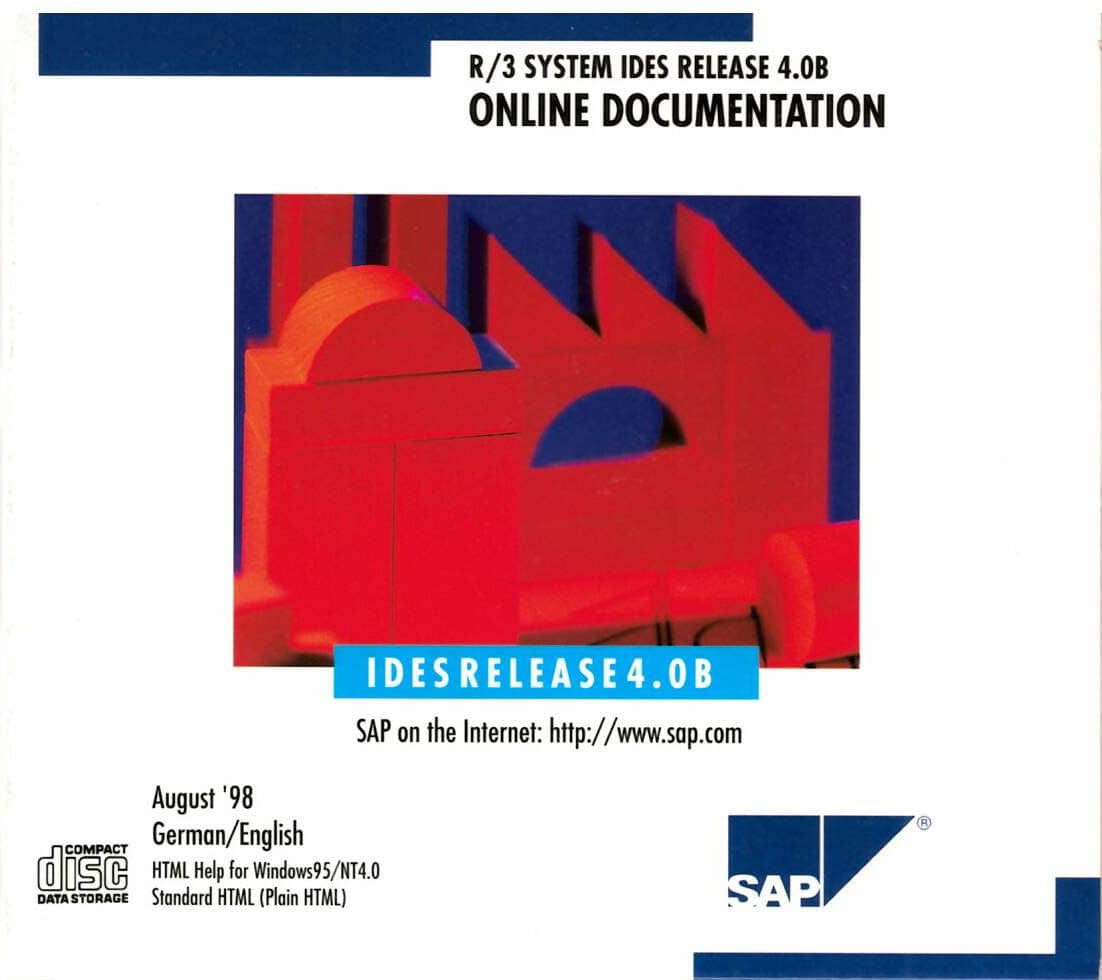
And despite efforts to meet customer expectations for a simple and fast way of testing SAP software over the Internet by inviting them to “Test-Drive Your Solution Online,” it became clear that IDES had had its day. “The performance wasn’t good enough; the technology – the Internet Transaction Server – was not as stable as we had hoped,” van der Beck says.
IDES gradually became less and less relevant. Yet the team, now called Solution & Innovation Experience (SIX) DID (Demo Infrastructure Delivery), still exists today – and operates the SAP Demo and Education Cloud environment, which contains systems used by SAP’s presales and sales personnel to demo software for customers. Nowadays, Krell and his colleagues refer customers who want to download a test package to the SAP S/4HANA fully-activated appliance.
While Pfaehler has long since retired, and recently ended an eight-year stint managing Dietmar Hopp’s Anpfiff ins Leben non-profit organization, Cura Daball and van der Beck are still at SAP – having served for 36 and 30 years respectively. They and their colleagues built IDES as an innovative demo system that still has its supporters today, such as SAP University Alliances. van der Beck now contributes his expertise to the Customer Adoption team, and Cura Daball works in the Customer Services & Delivery Board area, where he develops automation tools for demo and training system landscapes. Both still have a great deal to give to the company that means so much to them.
In the bustling world of startups having a groundbreaking idea is just the beginning. To truly thrive, emerging businesses need powerful tools that can grow alongside them, adapting to ever-changing demands.
Enter SAP S/4HANA Cloud Public Edition: a game-changing, flexible ERP solution designed to meet the unique challenges of emerging businesses. This cloud-based platform not only streamlines operations but also empowers startups to innovate and scale without limits, offering a competitive edge in today’s fast-paced market.
Let’s explore why SAP S/4HANA Cloud Public Edition is the ultimate ally for startups looking to gain a competitive edge and aiming to transform their visions into reality.
Startups often experience rapid changes in size, scope, and strategy. SAP S/4HANA Cloud Public Edition is built with scalability at its core. As a business evolves, SAP cloud ERP solutions allow for effortlessly adding new features, modules, and users as needed. This adaptability helps ensure that an ERP system remains aligned with business goals, enabling startups to stay agile and responsive to market changes. Whether a company is a small team today or planning to expand globally tomorrow, cloud-based ERP from SAP adapts to needs without the need for costly and disruptive upgrades.
Gero Decker, general manager of SAP Signavio and co-managing director of SAP Berlin, witnessed the impact of SAP cloud ERP on business growth: “Being a founder myself, I can tell you that SAP cloud ERP is a key catalyst for achieving hockey stick growth.”
One of the biggest challenges startups face is managing limited resources. SAP S/4HANA Cloud Public Edition operates on a subscription-based model, which means lower upfront costs and predictable expenses. This financial flexibility allows startups to allocate more resources toward innovation and growth rather than being tied down by expensive IT infrastructure.
In a startup environment, every decision counts. SAP S/4HANA Cloud Public Edition provides real-time analytics and insights, empowering a team to make informed decisions quickly. The platform fosters collaboration by connecting different departments and ensuring everyone has access to the same up-to-date information. This unified approach not only streamlines operations but also enhances productivity across the board.
For startups, especially those handling sensitive data, security is paramount. SAP S/4HANA Cloud Public Edition comes equipped with world-class security features, ensuring data is protected against threats. Additionally, SAP’s compliance tools help with navigating complex regulatory requirements, offering peace of mind when expanding into new markets.
Startups often rely on a variety of software tools to manage different aspects of their business. SAP S/4HANA Cloud Public Edition integrates easily with other applications, creating a seamless ecosystem where all business processes are connected. This integration reduces manual work, eliminates silos, and allows a startup to operate more efficiently.
When you choose SAP, you’re not just choosing software, you’re gaining access to decades of experience and a global network of experts. SAP provides comprehensive support to help startups navigate the complexities of ERP implementation and maximize the benefits of the platform. This partnership approach ensures that a company is never alone on its journey to success.
The SAP startup community is a unique resource that is supportive for all startups, which all share SAP S/4HANA Cloud in place as their business backbone, alongside the dedicated SAP for Startups Team.
Companies like Get Your Guide, FINN, and everdrop have leveraged extensive support and expertise from SAP to achieve strategic goals and drive their businesses forward. This is just a sample of the many successful partnerships SAP has with clients.
For startups looking to transform operations and scale business, SAP S/4HANA Cloud Public Edition is the solution they have been waiting for. Don’t miss the opportunity to see it in action: Join us at Bits & Pretzels in Munich, September 29-30, 2024, where we’ll be showcasing the full capabilities of SAP S/4HANA Cloud Public Edition.
Curious to find out more? here.
“Attending Bits & Pretzels 2024 offers unparalleled networking, learning, and funding opportunities, bringing together 5000+ top entrepreneurs, investors, and industry leaders,” ” shared Stefan Wagner, managing director of the SAP Labs Munich Campus. “It’s a unique chance to gain insights, build partnerships, and experience the event’s vibrant blend of business and culture during Oktoberfest in Munich.”
As president and chief product officer for Cloud ERP, I am excited to reveal how SAP cloud ERP solutions can revolutionize startup operations, slashing costs and turbocharging efficiency. Come and discover how SAP S/4HANA Cloud Public Cloud Edition can drive your startup’s success. We look forward to seeing you there!
Jan Gilg is president and chief product officer of Cloud ERP at SAP.


This blog post provides an overview of the reporting capability in the Preference Management functionality of SAP Global Trade Services (SAP GTS).


Discover how Applied Materials leverages Taulia’s dynamic discounting to enhance supply chain efficiency, offering early payment options to suppliers and driving innovation and growth. Learn about the benefits that have led to significant performance improvements and widespread adoption. See how SAP is helping Applied Materials Inc., a supplier of equipment for manufacturing semiconductor chips, grow its business – and the business of its suppliers so that they can grow too.
Rediscover the key moments from this year’s event, including keynotes, exclusive sessions, and more: https://sap.to/60559xuaN
#sapsapphire #appliedmaterials

Capgemini has taken another major step in enhancing its digital transformation services by acquiring Syniti, a global leader in enterprise data management, particularly in SAP data migrations. This move aims to bolster Capgemini’s capabilities in supporting complex data transformation projects for clients transitioning to SAP S/4HANA and other SAP solutions. Syniti has been a key […]
The post Syniti Joins Capgemini in Enhancing SAP Data Migrations appeared first on InsideSAP.
Since 1928, spectators at Macy’s Thanksgiving Day Parade have marveled at the iconic, giant balloons that drift through the streets of mid-town Manhattan. No party-store helium canister will do for these towering balloons, which often measure several stories high. Those gargantuan renditions of our favorite characters are all sent flying by Messer, a leader in the safe and reliable production and delivery of industrial and medical gases for more than 120 years.
Those gases also include oxygen, hydrogen, nitrogen, carbon dioxide, argon, neon, xenon, and krypton—all critical to supporting processes and products in electronics, food and beverage, metals, biopharmaceuticals, and other industries.
Business demands and market realities in the dynamic gas sector are constantly in flux, so Messer relies on real-time data intelligence to stay agile and flexible in their decision-making. Increasingly hampered by siloed data and a patchwork of third-party visualization tools, Messer embarked on a digital transformation to create a next-generation data management solution worthy of the company’s high-tech, high-flying operations.
Messer knows critical and often lifesaving business decisions require accurate, real-time intelligence and insights. CIO David Johnston explained: “The stakes in many of the sectors that we provide gases for are really very high.”
From steel plants to the semiconductor industry to intensive care units, “it is critical that our distribution processes are operating at a level that ensures our customers are getting what they need when they need it.”
Messer was able to rise to the moment and meet the urgent needs of its customers when the COVID-19 pandemic delivered unprecedented demand for oxygen coupled with massive logistical challenges. That global crisis revealed that Messer’s legacy IT system needed an overhaul.
Messer’s siloed data was in several different databases, which meant it was time-consuming to access, and a single source of the truth was elusive. Various visualization tools also required different data formats, which slowed reporting time and bogged the IT department as it tried to manage a complex, disparate landscape, creating, as Johnston explained, “a huge amount of complexity and a huge amount of inefficiency.”
Messer CIO David Johnston sought a solution that would provide a unified source of truth and the powerful analytics tools Messer needed to give an elevated purpose to the company’s data—a new, cloud-based data management and analytics foundation for an actual data-driven enterprise. SAP Business Technology Platform (SAP BTP) was the company’s choice.
SAP BTP, with SAP Data Warehouse Cloud, SAP Analytics Cloud, and the next-generation SAP Datasphere, provided a modern data architecture to establish a single, trusted source of truth, combining 12 data sources in one solution for mission-critical business insights.
Messer has been reaping benefits across the board, from IT and supply chain cost savings to improved customer service, inventory management, and data security. “We started with five specific use cases that we went after,” Johnston shared. “As I sit here today, we’re at well over 200.”
Messer’s new, simplified IT landscape has empowered business users, who benefit from intuitive, self-service dashboards and quick access to relevant, actionable, real-time data, as well as IT personnel, to now focus on higher-value, strategic tasks. This amounts to accelerated time-to-insight and more energy and resources available to focus on future innovation.
“With a data fabric that allows us to see our business in a consistent, fast, reliable, and highly trustworthy way,” Johnston said, “what we can do is really almost unlimited.”
With Messer’s new, streamlined data management foundation, the sky is no longer the limit.
“Our objective isn’t just to deliver a suite of great dashboards and great analytics stories,” Johnston explained. “Our goal is to build out a strong, coherent, strategic data fabric that will allow us to unlock the power of AI and drive the next level of business transformation.”
For other organizations hoping to build the data foundation that will send them soaring into the future, ready to capitalize on artificial intelligence technologies and whatever else awaits, Johnston’s advice is to frame your technology transformation as a business transformation, and a business imperative.
“Bring the business community together around data,” he said. “All the key stakeholders, the influencers, and the owners of data from across the organization: bring them to the table.”
Messer CIO David Johnston joined SAP BTP Better Together: Customer Conversations to discuss the medical and industrial gasses industry and Messer’s digital transformation.
Explore more success stories of customers leveraging SAP BTP to drive transformation that overhauls legacy IT systems:
For the full episode and the on-demand Better Together: Customer Conversations series, visit sap.com/btp. To share input on the topics and technologies you want us to cover, or if you are interested in being a guest on the show, email us.
Timo Elliott is vice president and global innovation advocate for SAP BTP at SAP.


When you choose any of the SAP BW/4HANA conversion approaches, there are multiple phases.
