SAP Vulnerabilities Addressed in September 2024 Patch Day

SAP vulnerabilities were a key focus during the September Patch Day, with multiple security updates released to enhance the protection of SAP systems. In September 2024, SAP released nineteen new and updated security notes aimed at addressing vulnerabilities in various systems. Among these were updates to one HotNews note and one High Priority note. The […]

The post SAP Vulnerabilities Addressed in September 2024 Patch Day appeared first on InsideSAP.

Five Things to Look Forward to at SuccessConnect in 2024

SuccessConnect, our flagship customer event, is just around the corner, and we’re beyond excited to bring you an event like no other this year. You’ll have the chance to connect with experts, partners, and peers to exchange best practices and discover innovations that are designed to bring out the best in your workforce. From seeing how AI is empowering employees, learning how to create a talent strategy built for future success, or finding ways to improve HR and business processes, you’ll be inspired by the possibilities to make every employee a success story. 

Whether you’re new to SAP SuccessFactors solutions, a longtime customer, or considering making a move, here’s what you can look forward to at SuccessConnect in 2024.

Discover innovations that empower the individuals who make your business thrive

1. Join Three Inspiring Keynotes and See SAP SuccessFactors Solutions in Action

The SAP SuccessFactors leadership team will take the stage to discuss what is top of mind for HR and the latest innovations in SAP SuccessFactors solutions. You’ll also hear from industry-leading customers on how they’re adopting our AI copilot Joule and generative AI to help unlock valuable insights, achieve new levels of productivity, and accelerate business outcomes with a best-in-class user experience. Plus, we’re thrilled to have Emmy award-winning actress and singer, Hannah Waddingham, join us this year to discuss her rise to fame, the importance of mental health advocacy, and women’s empowerment.

2. Explore Road Map Sessions and Discover What’s Coming

Get a front-row seat at our product road map sessions to hear what’s new and what’s coming next for SAP SuccessFactors solutions. From expanding on the unique strength of our cloud-native, AI-enabled global HR core to using the AI-enabled talent intelligence hub to help deliver an entirely new career development experience, we will share and show the latest innovations across our solutions. Also, learn about the exciting enhancements in the SAP SuccessFactors technology foundation and how HCM can provide customers significant value as a critical part of SAP’s cloud ERP suite. Topics include integration, extensibility, security, system administration, and more. Attendees will have the opportunity to interact with product experts and ask questions during the live Q&A segment.

3. Experience Hands-On Lab Sessions

Elevate your learning with hands-on lab sessions* that provide practical, real-time guidance. Dive into configuring and using our products while getting your questions answered on the spot. Topics include optimizing your position management processes with the SAP SuccessFactors Employee Central solution, creating compelling stories from the data in SAP SuccessFactors HCM, uncovering new enhancements for learners in the SAP SuccessFactors Learning solution, and more. To wrap up this year’s hands-on labs, we’re hosting a friendly competition where you and your peers can team up for a series of interactive exercises in a live SAP SuccessFactors environment. The goal? Be the fastest team to accurately recruit, hire, and pay a fictional employee. The first team to complete the challenge will win a fun prize!

4. Learn Best Practices from SAP SuccessFactors Customers

Hear practical tips from peers on a range of topics, including transitioning to a skills-based organization using AI, migrating from the SAP ERP Human Capital Management solution to SAP SuccessFactors solutions, and staying compliant with complex labor laws using our core HR, time, and payroll solutions. Learn how technology can advance diversity, equity, and inclusion (DE&I) initiatives, especially as expectations from environmental, social, and governance (ESG) investors and the public sector increase, or hear the experiences of SAP SuccessFactors customers that have embraced AI early on to gain a competitive edge. HR leaders from companies like McDonald’s, Volkswagen, Nestlé, Dr. Oetker, Delta Air Lines, Fujitsu, Eurobank, Aramark, and many others will inspire you with their stories. Plus, don’t miss the opportunity to engage in live Q&A with each of our customer speakers.

5. Meet SAP Experts and Have Fun!

Make the most of various networking opportunities to connect with HR executives, peers, partners, industry analysts, and more. For attendees who enjoy in-depth, one-on-one discussions with our product, services, and support experts, don’t miss the chance to join Meet the Experts sessions to ask your most pressing questions and build new connections. If you prefer interactive group discussions, join Ask SAP Experts sessions, where our team will answer your questions and advise you on how to tackle key business challenges.

And finally, don’t forget to join us at Pavilhão Carlos Lopes for an exciting after-hours party on Tuesday, October 29. Experience the true essence of Portugal with an evening full of surprises, delightful cuisine, and fantastic music.

Explore the session catalog to tailor your agenda to your specific role and interest. This year, we’re offering pre-conference trainings on Monday, October 28, and post-conference trainings on Wednesday, October 30, to expand your knowledge of the SAP SuccessFactors HCM suite. Additional fees apply.

If you are unable to attend the event in Lisbon, join us virtually by signing up for SuccessConnect Virtual on October 28-30, 2024.


*Hands-on lab session registration is required. Space is limited so speakers have time to answer attendee questions.

Lara Albert is global vice president of Product Marketing at SAP SuccessFactors.

Connect with us on LinkedIn to stay up-to-date with all things SAP News

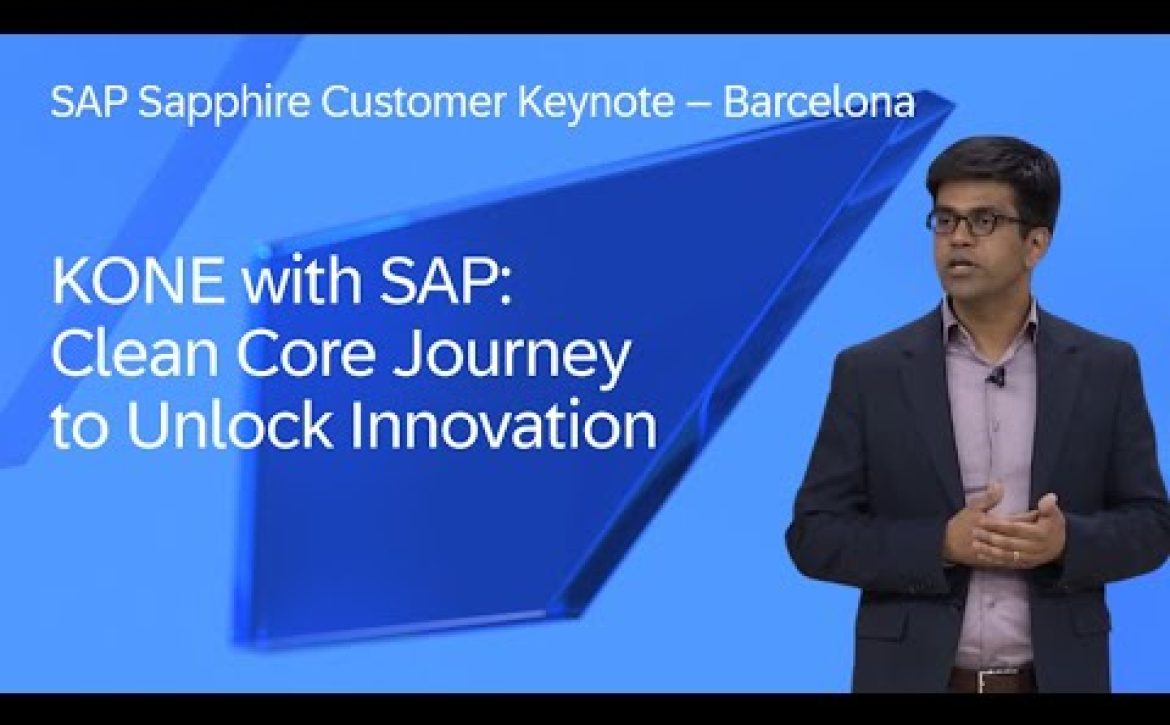
KONE with SAP: Clean Core Journey to Unlock Innovation | SAP Sapphire 2024

Discover how KONE Corporation, a global leader in the elevator and escalator industry, is benefiting from a clean core approach to its business. Hear how the clean core enables much faster innovation adoption and business benefits, gain agility for faster innovation, simplify upgrades for future readiness, and reduce Total Cost of Ownership (TCO). Learn how KONE leverages a clean core to unlock business transformation in the digital age.
Rediscover the key moments from this year’s event, including keynotes, exclusive sessions, and more. Watch on demand replays from the event: https://sap.to/60519s6B7

AI and the Future of Work: Interview with SAP’s Christian Schmeichel

SAP’s Future of Work Trend Report identifies three major areas relevant to work that are undergoing massive changes with the spread of artificial intelligence (AI): future of workforce, future of people practices, and future of HR.

Here Christian Schmeichel, Chief Future of Work Officer at SAP SE, discusses these transformations.

Q: The second half of 2024 has begun, and SAP is positioning itself as a business AI company, including offering an AI assistant for its business software. What do SAP employees think about the company’s increased focus on AI?

A: AI is no longer a new topic within SAP’s workforce. According to an internal study from late 2023, 80% of respondents are optimistic about AI. This has been confirmed. It’s also because we are a software company. There are certainly industries where the workforce is more cautious about AI, but this is less the case at SAP, partly because we place a high value on privacy and data protection. Our employees also see the great opportunity that SAP has with business AI to unlock the next stage of development for our portfolio. This excites many.

Q: As chief future of work officer at SAP, your team is responsible for predicting and managing changes in the workplace. How is the spread of AI currently influencing the future of employees?

A: The race for the future has intensified with AI. Our customers want to know how their workforce structure needs to evolve and what steps they need to take as a company to ensure current and future employees have the skills and qualifications needed to collaborate effectively with AI.

Global megatrends such as climate change and the entry of younger generations into the workforce are additional challenges that interest us at SAP. Like other companies, we are also exploring scenarios to determine what skills we will need in 5 to 10 years, how roles and activities will change, and what level of AI and robotics will be required in different teams. It’s not easy for anyone to imagine where we will be in five years, which keeps things exciting.

Q: What impact does the further spread of AI have on daily work?

A: Unlike other technological changes in the past, the current development in the context of AI is a fundamental shift in the interaction between humans and machines. I believe that learning to work with AI, including learning to delegate tasks, is necessary. We already see generative AI being used in all areas of work, and the topic is becoming very tangible. This ranges from research and data analysis to creating reports, presentations, and meeting minutes. It may turn out that we will take on tasks with a completely different focus in the future. For example, we may do tasks that cannot or should not be entrusted to AI because they require decisions that are currently beyond its capabilities, such as creativity, strategic thinking, or moral judgment.

Revolutionary technology. Real-world results.

Q: Can we speak of a shift away from purely role-specific work towards skill-based tasks?

A: Certainly. Depending on the role, whether it’s in development, sales, consulting, or more, there are specific, typical applications of AI. However, it also involves developing a certain mindset that involves a lot of self-reflection: what am I best at and what can I do better than AI in the future? Where can I best apply my skills? I believe this will become increasingly important. With a stronger focus on widely applicable skills rather than rigid role profiles, there is a certain fluidity in the organization. Employees will become increasingly flexible and will not need to switch roles or departments to take on tasks that match their skill set and interests. I see this as a great opportunity to increase job satisfaction.

The second major area involves the corresponding digital application skills. These include practical skills, such as giving a prompt in a way that AI can provide what is needed, as well as knowledge of ethics and compliance.

Q: Such comprehensive changes in a short period of time demand a lot from employees. How can the right people practices support them?

A: An important first step is to be aware of the changes that are happening. We live in an era where there are ever faster and more impactful technological changes happening. Employees need a toolbox to successfully face this massive change they experience every day. Topics such as mental health have been important at SAP for some time, and we see that practical techniques for stress management and adapting to changed work situations are in high demand. However, the use of AI also offers great opportunities to promote a good work-life integration.

Q: How does the application of AI today and in the future affect HR work?

A: There are already numerous exciting use cases for AI in HR that aim to make processes more efficient. For example, in recruiting, AI can generate job postings faster and create tailored interview guides. In the area of learning, there are already good opportunities, such as providing personalized information and individual training.

In addition to possible efficiency gains, AI will help the HR department become even more strategic in the future. Transactional tasks can increasingly be automated and taken on by AI, giving HR professionals more time for strategic tasks. For example, more focus could be placed on providing personal advice for employees, which is currently often hard to do given the many daily demands on HR professionals.

Q: What does the use of AI mean for the work of the People & Culture organization at SAP specifically?

A: The goal is to fully leverage the potential of AI as part of our transformation to best support our leaders and employees with their daily work. At the same time, it’s about continuously improving the efficiency within certain areas of the People & Culture organization. There is great interest among our employees in working with AI applications. To date, more than 50,000 employees have used the generative AI experience lab tool and submitted over 5 million prompts. It can now be said that AI is seen not only as a collaborative tool but also as a partner for work. Thinking “AI first” is an important aspect for continued success and to achieve our goal of becoming the No. 1 business AI company.

Furthermore, forward-looking HR work aims to create an attractive work environment where employees can do their tasks with a high level of motivation and enjoyment. In the age of AI, it will become increasingly easier to recognize in a timely manner how the workforce is doing and where there may be issues to act accordingly. Survey and feedback formats developed and controlled from the People & Culture organization should, with the help of AI, allow for results much faster in the future, helping to respond promptly to developments and needs within the workforce.

Q: How does the spread of AI influence your own work?

A: As chief future of work officer at SAP, I am excited about the opportunity to be at the forefront of the major changes that AI brings to HR work — and in the People & Culture Board area at SAP, we are actively driving the topic as a showcase for our own SAP solutions. For my role, this means actively shaping the influence of AI on the development of our workforce and the entire HR department alongside my team. This includes strategic workforce planning, modern work methods, and impulses for the further development of the HR organization to guide the future of work at SAP toward an exciting and digitalized future. AI will fundamentally change the work of employees, and the next few years will certainly be some of the most innovative in HR and the larger technology world. This is a great opportunity to significantly shape the development of the working world at SAP.

For more information:


Get weekly news highlights from the SAP News Center

SAP Spend Connect Live: Business Networks and the Rise of Las Vegas

SAP Spend Connect Live returns next month to Las Vegas, and I can’t wait.

Beneath the glow of its famed neon lights, the city is set to play host to the world’s premier spend management conference, where SAP will showcase the increasingly vital role played by AI-enabled cloud solutions in shaping the flow of business-to-business commerce – and in ensuring the transparency needed for trading partners to foster collaboration, gauge sustainability, and bolster resilience throughout global supply chains.

To carry out business processes with confidence and continuity amid uncertain market conditions – from procurement and supply chain to logistics and asset management – organizations rely on an unending stream of data amassed through the routine course of operations. A firm’s growth prospects typically correlate with its access to such data, both its own and that of its trading partners. The higher the quality of that data, the more valuable the insights it contains, particularly when analyzed by emerging AI capabilities. At a time when operational data increasingly determines competitive advantage, businesses have turned to cloud-based networks to harness its potential. Operational data has thus become one of the most precious resources in any organization.

Of course, successful businesses have always set themselves apart by access to scarce resources. But did you know the same holds true for world-class cities as well?

Settled in 1905 as a rail link between Salt Lake City and Los Angeles, the sleepy stopover known as Las Vegas was an unlikely candidate to become one of the fastest growing U.S. cities a century hence. Limited in arable land, much of the region lay fallow in the early twentieth century. But with the opening in 1936 of the Hoover Dam only 50 kilometers to the southeast, a city was born and a spectacular growth story begun. The world’s largest public works project of its day, construction of the dam required 21,000 workers to excavate 4.2 million cubic meters of rock, lay 937 kilometers of pipe, and pour 3.5 million cubic meters of concrete – enough to pave a highway stretching from Lisbon to Lapland.

Completed more than two years ahead of schedule in the depths of the Great Depression, the Hoover Dam soars 221 meters over the Colorado River, irrigating 1 million hectares of farmland in California, Arizona, and Nevada. It provides drinking water for urban centers including Phoenix, Tucson, Los Angeles, and Las Vegas and produces 4 billion kilowatt-hours of sustainable hydroelectric power annually for millions of homes and businesses across the southwestern U.S.

For nearly nine decades, the Hoover Dam has served as a conduit through which water and electricity flow in abundance, giving rise to a thriving city synonymous with legendary entertainment, a resplendent skyline, and limitless opportunity. For its part, SAP Business Network too is a conduit for exponential growth. But the precious resource it distributes is operational data, and its beneficiaries are the millions of trading partners that conduct business through its enterprise applications augmented by new generative AI capabilities.

Powerful business networks, not unlike mighty hydroelectric dams, represent marvels of engineering, feats of architecture, and transformative solutions to formidable operational challenges. With this in mind, I’m hard pressed to think of a more fitting backdrop to spotlight our latest SAP Business Network innovations than the gleaming city of Las Vegas and the vivid growth story it embodies. Please join us there for SAP Spend Connect Live from October 14 to 16, where we’ll explore how customers are countering disruption, extending visibility, reducing costs, infusing sustainability, and strengthening resilience throughout their interconnected operations and those of their trading partners. We’ll devote extensive discussion to the broadening set of capabilities within SAP Business Network’s trading partner experience, aimed at optimizing value for all of the disparate parties engaged in business-to-business transactions. You can bet on an engaging, enlightening set of sessions led by peers; and I hope to see you there.


Jörn Keller is executive vice president and chief product officer of SAP Business Network.

SAP Spend Connect Live is October 14-16 in Las Vegas

Countdown to Climate Week: Enabling Young Innovators in the Fight Against Air Pollution

Young people from Manhattan to Mongolia are leveraging technology to address issues of climate change. Those most impacted are also the most incentivized to do something about it. Over 1 billion children — half of all children globally — are at an “extremely high risk” due to the impacts of climate change. Organizations that support young people, including UNICEF, are rallying their support around young innovators addressing the opportunities and the risks climate change poses for youth.

SAP is also committed to finding solutions to climate change and working across generations to make it happen. As the world’s largest provider of enterprise application software, SAP plays a complementary role to organizations like UNICEF. With a unique ability to help the world’s largest companies achieve more across their value chains and drive sustainability at their core, there is enormous potential to use SAP technology for good. Coupled with its technological expertise, there is also a long-standing commitment to accelerate solutions by connecting corporate financial and nonfinancial resources with the expertise of young innovators.

Air pollution is a complicating factor of climate change. On International Day of Clean Air for Blue Skies, the world looks at this issue that is not locked within borders, making it difficult to address. It warms the global climate, exacerbating natural disasters and risking the health of millions of underserved people living in vulnerable areas.

In Mongolia, air pollution is particularly problematic as the country deals with rapid urbanization and a harsh climate. The country has a strong reliance on burning coal because it is inexpensive and readily available. Coal represents 90% of the energy used and is a huge economic export, creating jobs and wealth in a high-need country. Even though coal was banned in Mongolia’s capital city in 2019, coal use has led to enormous levels of smog and mounting health risks for thousands of citizens. In a country known as the “Land of the Eternal Blue Sky,” local youth like Enkhuun Byambadorj are not willing to accept this reality.

Enkhuun was just 17 when she co-founded Breathe Mongolia, an organization leveraging data and technology as a differentiator in solving pollution. With family members affected, she had deeply personal reasons to create tangible action. She quickly understood the value of leveraging technology to scale solutions to the masses and built a centralized source of air quality data for Mongolian communities. “These are all tech-based tools that we use to reach more audiences and more people than we could otherwise,” she said. Today, with information available in English and Mongolian, Breathe Mongolia has become a go-to source for air quality data in the region.

SAP is powering equitable access to economic opportunity, education and employment, and the circular economy

With Climate Week on the horizon, taking place during the annual UN General Assembly, SAP will step forward to represent the value of working with young innovators like Enkhuun with GenU. GenU was founded in 2018 as part of UNICEF aiming to equip youth with the necessary skills and resources to participate in key conversations around pressing global issues.

When given the opportunity, youth bring an impressive passion for creating impact, coupled with a digital-first mindset, that allows decision-makers to channel new solutions. Breathe Mongolia is one of the millions of impact organizations operating globally and putting people and planet first. SAP wants to ensure its success and that of the more than 10 million social enterprises operating globally, many led by young people. Together with leading youth social impact partners like Generation Unlimited, ChangemakerXchange, and We Are Family Foundation (WAFF), SAP is hoping to close the opportunity gap and ensure that youth have the resources they need to innovate and fulfill their potential. This commitment for youth inclusion extends beyond Climate Week and UNGA. Throughout the year, SAP and its leadership team lead by example, involving expert young leaders in the company’s innovation strategy and sustainability programs, opening doors that provide them with a seat at the table.

Whether you are attending Climate Week or participating virtually from home, every sector and individual has a role to play to combat issues like climate change. To better understand the challenges that youth face and the potential to incorporate youth voices in challenging projects, leverage The Possibilists global study on young changemakers and WAFF’s global study on intergenerational collaboration.

If you are a young climate innovator based in North America or Sub-Saharan Africa, we also encourage you to check out resource support through Changemakers for the Planet.


Selina Henn is a strategy and operations associate for Corporate Social Responsibility at SAP.

Get the latest SAP news delivered to your inbox once a week

Making Skills a Reality in Your Organization

Over the past five years, the topic of skills has emerged as a key trend in HR strategies. Organizations are starting to see how crucial it is to understand and use skills effectively to ensure they have the talent they need to be successful. A skills-based approach can truly revolutionize workforce management, boost productivity, and drive business success. But it’s important to remember that there’s no one-size-fits-all solution. Every organization will have its own path to integrating skills into its HR practices, shaped by its industry, culture, and specific needs.

At SAP SuccessFactors, our HR research scientists have conducted five years of research to understand how skills can be effectively incorporated into HR strategies. After speaking with 278 HR leaders and surveying 9,432 global employees and managers, we’ve identified four key strategies to integrate skills into your people practices to become a skills-focused organization. Let’s explore these approaches and the technologies that can support them.

1. Skills-Implied Approach

In a skills-implied approach, organizations use traditional criteria like candidates’ or employees’ previous job titles, educational background, and past experience to make decisions instead of using skills data. Here, work is centered around job roles, and decisions about hiring and pay are based on job titles and levels. Learning and development is tailored to current roles, and promotions follow standard paths tied to credentials and tenure. Workforce planning tends to focus on short-term headcount needs, with minimal use of skills data for deeper analysis.

This approach is best for roles requiring specific certifications or highly specialized skills that are either externally regulated or require extensive training, such as lawyers, certified public accountants, and pilots.

In terms of tools and technology, job architectures can help clarify roles and align jobs based on the type of work performed. For example, the job profile builder in SAP SuccessFactors solutions helps manage job elements such as descriptions, experiences, qualifications, skills, competencies, behaviors, education, and certifications. It can offer a flexible, intuitive way to identify and share job description components across an organization.

2. Skills-Included Approach

In a skills-included approach, work is organized around job roles with an emphasis on a few key technical skills. Hiring focuses mostly on traditional criteria like education but includes some skills assessment as well. Pay is generally based on job title and level, though skills might impact bonuses. Learning and development targets skills that are crucial for current or future roles. While skills are considered in workforce planning and reported in broad terms, they’re not connected with other data sources for deeper insights.

This works best for roles where required skills remain mostly consistent, but the prioritization and application of those skills evolve over time, as in, for example, sales and people management.

Prepare for the future of work with the latest HR technology trends, research, and best practices

Recruiters can use AI-enabled recruiting tools to consider an applicant’s technical and professional skills during the hiring process. For example, the SAP SuccessFactors Recruiting solution’s AI-assisted applicant screening can provide a skills compatibility score, allowing recruiters to view how well an applicant’s skills match job requirements. Candidate profiles include details on exact skills matches, additional relevant skills, potential skills, and missing skills to help recruiters quickly and effectively screen the best applicants.

Learning management systems can support targeted skill development for current roles. SAP SuccessFactors Learning, for example, can offer AI-driven learning recommendations and a dynamic search feature that filters by criteria such as duration, mobile availability, and specific skills. This helps promote continuous learning and can guide employees in developing skills for advanced proficiency levels. Additionally, SAP Content Stream applications by Skillsoft offer over 1,250 expertly curated learning paths aligned with high-demand skills and competencies. These include areas like AI and generative AI, cybersecurity, data management, leadership, first-time management, and performance and culture. Learners can refine their skills through various methods, including reading, watching, listening, and active practice.

3. Skills-Led Approach

In a skills-led approach, jobs are defined by a mix of technical and professional skills. Hiring looks at a range of skills, along with traditional criteria. Pay is linked to both the skills employees bring to the table and their performance. Learning and development is customized based on skills data and personal interests, helping to create personalized plans and internal mobility opportunities. Workforce planning becomes strategic, focusing on closing gaps between current and needed skills, and skills analytics are used to dive deep into skill levels and how they connect with other data.

This is best for roles where critical skills are specific or uncommon but proficiency can be inferred from adjacent skills, such as in marketing and operations.

Thinking about tools and technology, skills platforms can be useful to support this approach by tracking and analyzing skills across the workforce. The SAP SuccessFactors talent intelligence hub, for example, uses an AI-driven framework to integrate skills data from multiple sources, enabling organizations to make data-driven talent decisions. In addition, learning platforms provide development opportunities tailored to individual skills and career goals. For example, SAP SuccessFactors Learning offers AI-driven recommendations and peer suggestions for personalized learning. Skills tagging and the search for skills help to foster a habit of curiosity and a culture of continuous learning. Additionally, talent marketplaces like SAP SuccessFactors Opportunity Marketplace can offer experiential learning opportunities through AI-driven suggestions for mentors, short-term assignments, dynamic teams, and job openings.

4. Skills-Based Approach

In a skills-based approach, jobs do not exist – instead, work is organized entirely around the skills required to complete it. Hiring is all about evaluating skills instead of sticking to traditional criteria. Pay is tied to the skills employees currently have, with bonuses for skills that will be valuable in the future. Learning and development focuses on preparing for future skill needs, and internal mobility is driven by moving employees where their skills are most needed. Workforce planning is strategic, looking ahead to forecast what skills will be needed, and skills analytics keep track of trends and how skills connect with other business data.

This works for roles that rely more heavily on technical skills, roles that use certain tools or processes that are common across organizations or industries, and roles where skills can be gained outside of an educational setting, like HR, IT, and finance.

Integrated talent management platforms take care of all aspects of skills development and deployment in this approach. With SAP SuccessFactors solutions, organizations can use an AI-driven, unified skills model that covers everything from recruiting to learning, performance, and succession planning. The SAP SuccessFactors talent intelligence hub helps organizations get a clear view of their workforce by linking individual skills, strengths, and preferences with the right people and experiences across the platform. This can make managing skills throughout the employee lifecycle much easier and more effective.

As organizations work to weave skills into their HR strategies, understanding these four approaches can help them create a skills-based plan that fits their unique needs and goals. Whether you’re starting with a skills-implied approach for specialized roles or aiming for a skills-based framework for more dynamic functions, the key is to align the strategy with your organization’s specific context and objectives.

By exploring these approaches and using the right tools and technologies, organizations can build people practices that boost efficiency, transparency, and overall success. Finding the right mix and approach for your specific needs is key to unlocking the full potential of skills-based management.

Read the full report to dive deeper into our skills research. Want to see how focusing on skills can unlock an organization’s potential? Learn about Erie Insurance’s journey to becoming a skills-based organization.


Get the latest SAP news delivered to your inbox once a week

SAP Named a Leader in IDC MarketScape for Worldwide Accounts Payable Automation Software for Large Enterprise, Midmarket, and Small Business

When it comes to creating intelligent solutions to meet business challenges among today’s complex accounts payable landscape, SAP has been moving the needle for decades.

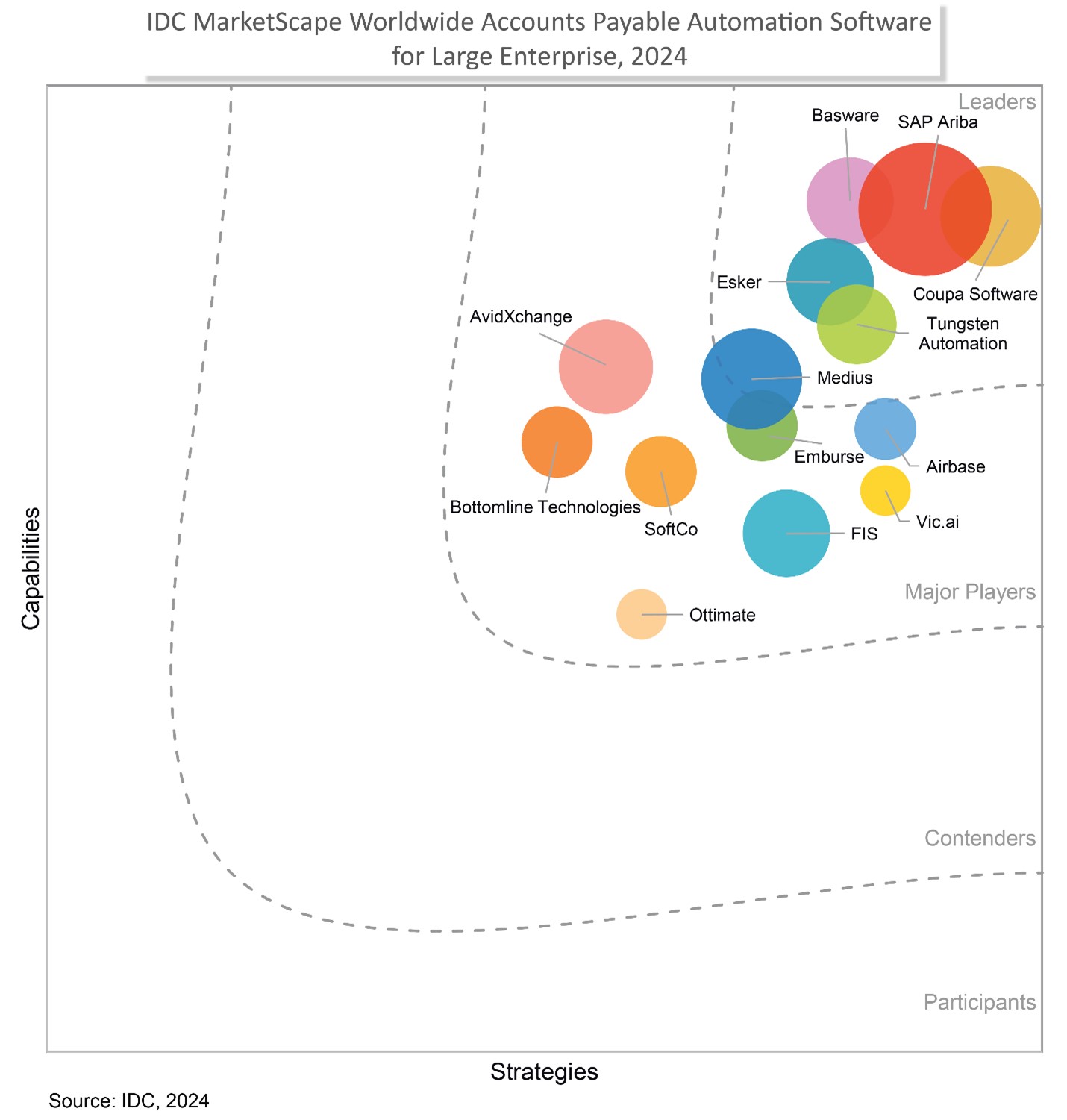
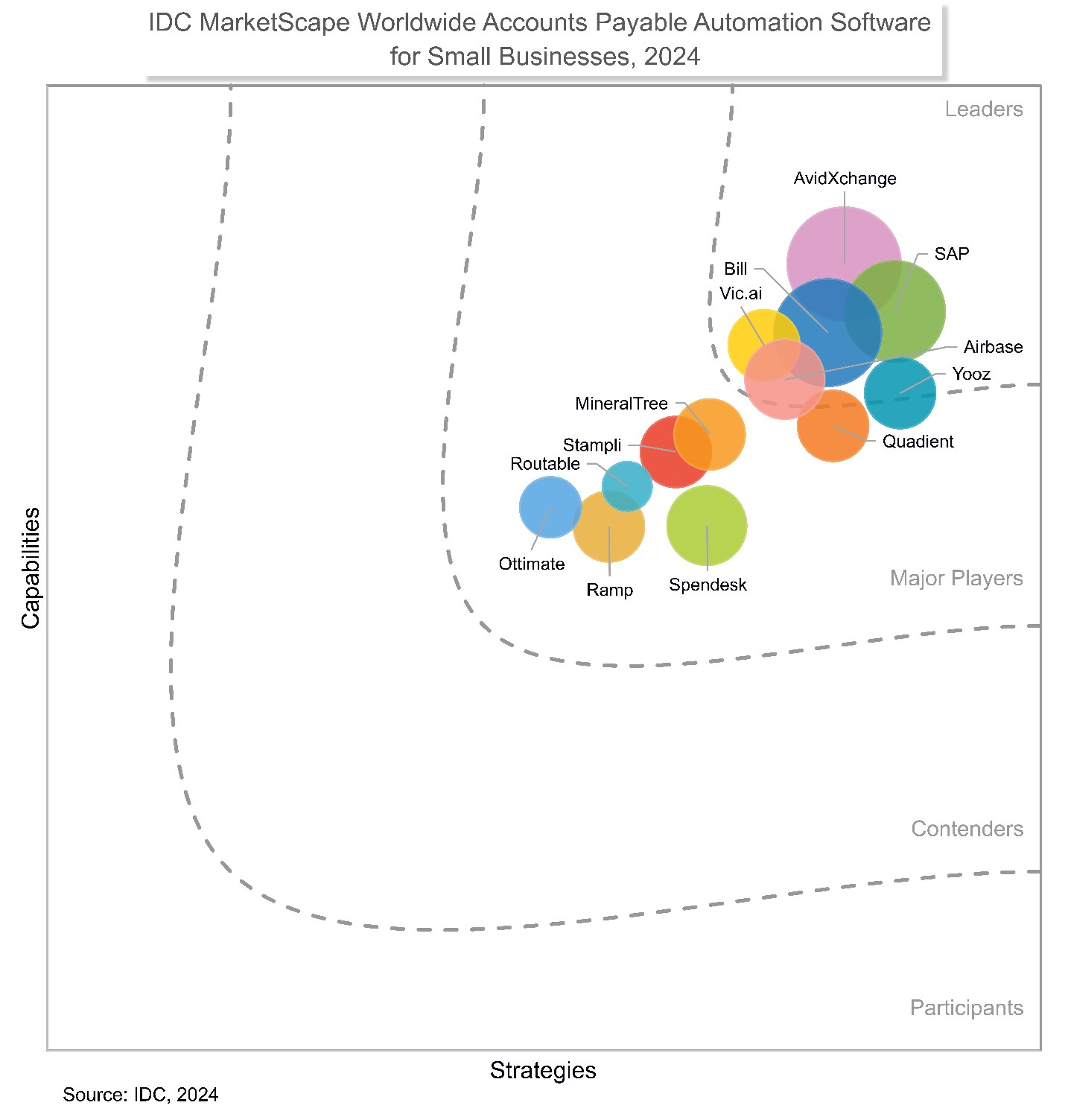
Now, I’m thrilled to share that SAP was the only company that was positioned in the Leaders category of all three IDC MarketScape reports – IDC MarketScape: Worldwide Accounts Payable Automation Software for Large Enterprise 2024 Vendor Assessment (doc #US51740824, July 2024); IDC MarketScape: Worldwide Accounts Payable Automation Software for Midmarket 2024 Vendor Assessment (doc #US52378624, July 2024); and IDC MarketScape: Worldwide Accounts Payable Automation Software for Small Businesses 2024 Vendor Assessment (doc #US52378824, July 2024). SAP’s accounts payable solutions, built with AI-first principles, continue to enable the accounts payable function to embrace its strategic role as it becomes a top priority for business operations in today’s challenging macro environment.

IDC analyst Kevin Permenter adds: “SAP’s performance in the IDC MarketScape for Accounts Payable Automation Software reports across all three market segments is a testament to the breadth, depth, and reach of SAP Ariba and SAP Concur accounts payable offerings. SAP’s accounts payable offerings infused with AI-first principles, complemented with a strong ecosystem and the unique value proposition of SAP Business Network as a frictionless mechanism for buyer and supplier collaboration, show SAP’s strength in this market. SAP Ariba and SAP Concur invoicing offerings help enable companies of all sizes to move to autonomous processing and enable accounts payable and procurement teams to leverage invoices as a strategic asset for growth and profitability.”

IDC MarketScape: Worldwide Accounts Payable Automation Software for Large Enterprise 2024 Vendor Assessment (doc #US51740824, July 2024).

IDC MarketScape vendor analysis model is designed to provide an overview of the competitive fitness of technology and suppliers in a given market. The research methodology utilizes a rigorous scoring methodology based on both qualitative and quantitative criteria that results in a single graphical illustration of each supplier’s position within a given market. The Capabilities score measures supplier product, go-to-market, and business execution in the short-term. The Strategy score measures alignment of supplier strategies with customer requirements in a 3-5-year timeframe. Supplier market share is represented by the size of the icons.

IDC MarketScape: Worldwide Accounts Payable Automation Software for Small Businesses 2024 Vendor Assessment (doc #US52378824, July 2024).

Why SAP Is a Leader

The IDC MarketScape reports are divided by market size, evaluating SAP Ariba invoicing solutions for large enterprise and upper midmarket and Concur Invoice for small business and lower midmarket. I believe SAP’s positioning speaks for itself – this recognition showcases our role as a leader in the accounts payable automation space as we work to help our customers modernize critical business processes to transform the way they approach financial management. Here’s why I believe IDC MarketScape positioned SAP as a Leader across all three markets:

Strong Ecosystem and Seamless Integration

The IDC MarketScape Worldwide Accounts Payable Automation Software for Large Enterprises report notes that vendors should “consider SAP if you are looking for a well-established provider with a robust ecosystem of financial management products that can fit needs of any size business in virtually any industry.”

Automate your payables processes to turn your invoices into strategic assets

SAP Business Network Is a “True Differentiator”

Additionally, the report highlights SAP Business Network as a “frictionless mechanism” for buyer-supplier collaboration. Our robust network of trading partners helps make it easier than ever for businesses to ensure invoicing accuracy and compliance while staying connected to their trading partners through our extensive network. The report further notes that, “SAP Ariba source-to-pay suite combined with the network provides accounts payable teams an effective, intelligent, and near-touchless way to manage the invoice-to-pay cycle, helping buyers and suppliers digitize and modernize their source-to-pay processes.”

SAP Helps Accounts Payable Run Better

The accounts payable function finds itself in a complex landscape of rising interest rates, tightening monetary policies, and supply chain disruptions. Among these challenges, many companies have become accustomed to curveballs that threaten their agility and future success. SAP offerings can help accounts payable teams address core pain points:

  • Reduce lengthy invoice approval times. With SAP’s AI-infused, end-to-end business processes across source-to-pay and ERP solutions, our customers can cut through cycle times with autonomous processing – from invoice submission to reconciliation. SAP Business AI can capture header and line item data fields, finding patterns from historical data to help increase accuracy with each invoice capture.
  • Minimize high percentage of exceptions. With global e-invoicing mandates on the rise, customers can reduce exceptions upfront while ensuring compliance. SAP’s business rules can validate invoices in real time against local government portals as needed. With SAP Business Network, suppliers can submit invoices electronically, streamlining the process and reducing costs.
  • Avoid late supplier payments. With working capital management and our early payment offerings within the Taulia portfolio, accounts payable teams can pay suppliers on time while leveraging invoices as a strategic asset for growth and profitability, strengthening their relationships with suppliers.

Customers Report Incredible Outcomes

Here are a few examples highlighting what customers have achieved after using SAP Ariba and SAP Concur solutions to help improve accounts payable processes:

  • Baker Hughes looked to SAP Ariba solutions to reduce its average invoice approval cycle time to just 1.5 days with 50% of supplier invoices transacted electronically in the first year.
  • Smith+Nephew achieved an 84% first-pass invoice-matching rate.
  • Navantia S.A. S.M.E. processes 99% of invoices automatically for over 9,000 vendors.
  • American Eagle Outfitters achieved 75% invoice-count compliance for 48,000 annual invoices.
  • Recordati Rare Diseases now completes its end-to-end invoice management process in half the amount of time.

I believe this recognition as a Leader in the 2024 IDC MarketScape reports for Worldwide Accounts Payable Automation Software for Small Business, Midmarket, and Large Enterprise markets emphasizes our commitment to driving a new era in redefining accounts payable automation.

Learn more about our accounts payable solutions at sap.com.


Baber Farooq is senior vice president for Market Strategy Procurement Solutions at SAP.

Receive weekly news highlights from the SAP News Center

What Is SAP Build Apps?

SAP Build Apps, formerly known as SAP AppGyver, is a service within the SAP Build product.

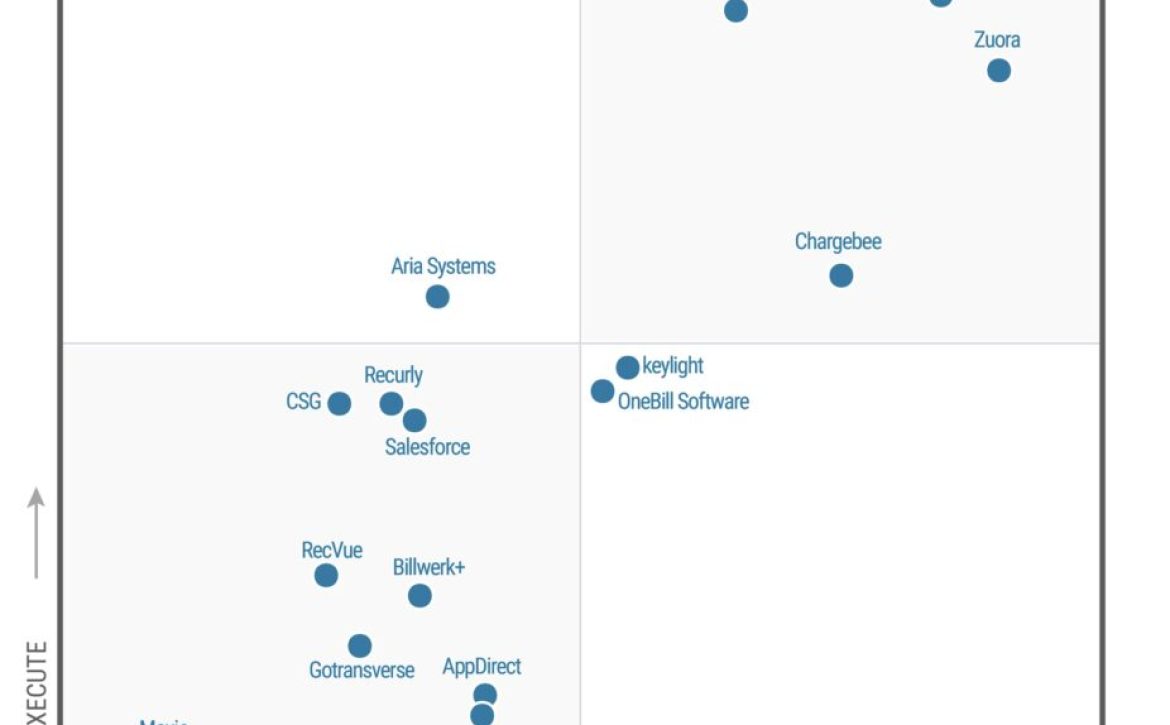
SAP Is a Leader in the 2024 Gartner® Magic Quadrant™ for Recurring Billing Applications

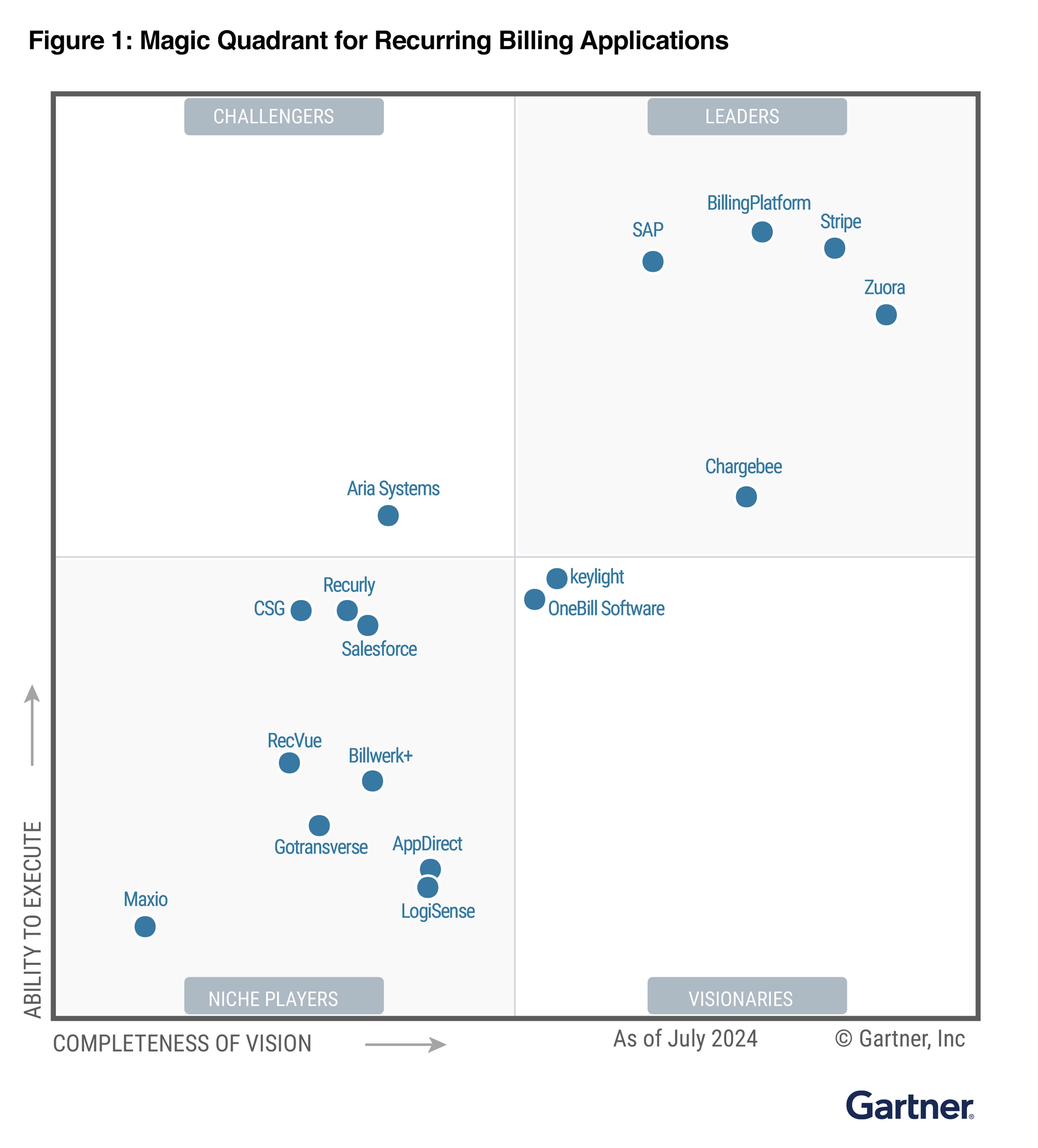
I’m thrilled to share that Gartner has named SAP a Leader in its inaugural 2024 Magic Quadrant for Recurring Billing Applications.

We believe this recognition underscores our commitment to providing an agile cloud solution for recurring revenue management that meets the needs of fast-growing companies with SAP S/4HANA Cloud and SAP Subscription Billing. Gartner evaluated 17 vendors and named SAP a Leader.

Read the full report here.

This graphic was published by Gartner, Inc. as part of a larger research document and should be evaluated in the context of the entire document. The Gartner document is available upon request from SAP. Click to enlarge.

The Growing Importance of Billing Software 

Recent publications emphasize a growing consensus among analysts that advanced billing software is becoming increasingly essential for fast-growing companies across various industries. To navigate the complexities of invoicing and revenue collection with recurring revenue business models, companies require a reliable and sophisticated solution that can handle high transaction volumes with both flexibility and accuracy.

Accelerate Growth with Modular Cloud ERP for Recurring Revenues 

Leveraging a modular cloud approach, SAP seamlessly integrates SAP S/4HANA Cloud, SAP Subscription Billing, and, in the case of usage-based pricing, SAP Convergent Mediation by DigitalRoute. This powerful combination enables organizations to efficiently manage subscriptions, usage plans, and bundles, driving growth and operational excellence in today’s dynamic business environment.  

SAP S/4HANA Cloud, together with SAP Subscription Billing, has quickly become a cornerstone for fast-growing companies seeking a SaaS approach to manage their recurring revenue business. Whether B2B or B2C scenarios, our solution supports a diverse array of industries, including professional services, high tech, industrial manufacturing, automotive, life sciences, and healthcare.  

Customer Success Stories 

Discover how SaaS CRM company LeadSquared simplifies complex subscriptions and enhances customer transparency with automated order-to-cash processes in this short video.

Explore how biotech leader F. Hoffmann-La Roche is revolutionizing the industry by automating order-to-cash processes for its digital offerings in this customer story.

For additional insights from SAP customers and to learn more about our quote-to-cash solutions, visit the comprehensive overview page on sap.com


Martin Barkman is senior vice president and global head of Product Marketing for Finance, Supply Chain, and Cloud ERP AI at SAP.

Sign up for our newsletter to receive stories and highlights in your inbox weekly

Gartner, Magic Quadrant for Recurring Billing Applications, Mark Lewis, Robert Anderson, 6 August 2024 

GARTNER is a registered trademark and service mark of Gartner, Inc. and/or its affiliates in the U.S. and internationally, and MAGIC QUADRANT is a registered trademark of Gartner, Inc. and/or its affiliates and are used herein with permission. All rights reserved. 

Gartner does not endorse any vendor, product or service depicted in its research publications, and does not advise technology users to select only those vendors with the highest ratings or other designation. Gartner research publications consist of the opinions of Gartner’s research organization and should not be construed as statements of fact. Gartner disclaims all warranties, expressed or implied, with respect to this research, including any warranties of merchantability or fitness for a particular purpose.  This graphic was published by Gartner, Inc. as part of a larger research document and should be evaluated in the context of the entire document. The Gartner document is available upon request from SAP.

Previous Next
Close
Test Caption
Test Description goes like this