Double exposure of success businessman and Office workplace with laptop and smart phone on wood table and big city blurred background

SAP-IBM Partnership Accelerates Innovation with Generative AI

In a significant move aimed at empowering clients to become next-generation enterprises, SAP and IBM have announced their plans to expand their long-standing collaboration. The SAP-IBM partnership envisions leveraging generative AI capabilities and industry-specific cloud solutions to help enterprises unlock business value and drive innovation. With a shared approach to generative AI, built on an […]

The post SAP-IBM Partnership Accelerates Innovation with Generative AI appeared first on InsideSAP.

The Power of the Consumer

Over recent years, retailers have experienced a notable shift in consumer behavior towards more sustainable products and conscious consumption. Consumers have driven this shift with their increased awareness of environmental issues, ethical concerns, and desire to support products which are eco-friendly, ethically sourced, and produced under fair labor conditions.

Companies that prioritize sustainability in their operations, such as using recycled materials, reducing carbon emissions, or supporting social causes, are gaining popularity among consumers. But those consumers demand proof of these values and product promises at the point of sale.

“The rise of sustainability isn’t just a movement; it is a shift in consumer consciousness,” said Dania Fayyaz, SAP North America sustainability program manager. “Today’s consumers are redefining their purchasing patterns, opting for products and brands that align with their values, and driving a demand for eco-conscious practices and ethical sourcing.” In her conversations with retailers that visited SAP’s booth at NRF 2024, the world’s largest retail fair, she saw a high interest in sustainability solutions.

Consumers – and Markets – Demand Visibility

When the EU Deforestation Regulation (EUDR) comes into effect for large enterprises later this year all products sold in the EU containing palm oil, cocoa, soy, rubber, cattle/leather, coffee, wood, and their derivatives will need proof that their harvest didn’t contribute to deforestation. Non-compliance will result in potential fines of up to 4% of companies’ EU annual turnover. To help businesses simplify this complex task, the SAP Green Token solution can track the geolocation of where raw materials are harvested and automate the creation of due diligence statements (DDS). The solution can also help improve visibility for consumers on where the raw material for their clothing was sourced and offer information on potential reuse and recycling.

Record, report, and act with SAP Sustainability solutions

Take the example of a cotton shirt made from 50% certified recycled materials. Cotton can be sourced from multiple farms or recycling services and taken to a cotton mill where it’s spun into thread and later fabric. It becomes impossible to distinguish the different cotton elements – conventional versus recycled cotton – once they are co-mingled and the manufacturer loses insight into the sustainability attributes of the raw materials. That’s why it’s important to have a sophisticated tracking solution in place. “SAP Green Token can enhance transparency for bulk-traded, co-mingled raw materials by digitally storing sustainability attributes on tokens that traverse the supply chain,” said Fayyaz.

In addition to making conscious decisions on raw materials and products, consumers can also consider circular economy models. “I’m really intrigued by the idea of revitalizing clothing items,” said Fayyaz. “Imagine being able to exchange a well-loved jacket you’ve had for years and receive credit in return. And the jacket might find a new owner who will genuinely appreciate it.” The SAP Recommerce solution enables that scenario, helping brands and retailers take back, manage, and resell secondhand inventory to help accelerate the shift from linear to circular business models. On an even larger scale, SAP Green Ledger is SAP’s vision to make transactional carbon accounting a reality. It can enable organizations to track carbon like they do cash, with every financial transaction having a corresponding carbon entry. “This is incredibly desirable because we will see taxes for carbon imposed in the future, and decision-makers will want insights into which processes are utilizing the most carbon,” Fayyaz said.

The Future of Retail – A Retailer’s View

At a recent SAP event, Christoph Werner, CEO at German retailer dm-drogerie markt, shared his view on the future of retail and his insights on what customers want – and therefore what will shape the way retailers have to engage to drive business.

For Werner, individualization of the shopping experience and any transaction will play a major role. Therefore, retailers will have to focus on the individual shopper, not on clusters of shoppers like in the past. Hyper-personalizing the customer experience will improve loyalty; the value for the customer will not only be the price, but increasingly the overall service and experience. This will change the concept of promotions. Werner is convinced that retailers will benefit from giving added benefits and delighting the customer, rather than pushing products into the market based on reduced prices. “Bring home flowers every now and then, but keep it special,” Werner said.

To no surprise, AI will be the foundation for personalized shopping experiences. “AI has benefits and downsides and today it remains to be seen where it will take us,” Werner stated. Overall, retailers see AI as an opportunity, with the technology completing repeatable tasks, freeing up employees for more value-adding tasks, and empowering individuals to make a difference. As retail stores often face staffing challenges, this can empower people in sales and marketing teams instead of replacing them. From Werner’s perspective, an AI-empowered workplace will attract new employees.

Learn more about dm-drogerie markt and its path to excellence with SAP.

A Glance into the Crystal Ball

At the same time, low-price online platforms continue to attract consumers with their affordable and wide range of products. They offer competitive prices on trendy clothing and accessories using economies of scale and direct-to-consumer models. Despite concerns about their environmental and ethical practices, these platforms remain popular among price-conscious consumers. However, there is growing awareness of the environmental and social impacts of fast fashion and low-price models. As a result, consumers are becoming increasingly discerning in their purchasing decisions, prioritizing quality, longevity, and sustainability over cheap prices and fast fashion trends.

“Overall, the consumer landscape is evolving, with a growing emphasis on sustainability, conscious consumption, and ethical practices,” said Sven Denecken, chief marketing and solutions officer for SAP Industries & CX. “Companies that can adapt to these changing preferences and demonstrate a commitment to environmental and social responsibility are likely to thrive in the long term.”


Connect with us to get all the updates on company news, stories, and coverage

Meeting Workout: A Game to Improve the Meeting Experience

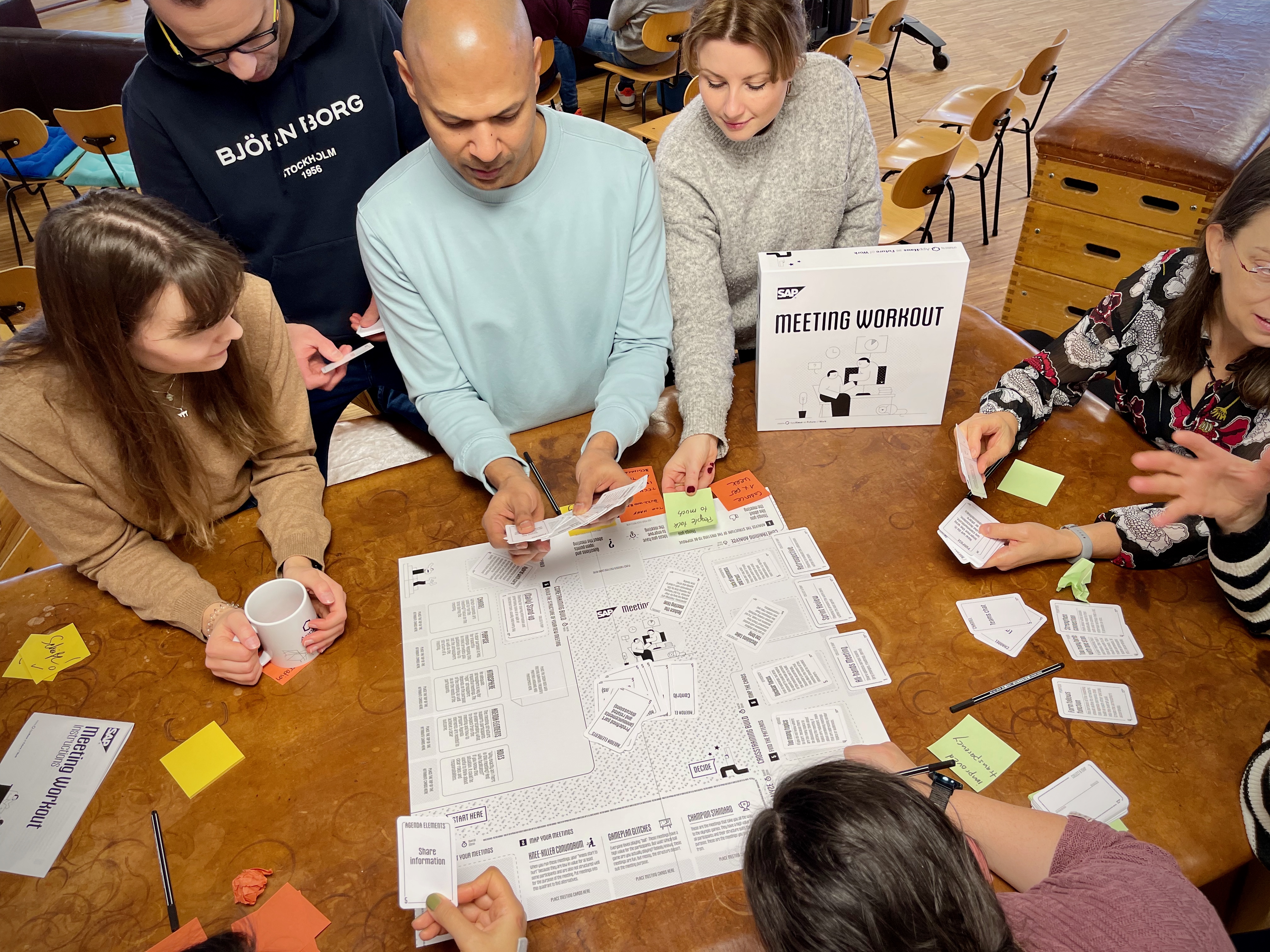
To help address the challenge of unproductive meetings, the Future of Work team at SAP and SAP AppHaus created the “Meeting Workout” board game. It brings a playful approach to making meetings more efficient. Interested teams can choose between a virtual template or a downloadable, do-it-yourself version.

For the majority of employees, work comprises enjoyable projects and duties but also routines and tasks that can be tiring or difficult. To make the work experience as positive and efficient as possible, experts and companies around the globe seek to continuously improve the realities of their workforce. This is also true for SAP.

Meetings, All Kinds of Meetings

An important facet of today’s work reality is meetings. They are where all sorts of work decisions are prepared and made, where briefings take place, where teams build up their team identity, exchange thoughts, solve challenges, share updates, align across geographical time zones, and much more. In many cases and for many roles, meetings consume a considerable part of overall working hours. So it comes as no surprise that, in their most recent project, the Future of Work team at SAP and SAP AppHaus colleagues joined forces to develop an easy approach for teams to improve their meeting routines.

“As featured by Forbes in May 2023, an average employee spends 31 hours per month in unproductive meetings. This is a challenge we want to address with the Meeting Workout game,” says Andreas Hauser, SVP and head of SAP AppHaus Network. “By innovatively blending play with productivity, we can transform these hours into opportunities for meaningful engagement and collaborative innovation, paving the way for a future where every meeting is a step towards building stronger, more dynamic teams.”

People playing the Meeting Workout game
Photo courtesy of Hyun Lee.

The Imperative for Efficient Meetings

According to a recent Microsoft report, inefficient meetings have been identified as the top disruptor to productivity, with an excessive number of meetings following close behind. As SAP Chief Future of Work Officer Christian Schmeichel states: “The way we are working is changing rapidly, and both the rise of hybrid work and new technologies have increased the number of meetings for many of us. Hence, it’s an imperative to foster meetings that best utilize our time, spark energy, and drive outcomes. The Meeting Workout game can help with an engaging workshop format that can not only improve meeting effectiveness but can enable teams to set new standards for workplace collaboration on their journey into the future of work.”

Playing for a Better Meeting Experience

From the initial idea to create a game for teams to improve their meeting routines, it took the New Work Practices team and SAP AppHaus a few weeks to design, test, and produce the Meeting Workout game. However, what might look like a fun project was very similar to any other design and innovation project.

“In our planning meetings and test sessions we really tried to put ourselves in the shoes of all kinds of teams in different organizations and setups,” recall project members Beate Riefer, UX designer at SAP AppHaus, and Filip Weidenbach, HR project expert in New Work Practices. “Through a very generic phrasing of the cards and in simple steps, the game should be applicable in the most diverse, if not all, environments. It’s not as easy as it might seem – and it’s the reason why we established breaks in our meetings to keep the energy and concentration levels up. Here’s an important recommendation for all teams playing the Meeting Workout game: have plenty of sticky notes and a variety of snacks available!”

50 Meeting Workout Games Available

The Meeting Workout game can be a perfect opportunity to help actively inspire and support teams in restructuring their current meeting formats. Users can choose between the virtual version available on Mural, a do-it-yourself, paper-based version for a physical workshop, and a tangible board game version.

The Future of Work team at SAP is gifting 50 board game versions on a first-come, first-serve basis. People or teams that would like to test and use the board game can contact SAPFutureOfWork@sap.com, thereby acknowledging that their postal address and contact information will be used only for the delivery of the game shipment, in accordance with the SAP Privacy Statement.


Waltraud Grimm is communications lead for SAP Future of Work.
Imke Vierjahn is communications lead for SAP AppHaus.

Top photo courtesy of Hyun Lee

Follow SAP News on LinkedIn to stay up-to-date with company news, stories, and coverage

SAP SuccessFactors 1H 2024 Release Highlights – Business AI

Dana Crockett shares exciting innovations on Business AI for SAP SuccessFactors HCM.

To learn more about the recent SAP SuccessFactors HCM innovations, visit: https://sap.to/6050uLhYI

Chapters
00:07 – Intro
00:26 – Joule
02:00 – AI-assisted goals
02:40 – AI-assisted writing
03:27 – AI-assisted person insights
04:30 – AI-assisted applicant screening
05:10 – Closing

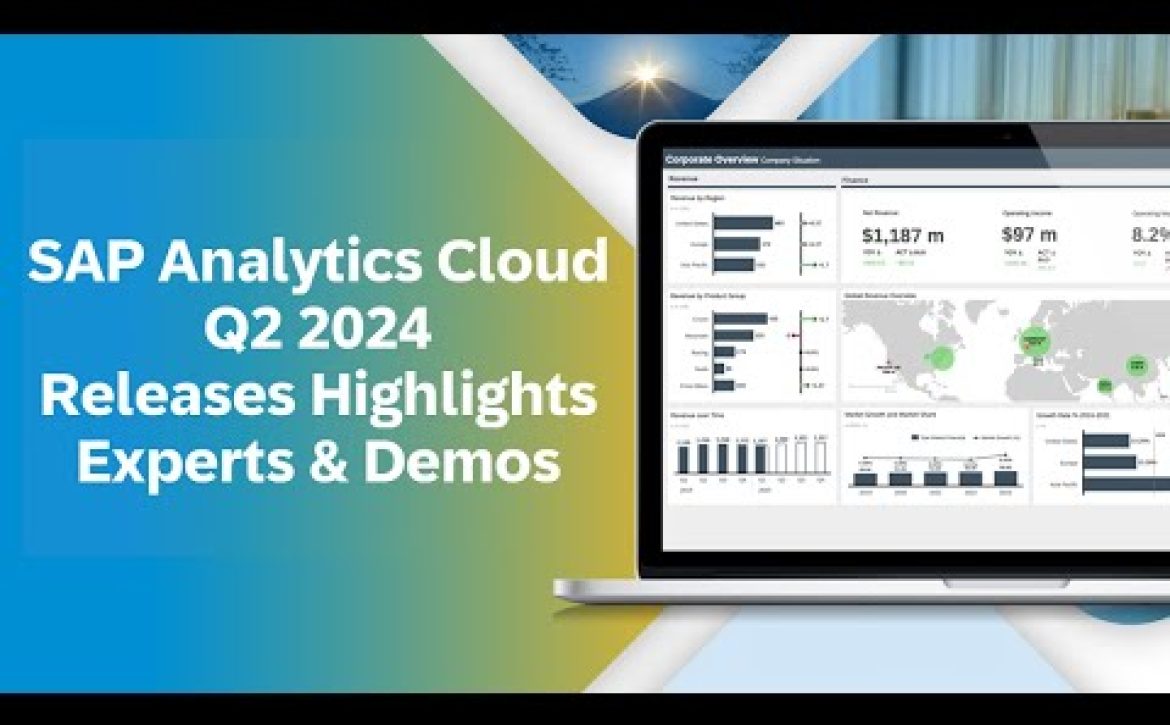
SAP Analytics Cloud: Q2 2024 Release’s Features with Experts & Demos

Check out the latest feature highlights for the quarterly release cycle of SAP Analytics Cloud in Q2 2024 with Orla Cullen, Product Marketing Manager – Data & Analytics. Read more on the blog: hhttps://community.sap.com/t5/technology-blogs-by-sap/sneak-peek-in-to-sap-analytics-cloud-release-for-q2-2024/ba-p/13671854
For more on SAP Analytics Cloud, visit: https://sap.to/6059uqbNJ

Chapters:
00:26 Administration & Service Management
00:31 Central control over user profile settings for administrators
01:54 Augmented Analytics
01:59 Predictive planning – making prediction intervals visible in stories
04:19 Just ask: natural-language query
07:45 Data Exploration
07:49 Data analyzer – support for workspaces
08:29 Data analyzer – new functionality for the table context menu
08:55 Variable dialog – text configuration, settings panel, and more

10:33 Data Modeling 10:33
10:38 Extended support for “unit” property type*

13:37 Enterprise Planning
13:42 Plan Process Management – include descendants when using the Calendar Wizard
15:59 Advanced Formulas – source data from analytical models
18:08 Data Actions – story API to poll the execution status
20:00 Data Actions – Select ‘Show Only Leaves’ in Tracing table
21:37 Multi Actions – copy external API URL from detailed dialog
22:56 Multi Actions – supporting parameters from analytic models
24:34 Plan Process Management – notifications management
26:47 Plan Process Management – extended APIs for stories and analytical applications
28:26 Planning Trigger – updated formatting options
30:17 Version Management – dynamic expansion of planning area during data entry

33:05 Microsoft Office Integration Updates (Microsoft Excel)
34:22 Mobile Analytics – Integrating KPI tiles in SAP Mobile Start

36:30 Story Design
39:39 Optimized (unified) story experience – dynamic font scaling, batch export, and more
42:43 Rank with others – view top-N and bottom-N in comparison to other data points
44:16 Repointing a model in a story

54:39 Story Extensibility – Supporting bursting mode for data change insights
56:13 Composite widgets (phase two)
1:01:35 Custom widget support for the universal model
1:05:16 Replace Model in Story

1:08:29 Story Presentation – Unified story presentation mode

The Path to AI with Clean Core

From cloud to generative AI, the list of new and emerging technologies continues to grow in our era of digital intelligence. Yet it’s also the era of inflation, geopolitical tension, supply chain disruption, and countless other challenges. How are businesses supposed to make sense of all these technologies – let alone transform their businesses with them – while simply trying to survive during such a challenging time?

That’s where Claudio Muruzabal, chief business officer of SAP SE, steps in.

Muruzabal is responsible for supporting the Customer Advisory solution area and Customer Success Management & Engagement teams at SAP. For more than eight years, he has played an important role in understanding not only an increasingly complex technology landscape but also how businesses actually use the technology at their disposal. He supports teams that help bring SAP customers closer to their goals by leveraging SAP solutions. This begins with advising customers through honest conversations about how they can apply the intelligent capabilities now included in many SAP solutions, such as generative AI.

I sat down with Muruzabal to find out more about his role, how SAP customers are winning with intelligent technology, and the growing impact of customer success management at SAP.

Q: AI is all the rage today, so let’s start there. What are the biggest opportunities for businesses to use AI?

Muruzabal: Opportunity is everywhere for AI. And it’s bigger than just automating processes to increase efficiency, which is what was talked about for the longest time. At SAP, we’re seeing how AI can support relevant business processes to instill innovation and competitiveness. While many players in the industry are focused on developing AI engines and large language models, we are focused on accelerating business value through generative AI. I could talk all day about how AI is transforming data analytics and decision-support systems as well as supply chain optimization, predictive maintenance, and HR. Every day we are discovering new opportunities for customers to leapfrog their competition when they combine the power of generative AI with the context of their business data and processes.

What are some examples of how SAP customers are using AI, and what value have they realized so far?

SAP Business AI: Revolutionary technology, real-world results

There’s really so much to get excited about when it comes to how our customers are using the AI capabilities included with their SAP solutions. Across industries, workers everywhere are using natural language to instantly get the data insights they need using the SAP Analytics Cloud solution. I like how busy recruiters can tap into generative AI with SAP SuccessFactors solutions to create compelling job descriptions and interview questions in less time. Joule, our AI assistant and copilot, can support end users in getting the right answers on how to get the most of our cloud solutions. With Joule already embedded across the portfolio – generally available in SAP SuccessFactors HCM, SAP Start, and SAP S/4HANA Cloud – we are all excited about the opportunities for our customers.

All industries can get this unique value, including professional soccer clubs FC Bayern Munich and Hertha BSC that are using a scouting prototype powered by AI to find and develop the next generation of star athletes.

AI can solve a lot of problems, but what about the underlying foundational technology stack companies have today? What conversations are you having with businesses about their technology investments?

Early on in our conversations with customers, it’s important to understand how businesses can set up their core, foundational enterprise technology platform running in the cloud. This is critical to establish a journey of innovation including SAP Business AI. Coming back to the foundation, many of our customers have built numerous modifications on top of their core ERP. In order to build a true cloud operating model – essential to embrace innovation including AI – it is critical to move to a clean core model. This means that any modification to the ERP functionality offered by SAP is built outside of the core, using extensibility solutions. This is not a technical topic only. Although clean core contributes to the cost-efficient operation of the platform, the true contribution is bringing flexibility and adaptability to the business, converting the cloud operating model into a unique “innovation as a service” platform.

What makes SAP unique and stand out to customers with its value proposition?

SAP has the unique value of being the global leader in best of suite solutions built with more than 50 years of industry knowledge and ERP technology leadership. On top of this, our leading “best of breed” solutions, such as in HCM, customer experience, intelligent spend and business network, and more, can provide the best functionality and the right integration into the core. Only SAP can offer this value proposition. When we combined this with the cloud operating model – widely adopted by our RISE with SAP customers – we provide exponential value for the innovation as a service proposition.

How can customers get the most from their investments? What kind of support is there to help them transform and innovate?

Customer success management is essential in the cloud. It is the end-to-end engagement with our customers, from advisory to sales execution to onboarding, adoption, and consumption. We provide the tools, assets, and content to help accelerate adoption and consumption so as to maximize the value from first use of the solution to full and future use. SAP Preferred Success services can accelerate the time to value even more. To support this motion, deep telemetry being built into our cloud solutions allows customers and our customer success management leaders to better understand how the solutions are being used while identifying opportunities to expand usage.

Where do advisory services fit into the customer journey?

Customer advisory services might be the most essential part of the journey with a customer. Successful projects start with the right business case definition, anchored in the best understanding of the industry and business of our customers. With that in mind, our Customer Advisory teams support building the right technical solutions that can support an enterprise architecture. This is the first step in moving in the right direction of building the cloud operating model.


Connect with SAP News on LinkedIn

SAP Analytics Cloud – Top 5 Q2 2024 | Top Feature Highlights For The Quarterly Release

Check out the Top feature highlights for the quarterly release cycle of SAP Analytics Cloud in Q2 2024 with Orla Cullen, Product Marketing Manager – Data & Analytics. For more on SAP Analytics Cloud visit https://sap.to/6052j3os8 Read more on the blog: https://sap.to/6056j3osw

00:00 Intro
00:49 Unified Presentation Mode
02:26 Integrating KPI tiles in SAP Mobile Start
03:10 Rank with others – view top-N and bottom-N in comparison to other data points
03:54 Plan Process Management – notifications management
05:23 Plan Process Management – extended APIs for stories and analytical applications
06:14 Outro

#analytics #sapbtp #cloud #data

SAP SuccessFactors 1H 2024 Release Highlights – Experience and UX

Scott Lietzke highlights the latest User Experience enhancements in our first-half 2024 release: a reimagined org chart, a new people profile, an enhanced experience for mobile, and improved work tech solutions.

To learn more about the recent SAP SuccessFactors HCM innovations, visit: https://sap.to/6050uLhYI

00:07 – Intro
00:22 – Reimagined org chart
00:56 – Profile preview
01:15 – Org chart collapse and expand feature & export options
01:51 – People profile innovations
03:16 – Mobile experience
04:51 – Work tech innovations
06:31 – Closing

UN Plastics Treaty: Good for Business and the Planet

Last week the UN Plastics Treaty reached its final stages of negotiations at INC-4 in Ottawa, Canada, to develop a legally binding, international agreement to tackle plastic pollution across the entire plastics life cycle. The fifth and final round of negotiations is due to complete by the end of this year, where an agreement is expected to be formally ratified in 2025.

The treaty represents a once-in-a-lifetime opportunity to unleash the potential of business to solve the plastic crisis. Its success is crucial. Production of new plastic is forecast to double by 2040 without new and effective action. Only 10% of plastic is currently recycled, and each year 19 to 23 million tons of plastic end up in our rivers, lakes, and seas. In addition, greenhouse gas emissions from plastics production, management, and disposal represent around 3.3% of global emissions. Exposure to plastics also has implications on human health, with plastic traces being found in our blood.

Fortunately, there is global consensus on the pressing need to end this ecological and environmental crisis, which is why 160 countries and hundreds of observer organizations are working together on this unique opportunity to end plastic pollution.

A Treaty Addressing the Entire Plastics Value Chain

The existing plastics ecosystem is heavily fragmented. Under current conditions, financial flows fund the creation of virgin polymers while a linear material flow continues bringing new plastics to market.

Centered on regulating production and consumption, the negotiations take every stage of the plastic value chain into account, from creation of the primary polymers to how plastic waste is managed. It covers product design for plastic reduction and recycling as well as extended producer responsibility to increase accountability among the most polluting entities while ensuring a just transition for affected communities.

Together we can enable a future with zero emissions, zero waste, and zero inequality

This is an ambitious project. It will involve redesigning products, making circularity possible through repair, reuse, and recycling, and making recycled polymers more economically viable than virgin plastics.

New jobs, markets, and business opportunities will be created by the treaty. Research and development into plastic alternatives will be accelerated to eliminate the health-harming pollutants from plastic that are released at every stage of plastic production. Additionally, it will require the evolution of waste management systems to deal with the legacy of plastic waste.

SAP Endorses the Business Coalition

The Business Coalition for a Global Plastics Treaty, convened by the Ellen MacArthur Foundation and WWF, assembles businesses and financial institutions committed to supporting the development of an ambitious, effective, and legally binding UN treaty to end plastic pollution.

“To end plastic pollution, we require both ambitious government policy and accelerated business action. The global plastics treaty offers a once-in-a-generation opportunity to put in place the right legally binding rules, measures, and incentives to tackle this global problem,” says Rob Opsomer, executive lead, Plastics and Finance, Ellen MacArthur Foundation.

With over 200 members, including SAP, the Business Coalition for a Global Plastics Treaty is calling for global business rules underpinned by harmonized regulations to tackle the full life cycle of plastic products. This will level the global playing field, making it easier for businesses and investors to scale both upstream and downstream solutions, mobilize the right investments, and support new innovations. 

“For decades, SAP software has been instrumental in enabling our customers to manage material flows, including plastics,” says Natasha Pergl, global sustainability lead, SAP Consumer Products. “We understand first-hand the challenges our customers face in managing the complex and fragmented web of regulations in place today that make it difficult to understand current material flows and align upstream efforts with downstream solutions.”

SAP Calls for Harmonization

Achieving systemic change will require collaboration and joint innovation, which depends on effective, well-functioning communication. Software and network technology are central to bridging the information gap and operationalizing an inclusive plastics ecosystem. The treaty must lay the foundations for harmonized regulations and simplified information flow as well as accelerate the implementation of global rules.

To achieve this, four essential elements need to be in place:

  • Common definitions for plastics and packaging to ensure mutual understanding and interoperability: This applies to the categorization of various plastic polymers, how products are structured and denominated, and how they are packaged and sold.
  • Harmonization across the plastics life cycle, covering criteria for product design, extended producer responsibility schemes, and assessment for recyclability: This will support businesses to design for circularity and recyclability, ensure that strategic decisions are guided by the capabilities of existing downstream infrastructure, and highlight where new capital investments are needed.
  • Harmonized national disclosure schemes to ensure uniformity, comparability, and information transparency: This is essential for giving investors and regulators a base of information for policy steering and decision-making. It will also allow business to harness the full potential of AI-driven innovation to accelerate solutions at scale.
  • Recognition of the role of digital tools for traceability: Improved data and the application of digital tracking will enable true progress.

“The treaty goals are ambitious, but with an agreement that focuses on global rules covering product design and material fate, extended producer responsibility schemes, and chemicals of concern, we can unleash the power of global business to deliver the solutions necessary. Importantly, SAP is ready with the processes and systems to help businesses quickly grasp the opportunity and scale impact to end plastic pollution,” says Stephen Jamieson, global head of Circular Economy Solutions, SAP.

Software solutions, such as SAP Responsible Design and Production and SAP Green Token, already allow companies to monitor, measure, and act to facilitate the design of products for a more sustainable and circular economy. But a more effective information flow for better collaboration and innovation is required to achieve systemic change.

The Role of AI

An obvious benefit of agreed common terminology and harmonization of criteria and disclosure rules is that it can open the door for businesses to leverage AI. Some envisaged applications in the production process include reducing virgin polymers and boosting material and supply chain efficiency. Downstream uses such as waste sorting, material recovery, quality control, identifying waste flow trends, and predictive analytics would also be made possible.

A Bold Approach

Discussions in Ottawa were productive and focused on decreasing and restricting plastic production. During the talks, Rwanda and Peru submitted a motion to reduce the production of primary plastic polymers worldwide by 40% by 2040, from a 2025 baseline. Their vision is for this to be legally binding, much like the Paris Agreement to limit global warming.

Robust data clarity and systems for sharing information are crucial for enabling businesses in the implementation of such a treaty. Only by connecting data points throughout the supply chain and across jurisdictions can material flows and emission sources be fully understood.

Work will continue towards INC-5 in Busan, South Korea, in November, where the final text will be agreed prior to being ratified in 2025.

For more information:


Heather Davies is a brand journalist.

Sign up to receive weekly news highlights from the SAP News Center

Esports Powerhouse Team Liquid Wins Big with SAP Business AI 

Picking the Right Champions to Win the Game

Gaming is something that keeps inspiring me. I’m amazed by the speed, accuracy, and level of concentration of professional players. It’s impressive how this industry has evolved and grown over just a couple of decades.

Team Liquid commands an imposing presence in the esports world, boasting over 160 professional players across more than 15 different games and a staggering fan base of over 10 million followers on various social media platforms. With more than 75 premier events won, Team Liquid is one of the most successful organizations in competitive gaming.

Team Liquid: Mining rich esports data to help players, managers, and teams compete and win

The game with the highest viewership and extensive fandom is League of Legends. Team Liquid successfully competes with their League of Legends team, which recently won the League of Legends Championship Series (LCS) 2024 Spring tournament.

In League of Legends, the goal is to create a strong and balanced team consisting of five characters, called “champions,” in order to outplay and outsmart the opponents during the game by being one step ahead of competition.

Teams participate in a pre-game draft process to select champions before a match. This involves banning and picking champions from a pool of 166 choices to create a strong team.

Champions are the in-game figures controlled by each player. Each champion has particular skills and areas in which they excel. Putting the champions together allows the team to play in various strategic directions to win the match.

After choosing five champions (“pick”), each team is also allowed to remove five champions from the pool (“ban”). Those players cannot be picked by either side. This can be utilized to remove specific parts that would otherwise counter a strategy or hinder the other team from playing their favorite style and/or composition.

Esports teams and their analysts need to prepare for the draft process, as it requires knowledge of the opponent’s favorite picks and strategies. Imagine a five-a-side dodgeball match, but before the match begins, the five players from each team draw their champions from a pool of 166 individual champions.

With bi-weekly updates to the game (“patches”), especially affecting the champions as well as indirectly teams practicing and developing new strategies, competitive League of Legends is an ever-changing game. It creates the need to constantly adapt your draft to a new environment, to analyze both your own and the opposing team’s behavior.

Furthermore, the nature of the draft process and the varying strategies of opponents make accurate predictions difficult. Esports teams have only a week to prepare for the game and gather knowledge about the other team’s favorite champion picks, strengths, and weaknesses.

Previously, Team Liquid coaches prepared draft scenarios based on manual analysis of the opponent team’s draft behaviors and champion preferences. However, the challenge was that manual analysis is done before the draft, with the best potential pick or ban changes based on the decisions of the other team. Additionally, the sheer number of potential matches to choose from and the different strategies employed by opponent teams make manual draft prediction very difficult.

Previous Next
Close
Test Caption
Test Description goes like this