SAP and UNESCO Partner to Launch AI-Assisted Disaster Risk Management System in Solomon Islands

WALLDORF SAP SE (NYSE: SAP) today announced that the United Nations Educational, Scientific and Cultural Organization (UNESCO) has selected advanced disaster risk management system EDiSON for use in the Solomon Islands.

Put sustainability at the core of your business with AI-driven solutions

The system was developed by SAP Japan and INSPIRATION PLUS, a venture from Oita University focused on disaster prevention.

EDiSON, which runs on SAP Business Technology Platform, exemplifies how intelligent enterprise technology can be harnessed to address global challenges such as cyclones (typhoons) and floods. It integrates diverse types of information, including real-time, visual meteorological data and historical data records, to drive predictive insights and smarter operations assisted by SAP Business AI and machine learning.

These predictions offer authorities a vital tool for delivering faster response times and mitigating damage in the event of a natural disaster. This includes forecasting terrain damage, dispatching emergency services to affected areas and supporting decision-making in issuing evacuation advisories. The Solomon Islands initiative is envisioned as a blueprint for other small island developing states, showcasing how cutting-edge technology can democratize disaster resilience.

“EDiSON represents a leap forward in how science and technology can empower vulnerable communities,” UNESCO Chief of Disaster Risk Reduction Soichiro Yasukawa said. “By integrating AI and real-time data, we are not only improving early warning capabilities but also building a foundation for long-term resilience and sustainable development.”

The project, part of UNESCO’s Disaster Prevention Strengthening Program, will be operational in 2026. It aims to establish a scalable, data-driven model for disaster preparedness and responses of small island nations that face the increasing severity of natural disasters driven by climate change. The Solomon Islands, located in the South Pacific Ocean, face frequent threats from earthquakes, tsunamis, cyclones, droughts and flooding. EDiSON will serve as a transformative solution to enhance national preparedness and response capabilities.

EDiSON integrates static and real-time dynamic data from government, municipal and private sector sources. The system delivers predictive insights and real-time visibility into emerging disaster risks. This empowers authorities to issue timely evacuation orders and make informed decisions that protect lives and infrastructure.

Why EDiSON? Proven Performance and Scalable Sustainability

“This project exemplifies SAP’s commitment to using technology to empower resilient communities,” said Sophia Mendelsohn, chief sustainability and commercial officer at SAP SE. “EDiSON is a powerful example of how our cloud platform and AI capabilities can be tailored to meet the needs of communities facing real-world challenges. We’re proud to support UNESCO in bringing this innovation to the Solomon Islands and beyond.”

UNESCO’s selection of EDiSON was driven by the system’s proven track record in Japan—a country renowned for its advanced disaster management systems. The system’s ability to overcome traditional barriers such as fragmented data, limited analytical capacity and underutilization in field operations makes it especially valuable for resource-constrained nations such as the Solomon Islands. EDiSON’s modular design helps ensure scalability and adaptability, enabling governments to deploy sophisticated disaster management tools without requiring extensive budgets or technical expertise.

Visit the SAP News Center. Get SAP news via LinkedIn and Bluesky.

Media Contact:
Lesa Plingen, +49 622 776 9000, lesa.plingen@sap.com, CET
SAP Press Room; press@sap.com

This document contains forward-looking statements, which are predictions, projections, or other statements about future events. These statements are based on current expectations, forecasts, and assumptions that are subject to risks and uncertainties that could cause actual results and outcomes to materially differ. Additional information regarding these risks and uncertainties may be found in our filings with the Securities and Exchange Commission, including but not limited to the risk factors section of SAP’s 2024 Annual Report on Form 20-F.
© 2025 SAP SE. All rights reserved.
SAP and other SAP products and services mentioned herein as well as their respective logos are trademarks or registered trademarks of SAP SE in Germany and other countries. Please see https://www.sap.com/copyright for additional trademark information and notices.

How to Build Joule Agents and Skills in Joule Studio | #SAPTechEd

How long does it take to build a Joule Agent? Faster than you think. ⏱️

1️⃣ Create a Joule Skill
2️⃣ Build a Joule Agent

Ready to build your own? https://sap.to/60567d7Q8

#AIAgents #Joule #SAPTechEd

Smooth, Fast, and Compliant AI Onboarding in SAP SuccessFactors | 2H 2025 Release Highlights

Discover how SAP SuccessFactors Onboarding uses AI and automation to streamline new-hire tasks and speed up HR onboarding in 2H 2025.

In this 2H 2025 release highlight, SAP SuccessFactors Onboarding introduces new AI-driven capabilities that help HR teams do more with less while giving new hires a faster, more engaging start. Senior Director of Product Management, Emily Nagengast, walks through how automation and AI come together to remove repetitive work and support a more consistent onboarding experience across your organization.

You’ll see how auto-completion of new hire tasks takes routine steps off your team’s plate – from “prepare for day one” to sending welcome messages at scale. For organizations with high-volume or seasonal hiring, this helps standardize processes, reduce errors, and ensure every new hire receives a consistently high-quality experience.

The video also covers AI-assisted document processing, which automatically extracts key data from documents such as national ID cards and passports. By reducing manual data entry, this capability helps minimize inconsistencies, supports compliance, and accelerates the time it takes for new hires to become productive. HR can focus on high-value work, managers gain time back, and overall efficiency improves across the onboarding journey.

Built as part of the SAP SuccessFactors Human Capital Management suite, SAP SuccessFactors Onboarding connects people, processes, and data in a single, intuitive solution. With embedded intelligence and automated workflows, organizations can support pre–day-one, onboarding, cross-boarding, offboarding, and rehire scenarios in a scalable, compliant way.

Whether you’re looking to streamline high-volume hiring, reduce paperwork, or create a more engaging new-hire experience, this release gives HR teams powerful new tools to transform onboarding with automation and AI.

00:00 – Introduction
00:57 – Auto-completion of new hire tasks
01:25 – AI-assisted document processing
01:52 – How SAP SuccessFactors is revolutionising the onboarding process

Learn more about SAP SuccessFactors Onboarding here: https://sap.to/60587ZxVY

#SAPSuccessFactors #Onboarding #BusinessAI

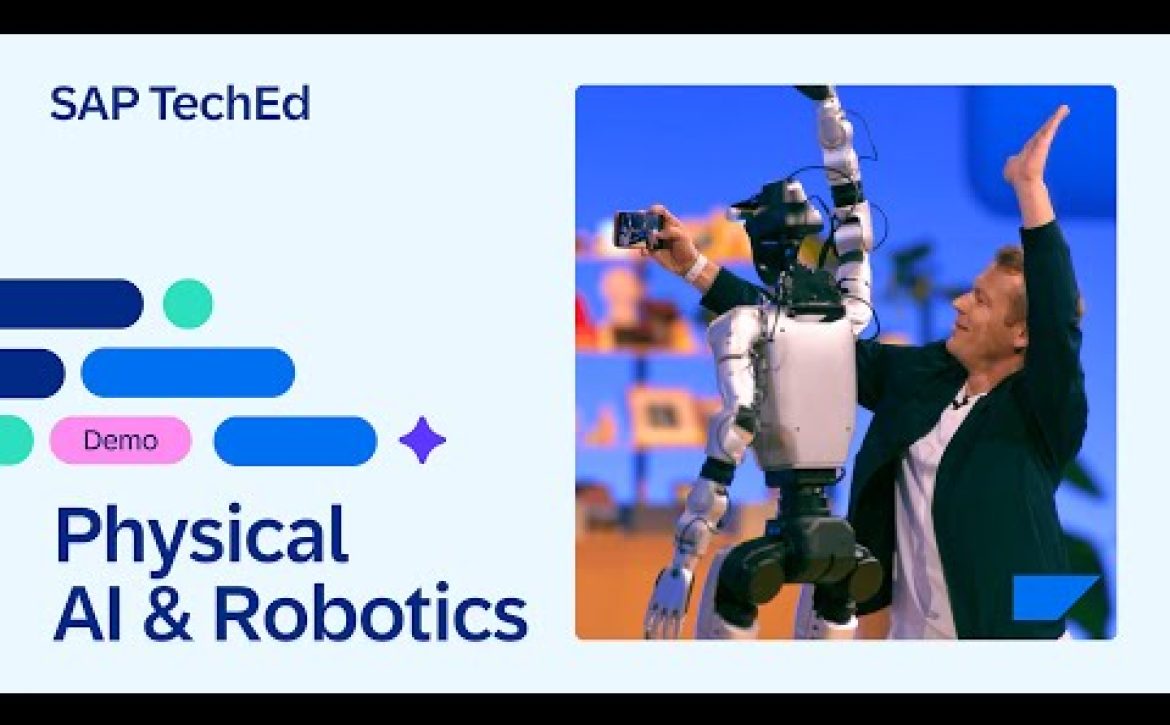
Demo: Physical AI | Business Processes & Robots | SAP TechEd 2025

See physical AI (embodied AI) in action: combining robots, computer vision, and SAP data to automate real-world tasks with governance on SAP BTP.

In this SAP TechEd demo, we bring AI off the screen and into the real world. You’ll see how physical AI connects computer vision, sensors, and robots with SAP business processes – so a task on the shop floor, warehouse, or service bay triggers the right workflow, approvals, and updates in SAP. The scenario shows a camera detecting a condition, an AI model classifying it, and a robot (or cobot) taking action. Behind the scenes, SAP Business Technology Platform (SAP BTP) orchestrates events, security, and data access, while keeping your core clean while extending with governed innovation.

We walk through the end-to-end flow: streaming signals from edge devices, invoking AI models, and calling enterprise services to create orders, reservations, or maintenance notifications in SAP. You’ll see how role-based access, audit trails, and policy controls keep actions compliant, and how telemetry and dashboards provide observability across devices and processes. For builders, we highlight how to iterate fast using low-code for front-ends where it fits, pro-code for custom logic, and automation to stitch steps together.

Whether you’re in manufacturing, logistics, or field service, this practical demo shows how to move from pilot to production with an architecture that scales across sites and use cases – grounded in trusted SAP data and open integrations.

Speaker: Philipp Herzig, Chief Technology Officer, SAP

00:11 – Warehouse manager view; switch from manual to Joule
00:25 – Ask Joule to handle urgent picking → delegate to humanoid robot
00:51 – EWM actions to robot; label issue resolved; quality bin & task completion
02:15 – Live delivery: Unitree G1 arrives from warehouse
03:10 – Robot banter, crowd selfie

Watch all SAP TechEd replays: https://sap.to/605073odi
Explore SAP Business AI on SAP BTP: https://sap.to/605173odc

Follow us on social:
LinkedIn: https://sap.to/605273odY
Instagram: https://sap.to/605373odl
Facebook: https://sap.to/605473odm
Threads: https://sap.to/605573odW

About SAP:
As a global leader in enterprise applications and business AI, SAP stands at the nexus of business and technology. For over 50 years, organizations have trusted SAP to bring out their best by uniting business-critical operations spanning finance, procurement, HR, supply chain, and customer experience. For more information, visit: https://sap.to/605673odo

#SAPTechEd #PhysicalAI #Robotics

Joule Agents: From Insight to Action, 4× Faster AR & $440M Impact #SAPTechEd

Turn insights into business action with Joule Agents.

20 shipped today (40 by year-end), automate tasks like AR reconciliation 4× faster (20→5 mins), with lower DSO, and up to $440M annual value across SAP’s portfolio.

Explore new Joule Agents: https://sap.to/60527Mxcu

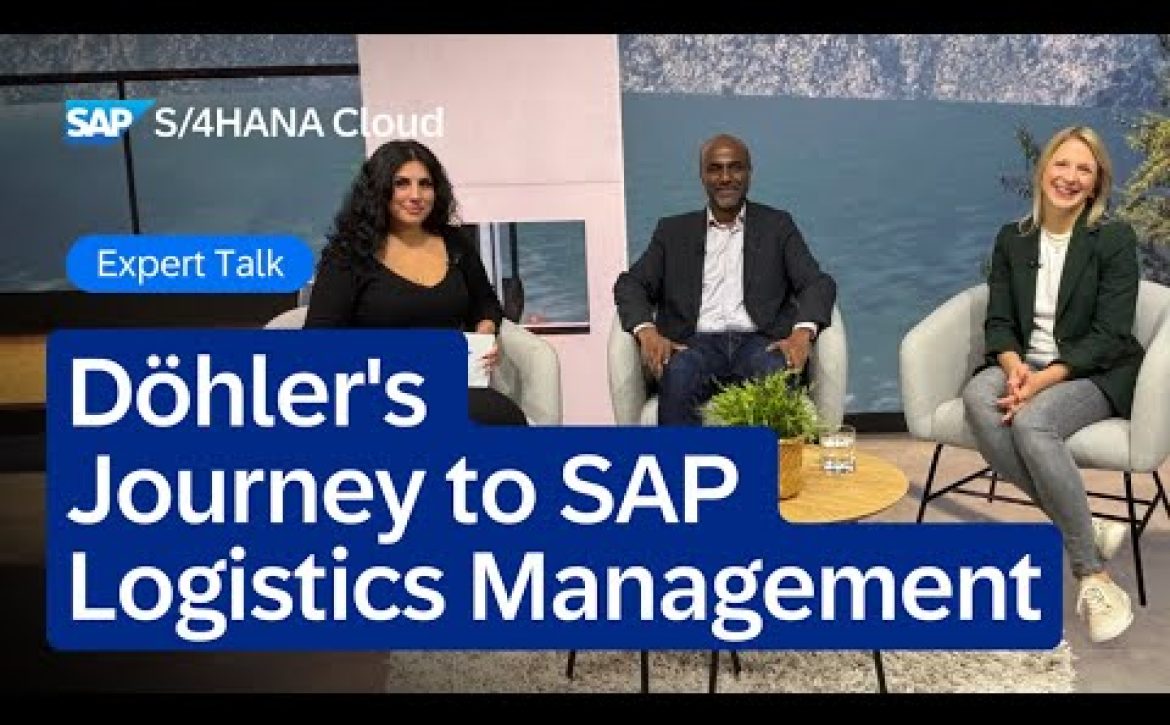
Global Food & Beverage Company Döhler’s Journey to SAP Logistics Management | Expert Talk

Welcome to our Expert Talk series. Hosted by Maria Silipo, of Cloud ERP Product Success at SAP, she is joined by Döhler’s Global IT Head, Srikanth Velagapudi, and SAP Product Manager Nadine Ried. This episode highlights the revolutionary impact of SAP Logistics Management on supply chains at the global food and beverage operation Döhler. Here,.

Srikanth, representing Döhler, delves into:
✅ How Döhler plans to implement SAP Logistics Management in sample and technical warehouses.
✅ Core benefits like improved traceability and streamlined processes.
✅ Reasons for selecting SAP Logistics Management, emphasizing user-friendly interfaces and cost savings
✅ SAP Cloud ERP integration and addressing challenges like transparency in stock situations.

From the SAP expert perspective, Nadine covers:
✅ Support for Döhler’s SAP Logistics Management implementation through continuous feedback integration.
✅ SAP’s roadmap for SAP Logistics Management, including exception handling and expanded mobile capabilities.
✅ Key features that make SAP Logistics Management competitive, such as rapid setup and business agility.

Whether you’re a logistics professional or a tech enthusiast, this session offers valuable insights into how SAP Logistics Management is transforming the industry.

00:00 – Welcome and introduction
01:11 – Customer perspective and logistics use cases
03:52 – Reasons for choosing SAP Logistics Management
06:30 – Initial feedback and workforce impact
08:37 – Expert support and continual development
10:00 – Future roadmap and enhancements
13:34 – Competitive edge and super features

Curious to see how SAP Logistics Management can elevate operations?
👉 Explore details here: https://sap.to/60517JvSL
🔮 Check out what the future holds for SAP Logistics Management on the roadmap: https://sap.to/60527JvS0
🌐 Join the discussion in the SAP community: https://sap.to/60537JvSF
📬 Connect with our experts: insideS4@sap.com

👍 If you found this video helpful, give it a thumbs up.
💬 We value your feedback; drop your questions and thoughts in the comments!
🔗 Share this episode to spread the knowledge about SAP Logistics innovations.
📺 Subscribe to our channel for more Expert Talks from SAP!

UiPath Goes Live with SAP Cloud ERP Private

WALLDORF SAP SE (NYSE: SAP) today announced that UiPath Inc. (NYSE: PATH), a global leader in agentic automation, has successfully gone live with an SAP Cloud ERP Private solution as part of its strategic digital transformation initiative.

Run your core operations with confidence using a ready-to-run cloud ERP from SAP

The company achieved 93% clean core in solution design and 88% clean core across the overall implementation, advancing its goals to modernize ERP, a component of its ongoing journey toward operational excellence.

As part of UiPath’s growth strategy, the company targeted ERP as a critical area of transformation, taking an automation-first approach to streamline and standardize its operations. As a global company, UiPath needs to comply with multi-GAAP reporting across different geographies. By moving to the cloud, UiPath is now able to connect fragmented systems, cut time and resources spent on billing cycles, and simplify complex multi-GAAP reporting processes—including order to cash, lead to cash, finance, procurement and human resources.

“Our transformation efforts are centered around two key goals—how can we leverage automation to improve customer experience and, in doing so, make our teams and overall business more efficient and agile,” UiPath CFO and COO Ashim Gupta said. “Modernizing our ERP system was a strategic move to meet those two goals, enabling greater agility and efficiency through the automation and standardization of key processes and workflows. SAP Cloud ERP Private gave us the ability to do just that with the added benefit of a frictionless transition with minimal disruption, positioning us for future growth and innovation.”

The high clean core scores reflect UiPath’s commitment to adopt best practices from SAP and minimize custom code to help ensure long-term agility and ease of innovation. The implementation was delivered on time and within scope, supported by a collaborative effort between UiPath and SAP. With SAP Cloud ERP Private now live, UiPath is well positioned to accelerate its automation-first vision and drive continuous innovation across its global operations, enabling scalable growth, improved compliance and enhanced user experience across its enterprise functions.

“UiPath’s successful go-live with SAP Cloud ERP shows how next-generation ERP, when combined with intelligent automation can deliver tangible business outcomes: faster processes, leaner operations and the ability to scale globally,” said Jan Gilg, chief revenue officer and president, SAP Americas and the Global Business Suite. “This is what disciplined execution and an outcomes-driven transform looks like in an AI-first economy, which is why we’re proud to partner with UiPath on their journey.” 

Visit the SAP News Center. Get SAP news via LinkedIn and Bluesky.

Subscribe to the SAP News Center newsletter to get news and highlights delivered straight to your inbox each week

Media Contact:
Lesa Plingen, +49 622 776 9000, lesa.plingen@sap.com, CET
SAP Press Room; press@sap.com

This document contains forward-looking statements, which are predictions, projections, or other statements about future events. These statements are based on current expectations, forecasts, and assumptions that are subject to risks and uncertainties that could cause actual results and outcomes to materially differ. Additional information regarding these risks and uncertainties may be found in our filings with the Securities and Exchange Commission, including but not limited to the risk factors section of SAP’s 2024 Annual Report on Form 20-F.
© 2025 SAP SE. All rights reserved.
SAP and other SAP products and services mentioned herein as well as their respective logos are trademarks or registered trademarks of SAP SE in Germany and other countries. Please see https://www.sap.com/copyright for additional trademark information and notices.

AI-Powered Customer Service: The Future of SAP Service Cloud

Explore SAP’s vision of the future of SAP Service Cloud, where AI and human agents work in harmony to deliver faster, smarter, and more personalized support.

From intelligent automation to real-time optimization, see how SAP Service Cloud will transform service operations to boost efficiency and elevate customer experience.

0:00 – Customers Want Faster, Personalized Service
0:12 – AI & Human Agents Reimagine Service
0:30 – Orchestrating Exceptional Service Operations
0:49 – Day in the Life: Service Ops Leader Jacob
1:30 – Monitoring, Dashboards & AI Insights
2:24 – Automated Exception Handling & Real-Time Optimization
2:58 – Results: Efficiency & Customer Satisfaction
3:19 – Next-Gen Service: The AI-Human Partnership

🔗 Learn more about SAP Customer Experience solutions: https://sap.to/6059fH8AH

SAP Receives Responsible AI Impact Award as Climate Week Spotlights Tech Innovation

London Climate Action Week 2025 brought together over 45,000 delegates across 700 events and saw SAP recognized with a Responsible AI Impact Award.

Put sustainability at the core of your business with AI-driven solutions

This year’s London Climate Action Week was less about reaffirming action, and more about accelerating it. Now in its seventh year, this is Europe’s largest city-wide climate event, bringing together policymakers, investors, NGOs, and technologists to accelerate plans ahead of COP30 in Belém, Brazil. Three major themes stood out across the week.

1. Decarbonize and build resilience

Business leaders and policymakers are focused on scaling decarbonization while also confronting the reality of escalating physical risks. From industrial heat to infrastructure retrofits, the message was clear: climate disruption is now a core business risk. As resilience is becoming synonymous with competitiveness, organizations are embedding climate data into board decisions and using it to guide strategy.

This shift is urgent: climate-driven losses are no longer theoretical, and businesses should treat physical risk with the same granularity and urgency as margin forecasting.

SAP has focused on turning physical climate risk into actionable intelligence for customers. By integrating sustainability metrics with financial models, companies can frame adaptation investments as cost-avoidance with measurable return on investment.

2. Mobilize climate finance

The gap between climate capital and real-economy transformation remains wide, especially in emerging markets. But momentum is building. London’s mayor announced a new climate finance task force aimed at crowding in public-private investment, while investors discussed blended finance models and sustainability-linked instruments. To stay investable, companies must present decision-grade sustainability data and show credible transition plans.

SAP is working with customers to bridge the divide between macro-level climate finance signals and operational decisions. That means using our systems to unify environmental data with financial and risk metrics, so sustainability reporting isn’t just about compliance, but about surfacing value. With green bonds and adaptation finance accelerating, businesses that can connect site-specific risk to capital expenditure planning will be best placed to access new funding streams.

We’re helping customers uncover the hidden costs of climate disruption — whether that’s increased cooling, transport volatility, or water constraints — and link them to balance sheet impacts. The result is a stronger business case for resilience investments, and more relevant data for financial partners.

3. Digital innovation and AI

A wave of sessions focused on the power of digital tools to accelerate climate action. SAP and fellow sustainability leaders highlighted how AI is enabling everything from emissions forecasting to supply chain optimization, while digital twins are helping companies and cities simulate disruption, model trade-offs, and optimize resources in real time.

Central to this story is responsible AI. At London Climate Action Week, SustainableIT.org recognized SAP with the Responsible AI Impact Award for its cross-functional work to embed ethical, human-centered AI into enterprise systems, driving outcomes that are not only efficient, but also equitable and sustainable.

This approach is guided by SAP’s Global AI Ethics Policy, which is grounded in the UNESCO recommendations on the Ethics of AI, and shapes how we build and deliver AI across all our sustainability and business solutions.

At SAP, we’re designing AI to assist, not replace, human activity — to scale climate action with integrity. We are focused on delivering embedded business AI tools that turn complexity into clarity, while preserving transparency and auditability.

Applying SAP’s tech lens: from insight to impact

London Climate Action Week 2025 made one truth unavoidable: climate leadership now hinges on trusted data and innovative technology, including human-centred AI. Across sessions, AI and unified data were repeatedly cited as the accelerants of climate progress, whether mapping Scope 3 emissions or modelling extreme weather scenarios.

Drawing on these insights, businesses can look to three main areas to boost their sustainability efforts:

  • Make sustainability data first-class business data: SAP Green Ledger posts auditable carbon and financial entries side by side, turning emissions into actionable profit and loss drivers. When linked with site-level climate risk data, SAP Green Ledger allows businesses to understand the cost of disruption — from heatwaves to resource scarcity — and align sustainability with enterprise planning.
  • Augment teams with responsible AI: With SAP Green Token, AI-assisted declaration image analysis automates thousands of supplier documents; with SAP Sustainability Footprint Management, AI-assisted emission factor mapping links thousands of materials to high-quality emission factors in minutes. In SAP Sustainability Control Tower, AI now also supports environmental, social, and governance (ESG) report generation, using best-practice templates to draft audit-ready reports, complete with data visualizations. This frees up sustainability teams to focus on strategy while increasing speed, accuracy, and regulatory confidence.
  • Unify processes, finance, and sustainability in the cloud: SAP Sustainability Control Tower will become an intelligent application within SAP Business Data Cloud later this year, which will unify sustainability data and business operations on a single platform, enabling consistent reporting, deeper insight, and smarter decision-making across the enterprise.

By breaking down silos among sustainability, finance, procurement, and operations, SAP is enabling businesses to act faster on everything from climate disclosure to adaptation investment. When ESG data is managed like financial data — with rigor, governance, and relevance — it becomes a strategic asset.

Together, these capabilities turn the rallying cry of London Climate Action Week 2025 “from morality to materiality” into a practical playbook: embed sustainability where business happens and use responsible AI to scale impact without compromise. From emissions to adaptation to finance, the future of climate leadership is not just digital, it’s enterprise-deep.


Monica Molesag is global head of Sustainability Communications at SAP.

Sign up for the SAP News Center newsletter to have stories and highlights delivered to your inbox each week

How Joule for Developers and ABAP AI Capabilities Transform the Developer Experience

In February 2025, SAP introduced Joule for developers and ABAP AI capabilities, ushering in a new era for ABAP development. This powerful integration of generative AI into the development environment is helping to revolutionize how developers interact with SAP systems. Designed to enable smarter, faster, and more intuitive coding, these tools help developers elevate both productivity and innovation.

Joule for developers leverages a purpose-built large language model (LLM) trained on millions of lines of SAP code. It can deliver contextual, ABAP-specific results that support tasks ranging from intelligent code suggestions to automated unit test creation. As customers continue their SAP S/4HANA transformations, these AI features can also support optimized code migration through smart analysis, explanations, and actionable suggestions. The result: AI becomes a collaborative partner that helps developers tackle complex challenges with confidence and efficiency.

IDC’s recent white paper, “ABAP Development in the Age of AI”, outlines how AI is transforming modern development. One key finding: 80% of developers reported increased productivity when using AI coding assistants, with an average productivity gain of 35%. The top-used features include unit test generation, code generation, and autocompletion—clear signs that AI is now a central pillar of the development experience.

To succeed in this evolving landscape, developers must cultivate new skills. These include writing precise natural language prompts, verifying AI-generated code, integrating proprietary data for improved AI context, and using AI to enhance requirements documentation. These capabilities ensure AI remains an intelligent collaborator that upholds enterprise-grade standards.

SAP Build solutions and ABAP Cloud can further empower developers by enabling automation, improved security, and scalable collaboration—all while supporting a clean core strategy. These tools reflect SAP’s commitment to intelligent extensibility that balances innovation with system integrity.

AI is no longer just a futuristic concept—it’s a vital asset shaping every phase of the software development life cycle. Developers are evolving from code writers to orchestrators of intelligent systems that learn, adapt, and co-create. Joule for developers and ABAP AI capabilities illustrate how SAP is leading this evolution by providing tools that are aligned with enterprise development needs and future-ready innovation.

To learn more, explore the IDC white paper, “ABAP Development in the Age of AI.”


Sonja Lienard is senior vice president of Product Marketing and head of SAP BTP ABAP at SAP.

Unlock new levels of productivity and proficiency with AI-assisted tooling 

Previous Next
Close
Test Caption
Test Description goes like this