When to Use SAP HANA Cloud for Data Storage

SAP HANA Cloud is a cloud-native, in-memory database platform built for data integration, application development, and advanced analytics.



SAP HANA Cloud is a cloud-native, in-memory database platform built for data integration, application development, and advanced analytics.


Migrating to SAP S/4HANA offers many benefits, but to ensure a smooth migration, you must be aware of your specific reasons for migrating.

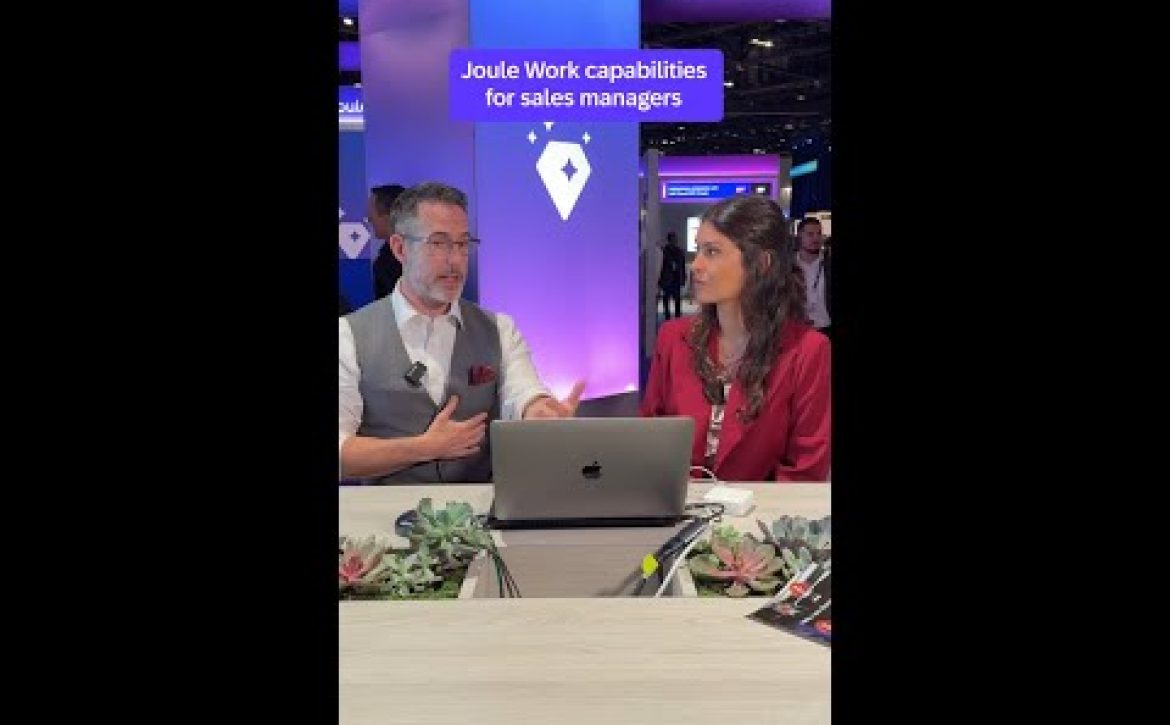
We spend too much time searching for information and not enough time acting on it. 💎
The new Joule Work is designed to change that.
With AI-powered conversations grounded in your business context, Joule understands your intent, asks relevant follow-up questions, and helps you get to the right answer faster.
Salt River Project (SRP) is a community-based, non-for-profit public power utility in Arizona. As the largest electricity provider in the Phoenix metropolitan area, it serves roughly 1.2 million electric customers, covering 2,800 square miles of electric service territory, and manages a 13,000 square-mile watershed that supports central Arizona’s water supply.
“We operate primarily to serve the needs of our customers and communities, so reliability is critical to SRP,” Drake Winfrey, ERP solution architect at Salt River Project, said. “We must ensure that anything we implement within our technology ecosystem doesn’t impact that reliability in any way—and, ultimately, enables our team members to deliver the best possible service.”
WalkMe’s superpower to work seamlessly on top of SAP and non-SAP systems helps ensure technology enables reliability without disruption. SRP’s first encounter with WalkMe was part of its SAP SuccessFactors implementation. At the time, Winfrey was the IT administrator for SAP Concur solutions at SRP and, based on the success of the SAP SuccessFactors implementation, saw an opportunity to add WalkMe in its travel and expense processes.
“Our employees only travel maybe once or twice a year, so no matter how user-friendly the system may be, there’s always going to be some pain points and friction,” Winfrey said. And, for those who travel frequently, the SRP team knew they could benefit from in-app guidance to ensure processes were completed quickly and accurately.
It was a perfect use case for WalkMe’s digital adoption solutions. At SAP Sapphire Orlando, Winfrey shared five wins that Salt River Project experienced by applying WalkMe to its processes.
At SRP, there are several standard expense reports that employees can submit in Concur Expense, such as personal mileage, safety gear, and telework.
To improve process efficiency, Winfrey built WalkMe “Smart Walk-Thrus”—step-by-step solutions that guide users through a series of actions to help complete a task—that direct SRP employees through the report completion and submission process. “With WalkMe, we automate some of the fields and fill in critical information for the user, taking away some of those hidden dependencies,” he said.
This proactive, in-flow guidance not only creates a simplified user experience for SRP employees when submitting expenses, but it has domino effects on IT support overhead. Since employees get the in-app guidance they need as they’re completing key steps, they submit reports accurately the first time, reducing support tickets or time spent correcting inaccurate submissions. “We’ve eliminated a lot of the support tickets and hand-holding we saw previously,” Winfrey said.
Winfrey applied WalkMe solutions in SRP’s payroll system to help with policy reinforcement. By adding in-app reminders, especially during important times of the year like holidays, SRP ensures employees are following procedures, boosting data and process accuracy.
When users log in to the system, they see in-app pop-up messages to remind them about key dates, such as time card due dates and approval timelines, and can opt to take action immediately or receive a reminder. If the user opts to act, they’re automatically redirected to the company’s time and attendance system via another WalkMe solution. “WalkMe solutions are very simple to build and deploy—and very effective compared to e-mails or chasing down people at the end of the pay period,” Winfrey said. He knows this for a fact because he can use WalkMe analytics to see how many users have viewed the in-app reminder and how many have clicked through to the time card. “It’s all reportable,” he said. “There are a lot of metrics behind the scenes that you can use to understand trends and find ways to improve the experience.”
Making changes to enterprise-wide systems can take time, as organizations are often constrained to the development cycles set by the IT department. “At SRP, we have monthly releases, so unless it’s a critical update or fix, getting a change is usually going to take a few weeks,” Winfrey said. “But with WalkMe, I can build and deploy content in 15 to 30 minutes.”
This agility is especially powerful for real-time communication and keeping the employee experience seamless. For example, Winfrey explained how SRP can instantly support users during routine system updates or maintenance windows. When a specific tile requires temporary maintenance, Winfrey’s team can immediately place a real-time message directly over the feature. This keeps employees informed and guides them to alternative workflows, ensuring business continuity and a smooth user experience while IT completes its work behind the scenes.
Empowering employees with self-service support “frees up their time for more value-added activities. By achieving this impact, my team can deliver enterprise-wide value without increasing headcount,” Winfrey said.
“We use WalkMe and the analytics it provides to look at different pages and see where the friction is and what processes are causing issues,” he explained. “Then we look at the support tickets and say ‘Okay, these are the same questions we get on this screen every time, so we’ll build a self-support solution.’” A user can then see those top support questions in the flow of work and get guided assistance. As a result, they’re able to complete the task themselves. No help ticket required.
Optimizing the digital employee experience means empowering employees with the digital tools and support needed to perform at their best. SRP uses WalkMe to anticipate user needs and ensure seamless change during major UI transitions. Using highly visual, contextual callouts like targeted Launchers that connect users to resources, eye-catching ShoutOuts for feature adoption, and Banner Reminders for critical updates, the team delivers personalized support that provides a unified, consistent user experience across multiple enterprise applications. “There’s just a lot of flexibility and, honestly, a lot of creativity” about the solutions they can deploy, Winfrey said.
What’s more, WalkMe solutions exist on top of current system landscapes. “As we continue to see everything moving to the cloud, it’s all about clean core,” he added. “I think we’re going to be limited on what we can customize going forward.”
Salt River Project is building on its success with WalkMe solutions and establishing a center of excellence to better balance central governance and cross-departmental collaboration. “In order to scale it, we really have to start building department-level WalkMe experts who know how to develop impactful content,” Winfrey said.
It’s clear: with WalkMe, Salt River Project can improve process efficiency, strengthen compliance, accelerate change, reduce support burden, and create a better digital experience for employees. As SRP expands its internal WalkMe expertise, it is positioning itself to scale those gains across the business while maintaining the high operational standards the organization is known for.
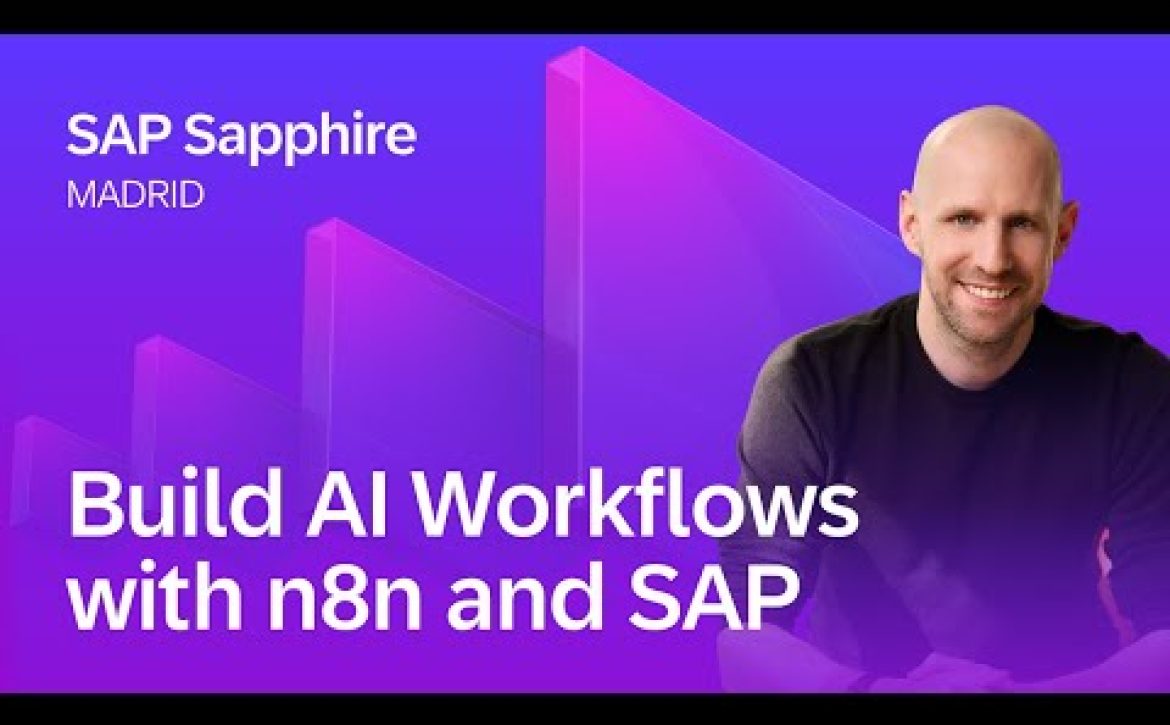
ee how SAP and n8n are helping teams build AI agents, automations, and enterprise workflows in Joule Studio.
At SAP Sapphire Madrid 2026, Jan Oberhauser, Founder and CEO of n8n, joins SAP to discuss how workflow automation and agentic AI can help enterprises connect systems, orchestrate business processes, and build more powerful AI experiences. Jan from n8n explains how the platform brings together AI agents, workflow automation, and business process integrations across the enterprise stack.
The conversation explores how n8n is being deeply integrated with Joule Studio 2.0 to help customers build anything from simple automations to complex multi-agent workflows. By combining SAP business context with n8n’s broad integration capabilities, teams can connect SAP and non-SAP systems, build faster, and create workflows that are grounded in proven process expertise.
Looking ahead, SAP and n8n share a vision for making agentic workflows powerful enough for technical users and accessible enough for business users. With business context, visibility, and governance built in, customers can experiment with new ways of building while staying aligned to enterprise requirements.
Watch the full Global Keynote: https://youtu.be/CocpyxAizwE?si=gDW8cldI-Xo1eq9k
Learn more about Joule Studio:
https://www.sap.com/products/artificial-intelligence/joule-studio.html
Chapters:
00:00 – Welcome to SAP Sapphire Madrid
00:34 – What makes n8n unique
01:07 – Integrating n8n with Joule Studio
01:25 – Building automations and multi-agent workflows
02:14 – What customers can expect next
03:03 – A shared vision for enterprise AI workflows
About SAP:
As a global leader in enterprise applications and business AI, SAP stands at the nexus of business and technology. For over 50 years, organizations have trusted SAP to bring out their best by uniting business-critical operations spanning finance, procurement, HR, supply chain, and customer experience. For more information, visit: https://www.sap.com/index.html
Follow us on social:
LinkedIn: https://www.linkedin.com/company/sap/
Instagram: https://www.instagram.com/sap
Facebook: https://www.facebook.com/SAP/
Threads: https://www.threads.com/@sap
#SAPBusinessAI #JouleStudio #SAPSapphireMadrid2026
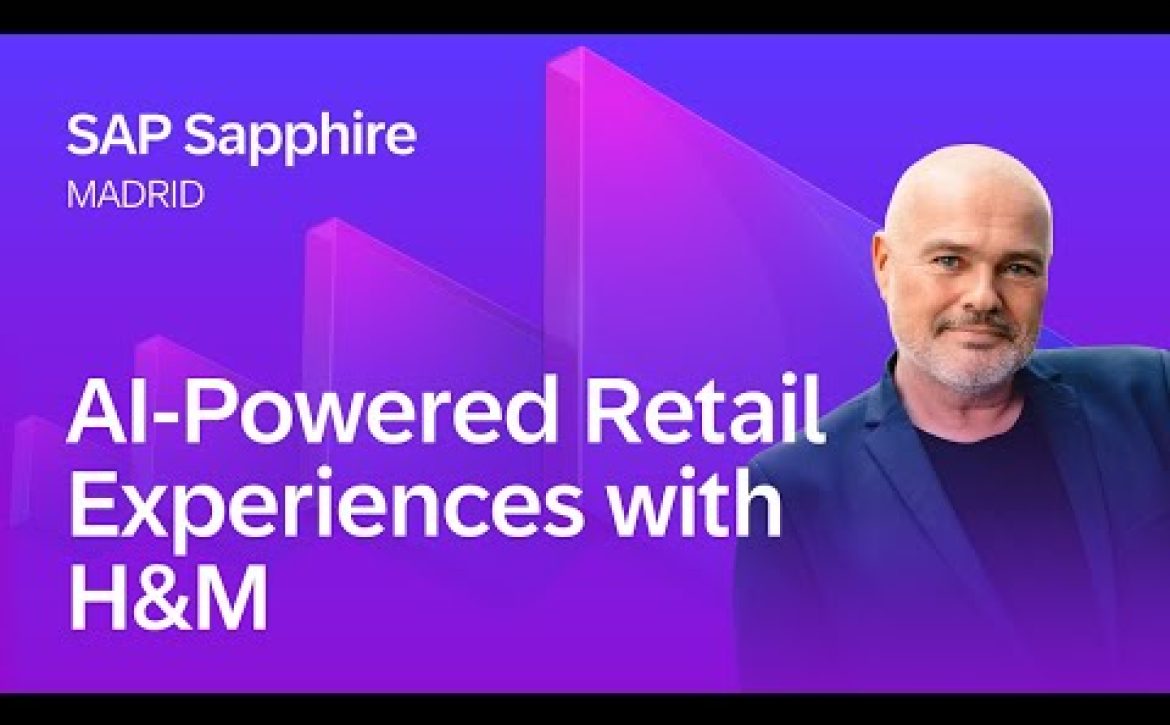
See how H&M is using SAP, real-time data, and AI agents to connect digital innovation with more personalized retail experiences.
At SAP Sapphire Madrid 2026, Jan Ziskasen, Head of Core Platforms at H&M, shares how H&M is strengthening its position as a fashion brand by putting customers at the center of every decision. Jan from H&M joins Sebastian Steinhaeuser, Chief Operating Officer, SAP SE and Member of the Executive Board, to discuss the company’s digital and AI journey, including how a strong technology foundation is helping H&M turn data into a true growth enabler.
The conversation explores how H&M is using SAP solutions including RISE with SAP, SAP Business Data Cloud, SAP Commerce Cloud, and SAP SuccessFactors to standardize and harmonize key business processes. With that foundation in place, H&M is layering in AI to improve operations, reimagine stores and supply chains, and empower store colleagues with more precise decision-making capabilities.
H&M also shares examples of AI in action, including a Store Intelligence app that tracks store performance in real time and a Store Intelligence Agent that suggests next-best actions for store managers. The discussion then moves into customer-facing innovation with an AI-powered Store Concierge Agent, designed to bring online and in-store experiences together with personalized recommendations, real-time availability, and contextual advice.
Watch the full Global Keynote: https://youtu.be/CocpyxAizwE?si=gDW8cldI-Xo1eq9k
Learn more about AI in SAP Commerce Cloud:
https://sap.to/6051B8DOm5
Chapters:
00:00 – Welcome and H&M’s digital journey
00:40 – Building a foundation for AI
01:31 – SAP at the core of H&M’s transformation
02:48 – Store Intelligence in real time
03:16 – AI agents across the value chain
04:09 – Customer-facing AI experiences
04:59 – Store Concierge Agent demo
06:00 – Reflections on the SAP and H&M journey
About SAP:
As a global leader in enterprise applications and business AI, SAP stands at the nexus of business and technology. For over 50 years, organizations have trusted SAP to bring out their best by uniting business-critical operations spanning finance, procurement, HR, supply chain, and customer experience. For more information, visit: https://sap.to/6053B8DOm9
Follow us on social:
LinkedIn: https://sap.to/6055B8DOmc
Instagram: https://sap.to/6059B8DOmW
Facebook: https://sap.to/6051B8DOmU
Threads: https://sap.to/6053B8DOmS
#SAPBusinessAI #RetailAI #SAPSapphireMadrid2026

Fresh country air? Magic cow milk? Or does Oli Baumann secretly have eight arms?
Spoiler: None of the above. What’s really behind @TSGHoffenheim1899’s strong season is a combination of team spirit, data-driven decisions, and SAP’s AI-powered technologies.
Find out how SAP Sports One helps the club optimize processes, make smarter decisions, and build sustainable competitive advantages, on and off the pitch.
👉 Read more: https://sap.to/6055BBjzCT
—
Gute Landluft? Magische Kuhmilch? Oder hat Oli Baumann heimlich acht Arme?
Spoiler: Nein. Was die TSG Hoffenheim in dieser Saison wirklich stark macht, ist eine Kombination aus Teamgeist, datengestützten Entscheidungen und KI-gestützten Technologien von SAP.
Erfahre, wie SAP Sports One dem Club hilft, Abläufe zu optimieren, bessere Entscheidungen zu treffen und nachhaltige Wettbewerbsvorteile aufzubauen, auf und neben dem Platz.
👉 Mehr erfahren: https://sap.to/6055BBjzCT
—
Follow us on social:
LinkedIn: https://sap.to/6056BBjzCp
Instagram: https://sap.to/6057BBjzCV
Facebook: https://sap.to/6058BBjzCn
Threads: https://sap.to/6059BBjzCX
About SAP:
As a global leader in enterprise applications and business AI, SAP stands at the nexus of business and technology. For over 50 years, organizations have trusted SAP to bring out their best by uniting business-critical operations spanning finance, procurement, HR, supply chain, and customer experience. For more information, visit: https://sap.to/6050BBjzCk
#SAPSportsOne #Football @TSGHoffenheim1899
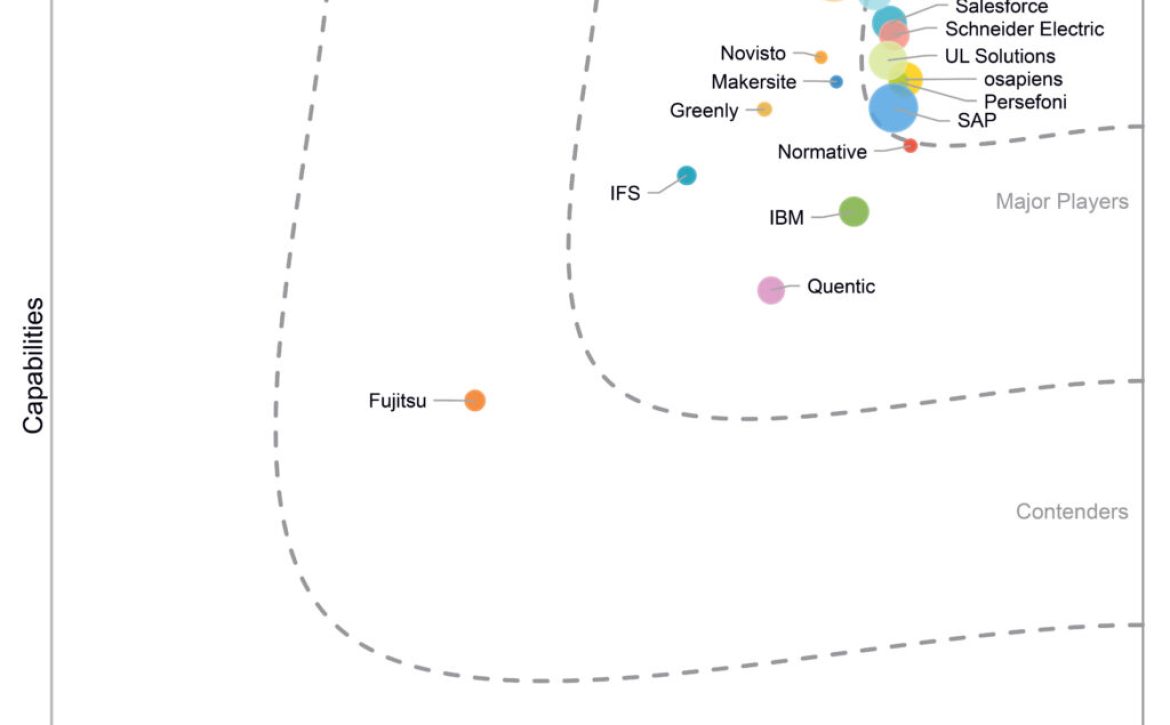
SAP is proud to be recognized as a Leader for the second time in the IDC MarketScape: Worldwide Carbon Accounting and Management Applications 2026 Vendor Assessment (doc #US54117126, April 2026). The report noted, “SAP’s ERP‑embedded approach unifies financial, operational, and sustainability data into a single, trusted foundation.”
The IDC MarketScape evaluated 17 application and software vendors delivering carbon accounting and management solutions. The IDC MarketScape examined how well they support credible emissions measurement, strong data governance, corporate-, product-, and supplier-level visibility, and standards-based reporting.
SAP is ideal for organizations seeking to run sustainability as a core business discipline by embedding carbon and broader sustainability management directly into ERP processes. This approach helps reduce the inefficiencies, risks, and inconsistencies created by fragmented, stand‑alone tools while enabling AI‑driven insights grounded in governed, transactional data.
We believe this recognition reflects SAP’s commitment to helping organizations act on carbon data across the enterprise. SAP Sustainability solutions support scalable carbon emissions calculation, regulatory reporting, supplier collaboration, and decarbonization planning while embedding emissions insights directly into business processes, investment decisions, and day-to-day operations.

Sustainability is an enterprise-wide responsibility and a strategic opportunity. Organizations must reliably measure, allocate, and act on carbon to manage risk, lower costs, and improve performance.
Regulatory requirements demand a shift from estimates to actuals. Assurance expectations continue to rise as evolving legislation penalizes the use of estimates, turning data gaps into direct financial exposure. Sustainability disclosures now require finance-grade evidence trails that spreadsheets cannot provide. With carbon increasingly impacting margins, cash, and liabilities, finance teams must find a way to forecast exposure and govern risk.
At the same time, leadership teams need a single, quantified view of carbon impact to understand implications, align priorities, and enable confident, informed decision-making.
This shift is already materializing through carbon pricing mechanisms. The EU’s Carbon Border Adjustment Mechanism (CBAM), now in its definitive phase, places a carbon price on certain imports based on their embedded emissions. It aims to promote fair competition and more sustainable global trade practices. Declaring companies can report using supplier actuals or EU default values. However, relying on EU default values can increase costs over time, creating a clear incentive to move to actual data to reduce exposure and protect market access.
As regulators set clearer expectations and assign a direct price to carbon, emissions now carry measurable financial risk. Companies must extend financial rigor into emissions quantification, applying the same discipline, controls, and assurance used in financial reporting.
Unlike point solutions built solely to calculate carbon emissions, the SAP Green Ledger solution can serve as the accounting layer for carbon. It applies the financial principles of double-entry accounting to carbon emissions, helping to bring structure, controls, and traceability to carbon data. Natively integrated with cloud ERP finance through SAP Business Technology Platform (SAP BTP), it enables companies to import, post, allocate, and analyze carbon emissions with the same rigor and discipline that finance applies to monetary accounting.
For ERP‑centric organizations, SAP Green Ledger can preserve and extend financial rigor into this regulated, non‑financial domain. It helps strengthen data integrity and auditability, support assurance-ready reporting, and create a consistent foundation for carbon data across the enterprise.
As a result, organizations can reduce compliance costs and regulatory risk, embed sustainability directly into cost centers and financial processes, and gain clearer insights to support better business decisions. Native integration makes the approach both trustworthy and scalable, allowing carbon to be governed, managed, and acted on as a core component of enterprise performance.
Robust businesses govern finance through strong controls, reconciliations, and audit trails, typically grounded in ERP systems. Until recently, carbon emissions existed outside this system, treated as a sustainability metric rather than a governed business variable. Bridging this gap requires an ecosystem that connects carbon calculation, data exchange, and accounting—anchored in finance. According to IDC, “The three-tier approach of better applications, richer data, and smarter AI enables companies to not only ‘record’ and ‘report’ their sustainability efforts but also take informed, data-driven actions.”
SAP supports this through a modular, ERP-native approach that adapts to different levels of maturity. Organizations can begin by calculating reliable corporate and product footprints using primary data wherever available, then bring those emissions into finance to post, allocate, and govern carbon with the same controls applied to monetary values.
As requirements grow, the ecosystem extends to supplier data exchange, consolidation across entities, advanced analytics, and scenario modeling—allowing companies to connect carbon with cost, performance, and planning. Sustainability reporting and disclosure are supported on top of this foundation, using governed, auditable data already embedded in enterprise systems.
SAP uses AI across the carbon lifecycle to help map and enrich emissions factors, streamline ESG report preparation, and analyze carbon data at scale—supporting stronger controls, faster reporting, and more informed financial decision‑making.
This is a defining moment for businesses as they take the critical step of integrating carbon management into finance. SAP remains committed to providing an ERP-integrated carbon ledger that empowers companies to comply with evolving regulations, govern performance with rigor, and make decisions that drive sustainable, long-term growth.
Learn more about carbon accounting at SAP.
Stephen Jamieson is chief marketing officer of SAP Sustainability.
See what’s new in Core Logistics for SAP Cloud ERP 2602, with three updates that improve inventory visibility, speed up internal stock movements, and enhance inbound processing with third-party warehouse systems.
In this video, Greg Hutcheon’s digital twin highlights new capabilities that support stronger end-to-end logistics execution and smoother goods flow across the supply chain.
📦 New Fiori app: Manage Physical Inventory Items List — A real-time, consolidated list of physical inventory items across documents in one place. Filter by processing status (for example, counted) to quickly spot what needs attention, then trigger follow-up actions like posting, recounting, or printing directly from the app.
✉️ Intra-plant stock transfers from reservations (movement type 311) — Stock transfers using movement type 311 can now be posted from both manual and MRP-generated reservations in the Manage Reservation Items app. Bulk-post multiple items in one go, while automatically creating the goods issue and goods receipt documents without extra steps.
📃 Third-party WMS integration: partial goods receipts for inbound deliveries — Enhanced integration supports posting or cancelling partial receipts with or without handling units, so putaway can begin after partial unloading. Quantities, weight, and volume update incrementally and finalize once all partial receipts are processed, keeping inbound delivery status aligned between SAP and the third-party warehouse system.
Chapters:
00:05 Welcome and introduction
00:38 ‘Manage Physical Inventory Items List’ SAP Fiori app
01:33 Support of intra-plant stock transfer reservations
02:27 Third-party warehouse management integration
03:25 Wrap-up and outro
• Read more about the latest innovations in SAP Cloud ERP 2602: https://community.sap.com/t5/enterprise-resource-planning-blog-posts-by-sap/core-logistics-in-sap-cloud-erp-2602/ba-p/14331232
• Check out the SAP Cloud ERP Community: https://sap.to/6055CIrvT
• Explore SAP Cloud ERP innovations: https://sap.to/6056CIrvp
Follow us on social:
LinkedIn: https://www.linkedin.com/company/sap/
Instagram: https://www.instagram.com/sap
Facebook: https://www.facebook.com/SAP/
Threads: https://www.threads.com/@sap
About SAP:
As a global leader in enterprise applications and business AI, SAP stands at the nexus of business and technology. For over 50 years, organizations have trusted SAP to bring out their best by uniting business-critical operations spanning finance, procurement, HR, supply chain, and customer experience. For more information, visit: https://www.sap.com/index.html
#SAPCloudERP #SCM #AI

Keep your AI, vector database, and ERP in sync with real-time events, not stale data. When every “order created” or “employee hired” event updates your vector DB as a subscriber, your LLM works from the same live truth as your commerce and ERP systems.
🎧 Full episode → https://sap.to/605277Ie4
#EventDrivenArchitecture #RealTimeData #SAP