What does it really take to scale AI and data across the enterprise?
Kunnal Khanna shares insights in the latest episode of Trending Chats.
🎧 More episodes of the Trending Chats podcast:
Watch on YouTube: https://sap.to/6050Cr6Qi
Listen on Spotify: https://sap.to/6052Cr6QY
Listen on Apple Podcasts: https://sap.to/6053Cr6Ql
Discover how SAP Cloud ERP 2602 strengthens Two‑Tier ERP landscapes with centralized master data governance and seamless integration to decentralized SAP Extended Warehouse Management (EWM).
In this update, the AI-generated avatar representing Chandrashekhar Tipre highlights two powerful innovations designed to help global organizations operate with cleaner processes, unified data, and scalable logistics, all while maintaining a cloud-first, clean‑core ERP strategy.
📘 Master data governance in a Two-Tier ERP landscape — With the 2602 release, SAP now enables centralized Master Data Governance (MDG) in a two‑tier environment. The “govern centrally, consume locally” approach ensures a single source of truth, accelerates subsidiary onboarding, reduces data discrepancies, improves compliance, and delivers more reliable reporting across the enterprise.
🏭 SAP Extended Warehouse Management integration with SAP Cloud ERP — As product portfolios and logistics networks grow, organizations need more sophisticated warehouse execution while still benefiting from a clean-core cloud ERP. Supported processes include outbound delivery execution, from order creation to picking, packing, loading, and goods issue, and inbound delivery execution from suppliers, covering unloading, checking, put-away, and confirmation back to ERP.
Chapters:
00:00 – Welcome & introduction
00:42 – Master data governance in a Two-Tier ERP landscape
01:40 – SAP Extended Warehouse Management integration with SAP Cloud ERP
03:47 – Summary & wrap‑up
• Read more about the latest Manufacturing innovations in SAP Cloud ERP 2602: https://sap.to/6054hg0Fm
• Check out the SAP Cloud ERP Community: https://sap.to/6055CIrvT
• Explore SAP Cloud ERP innovations: https://sap.to/6056CIrvp
Reduce technical debt and drive innovation with SAP Cloud ERP and clean core principles.
Outdated, heavily customised ERP systems slow innovation and increase complexity. To stay competitive, businesses need agility, real-time decision-making, and embedded Business AI at the heart of their ERP.
In this video, learn how the clean core approach in SAP Cloud ERP simplifies your landscape, reduces technical debt, and streamlines upgrades. Supported by the RISE with SAP methodology and integrated tools, clean core principles help you standardise processes, decouple extensions, and prepare for continuous change.
Discover how clean core enables faster innovation, easier adoption of SAP Business AI, and long-term ERP resilience, turning your system into a platform for growth.
Chapters:
00:00 – Why Agility Matters for ERP
00:26 – The Problem with Customisation
00:54 – What is Clean Core?
01:33 – How RISE with SAP Supports Clean Core
02:04 – Benefits: Simplicity, Speed, Innovation
Learn more about RISE with SAP. ➡️ https://sap.to/6052hbiSj
The goal is clear for Royal Greenland and its more than 40 plants and factories along the coast of Greenland and Atlantic Canada: a more standardized, cloud‑based landscape with significantly lower complexity, and a technological foundation that can support future AI initiatives.
SAP Cloud ERP: An out-of-the-box enterprise management solution
Headquartered in Nuuk and 100% owned by the Government of Greenland, Royal Greenland is modernizing its SAP platform and moving from on premise to cloud ERP in order to future‑proof core processes and unlock embedded AI across its SAP business applications.
“We are moving from our existing setup to SAP Cloud ERP and SAP Business Data Cloud because we want access to the capabilities you can consume on a cloud platform,” said Lars Bo Hassinggaard, CIO at Royal Greenland for more than 25 years.
The company brings high‑quality wild‑caught fish and shellfish from the North Atlantic and Arctic Ocean to consumers worldwide. It has been running SAP since 1998 but is now embarking on its most significant transition to date: migrating SAP ERP Central Component to SAP Cloud ERP while simultaneously elevating its business intelligence (BI) landscape into SAP Business Data Cloud and later transforming BI into SAP Datasphere.
The project follows the structured RISE with SAP framework, which consolidates platform transformation, operations, and the innovation cycle into one contract.
Lean, selective data transition: 90% fewer data to move
As part of the migration, Royal Greenland is reducing its data volume significantly using the “Lean Selective Data Transition” method.
“We are keeping 10 years of data and cleaning up, so we avoid outdated company codes and historical data that no longer create value,” Hassinggaard explained. “We’ve achieved a 90% reduction in what needs to be stored and migrated. The method combines data analysis, scoping, and standardized mapping objects in a guided process, ensuring that Royal Greenland only carries forward what is truly necessary, making the financials of the transformation more predictable and avoiding unnecessary complexity.”
Technology first, innovation next
Go‑live is planned for March 1, 2027. The year 2026 is dedicated to the platform lift itself. From 2027, Royal Greenland will begin building business‑driven improvements on top of the standardized core—for example, new user interfaces and process optimization using small AI agents within finance and administration.
“Royal Greenland and SAP have worked together since 1998, and we look forward to getting started on the technical part of the platform uplift this January,” Hassinggaard shared. “We’re keeping the transformation as simple as possible for now and will use 2027 to activate the benefits, such as improved data analysis, better user experience, and more efficient work processes.”
Royal Greenland is following a classic waterfall approach and has already established a “golden shell” as the basis for further configuration and retrofitting.
SAP is responsible for implementing the cloud solution, which will run on Microsoft Azure, initially in Sweden, with the option to move later to a Danish data center. External advisor Spektra Analytics has supported contract validation.
From in‑house experiments to standardized, “consumed” AI
Although Royal Greenland has already successfully experimented with its own AI solutions, including vision‑based projects in production, the strategic direction ahead is to leverage embedded, standardized AI data products from SAP and models built on the SAP Business Data Cloud and its semantic data layer.
“We are a company that prefers to tap into existing AI solutions rather than invent them ourselves,” Hassinggaard said. “It’s far more efficient for us. There is no reason for us to spend resources reinventing what SAP already provides. The initial focus will be on process optimization within administrative functions such as finance—small AI agents that can streamline daily work.”
Advice to others: Allocate more time, and understand your method
Hassinggaard is clear that the RISE with SAP contract, methodology, and preparation work require time and organizational maturity. His advice to other companies facing a similar cloud ERP decision: “Do it thoroughly—and allocate more time than you think. Study the methodology, pricing, and contracts. And bring a competent advisor on board.”
Ellen Vig Nelausen is an integrated communications expert for SAP Regional Communications.
SAP Business Data Cloud: Amplify the value of AI with your most powerful data
When operations run at global scale, data harmonization is mission-critical.
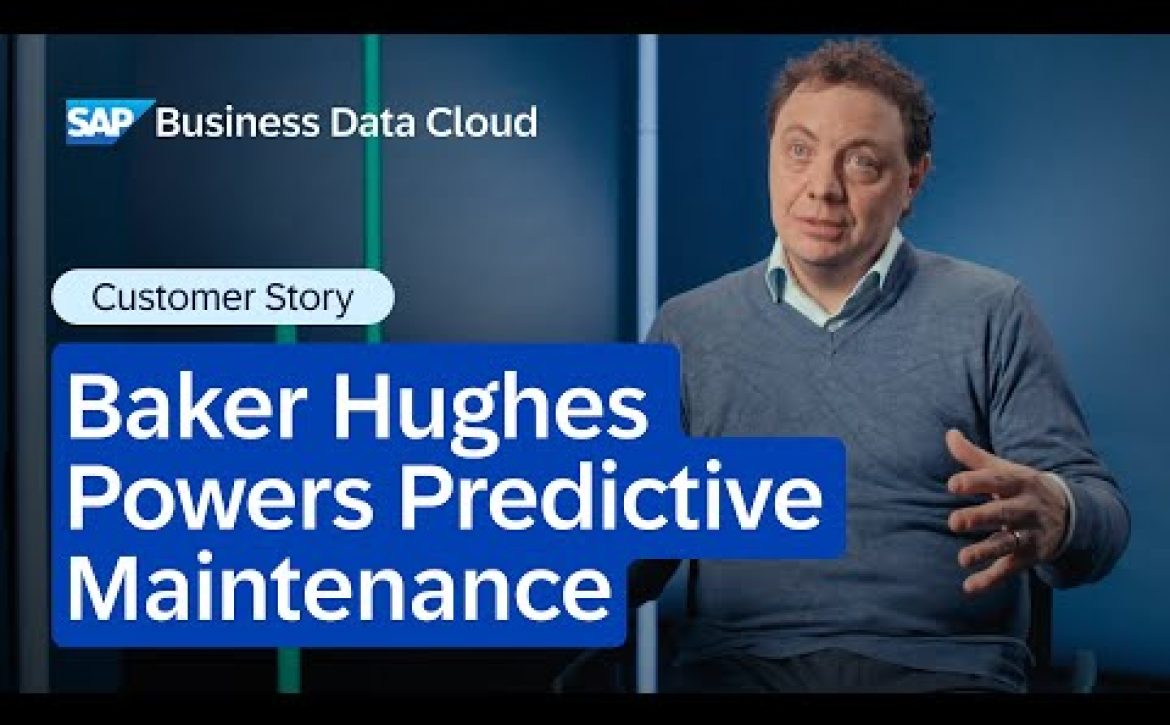
For Baker Hughes predictive maintenance and AI/ML aren’t aspirations, they’re the future. SAP Business Data Cloud enables the enterprise-scale and historical context required to make predictive maintenance accurate and reliable.
Learn more about SAP Business Data Cloud. 👉
https://sap.to/6051hPFC3
Dr. Autumn Krauss, Chief Scientist for SAP SuccessFactors, provides an overview of the second pillar of the predictions report by the Future of Work Research Lab: The Future of The Workforce.
This pillar examines who will perform this new work, highlighting the implications of demographic shifts, the evolving profile of a ‘successful worker’, and specific workforce segments and roles that will be particularly disrupted.
Get The Road Ahead: Predictions and Possibilities for the Future of Work report: https://sap.to/60567sWg6
We’ve made phenomenal progress embedding AI across the suite. By the end of 2025, we will have 400 SAP Business AI use cases delivered in our solutions, including 40 Joule Agents, building on 2,100 Joule Skills. Our existing more than 300 use cases translate into 441 million EUR value add for a company with 10 billion EUR annual revenue.
Advancements in AI agents, data, and platform capabilities equip developers with the tools to drive business transformation
This month at SAP TechEd Berlin, we announced a wave of SAP Business AI innovations all built on the same technology foundation that powers our embedded AI capabilities that we are now delivering to our customers and partners, allowing them to add even more value in the future.
We showed how the future of enterprise software is built on an AI-native architecture, powered by SAP app, data, and AI foundation. With this approach, we are enabling a platform shift across the tech stack in a non-disruptive fashion, empowering developers to work faster and smarter using the frameworks and tools of their choice.
SAP HANA Cloud and SAP Business Data Cloud: powering our AI-native future
SAP HANA Cloud is the database for SAP’s AI-native software architecture and the foundation of our broader data fabric strategy. At SAP TechEd, we announced new AI capabilities for SAP HANA Cloud that spur AI innovation.
For example, Model Context Protocol (MCP) support for SAP HANA Cloud is now generally available. This provides direct access to rich multi-model engines. Agents can be grounded in full enterprise data context: navigating relationships across customers and suppliers, understanding geographic dependencies through spatial data, and performing semantic searches through vector embeddings — all within a single in-memory engine.
We’re also expanding SAP HANA Cloud knowledge graph engine capabilities (Q1 2026) so customers can automatically generate knowledge graphs from SAP HANA Cloud metadata. What used to take weeks of manual modeling can now happen automatically in minutes. But that’s not all. We’re also enabling agentic memory in SAP HANA Cloud. With long-term memory, AI agents can memorize past inputs and decisions — learning and remembering just like humans — and become continuously smarter.
These advances show that SAP HANA Cloud is truly powering an AI-native future. Read more here.
Bringing together the power of SAP BDC and Snowflake
We are bringing the power of Snowflake together with SAP Business Data Cloud (SAP BDC), calling it SAP Snowflake. This partnership enables zero copy data sharing with Snowflake via SAP BDC Connect.
Enterprises already using Snowflake today can leverage SAP BDC Connect to integrate their existing instances of Snowflake with SAP BDC, giving them seamless, real-time access to combined, semantically rich SAP with non-SAP data in SAP BDC. SAP Snowflake will be made generally available in Q1 2026, and SAP BDC Connect for Snowflake in H1 2026. Find more information here.
SAP-RPT-1: a new category of AI models
One of our most exciting announcements at SAP TechEd was the launch of our first enterprise relational foundation model SAP-RPT-1, pronounced: “rapid one.”
Businesses run on structured data. But large language models (LLMs) struggle with a general understanding of table structures and associated semantics. This requires the use of machine learning, or “narrow AI,” for tasks like classification, regression, and more. But classical machine learning necessitates training a model on each task, which easily can lead to hundreds of separate models.
SAP-RPT-1 puts them all into one single, pre-trained model that understands relational business data and predicts business outcomes. Unlike language, image, or video models, SAP-RPT-1 accurately predicts business based on tabular data such as payment delays, supplier risks, upsell opportunities, customer churn risk, and more.
We believe that SAP-RPT-1 is a super capable foundation model today. It provides up to 2x better prediction quality compared to narrow models and 3.5x better prediction quality as compared to LLMs. Dive deeper in this SAP Community blog.
SAP-RPT-1 comes in three versions. SAP-RPT-1-small is for super-fast predictions and SAP-RPT-1-large is for highest accuracy. Both will be generally available in Q4 2025 in the generative AI hub in AI Foundation. SAP-RPT-1-OSS is the open-source version, available in Hugging Face and GitHub.
You can test SAP-RPT-1 today with your data or our use case data samples via no-code UI or via API in the new SAP-RPT-1 playground, an intuitive and interactive space to test for free and open to everyone Access the playground at rpt.cloud.sap and learn more about new models here.
We are continuously adding new capabilities to AI Foundation and models to the generative AI hub, empowering developers to experiment with orchestration tools and leading models to scale AI development and productization across SAP and non-SAP environments. For example, Perplexity is now generally available in the generative AI hub, so users can correlate business data with external data from the internet. Evaluation Services and Prompt Optimizer, in close collaboration with NotDiamond, are now also generally available in AI Foundation, freeing up users to adopt the most appropriate model for their use cases without the need for rewriting prompts. Read more here.
Digital sovereignty made in Germany, for Europe
Digital sovereignty is becoming increasingly important, reflecting the need for regional AI services that align with local regulations, standards, and values. As an example, Europe will benefit from its own strong, trustworthy infrastructure to support innovation, data protection, and ethical AI.
AI Foundation, including various models and all the services we offer, is already available on our own cloud infrastructure. As a next step, we are expanding our SAP Cloud Infrastructure offering in our SAP data center in Walldorf, Germany, to Deutsche Telekom through the Industrial AI Cloud project, providing secure, high-performance infrastructure for AI innovations across public institutions, defense, and society. SAP delivers SAP Cloud Infrastructure, SAP Business Technology Platform, and applications — including our AI Foundation with frontier AI from Mistral, Cohere, and others — on Telekom’s Munich data center. Both companies uphold the highest standards of data protection, security, and reliability.
This marks a milestone as more European companies join the Industrial AI Cloud project, advancing applied AI across Europe with trusted, business-embedded solutions that unlock the full potential of industry data. See the announcement here.
Enabling customers to build, extend, share, and orchestrate AI agents
To help manage Joule Agents and Joule skills, we have introduced the concept of AI Assistants — role-based AI teammates, accessed through Joule — like a financial assistant that brings together agents for cash collection, treasury, and more. We will provide AI Assistants in Joule for every core business role, offering our users an agentic experience like never before.
Out-of-the-box Joule Agents are powerful, but we know that every company has unique requirements. We believe AI should adapt to users’ systems, not the other way around, so we are enabling them to use Joule Studio to extend SAP’s pre-built agents with custom fields, tools, and reasoning logic while retaining all the deeply grounded integration capabilities SAP provides. Joule Studio also provides low-code tools to build custom agents that integrate with all other Joule Agents, Joule skills, and SAP BDC.
Using a low-code approach, users can build Joule Agents visually with natural language and drag-and-drop. But we also want to meet the needs of developers who want ultimate flexibility. Our pro-code approach gives developers the freedom to build agents using the agentic framework of their choice — for example, LangGraph, CrewAI, Google’s Agent Development Kit, and more. SAP Cloud SDK for AI now supports agentic development, ensuring these pro-code agents can be seamlessly integrated and giving developers the best of both worlds: deep integration and full flexibility.
No matter how you want to build agents, an important question is how to integrate them into the larger ecosystem beyond SAP. We’re making Joule Agents fully compatible with the agent-to-agent (A2A) protocol soon, so agents can discover and collaborate with each other.
A2A exposes rich semantics describing an agent’s capabilities, allowing both SAP and third-party agents to work together seamlessly. We are collaborating with partners — AWS, Google, Microsoft, ServiceNow, and more — to standardize this protocol for full interoperability. This capability will allow Joule to orchestrate tasks across multiple agents, both SAP and non-SAP, increasing automation and productivity across the enterprise. Read more here.
To manage and govern agents across the enterprise, SAP LeanIX agent hub is now generally available, providing centralized control of SAP and non-SAP agents. In addition, agent mining with SAP Signavio is available now for tracing agent actions, benchmarking against KPIs, and identifying bottlenecks or opportunities for agents to further improve business.
No SAP TechEd without ABAP news
The ABAP journey continues with SAP-ABAP-1, which will be available in the generative AI hub in Q4 2025. Trained on ABAP code, it is designed to build ABAP AI use cases, enabling developers to build smarter, custom AI solutions in modern ABAP code. Dive into the ABAP news in this SAP Community blog.
In addition, ABAP Cloud development is coming to Visual Studio (VS) Code. The new ABAP Cloud extension for VS Code delivers a streamlined, file-based development experience with built-in AI assistance. Powered by an ABAP language server, it will initially support SAP Fiori UI service development and expand to additional ABAP Cloud scenarios over time. This brings ABAP development into the same environment where developers already build with UI5 and CAP. General availability is planned for Q2 2026. Read more in this SAP Community blog.
What’s next: embodied AI and quantum
SAP TechEd is always an opportunity to look to the future. This year, that future includes not just humans, but also autonomous devices, including humanoid robots.
By integrating Joule Agents natively with robots, SAP is bringing business logic into the physical world, enabling a wide range of autonomous devices to operate with enterprise context. We highlighted our strategic partnerships with robotics companies and system integrators to serve customers like Sartorius, Bitzer, and Matur Fompak, demonstrating how our expanding physical AI ecosystem enables robots to understand business processes and execute complex tasks autonomously.
Early proof-of-concept deployments show Joule successfully integrated with SAP business applications and autonomous systems across asset performance, logistics, field services, and warehouse operations. While still in the pioneering stage, these implementations illustrate how SAP is extending Joule to serve both human users and autonomous devices, shaping the future of enterprise AI.
AI is a new compute paradigm that changes everything. But there is another compute paradigm on the horizon: quantum computing. It’s early days, but SAP is driving the future of enterprise computing with a vision to help businesses get ready for quantum computing.
SAP is not building quantum hardware; instead, we are focusing on creating quantum algorithms for business applications. These solutions are simple to deploy — on when needed, off when not — and are designed to be hardware-agnostic, collaborating with partners such as IBM to ensure seamless integration without re-platforming. This approach will enable organizations to unlock operational efficiency and drive better business results at enterprise scale.
I couldn’t be more excited about what’s next for our customers’ future as we bring SAP’s AI-native architecture to life.
Philipp Herzig is CTO of SAP.
SAP TechEd: Read news, stories, and coverage from the event
A rockstar, a CEO, and a teenager walk into a room. It’s not the start of a joke, but the essence of a decade-long partnership between SAP and We Are Family Foundation (WAFF). Together, they’ve built a model that shows how young leaders can move from token voices to strategy shapers, from climate action to AI regulation. And the results offer practical lessons for every company looking to future-proof their business.
The challenges facing businesses today demand fresh ideas, digital fluency, and bold thinking. These are the qualities youth leaders bring in spades. For more than 20 years, WAFF, co-founded by music legend Nile Rodgers and his lifelong partner Nancy Hunt, has mentored young leaders from more than 100 countries. Over the past decade, WAFF and SAP have partnered to deepen that global impact, moving youth voices from symbolic gestures to central drivers of innovation.
From roundtables where teenagers challenge senior executives, to shaping initiatives at the UN Climate Change Conferences and the World Economic Forum annual meeting in Davos, WAFF and SAP have developed a blueprint for embedding youth-led ideas into corporate strategy, supply chains, and culture while delivering measurable business and societal impact.
Here are five lessons from the collaboration on how intergenerational partnerships unlock value for both business and society.
1. Problems that span generations require leadership that does too
Traditional business models silo generations: executives design the strategy, then hand it down for others to execute. In today’s world, that handoff wastes momentum and risks irrelevance.
WAFF’s 2024 global study, Collaborating Across Generations, found that when senior leaders and young changemakers co-create from the start, ideas are stress-tested in real time. This results in strategies that are bolder, more resilient, and more adaptable to fast-moving challenges.
In short, instead of passing the baton on the final leg, build your strategies together from the starting line.
2. Intergenerational collaboration is a smart strategy
Youth leaders aren’t just “future leaders.” They already bring expertise that legacy teams lack. Digital natives understand platforms, trends, and user behavior instinctively. They also bring the urgency of living through the climate crisis and global inequality.
Take WAFF Youth Leader Arunima Sen, who uses AI to track plastic debris and apply data-driven models to malnutrition. Her work bridges grassroots innovation with scalable solutions, which is exactly the kind of thinking that can de-risk corporate strategies and ensure relevance from day one.
SAP is powering equitable access to economic opportunity, education and employment, and the circular economy
For companies, including youth voices isn’t an act of goodwill; it’s strategic de-risking.
3. Where business, policy, and community align, impact follows
Global challenges cannot be solved in silos. The biggest breakthroughs happen when companies, policymakers, and social entrepreneurs collaborate.
One example is Mozamel Aman, a young Afghan impact entrepreneur and immigrant in Germany, who built StartSteps to create inclusive employment pathways. In 2023, he began a partnership with SAP Germany connecting women to the opportunity for tech jobs in the SAP ecosystem, blending corporate support with government stipends. His organization leverages government stipends from the Bundesagentur für Arbeit (Federal Employment Agency) to train unemployed individuals and connect them with job opportunities.
Germany’s technical talent gap is nearly the same size as its unemployed refugee population. Partnerships like this solve social challenges while closing critical business gaps in talent and innovation.
4. Purpose, profit, and the power of inclusion
Authentic inclusion of young experts, especially Gen-Zs, builds credibility, trust, and stronger business performance.
Employees notice:
Engagement:Only 31% of U.S. employees were engaged in 2024, the lowest level in a decade.
Retention risk: Employees who feel aligned with their company’s mission and values are much more likely to stay, while misalignment drives turnover.
Business impact: Highly engaged employees drive up to 21% higher profitability.
WAFF’s global study findings underscore these statistics, indicating that young people see inclusivity and accountability as non-negotiable factors. By authentically including youth, organizations set a standard of purpose that fuels stronger engagement, deeper loyalty, and, ultimately, higher profitability.
5. Strategic procurement for social good
The most powerful financial corporate tool for change isn’t in giving, but perhaps in spending.
SAP Business Network facilitates US$6.1 trillion in annual commerce. Compare that to an average corporate social responsibility (CSR) budget of $12 million among FTSE 100 companies, and the potential is clear: redirecting even a fraction of procurement spend toward youth-led, sustainable enterprises can transform impact at scale.
Watson Institute, with leadership from former WAFF alumni, James Okina, has recently published a new research report on the opportunity for young social entrepreneurs in impact-led procurement. The report found that young, impact-driven entrepreneurs who succeed in selling to corporations report an average revenue increase of $170,187.50, while those who fail to secure deals lose between $7,000 and $300,000 in potential revenue. Okina offers that he “doesn’t understand why youth involvement in business is still so controversial.” SAP and WAFF agree. By integrating expert impact entrepreneurs who happen to be young into procurement pipelines, for example, companies embrace innovation and align with corporate goals and values while maintaining quality, price, and performance. It is a smarter, systemic approach than writing philanthropic checks.
A blueprint for the next decade
Over the past decade, SAP and WAFF have shown that partnering with young impact leaders creates a true competitive edge.
Companies that co-create with the next generation design strategies that are bolder, more relevant, and more sustainable. They build workforces that are engaged, trusted, and innovative. They align business goals with societal needs in ways that deliver measurable results—and, across generations, they operate on longer runways to implement lasting solutions.
Businesses that win in the next decade won’t just listen to youth; they will build with them. And that’s smart business.
Jennifer Beason is global director of Corporate Social Responsibility at SAP. Annie Greene and Jamie Roach are global program leads at We Are Family Foundation.
Connect with us on LinkedIn to stay up-to-date with all things SAP
See how Joule Studio in SAP Build lets you build custom skills and AI agents – connecting to SAP data, automations, and approvals in minutes.
In this SAP TechEd keynote demo, we extend Joule with a real workflow: configuring a Joule skill that retrieves process data, triggers automations, and returns user-ready responses. In Joule Studio, you define the skill’s description (for precise triggering), set input/output parameters, and choose actions such as calling backend APIs, sending messages, or invoking process automation – all grounded in SAP context.
You’ll see the skill orchestrate an HR new-hire flow: reacting to a SAP SuccessFactors event, surfacing the latest instance, listing approval tasks with owners and due dates, and even approving the task – end-to-end monitoring included. Then we switch to Agent Builder in Joule Studio to create a custom AI agent for relocation benefits. We choose models, add pre/post-processing, attach tools (e.g., calculator), ground the agent with policies via SAP AI Core document sources, and compose an email through the previously built skill, before releasing and deploying.
For developers, this aligns with SAP’s newest agentic capabilities on SAP BTP – open, extensible building blocks (skills, agents, integrations) and developer tooling to move from idea to impact faster, while keeping governance central.
Speakers:
Rekha D R, Developer Advocate, SAP
Daniel Wroblewski, Developer Advocate, SPA
00:02 – Intro: Extend Joule with custom skills & agents
00:21 – Create a Joule skill in Joule Studio (triggering, I/O)
01:20 – Orchestrate actions & process automation; monitor new-hire flow
03:37 – Build a custom AI agent (relocation benefits): models, tools & grounding
05:51 – Deploy & run: calculate costs, compose/send email, summarize
Watch all SAP TechEd replays: https://sap.to/6055737cL
Explore Joule Studio in SAP Build: https://sap.to/6056737c0
Follow us on social:
LinkedIn: https://sap.to/6057737cF
Instagram: https://sap.to/6058737c2
Facebook: https://sap.to/6059737cN
Threads: https://sap.to/6050737c4
About SAP:
As a global leader in enterprise applications and business AI, SAP stands at the nexus of business and technology. For over 50 years, organizations have trusted SAP to bring out their best by uniting business-critical operations spanning finance, procurement, HR, supply chain, and customer experience. For more information, visit: https://sap.to/6051737cf
See how quantum concepts can tackle hard optimization problems, brought to life in an SAP TechEd demo connected to trusted SAP data on SAP BTP.
In this SAP TechEd session, we explore how quantum computing and quantum-inspired methods can help address complex enterprise challenges, like scheduling, routing, and resource allocation, where classical approaches struggle at scale. You’ll see a live demo that frames a real-world optimization problem, prepares the data pipeline, and runs the workload on a simulator with the option to route jobs to supported quantum backends. Throughout, we show how SAP Business Technology Platform (SAP BTP) provides the governance, security, and integration needed for experimentation without disrupting core systems.
We walk through problem encoding, parameter tuning, and interpreting results in a business context. The demo also covers how to compare classical baselines to quantum-inspired heuristics, evaluate solution quality, and visualize trade-offs (speed, cost, accuracy) before you graduate a proof of concept to pilot. Whether you’re in IT architecture, data science, or an innovation office, you’ll come away with a pragmatic view of where quantum stands today—and how to prepare your organization with the right data foundation, integration points, and guardrails on SAP BTP.
Speaker: Philipp Herzig, Chief Technology Officer, SAP
00:02 – Why quantum for logistics
00:13 – Truck-loading example & process kickoff
00:39 – Optimization engine on SAP BTP; auto-generate quantum circuit
01:17 – Run on a quantum computer & get results
01:36 – Embed in enterprise stack: quantum + AI + cloud
Watch all SAP TechEd replays: https://sap.to/605473WIe
Explore SAP Business Technology Platform: https://sap.to/605573WI5
Follow us on social:
LinkedIn: https://sap.to/605673WIg
Instagram: https://sap.to/605773WI9
Facebook: https://sap.to/605873WIi
Threads: https://sap.to/605073WIY
About SAP:
As a global leader in enterprise applications and business AI, SAP stands at the nexus of business and technology. For over 50 years, organizations have trusted SAP to bring out their best by uniting business-critical operations spanning finance, procurement, HR, supply chain, and customer experience. For more information, visit: https://sap.to/605273WIm