SAP Deepens European Cloud Sovereignty Offering to Unlock Regional AI Innovation

Decades of SAP’s experience in securing mission-critical operations now powers the demands of sovereignty, regulation, and AI-driven growth


WALLDORF — SAP SE (NYSE: SAP) today announced a comprehensive new approach to digital sovereignty and AI innovation.

SAP Sovereign Cloud: Embrace the cloud without compromise

Expanded offerings within the SAP Sovereign Cloud portfolio give European customers access to a comprehensive technology stack, including SAP Cloud Infrastructure and SAP Sovereign Cloud On-Site. With the announcement, SAP sets a new standard for secure, compliant, and scalable innovation, reinforcing digital sovereignty as a core element of Europe’s technological resilience and strategic autonomy.

“Europe’s leadership in the next era of digital innovation—especially in AI—will depend on how effectively we apply AI to solve differentiated industry use cases,” said Thomas Saueressig, Member of the Executive Board of SAP SE, Customer Services & Delivery. “With our expanded SAP Sovereign Cloud offering, SAP is unlocking access to the full spectrum of cloud innovations and AI capabilities for all markets and industries—including the public sector and regulated environments—while ensuring these advancements are delivered in a sovereign framework and on customers’ own terms.”

Deployment choices for every security profile

With the expansion of SAP Sovereign Cloud, customers can choose from new deployment models that offer control across infrastructure, platform, and software tailored to their specific regulatory and operational needs. This flexibility enables organizations to innovate securely and in compliance with local laws while maintaining the freedom to scale on their own terms. SAP Sovereign Cloud solutions are available on:

  • SAP Cloud Infrastructure (in Europe): SAP Cloud Infrastructure is SAP’s Infrastructure-as-a-Service (IaaS) platform that is developed and operated with open-source technologies within SAP’s data center network. All data is stored within the EU to maintain compliance with European data protection regulations.
  • SAP Sovereign Cloud On-Site: SAP offers SAP-operated infrastructure within a customer-owned or customer-selected data center. This solution delivers the highest levels of data, operational, technical, and legal sovereignty while maintaining SAP cloud innovation and architecture.
  • Delos Cloud: SAP offers Delos Cloud in Germany, a secure and sovereign cloud that supports the flexible and rapid transformation of the public sector, to meet country-specific sovereignty requirements.

Long-term Investment in Europe’s digital resilience

With a long-term investment of more than €20 billion Euros, SAP is making digital sovereignty a strategic priority. This commitment reflects SAP’s determination to support Europe’s digital autonomy through more secure, local, and regulation-compliant cloud solutions tailored to the public sector and highly regulated industries.

With SAP Sovereign Cloud, customers not only gain infrastructure control but also unlock the full potential of cloud solutions from SAP. The offering enables organizations to run their SAP Business Suite in sovereign environments while benefiting from continuous innovation cycles, including SAP Business Technology Platform (SAP BTP) and embedded SAP Business AI capabilities. This helps ensure that customers can innovate more securely and locally without compromising on the pace or depth of transformation.

“The digital resilience of Europe depends on sovereignty that is secure, scalable and future-ready,” said Martin Merz, President, SAP Sovereign Cloud. “SAP’s full-stack sovereign cloud offering delivers exactly that, giving customers the freedom to choose their deployment model while helping ensure compliance up to the highest standards.”

Today, SAP Sovereign Cloud is available in multiple countries with substantial additions to come​, supported by hundreds of localized delivery experts and a broad set of certifications. The offer helps ensure full-stack sovereignty across data, operational, technical, and legal dimensions, empowering customers to maintain control, meet regulatory requirements, and innovate with confidence.

Visit the SAP News Center. Get SAP news via LinkedIn and Bluesky.

Sign up for the SAP News Center newsletter to get stories and highlights delivered straight to your inbox each week

About SAP

As a global leader in enterprise applications and business AI, SAP (NYSE:SAP) stands at the nexus of business and technology. For over 50 years, organizations have trusted SAP to bring out their best by uniting business-critical operations spanning finance, procurement, HR, supply chain, and customer experience. For more information, visit www.sap.com.

Note to editors:
To preview and download broadcast-standard stock footage and press photos digitally, please visit www.sap.com/photos. On this platform, you can find high resolution material for your media channels.

For customers interested in learning more about SAP products:
Global Customer Center: +49 180 534-34-24
United States Only: 1 (800) 872-1SAP (1-800-872-1727)

For more information, press only:
Dana Roesiger, + 49 6227 7 63900, dana.roesiger@sap.com, CET
SAP Press Roompress@sap.com

This document contains forward-looking statements, which are predictions, projections, or other statements about future events. These statements are based on current expectations, forecasts, and assumptions that are subject to risks and uncertainties that could cause actual results and outcomes to materially differ. Additional information regarding these risks and uncertainties may be found in our filings with the Securities and Exchange Commission, including but not limited to the risk factors section of SAP’s 2024 Annual Report on Form 20-F.
© 2025 SAP SE. All rights reserved.
SAP and other SAP products and services mentioned herein as well as their respective logos are trademarks or registered trademarks of SAP SE in Germany and other countries. Please see https://www.sap.com/copyright for additional trademark information and notices.
Please consider our privacy policy. If you received this press release in your e-mail and you wish to unsubscribe to our mailing list please contact press@sap.com and write Unsubscribe in the subject line.

SAP Unleashes the Power of Its Own Solutions to Meet Sustainability Goals

How many companies do you know that use their own products? Not for beta testing, but for the tasks they are designed to carry out? This is exactly what SAP is doing, being both a developer and practitioner of its sustainability software that helps enable and empower companies to integrate sustainability into their operations.

Sustainability is an essential element of SAP’s purpose to help the world run better and improve people’s lives. Our approach is grounded in creating positive economic, social, and environmental impact, always within the limits of planetary boundaries and in full respect of human rights. With the ambition to drive sustainability beyond our net-zero 2030 goals and a portfolio that supports broader action areas such as holistic steering and reporting, ethical business conduct, and social responsibility, it was a natural progression for SAP to become its own customer.

As both an exemplar and enabler, we aim to make our targets and purpose a reality. At the same time, by testing our IT solutions to the limit, we share the lessons learned along the way with the product development teams to continuously improve the SAP Sustainability portfolio.

SAP runs SAP Green Ledger: ERP software for carbon accounting

SAP shares its clients’ challenges

SAP faces many of the same sustainability challenges as our customers, such as data collection, data management, and compliance with regulatory requirements. Like the many organizations we support, SAP must manage huge volumes of sustainability data, including carbon footprints, material flows, and ESG metrics, working to ensure accuracy, consistency, and accessibility across the value chain. Demands on IT systems are high. They must grapple with collecting, integrating, and sharing data while also assuring quality, traceability, and auditability.

The evolving regulatory landscape represents another challenge, requiring SAP and other organizations to adapt and leverage their systems for compliance and reporting. IT solutions must be scaled and adjusted rapidly to these changing regulations and be able to collaborate seamlessly with supply chain partners.

Beyond these requirements, companies need sustainability data to provide actionable insights to support decision-making and respond to stakeholders. Meeting these challenges head-on requires an IT infrastructure that is innovative, scalable, and designed to evolve as the business advances on its sustainability journey.

“SAP runs SAP” implementation

In practice, SAP’s systems are designed to empower customers to measure, report, and act on their sustainability goals. To enable this, solutions are built into core business systems such as SAP S/4HANA Cloud Public Edition and SAP Business Technology Platform (SAP BTP). This helps ensure a solid data foundation and flexible integration of data sets from various business areas such as procurement, finance, supply chain management, and product design. Sustainability-focused tools like SAP Sustainability Control Tower, SAP Sustainability Footprint Management, and SAP Green Ledger can then provide the data, analytics, and insights needed to help drive sustainable decision-making.

“By implementing SAP Sustainability Control Tower and SAP Green Ledger across our reporting ecosystem, we aim to elevate sustainability management to the same standard as financial reporting,” said Dr. Christopher Sessar, Chief Accounting Officer, SAP SE. “These powerful tools will not only streamline and automate our ESG regulative compliance efforts but also generate actionable insights that drive strategic decision-making, accelerating our journey toward measurable sustainability outcomes and long-term environmental value creation.”

Implementation lessons

SAP’s approach has evolved since the first implementation of SAP Sustainability Control Tower in 2022. Early lessons included the need to collect emissions data in a consistent manner, anchor the project in its net-zero program governance, and expand the scope of the project beyond carbon footprint data to include other environmental topics for a more holistic approach.

The next question concerned the IT architecture, organized into three layers. The top layer relates to the collection of raw sustainability, financial, and operational data from various source systems. The middle management layer processes and standardizes the data. Finally, a bottom planning and reporting layer delivers insights for sustainability decision-making.

The rollout began by uploading carbon footprint data into SAP Sustainability Footprint Management across one company code and will increase to five company codes before the system goes live in Q3 of this year. It is useful to note the iterative approach our team has taken, which has allowed for the collection and integration of data from different sources and the testing of use cases including our ability to support businesses amid changes such as those recently initiated by the EU’s new Omnibus package.

Read in more detail about how SAP runs SAP Sustainability.


Matthias Medert is global head of Sustainability at SAP SE.

Get the latest SAP news delivered to your inbox once a week

Engineer using tablet near oil refinery at night.

ONTRAS Enhances Reliability and Worker Safety with SAP Field Service Management

ONTRAS Gastransport GmbH is a transmission system operator overseeing 7,700 kilometers of pipelines. The company is responsible for transporting natural gas all over East Germany and prioritizes reliability for its customers.

Achieve efficient and sustainable field service operations with AI-powered insights, advanced scheduling, and optimized workforce management

As the company expanded, ONTRAS sought better visibility across its operations, especially those carried out by service providers. Manual communication interfaces led to information loss, hindering operational efficiency and service quality. To address these challenges, ONTRAS aimed to improve field operations with offline capabilities, ensuring better data integrity for uninterrupted operations and much faster response times.

After thorough research, the German utility company implemented smart forms within SAP Field Service Management to capture and monitor real-time data from its field operations. Convista supported ONTRAS throughout the implementation process, serving as the interface to SAP and customizing and enhancing SAP Field Service Management, including customizing the SAP Field Service Management, connector for SAP ERP, in order to meet the company’s specific requirements.

Faster process runtime with improved data visibility at ONTRAS

Working with a large external staff and a dispersed system led to a significant data gap.

Ines Kurmies, an SAP specialist at ONTRAS, explained: “Our internal staff extracted data from SAP, while external staff used a manual Excel logging process, which made it difficult to understand the status of orders.”

The external staff was receiving the orders through the SAP system, but it was not possible to track their work. Feedback was received within the SAP system only after completion, and the logs were uploaded to SAP, which meant the company lacked visibility into the steps in between.

ONTRAS needed a solution to maintain maintenance plans and functional locations within SAP while providing access to external service providers via an interface. The company sought comprehensive data integration and a single source of truth with real-time data monitoring.

With the full integration of logs and smart forms, ONTRAS can now guide technicians through tasks, capture data, and provide a structured way to document the inspection process in real-time. Integrating these disparate systems created a single source of truth, helping the company eliminate inefficiencies and data gaps, enabling faster process runtime.

“With the full integration of logs and smart forms, we achieved a much faster checklist revision,” Eva Scholl, a maintenance engineer at ONTRAS, shared. “Now we have an end-to-end digital process, so the process runtime in itself is one of the greatest benefits.”

Real-time data and comprehensive tracking are crucial for preventative maintenance, rapid response to issues, and compliance.

During a gas pipe fitting inspection, the company’s system creates an order dispatched to a service provider, the responsible specialist, who then assigns it to an assembler. The assembler inspects the fittings, logging their work using smart forms in SAP Field Service Management. This information is sent back to the responsible specialist, who reviews and completes the order. Finally, an audit report is generated as a PDF and transferred to SAP Plant Maintenance Rapid Mart, where the company can view and process the inspection results. Without this real-time data flow, a faulty fitting might go unnoticed, leading to a gas leak and potential safety hazard.

The company can see what order is dispatched when it is processed and what the status is.

“Now, field sales representatives have more information and experience less information loss because they directly see the order from us — exactly what we want to see,” Scholl added. “Previously, there was a manual communication interface, which inevitably led to information loss.”

Running safe, efficient, compliant operations in remote and challenging environments

For utility companies, inspecting and maintaining natural gas pipelines in remote rural areas is crucial. These locations often suffer from unreliable internet connectivity, leading to potential data gaps.

ONTRAS has significantly improved its field operations by implementing offline capabilities. Technicians can now conduct inspections, record findings, and complete digital checklists directly on their mobile devices on-site, even without internet access. Once back in an area with connectivity, all data automatically syncs to the central system, updating records and informing supervisors of completed work.

“With SAP Field Service Management, there is the app that can be connected to all applications,” Kurmies added. “We achieved the broadest coverage of our use cases for the first time, with many already covered by the standard product.”

As the company continues to grow, the German Association of Gas and Water Compartments regulations are a central component, implemented to guarantee the technical security of the installations and the security of supply.

With SAP Field Service Management, the company can now operate offline remotely without internet coverage and maintain the patching and checklist functions. This is especially important for technicians in remote areas lacking internet connectivity. Technicians must adhere to strict safety protocols and document every step. Offline checklists and patching functions ensure that no steps are missed, even in remote locations.

“This was the big challenge that we are also becoming more and more digital,” Kurmies further explained. “You also want to provide digital protocol templates and we simply reached our limits.”

Convista played a crucial role in guiding the company through the SAP implementation process, acting as the interface between SAP and the company while adjusting SAP Field Service Management to meet ONTRAS’ specific needs.

Heiko Winkler, IT manager at ONTRAS, highlighted the reliability and commitment of Convista as an implementation partner: “Convista is an exceptionally reliable and committed partner. Even in the second phase of the project, which was initially considered high-risk, their expertise and dedication ensured a successful implementation.”

Winkler noted the significant creativity applied to advising on the implementation, especially considering the initial uncertainty about its feasibility. Additionally, the company collaborated with Proaxia Consulting Group for the technical implementation of the SAP Field Service Management, connector for SAP ERP, and made several adjustments to the setup and error messages. The entire implementation took approximately a year and a half.

The company currently uses SAP ERP Central Component and is transitioning to SAP S/4HANA, having already implemented SAP Field Service Management. Winkler noted that they strategically rely on cloud products: “Our philosophy is not cloud only, but cloud first.”

ONTRAS aims to advance further with smart forms and continue to expand its SAP S/4HANA implementation in the near future.

Learn more about the full transformation journey at ONTRAS here.

Sign up for the SAP News Center newsletter to get highlights delivered to your inbox each week

Bridging the Skills Gap: How SAP Learning Hub, Student Edition Empowers the Next Generation

The next generation of workers is stepping into an environment unlike anything that came before it—where AI tools evolve faster than curriculums and job descriptions shift with every product update. According to a LinkedIn study, 34% of employees—particularly younger professionals—say they feel overwhelmed by the pace of change, citing a desperate need for support in adapting to new technologies and digital ways of working.

In response to this mounting pressure, SAP has launched SAP Learning Hub, student edition—a no-cost global program that can provide students and academic educators with all the curated resources needed to get and stay certified and stand out with proven skills in the latest SAP innovations. It offers guided learning resources, including expert-led live sessions, access to practice systems to get hands-on experience, and two SAP Certification exam attempts.

Empower your potential with SAP Learning Hub, student edition

Available globally since April 2025, the program is designed to close the gap between classroom theory and real-world readiness, giving students access to all resources they need to future-proof their career with the latest skills and credentials.

Closing the global skills gap—one student at a time

The need for a program like this has never been higher. With AI-related course enrollments spiking by 117% in the last year alone and increased fears of digital obsolescence, students and early-career professionals are looking for practical, on-the-job experience—not just theoretical knowledge—to empower them to meet change with adaptability, not anxiety.

The timing of this initiative is critical, too. IDC projects that by 2026, over 90% of organizations will suffer from a shortage of IT skills, costing them trillions in missed opportunities. Employers are struggling to find graduates who not only understand digital technologies but can also use them effectively from day one. Dr. Katharina Schäfer, global head of SAP University Alliances, believes SAP Learning Hub, student edition will help bridge this skills gap: “SAP Learning Hub, student edition simplifies lesson planning and instruction for lecturers while also ensuring students gain practical experience with the latest SAP technologies to prepare them for today’s job market.”

Students, educators, and employers alike win

Designed for students, the site offers self-paced content and guided and tailored learning to help gain practical skills. Along with accessing the latest practice systems for SAP solutions, students can connect directly with SAP experts in live sessions to cover more complex topics. With SAP Learning Hub, student edition, students can gain the confidence to work on key SAP projects, drive innovation with their proven proficiency, and continuously develop the skills to stand out to employers.

Beyond students, the benefits of SAP Learning Hub, student edition extend to lecturers who can now have access to guided, practical resources to help empower their students to graduate with an SAP Certification. “This program lowers the barrier for me to teach with real SAP tools,” said Nancy Jones, a lecturer and curriculum developer. “My students are walking away not just with knowledge—but with proof that they can apply it.”

The solution can also give companies a powerful new lever to tap into certified, workforce-ready talent—many of whom have been trained in the technologies they use on a daily basis. HR leaders and hiring managers can also benefit from an efficient recruitment process by easily identifying candidates with validated SAP expertise. This also helps reduce the need for extensive training, shorten onboarding times, and ensure the company’s readiness for future challenges—a win for all.

Overcoming with future-ready skills

SAP Learning Hub, student edition arrives at a time when AI and digital transformation are redefining job requirements. This digital solution can give young talents—and the educators who support them—an effective way to keep pace. In doing so, they’re laying the foundation for a more resilient, skilled workforce that’s ready to meet the challenges and opportunities of the modern economy head-on.

More information can be found here:


Andre Bechtold is president of SAP Industries & Experiences.

Get the latest SAP news delivered to your inbox every week

How to Create Your First SAPUI5 Application

To create an SAPUI5 application, you can use one of several integrated development environments (IDEs).

Unleashing Manufacturing’s Potential: SAP’s Vision for an Adaptive, AI-Driven Future

In an era of rapid technological advancement and increasing complexity, the manufacturing industry faces unprecedented challenges. Companies worldwide must adapt to market changes while maintaining highly cost-efficient and productive supply chains. To thrive in this dynamic landscape, businesses need innovative strategies and technologies that go beyond isolated efficiency gains.

At SAP, we believe in empowering manufacturers to bring out their best. By connecting processes beyond the silos of individual functions and by converging and contextualizing critical data, we are laying the foundation to leverage cutting-edge technologies like generative and agentic AI. This strategy helps businesses build more sustainable, resilient networks that are adaptive to overcome unforeseen risks and seize bold new opportunities.

This vision will be on full display at Hannover Messe 2025, the world’s leading trade fair for industry, where we will showcase how SAP is revolutionizing manufacturing through the following key areas.

To learn more, tune into this recent episode of the Future of Supply Chain podcast: AI & Manufacturing: Smart Technologies for a New Era of Industry

New paths with SAP Business Suite

SAP Business Suite offers a comprehensive solution that transcends traditional ERP systems. By leveraging seamlessly integrated, end-to-end supply chain processes in the cloud, supported by context-rich business data and real-time analysis, artificial intelligence and predictive algorithms, we help companies manage their supply chains efficiently while responding to new requirements with agility.

In an era of mass customization, this agility is crucial for maintaining competitiveness. Transparent access to manufacturing data allows companies to manage their production capacities more flexibly and recover from short-term supply disruptions better. We empower companies to meet new customer requirements promptly and efficiently, reducing costs and shortening time-to-market for new products.

One example is Siemens Energy digitalizing service operations with SAP Field Service Management. This optimization of the entire service order process — from customer demand to spare parts planning and finally technician and tool planning, dispatching, and execution — allows manufacturers to streamline their operations and enhance overall efficiency in a single, unified experience.

Applications that drive excellence

In manufacturing, downtime is costly. That’s why our digital applications play a key role in vertically connecting machines and devices through critical manufacturing data with enterprise processes. By optimizing production processes, reducing downtime, and increasing transparency, we’re turning reactive maintenance into a predictive strategy.

SAP Digital Manufacturing provides manufacturers with the ability to coordinate complex and short-term changes to customer orders on the shop floor across multiple functions, ensuring smooth operations. Our new embedded IoT technology based on our partnership with Cumulocity AG in SAP Asset Performance Management allows operators to monitor asset health with plug-and-play simplicity. Meanwhile, the integration of SAP S/4HANA for product design and sourcing and SAP Integrated Product Development for collaborative product data management is enhancing collaboration with direct material suppliers, orchestrated through the SAP business network.

Real-world success stories, like SMA Solar Technology AG, demonstrate the tangible benefits of our solutions. SMA Solar achieved a 15 percent increase in supply chain workforce productivity, 10 percent improvement in overall supply chain planning costs, and 10 percent lower inventory carrying costs and stock turnover rate using SAP Digital Manufacturing for electronics manufacturing.

The power of data

To enable automation in mass production with individualized requests, companies need real-time integration of operational, sustainability, and business data. SAP provides real-time access to data-driven insights, eliminating delays and silos with instant access to unified data across SAP and non-SAP systems. This enterprise-wide operational alignment connects supply chain data with finance, human resources, and other business areas, streamlining processes and reducing costs.

SAP Business Data Cloud further enhances this capability by providing a comprehensive platform for data management and analytics. Moreover, our AI-powered predictions and insights help improve sustainability by optimizing energy consumption, eliminating waste, and minimizing environmental impact.

Integrating AI for greater efficiency

Companies today need to redefine their business management by integrating automation and AI-driven decision intelligence into their business processes. SAP solutions enhance productivity and efficiency across all business processes, from product development to execution and continuous process improvement.

SAP Integrated Business Planning (SAP IBP) offers planning analytics, what-if simulations, and real-time information for sustainable and risk-resilient decision-making. The new AI-assisted planning capabilities with SAP’s co-pilot Joule in SAP IBP allow supply chain planners to customize Excel add-in planning views using natural language commands, streamlining daily tasks and strategic decisions.

Joule revolutionizes SAP IBP by introducing intuitive conversational search, navigation, and transactional capabilities. By harnessing natural language processing, it effortlessly interprets user queries and instantly retrieves relevant information, significantly enhancing overall user productivity. This ability allows even highly experienced planners to understand the outcome of complex optimization and machine learning-based planning algorithms revolutionizing their user experience and ultimately increasing user adoption of these advanced AI-based technologies.

In SAP Digital Manufacturing and SAP Asset Performance Management, machine learning-guided visual inspection enables the execution of multiple inspection tasks such as for production and maintenance quality or even automates the process entirely, reducing human errors, improving product quality, and lowering operational costs.

Joule in SAP Integrated Product Development facilitates help-content discovery with conversational access to development documentation, covering idea-to-market processes such as collaboration, formulation, and handover. Users can inquire naturally, access relevant documentation, and receive concise summaries, enhancing efficiency and decision-making.

For the manufacturing industry, SAP Field Service Management with AI provides technicians quick access to equipment service history and key job details, improving diagnostics and first-time fix rates. This increases operational efficiency, reduces downtime, and enhances customer satisfaction.

Lastly, the integration of Joule with SAP Business Network Freight Collaboration allows transportation planners to use simple natural language searches to find order details and reduce manual errors by autonomously cross-referencing multiple data sources.

Join SAP at Hannover Messe 2025

Visit SAP in Hall 15, booth C19 at Hannover Messe 2025 to discover how our modern manufacturing, supply chain, and cloud ERP solutions can help your business, regardless of its size. Experience firsthand how we’re maximizing the impact of technology, running resilient and sustainable supply chains, and unlocking the power of business networks.

Meet our experts and industry-leading partners to learn how manufacturing and supply chain processes in the cloud can help you succeed in an AI-enabled world. Together, let’s bring out your best and shape the future of intelligent, sustainable manufacturing.


Dominik Metzger is president and chief product officer for SAP Supply Chain Management at SAP.

Design risk out of your supply chain from design to operate

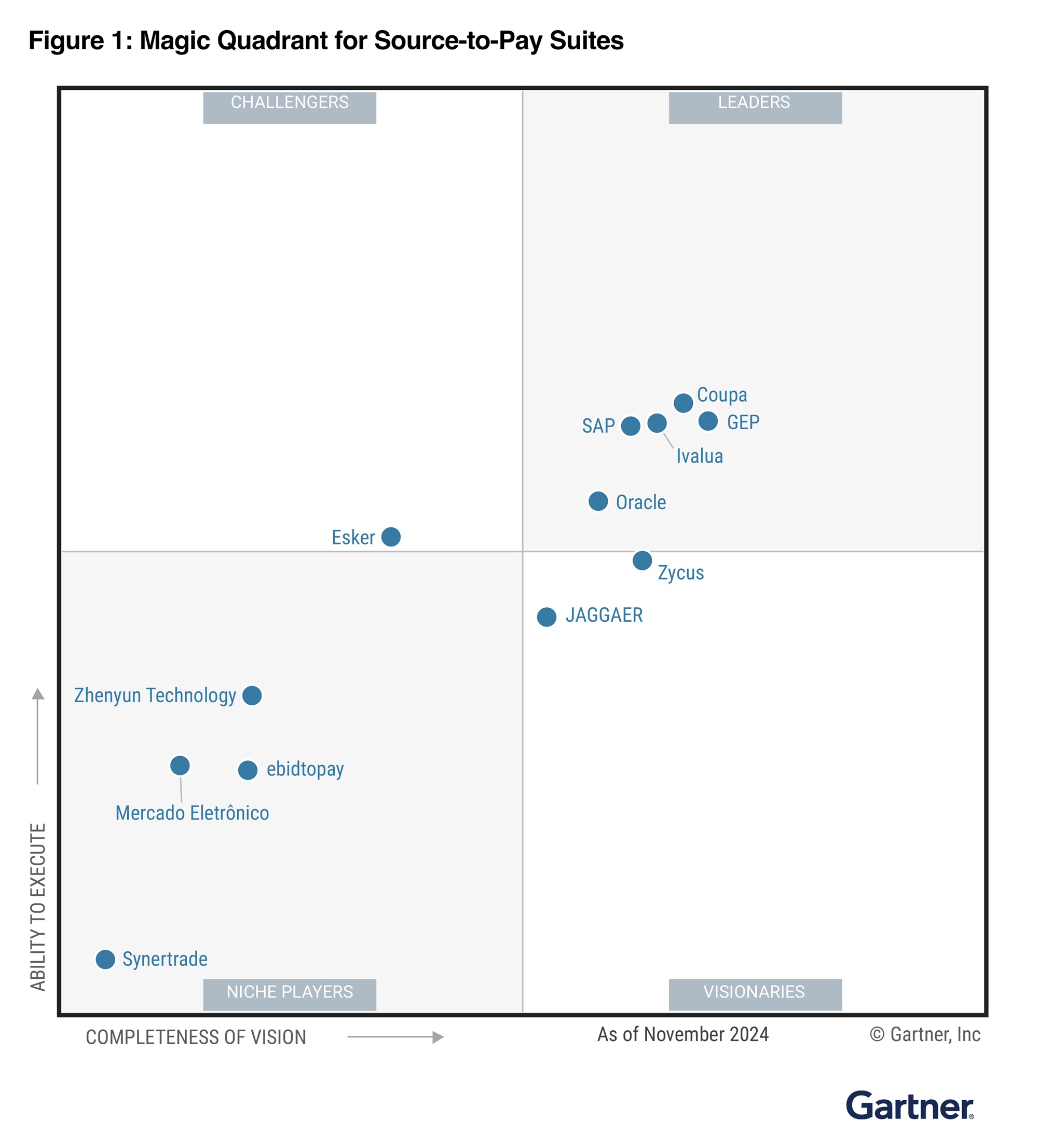
SAP Named a Leader in Gartner Magic Quadrant for Source to Pay Suites

As the chief product officer for our spend management solutions, I am proud to share that Gartner has recognized SAP as a Leader in the 2025 Gartner® Magic Quadrant™ for Source to Pay Suites.

Manage all sources of spend for increased control and business resilience

This recognition, we believe, is a testament to our unwavering commitment to delivering innovative, comprehensive solutions that empower businesses to optimize procurement processes and enhance bottom-line results.

We feel it serves as validation for the strength of SAP Ariba offerings, and our continued focus on delivering experiences premised on data, intelligence, and suite.  We believe that in a dynamic and unpredictable world, a partner with the breadth and depth of SAP is uniquely positioned to unleash success on these principles across your business, and we are humbled by this recognition.

SAP’s source-to-pay offerings and investment focus areas

SAP Ariba has been a leader in the development of cloud-based technologies that help buyers and suppliers collaborate to unleash the power of procurement. As the first product to offer these services in a multitenant cloud framework, SAP Ariba has developed deep functionality to handle complexity, while its focus on user experience has enabled simplicity.  This has allowed an offering that can span all industries, all geographies, and all spend types. Our global customer base is proof of this achievement.

Our future focus is on ongoing innovation and improvement across our portfolio. Building use cases for intelligence is at the heart of our product strategy and defines the next generation of user experience for our products. Unparalleled applications in spend management have enabled our globally diverse customers to bring all spend under management: direct, indirect, MRO, and services.  This provides the world’s largest, unmatched dataset for procurement and is the fuel for the delivery of an unrivaled AI roadmap.

SAP’s AI copilot Joule simplifies complex tasks across the source-to-pay process. Each use case has been built to enhance productivity, allowing procurement organizations to achieve more with less. Joule’s agentic AI framework will be directly applicable and available for spend applications from SAP, allowing customers to build agents that can operate on data from across their business landscape.

While companies today are sometimes told to mind their business, SAP realizes that no business does business alone. Our product road map is predicated on collaborative trading partner experiences through SAP Business Network, the largest supplier network in the industry, operational in 190 countries. This is exemplified by SAP Ariba Category Management, a new product built with an AI-first mindset. Its category agents have value because they are business network-aware and process-aware; the product is integrated across the network and source-to-pay suite, as it helps develop a category strategy and then monitors execution.

SAP Spend Control Tower offers comprehensive visibility across all spend systems, with zero integration effort for data originating from SAP cloud ERP solutions, SAP Ariba solutions, SAP Fieldglass solutions, or SAP Concur solutions. Broadly speaking, this is fundamental to the overall strategy for SAP Business Data Cloud, ensuring all business applications speak the same language and enabling an unrivaled AI roadmap for the SAP Business Suite.

At the same time, SAP recognizes that the world of software applications is heterogenous. Our own application partner network is continuously expanding. And while SAP won’t develop capabilities to solve every problem, our customers still want an orchestrated suite experience, even when non-SAP products are involved in the workflow. That is why we have invested in the development of SAP Ariba Intake Management. Businesses need to automate procurement requests with one common workflow, regardless of how many applications are involved. And where SAP applications are involved, this suite experience is increasingly in-built, again with zero effort required for integration. Capabilities from SAP Fieldglass and SAP Taulia are being directly embedded into SAP Ariba to provide a unified experience.

Real-world impact

The power of source-to-pay solutions from SAP is best illustrated through the experiences of our customers. American Eagle Outfitters (AEO), a global specialty retailer, faced challenges in managing its high volume of suppliers and invoices. By implementing SAP Business Network and SAP Ariba solutions, AEO achieved 85 percent purchase order compliance (five percent above target), 75 percent invoice-count compliance for 48,000 annual invoices, and over $780 million in spend transacting on SAP Business Network.

Nick Bonacci, senior manager of Procure-to-Pay Services at AEO, noted, “SAP Ariba solutions and SAP Business Network help AEO simplify our procure-to-pay processes in several key ways. Through the use of SAP’s intuitive applications, compliant purchasing protocols are now embedded into our broader organization, helping us maximize cost savings, optimize working capital, and strengthen vendor relationships.”

Similarly, Adani Enterprises Limited, implemented SAP Business Network and SAP Ariba solutions, achieving 94 percent first-time-right invoices in digital channels, 4,000 hours saved in one year in processing invoices, and over 8.5 million pieces of paper saved in one year with supplier digitalization.

Mukesh Ralhan, group head of Business Excellence and Strategic Initiatives at Adani, commented, “We process close to 100,000 purchase orders every year, with more than US$20 billion of spend. That’s huge for a company. Without SAP software such as SAP Ariba solutions supporting a single platform, that would not be possible.”

Looking ahead

SAP remains dedicated to delivering solutions that help businesses navigate the complexities of modern procurement. Our focus on customer success, coupled with our deep industry expertise and innovative technology, positions us to continue leading the way in source-to-pay solutions.

Learn more about source-to-pay solutions from SAP here.

Read the full Gartner Magic Quadrant for Source to Pay Suites report.


Manoj Swaminathan is president and chief product officer for SAP Intelligent Spend Management and Application Foundation Services at SAP.

Subscribe to the SAP News Center newsletter and get stories and highlights delivered straight to your inbox each week

Gartner does not endorse any vendor, product or service depicted in its research publications, and does not advise technology users to select only those vendors with the highest ratings or other designation. Gartner research publications consist of the opinions of Gartner’s research organization and should not be construed as statements of fact. Gartner disclaims all warranties, expressed or implied, with respect to this research, including any warranties of merchantability or fitness for a particular purpose.
GARTNER is a registered trademark and service mark of Gartner, Inc. and/or its affiliates in the U.S. and internationally, and MAGIC QUADRANT is a registered trademark of Gartner, Inc. and/or its affiliates and are used herein with permission. All rights reserved.
This graphic was published by Gartner, Inc. as part of a larger research document and should be evaluated in the context of the entire document.
The Gartner Magic Quadrant for Source to Pay Suites report document is available here.

Retail’s Biggest Challenge: A Data-Driven Vision for the Future

In today’s retail landscape, customer expectations have never been higher. Shoppers want to move effortlessly between in-store visits, mobile browsing, social commerce, and digital marketplaces, expecting every interaction to be seamless and personalized.

Behind the scenes, retailers struggle to deliver these experiences due to fragmented, outdated, and incomplete data that makes real-time decision-making nearly impossible and hampers engagement, operational efficiency, and, ultimately, profitability.

The hidden costs of disconnected data

When retailers’ data exists in silos, the problem is compounded from all angles. With sales, inventory, marketing, and customer engagement data living in separate systems, retailers lack the clear view of customer behavior and business insights they need to respond with critical actions in real time. Lack of context within the data means businesses struggle to extract meaningful insights.

Consider the impact:

  • Limited inventory visibility leads to stockouts and overstocks, frustrating customers and eroding profits.
  • Lack of real-time insights hinders personalized customer engagement, diminishing loyalty.
  • Disconnected operations make omnichannel fulfillment—such as buy online, pick up in-store (BOPIS) or hassle-free returns—difficult to execute smoothly.

At a moment when retailers must optimize every facet of their business to remain competitive, a unified data strategy isn’t optional—it’s essential.

A data-driven future: Turning insights into action

To break these silos, retailers need a unified data foundation—one that consolidates insights across all customer touchpoints, enabling real-time intelligence and business agility. SAP Business Data Cloud (SAP BDC), as recently announced, is an integrated solution that can bring data together from all sources, owned and external, to help create a single, trusted source of truth.

With SAP Business Data Cloud, retailers can have the total picture of data from sales, inventory, marketing, loyalty, service, and near-real-time statuses of third-party logistics.

With this holistic view, retailers can:

  • Enable seamless cross-channel fulfillment, such as buy online, pick up in-store or return anywhere.
  • Optimize operational efficiency for everything from intelligent sourcing and promotional planning to inventory visibility and availability across sales channels.
  • Personalize customer engagement by leveraging data-driven insights to boost loyalty and increase revenue.

By shifting to a data-first approach, retailers can move beyond managing transactions to driving intelligent, customer-centric experiences for long-term loyalty and growth.

Why physical stores still matter—more than ever

Despite the rise of e-commerce, more than 80% of retail interactions still take place in physical stores. Brick-and-mortar locations remain central to the retail journey, yet, as retailers’ largest cost center, they also encompass the biggest operational challenges—from inventory carrying costs to labor and store operations.

Although today’s consumers are fluid in how they shop—researching products across multiple platforms or buying online and picking up in-store, for example—they still expect accurate, real-time visibility into inventory wherever they engage. In this landscape, data is the lifeblood that allows retailers to orchestrate orders, manage workflows, and ensure that customers can trust the information they see. Yet, according to a new report released today from SAP Emarsys, 51% of U.S. brands say their organization suffers from “dark data,” which is data that is collected but not effectively used.

To remain competitive, retailers must harness real-time transactional insights to optimize store efficiency, maximize revenue, and provide seamless customer interactions.

Bringing it all together: Intelligent order management

Retailers don’t just need data—they also need actionable, real-time intelligence that helps them drive smarter decision-making. That’s why SAP is integrating advanced order management capabilities as part of our broader data-driven customer experience strategy. SAP has a long history of helping thousands of retail and B2C customers manage vast amounts of data. Today we’re tailoring this expertise, trusted by market leaders worldwide, to help meet the scale, flexibility, and time-to-value required by fast-growing organizations.

Optimize retail operations to better meet customer needs

As part of the SAP Order Management Services bundle, we are launching the SAP Omnichannel Sales Transfer and Audit solution today at Shoptalk in Las Vegas, Nevada. This modular, cloud-native solution can empower retailers with real-time visibility into transactions and inventory, helping to reduce friction and improve customer satisfaction. SAP Omnichannel Sales Transfer and Audit can unify POS data from multiple systems, process high-volume transactions in real time, and help ensure inventory accuracy across all channels to improve stock availability, financial reporting, and customer engagement—without the burden of complex, custom-built integrations.

Apart from omnichannel sales and audit capabilities, the SAP Order Management Services bundle also includes additional modular, cloud-native capabilities including SAP Order Management foundation and the SAP Order Management solution for sourcing and availability. The SAP Order Management Services bundle is natively connected with SAP S/4HANA, which can enable retail and consumer products organizations and other consumer brands to unlock real-time inventory visibility, streamline fulfillment, and reduce operational costs without complex and costly custom integrations. And, integrated with SAP S/4HANA Cloud Public Edition, retail, fashion, and vertical business, announced at NRF earlier this year, the cloud-native capabilities of the SAP Order Management Services bundle can be even more scalable, secure, compliant, and affordable, enabling retailers to realize value more quickly than ever before.

Other benefits of SAP Omnichannel Sales Transfer and Audit include:

  • Seamless POS integration can connect multiple POS systems with different data structures, working to eliminate silos and ensure data accuracy.
  • Real-time inventory updates help keep omnichannel inventory accurate so customers can trust what they see online matches what’s available in-store.
  • Smarter data processing and configurable data transfer and aggregation help update inventory, financials, and even loyalty programs effortlessly.
  • Optimized sales data validation process can automate checks that are executed through configurable workflows.

By embracing a unified data strategy, retailers can eliminate complexity, reduce costs, and unlock new opportunities for growth—all while delivering the frictionless experiences today’s consumers expect.

Hornbach: The future of omnichannel retail in action

For Hornbach, one of the largest DIY stores in Germany, the idea of interconnected retail is more than just omnichannel. It needs to be able to add new channels quickly—and to maintain a seamless customer experience over all channels. Hornbach adopted SAP Order Management Services as a foundation for this vision, enabling the flexibility to address new markets quickly, connect new systems, process orders rapidly and efficiently, and adopt new innovations. With the addition of SAP Omnichannel Sales and Transfer Audit, the Hornbach team expects to get more visibility in day-to-day operations, like checking fraud detection and the completeness of transactions.

“The most exciting thing will be the combination of all these new technologies we’re seeing: artificial intelligence, event-driven architecture, as well as native cloud solutions,” said Carsten Mueller, head of Enterprise Architecture and Security, Hornbach. “The combination will give Hornbach great power in the next year.”

The future of retail is data-driven

The retail industry is evolving at an unprecedented pace, with AI redefining how businesses operate and interact with customers. According to the same SAP Emarsys report, 89% of U.S. consumer product marketers believe AI will be essential for engaging new customers. However, the effectiveness of AI hinges on the reliability and accuracy of the data it processes.

Retailers that embrace AI-powered data intelligence will lead the next era of omnichannel excellence. The future isn’t just about connecting data—it’s about activating it in real time to drive seamless customer interactions.

To stay ahead, retailers must:

  • Invest in AI-driven analytics to predict demand, optimize pricing, and personalize engagement at scale.
  • Implement intelligent order and transaction management to automate fulfillment, reduce friction, and improve supply chain agility.
  • Leverage AI-powered customer insights to create hyper-personalized experiences that drive loyalty and lifetime value.
  • Enable real-time inventory intelligence to ensure products are available where and when customers need them.

As omnichannel complexity grows, brands that fail to unify their data risk falling behind. SAP Business Data Cloud and intelligent order management solutions can provide the foundation for a future-proof transformation. As AI continues to evolve, retailers must shift from reactive decision-making to proactive, predictive commerce, where every transaction is optimized for efficiency and profitability.

The future of retail is here. Those who harness AI to unify, analyze, and act on their data will define the next generation of customer experience and retail success. I’m excited to partner with companies navigating this transformation and empower them to seize new opportunities for success.

Want to learn more? Stay tuned to see how leading retailers are leveraging SAP’s data-driven approach to optimize their operations and stay ahead of the competition and learn more about SAP’s solutions for retail.


Balaji Balasubramanian is president and chief product officer for SAP Customer Experience and Consumer Industries.

Connect with SAP News on LinkedIn to stay in-the-know

Top New Features in SAP HANA Cloud | Q1 2025 Release Highlights

Join Thomas Hammer, Lead Product Manager, as he shares his top features of SAP HANA Cloud’s Q1 2025 release.

0:00 Intro
0:30 Knowledge Graph Engine
1:30 Gen AI Virtual Assistant by SAP Joule
2:15 Gen AI toolkit
3:08 Data Centers
3:34 Further Information
👉 To learn more about SAP HANA Cloud, please visit: https://sap.to/60590qKiX
👉 Join our SAP HANA on-premises and cloud databases community to stay up to date: https://sap.to/60500qKik
👉 Dive deeper into SAP HANA Cloud updates via our #whatsnewinsaphanacloud tag: https://sap.to/60520qKiw

#SAP #SAPHANACloud

Darussalam Assets Leverages SAP Business AI for Inclusive Recruitment and Personalized Development

Learn how Darussalam Assets aligns HR processes and enhances talent management with SAP SuccessFactors and SAP Business AI. https://sap.to/60510EIFh

Previous Next
Close
Test Caption
Test Description goes like this