How Does Kanban Fit into SAP S/4HANA?

In a Kanban environment, when production workers take the last part from a bin, they send a signal to other workers, who then make more of the required parts and ensure delivery to the assembly line.



In a Kanban environment, when production workers take the last part from a bin, they send a signal to other workers, who then make more of the required parts and ensure delivery to the assembly line.
Far East Organization (FEO) is the largest private property developer in Singapore, having built over 780 developments in the residential, hospitality, and commercial space segments for sales and lease. Its commercial portfolio comprises of retail, offices, industrial, and medical units.
To support ongoing expansion, Far East sought more streamlined and efficient lease lifecycle management operations, leading the company to progressively digitalize the entire leasing lifecycle.
The leasing process at Far East has traditionally been resource-intensive, involving multiple manual steps and significant human intervention across various stages, including pre-offer approvals via e-mail, rental computations, budget comparisons, contract drafting, amendment management, and rental change tracking.
This approach required substantial manpower and created multiple data entry points across the leasing lifecycle, which could affect accuracy and timeliness. Manual updates to rental terms and amendments also contributed to inefficiencies.
The project marks an important step toward operational excellence. By identifying and addressing these systemic challenges, Far East is laying the foundation for a fully digital, integrated leasing platform that supports seamless process flow, real-time data visibility, and more informed decision-making. It is a bold shift toward a strategic, data-driven approach to leasing that enhances agility, accuracy, and growth.
For this reason, FEO decided to undertake a strategic transformation to digitalize its leasing operations through a robust, intelligent, and integrated SAP ecosystem. This initiative unifies the full leasing lifecycle, from lead generation to contract execution and financial settlement, while enhancing operational excellence, data transparency, and customer service.
SAP was selected as the strategic platform for leasing digitalization due to its ability to deliver a comprehensive, end-to-end solution that connects business processes across the leasing lifecycle. With SAP S/4HANA at the core, Far East benefits from a powerful digital foundation that aligns real estate, finance, and operational workflows into a single source of truth, supporting data integrity, process consistency, and real-time visibility. SAP’s cutting-edge technologies—including SAP Customer Relationship Management (SAP CRM), SAP Business Technology Platform (SAP BTP), and SAP Fiori apps—enable intelligent automation, advanced analytics, and a clean core architecture that supports both standardization and innovation.
This integrated ecosystem empowers FEO employees to leverage real-time analytics for data-driven decisions and reduce errors and eliminate bottlenecks with automated tasks, streamlined processes, and optimized workflows.
The result? FEO experienced an 80% improvement in sales process efficiency at closing leasing sales.
The successful implementation of the leasing digitalization project has delivered tangible improvements across the organization, from the residential and commercial group business unit to its financial, operational, and compliance domains. By streamlining and automating leasing processes, FEO achieved over US$500,000 in annual cost savings while reducing operational overhead. The project eliminated redundant data entry through intelligent field derivation and automated rental computations, helping to minimize errors and boost workforce productivity.
In addition, the leasing lifecycle has been accelerated, cutting the lead-to-contract process and reducing contract generation time from days to just minutes. With 100% system uptime since go-live and strong user adoption, the platform has become a reliable tool for leasing operations. Intelligent validations, including budget checks and competitive rent evaluations, have strengthened regulatory compliance and enhanced decision accuracy. Collectively, these outcomes have strengthened FEO’s position as a digitally enabled real estate business, well-equipped for agile, data-driven portfolio management and continuous innovation.
FEO has made significant leaps forward in the property management industry. Employee productivity has increased with streamlined processes. Regulatory compliance with industry regulations and standards is managed with intelligent validation. And, analytics provide valuable insights into tenant behavior, rent trends, and property performance.
For its property management achievement, Far East Organization was selected as a 2025 SAP Innovation Award winner in the Industry Leader category. Learn more about the real estate developer’s digital transformation.
Nicolas Englo is program manager for the SAP Innovation Awards.
Every business runs on data, but while companies invest heavily in understanding their customers and their markets, many struggle to access and act on their most valuable data of all: their people data. Without a clear, connected view of their workforce, leaders face difficulty answering fundamental questions, such as do we have the right skills to deliver on our strategy? Where are we at risk of turnover? Do we have the right people in the right roles to optimize production and meet customer demand?
The impact of getting people analytics right is undeniable. According to research from IDC, organizations that prioritize insights models and performance processes rooted in people data are more likely to see meaningful gains across the board: 98% continuously realize stronger employee satisfaction, 90% experience a boost in workforce performance toward strategic goals, and 87% see improved employee retention.
Yet for many organizations, the challenge isn’t recognizing the value of people data—it’s unlocking it. Data lives in silos, systems don’t connect, and insights that could drive strategy often stay buried in spreadsheets or dashboards. And let’s face it—the power of AI rests on data. Without harmonized data in one place, organizations can’t fully tap into AI’s potential to deliver proactive insights, predictive intelligence, and personalized recommendations that drive better business decisions.
That’s why SAP announced the People Intelligence package in SAP Business Data Cloud, now generally available, earlier this year. Built on SAP BDC, People Intelligence is an AI-driven application that can bring together people, skills, and business data—from SAP SuccessFactors solutions and beyond—into actionable insights that help leaders make more informed people and business decisions.
At Success Connect at SAP Connect earlier this month, we announced new prebuilt insights in People Intelligence for recruiting, learning, succession, career development planning, and performance and goals management—helping to make it even easier for organizations to translate workforce data into measurable impact.
People Intelligence combines unified data from across the enterprise with AI-driven predictions to help forecast workforce needs, anticipate labor costs and risks, and strengthen workforce planning. And with Joule, SAP’s AI copilot, HR teams can instantly get contextual, actionable answers to critical business questions such as:
Too often, workforce data exists in isolation from finance, supply chain, and operational metrics, which makes it nearly impossible to see how people decisions impact business results. People Intelligence can change that. By linking workforce insights to core business data in SAP Business Data Cloud, leaders can understand how talent strategies affect productivity, compliance, profitability, and agility, and they can act in real time.
The future of work will be defined by rapid change: accelerating AI adoption, shifting skills requirements, and evolving employee expectations. Organizations that are hamstrung by siloed data or manual analysis will always be a step behind.
People Intelligence helps provide the foundation and insights to move forward with confidence. By harnessing people data with the same rigor as financial or customer data, organizations gain clarity on how skills, roles, and costs are evolving—and the foresight to stay ahead of what’s next.
Watch this People Intelligence deep dive to learn how data-driven insights can fuel your workforce strategy.
Lara Albert is chief marketing officer at SAP SuccessFactors.
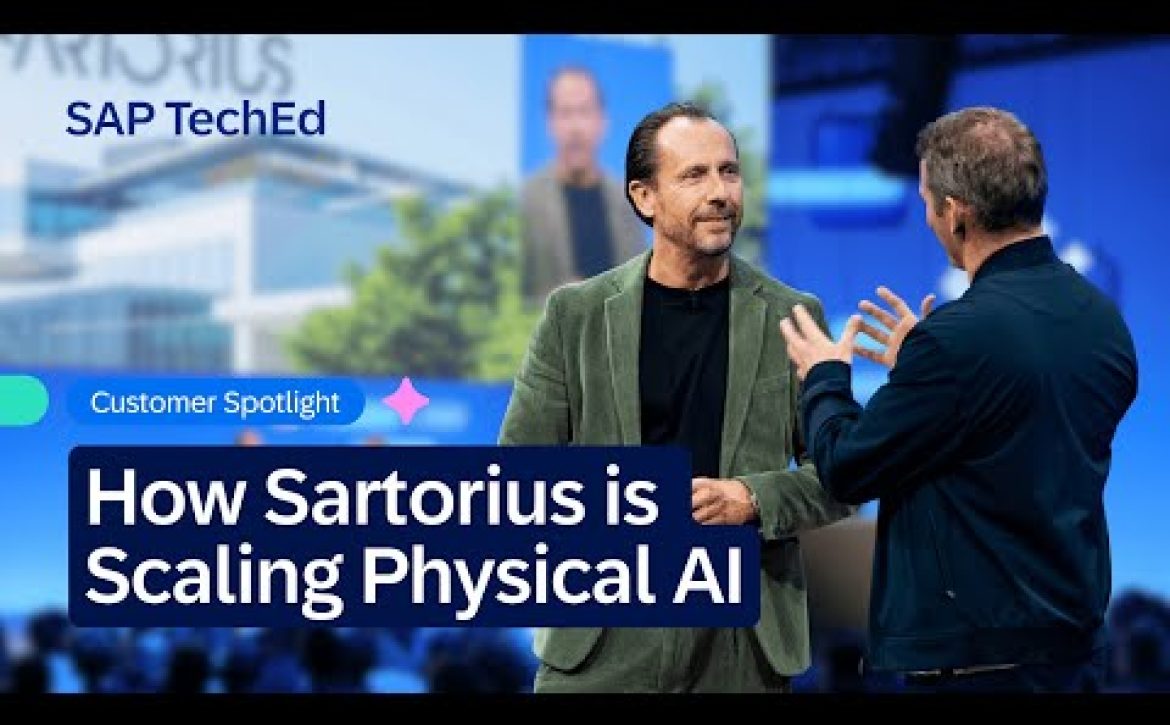
How Sartorius modernized on RISE with SAP, and is now scaling physical AI (embodied AI) with SAP, Neura, and EWM integration.
In this SAP TechEd customer conversation, Sartorius shares how a bold operating model – bringing IT, data, processes, and operations together—accelerated its move from ECC on-premise to RISE with SAP in the cloud. With Joule and SAP Extended Warehouse Management (EWM) now in place, the team is raising the bar on reliability, lead times, and inventory control while preparing the foundation for robotics at scale.
Thorsten Mueller explains how Sartorius is partnering with SAP and Neura to connect humanoid and collaborative robots to SAP processes. The focus: unifying the “physical interface” between production clean rooms and warehouses so robots can recognize forms, colors, and materials, pick and place accurately, and work safely alongside people. By grounding robotic actions in EWM and SAP data, Sartorius can automate repetitive tasks, improve consistency, and free teams to focus on higher-value work.
The session closes with Sartorius’ vision for next-level automation: robots with more dexterity (two-hand operations) and human-safe collaboration, powered by deep process integration on SAP.
Speakers:
Thorsten Mueller, CIO and CEO, @SartoriusGlobal
Philipp Herzig, Chief Technology Officer, SAP
00:02 – Welcome & guest intro: Thorsten Mueller (Sartorius)
00:25 – Transformation baseline: ECC on-prem, KPI pain points
01:26 – Migration progress: RISE with SAP S/4HANA, Joule & EWM
02:00 – Collaboration vision: SAP × Neura × Sartorius for EWM + robots
02:57 – Robotics PoC details: recognition, picking, next steps
Watch all SAP TechEd replays: https://sap.to/605973S01
Explore SAP Business Technology Platform → https://sap.to/605073S0G
Follow us on social:
LinkedIn: https://sap.to/605173S0H
Instagram: https://sap.to/605273S0y
Facebook: https://sap.to/605373S0J
Threads: https://sap.to/605473S0K
About SAP:
As a global leader in enterprise applications and business AI, SAP stands at the nexus of business and technology. For over 50 years, organizations have trusted SAP to bring out their best by uniting business-critical operations spanning finance, procurement, HR, supply chain, and customer experience. For more information, visit: https://sap.to/605573S0z
#SAPTechEd #RISEwithSAP #EmbodiedAI

How is SAP unifying Business AI with SAP Business Data Cloud? Bringing together Joule, AI agents, and Knowledge Graph. Watch the full podcast for the deeper discussion: https://www.youtube.com/watch?v=11D4_p3d0Ww
#BusinessAI #BusinessDataCloud #Joule

See how @SouthernCaliforniaEdison_SCE is transforming the future of energy with SAP. In this #SAPConnect 2025 customer highlight, Todd Inlander, Senior Vice President and Chief Information Officer, shares how AI, data, and SAP Business Suite are helping one of the nation’s largest utilities modernize operations, strengthen reliability, and deliver sustainable outcomes at scale.
00:00 – Introduction – Customer Perspective with Anja Schneider
01:10 – Todd Inlander on Energy Transformation and AI
03:40 – Modernizing Operations with SAP Business Suite
05:20 – Data & Analytics for Smarter Decisions
07:00 – Closing – Building a Resilient and Sustainable Future
In conversation with Anja Schneider, SAP SVP and Global Head of Premium Engagement & Advisory, Todd Inlander reveals how Southern California Edison is using SAP Business Technology Platform and SAP Data & Analytics to connect systems, unify insights, and respond faster in an evolving energy landscape. Together, they explore how integrating AI into everyday workflows enables smarter forecasting, predictive maintenance, and real-time decision-making — while empowering teams to focus on innovation and customer value.
This session demonstrates how SAP Business Suite helps customers move from reactive to proactive — anticipating change instead of responding to it. By connecting data, AI, and human expertise across the enterprise, Southern California Edison is setting a new standard for agility and sustainability in the utility sector.
Watch the full Central Keynote: https://sap.to/6050AsQ5i
Watch all SAP Connect replays: https://sap.to/6051AsQ5c
Explore SAP Business Suite: https://sap.to/6052AsQ5Y
Follow us on social:
LinkedIn: https://sap.to/6053AsQ5l
Instagram: https://sap.to/6054AsQ5m
Facebook: https://sap.to/6055AsQ5W
Threads: https://sap.to/6056AsQ5o
About SAP:
As a global leader in enterprise applications and business AI, SAP stands at the nexus of business and technology. For over 50 years, organizations have trusted SAP to bring out their best by uniting business-critical operations spanning finance, procurement, HR, supply chain, and customer experience. For more information, visit: https://sap.to/6057AsQ5U
#SAPConnect #SAPBusinessSuite #AI
SAP reimagines enterprise AI with role-based assistants in
Joule that coordinate agents across lines of business
LAS VEGAS — At its inaugural SAP Connect event, SAP SE (NYSE: SAP) showcases how the integration of AI, data and applications creates unparalleled business value.
These breakthroughs – including a new network of role-based assistants in Joule that partner with humans to elevate performance, an expanding data ecosystem that drives deeper insights and supply chain software that anticipates disruptions – once again revolutionize how business gets done.
“To thrive when volatility is the new normal, businesses need more than a patchwork of disparate best-of-breed applications,” said Muhammad Alam, member of the Executive Board of SAP SE, SAP Product & Engineering. “Our announcements today demonstrate the power of SAP Business Suite, where AI, data and applications come together in an experience to propel smarter decisions, faster execution and scalable transformation.”
SAP unveils Joule’s next stage as the AI force at the center of SAP Business Suite’s value creation. Drawing on the applications and data from across SAP Business Suite, SAP is introducing a new generation of role-aware assistants in Joule. Each assistant is designed to partner with a human being in their specific business role. Assistants in Joule tap into the right agents for the job, configuring, orchestrating and managing them so humans can focus on unlocking new levels of insight and productivity.
Supporting the assistants in Joule is a growing library of specialized Joule Agents, designed to help execute complex workflows within a specific function. For instance, a People Manager Assistant coordinates a team of specialized agents — including the new People Intelligence Agent, which helps spot and resolve issues like compensation anomalies — to support managers as they drive performance. A new Financial Planning Assistant will be aided by a group of expert agents — including the new Cash Management Agent, which optimizes cash flow and improves interest yields — to help finance professionals drive efficiencies. This new roster of role-aware AI assistants not only partner with people to elevate performance in their lines of business but also work together across business functions to solve complex enterprise-wide problems.
Data fuels AI’s transformative power but it’s often siloed in different systems. At SAP Connect, we are removing those barriers with SAP Business Data Cloud Connect. SAP BDC Connect securely links SAP BDC with partner platforms to enable a bidirectional flow of business-ready data products across organizational and technological boundaries.
With zero-copy sharing, data stays securely in SAP systems yet remains instantly accessible in customers’ existing data platforms, preserving business context without costly copies. The result: fewer silos, simpler pipelines, no duplication — just trusted data products where and when they’re needed.
SAP also announced that Databricks and Google Cloud are the first partners enabled for SAP BDC Connect, with more to follow. As announced in February 2025, SAP Databricks remains a data service within SAP Business Data Cloud, and SAP BDC Connect extends its benefits across an open data ecosystem. These partnerships give customers faster access to data products for analytics and AI, helping teams move from raw data to real-time business outcomes with greater speed and simplicity.
At the heart of SAP’s unique value proposition are enterprise applications where data is created and AI-driven insights are experienced. SAP Supply Chain Orchestration is a new AI-native solution that combines the power of Joule with a live knowledge graph to detect real-time risks several suppliers deep and orchestrate a coordinated response, helping customers cut costs and keep supply chains moving. SAP Engagement Cloud, a new customer experience solution, uses business-critical context to personalize interactions across customers, suppliers and other stakeholders. And our next-generation SAP Ariba procurement suite stands out as an AI-native solution, bringing intelligence to every stage of spend management, from sourcing through supplier engagement.
Altogether, these SAP Business Suite innovations mark the beginning of a new era powered by self-reinforcing AI, data and applications that drive intelligence, speed and resilience.
Visit the SAP News Center. Get SAP news via LinkedIn and Bluesky.
As a global leader in enterprise applications and business AI, SAP (NYSE:SAP) stands at the nexus of business and technology. For over 50 years, organizations have trusted SAP to bring out their best by uniting business-critical operations spanning finance, procurement, HR, supply chain, and customer experience. For more information, visit www.sap.com.
Note to editors:
To preview and download broadcast-standard stock footage and press photos digitally, please visit www.sap.com/photos. On this platform, you can find high resolution material for your media channels.
For customers interested in learning more about SAP products:
Global Customer Center: +49 180 534-34-24
United States Only: 1 (800) 872-1SAP (1-800-872-1727)
For more information, press only:
Joellen Perry, +1 (626) 265-0370, joellen.perry@sap.com, PT
Marcus Winkler, +49 6227 7-67497, marcus.winkler@sap.com, CEST
SAP Press Room; press@sap.com
This document contains forward-looking statements, which are predictions, projections, or other statements about future events. These statements are based on current expectations, forecasts, and assumptions that are subject to risks and uncertainties that could cause actual results and outcomes to materially differ. Additional information regarding these risks and uncertainties may be found in our filings with the Securities and Exchange Commission, including but not limited to the risk factors section of SAP’s 2024 Annual Report on Form 20-F.
© 2025 SAP SE. All rights reserved.
SAP and other SAP products and services mentioned herein as well as their respective logos are trademarks or registered trademarks of SAP SE in Germany and other countries. Please see https://www.sap.com/copyright for additional trademark information and notices.
Please consider our privacy policy. If you received this press release in your e-mail and you wish to unsubscribe to our mailing list please contact press@sap.com and write Unsubscribe in the subject line.
Vendor consolidation has emerged as the dominant priority for CIOs in 2025, driven by mounting pressure to reduce complexity, control costs, and maximize the full potential of AI – while creating greater mechanisms for resiliency.
Research from multiple industry sources indicates that this isn’t just an emerging trend — the emphasis on consolidation is growing at an unrelenting pace.
According to ADAPT’s CIO Edge research, a comprehensive study of more than 140 CIOs, 68 percent of technology leaders are planning to consolidate their vendor landscape.
This trend is not just about making minor adjustments to meet market demands; a majority of organizations are targeting a 20 percent reduction in vendor count, which represents a significant and fundamental shift in how enterprises approach their technology ecosystems.
The urgency for CIOs to transform their vendor landscape is palpable across all sectors and industries. A survey of more than 1,000 technology professionals revealed that 90 percent of IT professionals identified software consolidation as a priority, with 73 percent predicting their organizations will continue growing software investments while simultaneously consolidating vendors.
This paradox — expanding capabilities while reducing complexity — defines the modern CIO’s challenge.
This vendor consolidation trend contrasts with movements like the MACH alliance, which promotes a pure “best-of-breed” approach. While its underlying architectural approaches (Microservices, API-first, Cloud-native, Headless) are sound and arguably have become table stakes in the SaaS world, MACH created unexpected challenges for enterprises.
Initially lauded for its flexibility and agility, MACH ended up creating significant complexity — more than most enterprises can handle — at a time when they are looking for simplicity more than ever.
The economic reality is stark: fully MACH implementations usually require more money upfront compared to a unified solution that is pre-configured. Companies must consider not only the purchasing of multiple services, but also the cost and time required for employee training and adoption. Running MACH architecture requires people with highly specialized skills in cloud infrastructure, APIs, microservices, and tools designed to streamline development of the user-facing part of a website or web application. The job market for that talent is uber-competitive, even in the age of AI, meaning you’ll need to have the resources to pay them well or else your competitors will.
Research reveals several critical drawbacks to the fragmented fully best-of-breed approach:
As CIOs prioritize vendor consolidation, SAP’s approach to “Suite as a Service” or “best of breed as a suite” offers a pragmatic solution that addresses the fundamental challenges of fragmented architectures. Rather than forcing organizations to choose between flexibility and integration, the SAP Customer Experience (SAP CX) portfolio provides both through a unified yet composable business suite that spans front and back-office operations, in conjunction with a pre-integrated and certified rich ISV ecosystem that allows businesses to compose with intention, wherever this makes sense business-wise.
The true power of consolidated platforms lies in what SAP calls the “flywheel effect.” In this model, applications generate data, data trains AI, and AI optimizes applications. This creates a virtuous cycle where:
This integrated approach is only possible when organizations move beyond siloed point solutions to embrace unified platforms that can leverage the full spectrum of business data. Companies already invested in SAP technologies have discovered that a unified data strategy provides a proven path to the data architecture that AI requires.
Enterprise Strategy Group’s economic analysis of SAP CX solutions reveals compelling evidence for the vendor consolidation approach:
AI is driving the consolidation trend as much as the need to reduce costs. AI models demand high-quality, accurate data to be useful. When organizations maintain data silos — often the result of disconnected digital tools — AI efforts fall short of expectations or stall entirely.
SAP’s unified approach addresses this challenge directly. By providing harmonized SLAs, UX, data models, and provisioning across the stack, along with embedded AI via SAP Business AI and a unified and semantically rich data layer via SAP Business Data Cloud, organizations can fully leverage AI capabilities across domains without the complexity of integrating multiple disparate systems.
The trend toward vendor consolidation is accelerating across multiple dimensions:
The evidence is clear: 2025 marks a pivotal moment for CIOs. Organizations that embrace strategic vendor consolidation and choose unified platforms over fragmented point solutions will gain significant competitive advantages in operational efficiency, cost management, and AI readiness.
SAP CX represents the future of customer experience technology — not as a collection of disparate tools, but as a unified, intelligent platform that can adapt and evolve with business needs. As CIOs navigate the challenges of 2025, the choice between complexity and consolidation will define their success.
The question isn’t whether to consolidate; it’s whether to lead the trend or be left behind.
With 68 percent of CIOs already planning consolidation initiatives, organizations that act decisively on vendor consolidation will be best positioned to win when it comes to the future of enterprise technology.
Geert Leeman is chief revenue officer of SAP Customer Experience.
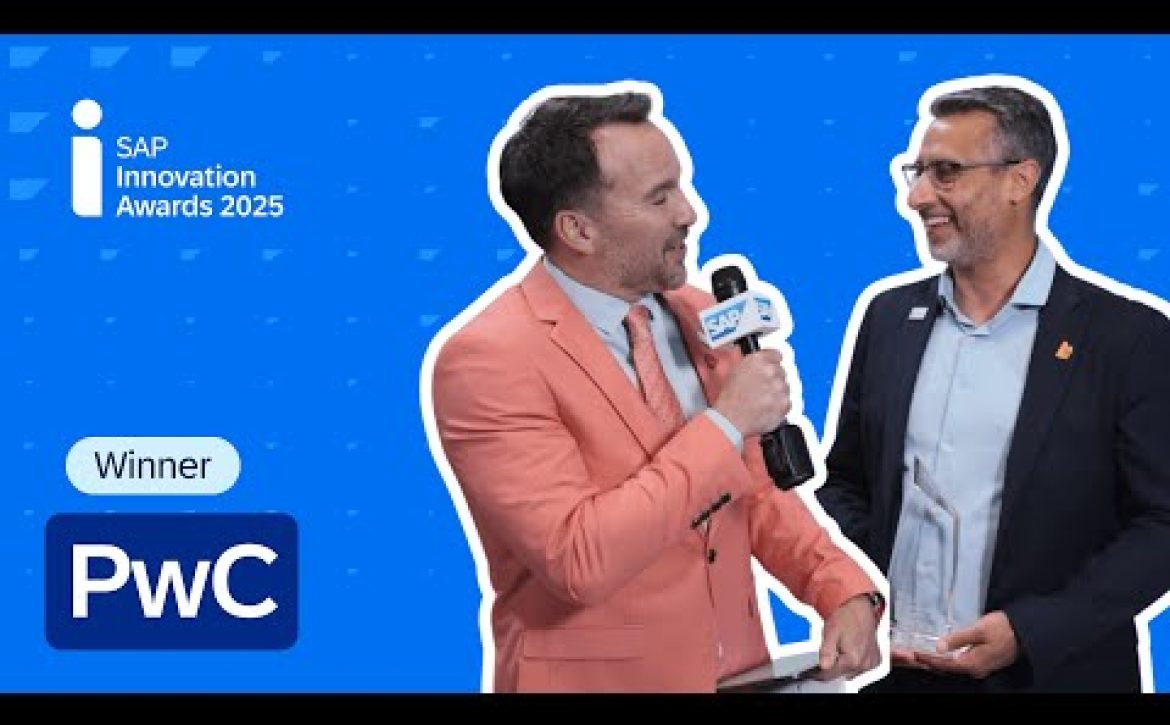
PwC won the SAP Innovation Award by leveraging technology to drive more efficient and effective business outcomes for its clients and help customers achieve their goals more quickly and efficiently.
To find out more about the SAP Innovation Awards and how to submit your own innovative ideas, visit:https://sap.to/6058fGA1Y
#SAPInnovationAwards @PWC
Matthias Medert is global head of Sustainability at SAP. Here, he speaks about key aspects of the company’s long-term resilience plans and the challenges along the way. In the interview, he also discusses a new partnership to advance SAP’s commitment of achieving net-zero greenhouse gas (GHG) emissions by 2030 and beyond.
A: Sustainability is a core element of business strategy and deeply embedded in our vision to help the world run better and improve people’s lives. This means it is not a separate initiative, but an integral part of our leadership and long-term goals as a company. And as such, sustainability is a business catalyst and value driver.
We recognize that with a customer base that generates 84 percent of the total global commerce, we have the responsibility and opportunity to lead in corporate climate action efforts. This isn’t just about reporting numbers; it’s a science-based transformation that is embedded in our operations, collaboration with suppliers, technology, and what we offer to our customers.
For us, it means our strategy aligns with the 1.5°C pathway set in the Paris Agreement. We aim to reduce gross GHG emissions by 90 percent across our relevant value chain (market-based). The remaining emissions — no more than 10 percent — will be neutralized through high-quality, verified carbon removal projects. Our reduction efforts have earned SAP’s inclusion in the EU Paris-Aligned Benchmarks, which gives climate-conscious investors confidence in our approach.
Our transformation is structured around four interconnected pillars:
With cloud transformation, we’re accelerating the shift from on-premise to cloud solutions, with SAP-managed data centers already powered by 100 percent renewable electricity. In parallel, we are collaborating with hyperscalers and our customers to push renewable electricity adoption upstream and downstream. An important part of this transition is enhancing GHG accounting and moving from estimates to primary data from our suppliers.
With upstream supply chain engagement, we are revising procurement policies and working closely with our suppliers to lower emissions across the supply chain. This includes aligning on data transparency and decarbonization targets. The rise of energy-intensive technologies like AI presents new challenges, but we’re addressing them through joint commitments and shared accountability.
In internal operations, we have several initiatives in place. For instance, since 2014 SAP has been running all offices, owned data centers, and co-locations on 100 percent renewable electricity. In addition to this, we are electrifying our vehicle fleet, and we have an internal carbon pricing scheme for business flights in place. The generated funds are invested in projects that have a positive impact on local and global populations as well as climate and biodiversity.
To neutralize SAP’s residual emissions that remain beyond 2030 after all feasible reduction efforts, we are investing in high-integrity carbon removals, ranging from nature-based to engineered solutions. Great examples of this are our long-term investments in the Livelihoods Carbon Funds and Climeworks’ Direct Air Capture solutions. The partnership with Climeworks marks a significant milestone for SAP and our commitment to durable carbon removals. Additionally, we make annual contributions to climate finance. The voluntary investments made during our transition to net-zero allow us to take responsibility for our emissions, increase our overall impact beyond our own decarbonization efforts, and help the world keep their climate targets in reach.
We have entered an agreement with Climeworks to secure 37,000 tons of high-quality carbon removal credits through 2034. This includes technologies like direct air capture, biochar, and enhanced rock weathering. More than just a carbon removal purchase, this is a strategic innovation partnership.
Together, we are co-creating ERP-centric carbon management tools, integrated into solutions like SAP Sustainability Control Tower, and making it available via SAP Store. These tools will help companies manage and mitigate emissions in real time, making carbon removal more actionable at scale.
Yes, and that is part of what makes this partnership so compelling. Climeworks has implemented SAP S/4HANA Public Cloud through the GROW with SAP journey and is using the SAP LeanIX portfolio to support its rapid growth. These tools help with compliance, financial management, and operational efficiency — all critical elements for scaling in the climate-tech space.
It is a strategic move that strengthens our position economically and environmentally. As SAP Chief Sustainability & Commercial Officer Sophia Mendelsohn recently shared, this partnership allows us to lock in carbon removal capacity at preferred rates, hedging against future price volatility. But more importantly, it enables us to create new sustainability-focused solutions for our customers, helping them meet regulatory and stakeholder expectations.
As SAP advances its decarbonization strategy, the biggest opportunities for positive impact lie in leveraging our technology and ecosystem to drive systemic change — both internally and across industries.
Within SAP, our greatest opportunity is embedding sustainability directly into core business processes — such as procurement, supply chain, and finance — using our own solutions. This not only reduces our operational GHG footprint but serves as a model for our customers. Our sustainability solutions aim to empower organizations to measure, manage, and act on their sustainability goals. By doing so, we scale our impact.
We remain grounded in the Science-Based Targets Initiative (SBTi) Corporate Net-Zero Standard and see opportunities to lead by example, even beyond 2030, by continuously improving our net-zero program and sharing best practices.
In the end, we are not just preparing for a net-zero future; we are shaping it. Through collaboration, transparency, and technology, we are proving that climate action is essential to long-term success.
Karen Restrepo Avila is Sustainability and Net-Zero communications lead at SAP.