SAP Spend Control Tower: Your Command Center for Enterprise-Wide Spend Analysis
All businesses generate spend data. But capturing, rationalizing, and deriving insights from that data – especially when it is scattered across multiple systems, in different formats, and of questionable accuracy – is why we announced the development of SAP Spend Control Tower, our command center for enterprise-wide spend analysis, last year.
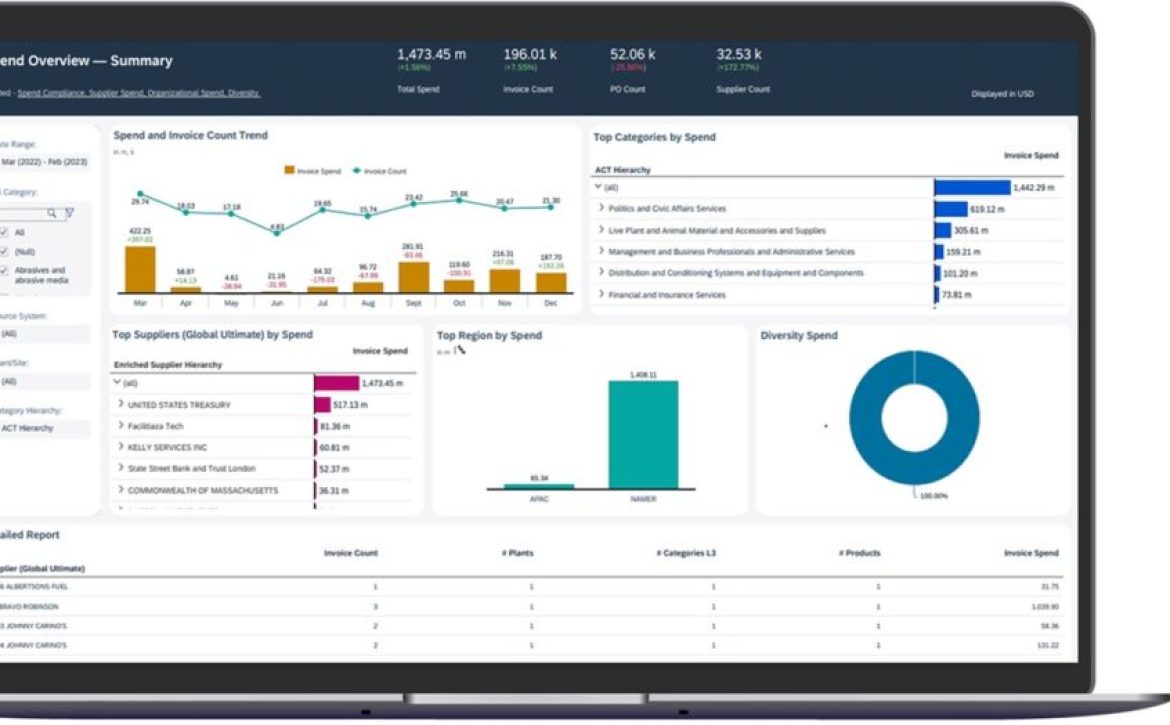
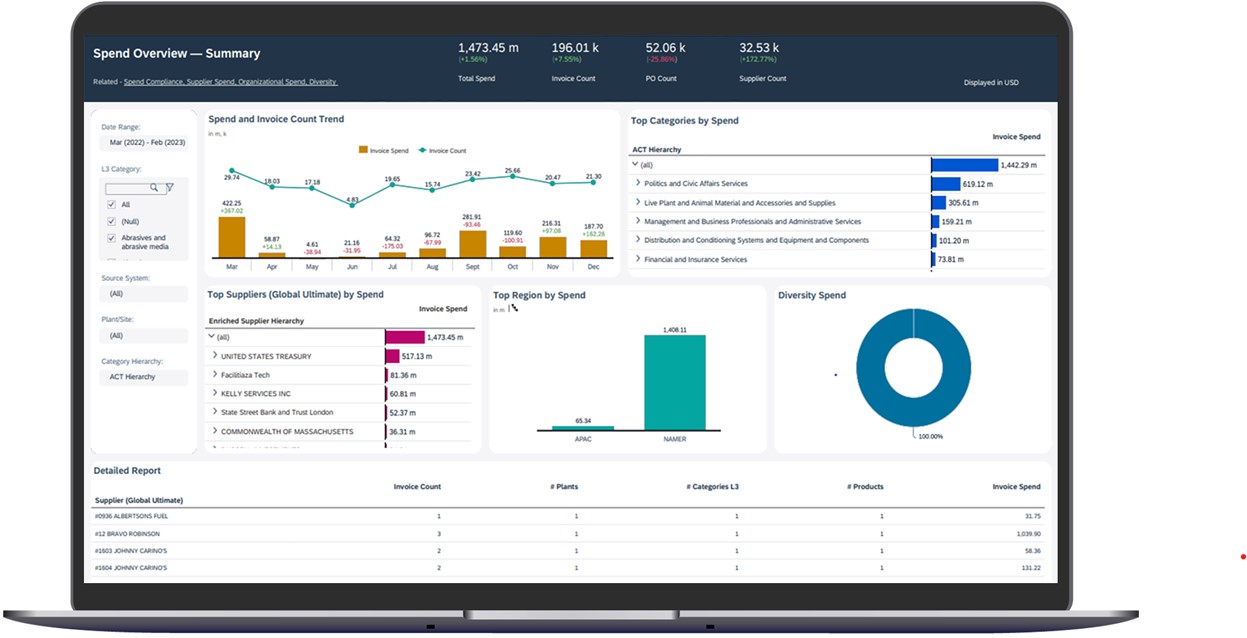
SAP Spend Control Tower can enable business leaders to answer questions, like where and how much did my organization spend? With what suppliers? Can we break that down by normalized categories? Where are my cost-savings opportunities? What about compliance with environmental and social regulations?
I am happy to announce that SAP Spend Control Tower is now available for all businesses.
Addressing Your Spend Data Challenges
I frequently discuss spend management challenges with CPOs and CFOs. They consistently seek visibility and insights into their spending, key suppliers, and ways to enhance savings and cash flow, which enable them to make better-informed decisions.
This aligns with our formal market research. In a new Economist Impact study sponsored by SAP – Across the procurement-verse: Changing trends in the procurement function – 44% of all respondents and 49% of CPOs identified spend analytics as the top driver of digitization in procurement in 2024.
Of course, it’s not just about procurement spend. It’s about all enterprise spend. And that’s our sweet spot. SAP delivers intelligent spend solutions covering the entire enterprise – from procurement to travel and expense to contingent labor and beyond.
As we’ve worked to bring together spend data across the enterprise, it’s become clear to me that many organizations face similar challenges:
- Poor data quality
- Too much data for individuals to process
- Lack of visibility into cost-saving opportunities and ways to improve cash flow
SAP Spend Control Tower is specifically designed to help address these challenges. It can provide visibility and actionable insights into enterprise spend that flows to SAP solutions, such as SAP S/4HANA or SAP ERP Central Component (SAP ECC), and non-SAP systems. Spend information can then be further enhanced with data from SAP Ariba, SAP Fieldglass, and SAP Concur solutions.
How We Do It
SAP Spend Control Tower helps address the challenges of spend data management by providing:
- A single location for all spend data: Enterprise data for all spend-related applications is centralized in a single “data layer.” This can provide visibility into your overall organizational spend while allowing users to drill down and see data within specific solutions, for example SAP Ariba, SAP Fieldglass, or SAP Concur solutions.
- Data analysis driven by AI and machine learning: Embedded SAP Business AI solutions can enable users to analyze spend data, clarify categories, and make data-driven decisions.
- Data harmonization and enrichment: Systems use a variety of formats to store data, which makes it difficult to combine or compare data sets. SAP standardizes data into a unified structure, making it possible to analyze a cohesive data set. Additionally, data enrichment helps improve accuracy by adding supplemental, third-party data to your own, then comparing them to ensure completeness and accuracy.
Six Ways SAP Spend Control Tower Helps Drive Spend Performance
The process of driving enterprise spend performance is a journey. First you need to explore what you’re spending and where you’re spending it. Then you uncover opportunities for savings. Finally, you measure regulatory compliance and how your spending programs stack up against your industry competitors.
SAP Spend Control Tower can help every step of the way, providing visibility into accurate data sets that can enable you to:
Consolidate Spend, Category, and Contract Data
Spend across your enterprise is a maze of suppliers, invoices, and contracts. How many suppliers do we really have? Which invoices fall into the “other” bucket? SAP Spend Control Tower can produce a consolidated list of suppliers and categories by employing artificial intelligence and machine learning classification and matching algorithms.
Improve Compliance and Deliver Savings
Once you identify categories and suppliers, you can look for opportunities to increase compliance and achieve cost savings. For instance, you may find that your business has five contracts with smaller suppliers, all under the same global ultimate parent company. This information allows you to consolidate your contracts, resulting in cost savings and improved cash flow.
Drill Down for Efficient Spend Visibility
With SAP Spend Control Tower, you can have visibility across all areas of your enterprise spend – for example, contingent labor, maintenance, repairs and operation, or travel and expense – providing a single view of all spend from SAP or non-SAP systems while enabling visibility into the source of spend via SAP Ariba, SAP Fieldglass, or SAP Concur solutions.
Identify Cost-Savings Opportunities and Provide Actionable Insights
SAP Spend Control Tower utilizes SAP Business AI to help guide you toward relevant and timely savings opportunities. Data from SAP Spend Control Tower can seamlessly integrate with the SAP Ariba Category Management spend profile. Furthermore, within opportunity analysis, AI can identify opportunities for end users in SAP Spend Control Tower, which are accessible to SAP Ariba Category Management. This integration allows category managers to set goals and develop effective category plans. By leveraging SAP Business AI, category managers can efficiently narrow down suppliers and deliver procurement opportunities within categories, streamlining the process and optimizing cost saving.
Drive Enterprise-Level Diversity and Sustainability Compliance
Even if you know who your suppliers are, it’s likely you don’t have direct access to all their corporate social responsibility credentials. Through data enhancement using generative AI and the SAP Sustainability Footprint Management solution, SAP Spend Control Tower can layer compliance and diversity data onto your supplier and spend data. This can help enable the evaluation of spend for compliance with diversity requirements and sustainability measures like Scope 3 emissions.
Achieve Best-in-Class Spend Performance Based on Industry Standards
A significant portion of the world’s business runs through SAP systems. We leverage this information to help provide realistic benchmarks from leading businesses in your industry. For example, a consumer products company may direct 22% of its total spend on marketing. Using SAP Spend Control Tower, they can find out that for leading competitors of similar size and revenue, the average marketing spend is much lower. This will help inform decisions about how to align their costs with the competition.
SAP Spend Control Tower is now available to all businesses to help drive enterprise spend performance effectively. Learn more about this solution or register for and watch the “One View: One Source of Spend Truth” webinar on SAP Spend Control Tower.
Join the SAP Spend Connect Live virtual event on October 24 to catch the latest in technology, innovation, and ideas on-demand.
Manoj Swaminathan is ISBN president and chief product officer at SAP.