Elevating Procurement’s Role in Risk Management and Sustainability

The 2024 Economist Impact report highlights the strategic importance of procurement in managing risk and driving sustainability. As previously reported, procurement is gaining prominence in the C-suite, and it can play a critical role in driving resilience, including with environmental, social, and governance (ESG) objectives.

Automate spending processes and actively manage more spend for better control, greater value, and more savings

In the Economist Impact report, titled “Across the procurement-verse: Changing trends in the procurement function” and sponsored by SAP, surveyed executives share increased confidence in procurement to deliver against risk-mitigation objectives. Particularly when it comes to internal risk, which involves stakeholder management and strategic alignment, confidence levels rose to 83% this year, from 64% last year. This illustrates that procurement is becoming more aligned with key stakeholders across the organization.

However, a “state of permanent crisis” has shaken executives’ confidence in procurement’s ability to manage external risks such as geopolitical shifts, supplier threats, and liquidity risks.

Procurement’s role in business strategies is ever-growing, but it is imperative to maintain agility.

Heightened Attention to Risk Management

Ongoing inflation, global conflicts, and fluctuating commodity prices have placed risk management at the center of business strategies. Procurement plays a pivotal role in this effort by identifying high-quality alternative products and services while limiting costs.

Yet, respondents noted concerns over procurement’s ability to manage external risk factors, as only 41% of respondents said they are highly confident in its ability to control vulnerabilities. Comparatively, in 2023, 62% of business leaders expressed assurance in procurement’s handling of these factors, like supplier shortages, market fluctuations, and supply chain disruptions. Several drivers are pushing this trend, as the report notes that organizations experience four supply chain disruptions every day. Also, inflation continues to influence organizational decision-making, as monetary uncertainty was listed as the top organizational risk priority for procurement. Additional key external factors impacting organizational strategy over the next 12 to 18 months are macroeconomic (71%) and legal and regulatory risks (70%).

Diversifying Supplier Relationships

Businesses have looked to ease fears of shortages by moving away from sole sourcing suppliers. According to the survey, 40% of executives aim to prioritize supply chain diversification to build trusted and long-lasting relationships. In fact, three of the top five strategies listed in the survey are focused on mitigating risk, including reshoring/nearshoring and multi-sourcing.

Visibility has also been listed as one of the highest two priorities for a second consecutive year, proof that it is an urgent need for organizations to invest in technology that increases access to supply chain metrics, develops connections with suppliers, and identifies alternative sellers. Platforms that utilize automation, AI, and advanced analytics are another way to enable procurement teams to make data-driven decisions that improve efficiency and reduce risk.

Sustainability: Procurement’s Green Thumb

ESG ranked second on the list of priorities for the next 12 to 18 months, an increase from fifth in 2023.

“Procurement’s work at the convergence between the business and wider supply-chain ecosystem thus offers it a unique strategic opportunity to lead the sustainability agenda,” the report states. By engaging with sourcing and suppliers, two critical stakeholders in achieving sustainability KPIs, procurement can use its role to translate companies’ green ambitions into tangible results.

New regulations such as the European Sustainability Reporting Standards (ESRS) and Corporate Sustainability Reporting Directive (CSRD) have driven companies to enhance their sustainability practices.  According to the Economist Impact report, procurement has capitalized on this opportunity to gain the confidence of executives across the C-suite, with 68% of business leaders expressing belief in procurement’s abilities to deliver against ESG objectives. This is an increase from 49% in 2023, signaling that procurement’s remit has expanded beyond cost management.

Sustainability has also become a critical risk category, as 39% of respondents listed compliance as a driver to becoming greener. A failure to conform to governmental policy can lead to penalties and fines that limit growth.

SAP recently hosted a webinar to discuss strategies that leading companies are using to develop sustainable supply. The discussion also includes insights into how procurement can add value to ESG initiatives beyond compliance and reporting.

Leveraging Technology for Sustainable Sourcing

Procurement’s role in engaging buyers and suppliers to drive sustainability is pivotal. CPOs can set standards for sustainable sourcing and supplier practices, reducing carbon footprints and helping reach ESG benchmarks.

The increasing alignment of procurement with C-suite priorities is seen through the increased focus on sustainability and risk management. The shift in reporting lines toward COOs and the greater involvement in strategic discussions highlight the growing influence of procurement in organizational decision-making.

The expanded role of procurement has placed it at an inflection point, with heightened expectations to deliver results beyond cost mitigation. How will procurement leaders meet these new demands? Investing in technology offers a solution for uncovering valuable insights that to demonstrate procurement’s value. Coupled with developing people and processes, this approach allows procurement leaders to successfully fulfill their increasing remit.

Utilizing SAP Business Network for Strategic Priorities

Business leaders should look for a platform to bridge the gap between companies and buyers and suppliers, enhancing visibility, collaboration, efficiency, and compliance. By leveraging such a comprehensive solution, companies can streamline their procurement processes, reduce silos, mitigate risk, and achieve substantial time and cost savings.

SAP Business Network can align these benefits with the strategic priorities of risk management and sustainability. The technology has facilitated 780 million B2B transactions and $5.8 trillion in annual commerce, highlighting its vast influence across 190 countries. There has also been a 13% growth in transacting relationships and a 7.3% increase in B2B transactions over the past 12 months, a testament to our growing global community.

Embracing the Future of Procurement

With growing confidence from executives and risk-focused strategies, procurement is well-positioned to lead organizations through today’s complex business environment. The Economist Impact report underscores this belief, but procurement teams must aim to ensure long-term success by leveraging digital transformation.

Through in-depth interviews and targeted research, the Economist Impact report provides a broad analysis of the state of procurement.

View the infographic and download the report.


Gordon Donovan is global vice president of Research, Procurement & External Workforce at SAP.

Receive weekly stories and highlights from the SAP News Center

SAP Market in East Africa Powers Technological Transformation

The SAP market in East Africa is witnessing a significant transformation as business leaders, technology partners, and SAP experts come together to explore the potential of innovation to drive economic growth in the region. The East African SAP market is emerging as a critical player in the broader African economic landscape. The region, home to […]

The post SAP Market in East Africa Powers Technological Transformation appeared first on InsideSAP.

Xerox Overhauls Enterprise Framework with SAP Business Solutions

SAP business solutions have been selected by Xerox Holdings Corp. (Nasdaq: XRX) as the cornerstone for transforming its enterprise architecture. This decision is part of Xerox’s ongoing, multi-year strategy to reinvent its operations, focusing on enhancing its core print businesses, boosting productivity, and expanding its digital services and IT capabilities. By integrating these SAP solutions, […]

The post Xerox Overhauls Enterprise Framework with SAP Business Solutions appeared first on InsideSAP.

SAP Business AI Enhances Powerlink’s Digital Transformation

Powerlink Queensland, a government-owned transmission network service provider in Australia, has chosen RISE with SAP on Microsoft Azure to further enhance its data and asset management capabilities through SAP Business AI. This strategic move marks another significant step in Powerlink’s ongoing digital transformation efforts. Powerlink Queensland operates an extensive electricity transmission network that stretches over […]

The post SAP Business AI Enhances Powerlink’s Digital Transformation appeared first on InsideSAP.

How SAP Business AI Will Bring Significant Value to Utility Organizations

The utilities industry is undergoing a profound transformation driven by the integration of artificial intelligence (AI).

As organizations strive to optimize energy usage, enhance customer experiences, and streamline operations, AI emerges as a pivotal technology. SAP Business AI can revolutionize the utilities sector through reliable, relevant, and responsible solutions.  

To learn more, read this article or this blog for an in-depth look at recent SAP Business AI innovations. 

Strategic Impacts of AI on Utilities

SAP Business AI can impact several strategic priorities within the utilities industry: 

  • Customer intimacy: Customers often face long wait times and generic responses, leading to frustration and decreased satisfaction. AI-enabled tools like guided conversations, intelligent Q&A, and response generation can significantly enhance customer service by providing personalized interactions based on a 360° customer view. This helps optimize service, improve the classification and processing of service requests, and boost cross-selling and upselling opportunities through intelligent product recommendations. 
  • Marketing and sales simplification: Sales cycles are prolonged due to the manual processing of unstructured data, causing inefficiencies and delayed order creation. AI can analyze marketing data using natural language processing to create sales orders from unstructured data and automate back-office processes. This automation helps reduce manual effort, accelerate sales cycles, and ensure more accurate order processing. 
  • Operational excellence: Unplanned equipment downtime and inefficient field service management lead to increased operational costs and reduced asset reliability. AI helps optimize asset management through predictive maintenance, dispatch planning, and field service management. By predicting equipment failures and planning maintenance activities proactively, AI can reduce downtime, enhance labor utilization, and lower operational costs, working to ensure smoother operations and higher asset reliability. 

How AI Will Transform Utilities

SAP Business AI offers a range of scenarios across various business functions: 

  • Customer experience: AI capabilities in SAP Emarsys Customer Engagement and the SAP Service Cloud solution can enhance customer engagement through intelligent content recommendations, case categorization, and automated response generation. 
  • Metering and markets: AI solutions for utilities, such as implausible meter reading validation and energy forecasting, can improve data accuracy and operational efficiency. Joint offerings with industry cloud partners help to further enhance these capabilities. 
  • Bill-to-cash and finance: Intelligent collections, invoice matching, and automated processing of out-sorted billing documents can streamline financial operations, helping to improve cash flow and reducing manual intervention. 
  • Service and asset management: AI-driven predictive maintenance, anomaly detection, and asset health monitoring can ensure optimal asset performance and reduced downtime. 
Revolutionary technology. Real-world results.

AI in Action 

AI holds vast potential across sectors, particularly in utilities. From innovations in grid management to optimizing distribution operations and energy management, AI is revolutionizing how utilities operate and secure their infrastructure. 

To tackle current industry challenges and evolving market conditions, many utility companies are exploring AI solutions. These solutions span production, supply chain management, and maintenance operations, offering significant improvements in operational performance and quality metrics. In today’s challenging environment, AI is increasingly seen as an essential tool for achieving efficiency and resilience. 

To illustrate the transformative potential of SAP Business AI, various organizations worldwide have leveraged its capabilities to realize substantial advancements: 

  • IWB utilizes machine learning to accurately predict solar power production in Basel, Switzerland, thereby enhancing the city’s energy planning and management. 
  • Avangrid employs automated AI-driven solutions for overhead network inspections, which streamline maintenance processes and improve operational efficiency. 
  • Energie Südbayern optimizes the incident creation process with SAP’s support assistant, enhancing the responsiveness and effectiveness of its customer service operations. 

These examples underscore the ability of SAP Business AI to drive innovation and efficiency across different sectors, offering a blueprint for other organizations aiming to harness AI for similar improvements. 

On the Horizon  

As utility organizations continue to explore AI applications, the future holds immense potential. Future scenarios that customers envision may include: 

  • Visual inspection and condition-based maintenance: AI-enabled visual inspection for asset condition monitoring can transform maintenance strategies, reducing out-of-service times and improving efficiency. 
  • Next-generation customer interaction: A conversational self-service agent for utilities could provide personalized customer experiences, proactive bill-shock prevention, and tailored tariff recommendations. 

Implementing Business AI: Moving Toward a Resilient Digital Future 

By integrating SAP Business AI, companies can leverage SAP’s established industry data models, which have been refined through collaborations with thousands of customers over the years. This AI can be trained to understand and analyze your enterprise’s unique data structures, helping to ensure compliance with data protection, ethical standards, and privacy regulations. 

SAP Business AI is poised to transform the utilities industry by delivering real-world business results through relevant, reliable, and responsible AI solutions. By integrating AI into core business processes, utilities can achieve operational excellence, enhance customer experiences, and drive sustainable growth. Embracing SAP Business AI can enable utilities to navigate the challenges of the future and unlock new opportunities for innovation and efficiency. 

Innovation in AI is always evolving. The sources below provide up-to-date guidance in determining how AI can be used in your organizations:

For more insights into SAP’s AI innovations and their application in the utilities sector, join us in Miami, Florida, September 9-11 at SAP for Utilities, presented by ASUG. Register here.


Matthew London is vice president of North America Central Renewable Energy & Utilities at SAP.

Get the latest SAP news delivered to your inbox once a week

SAP Is a Leader in the 2024 Gartner® Magic Quadrant™ for Recurring Billing Applications

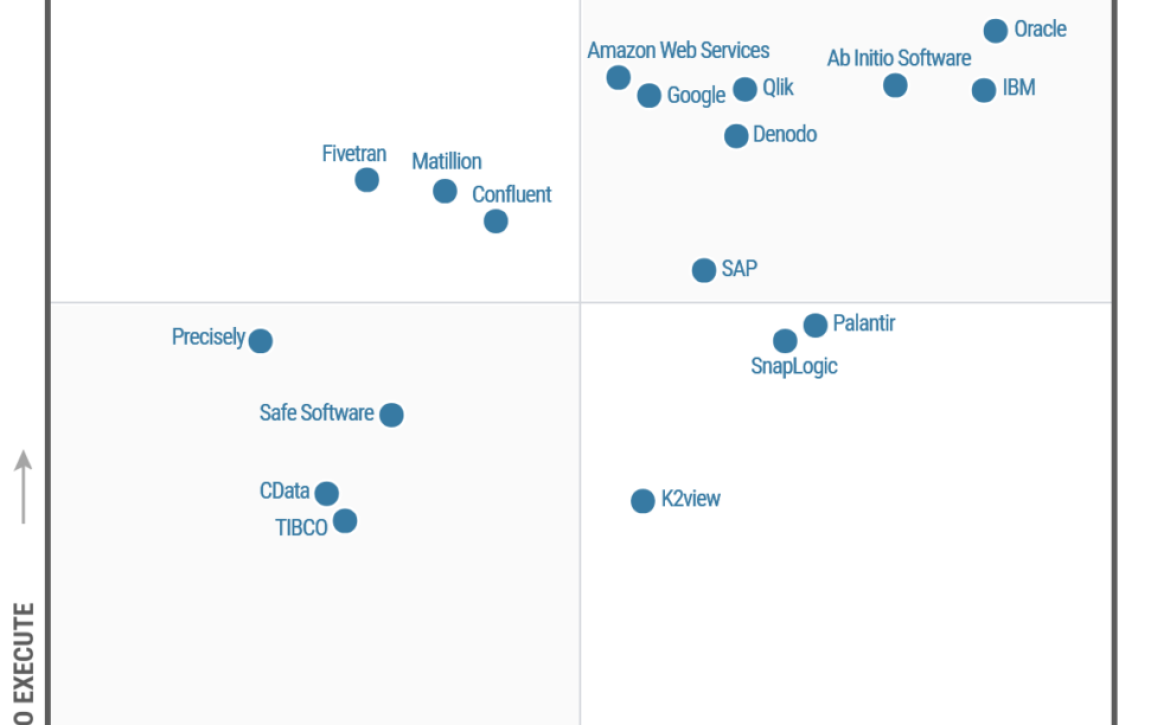
I’m thrilled to share that Gartner has named SAP a Leader in its inaugural 2024 Magic Quadrant for Recurring Billing Applications.

We believe this recognition underscores our commitment to providing an agile cloud solution for recurring revenue management that meets the needs of fast-growing companies with SAP S/4HANA Cloud and SAP Subscription Billing. Gartner evaluated 17 vendors and named SAP a Leader.

Read the full report here.

This graphic was published by Gartner, Inc. as part of a larger research document and should be evaluated in the context of the entire document. The Gartner document is available upon request from SAP. Click to enlarge.

The Growing Importance of Billing Software 

Recent publications emphasize a growing consensus among analysts that advanced billing software is becoming increasingly essential for fast-growing companies across various industries. To navigate the complexities of invoicing and revenue collection with recurring revenue business models, companies require a reliable and sophisticated solution that can handle high transaction volumes with both flexibility and accuracy.

Accelerate Growth with Modular Cloud ERP for Recurring Revenues 

Leveraging a modular cloud approach, SAP seamlessly integrates SAP S/4HANA Cloud, SAP Subscription Billing, and, in the case of usage-based pricing, SAP Convergent Mediation by DigitalRoute. This powerful combination enables organizations to efficiently manage subscriptions, usage plans, and bundles, driving growth and operational excellence in today’s dynamic business environment.  

SAP S/4HANA Cloud, together with SAP Subscription Billing, has quickly become a cornerstone for fast-growing companies seeking a SaaS approach to manage their recurring revenue business. Whether B2B or B2C scenarios, our solution supports a diverse array of industries, including professional services, high tech, industrial manufacturing, automotive, life sciences, and healthcare.  

Customer Success Stories 

Discover how SaaS CRM company LeadSquared simplifies complex subscriptions and enhances customer transparency with automated order-to-cash processes in this short video.

Explore how biotech leader F. Hoffmann-La Roche is revolutionizing the industry by automating order-to-cash processes for its digital offerings in this customer story.

For additional insights from SAP customers and to learn more about our quote-to-cash solutions, visit the comprehensive overview page on sap.com


Martin Barkman is senior vice president and global head of Product Marketing for Finance, Supply Chain, and Cloud ERP AI at SAP.

Sign up for our newsletter to receive stories and highlights in your inbox weekly

Gartner, Magic Quadrant for Recurring Billing Applications, Mark Lewis, Robert Anderson, 6 August 2024 

GARTNER is a registered trademark and service mark of Gartner, Inc. and/or its affiliates in the U.S. and internationally, and MAGIC QUADRANT is a registered trademark of Gartner, Inc. and/or its affiliates and are used herein with permission. All rights reserved. 

Gartner does not endorse any vendor, product or service depicted in its research publications, and does not advise technology users to select only those vendors with the highest ratings or other designation. Gartner research publications consist of the opinions of Gartner’s research organization and should not be construed as statements of fact. Gartner disclaims all warranties, expressed or implied, with respect to this research, including any warranties of merchantability or fitness for a particular purpose.  This graphic was published by Gartner, Inc. as part of a larger research document and should be evaluated in the context of the entire document. The Gartner document is available upon request from SAP.

New Process AI Capabilities for SAP Signavio Offer Instant, Tailored Recommendations

The promise of generative AI is in its ability to support individual businesses with individual needs; not just automating work, but identifying what work can or should be automated, as well as the best place to start.

With the release of new process AI capabilities for SAP Signavioprocess recommender and performance indicators recommender — SAP is taking a step closer to realizing this promise.

Realize holistic, data-driven business transformation across your organization – unlocking faster time to insight and adaption

Embedded into SAP Signavio Process Transformation Suite, these novel capabilities deliver instant, tailored process and metrics recommendations that will help process owners and process analysts accelerate process model design, more readily define their process monitoring strategy, and improve the quality of business outcomes.

SAP Signavio and SAP LeanIX solutions are core elements of the Business Transformation Management portfolio, which leverages SAP Business AI technology, initiatives, and principles to help customers on their transformation journeys, and deliver generative AI capabilities that are specific to the process world.

The latest release of SAP Signavio Process Transformation Suite features the following:

  • An AI-assisted process recommender provides process owners with preconfigured process models suggestions out of a database of more than 5,000 best practices from SAP.  This new generative AI capability will help process owners move fast from the initial exploration phase to process design by instantly narrowing down hundreds of options to those that present a best match to their business.
  • Users are suggested preconfigured process models which serve as a great foundation they can save, edit, and further perfect, saving weeks, if not months, of stakeholder interviews and lengthy workshops currently required to design a new process or redefine an existing one.
  • An AI-assisted performance indicators recommender delivers instant recommendations on the most relevant process performance indicators (PPIs) to be applied to a specific process, based on a database of thousands of KPIs and PPIs.
  • A capability to identify key process metrics among a variety of options, which is critical to measure success, can recommend the most relevant measures to assess the performance of a business process, providing companies with much needed insight into how they can streamline operations and reduce overhead.

“Generative AI is impacting every facet of modern organizations, and every process — from finance to sales, procurement, and supply chain management — can benefit from this transformative force,” shared Dee Houchen, head of Market Impact for SAP Signavio. “With generative AI serving as a catalyst, we are developing the third generation of our business process management solutions to make people’s work easier and help them perform it faster. When it comes to process management, generative AI can also extend the horizon of our thinking, by providing suggestions that experts can build on. At the same time, we can see generative AI lowering the entry barriers to disciplines such as process analysis, acting as a knowledge multiplier and helping companies to scale.”

In addition to these newly released capabilities, a process mining co-pilot currently in beta testing is expected to be released in November this year. The AI-assisted process analyzer, also known as text-to-insights, will empower users with any skillset to extract deep insights and obtain valuable knowledge from process information simply by using natural language and a question/answer approach. Along with improving the time to insight, this new co-pilot will help continue the trend of democratizing process mining, ensuring as many people as possible within an organization can contribute to process excellence.


Lucas de Boer is Global Marketing Program lead for SAP Signavio.

Receive weekly updates and highlights from the SAP News Center direct to your inbox

Atturra Enhances HR with SAP SuccessFactors Implementation

Atturra, a prominent Australian advisory and IT solutions provider listed on the ASX, has successfully transformed its human resources operations with SAP SuccessFactors implementation. The announcement of Atturra’s SAP SuccessFactors implementation was made at SAP NOW ANZ, SAP’s flagship customer event in Australia and New Zealand. This event serves as a platform for showcasing innovative […]

The post Atturra Enhances HR with SAP SuccessFactors Implementation appeared first on InsideSAP.

Three Reasons to Include the Next Generation on Big Decisions

At 14, Coco Yoshizawa of Japan recently became the youngest medalist at the 2024 Summer Olympics, using a skill she mastered during primary school to bring her to the podium. Coco and her peers are proving on an international stage that it is never too early to accomplish incredible feats. The Olympic Games are not the only place we can look to for young, driven leaders.

A recent global study by We Are Family Foundation (WAFF), produced in part with support from SAP, introduced the complexity of incorporating intergenerational collaboration into projects, highlighting how youth in particular face a lack of opportunities to lead and contribute. Young people are often left out of the conversation when it comes to the world’s unprecedented challenges, despite offering a unique and personal perspective on shaping the future.

SAP is powering equitable access to economic opportunity, education and employment, and the circular economy

People under the age of 30 make up more than half of the world’s population. Why block these important voices?

Laalitya Acharya is an impact entrepreneur who invented an AI-driven device to detect water contamination in seconds. In parallel, she founded an organization aimed at finding the intersection of research, advocacy, and policy work through summits discussing action to scale clean water solutions. She continued as an active activist on the topic of closing the water gap by attending events like COP28 as a We Are Family Foundation delegate — all before the age of 20.

Age has not stopped either of these accomplished youth from taking action. In fact, in most cases, being young can be an asset. Young people embody the qualities needed to lead in an increasingly unpredictable and technology-driven time — from the determination to be a leader in one’s athletic field to enacting meaningful change on climate issues.

In honor of International Youth Day 2024, here are three reasons we should never let age become an obstacle to actualize powerful ideas.

1. Young Entrepreneurs Offer Fresh Perspectives

Young impact entrepreneurs like Laalitya are governed by their life experiences and insights, shaped by a rapidly changing global landscape and unprecedented access to technology. Laalitya’s innovation, for example, was born out of a family trip to India, where she was inspired to research solutions when she was personally affected by contaminated water. With an interest in AI, she wanted to find a unique way to blend technology with advocacy to change the “mold of what we think about as water advocacy.”

When given the opportunity, youth can bring groundbreaking ideas and challenge traditional engagement models at the corporate and policy levels. Companies like SAP are leveraging these unique insights with initiatives like Youth to the Table, in which they enable young leaders to rethink the status quo in conversations with key partners at events like COP and The World Economic Forum.

2. Young Innovators Show a Strong Sense of Resilience and Adaptability

In an era characterized by constant change, from the onset of COVID-19 to the developments in AI, young people have an intrinsic ability to navigate uncertainty and apply a dynamic approach. While the entrepreneurial journey is rarely easy, tech-driven acceleration adds a level of urgency that forces them to remain scrappy and leverage the resources available to them in the moment. 

Renata Koch Alvarenga, a young activist from Brazil, understood the power of accessibility when she founded EmoderaClima at 22. The initiative looks to tackle the climate crisis through the lens of gender equality in the Global South, providing an online database with multilingual educational content to empower young people impacted by climate change in Latin America. As she looks to make resources accessible to all, she is required to adapt to the ever-changing business and policy setting in Brazil. Young people like Renata leverage resources like technology to adapt to difficult environments, a testament to their unique strengths as leaders.

3. Young People Emphasize the Importance of Community

Technology has not only given young impact entrepreneurs activists a louder voice than ever, it gives them a community at their fingertips. Whether it was the community they were born into or the community they’ve created, young people are more likely to support the causes and people they care about than former generations. Per a study on young changemakers by The Possibilists in partnership with SAP, 92% of respondents are motivated by the opportunity to do something for their community.

Young people know how to mobilize for their cause or community. Innovators like Larissa Napoli (27), who is the coordinator and member of the Quebrada Agroecológica, a project that promotes water security and agroecology in several Brazilian communities, are fueled by a sense of dedication. Much like the 70% of gen-Z were involved in social or political causes in 2021, she and her colleagues started locally and scaled their initiative through the power of digital channels. Their passion translates into meaningful action that can influence key decision-makers.

SAP believes in the power of collaborating with young impact entrepreneurs and innovators. Through partnerships with ChangemakerXchange, Generation Unlimited, The Possibilists, and We Are Family Foundation, we gather insights and promote initiatives that enact inclusive change. From bringing youth delegates to COP28 to introducing young changemakers at SAP events, we aim to give young innovators a valued voice.

If you are interested in learning more on how to close the intergenerational gap, We Are Family Foundation’s study offers interesting insights on the competitive advantages of working with young leaders.

We invite you to join us in this work; let’s inspire future solutions through meaningful solutions that erase age as an obstacle and ensure everyone’s opinion is valued.


Selina Henn is Strategy and Operations associate for Corporate Social Responsibility at SAP.

Get weekly news highlights from the SAP News Center delivered to your inbox

Previous Next
Close
Test Caption
Test Description goes like this