If You Use AI to Come Up With the Idea, Is It Your Idea? (Part 3)
Whose idea is it really – yours or AI’s? Let’s debate. 👇
This is the last part of asking our Social Media Team about using AI at work. 🥹 Follow us for more conversations like these!



Whose idea is it really – yours or AI’s? Let’s debate. 👇
This is the last part of asking our Social Media Team about using AI at work. 🥹 Follow us for more conversations like these!

Want faster, clearer sales insights? See how BW Data Products turn raw data into smarter decisions.
Watch the full episode: https://sap.to/6053AzRxU
#SAP #DataProducts #SalesInsights


Transaction variants are a powerful tool in SAP that can be used to restrict the display of fields for a particular screen, based on which users are accessing the data.

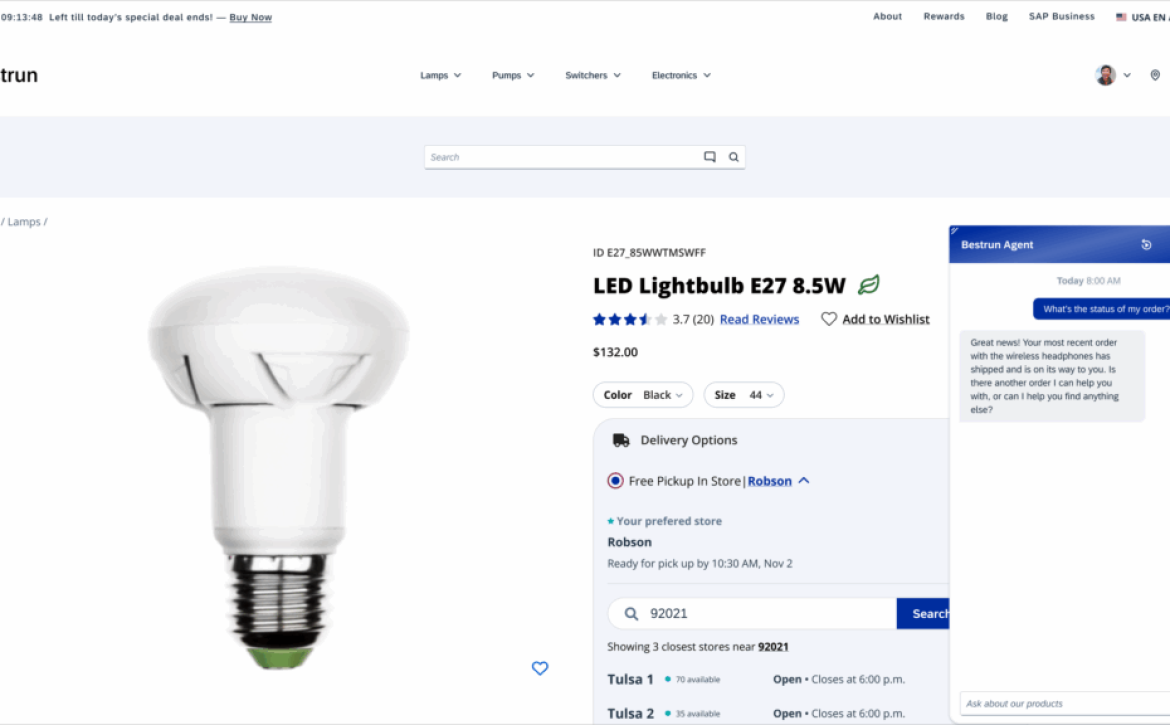
In the arena of customer experience, competitive advantage can be won or lost in a single interaction. And long-term loyalty — keeping customers coming back — is an ongoing challenge.
Every moment in the customer journey is a chance to deliver value, earn trust, and build relationships. But delivering consistently great experiences means adapting to evolving trends and expectations with a connected approach to people, data, and systems.
The Q2 2025 release of the SAP Customer Experience (SAP CX) portfolio does just that. Whether engaging customers, streamlining operations, or empowering employees, this release delivers smarter, faster, more personalized experiences at scale. Powered by AI with harmonized data, it brings improvements across the customer experience life cycle, from first touch to long-term growth, with seamless, value-generating experiences across service, sales, marketing, commerce, and consumer industries.
Here are the highlights from SAP CX in Q2 2025.
Everyday moments turn into meaningful engagements when experiences are connected, relevant, and effortless. This release helps users go beyond meeting customer needs to building trust and loyalty at every touchpoint.
SAP Service Cloud
SAP Commerce Cloud

SAP Emarsys
Sustainable growth requires operational efficiency and built-in customer experience. With unified data connected to core business operations and AI-driven insights, these updates improve internal operations, enhance scalability, and set the foundation for differentiated customer experiences.
SAP Commerce Cloud
SAP Sales and Service Cloud
SAP Revenue Growth Management
New to SAP Revenue Growth Management in Q2 2025 includes:

Across the experience life cycle, AI-powered embedded intelligence and autonomous AI agents help unlock faster decisions and better outcomes. This release helps teams move faster, engage smarter, and scale with confidence.
SAP Sales Cloud
SAP Service Cloud
SAP Emarsys

From loyalty to growth to operational agility, these innovations help deliver more intelligent, connected experiences at every touchpoint — with the adaptability and scalability to grow lifelong customer value.
Balaji Balasubramanian is president and chief product officer for SAP Customer Experience.
In the face of growing economic volatility and rapidly evolving trade dynamics, supply chain leaders are under pressure to shift from reactive logistics models to proactive, data-driven operations. Organizations that quickly adapt to policy changes and global disruptions are better positioned to maintain resilience, while those that cling to the status quo may struggle to keep pace in a rapidly evolving marketplace.
The challenge is clear: without a plan to adapt and evolve, organizations expose themselves to rising logistics costs and limited scalability. To remain agile and deliver on rising customer expectations, companies must move along the logistics maturity curve—transitioning from manual, fragmented practices to agile, automated operations.
With four key techniques outlined in our Supply Chain Logistics Maturity Model, organizations can accelerate their maturity journey and build supply chain logistics operations that are efficient, resilient, and orchestrated.
At the initial stages of maturity, logistics operations often rely on siloed and manual processes, such as contracting carriers via e-mail and managing data in spreadsheets. This fragmented approach creates inefficiencies, increases the risk of errors, and limits the scalability of operations.
Improving efficiency starts with the process of digitalization. By integrating enterprise resource planning (ERP) platforms with transportation and warehouse management systems, companies can streamline routine tasks like data entry, eliminate redundant communications, and better utilize resources. For example, intelligent operations can optimize transportation costs through load consolidation and mode shifting; enable better planning by reducing reliance on spot shipments; improve mileage and fuel consumption through route optimization; and prevent overpayments with invoice validation.
Automating these processes breaks down the first barrier to decision-making by handing valuable time back to logistics teams. And as organizations mature, these efficiencies become embedded into daily workflows that span the organizational gap across carriers and trading partners. Resource allocation becomes data-driven and adaptive, setting the stage for more advanced capabilities and collaboration.
Limited visibility is a common pain point for lower-maturity organizations, where shipment status is either unknown until final delivery or only accessible by leaving the core fulfillment process. Without timely and integrated insights, it’s difficult to adjust to disruptions or meet rising customer expectations.
To move forward, businesses must turn insight into action, eliminating data silos to integrate real-time visibility into core order fulfillment processes. This technology enables proactive decision-making, powered by predictive analytics and automation.
Companies can further enhance agility and visibility by optimizing executable transportation plans that align with fulfillment needs. With these capabilities, customer service teams can forecast potential delays or disruptions and create automated customer notifications for exceptions or changes. Improved visibility ultimately leads to insights that can help companies commit to and then deliver on customer promises.
For businesses that need help turning data into action, SAP supply chain logistics solutions can unify information from multiple sources to help align transportation management with broader supply chain operations.
In today’s volatile landscape, resilience puts leaders ahead of the pack. It’s a prerequisite for success. Mature organizations are built to absorb shocks and continue delivering, while less mature systems are often left scrambling to respond with costly, reactive measures.
Resilient logistics operations are flexible, sustainable, and data-driven. They make quick but methodical decisions when disruptions arise based on embedded analytics and intelligent optimization.
In the face of disruption, mature organizations look for ways to make marginal gains throughout planning, contracting, and execution. They understand that constant incremental improvement creates broader success. This can take the form of optimizing routes to minimize miles or shifting to lower-emission modes or equipment to reduce carbon footprints. These organizations may also examine their load configurations to fit more cases or pallets into a trailer or container, stacking efficiencies across their operation.
With the right tools and processes in place, businesses can transform potential disruptions into opportunities for competitive advantage.
Automated orchestration is the final step of the supply chain maturity model. Seamless, harmonized coordination of systems, people, and partners is the apex of supply chain logistics maturity. Here, every component of the logistics ecosystem operates in sync, guided by autonomous, AI-based technologies across a unified strategy. Such a high level of ecosystem integration allows organizations to anticipate risk, respond dynamically, and collaborate across their ecosystem.
Achieving orchestration demands connected systems across a unifying platform, real-time collaboration, and adaptive execution across the supply chain. Key elements to enable orchestration include access to predictive, real-time data on shipments, demand, capacity, weather, traffic, and port congestion that enable synchronized optimization, spanning a unified platform for digital transactions extended to a multi-modal carrier network.
In an era defined by an abundance of data yet a perpetual risk of disruption, standing still is not an option. Connecting the dots between people, processes, and partners will help companies stay ahead of potential disruptions and build the foundation for a collaborative, data-driven, and optimized supply chain.
No matter where an organization stands on the logistics maturity curve, the techniques outlined above can drive tangible progress—provided the right plan is in place.
SAP’s supply chain logistics management software can empower organizations to optimize and automate execution and achieve real-time visibility to respond effectively to changing market conditions. Solutions like SAP Business Network can further enhance collaboration between shippers and carriers, helping to reduce cost, improve on-time delivery rates, and eliminate friction across logistics processes.
To remain competitive, businesses must chart a clear path toward orchestrated logistics operations or risk being left behind by those that do.
Doug DeLuca is an SAP Business Network product marketing manager.
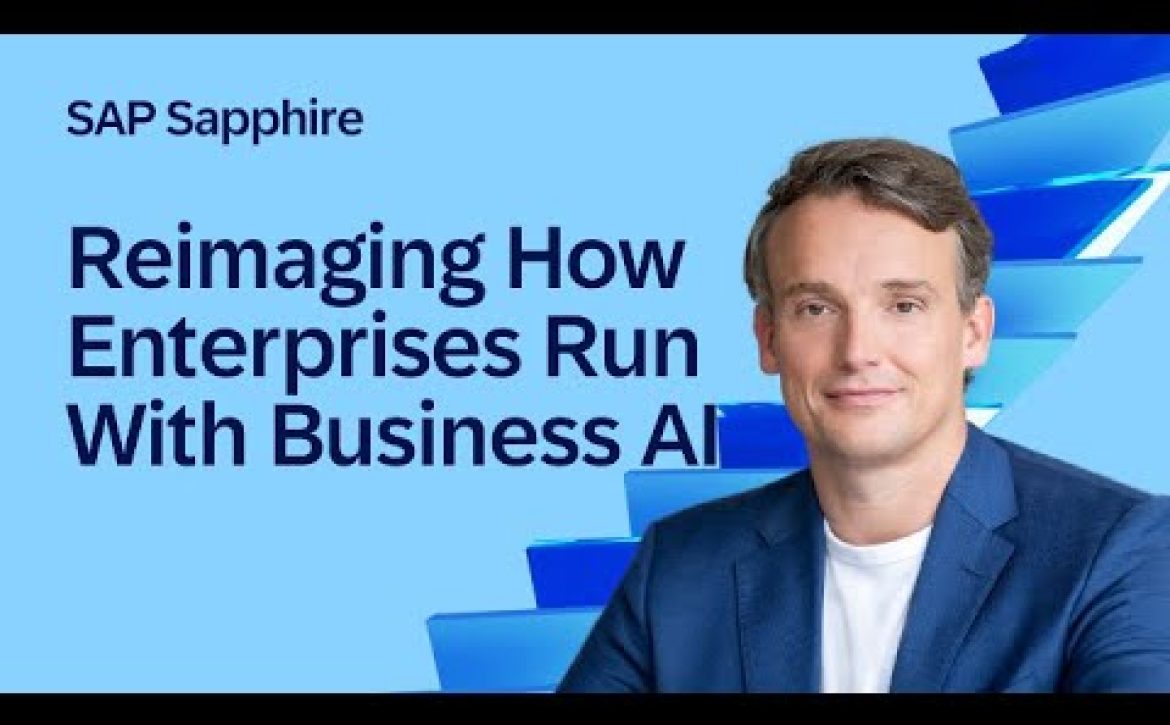
SAP executives, led by CEO Christian Klein, told IT and business leaders attending this year’s SAP Sapphire event that by tapping into SAP’s “flywheel” combination of the broadest suite of enterprise apps, context-aware data, and world-class Business AI, they can conquer uncertainty.
In a kickoff keynote at the Orlando event, they unveiled a raft of new AI tools, business apps, and partnerships designed to help customers overcome these challenges, transform their operations, and “bring out your best.”
“All of us face one problem – every company, no matter which industry or geography. And that problem is uncertainty,” said Klein. “Uncertainty about trade disruption, about new regulatory requirements, and about how AI will transform my business and impact my workforce.”
SAP can’t take away macroeconomic uncertainty, he said, “But you have my commitment that we will help your business become more resilient and more resilient – especially in times like these. We will help you bring out your best.”

From a virtually omnipresent Joule assistant to an expanded network of Joule Agents that work across systems and lines of business, SAP heralds a new era that democratizes access to Business AI and can drive productivity gains of up to 30 percent.
Get all the latest news: https://sap.to/6052NQz9i


Collecting customer feedback is important, but what really matters is how businesses use it. In today’s fast-moving world, feedback needs to be understood and acted on quickly—not just stored in reports.

About nine out of 10 ERP implementations fall short, often due to lack of adoption by either employees or business units, according to global consultancy Bain & Company. So, how do experts such as Bain ensure success during their own big-bang implementation of, say, SAP S/4HANA Public Cloud?
“We executed this change management successfully by leveraging our own playbook on ourselves,” Ramesh Razdan, Global Chief Technology/Information Officer, Bain & Company, told SAP. “Just as we have done [with clients] multiple times across the globe, in partnership with SAP.”
The “playbook” is Bain’s methodical guide to modernizing an organization’s enterprise resource planning (ERP) system. And it played a vital role in Bain’s own ERP journey.