Five Make-or-Break Moments for Your AI Ambitions in 2026

Let me start with a simple experiment: Ask a generative AI tool to count the words in a document. It will likely be off by 10%.

Achieve company-wide ROI and transform how work gets done with agents grounded in business data

In a blog post, that’s tolerable. In a financial disclosure, a regulatory filing, or a supply chain commitment, it is simply unacceptable.

Generative AI is statistical. Answers to enterprise level problems are a lot more deterministic. The distance between 90% and 100% accuracy is not incremental. In our world, it is existential.

In 2026, AI is no longer evaluated on novelty. It is evaluated on precision, governance, scalability, and business impact. As organizations move from pilots to scaled programs, five moments will define whether they capture lasting value or expose themselves to avoidable risk. I have seen these moments play out across every major market I oversee.

1. The governance moment: when agents become digital coworkers

The first moment arrives when AI stops being a tool and starts being an actor.

Agentic AI systems plan, reason, orchestrate with other agents, and execute workflows autonomously. They touch sensitive data and influence decisions at scale. If you are not already governing them as you govern your human workforce, you are exposing your organization to risk.

Agent sprawl will mirror the shadow IT crises of the past decade, but the stakes are categorically higher. Enterprises must establish agent lifecycle management, clear autonomy boundaries, policy enforcement, and continuous performance monitoring. Every board needs to answer three questions: Who is accountable when an agent makes the wrong call? How are decisions audited? When does the machine escalate to a human?

Geopolitical fragmentation compounds this urgency. Sovereign cloud, sovereign AI, and data localization are no longer theoretical concerns. They are regulatory realities in markets from New York to Frankfurt to Riyadh to Singapore. Governance in the age of AI is less about controlling risk at the edge and more about embedding deterministic control into probabilistic intelligence. That is a C-suite mandate, not an IT project.

2. The data foundation moment: when the last mile is the only mile that matters

The second moment is quieter, but it is where most enterprises will ultimately win or lose.

AI is only as reliable as the data and processes it operates on. Fragmented master data, siloed systems, and over-customized ERP landscapes introduce unpredictability at the worst possible moment: when AI provides a recommendation that affects your customers, your cash flow, or your compliance position.

Enterprise AI value will not come from generic large language models trained on internet-scale text. It will come from intelligence grounded in your enterprise data—orders, invoices, supply chain records, financial postings—embedded directly in your processes. Relational foundation models optimized for structured business data will outperform generic LLMs in forecasting, anomaly detection, and operational optimization.

The question every board should be asking is not only “What AI can we add?”, but also, “Is our data estate ready, or are we layering probabilistic intelligence onto fragmented foundations?”

3. The employee interaction moment: when the interface disappears

The third moment happens in your employees’ daily workflows, and it will accelerate faster than most organizations expect.

In 2026, we are moving from static application interfaces to generative user interfaces. Instead of navigating between systems, employees express intent: “Prepare a briefing for my highest-revenue customer visit this week.” AI agents orchestrate the workflows, assemble the context, and surface recommended actions.

But adoption is not automatic, and trust is not given. Employees will embrace AI teammates only when they are confident that outputs respect governance boundaries, reflect real business rules, and deliver measurable gains. Role-specific AI personas tailored for the CFO, the CHRO, the head of supply chain, built on trusted data and embedded in familiar workflows, are what will close the adoption gap.

Organizations that invest in AI-native architecture will accelerate ROI. Those that bolt AI onto legacy interfaces will struggle with trust, usability, and scale. This is a design decision with strategic consequences.

4. The customer moment: when intelligence becomes a competitive moat

AI proves its enterprise value most visibly at the customer edge.

Trained on your own data, your own policies, and your own interaction history, customer-specific intelligence compounds in ways that competitors cannot easily replicate. This is especially powerful in exception-heavy environments: dispute resolution, claims handling, returns management, service routing. AI that can classify cases, surface relevant documentation, recommend policy-aligned resolutions, and learn continuously from outcomes transforms these high-cost, high-friction processes into sources of competitive differentiation.

In 2026, your customers will not reward novelty. They will reward reliability, relevance, and responsiveness. Organizations that use AI to absorb complexity, without losing control over outcomes, will build moats that generalist tools cannot breach.

5. The strategy moment: when you decide how far to go

The final moment is the one that falls squarely on leaders.

AI adoption is not a single journey. It requires leaders to orchestrate three layers in parallel:

  • Embedded AI: Persona-driven productivity gains built into core applications for immediate returns
  • Agentic AI: Multi-agent orchestration of complex, cross-system workflows
  • Industry AI: Deeply specialized applications co-developed to address the highest-value challenges specific to your sector

The trap is false sequencing: focusing only on embedded AI leaves value on the table and jumping to deep industry transformation without governance and data maturity multiplies risk. The organizations that will lead are those that align ambition with readiness and invest in clean core architecture, modern data foundations, and cross-functional AI ownership, while moving decisively from pilots to programs.

The leadership test

In 2026, the winners will not be those with the most AI features. They will be those who treat AI as a core operating layer, governed like a workforce, grounded in trusted data, tailored to employees and customers, and calibrated to the realities of their industry.

The gap between 90% and 100% is precisely where enterprise value lives. It is also where leadership is tested. The decisions you make in the coming months will determine whether AI becomes your most powerful source of durable advantage or your most expensive lesson in misplaced confidence.

This is the moment to move with precision.


Manos Raptopoulos is global president of Customer Success Europe, APAC, Middle East & Africa, and a member of the Extended Board SAP SE.

Subscribe to the SAP News Center newsletter to receive news, highlights, and stories each week

With AI, Fast-Growing Companies Could Compete on Innovation, Not Size

For 50 years, if you weren’t a billion-dollar company, you could not afford to run your business with the same precision, depth, and intelligence as the world’s best.

Pave a clear path to scalable, sustainable growth on a timeline that’s right for you

The software itself wasn’t the barrier; the operational weight around it was: dedicated data centers, expensive hardware, annual upgrade cycles that consumed months of IT resources, and the specialist teams to keep it all alive.

SAP Business AI and SAP Cloud ERP have completely changed the economics of enterprise software. The heavy infrastructure disappeared into a subscription. A 200-person company can now run its core business processes as efficiently as a global enterprise, on a predictable monthly cost, without an army of IT staff.

AI accelerates this further. What took months of configuration and specialist knowledge can now be activated through natural language and intelligent automation. The deep industry expertise SAP spent 50 years encoding into its software is now accessible to businesses of all sizes.

“John Boos is a 137-year-old company, with 137 years of tech debt,” said Britt East, CIO at John Boos & Co. “To make matters more complex, we are growing incredibly fast. Every quarter is a record quarter! SAP Cloud ERP will be the backbone of our business in perpetuity, giving us a standard and scalable foundation to support growth while also unleashing our workforce with real AI use cases that make their lives a lot easier and the company as a whole more successful.”

The real value of SAP Business AI is that a midsize manufacturer in Stuttgart or a growing logistics company in Dallas could access intelligent business operations at speed and price point they can afford.

Won’t AI then replace software altogether?

Think of it this way: GPS system is genuinely intelligent. It calculates optimal routes, adapts to real-time traffic, and reroutes dynamically. But it is only as good as what backs it—the data underneath it, like accurate roads, turn restrictions, and governance for local speed limits, timeframes for live incident feeds and so on. Without the structured, maintained, trusted data layer, the intelligence has nothing to work with—it would confidently lead you off a cliff.

Software is not being replaced by AI. Software is becoming AI’s superpower.

With deep process and industry knowledge, semantically rich business data and enterprise-grade governance built in,  AI gets what it lacks on its own to deliver reliable, battle-proven, trustworthy, repeatable, and auditable results—every time. Agents are probabilistic. They predict, they infer, they move fast, and that is powerful. But it means that the more AI agents you deploy, the more valuable your underlying software systems become.

And the cost? Running a stack of AI tools adds up to significant infrastructure investment, fast. However, serious software companies, including SAP, have already embedded their AI directly into their platforms, and they often co-develop with leading AI providers, so you are not choosing between AI and SAP. You’re choosing SAP with AI already inside it.

“Many companies used to delay decisions because ERP felt too complex,” shared Tobias Siebler, CEO of FULCRUM Consulting Germany. “That has changed. With SAP Cloud ERP, you can start small, get live quickly, and still have a setup that grows with the business, including the current and new AI capabilities as they become available.”

The new stack: What this actually looks like

Imagine a shipping company that processes 10,000 orders a day. Traditionally, humans monitored exceptions, chased suppliers, and rerouted freight when things went wrong. Today, AI agents can scan the full order pipeline in real time, flag anomalies, draft supplier communications, and propose rerouting options—all within the governed environment of SAP’s supply chain data. Humans are irreplaceable in making the final call, but the agents do the legwork.

With Joule, work starts with what needs to be accomplished, not which system to open. Teams move from intent to execution in real time. Decisions are shaped by data, operational capacity, financial constraints, and customer demand.  AI agents handle coordination across workflows. People make the calls that matter. The whole process runs on the unmatched human ability to make decisions based on multifaceted considerations, supported by auditable, structured data.

That is the model. AI can’t replace the system. AI operates inside the system, supervised by humans and connected to real business data, constrained by real business rules and governance, delivering real business outcomes.

AI needs rich, structured, semantically meaningful business data to perform. SAP has 50 years of exactly that.

For fast-growing companies: SAP GROW Fast

Markets shift. Expectations evolve. Technology accelerates change. Naturally, our customers demand quicker and better results. SAP GROW Fast services are designed to help customers go live with AI-ready SAP Cloud ERP with speed and predictability. The deployment of finance and spend core capabilities for SAP Cloud ERP, as well as other SAP solutions on the way, can be done in months, not quarters. And from there, the business can expand into the rest of SAP Business Suite fast, all activated with AI from day one.

Companies taking advantage of SAP GROW Fast are gaining compound advantages with a platform that becomes more capable with every AI advancement that SAP and its partners embed into it. The companies that are waiting? They will be implementing what the leaders deployed today—three years from now.

The human element is not going away, it’s going up the stack

As we disrupt everything we do and work with AI to achieve better, faster business outcomes, SAP partners become key change agents. All around the globe, SAP partners are being enabled to extract business value quickly for our customers with the AI-ready SAP GROW Fast services. This is a step-by-step change into a world of AI-first business value adoption and should be leveraged by all our partners.

“Many organizations still assume that SAP is designed exclusively for large enterprises,” explained David Bayón Esporrín, go-to-market director of the Global SAP Practice at INETUM. “In reality, that perception no longer reflects today’s market. With SAP Cloud ERP, and especially with SAP GROW Fast, companies of almost any size can optimize core business processes and harness the power of AI to accelerate growth in a simple and cost-effective way.” (See the full video interview.)

We are living through a platform shift, not unlike the one the internet created. The businesses that thrive will be the ones that move with intention, combining the intelligence of AI with the governed, structured, operationally rich foundation that enterprise software provides.

The great equalizer is here. The only question is: How fast do you want to use it to your advantage?


Santina Franchi is president of the Corporate Segment at SAP.
Guido Beuningen head of AI and Public Cloud for the Corporate Segment at SAP.

Subscribe to the weekly SAP News Center newsletter to receive stories and highlights

TSG Hoffenheim and SAP Expand Co‑Innovation to Advance AI in Professional Football

TSG Hoffenheim and SAP are deepening their longstanding collaboration to jointly explore and validate the next generation of intelligence‑driven football operations.

As one of the German Bundesliga’s most forward‑thinking organizations, TSG Hoffenheim is working closely with SAP in a co‑innovation setup to pioneer and test new AI capabilities within SAP Sports One. The focus is on assessing how AI can support football‑specific processes such as scouting and video analysis. 

Live AI Use Cases Show How SAP Delivers Trusted Orchestration and Smarter Execution for Manufacturing and Supply Chain Management

A ginger shot, fresh off the line, was the first stop for many visitors at SAP’s booth at Hannover Messe. But the real takeaway was seeing AI in action. From mixing the ginger shot to packaging and warehouse delivery, visitors saw how SAP is turning AI ambition into real-world manufacturing execution, delivering end-to-end supply chain management processes, and building the resilience every manufacturer needs.

Held from April 20–24, Hannover Messe is the world’s leading industrial trade fair.

On day one, Christian Klein, CEO of SAP SE, stopped by the SAP booth before joining German Chancellor Friedrich Merz and other industrial leaders on the center stage to discuss the importance of moving from AI ambition to real-world execution.

And visitors to the SAP booth experienced that shift firsthand, following the production of the ginger shot.

Packaged in a neat blue box, the ginger shot was refreshing but that wasn’t the only takeaway. The real takeaway was how SAP’s new set of AI-powered manufacturing and supply chain innovations can deliver connected end-to-end supply chain business processes powered by AI.

Supply chain orchestration

From AI and data and then using SAP’s agentic AI, visitors saw what supply chain orchestration looks like in practice. SAP uses agentic AI, trusted data, and applications to help manufacturers sense, analyze, and act in real time.

Orchestrate your supply chain as a single, connected system using AI and data to sense, analyze, and act in real time

At the booth, visitors saw human operators interact with an ANYbotics robot through Joule using natural language to run live, remote field service inspections; Uhlmann’s high-tech glass-fronted packing machine, PacXplorer, in action opposite the CNC machine from DMG MORI that was creating spare parts for the PacXplorer; and, at end of the production cycle, AIMBO’s robot handling the picking and packing of the ginger shot. Both AIMBO and ANYbotics are part of SAP’s growing network of physical AI partnerships.

In addition to many tours held in German and English, day one also saw tours in Japanese, Chinese, and Portuguese—Brazil was the partner country at Hannover Messe 2026.

Equipped with headphones to block out the noise of the crowds at the booth, visitors heard how SAP’s AI can deliver trusted orchestration and smarter execution for manufacturing and supply chain management.

Live AI use cases demonstrate functions and benefits

Operations and insights use case

Here, visitors experienced SAP’s vision of supply chain orchestration. In this vision, supply chain orchestration acts as the nerve center of the enterprise. It uses external alerts such as natural disasters, port congestions, or supplier routes to optimize enterprise logistics and planning using agents.

Benefits can include faster response times with AI-assisted monitoring and automated alerts; improved decision-making with data-driven, operational decisions powered by integrated business AI capabilities; and seamless integration with end-to-end connectivity from supply chain planning through to manufacturing execution and quality control.

Top AI functions

  • Production Planning and Operating Agent can assist with order release and real-time monitoring.
  • A physical AI robot inspects hazards, analyzes inspection data, and identifies root causes.
  • Supply optimization analysis helps summarize insights, analyze, and explain the time-series optimization planning run.

Smart production use case

DMG MORI demonstrated production at its CNC machine—as part of an end-to-end process—from engineering to planning to production.

As the white robotic arm of the CNC machine silently moved the pusher spare part after the milling process, visitors learned about the benefits of integration, from design to tool management, CNC programs to SAP Digital Manufacturing as part of a seamless, integrated process. The production operator dashboard offers the operator on the machine AI capabilities and insights to operational and maintenance information.

The process then continues through to logistics execution with SAP Logistics Management, which helps combine warehousing and transportation capabilities for smaller warehouses.  This features an AI-powered logistics assistant that can cut through the noise, automatically gathering, summarizing, and prioritizing critical shipment information. It can also provide real-time shipping prices, bringing to life trusted orchestration and smarter execution.

Top AI functions

Intelligent packaging use case

Uhlmann’s PacXplorer and SAP highlighted a fully integrated, high-speed packaging line from SAP S/4HANA, to SAP Digital Manufacturing, down to Uhlmann’s automation layer to produce the packaged ginger shot. The ginger shots were moved away from the line by a mobile autonomous robot from Symovo. This use case showed visitors how SAP supports regulated industries such as pharma and life sciences.  

Highlighted benefits include increased operational speed with higher throughput thanks to decreased order processing time, built-in regulatory compliance, reduced manual intervention, inventory transparency, and data integrity across the entire production chain.

Top AI functions

  • Condition monitoring-led services can enhance asset uptime and service efficiency by combining AI-driven insights and seamless collaboration across the service ecosystem.
  • AI-empowered flow analysis enables quick process modeling and engineering optimization.
  • Intelligent exception handling is embedded in agent-driven processes.
  • Joule’s integrated AI agents can support decision-making throughout the workflow.
  • Joule can help power order and line insights.

Humanoid use case

At the final stop before getting their ginger shots, visitors watched an intelligent humanoid robot perform physical tasks at the end of the packaging line, bridging the gap between digital planning and physical execution, highlighting SAP’s Project Embodied AI.

Benefits of humanoids include increased operational speed with higher throughput due to a decreased order processing time; increased business uptime and cost efficiency especially in areas dangerous or difficult for humans; inventory transparency with real-time data integrity across the warehouse; and physical-digital alignment eliminating misalignment between planning and execution.

Top AI functions

  • Joule and Joule Studio can enable robots to understand the physical world, make autonomous decisions, and learn from their environment for smarter operations.

More than a quick refuel

At the end of their visit, visitors got so much more than a quick refuel to slake their thirst. Following the creation of the ginger shot from recipe development and planning to production with mixing, filling, and packing, visitors came away with a clear understanding of how SAP is connecting insight to execution with trusted orchestration and smarter execution. And, it is this trusted orchestration and smarter execution that is building the resilience every manufacturer needs in today’s world.


Subscribe to the SAP News Center for the latest SAP news each week

The New SAP AppHaus Walldorf Opens Its Doors for Customers

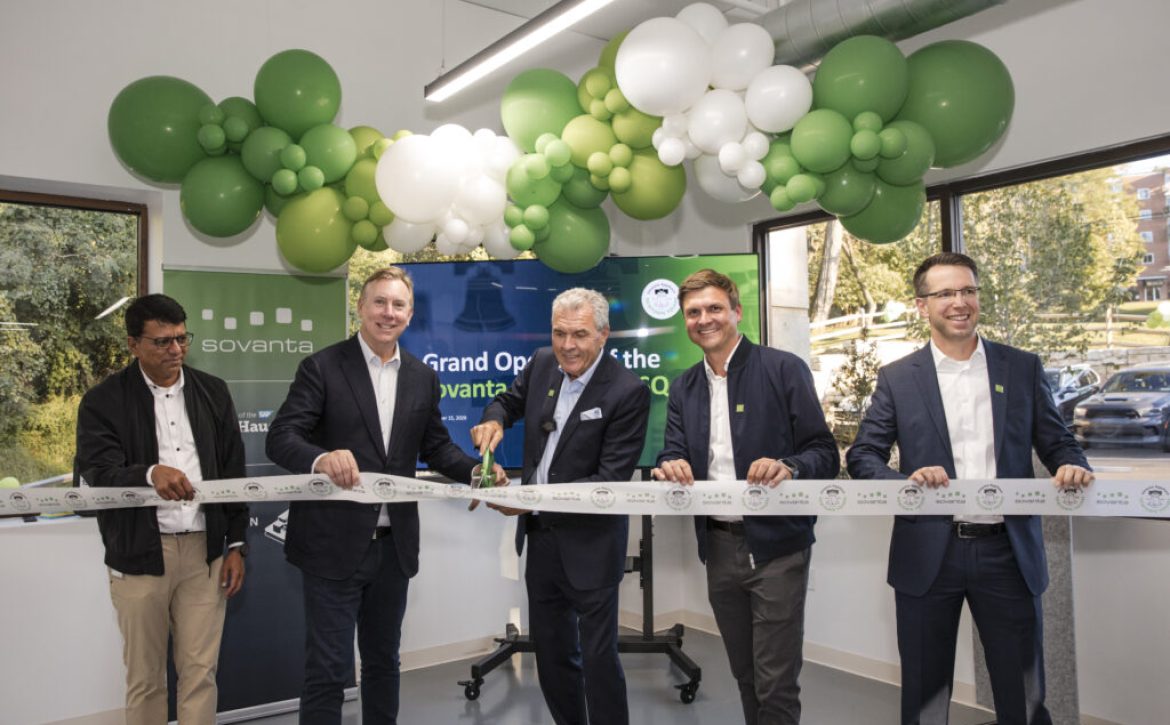
On April 16, 2026, SAP officially opened its newest creative space for customer co-creation, SAP AppHaus Walldorf. 

After months of renovation and designing the new creative space together with architects and facility management, the new SAP AppHaus Walldorf opened its doors for SAP employees in the region. It is an important milestone towards an outstanding, integrated customer experience on the Walldorf campus. The opening started with a fireside chat with Álvaro Wiedling, head of Customer Engagement Services MEE; Andreas Wendel, head of SAP Innovation Experience Services; Dennis Kecskemeti, head of SAP Innovation Experience; and moderated by Kathrin Tarnai-Sindl, head of Customer Engagements for APAC, EMEA, and MEE.

Watch a video of the SAP AppHaus Walldorf opening

Visitors such as Dirk Haeussermann, managing director SAP Germany, joined the event to get first impressions of the new space: “The new SAP AppHaus Walldorf is a very friendly and inviting collaboration space that is a perfect setup for our customers and partners to explore the newest innovations. It inspires them to move on into real, live solutions.”

The opening celebration

For the opening, the SAP AppHaus team decided to not cut a red ribbon, but tell a little story. After uncovering an old Chinese gong, Kecskemeti officially opened the new SAP AppHaus Walldorf with a loud and clear gong stroke. He explained that the gong was one of the signature pieces from the previous creative space in Heidelberg. There, it had a classic, traditional Chinese design and its sound was used during many workshops, meeting breaks, and events. When the team prepared the move from Heidelberg, it was immediately clear that the gong had to be taken to Walldorf. It went through its own small transformation, being redesigned and given a modern look to perfectly fit into the new space. When its deep sound was heard in the new SAP AppHaus Walldorf environment it was a worthy setting to start the new chapter in its new home.

From now on, the gong will be an integral part of SAP AppHaus Walldorf, where the team continues to run innovation workshops. Together with SAP customers and partners, it is all about framing the right business problems, turning insights into blueprints, and piloting ideas fast. This is especially relevant for AI solutions and the business opportunities brought about by agentic AI. Along the dedicated innovation toolkit for AI, the SAP AppHaus team supports customers of all industries to explore use cases and design them based on the latest SAP technologies. That way, SAP customers can learn, adapt, and scale with confidence. 

The integrated Walldorf campus experience

Now at SAP headquarters, the new SAP AppHaus Walldorf offers customers a collaborative, hands-on space to explore SAP innovation. Together with the SAP Experience Center, the show floor, S-Factory, and S.Mart Store, SAP’s Walldorf campus takes customers on a truly holistic journey, from inspiration to real impact. It shows visitors not just what SAP can do, but offers them the opportunity to explore and design solutions with the latest SAP technologies, such as SAP Business AI, to use the innovation potential for their respective business. Along its human-centered innovation approach, the SAP AppHaus helps teams turn ideas into solutions and make innovation real, especially when it comes to AI- and agentic AI-infused use cases.

“Our new innovation service offerings represent a significant evolution in how we support our customers’ digital transformation. By combining the inspirational power of our SAP Experience Centers with the interactive, hands-on SAP AppHaus workshop formats, we’re able to guide customers at every stage of their transformation journey and create measurable value quickly,” Wieldling says. “What truly sets this approach apart is our commitment to involving business stakeholders and end users from day one. This helps ensure that the use cases we identify and solutions we design have genuine business relevance and real-world applicability—ultimately delivering outcomes that matter to our customers.”

The work with customers

At the heart of what the SAP AppHaus offers are three core services: innovation service, explore service, and design service. Depending on the customer’s needs, these can be extended, for example, with different workshop formats, such as for SAP Business AI, SAP Business Technology Platform (SAP BTP), or Joule. In a networked way, customers also get direct access to product experts who are involved where they add the most value.

New beginnings

“For many people, the SAP AppHaus Heidelberg was more than just a workplace or a workshop location. It felt like working in a startup environment to build and design new solutions together with customers and partners. So, there clearly is a nostalgic look back on shared memories,” Tarnai-Sindl says. “At the same time, the campus in Walldorf brings new energy and opportunities. You feel more strongly that you’re part of a bigger whole and have the chance to meet and connect with many colleagues and people more easily. It’s a move from a very familiar environment into a larger context, with a sense of new beginnings.”

The first comments on the guest wall in SAP AppHaus Walldorf seem to prove her right: “Cool new space!”, “Finally!”, and “How inspiring, open, and well designed.”

How is the SAP AppHaus set up to work with customers globally?

The SAP AppHaus Network plays an important scaling role on an international level. It consists of more than 20 SAP partners that work closely with the market units, have established their own SAP AppHaus locations, and are fully trained in the human-centered innovation methodology as well as latest workshop formats, such as the Joule Agent Discovery Workshop also offered in the specialized innovation toolkit for AI.  All members are empowered early on with the latest methods, tools, and knowledge, allowing them to act as agile front-runners and co-innovation experts. They support customers regardless of their digital maturity, guiding them to explore new use cases and unlock tangible business value for customers around the world along SAP’s human-centered approach to innovation.

In addition, SAP AppHaus and the SAP Partner organization jointly launched the SAP AppHaus Alliances initiative. It is specifically designed for large SAP Global Strategic Services partners that work with key customers worldwide and are empowered to use the SAP AppHaus AI workshop formats.


Imke Vierjahn is SAP AppHaus Network communications lead.

Sign up to receive weekly news highlights from the SAP News Center

David Coulthard at Goodwood Members Meeting

From Track to Tech: David Coulthard at SAP Sapphire 2026 in Orlando and Madrid

SAP is excited to announce that former Formula 1 Driver and Grand Prix Winner David Coulthard will be a special guest together with Mika Häkkinen at SAP Sapphire 2026, appearing at both the Orlando and Madrid events. Visitors will have the opportunity to experience Coulthard and Häkkinen live at the Services and Support Center, where performance, precision, and innovation come together.

Photo credit: Ross Tomkins/Alamy

With a distinguished career in Formula One, Coulthard is known for his consistency, race intelligence, and deep understanding of high-performance environments. His presence at SAP Sapphire brings valuable perspectives on how precision, teamwork, and data-driven decision-making translate from the racetrack to the world of business.

Performance meets innovation

Throughout his career, Coulthard demonstrated the importance of preparation, adaptability, and collaboration—qualities that strongly resonate with SAP’s Services and Support organization. At the Services and Support Center, attendees can experience how these same principles help businesses navigate complexity, accelerate outcomes, and maintain peak performance.

Coulthard and Häkkinen will share insights from their time in Formula One, offering perspectives on competition at the highest level, the evolution of technology in racing, and the critical role of teamwork in achieving success.

Event highlights

Visitors to the Services and Support Center can look forward to several exclusive opportunities:

  • Experience Coulthard and Häkkinen live in the Formula One Racing Simulator at the Race of Legends.
    • May 13 in Orlando at 1:00 p.m.
    • May 20 in Madrid at 11:30 a.m. and 1:30 p.m.
  • Join theater sessions featuring voices from the Mercedes-AMG PETRONAS Formula One Team.
    • May 13 in Orlando with Michael Taylor at 11:30 a.m. (SER1257)
    • May 20 in Madrid with Laura Goodrick at 11:00 a.m. (SER1342)
  • Take part in exclusive interviews with Coulthard and Häkkinen.
    • May 13 in Orlando at 10:30 a.m. (SER2893)
    • May 20 in Madrid at 2:00 p.m. (SER1553)

A unique experience with SAP Services and Support

The Services and Support Center at SAP Sapphire is designed as a hub for inspiration and interaction. With Coulthard and Häkkinen on-site, visitors can expect engaging sessions, real-world insights, and hands-on experiences that connect motorsport excellence with business innovation—brought to life by SAP’s Services and Support organization. 

Join us in Orlando and Madrid

Whether attending SAP Sapphire Orlando or Madrid, this is a unique opportunity to experience two of Formula One’s most respected drivers up close—and to explore how SAP helps organizations achieve peak performance. Don’t miss the chance to meet Coulthard and Häkkinen at the Services and Support Center and discover how insights from the world of Formula One can inspire your business transformation journey.

Get our sessions into your personal agenda:


Hear the latest and connect with the best at SAP Sapphire

How NEC Is Becoming an AI-Native Enterprise with SAP

What does it take for a 125-year-old technology company to reinvent itself for the AI era? NEC is already taking that step, moving from continuous transformation to AI at scale.

Founded in 1899, NEC Corporation is one of Japan’s leading technology companies, operating globally across IT services, telecommunications, and digital infrastructure. Over the decades, the company has continuously adapted to new waves of technological change, but today’s shift is different. Artificial intelligence is not just another innovation cycle; it is redefining how organizations operate at their core.

For NEC, this means rethinking not only technology, but also how work gets done, how decisions are made, and how value is created.

In a recent conversation with Thomas Pfiester, head of Customer Engagement & Adoption and member of the Extended Board of SAP SE, NEC CIO Toshihiko Nakata shared how the company is approaching this challenge and why becoming an AI-native enterprise requires more than technology.

From Policy Debate to Practice: BSI Vice President Thomas Caspers on C3A, Cloud Sovereignty, and SAP

Since the signing of the cooperation agreement in 2024, SAP and the German Federal Office for Information Security (BSI) have been working together to translate secure digitalization into concrete solutions.

As a global player in the software and technology industry, SAP is a key enabler of digital sovereignty in Germany and across Europe. With the introduction of the BSI’s new C3A criteria and the growing importance of resilient cloud infrastructures, digital sovereignty is now entering a phase of practical implementation.

I spoke with Thomas Caspers, vice president of the BSI, about these developments and the role of the technology partnership with SAP.

Martin Merz and Thomas Caspers. Photo courtesy SAP
Martin Merz and Thomas Caspers; photo courtesy of SAP.

Q: Digital sovereignty is currently one of the central themes in German and European digital policy. Why is this topic gaining such strong momentum right now?

A: The debate is clearly driven by geopolitical factors. For us, the key issue is ensuring that Europe remains capable of taking action. That is precisely what digital sovereignty is about and, by the way, what cybersecurity in general is about as well: being prepared rather than reacting only when a crisis occurs.

The question is not limited to where data is stored. We take a systemic view of the overall picture: Will critical data centers remain operational? Is qualified personnel available? Are supply chains secured? Can services continue to be used even if the underlying conditions change suddenly? This ability to act is at the heart of the debate.

With the C3A, we are now consolidating the criteria that, from our perspective, enable the self-determined and secure use of cloud services, not only in public administration but far beyond that.

Q: With the C3A criteria catalogue, the BSI is now making its requirements for autonomous and self‑determined cloud usage public. What is new or distinctive about this?

A: Much of this is not fundamentally new for cooperation partners such as SAP, with whom we have worked closely for many years. We have been applying these criteria in practice for a long time and continuously refining them as technology evolves. What is new is that we have now systematically documented them and made them publicly available as a guiding framework.

The C3A do not have direct regulatory effect, but for the first time they create a high level of transparency for the market. It becomes clear which requirements cloud providers must meet if cloud customers or public authorities want to use cloud services in a self‑determined and secure manner. These requirements include technical, operational, and now also legal criteria. This comprehensive, systematic perspective is what is new and particularly important.

Q: What role does cooperation with technology providers such as SAP play when translating these requirements into concrete architectures and operating models?

A: A very important one. SAP was one of the first partners with whom we intensified cooperation in this context. Of course, there are formal rules and defined exchange formats for this collaboration. But in practice it quickly became clear that we are in almost continuous dialogue.

In developing the C3A, we also drew on experience gained from projects such as Delos Cloud and SAP Cloud Infrastructure. This kind of direct cooperation is essential, especially as technology, security requirements, and sovereignty considerations are evolving so dynamically.

For us, it is crucial to work with companies where implementation can happen closely, trustfully, and quickly. This applies equally to established cloud topics and to new technologies. If we want innovation to be usable in a secure and controlled way and if Germany is to remain competitive in digitalization, this kind of early and reliable coordination between supervisory authorities and industry is indispensable.

SAP Sovereign Cloud: Embrace the cloud without compromise

Q: From your perspective, what demonstrates that digital sovereignty is more than just a political concept and can actually be implemented in practice?

A: For me, this is evident wherever requirements are not only defined, but actually tested and implemented in practice and where the resulting products and services then succeed in the market. This applies, for example, to the question of how cloud infrastructures can be brought to a level where they are suitable even for particularly critical environments.

It must be absolutely clear which criteria apply and how they are fulfilled technically, organizationally, and not least physically.

A concrete example is Delos Cloud as a sovereign cloud for public authorities in Germany. In cooperation with SAP, the BSI is working to transfer Microsoft cloud technology into a model that can be operated securely and self‑determinedly under German requirements. This clearly demonstrates that digital sovereignty is not merely claimed, but must and can be implemented architecturally, organizationally, and regulatorily.

That is where the value of cooperation lies. When requirements are clear, we can work together with companies on architectures, operating models, and security measures.

Q: Resilience is a key topic in the current debate. What must a sovereign cloud model be capable of in the event of geopolitical disruptions or failures?

A: It must remain operational. For us, resilience means having options and being prepared for difficult scenarios so that operations can be maintained in the event of a crisis. In our current scenarios, we assume that a minimum level of operation must be ensured over an extended period.

This explicitly includes situations in which original providers or supply chains are no longer available in their existing form at short notice.

In other words, we must consider not only normal operations, but also exceptional circumstances. Anyone who takes digital sovereignty seriously must also be prepared for scenarios that no one hopes to see. That is precisely why issues such as continuity of operations, availability of personnel, and supply‑chain resilience play such a central role in the C3A.

Q: How important is the interaction of national standards such as between Germany’s BSI and France’s ANSSI for a shared European understanding of digital sovereignty?

A: This interaction is essential. Germany and France play a special role in the European debate because both countries are working very concretely on criteria, standards, and implementation models and are putting them into practice.

What we learn in Germany feeds into the European discussion, and of course we also benefit from exchanges with our partners in France and other European countries. If Europe is to make progress on digital sovereignty, it needs national innovative strength, reliable partnerships, and at the same time a shared strategic direction. This is also crucial for creating a scalable market for European companies such as SAP one that encourages investment in innovation.

Q: What should public authorities, companies, and cloud providers prepare for in the coming years?

A: The requirements will become more concrete, more verifiable, and more systemic. The first question is what is technologically possible, but this must be followed by the question of how robust, transparent, and controllable an offering actually is. This applies to technical aspects as well as operational and legal ones. We have to consider the entire stack.

If we are able to make technologies usable in a secure and sovereign manner, then we should do so. That means clear standards, a holistic approach, and the ability to bring new technologies into use in a controlled way across the full stack.


Martin Merz is president of SAP Sovereign Cloud.

Get news, stories, and highlights delivered straight to your inbox each week via the SAP News Center newsletter

Where Do You Stand? Business Transformation Maturity Assessment Tool Now Available

Business transformation is tough. Adapting the way you work in response to AI advances, supply chain disruption, seismic political shifts, and more can often draw focus and resources away from actually doing the work itself.

The other key characteristic of business transformation: it’s not going away.

Organizations that ignore the need for change find themselves constantly on the back foot, unable to take advantage of new opportunities, and in an endless loop of reactivity.

But even those businesses that know they need to change fall into a common trap: treating “transformation” as a project, something to be ticked off the list as “completed,” never to be thought of again. Until the next system-wide shock, that is.

Transformation as a capability

The organizations best placed for success are those that avoid both these approaches. They succeed by building their transformation muscle—the capacity to run multiple transformations, consistently and concurrently.

Let’s be clear: for modern enterprises, change is not something that happens as a time-limited or even clearly definable event. Change is much closer to an operational reality, something so intrinsically connected to how businesses work that it can’t be separated from decisions, processes, and all the other elements that allow an organization to function.

Assess your organization’s transformation readiness and see how to level up

“Most enterprises run four or more transformations a year. Building a repeatable transformation capability you can strengthen over time makes all the difference,” Dee Houchen, chief marketing officer for SAP LeanIX and SAP Signavio, says. “The capacity to adapt and transform is not just a competitive edge, it’s a basic business requirement. And so, knowing where your transformation strengths and weaknesses lie is critical to ensuring your business can function effectively in today’s complex environment.”

In other words, effective business transformation is just as important to the way a company works as any other aspect you could name. Organizations with the skills and knowledge to transform repeatedly and at scale, and to flexibly apply those skills and that knowledge in different contexts, will be those that survive and thrive.

So how can you determine whether your business has the right transformation muscles?

Assessing your capability

SAP has created a quick and easy online tool that can measure your organization’s transformation capability as it stands right now, so you can make the right decisions to build your business for the future.

Grounded in recent Forrester research assessing levels of business transformation management maturity around the globe, the tool uses this data as a baseline to assess transformation capability across five domains: strategy and leadership, applications and technology, process, data, and people.

Using self-reported information about your business, the tool can take less than 10 minutes to benchmark your capability against peers, as well as pinpoint strengths, gaps, and execution risks. But this is not simply a static information-gathering exercise. The tool can set your baseline, helping determine where your organizational strengths and weaknesses are. It’s up to you to take the next steps.

“The real value of this tool lies in using it to unlock value in your business,” Houchen says. “The baseline is important, but it’s the targeted, actionable recommendations that can really strengthen your transformation capability.”

“The tool provides recommendations across critical areas like executive commitment, strategic planning, technology modernization, process optimization, data management, and organizational culture—and some you can already start putting in place,” Houchen adds. “Within a matter of months, you can build a robust, repeatable transformation capability, or, if you’re more advanced already, continue to strengthen that capability and start to expand the possibilities for value-adding through transformation.”

Building your capability

The transformation maturity assessment tool can also go beyond organizational recommendations and can even provide insights on how you can best improve your underlying approach—the transformation mindset that can help drive future success. The tool can help you explore critical components like:

  • The role of strategic commitment in enabling transformation
  • Opportunities to modernize your technology foundation
  • How processes support value-driven execution
  • The best ways to manage transformation data
  • How organizational culture supports empowerment and adaptability

“Using this tool helps ensure your readiness to navigate the complexities of modern business, turning business transformation from a project into a part of the operational fabric of your organization—a repeatable, scalable competitive advantage,” Houchen says.

Try the business transformation capability assessment tool for yourself.


Lucas de Boer is a marketing execution senior specialist at SAP.

Get the latest SAP news delivered to your inbox once a week

Software Is Entering Its Most Powerful Era

The recent selloff in SaaS stocks misreads the real disruption. It reveals why enterprise software is more essential than ever. 

Achieve company-wide ROI and transform how work gets done with agents grounded in business data

Artificial intelligence is the most consequential technology shift since the internet—and the most transformative thing to happen to enterprise software. Not because AI threatens it, but because AI needs it. The breakthroughs in reasoning, code generation, and autonomous agents are real, and they will reshape every industry. 

I see it firsthand. AI is driving double-digit efficiency gains across our own operations. In more than two-thirds of our 2025 fourth quarter cloud deals, customers chose to include AI capabilities. Manufacturers are using AI agents to automate quotation processes, cutting response times dramatically. Consulting teams are reclaiming a quarter of their working week for higher-value work. This is not hype; it is happening, at enterprise scale. 

Every major platform shift follows a pattern. Early on, value accrues to the lowest layers of the stack: the compute, the models, the infrastructure—the shovels in the gold rush. Over time, enduring value migrates upward to the application layer, where technology translates into business outcomes. The internet made that clear. Cloud computing confirmed it.

AI will be no different. Software is not reaching the end of the line; it’s just getting started. In other words: software is becoming AI’s superpower. 

Where the real value lies 

Across industries, companies are pouring billions into AI, driven by real breakthroughs in capability and productivity. Yet many are struggling to translate experiments into measurable, enterprise-wide outcomes. The root causes are well-known: fragmented data landscapes, siloed processes, inconsistent governance, and AI bolted on to aging legacy systems.  

Regardless of their industry or size, every customer I speak with wants one thing: AI that deeply understands their business and does so securely and reliably. That requires integrated applications, harmonized business data, and clear controls. Without these, AI operates in a vacuum, disconnected from business reality. 

If it doesn’t understand how finance connects to procurement, how a supply chain interacts with manufacturing, what compliance rules govern a transaction, or how to handle exceptions, AI cannot reliably run a business. The smallest mistake—using outdated, incomplete, or incorrect data—can quietly cascade into wrong decisions, faulty transactions, and significant losses before anyone notices.

Far from eliminating software, AI exposes the indispensability of the systems that coordinate work at scale.  

Enterprise AI succeeds where agents and governance meet 

Building an agent is becoming increasingly easier—the tip of the iceberg. Deploying it across end-to-end supply chains or financial close processes, with full compliance and audit trails, is where most of the effort lies. Orchestration, policy enforcement, and workflow determinism are the gatekeepers of trust. The more autonomous agents you deploy, the more valuable the governed systems that constrain and supervise them become, and that’s where the platforms that already run the world’s core operations come into their own.

What agents need to operate at scale 

To deliver real outcomes reliably, agents need three things. First, deep domain and industry knowledge encoded in systems, so agents understand context, relationships, and end-to-end processes. Second, accurate, semantically rich business data that provides a reliable source of truth. And third, enterprise-grade governance: validation rules, compliance checks, approval flows, identity management and audit trails to keep autonomy safe.  

These are the elements that separate the AI that can truly and reliably run a business from the AI that merely impresses in a demo. 

What changes, what stays true 

AI makes software faster and cheaper to build. Large language models will be commoditized. Business models will evolve as usage patterns shift from users to agents. Entirely new interfaces will emerge. Users will increasingly converse with AI rather than navigate applications, and front-ends will be generated dynamically in real time. 

But the need for continuously updated, governed systems only grows. AI raises the bar for secure updates, telemetry-driven improvement, and shared controls: all strengths of mature SaaS. AI agents don’t replace enterprise software. They rely on it.  

The winners will not be those who own marginally better foundation models. They’ll be those who deliver value at the application layer: business outcomes grounded in deep domain expertise, integrated across functions, and governed for deployment at scale. 

Software is becoming the operating system for trusted autonomy. The companies that recognize this will embed AI into the systems that run the world’s economy. The rest will run more experiments, generate more prototypes, and wonder why the outcomes lag the hype. 

Long live software. 


Christian Klein is CEO of SAP SE.

Get news, stories, and highlights from the SAP News Center delivered straight to your inbox each week

Previous Next
Close
Test Caption
Test Description goes like this