2025 Is the Last Year Online Shopping Starts with a Search Bar, Not a Sentence

During this holiday season, 58% of Gen Z and millennials say they would trust an AI agent to compare prices and recommend the best option. This marks the beginning of a monumental shift in how consumers shop and a new challenge for retailers in creating customer loyalty.

Deliver AI-enhanced unified commerce experiences that drive profitable growth

Seismic shifts are not new for retailers—back in 1999, e-commerce was still an afterthought. By 2000, everything changed as retailers went all-in on digital.

In 2025, we are living in yet another pivotal year. This holiday season might feel familiar as you scroll through deals, compare brands, and race to beat shipping deadlines. But beneath the surface, something far more transformative is happening. The year 2025 will likely be the last consumers shop as they do now.  

Agentic AI is reshaping commerce by making shopping faster, smarter, and effortless. Discovery is moving from people browsing their favorite brands to intelligent orchestration. Instead of opening 10 tabs to hunt for the right deal, shoppers will simply ask: “Find me the highest rated black, puffy winter coat, size 10, under $200 that ships in two days.”

The agent will handle the rest—scanning thousands of options, validating reviews, confirming delivery timelines, even factoring in loyalty perks. That future isn’t tomorrow; it’s already here, and by next holiday season, most shopping journeys will begin, evolve, or end with AI agents.

While this type of shopping creates convenience for shoppers, it creates a challenge for retailers that have focused on brand campaigns and poured millions of dollars into advertising to be the “brand of choice” in the discovery process. Decades of investment into SEO, paid traffic, and brand recognition are losing their edge. While not abandoning these strategies entirely, they must evolve for the AI-first world.

However, there is something that hasn’t changed over the course of decades: the need to create loyal customers who make repeat purchases and give the greatest share of their wallets. This, too, is more challenging than ever. In fact, 72% of consumers report that this holiday season they will only stay loyal to brands that consistently meet their needs in the moment.

Creating customer loyalty in the age of agentic commerce means conquering two critical fronts:

  • Optimizing for discoverability: Agents will favor retailers that make buying seamless.
  • Creating customer loyalty post-purchase: With discovery being augmented by AI agents, humans will now give their ongoing loyalty based on post-purchase experiences. On-time delivery, easy returns, and rewards that feel personal are the new battleground for brand equity.  And with agents learning from human behavior, exceeding shopper expectations post-purchase can ultimately impact a brand’s likelihood of being recommended in the discovery phase.

The question remains: how do we move from esoteric AI conversations to practical strategies?

Discovery and loyalty: How to win in the age of agentic AI

  • Make your catalog agent-ready: Treat AI as a new kind of shopper. Ensure product feeds are rich, structured, and machine-readable, complete with attributes, use-case-driven descriptions, real-time pricing, and accurate inventory. Clean, structured product data is now the foundation of intelligent discovery.
  • Create solutions, not just SKUs: AI-driven traffic behaves differently. Design bundles, add-ons, and value stacks that solve specific problems and allow agents to match shoppers with outcomes, not just product lists.
  • Build trustworthy, accessible information: Operationalize trust by surfacing verified reviews, transparent pricing, sustainability details, and clear return policies. Make this data accessible through well-structured APIs, not scraping, so agents and humans see the same reliable truth.
  • Let prediction power personalization: Use unified data and AI to predict what customers want before they act, enabling real-time next-best-actions across email, SMS, push, in-app, and other emerging channels. This predictive intelligence turns fragmented campaigns into connected, personalized experiences that deliver higher engagement and revenue.
  • Make loyalty the thread that ties every experience together: Loyalty is no longer a program. It’s a relationship. Use every interaction to tailor meaningful, emotional moments that adapt, remember, and feel consistent across channels in order to help convert agent-driven traffic. Then, use personalized exclusives and perks to foster high-value relationships with those new customers.
  • Deliver on your promises, every time: Eighty-eight percent of customers leave a brand after one bad experience. That’s why operational reliability is the new loyalty. Bring order, inventory, payments, and fulfillment into alignment, so customers receive what they were promised, when they were promised. Loyalty now begins at checkout.
  • Prepare for the new return economy: Agent-driven buying makes it easy for consumers to purchase first and decide later. Set clear limits to protect margins and reduce friction in the returns journey because a seamless return can build more loyalty than the purchase itself.

SAP is already helping brands prepare for this future with AI-enabled technologies across commerce, loyalty, order management, and customer engagement.

A brand already building for the future

Global sports brand Mizuno offers a glimpse ahead. Historically reliant on seasonal campaigns, Mizuno wanted a more sustainable way to engage its diverse customer base across 10 product categories and multiple channels. Mizuno unified its customer data and used AI to create personalized journeys, turning one-off interactions into long-term relationships.

The results speak for themselves:

  • 52% year-over-year (YoY) increase in active customers
  • 62% increase in revenue from premium customers
  • 35% increase in customer win-backs
  • 33% increase in the number of orders

SAP: A partner built for scale, stability, and growth

As customer behavior evolves and AI reshapes what’s possible, one thing remains constant: SAP’s commitment to helping brands win their biggest commercial moments. This year’s holiday results make that clearer than ever. We’re not just helping brands plan for peak season—we’re helping them execute it with precision, intelligence, and confidence.

Nearly 20% YoY growth in total messages sent underscores the trust brands place in SAP Emarsys to deliver at scale. Mobile and emerging channels surged—in-app (+61%), SMS (+32%), push (+27%), and inbox (+91%) all saw significant YoY gains—as brands met customers exactly where they were browsing and buying. Omnichannel maturity accelerated with brands using a richer mix of channels to create connected, high-value experiences across every stage of the shopping journey. And with 100% uptime and flawless reliability, teams executed independently and confidently, even during their highest-volume moments.

Paired with exceptional commerce performance, the story becomes even more compelling: brands used more intelligent engagement to guide shoppers toward higher-value purchases (+18% YoY average order value) and ultimately drove substantial YoY revenue growth (+40% gross merchandise value)—all powered by a CX portfolio that delivered uninterrupted performance with 100% uptime through the holiday shopping rush, ensuring we’re here for our customers when it matters most.

This is what partnership looks like: scale, intelligence, reliability, and results so brands can focus on creating exceptional customer experiences, not managing technology.

Looking ahead

The year 2025 will be remembered as the last holiday season where brand mattered more than the overall experience.

This year, 39% of shoppers report a positive impact of AI on their retail experience and 48% of shoppers would support brands bringing more AI into their buying experience. This sets the stage for growth in 2026 as AI agents deliver relevance, trust, and immediacy, making shopping simpler, smarter, and more satisfying for people everywhere.

The brands that win won’t be the ones shouting the loudest. They’ll be the ones using SAP to be most discoverable, dependable, and unforgettable.

By anticipating needs and creating better, personalized journeys, AI will enhance every stage of commerce. And SAP is here to make that future happen.


Balaji Balasubramanian is president and chief product officer for SAP Customer Experience.
Sign up for the SAP News Center newsletter to get stories and highlights delivered each week

AI on the Front Line: SAP’s Strategy for Customer Support

We’re witnessing the AI revolution in customer support as it happens.

From decades of customer support defined by reaction to calls, tickets, or queues, to the evolution of proactive support with pre-AI digital platforms, to the current AI-powered ecosystem that is redefining how support teams strategize, operate, and deliver resolutions. AI-enabled support anticipates needs, predicts failures, and delivers instant, seamless resolutions at scale.

And most importantly, this shift is as transformational as it is technological.

Keeping pace with transformation

As customers navigate complex and ambitious transformation projects, whether it’s moving to the cloud, scaling AI, or modernizing complex operations, there is always a quiet mandate: systems supporting critical business processes must run smoothly because the costs of downtimes have never been higher.

For businesses, uninterrupted operations are non-negotiable. SAP’s AI-driven support can anticipate issues before they arise, helping to ensure critical processes run smoothly, even during high-volume peak events. SAP uses SAP Business AI to help prevent issues proactively, working to ensure a smooth experience by avoiding system outages, platform scalability issues, data overloads, or service overloads. During the peak sales event of Cyber Week 2024, SAP achieved 100% uptime for SAP Commerce Cloud customers. As the Cyber Week 2025 numbers come in, we already have delivered 100% uptime and improved GMV for global sales events like Singles Day (GMV reached €7,108.72M, or +180.2% YoY, with 6,315.99K orders, or +46.4% YoY) and El Buen Fin (GMV hit €12,341.70M, or +13.18% YoY, and 10,385.74K orders, or +32.24% YoY).

Create transformative impact with the most powerful AI and agents fueled by the context of all your business data

Scaling self-service with AI

Structured knowledge and curated content enable SAP to build AI and AI agents with high confidence levels. Today, over 82% of customer issues are addressed via self-service. This allows users to get instant resolution to issues or bridge knowledge gaps they face during the use, implementation, and continuous improvement of SAP’s solutions.

AI in instant response and resolution

When it comes to delivering instant response and resolution in customer support, the impact of AI-integrated services is remarkable. When SAP’s Auto Response Agent is highly confident of the solution, based on the underlying data and knowledge, it can deliver highly relevant solutions that can save customers significant time and effort. Additionally, the first contact resolution rate for cases answered automatically by the agent is at par with what human-human support interactions achieve.

Supporting SAP Business AI

SAP Business AI supportability is all about making AI real for customers through the right systems that drive successful adoption. As SAP delivers AI capabilities across its portfolio, we enable customers to have the right support when they encounter issues in early deployment.

As customers scale AI across their organizations, we have concrete processes and tools to help support them, so they can deploy new AI with the utmost confidence. For example, the Incident Solution Matching service is integrated with SAP Joule for Consultants, allowing efficient support information retrieval and helping to eliminate the hassle of searching through vast amounts of SAP documentation.

Empowering support engineers with AI

AI is not just transforming customer outcomes, it’s also transforming how our engineers and experts deliver precision and speed, freeing them from logistical tasks so they can focus on support requests that need specialized attention. Thanks to SAP’s AI-integrated self-service offerings, we’re able to instantly resolve customer issues four out of the five times they come to us.

AI-powered solution recommendations in self-service can eliminate the need for at least 10% of the cases being created. This is a big win for human-generated knowledge being delivered by AI-generated tools. Every third case gets submitted with an AI-recommended product component for optimal routing and faster processing.

In SAP’s multi-location, multilingual, global setup, standardized communication is key. Around 10% of responses by support engineers take advantage of SAP’s AI-assisted language optimization services.

There’s more. We have agentic case resolution, AI-assisted creation of SAP Knowledge Base Articles, and automatic error categorization, covering use cases that help our engineers deliver their best work with greater accuracy and higher quality.

And, of course, SAP runs its own products and solutions, serving as a first reference for our customers. As Dr. Benjamin Blau, SAP’s Chief Process and Information Officer, puts it: “This is ‘SAP runs SAP’ in action. As customer zero, we validate every AI innovation in real-world complexity before it reaches you. We’ve architected this multi-agent AI on our own SAP Business Technology Platform, including the SAP AI Core foundation, and our service and support data lake. Agentic case resolution is a blueprint for enterprise-grade, responsible AI, proving the power and maturity of the SAP Business AI portfolio, empowering customers with faster resolutions for an elevated experience.”

Will AI replace support teams?

Short answer: No.

To elaborate, let’s take the example of an AI agent that automatically responds to customers. SAP’s instant response and resolution are only activated when the system is very confident with its response. Our commitment to the relevant, reliable, and responsible use of AI helps ensure that there’s no experimentation with customer cases that deserve hands-on attention from engineers and experts. The legacy of trust that SAP has earned over 50 years of industry leadership, which is also trusted by 90% of Fortune 500 companies, drives this rigor applied to AI.

What does this mean for our engineers? Any move to augment our work with AI is not about replacing people. It’s about freeing time, energy, and creative space to focus on high-impact tasks that need critical thinking and human insight. AI amplifies human expertise. Customers benefit from this blend of machine intelligence and human insight, ensuring every solution is relevant and responsible.

It’s also important to highlight that SAP is a growth company. The use of technology helps us deliver what customers expect from support teams and build ongoing knowledge that feeds AI systems for intelligent decision-making, also meeting the future demands of AI-augmented support.

Yes, the world is witnessing role reductions across the industry with the adoption of AI in business workflows, but we also see the emergence of critical new roles that help us navigate the current reality. How many of us had heard of AI trainers or carbon accountants 15 years ago?

These are exciting times for innovation. SAP’s partnerships, such as our collaboration with Databricks and Snowflake, empower developers to turn business data and AI into real business outcomes.

We’re truly at the crossroads of innovation and transformative tools that can turn imagination into impact. SAP‘s Chief Technology Officer, Philipp Herzig, summarizes it perfectly: “AI is transforming business at every level, but it’s people who turn transformation into progress. With SAP Business AI, we’re combining the best of human ingenuity and machine intelligence to deliver impact that matters.”


Stefan Steinle is executive vice president and head of Customer Support & Cloud Lifecycle Management at SAP.

Sign up to receive weekly news highlights from the SAP News Center

Beyond Cloud Migration: Shaping the Future of U.S. Federal IT, Federal Government

The U.S. federal technology landscape is entering a new era, one defined not by migration alone, but by modernization with purpose. For decades, progress meant upgrading infrastructure or shifting workloads to the cloud.

Unify every mission-critical function to drive government efficiency and innovation

As the pace of digital demand accelerates and mission priorities grow more complex, it is clear that traditional modernization approaches can no longer keep pace.

To deliver on rapidly evolving government missions, agencies must move beyond lifting and shifting legacy systems. The true transformation lies in reimagining operating models to support continuous, secure, and scalable innovation.

Shift from modernization to transformation

Legacy IT structures, designed for predictability and control, often limit progress. Risk-averse approaches that once provided stability now constrain agility and innovation. Federal agencies leading the way are adopting future-ready, cloud-native architectures that emphasize interoperability, flexibility, and resilience. These architectures do more than modernize technology; they modernize how agencies work, collaborate, and deliver results.

Reducing technical debt has become a strategic imperative, but emerging technologies also demand a balance of governance and innovation. Federal leaders are reframing their approach to modernization as an ongoing process, a state of persistent transformation where technology, mission, and operations evolve in sync.

Measuring what matters: from cost to capability

As agencies embrace new models of delivery, success must be evaluated through a dual focus:

  • Total cost of ownership (TCO): Sustaining efficiency by lowering infrastructure costs and simplifying operations
  • Total cost to innovate (TCI): Accelerating value creation by enabling teams to activate, test, and scale new capabilities with minimal risk and complexity

This broader lens allows agencies to view modernization as an investment in agility, resilience, and readiness—ensuring they can respond to what’s next, not just what’s now.

Partnering for a smarter, more agile government

Driving this shift requires strategic collaboration across the public and private sectors. Programs such as the U.S. General Services Administration’s OneGov initiative are redefining how government acquires and deploys technology. By consolidating procurement and engaging directly with technology providers, OneGov helps create greater transparency, efficiency, and long-term value for taxpayers.

In alignment with this vision, SAP has partnered with GSA to provide federal agencies with expanded access to both SAP licensed-based products and white glove migration, all while avoiding data egress fees. These initiatives help agencies reduce technical debt, accelerate digital transformation, and establish a secure, cloud-native foundation for the future.

Building the innovation-ready enterprise

Modernization is not a destination, it is a capability. Agencies that continually adapt their operating models will define the next generation of public service. The path forward is clear:

  • Reimagine modernization as operating model transformation, not just technology refresh
  • Balance efficiency with innovation by measuring both cost savings and speed to value
  • Build future-ready enterprises where mission and IT operate as one, powered by cloud, automation, and AI

Together, we are shaping a smarter, more secure, and more agile federal enterprise, one that is ready to meet the demands of a rapidly changing world and deliver enduring value to citizens.


David Robinson is president of Cloud ERP and acting managing director of U.S. Public Services at SAP.

Get news and highlights delivered straight to your inbox each week via the SAP News Center newsletter

KAMAX Drives Supply Chain Excellence with SAP for a Future-Ready Automotive Industry

As a global leader in high-strength fastening systems, precision parts, and assemblies for the automotive industry,  KAMAX stands at the forefront of innovation–not only in manufacturing, but also in operational excellence.

Keep pace with demand, minimize costs, and maintain sustainable, risk-resilient warehouse operations

Headquartered in Homberg (Ohm), Germany, with worldwide locations, in 2024 KAMAX generated €1 billion in revenue and employs 4,000 people dedicated to serving OEMs globally.

To maintain its competitive edge, the ambitious company embarked on a transformative journey to streamline its supply chain through digitalization and intelligent logistics management. This transformation centers around the deployment of SAP Extended Warehouse Management (SAP EWM), SAP Transportation Management  (SAP TM), and a comprehensive SAP S/4HANA platform, supporting superior logistics efficiency, transparency, and sustainability.

Optimizing logistics at scale

Handling approximately 400 transports daily across multiple global plants, KAMAX manages two distinct logistics flows: goods pre-packed and stored in warehouses, and a “pack-to-order” system where items are packaged just before shipment. Currently, three plants operate on SAP S/4HANA with SAP Extended Warehouse Management and one pilot plant with SAP Transportation Management integrated, while others are transitioning from SAP ERP Central Component (SAP ECC).

The implementation of the advanced shipping and receiving process dramatically improved logistics transparency and efficiency.

“The use of the unified package builder, which leverages real data instead of estimates, allows us to provide precise shipping information to freight forwarders earlier in the process,” Jens Hoidem, director of IT Business Solutions at KAMAX, explained. This improvement enhances truck planning and communication with carriers, positively impacting the company’s logistics operations daily.

KAMAX collaborates exclusively with freight forwarders, working with approximately 20 carriers globally. At the advanced shipping and receiving pilot plant, about 60 deliveries per day are coordinated, involving around 2,000 handling units across five to six trucks. This network supports operational responsiveness without compromising control.

On premise today, cloud-ready tomorrow

Currently, three of KAMAX’s plants run on SAP S/4HANA, with the remaining plants on SAP ECC, all on an on-premises basis designed to be cloud-ready for future transitions.

Hoidem pinpointed the critical process improvements brought by advanced shipping and receiving in combination with SAP Extended Warehouse Management and SAP Transportation Management: “The shipping registration now uses the unified package builder, relying on accurate, real data rather than estimated figures. This has substantially improved truck planning and early communication with our freight forwarders, impacting around 60 deliveries and about 2,000 handling units daily at our pilot plant.”

Over 95 percent of KAMAX’s transport is by truck. “We maintain a global footprint close to our OEM customers to optimize delivery times and costs,” Hoidem added. “We currently engage about 70 to 80 different freight forwarders worldwide, facilitating diverse and dynamic transport needs.”

Sustainability and process automation

KAMAX has a bold strategy for sustainability and aims for carbon neutrality by 2037. Implementation of SAP Extended Warehouse Management and SAP Transportation Management plays a crucial role in supporting KAMAX’s goal by enabling better route planning, efficient truck utilization, and minimizing empty runs.

“Reducing CO2 emissions through smarter transport management is a key project outcome,” Hoidem added.

The German company is also actively advancing in automation. In China, KAMAX has piloted RFID technology integrated with automated guided vehicles (AGVs) to automate intra-logistics, reducing manual labor and enhancing productivity.

Nexineer, the company’s digital subsidiary, has developed an Operator Cockpit linked with SAP Extended Warehouse Management for real-time monitoring and automated production order management. Using laser technology, KAMAX automated piece counting, saving about 40 labour hours in May at their Slovakian plant across 1,200 containers.

KAMAX plans to roll out SAP Extended Warehouse Management, SAP Transportation Management, and advanced shipping and receiving across all seven plants, progressively improving automation and digitalization of intralogistics processes. “We aim to integrate AI for advanced receiving and transportation management, continuing to optimize costs and capacity,” Hoidem shared.

Subscribe to the SAP News Center newsletter to receive stories and highlights weekly

The Ocean Cleanup Takes Next Step in Digital Transformation with SAP S/4HANA Cloud, Public Edition

To better organize its internal processes, collaborate more efficiently worldwide, and prepare for further growth, The Ocean Cleanup is implementing SAP S/4HANA Cloud, Public Edition.

SAP Cloud ERP: An out-of-the-box enterprise management solution

The step is part of the digital transformation needed to support the organization’s global mission.

The Ocean Cleanup focuses on reducing plastic pollution in rivers and oceans, operates internationally, and is growing rapidly. To date, the organization has already removed more than 40 million kilograms of waste.

However, its ambitions go further: by 2040, The Ocean Cleanup aims to have removed 90 percent of floating ocean plastic and cleaned up plastic pollution in 90 river cities. This represents a major scale-up of the work, with more activities and installations in rivers and oceans worldwide.

Flexible growth

To properly manage global processes and support international activities, The Ocean Cleanup urgently needed a modern and scalable system. The Dutch nonprofit organization chose to replace its existing system with SAP S/4HANA Cloud, Public Edition.

The modern ERP platform enables The Ocean Cleanup to achieve its growth ambitions: the system is easily scalable and can be flexibly adapted as processes, projects, or international activities expand.

A strong foundation for global collaboration is essential. For example, financial teams must work closely with fundraisers to optimally distribute donations across international projects while project teams, engineers, and data analysts coordinate daily on technology, planning, and budgets for initiatives in rivers and oceans worldwide.

“Perfect coordination between teams is essential; we hunt plastic together as a pack,” Aurelia Ferraro, senior partnership manager at The Ocean Cleanup, shared. “The system helps us with that collaboration, allowing us to respond quickly to new challenges.”

“We are growing exponentially, and our internal processes have become increasingly complex, with operations spanning multiple countries,” Ferraro further explained. “SAP S/4HANA is the ideal system to manage that complexity.”

She emphasized that the transformation is about more than just technology: “Change and innovation are always complex, but our organization is accustomed to change. We invest a lot of energy in communication and training, which ensures smooth SAP adoption.”

Fast implementation and configuration

Joost van Lankveld is a strategic advisor at Scheer Nederland, The Ocean Cleanup’s implementation partner. He added: “Together with The Ocean Cleanup, we are following a phased implementation. SAP’s 80-20 fit-to-standard approach allows us to implement quickly, after which we configure specific processes in SAP according to The Ocean Cleanup’s needs.”

The implementation began with financial administration and purchasing modules for five Dutch entities. The upcoming phases will include project management and logistics modules that provide insight into The Ocean Cleanup’s complex river and ocean projects. The organization expects to complete the transition to SAP S/4HANA by the end of 2025.

Sustainable Gifting Made Easier with the 2025 SAP Community Holiday Gift Guide

A gift is always more than just a physical present; it is a thought wrapped in paper, an appreciation corporeal. The holiday season always challenges us to think beyond the material and pass along the kindness. This year, we’re encouraging you to extend the positive impact you create beyond your inner circle to your community. 

But don’t worry! This doesn’t necessarily mean buying everyone in the world a present. Truly making an impact is an easy thing that can start with the decisions you make, and the SAP community holiday gift guide can help you there. 

What if the coffee you’re gifting also encourages seniors to learn new skills and prevent their feeling of isolation? Or the sustainable pullover you find protects a UNESCO heritage skill, embroidered by women who are economically disadvantaged? Would you like to receive handcrafted, artisanal décor, knowing that its purchase sent life-saving supplies to children in need? The SAP community holiday gift guide contains more than a hundred gift-giving options that can make these dreams a reality. 

We know it can become difficult to navigate holiday shopping. Thus, the SAP community holiday gift guide is a curated list of more than 200 organizations that not only ensure high-quality goods and services but also focus their profits into increasing opportunities in their communities and ecosystems. 

As consumers, we know that our choices carry ripple effects: we buy what we support. By purchasing products from these small businesses, you aid in their persistence and innovation. You contribute to SAP’s mission of accelerating impact businesses and the development of skills. You show that you are a part of a system that values inclusivity, sustainability, and morality. 

Peruse the 2025 SAP community holiday gift guide and make a small decision that goes a long way. Feel free to share the guide with your networks and inspire them to consider the power of impact businesses, and use the hashtag #SAP4Good on social media. 

Here’s to a gift that makes everyone smile—from the supplier’s beneficiaries down to your chosen recipient. With more intentional and sustainable gift giving, we can help the world run better, together. 


Mia Naval and Franziska Holstein are part of the Social Responsibility, Inclusion, & Commmunities Team at SAP.

Explore the SAP community holiday gift guide and give with impact this holiday season

AUMOVIO Accelerates Future Mobility with SAP Cloud ERP and Business Transformation Management Solutions

WALLDORF SAP SE (NYSE: SAP) announced that AUMOVIO, the newly launched global technology company focused on future mobility, has selected a comprehensive suite of cloud solutions from SAP to help build its digital foundation.

Run your core operations with confidence using ready-to-run cloud ERP from SAP

These include SAP Cloud ERP Private, SAP Business Data Cloud, SAP Integrated Business Planning and SAP Signavio solutions.

Following its spinoff from Continental AG in September 2025, AUMOVIO is redefining the automotive landscape with its bold vision to make mobility safe, exciting, connected and autonomous. With over 100 years of experience and a global footprint of more than 86,000 employees across over 100 locations, AUMOVIO is now embracing SAP’s intelligent enterprise solutions to become even more dynamic, agile and competitive.

“This move to the cloud and these solutions will transform our operations,” said Thorsten Pache, CIO of AUMOVIO. “We’re building a digital-first foundation that allows us to scale innovation, respond to market shifts in real time and deliver intelligent mobility solutions that anticipate the needs of tomorrow’s drivers.”

The deployment of SAP Cloud ERP Private provides AUMOVIO with a more secure and flexible digital core, while SAP Business Data Cloud enables real-time data harmonization across its global footprint. SAP Integrated Business Planning supports comprehensive supply chain visibility and responsiveness, and SAP Signavio solutions empower continuous process optimization and transformation.

“Our collaboration with AUMOVIO demonstrates how cloud technology can accelerate reinvention,” said Thomas Saueressig, member of the Executive Board of SAP SE, Customer Services & Delivery. “By combining advanced planning, process intelligence and a unified data foundation, AUMOVIO is well positioned to lead in the era of connected and autonomous mobility.”

AUMOVIO’s transformation reflects its commitment to innovation, operational excellence and collaborative spirit. AUMOVIO is now better positioned to deliver cutting-edge solutions, from sensors and displays to autonomous driving platforms, while maintaining operational excellence and customer-centricity.

Visit the SAP News Center. Get SAP news via LinkedIn and Bluesky.

Subscribe to the SAP News Center newsletter to get stories and highlights delivered each week

Media Contact:
Lesa Plingen, +49 622 776 9000, lesa.plingen@sap.com, CET
SAP Press Room; press@sap.com

This document contains forward-looking statements, which are predictions, projections, or other statements about future events. These statements are based on current expectations, forecasts, and assumptions that are subject to risks and uncertainties that could cause actual results and outcomes to materially differ. Additional information regarding these risks and uncertainties may be found in our filings with the Securities and Exchange Commission, including but not limited to the risk factors section of SAP’s 2024 Annual Report on Form 20-F.
© 2025 SAP SE. All rights reserved.
SAP and other SAP products and services mentioned herein as well as their respective logos are trademarks or registered trademarks of SAP SE in Germany and other countries. Please see https://www.sap.com/copyright for additional trademark information and notices.

SAP Unveils EU AI Cloud: A Unified Vision for Europe’s Sovereign AI and Cloud Future

WALLDORF — SAP SE (NYSE: SAP) today unveiled the next stage of its vision for European digital sovereignty with the launch of EU AI Cloud.

SAP Sovereign Cloud: Embrace the cloud without compromise

SAP now unites all existing milestones under a single strategic framework: a sovereign AI and cloud offering designed for Europe. SAP now offers a truly full-stack sovereign cloud offering, empowering customers to select the right level of sovereignty and deployment for their needs, whether in SAP’s own data centers, on trusted European infrastructure or as a fully managed solution on-site.

EU AI Cloud supports EU data residency and full sovereignty, helping ensure that every organization can meet its unique regulatory and operational requirements.

Cohere: Unlocking Sovereign, Agentic and Multimodal AI Capabilities for European Enterprises

SAP and Cohere are joining forces to deliver frontier agentic AI capabilities with Cohere North, extending existing state-of-the-art multimodal AI capabilities through EU AI Cloud and sovereign offerings. Cohere North will be integrated into SAP Business Technology Platform (SAP BTP), enabling customers with data residency constraints across industries to build robust, production-ready AI into their core business processes. Together, SAP and Cohere will help enterprises unlock deeper insights, more accurate decision support and more intelligent automation across complex workflows without compromising on sovereignty, compliance or performance.

A Strong and Growing Ecosystem

EU AI Cloud is powered by a strong and growing ecosystem of leading European and global partners. By integrating advanced AI models and applications from partners such as Cohere, Mistral AI, OpenAI and others directly into SAP BTP, EU AI Cloud delivers a pathway for building, deploying and scaling AI-powered applications. Customers can consume these partner offerings as SaaS, PaaS or IaaS, and deploy them flexibly across SAP’s own infrastructure or trusted European partners.

This collaborative approach ensures that European enterprises and public sector organizations benefit from the latest AI innovations securely, in full compliance with European standards and with the sovereignty and flexibility they require.

Deployment Choices for Every Security Profile

EU AI Cloud offers flexible deployment through SAP Sovereign Cloud, giving customers full control across infrastructure, platform and software tailored to their regulatory and operational needs. AI models run on SAP’s software abstraction layer (SAP Cloud Infrastructure + SAP BTP) in European data centers, ensuring compliance and independence from U.S. hyperscalers.

  • SAP Sovereign Cloud on SAP Cloud Infrastructure (EU): SAP’s Infrastructure-as-a-Service (IaaS), developed with open-source technologies and operated within SAP’s European data center network. All data remains within the EU to ensure compliance with European data protection regulations.
  • SAP Sovereign Cloud On-Site: SAP-operated infrastructure offering within a customer-owned or customer-selected data center. It provides the highest levels of data, operational, technical and legal sovereignty while maintaining SAP cloud innovation and architecture.
  • Selected Hyperscalers per Market: For customers that choose to run SAP commercial SaaS on global cloud providers, with sovereignty features as required.
  • Delos Cloud: A secure and sovereign cloud solution in Germany, designed to support the public sector’s transformation and meet country-specific sovereignty requirements.

Visit the SAP News Center. Get SAP news via LinkedIn and Bluesky.

About SAP

As a global leader in enterprise applications and business AI, SAP (NYSE: SAP) stands at the nexus of business and technology. For over 50 years, organizations have trusted SAP to bring out their best by uniting business-critical operations spanning finance, procurement, HR, supply chain, and customer experience. For more information, visit www.sap.com.

Sign up for the SAP News Center newsletter and get stories and highlights delivered straight to your inbox each week

Note to editors:
To preview and download broadcast-standard stock footage and press photos digitally, please visit www.sap.com/photos. On this platform, you can find high resolution material for your media channels.

For customers interested in learning more about SAP products:
Global Customer Center: +49 180 534-34-24
United States Only: 1 (800) 872-1SAP (1-800-872-1727)

For more information, press only:
Dana Roesiger, +49 6227 7 63900, dana.roesiger@sap.com, CET
SAP Press Roompress@sap.com

This document contains forward-looking statements, which are predictions, projections, or other statements about future events. These statements are based on current expectations, forecasts, and assumptions that are subject to risks and uncertainties that could cause actual results and outcomes to materially differ. Additional information regarding these risks and uncertainties may be found in our filings with the Securities and Exchange Commission, including but not limited to the risk factors section of SAP’s 2024 Annual Report on Form 20-F.
© 2025 SAP SE. All rights reserved.
SAP and other SAP products and services mentioned herein as well as their respective logos are trademarks or registered trademarks of SAP SE in Germany and other countries. Please see https://www.sap.com/copyright for additional trademark information and notices.
Please consider our privacy policy. If you received this press release in your e-mail and you wish to unsubscribe to our mailing list please contact press@sap.com and write Unsubscribe in the subject line.

Customer-Specific AI Applications Power the Next Wave of Business Transformation

As generative AI goes mainstream, enterprises are quickly realizing that off-the-shelf solutions can only take them so far. The next wave of value creation will come from AI that is deeply attuned to a business’s unique context, its data, processes, and decision environments.

Transform your business by enabling strategy and delivering differentiated value for lasting impact

Personalization in AI is no longer an innovation layer; it is becoming a foundational expectation. Whether it’s for driving operational excellence, improving customer experiences, or enabling faster decision-making, organizations are increasingly prioritizing AI that understands their reality.

Generic AI models are designed to be broadly applicable, but that also makes them inherently limited. These models often fail to account for the specific nuances of a business, resulting in lower accuracy, generic insights, and poor cross-functional scalability. Their one-size-fits-all nature makes them difficult to adapt across industries with diverse regulatory needs, data types, and operational complexities.

In critical industries, where precision, compliance, and context are non-negotiable, relying on generic models can lead to inefficiencies and missed opportunities. Additionally, integrating these models into enterprise governance, security, and compliance workflows becomes an uphill task. The result? Underperformance and a growing recognition that one-size-fits-all AI is not built for the complexity of enterprise needs.

This is why more enterprises are investing in differentiated innovations with AI solutions designed from the ground up to serve specific business goals.

A clear example of this is our partnership with Accenture. Managing close to 1 million invoices annually across more than 40,000 contracts, the company faced a complex, manual billing process. Together, we used SAP Business Technology Platform (SAP BTP) and generative AI to create a compliant, intuitive application that allows account executives to manage invoicing directly and navigate rate cards and contract terms without relying heavily on specialist teams.

The results are tangible. Billing is faster and more accurate, the user experience has improved, and commercial teams can focus more on clients instead of operational tasks. By year-end, billing efficiency is expected to improve by 32 percent and setup times halved. Much of the manual work has been replaced by an intelligent, automated platform.

Where it’s working: Sector-level transformation

Customer-specific AI applications are transforming industries by shaping intelligence around the specific data, processes, and challenges each sector faces.

In manufacturing, the impact of customer-specific AI applications is evident in how companies are streamlining complex operational processes. For instance, our team developed a solution for Henkel to support their financial supply chain management deduction and dispute management indexing process. This solution automates the analysis and indexing of claim documents received from customers, embedding advanced AI capabilities directly into the daily workflows of dispute management users. The result is faster, more accurate claim case creation, improved efficiency, and greater agility in handling disputes.

In oil and gas, AI models trained on geological data, equipment logs, and environmental variables are improving drilling forecasts and enabling proactive maintenance, enhancing both safety and energy efficiency. The automotive industry is seeing similar gains, with AI supporting predictive maintenance, autonomous driving systems, and real-time diagnostics, while also delivering personalized in-car experiences. Retailers are leveraging AI that adapts to regional buying patterns and live sales data, allowing for sharper demand forecasts, localized inventory planning, and more relevant promotions that reduce waste.

Even government agencies are finding value in context-aware AI, automating routine processes, prioritizing citizen requests, and designing policies with greater precision to deliver faster, more effective public services.

Across these examples, the pattern is clear: AI that understands the context in which it operates drives smarter decisions, more efficient operations, and better outcomes for both organizations and the people they serve.

SAP’s vision: Building enterprise-grade customer-specific AI applications

SAP is at the forefront of this shift toward enterprise-grade personalized AI. The company’s vision is rooted in creating AI that is not experimental, but enterprise-ready.

Rather than building standalone solutions, SAP embeds AI directly into core business processes across finance, HR, supply chain, and more. Through co-innovation with customers and partners, SAP is working to make every AI solution technically robust and aligned with real-world use cases.

For AI to drive true enterprise transformation, it needs to be designed in and not bolted on. That means working closely with domain experts, aligning with compliance standards, and constantly tuning models based on real-time feedback. Customer-specific AI applications are not just about code; they are about collaboration, trust, and long-term value.

Our approach is to empower organizations to build AI that mirrors their structure, culture, and customers–making it more relevant, reliable, and responsible.

The time to scale is now

Organizations that want to stay competitive can no longer afford to treat AI as a side project. The era of experimentation is over. This is the time to scale AI that works for you intelligently, responsibly, and at speed. Customer-specific AI applications are not tech features but are strategic enablers of innovation, efficiency, and differentiation.

The future belongs to those who can scale personalization without sacrificing performance. It’s time to build with AI that knows your business.


Sindhu Gangadharan is head of Customer Innovation Services at SAP.

Get news and highlights each week via the SAP News Center newsletter

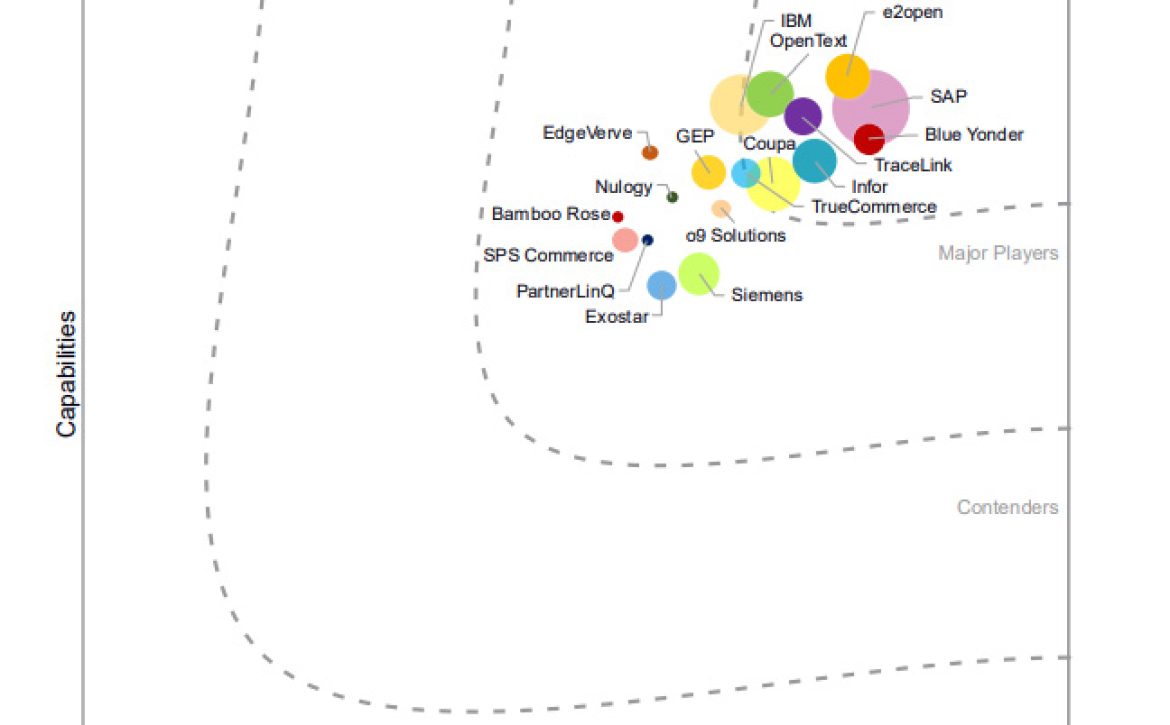
SAP Named a Leader in the IDC MarketScape for Worldwide Multi-Enterprise Supply Chain Commerce Network

At SAP, we believe that the future of supply chain management lies in resilience, efficiency, and automation. Supply chain business is a network business; no company operates in isolation. To achieve this, it is imperative to gain visibility into supply chain risks and disruptions and deeply collaborate with all critical trading partners.

That’s why I’m super proud to share that SAP has been named a Leader in the 2025 IDC MarketScape for Worldwide Multi-Enterprise Supply Chain Commerce Network (MESCCN) Vendor Assessment.* This marks the second time SAP has received this recognition, following our position as a Leader in the 2023 IDC MarketScape.**

We believe this distinction reflects the strength of SAP Business Network—our entry in the MESCCN space—and the trust placed in the solution by companies around the world. It’s a milestone that underscores our commitment to helping businesses navigate complexity and build more connected, intelligent supply chains.

Source: IDC, 2025

A legacy of collaboration

SAP Business Network is the world’s largest B2B trading partner platform, supporting more than US$6.5 trillion in annual transactions. It can modernize how procurement and supply chain processes connect across companies, helping build stronger, more resilient supply chains and deliver on the customer promise.

The network traces its roots back to the Ariba Supplier Network, founded in 1996. Over the years, it has evolved to support a broad range of supply chain processes. In 2021, we unified our capabilities under the SAP Business Network brand, bringing together logistics, asset management, finance, sustainability, and talent-based networks into a single, comprehensive platform.

Today, millions of companies across 190 countries rely on SAP Business Network to digitalize transactions, share information, and discover trading partners. By leveraging AI and configurable business rules, the network helps close break points between buyers and suppliers—enabling greater visibility, operational efficiency, and compliance across the supply chain.

What the IDC MarketScape recognized

According to the IDC MarketScape, SAP Business Network’s positioning as a Leader is supported by several competitive strengths:

  • Comprehensive product features and road map: SAP Business Network offers an extensive range of features and functionality, covering all major B2B collaboration categories, including indirect and direct materials, MRO, logistics, finance, services, and sustainability. The network’s robust future road map enables continuous innovation, empowering businesses to stay ahead in a dynamic landscape.
  • Seamless integration and extensibility: The network demonstrates capabilities in integration, connecting SAP ERP, procurement, and supply chain modules while extending to other ERPs, customer applications, and cutting-edge technologies such as machine learning, AI, and blockchain.
  • Global reach and real-time collaboration: SAP Business Network enables trading partners to collaborate in real time across the globe across a wide breadth of business processes.
  • Automation through configurable business rules: SAP Business Network empowers businesses to automate essential processes by working to define and customize rules tailored to their specific needs. These configurable rules can streamline workflows, enforce compliance, and boost operational efficiency, reducing manual intervention.
  • Robust foundation and ecosystem: SAP Business Technology Platform (SAP BTP), combined with the broader SAP ecosystem, can provide a scalable and extensible secure foundation for seamless integration across procurement, supply chain, and finance processes.
Read the full IDC MarketScape report

We believe these strengths, as recognized by the IDC MarketScape, reinforce the value SAP delivers to organizations seeking to extend their business processes across the entire value chain.

Continuing to innovate on SAP Business Network

We believe this recognition by the IDC MarketScape reflects not only the strength of SAP today but also our commitment to ongoing innovation. We’re continuously enhancing the network to help companies collaborate more effectively, respond faster to change, and unlock new sources of value across their supply chains.

At SAP Connect, we shared how SAP Business Network is evolving to meet the demands of increasingly dynamic and interconnected business environments. Built on SAP Business Technology Platform, the network now offers a scalable data foundation, seamless integration with SAP Cloud ERP capabilities and third-party systems, and enhanced workflow customization through SAP Build solutions. This has enabled many innovative initiatives to incorporate Joule across the network, reimagining analytics, automation, and approvals with intelligent capabilities that will be continuously released starting in 2026. 

We’re also further expanding integration with SAP Cloud ERP, SAP Ariba solutions, SAP Fieldglass solutions, and SAP Transportation Management to support end-to-end value streams. These enhancements can help streamline supplier onboarding, accelerate issue resolution, and improve sustainability tracking, empowering businesses to operate with greater agility and confidence.

Empowering businesses to realize the full value of collaboration

As multi-enterprise collaboration continues to evolve, we see tremendous opportunity to help organizations unlock new levels of agility, visibility, and efficiency. At SAP, we’re focused on making this journey as seamless and rewarding as possible.

Across industries, customers are already seeing the impact. ITP Aero, a leading aerospace manufacturer, is using SAP Business Network Supply Chain Collaboration to improve visibility and responsiveness across its supplier ecosystem. Similarly, Embraer, one of the world’s largest aircraft manufacturers, is leveraging SAP Business Network to streamline procurement and supply chain processes, enhancing operational agility and supplier engagement.

We’re investing in education, enablement, and intuitive user experiences to support companies as they expand their collaborative networks. Whether you’re a manufacturer, services provider, or supplier, our goal is to empower you to connect, collaborate, and grow with confidence—leveraging the full potential of SAP Business Network to help drive strategic outcomes across your value chain.

A strategic choice for the future

If you’re looking for a partner that offers both a robust multi-enterprise network and deep supply chain and procurement capabilities, SAP is the clear choice. Our unmatched integration with core SAP and non-SAP applications, combined with our strategic vision and global reach, makes us uniquely positioned to support your transformation.

As I shared in my recent article, we’re entering a new era of supply chain management—one defined by connected ecosystems, intelligent automation, and sustainable growth. SAP Business Network is at the heart of this transformation, helping businesses turn complexity into opportunity.

To our customers, partners, and the entire SAP community, thank you for your trust and collaboration. We believe this recognition from the IDC MarketScape is a shared achievement, and we’re excited to continue building the future of supply chain commerce together.

To learn more, visit the SAP Business Network product page and read the IDC MarketScape excerpt here.


Dominik Metzger is president and chief product officer for SAP Supply Chain Management.

*Source: IDC MarketScape: Worldwide Multi-Enterprise Supply Chain Commerce Network 2025 Vendor Assessment, November 2025, IDC #US53010225.
**Source: IDC MarketScape: Worldwide Multi-Enterprise Supply Chain Commerce Network 2023 Vendor Assessment, December 2023, IDC #US49948423.

Get the latest SAP news delivered to your inbox once a week

Previous Next
Close
Test Caption
Test Description goes like this