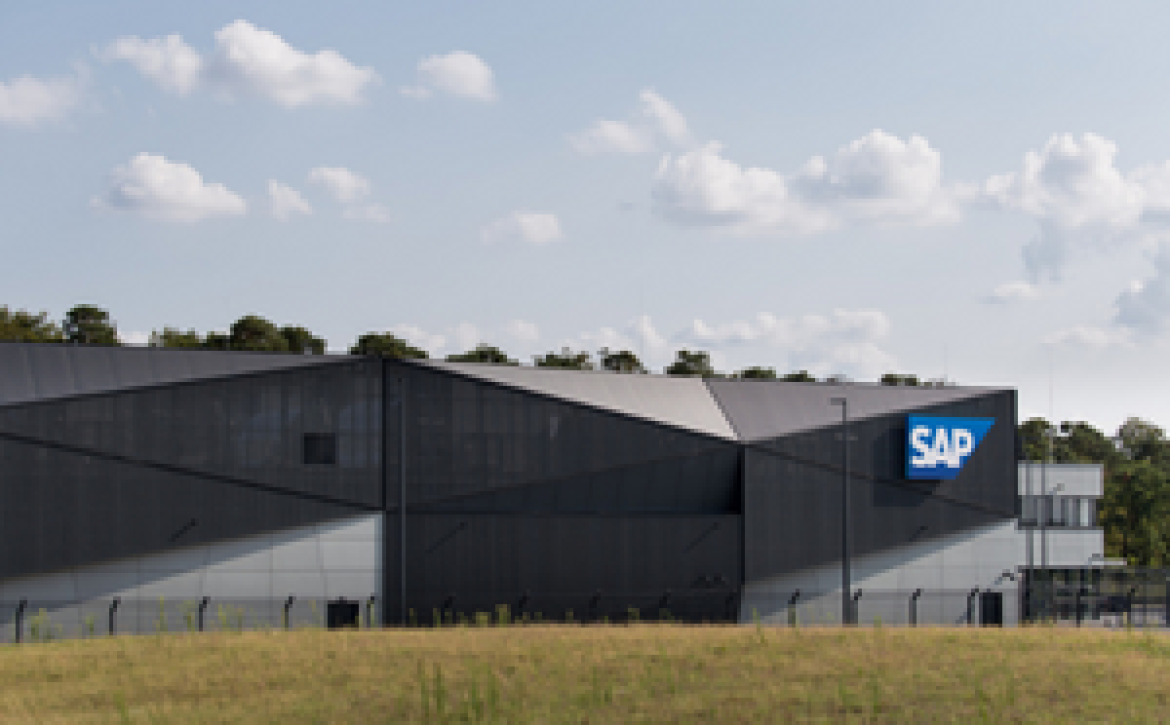
SAP Net-Zero Strategy Expands Beyond Carbon Neutrality

With its ongoing commitment to sustainability, the German enterprise software giant will be investing more in climate projects and environmental conservation beginning in 2024 as part of the SAP net-zero strategy. The SAP net-zero strategy aims to balance the amount of greenhouse gases entering the atmosphere with the amount being removed, which is in line with the Science […]

The post SAP Net-Zero Strategy Expands Beyond Carbon Neutrality appeared first on InsideSAP.

Ecosystem Matters: Lessons Learned from 14 Years of Driving Social Impact

After 14 years of championing social entrepreneurship and social innovation, we’ve learned a few things. But one stands out above the rest: ecosystem development is everything. So why are so few investing in it?

It’s easy to pour funds into the next big idea, but without a robust ecosystem to support these innovations even the most groundbreaking social enterprises struggle to scale their impact. That’s why at SAP we’re putting our money where others won’t – into unrestricted funding for organizations such as the Global Alliance for Social Entrepreneurship, Catalyst2030, or the Social Enterprise World Forum (SEWF). These organizations are the backbone of social innovation yet often operate on shoestring budgets and tight resources. It’s high time we all recognize that building ecosystems isn’t an overhead, but essential infrastructure.

Ecosystem development isn’t just another way of funding organizations. Think of it as creating interconnected pathways that enable social enterprises to thrive. Over the years, we’ve discovered three critical areas where focused efforts can make a transformative difference: integrating social enterprises into supply chains, fostering radical collaboration, and empowering social entrepreneurs worldwide, especially the next generation.

Integration into Supply Chains: A Game Changer and the Biggest Lever

Integrating social enterprises into mainstream supply chains is our biggest lever. Through SAP Business Network, SAP runs the world’s largest B2B marketplace, where more than US$5.3 trillion in annual commerce is transacted across 190 countries. If SAP can help its customers shift a small percentage of that spending to impact business suppliers, we can create a significant financial investment in sustainable development.

As of November 2023, SAP Business Network recognizes verified social enterprises, and in less than a year the number of verified social enterprises on SAP Business Network has surged from 1,200 to over 4,400. Beyond the numbers, this growth is about creating real opportunities for businesses that prioritize social and environmental impact. By enabling these enterprises to identify themselves as potential sellers, we provide them with access to B2B opportunities, allowing them to scale their operations and increase their influence on global supply chains. In addition, we support a unified standard for social enterprises called the “People and Planet First Verification” in partnership with the Social Enterprise World Forum, which reaches social enterprise suppliers in more than 120 countries.

Frankly, this is not an altruistic move, but fulfills the cliché of a win-win situation. We’ve learned that by opening doors for impact-driven businesses to compete on a level playing field, we’re enriching the entire supply chain with innovation, sustainability, and social value. To help prepare markets for these kinds of trading relationships, we are hosting social procurement roundtables in multi-stakeholder settings and are also integrating social procurement into more customer-facing events and campaigns, helping to ensure our customers have the tools and resources to prioritize sustainability in their purchasing decisions.

Ultimately, when social enterprises succeed, we all win. Integrating them into supply chains transforms their businesses and ours, fundamentally changing the procurement system.

The Urgent Need for Radical Collaboration

Integrating social enterprises into supply chains is just one piece of the puzzle. Today, offerings to social enterprises are too fragmented. Non-profits, private sector initiatives, and governmental programs often operate in silos, duplicating efforts and diluting impact. Radical collaboration is something that’s needed on all ends.

SAP is powering equitable access to economic opportunity, education and employment, and the circular economy

That’s why, for example, we collaborate with Unilever, EY, and MovingWorlds to run the TRANSFORM Support Hub – an on-demand acceleration platform that provides personalized guidance, access to consultants, mentors, and coaches, and introductions to sales and partnership opportunities. We’re collecting and summarizing the offerings, breaking down barriers, and creating a location for unified support.

Just last year, 120 SAP employees completed 51 projects via the TRANSFORM Support Hub, providing pro-bono consulting to social enterprises and generating an in-kind contribution of $458,835. One of these employees was David Elliott, a senior user assistance developer who collaborated with Faces Up Uganda, a youth development NGO that uses arts and crafts education to help young people overcome psychosocial challenges and develop essential personal and professional skills. He leveraged his expertise to review the organization’s website and strategic plan, enhancing the communication of its vision, mission, and values, and wrote grant applications to help secure funding.

But collaboration must go beyond platforms. It requires a collective shift in mindset. It’s time we stop asking, “What new thing can I create?” and start asking “What can we achieve together?” and “What is already out there?”

To sum it up with a fact: 70.6% of young social entrepreneurs believe access to relevant global connections is critical to their work while 94.1% believe increasing collaboration with other organizations is important. So, corporations should start to open their networks and resources to connect industry experts with social entrepreneurs to foster the entire social innovation ecosystem.

Empowering the Next Generation of Social Entrepreneurs

While we are already talking about young social entrepreneurs, let’s not overlook them, as they are the future of this movement. They face unique barriers – limited access to funding, mentorship, and networks – that can stifle their potential before it even takes root.

We’re investing in programs that provide tailored support to young innovators. Through mentorship opportunities, capacity-building workshops, and access to our global networks, we’re leveling the playing field. Collaborations with organizations like Social Impact Award, We Are Family Foundation, and initiatives like Africa Forward can ensure that the next generation doesn’t just have a seat at the table, but is helping to set the agenda.

Let’s talk about Africa Forward, a critical step in our strategy to empower the next generation of African social entrepreneurs. Co-created by African members of Catalyst2030, this initiative is designed to advance progress on the UN Sustainable Development Goals and address the continent’s most pressing challenges through a partnership-driven approach.

This is about investing in long-term solutions by building a Pan-African data platform, promoting policy reform, and facilitating leadership training. Africa Forward is helping to create an ecosystem where social businesses can thrive. The goal is to enable a new wave of innovators, giving them the tools and opportunities they need to scale their impact. By focusing on capacity-building, youth training, and financial development, we’re laying a foundation for lasting change in Sub-Saharan Africa.

A Call to Action

So, after 14 years, what’s our biggest takeaway? Real change doesn’t happen in isolation. It happens when we invest in the connective tissue – the ecosystems – that empower social enterprises to scale and succeed. I’m challenging corporations, investors, and policymakers to rethink their approach. Don’t just fund the next shiny project; invest in the infrastructure that supports them all.

Why are so few willing to invest in ecosystem development? Perhaps it’s not as immediately gratifying as funding a new app or launching a big campaign to reach a big number of people. But if we truly want to tackle systemic issues – poverty, inequality, climate change – we need to dig deeper. We need to build the foundations that allow solutions to grow sustainably.

We’d like to invite you to join us. Let’s pool our resources, break down the silos, and build an ecosystem that accelerates social impact on a global scale. Together, we can transform not just businesses but entire industries.

So, here’s the question: Are you ready to invest where it counts? Are you ready to invest in social entrepreneurship ecosystems?


Get the latest SAP news delivered to your inbox once a week

SAP Increases Innovation Footprint in Silicon Valley

From flying cars to robotic concierges and even the quest for longevity, artificial intelligence (AI) promises to transform our work and personal lives, like never before.

SAP AppHaus: Humanize business software and make innovation real

AI is pushing the boundaries of every realm, as we inch ever-closer to science fiction becoming reality. While the global AI market is rightfully expected to skyrocket and touch US$2.7 trillion, it is equally important for organizations to rapidly move beyond the exploratory phases to scaling enterprise-wide solutions that deliver tangible impact. Only then will we unlock the full potential of AI and drive the next wave of innovation.

To help customers keep pace with AI and other technology innovations, SAP continues to invest in its SAP AppHaus Network. SAP AppHaus empowers customers by turning cutting edge technology into real, tangible business value for organizations.

As an example, SAP recently created a “Business AI Explore Workshop,” which serves as a blueprint for organizations to go beyond the AI hype and determine how generative AI can deliver business value for them and their customers. It is available now and provides templates, collaborative tools, and step-by-step guidelines to help organizations define the best use cases for AI to drive impact and make a list of actionable steps to get started. 

As part of SAP’s ongoing investment in the Silicon Valley, the company has built a new, enlarged SAP AppHaus at its Palo Alto campus. The space will host customer-facing activities that leverage SAP Business AI, SAP Business Technology Platform (SAP BTP), and other SAP technologies.

Opening today, SAP AppHaus Palo Alto is co-located with the SAP Experience Center, providing a holistic engagement space for customers and partners.

Unique Method for Sustainable Co-Innovation

SAP AppHaus differentiates itself through its human-centered approach to innovation. By combining design thinking and enterprise architecture, SAP AppHaus supports customers through the entire journey — from ideation to deployment — and ensures a sustainable implementation of innovation in customers’ landscape.

SAP AppHaus is not simply a showcase for technology, but a creative space where SAP collaborates with customers to develop solutions that address their most pressing business problems. Using methodologies and tools that democratize human-centered design, SAP AppHaus network delivers ground-breaking solutions into the hands of people.  All solutions are built on SAP BTP, allowing customers to easily take advantage of the platform’s best-in-class capabilities around automation, data and analytics, integration, and developer tools .

The newly renovated SAP AppHaus is part of a global network that consists of 24 SAP AppHaus locations: three run by SAP — in Palo Alto, Berlin, and Heidelberg — and the rest by partners around the world. The renewed Silicon Valley site is just the latest chapter in SAP AppHaus’ 10-year history of helping customers find the most compelling, sustainable value in new technology.

As technology writer Steven Johnson said,” If you look at history, innovation doesn’t come just from giving people incentives; it comes from creating environments where their ideas can connect.” Now Silicon Valley has a brand new space where inventors and business leaders can generate the next big thing.

Celebrating a Decade of Customer Co-Innovation

Last year marked the 10th anniversary of SAP AppHaus, celebrating a decade of successful co-innovation with customers. In honor of this milestone, Tim Brown, chair of IDEO and a pioneer of design thinking in business, said, “Congratulations to 10 years of SAP AppHaus! It is remarkable what you achieved. All your competitors tried it, but you succeeded.”


Kulmeet Bawa is chief revenue officer for SAP Business Technology Platform at SAP.

SAP’s Partnership with ChannelEngine, the Leader in Marketplace Integration

When it comes to customer experience (CX), brands must invest in an end-to-end, industry-specific platform that is informed by data. These deep connections enable business AI to come to life and ensure the agility and flexibility to innovate based on consumer demand and market needs.

That is why SAP is always developing new partnerships and integrations to continue providing value to CX customers. 

CRM and CX from SAP: Deploy industry-tailored solutions that are connected, insightful, and adaptive

The integration between SAP Order Management Services and ChannelEngine, a global leader in marketplace integration and management software, is the next step in this journey.

By leveraging SAP Order Management Services, a central hub for unified customer transactions, and incorporating AI-enhanced integrations, ChannelEngine is enabling merchants to augment the order and inventory management process for third-party marketplace selling. This enables merchants to automate and optimize third-party marketplace operations, increasing their revenue and profitability. 

What does this mean for SAP customers?

“Our direct integration allows SAP Order Management Services users to seamlessly activate over 950 new sales channels and reach international markets,” said Jorrit Steinz, CEO of ChannelEngine. “By incorporating AI-driven automation into our platform, we’ve taken a pivotal step toward simplifying global unified e-commerce. This collaboration enables merchants to harness the immense potential of third-party online marketplaces, driving efficiency and scaling opportunities while capitalizing on the built-in trust and vast customer base of these platforms.” 

By having a centralized view of e-commerce operations across first- and third-party channels through reporting, analytics, and insights into sales performance and marketplace KPIs, merchants can target consumers with precision and drive customer loyalty. Additionally, this integration enables merchants to streamline their e-commerce operations, accelerate time-to-market, and participate in a broader range of marketplaces. 

Analysts also understand this need to align inventory management and marketplace connectivity due to an increasingly fragmented e-commerce environment.

“The fusion of order management technology with third-party marketplace integration solutions marks a strategic move for enterprises seeking to optimize operational efficiency and expand their market presence,” explained Heather Hershey, Research Director for IDC. “This approach enables businesses to manage complex sales channels while leveraging the advantages of AI-driven insights to better meet customer demands.” 

The ChannelEngine marketplace integration platform is now available on SAP Store, the online marketplace for SAP and partner offerings.


Ritu Bhargava is president and chief product Officer of SAP CX and Industries.

SAP CX LIVE: Watch customer spotlight sessions, product demos, and product direction videos on demand

SAP Enhances SAP Sales Cloud Journey with Gainsight for Increased Retention and Revenue Growth

The sales journey is never over, and organizations focused on customer success understand this need to constantly deliver on customer expectations while highlighting new innovative opportunities to drive growth. This is a key element of our strategy for SAP Sales Cloud, which is why SAP is partnering with Gainsight.

As a leader in customer success and product experience software, Gainsight enables SAP customers to align sales and customer success efforts, delivering a seamless customer experience that boosts retention and drives revenue growth.

By integrating SAP Sales Cloud and Gainsight Customer Success, organizations can orchestrate connected customer journeys, leverage AI-powered automation, standardize workflows, and enhance strategic account planning, among other benefits. 

Truly understand your customers to improve sales engagements and build lasting relationships

This partnership seeks to redefine and enhance enterprise customer success strategies while reinforcing SAP’s commitment to intelligent CX.

To develop an effective customer program, organizations need the capability to integrate relevant data and intelligence. With a composable, plug-and-play framework approach in SAP Sales Cloud, organizations can seamlessly access and integrate Gainsight data within the SAP Sales Cloud solution, harmonized with the data and intelligence.  

What does this partnership mean from Gainsight’s perspective?

“Gainsight has helped more than 2,000 companies, including many of the world’s top brands across industries, transform their operations and prioritize customer retention and growth,” said Chuck Ganapathi, COO and President at Gainsight. “Now, by delivering Gainsight’s unique human-first AI capabilities to SAP Sales Cloud, we’re empowering our joint customers to spend less time on administrative work and more time focusing on their clients. And this is just the beginning — we’re looking forward to deepening our collaboration with SAP and driving even more innovation together.” 

The integration offers comprehensive insights into the customer journey, accessible to both sales and customer success teams within a single platform. A 360-degree customer view along with real-time data analysis and automated workflows and playbooks enable teams to proactively act on customer risks and expansion opportunities. It empowers the sales team to enhance and expedite the sales cycle, while enabling the customer success team to expand post-sale engagement strategies.  

It’s also important to myself and my team to have a pulse check on the market, collaborating and validating with our user community, partners and industry analysts.

“Customer success is a strategy that requires data, intelligence and analytics to be successful,” explained Liz Miller, vice president and principal analyst at Constellation Research. “SAP and Gainsight are bridging the gaps that can form across the customer, revenue, and success ecosystem by intentionally bringing success data together with market intelligence to accelerate decision velocity and action. This partnership is focused on centering success on the customer by expanding the scope and scale of intelligence where sellers and successful leaders work.”  

To put this all into context, let’s say a manufacturing company wants to increase customer retention and capture untapped revenue opportunities. Through this partnership, customer success managers can develop and align tailored customer goals and success plans with customized engagement and support strategies, expanding upsell and cross-sell opportunities. At the same time, sales reps can utilize in-depth data, such as customer satisfaction levels, and product usage patterns to refine and improve ongoing and future sales cycles.   

The SAP and Gainsight integration is now available on SAP Store.


Ritu Bhargava is president and chief product Officer of SAP CX and Industries.

SAP CX LIVE: Watch customer spotlight sessions, product demos, and product direction videos on demand

Elevating the Power of Procurement Through Innovation

The 2024 Economist Impact report “Across the procurement-verse: Changing trends in the procurement function” highlights the trends transforming the role of procurement, from the evolving influence of procurement to driving sustainability and managing risk.

The SAP-sponsored report offers insights from more than 2,300 C-suite executives spanning multiple countries, regions and industries and examines the pressures facing today’s procurement teams. As these teams manage risks like geopolitical shifts, supplier threats, and liquidity risks, the surveyed executives emphasize an urgent motivation to improve their procurement operations through agile, innovative, and fast-paced solutions.

Today’s complex and uncertain business environment has pushed procurement teams to take matters into their own hands. Not only are they accelerating digitalization by adopting emerging technologies like AI, they are driving it by searching for ways to change the procurement operating model.

Automate spending processes and actively manage more spend for better control, greater value, and more savings with SAP

As Always, It’s All About Innovation

Procurement officers view driving innovation as one of their function’s chief objectives. Doing so will help them navigate risks and respond to an evolving consumer environment.

When procurement is truly influential, it is proactive. Teams that understand digitalization and the technologies being acquired have more impact in this area than those that are reactive. Over two-thirds (70%) of the survey respondents agree that procurement is actively involved in developing their wider organization’s digital transformation strategy — though whether this is true in the day-to-day may vary from business to business.

If procurement is to play a more integral role in businesses, changes to the function’s operating model are likely for some organizations, which is why the research also shows that procurement is accelerating its digitalization, including through the adoption of emerging technologies. Approximately 84% of executives are confident in their procurement team’s ability to apply technology successfully to automate some processes and shift attention to more strategic and complex tasks.

This ability to seamlessly integrate and adopt new solutions will be critical as

procurement teams work to balance capabilities, know-how, and expertise from suppliers to achieve the best possible results.

Digitalization Remains a Top Priority

While innovation is at the core of many companies’ priorities, C-suite leaders are laser-focused on the solutions that enable their teams to be more efficient, cost-effective, and risk-averse.

More than half (57%) of the C-suite cite digitalization as the top strategic priority for their procurement teams. This emphasis may be fueled by recent advances in generative AI, which is the top technology trend (34%) executives plan to implement in the next 12 to 18 months.

Digitalization efforts can offer real-time capabilities that better address dynamic market challenges and make existing procurement processes more efficient. Data-driven insights allow for more actionable outputs in strategic decision-making and can even impact procurement’s role in engaging contingent labor. Augmented with AI, they can easily manage contingent labor by streamlining and standardizing recruiting processes like job advertising, resume scanning, expediting background checks, and more.

More efficient intake management also goes hand-in-hand with digitalization. While generative AI occupies the highest priority, intake management is only one percentage point behind it, making it the second-most likely tech trend to be piloted or implemented. 

Value of Multi-Sourcing and Supplier Diversity

The top organizational risk for procurement was monetary uncertainty (49%), as macroeconomic risks can have a large impact on operational external risk. This is a potential factor as to why procurement teams are focused on risk as a longer-term priority.

SAP Business Network: Connect, transact, and partner on shared processes and information

Updates here can create opportunities like multi-sourcing, which can improve risk reduction and resilience amid growing external threats, and supplier diversity — driving market expansion through a more diverse supplier base. This can also reduce single-sourcing dependencies to mitigate risks against potential disruptions.

These possibilities prove how companies must make it a mission to improve the quality of data and the models needed to effectively analyze it. Subpar data directly hinders procurement’s ability to make good decisions, undermining its overall effectiveness and derailing successful digitalization before it takes hold.

Executives Agree: Time to Go All-In on AI

No other strategic priority attracts nearly as many responses as a priority across all industries as digitalization. However, respondents also agreed on one other key topic: the role that AI will take in the digitalization journey.

Adoption of an AI strategy stands at the joint top of executives’ list of digitalization priorities for procurement, alongside spend analytics, both cited by 44%. Almost half (48%) of executives aim to use AI to improve procurement processes through source-to-pay and AI-enabled spend management and decision support.

As the main drivers for digital transformation in procurement, these two objectives are complementary. AI tools can read a contract to evaluate clauses and suggest how they can be improved. It can also enhance data management, streamlining the processes needed to make key procurement decisions.

Fully digitalizing procurement operations has been on the function’s agenda for several years, but it is a continuous challenge. It is a process that does not have an endpoint, particularly as technologies advance quickly. The leading technologies from just three years ago pale in comparison to what can be accomplished today, which require knowledge across software development, APIs, and AI.

Therefore, success in building a thorough and adaptable AI strategy requires top-level expertise. Acquiring the necessary skills could entail considerable organizational and cultural change in procurement and across the business — extending beyond the structural shifts and developing new ways of working to build these skills.

The Start of a Procurement Renaissance

Across industries, procurement is already finding new ways to add value to the organization. But now that chief procurement officers and their teams are more consistently gaining a seat at the decision table, the challenge is to keep it.

The ongoing state of disruption offers ample opportunity for procurement teams to continue evolving and demonstrate their worth. Above all, improving collaboration with other business stakeholders will be the key to strengthening procurement’s role within the organization. Today’s technology-driven initiatives are as much a human challenge as they are a technology one, and when organizations are planning these initiatives it is clear that they need to consider people, process, and technology in equal measure to ensure success.

For more about the findings from this year’s Economist Impact report, tune in to this podcast hosted by Art of Procurement: What the Research Foretells About Procurement’s Vision, Priorities, and Opportunities.


Gordon Donovan is global vice president of Research, Procurement, and External Workforce at SAP.

SAP Spend Connect Live: Join the industry’s premier spend management event for the latest in technology, innovation, and ideas

SAP and Ambipar Unveil Net Zero as a Service

WALLDORF SAP SE (NYSE: SAP) today announced a partnership with Ambipar (B3: AMBP3; NYSE: AMBI), a global leader in environmental solutions with operations in 40 countries, to bring Net Zero as a Service to customers and support the fight against climate change.

Put sustainability at the core of your business with SAP

Net Zero as a Service brings together a combination of SAP’s robust cloud solutions and Ambipar’s deep carbon credit generation and trading expertise to help customers seamlessly manage and offset carbon emissions.

“In partnering with SAP, we are bringing together two companies with a shared commitment to help organizations achieve net zero,” said Tercio Borlenghi Junior, CEO of Ambipar. “By combining SAP’s technology with Ambipar’s decarbonization expertise to create Net Zero as a Service, customers will have access to a simple but comprehensive solution that contributes to the low carbon economy.”

Comprehensive Carbon Management

Net Zero as a Service can equip SAP customers globally with solutions for the entire decarbonization journey. SAP’s ERP-centric and AI-enabled solutions will provide end-to-end carbon management, allowing customers to establish a common data foundation, seamlessly measure emissions and make granular and timely decisions that are financially and environmentally sound. Customers can neutralize emissions by purchasing internationally certified carbon credits through Ambipar’s technology platform AMBIFY, available on the SAP Store, the online marketplace for SAP and partner offerings.

“SAP customers are increasingly seeking ways to measure and offset their carbon emissions,” said Adriana Aroulho, president of SAP Brazil. “Through Net Zero as a Service and our partnership with Ambipar, SAP is building on our commitment to deliver comprehensive sustainability management solutions and empowering our customers to become future-ready businesses.”

Scaling Net Zero as a Service

Ambipar is currently piloting Net Zero as a Service in its own operations, tapping into the power of SAP’s solutions as it aims to meet aggressive growth targets this year, before the service becomes widely available to SAP customers.

By leveraging SAP Sustainability solutions, Ambipar will establish a unified data foundation, breaking down silos across the business, and seamlessly measure and manage carbon emissions. 

“Ambipar is undergoing a worldwide expansion and counts on SAP as a trusted IT partner as they scale,” said Aroulho. “Net Zero as a Service will support Ambipar’s growth objectives, while helping the company effectively streamline operations, drive innovation and manage its own environmental footprint. We are thrilled to bring this service to SAP customers.”

Visit the SAP News Center. Follow SAP at @SAPNews.

Sign up to receive news highlights from the SAP News Center, delivered straight to your inbox each week

Media Contact:
Sybelle D’Marco, +1 (305) 490-6139, sybelle.d-marco@sap.com , ET
SAP Press Room; press@sap.com

This document contains forward-looking statements, which are predictions, projections, or other statements about future events. These statements are based on current expectations, forecasts, and assumptions that are subject to risks and uncertainties that could cause actual results and outcomes to materially differ.  Additional information regarding these risks and uncertainties may be found in our filings with the Securities and Exchange Commission, including but not limited to the risk factors section of SAP’s 2023 Annual Report on Form 20-F.
© 2024 SAP SE. All rights reserved.
SAP and other SAP products and services mentioned herein as well as their respective logos are trademarks or registered trademarks of SAP SE in Germany and other countries. Please see https://www.sap.com/copyright for additional trademark information and notices.

FC Bayern Scores Big with SAP

With fans and employees around the world, going digital with SAP was a no-brainer for FC Bayern – one of the “beautiful game’s” biggest and most successful football clubs.

­­­“We are a local club in Bavaria, but have fans around the globe,” says Stefan Meri, the club’s director for digital media and communications. In addition to its 1,200 employees in Munich, New York, Shanghai, and Bangkok, the club has around 175 million followers on its social media and its own media platforms.

Meri says the club’s digital and media platforms are very important because fans expect to be able to interact with their club wherever they are. “They want to send us their feedback and they want to receive feedback.”

SAP Sustainability Control Tower Integrates with Thomson Reuters

Designed to make environmental, social, and governance (ESG) reporting for multinational corporations easier, SAP Sustainability Control Tower is at the heart of a new partnership with Thomson Reuters. Together, SAP and Thomson Reuters are tackling the difficulties that multinational corporations encounter when handling ESG reporting. Their partnership centers on integrating SAP Sustainability Control Tower with […]

The post SAP Sustainability Control Tower Integrates with Thomson Reuters appeared first on InsideSAP.

Sainsbury’s Transformation Fueled by SAP Collaboration

UK supermarket chain J Sainsbury plc (Sainsbury’s) aims to further its Next Level Sainsbury’s plans and improve its commercial systems through a recently announced SAP collaboration. A new path for the retailer is established by the strategic partnership between SAP and Sainsbury’s, which focuses on modernizing commercial operations and boosting business flexibility. Sainsbury’s current systems […]

The post Sainsbury’s Transformation Fueled by SAP Collaboration appeared first on InsideSAP.

Previous Next
Close
Test Caption
Test Description goes like this