We’re proud to announce that SAP Signavio has been recognized as a Leader in the 2024 SPARK Matrix for Digital Twin of an Organization (DTO) for the fourth consecutive year. This consistent recognition by Quadrant Knowledge Solutions is a testament to our ongoing commitment to technological excellence and impactful customer service in digital transformation.
The SPARK Matrix provides a detailed analysis of global market dynamics, significant trends, and the vendor landscape. Each market participant is analyzed against several Technology Excellence and Customer Impact parameters. SAP Signavio stands out for its comprehensive DTO solutions that can effectively merge organizational processes with technological capabilities, fostering continuous improvement and strategic decision-making.
Our strengths highlight our leadership position in several critical areas:
Enterprise observability: Integrating process observability with technology observability, we can provide organizations with a detailed understanding of their operations.
AI-powered applications: We leverage generative AI to offer applications that help enhance process knowledge and support informed decision-making.
Value accelerators and benchmarking: Our tools can provide ready-to-use best practices and metrics, helping organizations quickly assess and improve performance.
Modeling and experience connection: We extend DTO capabilities to customer touchpoints, working to ensure comprehensive transformation efforts.
According to Sofia Ali, associate director and principal analyst at Quadrant Knowledge Solutions, “SAP’s integration of SAP Signavio and SAP LeanIX into its DTO platform enables organizations to achieve digital transformation seamlessly. By leveraging SAP Signavio’s process observability and SAP LeanIX’s technology observability, SAP provides a holistic approach to enhancing processes and deriving value through unified observability. This approach enables organizations to represent their architecture and capabilities virtually and facilitates continuous improvement and automation of operational processes through AI-powered simulations. SAP’s robust vision and focused strategy and the development of large process models promise to deliver AI-driven transformation services that enhance insights, recommendations, and governance. Overall, SAP’s continued enhancement of its DTO platform underscores its commitment to empowering organizations with the tools needed to thrive in an increasingly digital world.”
Exploring the Digital Twin of an Organization
The digital twin of an organization mirrors how the business as a whole operates and adapts. Modern organizations are complex sets of connected business units, processes, people, and systems. The DTO showcases interdependencies among the different entities and the impact of change at all levels.
The DTO helps to understand how an organization operationalizes its business model in processes and applications, monitors inefficiencies, and tracks process improvement measures. In other words, creating a digital twin allows decision-makers to answer the big what-if questions about how their enterprise functions.
Rouven Morato, general manager of SAP Signavio and SAP LeanIX, emphasizes the strategic importance of DTO solutions: “The ability to map interactions across business processes and IT architecture gives leaders the confidence they need to drive change. Our advanced AI functionalities allow customers to safely simulate new business scenarios, ensuring agility and resilience in a volatile market.”
This honor reflects our dedication to empowering businesses with cutting-edge solutions that meet the evolving demands of the digital age. Download the complimentary SPARK Matrix report to understand the DTO market better and why SAP Signavio has been acknowledged as a leader in this crucial area for four years.
Dee Houchen is global head of Market Impact for SAP Signavio.
Transform existing business processes while optimizing operational excellence and customer experiences
Talk to any high-tech industry leader who’s launched an as-a-service offering, and they’ll tell you that everything as a service (XaaS) is unlike any other business model transformation. Instead of a one-and-done sales transaction, customers are signing up for a long-term relationship that bundles services with the company’s hardware or software products. XaaS often broadens the collaborative bonds with partners that are involved in service delivery as well. At the outset, companies need to think big but start small.
“Moving to an as-a-service model dramatically changes how an organization does business and keeps customers satisfied, starting with product design and pricing through synchronized order fulfillment, revenue recognition and sharing, invoicing, and contract management,” said Mirjam Wittmann, director of Product Marketing, High Technology at SAP. “We’re seeing our customers begin with a targeted pilot in one line of business, followed by refinements and expansion to monetize XaaS packages for greatest competitive advantage.”
XaaS-Driven Growth at Lenovo: Go Bigger Than Back Office
Everything-as-a-service business models are essential to Lenovo’s growth plans. Long recognized for laptops, phones, tablets, data center servers, and business solutions, the company’s service-led transformation has been a catalyst for significant expansion in its non-PC business, accounting for over 42% of the company’s revenue.
“We’re in a phase of rapid acceleration, focusing our efforts on the expansion and refinement of our XaaS capabilities and business infrastructure,” said Arthur Hu, senior vice president and chief information officer at Lenovo and chief technology and delivery officer at Lenovo’s Solutions and Services Group. “This journey involves a multifaceted approach, combining agile development, strategic partnerships, and continuous optimization to ensure that our XaaS offerings meet the evolving needs of our clients.”
Accelerate monetization of any business model with SAP solutions
Hu said that SAP Billing and Revenue Innovation Management provides Lenovo with the flexibility to monetize services through pay-as-you-go, subscription, consumption-based, outcome-based, and other models. For example, the company can structure pay-as-you-go packages priced by the customer’s power consumption, storage of gigabytes, utilization, and number of nodes in an installation.
“Redefine your product hierarchies to fit the as-a-service world. Update financial accounting for managed services, such as revenue recognition and costing. Provide the sales team with a clear understanding of the offerings so they can articulate the value to customers,” Hu said. “Make sure that every impacted system has the integrated data for accurate and timely fulfillment and entitlement that delivers the optimal customer experience and desired outcomes.”
Personalized XaaS Offerings Generate Revenue at Autodesk
Autodesk offers customers both subscription- and usage-based models for nearly all products across 50 countries. As a global leader in the design and software industry for media, construction, and engineering, Autodesk is using XaaS to future-proof the company.
“As-a-service provides us with a scalable, nimble foundation that drives better outcomes for customers and generates a steady stream of revenue for the company. We can quickly offer customers personalized products and pricing combinations for faster go-to-market,” said Sudhir Misal, senior director of Engineering at Autodesk. “SAP solutions are the backbone of our as-a-service business model, helping us cost-efficiently manage orders, converged invoicing, contract accounting, and the financial supply chain. For example, we’ve reduced quarterly financial closing times by over 80%.”
Misal agreed that a successful XaaS strategy requires a mindset shift.
“You need to partner closely with your system provider, in our case it was SAP, to understand the business context behind the offering. We focused on standardizing as much as possible,” Misal said. “Change management was a priority as we went through this journey that included all stakeholders. By talking with peer companies to hear their learnings, we avoided repeating mistakes that others have made.”
Generative AI Promises Dynamic Innovation
No discussion of high-tech innovation would be complete without addressing the significance of generative AI. Misal said that Autodesk was exploring how AI can help companies quickly test and adopt value-added XaaS offerings.
“Generative AI can analyze data to help organizations see how customers are behaving depending on the services they’re using,” said Wittmann. “Data from generative AI can help companies cross sell and upsell personalized services that meet individual customer preferences, increasing customer loyalty. With faster market demand insights, companies can dynamically adjust XaaS bundles and iterate fresh ideas to take advantage of emerging opportunities before the competition.”
Over recent years, retailers have experienced a notable shift in consumer behavior towards more sustainable products and conscious consumption. Consumers have driven this shift with their increased awareness of environmental issues, ethical concerns, and desire to support products which are eco-friendly, ethically sourced, and produced under fair labor conditions.
Companies that prioritize sustainability in their operations, such as using recycled materials, reducing carbon emissions, or supporting social causes, are gaining popularity among consumers. But those consumers demand proof of these values and product promises at the point of sale.
“The rise of sustainability isn’t just a movement; it is a shift in consumer consciousness,” said Dania Fayyaz, SAP North America sustainability program manager. “Today’s consumers are redefining their purchasing patterns, opting for products and brands that align with their values, and driving a demand for eco-conscious practices and ethical sourcing.” In her conversations with retailers that visited SAP’s booth at NRF 2024, the world’s largest retail fair, she saw a high interest in sustainability solutions.
Consumers – and Markets – Demand Visibility
When the EU Deforestation Regulation (EUDR) comes into effect for large enterprises later this year all products sold in the EU containing palm oil, cocoa, soy, rubber, cattle/leather, coffee, wood, and their derivatives will need proof that their harvest didn’t contribute to deforestation. Non-compliance will result in potential fines of up to 4% of companies’ EU annual turnover. To help businesses simplify this complex task, the SAP Green Token solution can track the geolocation of where raw materials are harvested and automate the creation of due diligence statements (DDS). The solution can also help improve visibility for consumers on where the raw material for their clothing was sourced and offer information on potential reuse and recycling.
Record, report, and act with SAP Sustainability solutions
Take the example of a cotton shirt made from 50% certified recycled materials. Cotton can be sourced from multiple farms or recycling services and taken to a cotton mill where it’s spun into thread and later fabric. It becomes impossible to distinguish the different cotton elements – conventional versus recycled cotton – once they are co-mingled and the manufacturer loses insight into the sustainability attributes of the raw materials. That’s why it’s important to have a sophisticated tracking solution in place. “SAP Green Token can enhance transparency for bulk-traded, co-mingled raw materials by digitally storing sustainability attributes on tokens that traverse the supply chain,” said Fayyaz.
In addition to making conscious decisions on raw materials and products, consumers can also consider circular economy models. “I’m really intrigued by the idea of revitalizing clothing items,” said Fayyaz. “Imagine being able to exchange a well-loved jacket you’ve had for years and receive credit in return. And the jacket might find a new owner who will genuinely appreciate it.” The SAP Recommerce solution enables that scenario, helping brands and retailers take back, manage, and resell secondhand inventory to help accelerate the shift from linear to circular business models. On an even larger scale, SAP Green Ledger is SAP’s vision to make transactional carbon accounting a reality. It can enable organizations to track carbon like they do cash, with every financial transaction having a corresponding carbon entry. “This is incredibly desirable because we will see taxes for carbon imposed in the future, and decision-makers will want insights into which processes are utilizing the most carbon,” Fayyaz said.
The Future of Retail – A Retailer’s View
At a recent SAP event, Christoph Werner, CEO at German retailer dm-drogerie markt, shared his view on the future of retail and his insights on what customers want – and therefore what will shape the way retailers have to engage to drive business.
For Werner, individualization of the shopping experience and any transaction will play a major role. Therefore, retailers will have to focus on the individual shopper, not on clusters of shoppers like in the past. Hyper-personalizing the customer experience will improve loyalty; the value for the customer will not only be the price, but increasingly the overall service and experience. This will change the concept of promotions. Werner is convinced that retailers will benefit from giving added benefits and delighting the customer, rather than pushing products into the market based on reduced prices. “Bring home flowers every now and then, but keep it special,” Werner said.
To no surprise, AI will be the foundation for personalized shopping experiences. “AI has benefits and downsides and today it remains to be seen where it will take us,” Werner stated. Overall, retailers see AI as an opportunity, with the technology completing repeatable tasks, freeing up employees for more value-adding tasks, and empowering individuals to make a difference. As retail stores often face staffing challenges, this can empower people in sales and marketing teams instead of replacing them. From Werner’s perspective, an AI-empowered workplace will attract new employees.
At the same time, low-price online platforms continue to attract consumers with their affordable and wide range of products. They offer competitive prices on trendy clothing and accessories using economies of scale and direct-to-consumer models. Despite concerns about their environmental and ethical practices, these platforms remain popular among price-conscious consumers. However, there is growing awareness of the environmental and social impacts of fast fashion and low-price models. As a result, consumers are becoming increasingly discerning in their purchasing decisions, prioritizing quality, longevity, and sustainability over cheap prices and fast fashion trends.
“Overall, the consumer landscape is evolving, with a growing emphasis on sustainability, conscious consumption, and ethical practices,” said Sven Denecken, chief marketing and solutions officer for SAP Industries & CX. “Companies that can adapt to these changing preferences and demonstrate a commitment to environmental and social responsibility are likely to thrive in the long term.”
Connect with us to get all the updates on company news, stories, and coverage
“SAP Fieldglass has consistently set the bar for the extended workforce solutions industry through a blend of innovation, advanced analytics, and total talent management functionality.” That is Ardent Partners’ assessment of the leading role SAP Fieldglass plays in the marketplace for vendor management systems. In its 2024 Vendor Management System (VMS) Technology Advisor report, it has positioned SAP Fieldglass as a Market Leader.
This recognition is especially gratifying as we continue to invest in enhancements and new functionality that make the SAP Fieldglass portfolio the benchmark for VMS innovation. Every day, we focus on empowering organizations to:
Automate the procurement of external workers and services
Build a strong external workforce and talent ecosystem
Enable visibility across their extended workforce
Use analytics and machine learning to engage and manage top talent
Track and report on all their external workers
Onboard, manage, and pay multiple resources for multiple assignments
Because of our focus on innovation, we all know the best is yet to come. New enhancements include the use of generative AI to help create and translate job descriptions, as well as to help produce statement of work descriptions. Even more powerful AI enhancements are planned for later this year that will continue to enhance productivity and streamline processes across hiring and workforce management. We will also continue to improve the user experience. And for midsize organizations, we are planning to deliver out-of-the-box solutions that are simpler to deploy.
We will continue to deliver innovations that enable organizations to deploy total workforce management – referred to as “total talent management” by Ardent Partners – across the enterprise.
Drive agility and resilience with a well-managed external workforce
“With a firm commitment to extended workforce innovation and the integration of AI-based tools into total talent management, SAP Fieldglass continues to deliver next-generation automation and powerful value within the Future of Work movement,” said Christopher J. Dwyer, SVP of Research at Ardent Partners and author of the new study. “SAP Fieldglass remains an ideal platform for both procurement and HR leaders to reimagine their contingent workforce initiatives and transform the ways non-employee talent supports work optimization.”
In its assessment of SAP Fieldglass solutions, Ardent Partners highlighted some of the portfolio’s strengths. Here are excerpts from the report:
Spend management integration: “SAP Fieldglass is a pioneer in delivering the ‘spend management’ attributes of extended workforce management via on-demand supplier intelligence and guided, proactive spend and financial data. With its tight integration into SAP Ariba solutions, SAP Fieldglass Vendor Management System enables users with a series of real-time insights into the critical spend components of the external workforce.”
Automation of statement of work (SOW) management: “SAP Fieldglass offers a powerful SOW management and services procurement module that was designed to optimize this extended workforce subcategory in a data-driven, value-added manner. This solution offers a unique and flexible design that enhances SOW creation, management, and reconciliation.”
A “one-stop” experience for talent information: “SAP Build Work Zone offers real-time visibility into all workforce (both extended and traditional) attributes through a centralized entry point that brings together SAP Fieldglass, other SAP systems (particularly SAP SuccessFactors and SAP Ariba), and third-party integrations. SAP Build Work Zone can serve as a powerful ‘one-stop shop’ experience for critical talent information.”
AI leadership: “SAP Fieldglass is at the forefront to AI revolution with its fully-embedded generative AI capabilities, including advanced job description automation, real-time talent recommendations, and on-demand pay rate intelligence. The company has built on its already-robust predictive analytics and scenario-building capabilities with added AI-led functionality that provides real-time rate guidance.”
Total workforce management: “SAP Fieldglass is focused on delivering comprehensive ‘total workforce management’ with an offering that combines external workforce and FTE management with a single, global view. Key integrations with SAP SuccessFactors build on this solution with connections into SAP Analytics Cloud reporting, human capital offerings (like learning and development), candidate experience automation, and a ‘recommendation engine’ that is embedded across the talent acquisition process.”
Ardent Partners’ assessment also praised how SAP Fieldglass solutions can simplify assignment management, calling it a “core differentiator.” For managing light industrial, blue collar, and services-heavy labor for asset-heavy industries, the SAP Fieldglass portfolio includes end-to-end capabilities like timeclocks and badging, purchase order management, equipment tracking, resource management, and dynamic bill rate management.
Recommendations from Ardent Partners
How do SAP Fieldglass solutions fit the needs of organizations looking to purchase a new VMS, or upgrade from their current one? “SAP Fieldglass deserves strong consideration from enterprises that are seeking a trusted, global, innovative, end-to-end provider that presents cutting-edge technology that converges with total talent management and artificial intelligence,” Ardent Partners concludes. The report suggests the portfolio deserves consideration for these customer scenarios:
“Businesses that desire AI-led tools and technology to guide talent decisions, fuse intelligence into workforce management, and provide real-time staffing insights.”
“Companies that need a VMS partner that can optimize enterprise-level services procurement spend and SOW management with innovative functionality.”
“Organizations that seek a VMS platform that focuses on Future of Work readiness and skills-based hiring.”
Vish Baliga is chief technology officer for SAP Fieldglass.
Receive weekly news highlights from the SAP News Center
Ardent Partners’ 2024 Vendor Management System (VMS) Technology Advisor is designed to help procurement, human resources, human capital, and talent acquisition executives navigate the complex and mature VMS solutions marketplace. This report analyzes and assesses the primary VMS solution providers in the marketplace today. You can read the full report here.
Leveraging Technology to Drive Excellence On and Off the Pitch
FC Bayern, one of the most successful global football clubs, continues to raise the bar on and off the field. With a relentless focus on excellence and innovation, the world-renowned club has extended its usage of SAP SuccessFactors software with AI-enabled solutions to enhance its HR functions and processes.
A clear key to the club’s success are the more than 1,000 employees in Munich, New York, Bangkok, and Shanghai who are as integral to the club as the players on the pitch, meaning each job experience and career path must enable employees to continuously develop themselves professionally to reach their full potential.
Streamlining HR Operations with SAP SuccessFactors
FC Bayern initially adopted SAP SuccessFactors to optimize its talent management, modernize HR processes, and foster a culture of continuous learning and development. Over the years, the club has expanded its utilization of SAP SuccessFactors to manage everything from employee onboarding to performance management.
An Oxford Economics survey, sponsored by SAP, recently uncovered that close relationships between HR and IT are dynamically driving organizational success together. For 55% of the 550 respondents in HR and IT leadership roles, such collaboration improves talent development, optimizes internal processes, and modernizes systems for overall business success.
This finding confirms what thousands of midsize organizations using SAP SuccessFactors solutions already know. Accelerating the shift to digital HR isn’t just a critical advantage; it’s a game changer for business growth, especially as the need for new skills intensifies due to emerging technologies such as AI.
Oxford Economics’ research explains why: “As AI-enabled technologies like chatbots and personalized recommendations become the norm outside the workplace, HR functions will need to strategize to incorporate similar self-service experiences and other AI-driven use cases into their employees’ way of working.”
Driving Growth with a Talent Management Edge
Midsize organizations often seek a human capital management (HCM) solution that supports scalability and can match the pace and extent of their business growth. Yet, they frequently operate with limited HR capacity, hindering their ability to compete in a complicated talent landscape where a shortage of a million experts is expected by 2030.
Expanding midsize organizations particularly struggle to secure or develop talent with the skills required for growth. Oxford Economics reports that 49% of surveyed organizations cite the inability to find the right talent to maintain operations as their greatest near-term risk. Similarly, 41% of HR executives believe their organization’s inability to reskill and upskill workers to adapt to changing needs is a top threat.
With SAP SuccessFactors solutions, midsize organizations can address both concerns. The HCM solutions can help run a cohesive, organization-wide strategy for upgrading outdated technologies and implementing modern, foundational capabilities such as workforce management tools and AI-enabled functionalities.
Here’s a sneak peek into the outsized outcomes SAP SuccessFactors solutions can deliver:
1. Inclusive Job Descriptions and Assisted Candidate Screening
AI is transforming skills-based hiring by creating compelling job descriptions and enabling inclusive applicant selection so organizations can find the best talent quickly and efficiently. We have thoughtfully embedded these capabilities into the SAP SuccessFactors Recruiting solution to provide organizations with tools to help attract and secure candidates with the right skills.
Embedded AI assistance helps talent acquisition teams make better, more equitable hiring decisions while reducing time spent on manual, tedious tasks such as creating job descriptions. Insights into applicant skills – extracted from résumés using AI – allow recruiters to quickly identify and rank top candidates based on their match to a job, removing unconscious bias from the process.
2. Integrated Learning and Talent Management
As the nature of work evolves, so does the approach to HR technology solutions. Integrated learning and talent management systems are pivotal in addressing this dynamic, facilitating a smooth flow of development opportunities for employees.
By leveraging SAP SuccessFactors Talent Management solutions, organizations can tie learning initiatives with talent management processes to help create a cohesive, impactful talent strategy and employee experience. Employees can access learning resources based on their career goals and performance, aligning their development with personal goals and organizational objectives.
Unlock the potential of your people and your organization
3. Intelligent and Personalized Skill Recommendations
The Oxford Economics survey reveals that 30% of HR and IT decision-makers are starting to understand how AI can help meet talent development and retention goals critical to their company’s growth. This includes helping employees stay on track with a personalized view into what they have to, need to, and want to learn.
Adopting a learning management system that includes AI, such as the SAP SuccessFactors Learning solution, gives organizations capabilities that can enhance the learner’s experience. For example, instead of a “search and find” approach to identifying relevant courses and content, an AI-driven system can offer learning options highly relevant to the learner by automatically surfacing personalized recommendations based on the employee’s role, skills, needs, and preferences.
This approach can help save time by pointing learners toward the most relevant and valuable resources, instead of requiring learners to search for them alone. Most importantly, access to self-directed learning and development opportunities fosters a habit of continuous learning and personal growth.
4. New Opportunities for Employees to Grow
Both consumers and employees expect personalized experiences that are easy to navigate and relevant to their needs. Reflecting on this trend, organizations are leveraging solutions – such as the SAP SuccessFactors Opportunity Marketplace solution – to support upskilling and reskilling efforts.
The solution can connect employees with relevant projects, learning opportunities, mentors, and dynamic teams, presenting recommended matches through centralized access. Integrating talent intelligence into these recommendations can enhance their effectiveness by enabling the identification of skills gaps and the analysis of individual preferences and career aspirations. In return, employees can be empowered to grow and develop in ways that benefit them and the organization, helping to create a more engaged and motivated workforce.
Additionally, with the SAP SuccessFactors Succession & Development solution, organizations can optimize employee experiences by properly preparing them for their next role. For instance, employees can feel empowered to own their career development by exploring career options with AI-driven recommendations and intelligent skills gap identification. Also, with AI-assisted goals, employees can quickly create more ambitious development goals aligned with their growth plans.
5. Holistic Skills Management
Competing for and retaining top talent remains a significant challenge for midsize organizations as the skills gap widens. While visibility into current skills and those required for the future can offer a competitive edge, tackling this issue fully requires a more comprehensive approach beyond skills alone.
SAP SuccessFactors HCM can address all sides of this complex challenge by considering individual competencies, aspirations, and preferences. Leveraging talent intelligence, the suite allows organizations to enhance the talent experience with a strategy that can cater to the “whole self” of the employee.
6. Enhanced Productivity and Engagement
Aligning employee goals to business objectives is crucial for enhancing productivity and performance. With AI-assisted goals, employees can craft meaningful and aspirational goals in a fraction of the time it usually takes.
The SAP SuccessFactors Performance & Goals solution enables flexible and continuous performance modeling. Real-time coaching and feedback are included in the flow of work, helping employees feel more supported and engaged while enabling continuous insights and growth.
Building a Workforce Culture of Growth with AI
SAP SuccessFactors solutions can offer a holistic approach to take advantage of the critical role of talent management strategies in driving business growth, as highlighted in the Oxford Economics report. With innovative AI capabilities, the solutions are helping many organizations worldwide win the race for talent and skills and build an agile workforce.
SAP’s commitment to AI innovation is not just about cutting-edge technology. We create HCM solutions that are relevant, reliable, and responsible. Backed by this AI principle, SAP SuccessFactors solutions can offer a competitive edge in the current dynamic talent landscape. Organizations are not only empowered to keep up – they’re also prepared to lead the way with talent management strategies that drive ongoing growth, innovation, and success.
Discover how growth-focused midsize businesses prioritize their HR and IT strategies to help them grow and remain competitive. Read the Oxford Economics study, sponsored by SAP, “Optimizing Talent Management: Best Practices for HR and IT.”
Margit Bauer is director of Product Marketing for SAP SuccessFactors.
Get the latest SAP news delivered to your inbox once a week
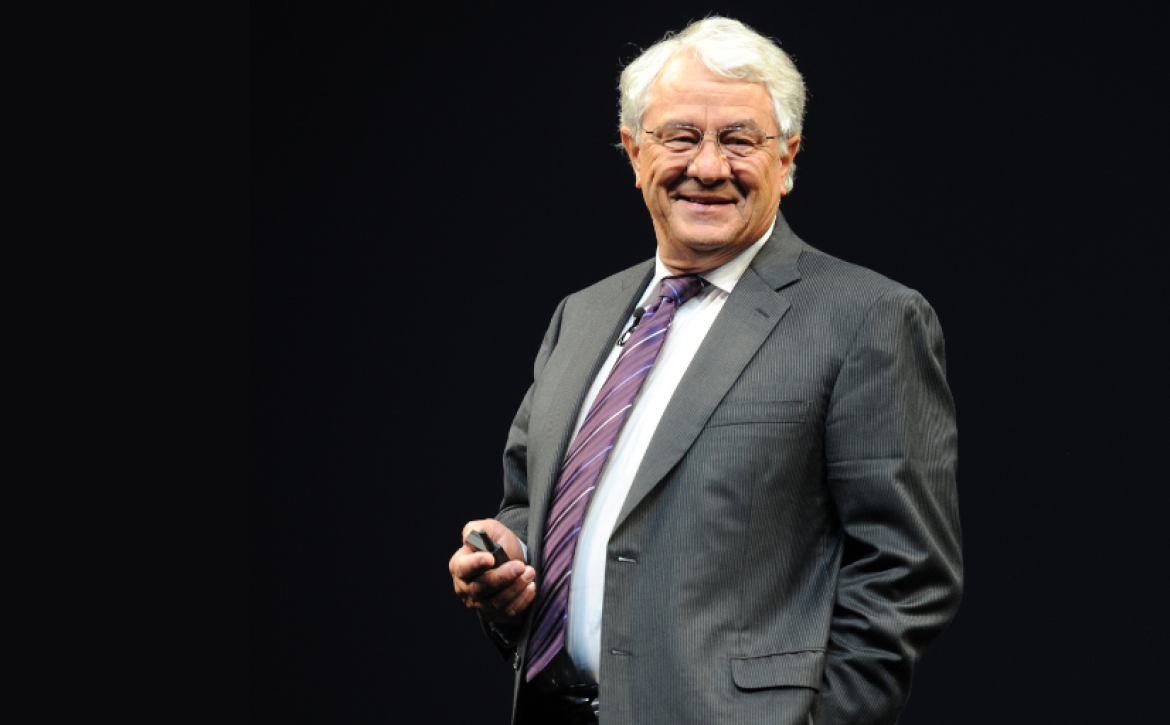
SAP co-founder Dietmar Hopp once said about co-founder Hasso Plattner: “It’s hard to quantify his legacy. All I can say is that without him, SAP would never have been so successful.” At the 2024 Annual General Meeting of Shareholders on May 15, Plattner will step down from the SAP Supervisory Board after 21 years as its chairman.
One need only look at the key milestones in Plattner’s 52-year career at SAP to gain a vivid picture of his legacy. Together with Dietmar Hopp and his fellow co-founders, Plattner created the market for real-time business software, helped steer SAP through more than five decades of fast-moving IT history, and drove SAP’s global expansion – transforming it from a single-product company to the world’s No. 1 provider of enterprise applications.
Over the years, he worked tirelessly to open new horizons for the company and its employees, identifying technological trends and channeling his pioneering spirit into revolutionizing far more than just data management.
1972-1973: The Early Days
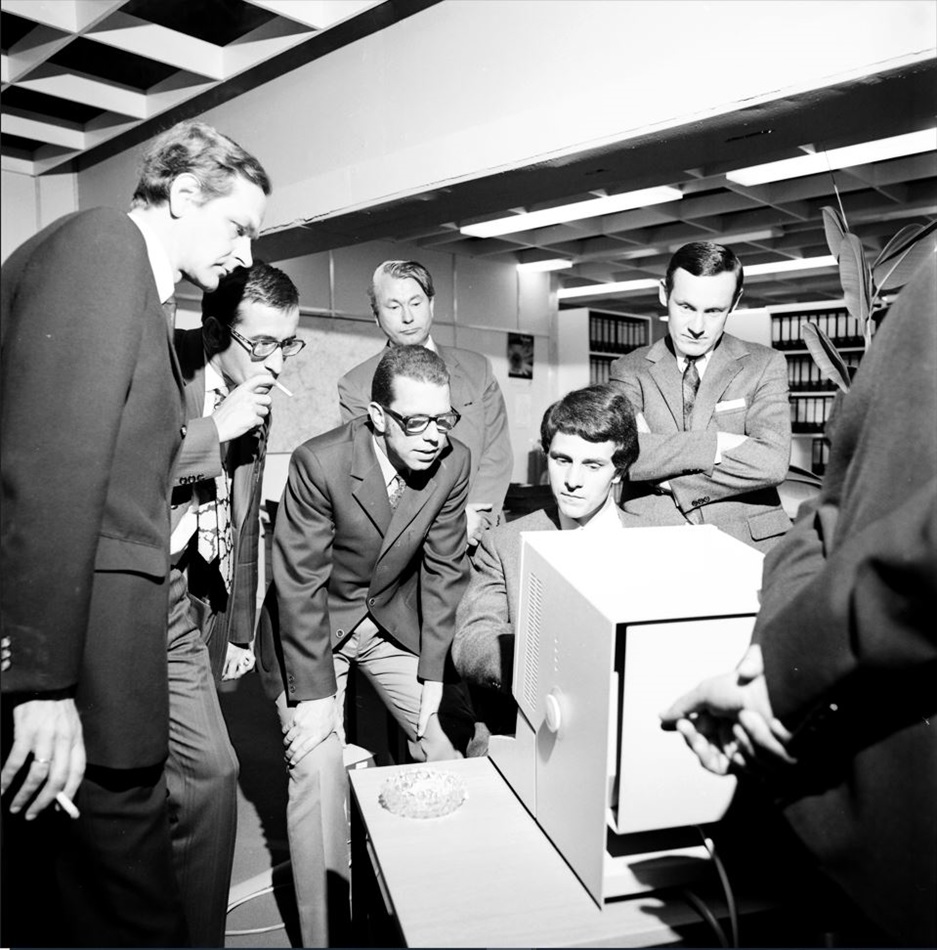
Hasso Plattner (sitting) explains the real-time screen application to colleagues from IBM and ICI
Having created Germany’s first real-time software application with a user interface, Hasso Plattner and Dietmar Hopp founded a company they named Systemanalyse Programmentwicklung (“System Analysis Program Development”) on April 1, 1972, together with their IBM colleagues Claus Wellenreuther, Klaus Tschira, and Hans-Werner Hector.
In 1973, the entrepreneurs launched RF, their first financial accounting system. The “R” in the name stood for “real time.” Developed under Plattner’s leadership, RF laid the foundation for a series of software modules in a system that would later be known as SAP R/1.
“Before I worked on RF,” Plattner once said, “I knew nothing about financial accounting; afterwards, I could hold seminars about it for CFOs. And not because I’d read stacks of books or was very smart, but because I’d learned from customers how to build this kind of system. I worked side by side with our customers at their offices every day.”
1976: The Formative Years
Systemanalyse Programmentwicklung was renamed “SAP.” Each of the founders and their employees – numbering about 30 at this point – was a developer, salesperson, and consultant all rolled into one.
Hasso Plattner and Dietmar Hopp were constantly competing to be the best at programming and selling their products. Plattner recalls that it made him really mad once when Hopp sold more than he did. Wherever their tasks and skills converged, they would engage in a private, “take-no-prisoners” contest to outdo each other.
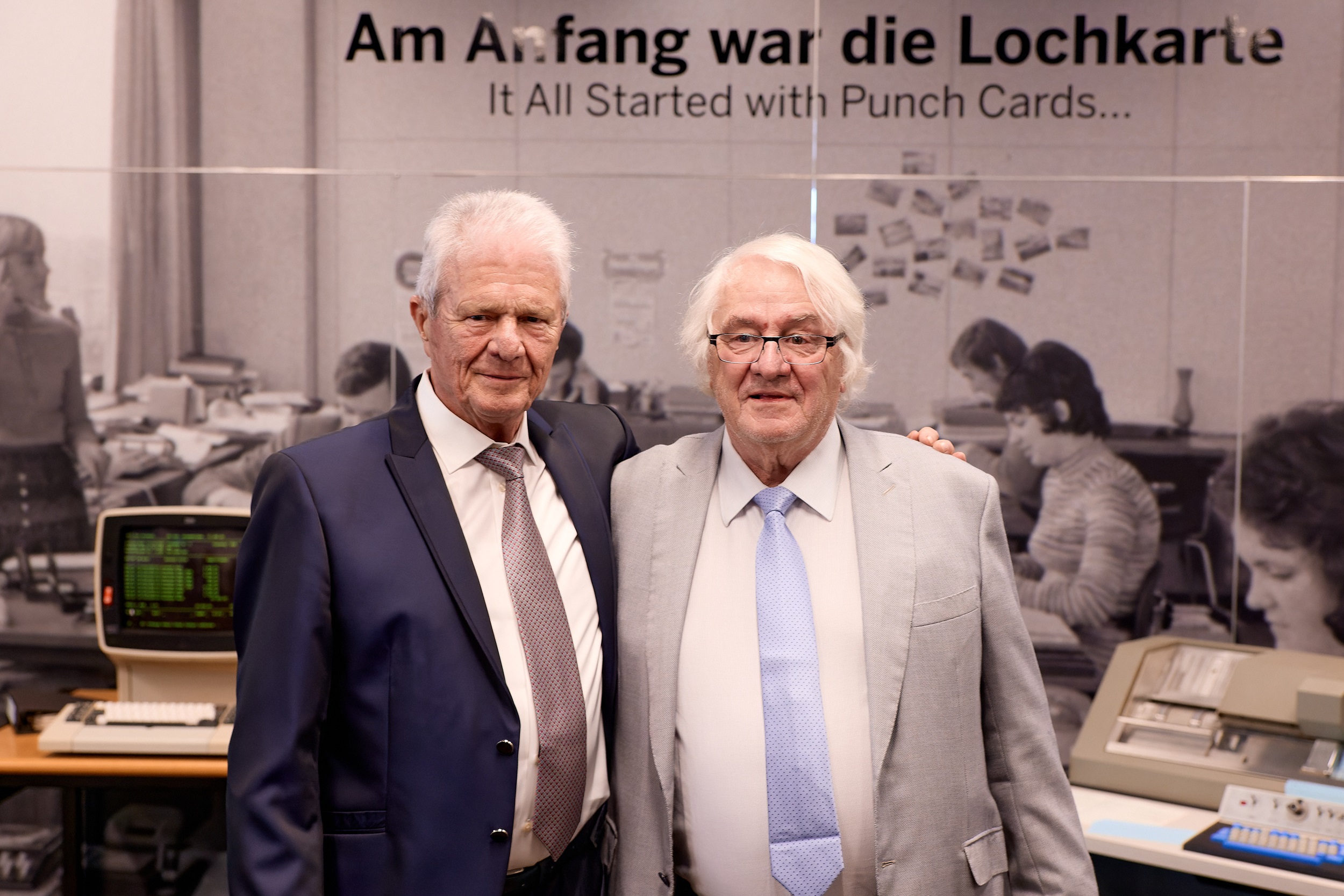
Dietmar Hopp (left) and Hasso Plattner: ambitious and always encouraging each other to achieve top performance (in the anniversary year 2022)
Nevertheless, both men also knew how to harness their ambition and fondness for friendly competition to the benefit of their fledgling business.
1988: Conversion and IPO
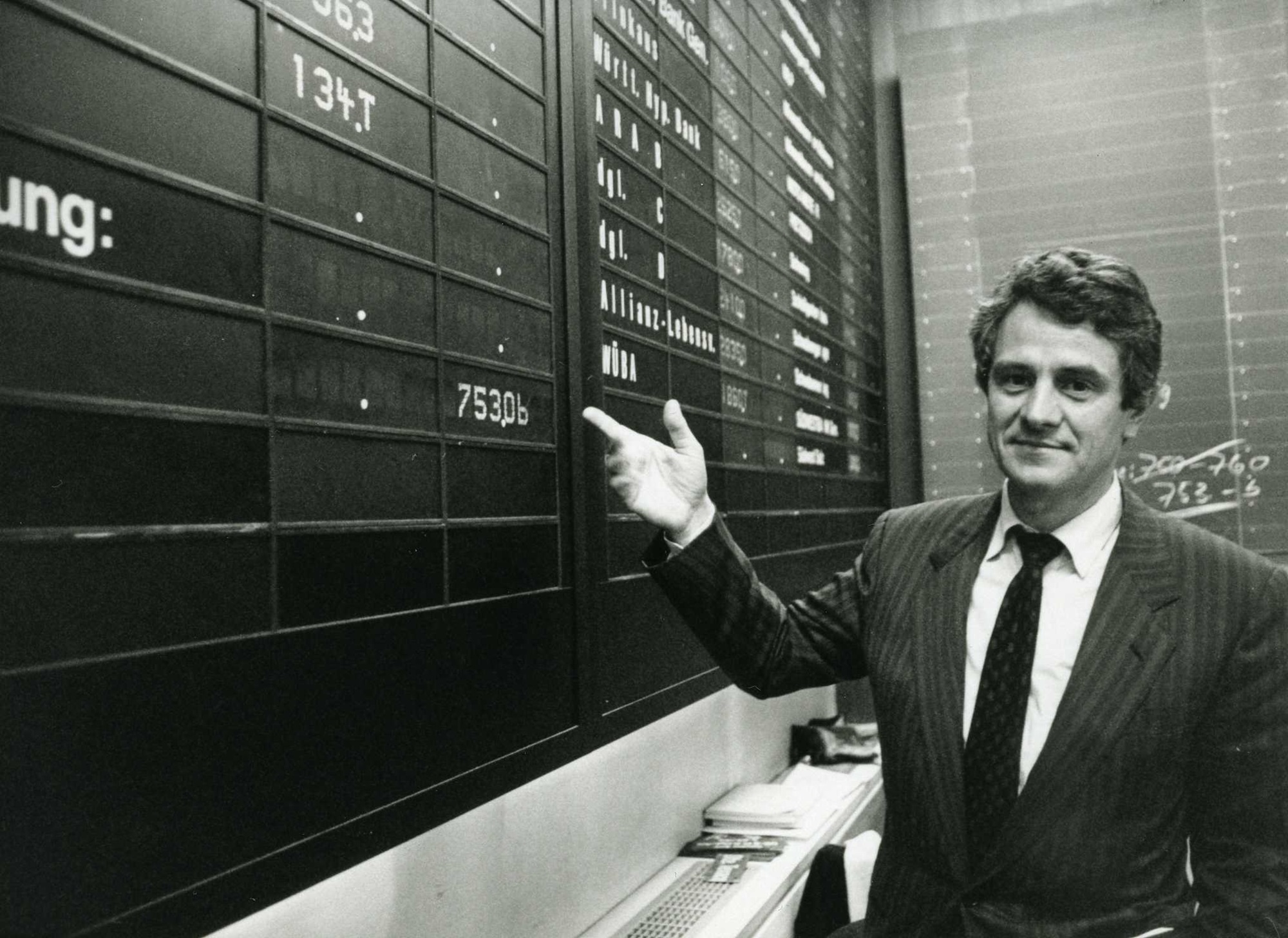
SAP GmbH was converted to a stock corporation, SAP AG, and in October 1988 it listed on the stock exchanges in Frankfurt and Stuttgart, providing the company with the funding it needed to expand into even more markets.
The initial public stock offering (IPO) was the beginning of a steep stock rise
1991: SAP R/3
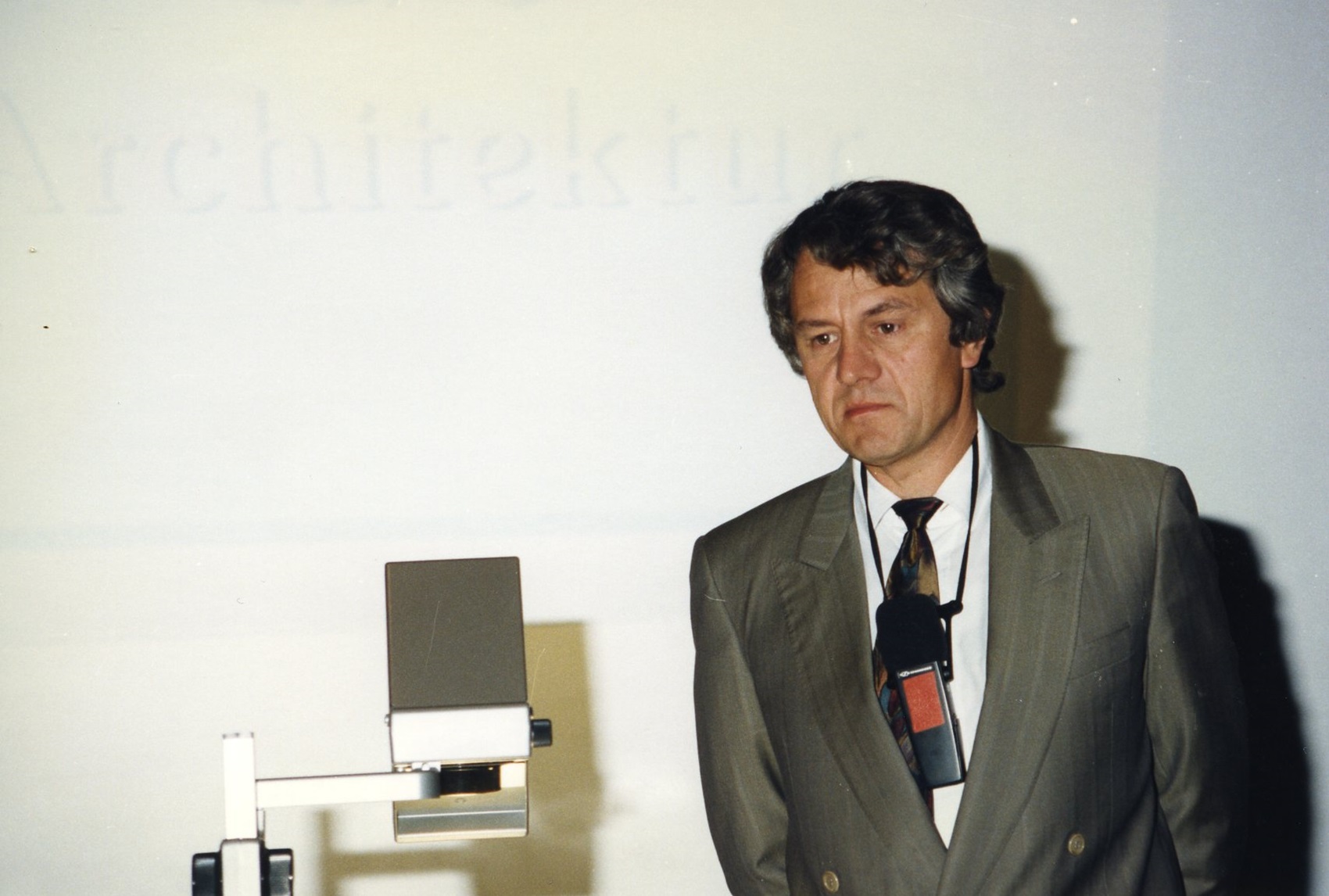
SAP R/3 made the company a global player. Plattner in 1991 at a Hewlett Packard (HP) event.
At SAP’s 25th anniversary celebrations in 1997, Plattner recounted an incident in late January 1991, which he described as “probably the most dramatic situation” in the company’s history: “A year before the final delivery date for R/3, we realized during testing that its performance on our mainframe was completely unsatisfactory and that the test conditions were unacceptable. Six weeks before we had planned to present R/3 at the CeBIT trade fair in Hanover, we had all but given up on the project.
We called an emergency meeting at which everyone remained standing, such was the urgency of the matter at hand. We decided to halt work on the mainframe systems and, in a last-ditch attempt, to switch to the new, more powerful Unix workstations, which we’d previously only used in development.
The presentation of R/3 on Unix was a huge hit. A year and a half later, we began shipping our new client-server software to customers. That was the start of R/3, a business application for network-based computers.”
1992: Heading Stateside
In the early 1990s, when everyone else’s attention was focused on getting SAP R/3 to market quickly, sales of SAP R/2 in Germany were a cause of concern for Dietmar Hopp. As Plattner recalls: “Dietmar and I were standing in his office, and he said to me, ‘It’s not looking good. The only option I can see is for you to pack the system up and take it to America.’” They agreed to continue promoting the SAP R/2 mainframe software in Germany while going all-in on SAP R/3 in the U.S.
At the Sapphire customer conference held in Orlando in September 1992, Plattner announced that SAP would deliver the SAP R/3 system within six weeks to anyone who ordered it there and then. By October, computer manufacturer Convex had signed a contract for the new product, giving SAP its first SAP R/3 customer in the United States. And when, not long after that, oil giant Chevron – one of the country’s largest companies – also opted for R/3, SAP’s new software, originally built with the midmarket in mind, was well on track to becoming a global success story.
The computer manufacturer Convex was the first SAP R/3 customer in the U.S.
1993: A Very Special Partnership
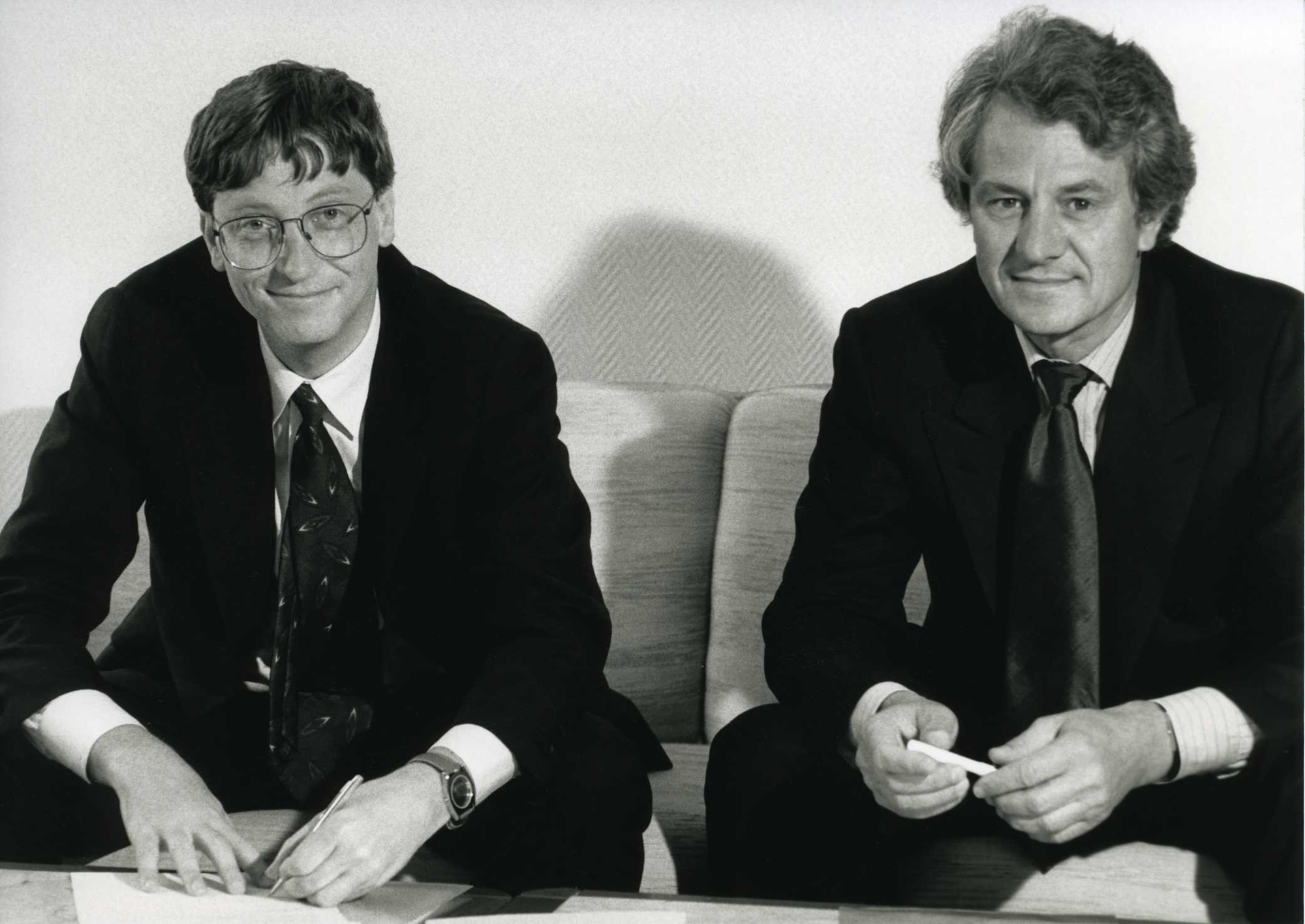
SAP entered into an alliance with the world’s largest software company: Microsoft. Bill Gates, who had flown into Munich to sign the contract in person, told the audience at the press conference announcing the partnership: “We are delighted that SAP, one of the leading providers of standard software, supports Microsoft’s client-server operating system. We believe that many businesses will see this move by SAP as a compelling reason to opt for Windows NT.”
The beginning of a long and fruitful partnership: Microsoft founder Bill Gates and Hasso Plattner
And when, in 2010, Plattner received the Transatlantic Partnership Award, Gates had this to say about his friend and colleague: “I’ve known Hasso for more than three decades. His knowledge, energy, and vision never cease to impress me.”
1997: SAP Celebrates Its 25th Anniversary
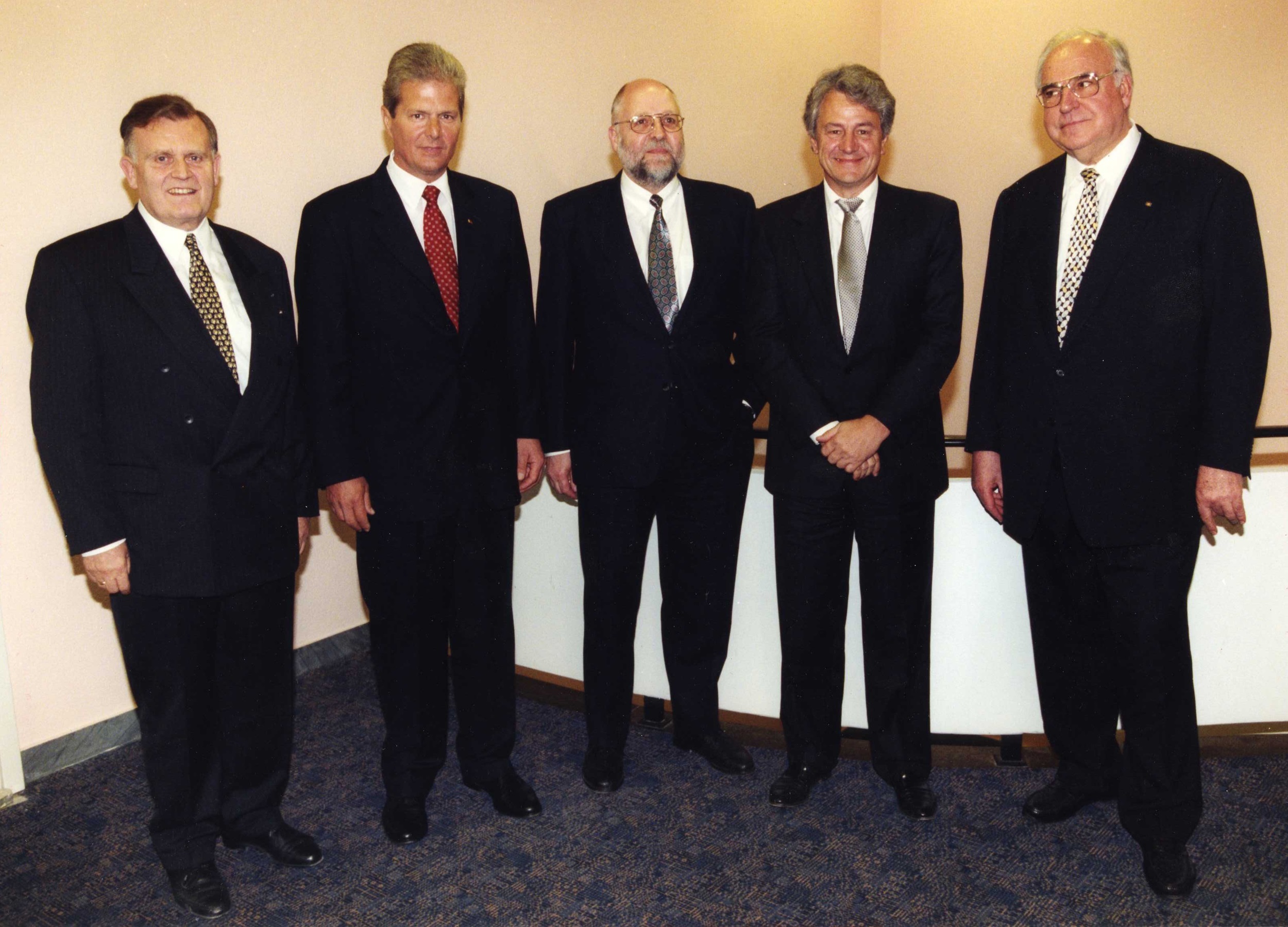
SAP turns 25 and celebrates with the Prime Minister of Baden-Württemberg, Erwin Teufel (left) and Federal Chancellor Helmut Kohl (right) in between Hopp, Tschira, and Plattner
Plattner was appointed co-CEO, alongside Dietmar Hopp. In his speech at SAP’s 25th anniversary celebrations, he spoke about what had helped the company prosper: “Product focus is one pillar of SAP’s success. When a product sells well, the employees share in that sense of achievement. That feeling is just as important to them as the pay they take home each month. Our employees identify with the product – that’s why they have always gone the extra mile. No matter how different our views at times were, we always managed to regroup and we never lost sight of the product. For the past 25 years, the founders and employees of SAP remained true to the original product vision and never veered off course.”
1998: SAP Conquers New York
On August 3, 1998, the company debuted on the New York Stock Exchange (NYSE), the world’s largest exchange. CEO Hasso Plattner described SAP’s Wall Street listing as “a strategic necessity and logical milestone in the history of SAP.”
By having its shares listed on the New York Stock Exchange “Big Board,” SAP gained new prominence in its most important market
That same year, Plattner founded the Hasso Plattner Institute (HPI) for Software System Engineering in Potsdam, near Berlin. “The institute here in Potsdam is my contribution to training internationally competitive junior managers who help shape and advance the digital world,” he said.
Dietmar Hopp and Klaus Tschira transitioned from the Executive Board to the Supervisory Board, and Plattner became co-CEO alongside Henning Kagermann.
1999: The mySAP.com Revolution
In May, Plattner announced the mySAP.com strategy, which set the company and its product portfolio on an entirely new path. Using the latest Web technology, mySAP.com connected e-commerce solutions with the company’s existing ERP applications.
To be successful in the increasingly important Internet business, Plattner relied on the mySAP.com strategy
According to Plattner, success on the Internet was key to the company’s survival. At the Sapphire conference in Philadelphia in September 1999, a live demo of mySAP.com — with a prelude by Plattner playing Queen’s “I Want to Break Free” live on electric guitar — was enough to convince customers to adopt SAP’s Web strategy.
And, true to form, Plattner was already thinking about where the technology would go next, predicting that e-commerce and the hosting of applications on SAP servers would be “the future of software sales.”
2003: From Executive Board to Supervisory Board
Plattner stepped down from the Executive Board and was elected chairman of the Supervisory Board.
Speaking at the Annual General Meeting of Shareholders in May, he said: “This rising star of the 90s is now playing in the same league as IBM, Microsoft, and Oracle.”
With Plattner’s withdrawal from the Executive Board, Kagermann (left) becomes the sole CEO
Though no longer its CEO, Plattner continued to channel his passion and his eye for technological trends into driving SAP forward, but now in his new role as chief software advisor on the Supervisory Board. That same year, he helped found the Hasso Plattner Institute of Design (“d.school”) at Stanford University, providing funds to support its work on design thinking, a new approach to finding creative solutions to complex problems.
2006: The In-Memory Database
It was in 2006 that Plattner and students at HPI began work on a revolutionary technology. The result was SAP HANA (High-Performance ANalytic Appliance), an entirely new, column-oriented, in-memory database management system.
“It’s not so easy for a big company to break out and do something radically different,” said Plattner. “The university context gives you the freedom to do it.”
Plattner loves to pass on his knowledge to young people
2011-2013: SAP HANA Drives Growth
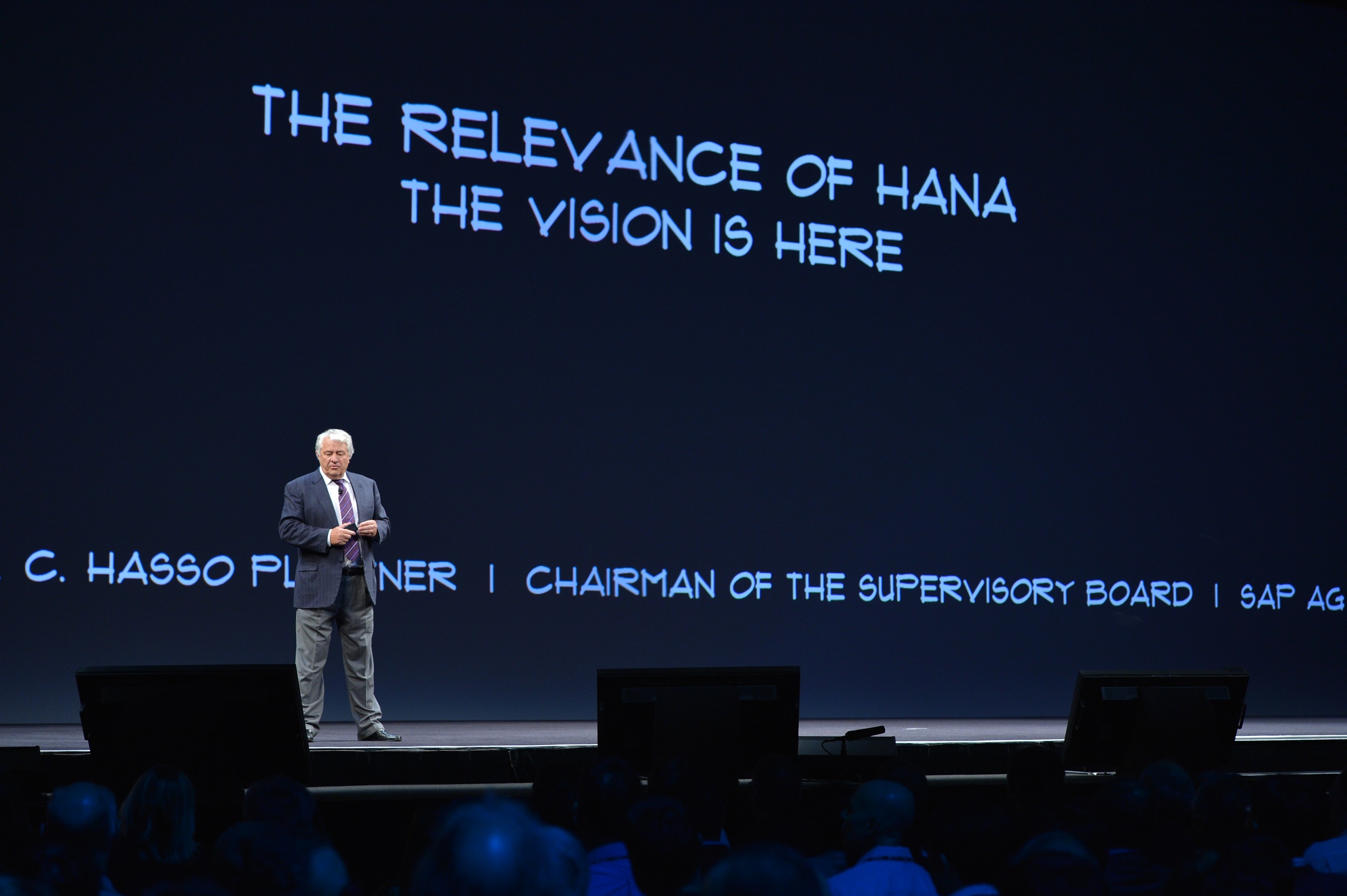
Plattner talks about the importance of SAP HANA at the SAPPHIRE NOW conference in Orlando in 2012
Five years later, the first SAP HANA customers began implementing the new database, which generated the kind of demand not seen since the market launch of SAP R/3.
By the end of 2013, the entire SAP Business Suite had moved to SAP HANA. In the three years since its launch, SAP HANA had garnered nearly €1.2 billion in revenues, making it one of the fastest-growing products in the history of enterprise software.
In an interview with German daily Handelsblatt in 2020, Plattner said: “SAP HANA is so superior in practice that there is no alternative. And quite honestly, it saved SAP’s life, because it let us massively accelerate our ERP system without a lot of changes, while physically downsizing it at the same time. That meant a huge cost saving for our customers.”
2015: The Foundation
Plattner reinforced his commitment to promoting education and culture by setting up the Hasso Plattner Foundation.
Among the many causes the foundation has supported over the years are programs to promote healthcare and health education in South Africa. The German city of Potsdam also has much to thank Plattner for: The Hasso Plattner Institute is the largest investment in Potsdam and the one that bears his signature most strongly. The Barberini Museum that he rebuilt completes the inner cityscape of Potsdam and provides a home for his impressive Impressionist collection — the largest outside of France. With the Kunsthaus MINSK, he saved one of the few architectural icons of the GDR era and created a home for his GDR art collection.
Celebrities at the opening of the Barberini Museum in Potsdam in 2017
On being asked why he chooses to get involved with causes and projects of this kind, Plattner explained: “I owe the resources and skills for life to my parents and, above all, to my studies at the public technical university in Karlsruhe. That’s why I want to give something back in the area of education, so that others can also benefit from it.”
2022: Learn from Our Customers
In an interview to mark SAP’s 50th anniversary, Plattner shared some advice: “I recommend a return to the approach we used in the early days of SAP – of sending SAP teams out to the customer. Instead of implementing our standard systems, they should find out how people actually use the tools they get from SAP and other vendors. That will give us our starting point. There are so many interesting companies out there. We can learn from them and with them. We have to step outside SAP and do something with the customers.”
And in a comment directed to SAP employees, he said: “Treat the customers well – once we have them, we have to keep them. That’s one of SAP’s strengths. And never think it’s done. You have to carry on. The job is never done!”
“Treat the customers well” – Plattner’s wish to employees on SAP’s 50th birthday
2024
Plattner will step down from the Supervisory Board on May 15, the last of the SAP co-founders to leave the company.
Explore more of SAP’s more than 50-year history of success that began with five entrepreneurial programmers
WALLDORF and BANGKOK — SAP SE (NYSE: SAP) today announced Charoen Pokphand Foods Public Company Limited (“CP Foods”) has selected multiple SAP solutions to drive further growth and competitive advantage and to ensure the sustainability of its products for the future.
Record, report and act on your sustainability goals with SAP software
Catering to more than 4 billion people globally, CP Foods is embarking on its next stage of digital transformation with the RISE with SAP, SAP Sustainability Footprint Management, and SAP Sustainability Control Tower solutions. In addition, the SAP EHS Management, environment management application will be implemented to future-proof its business and to gain strategic insight into the sustainability impact of its products, processes and infrastructure globally. The company is a leading integrated agro-industrial and food business that is one of the world’s largest producers of feed, shrimp, poultry and pork. It has operations in 17 countries and exports to more than 50 countries.
Global Net-Zero Ambitions
In line with CP Foods’ goal of becoming the “Sustainable Kitchen of the World,” CP Foods is the first food processing company in the world with near- and long-term forests, lands and agriculture (FLAG) sustainability targets validated by the Science-Based Targets Initiative (SBTi). CP Foods is looking to realize the company’s Net Zero goals of reducing 42% of Scope 1 and 2 emissions and 30.3% of Scope 3 emissions by 2030 – and 90% of Scope 1 and 2 emissions and 72% of Scope 3 emissions by 2050. To achieve these goals, the company is implementing SAP Sustainability solutions to record, report and act on real-time sustainability data, driving carbon accounting at both corporate and product levels.
“Net Zero is the only solution to climate change,” CP Foods CEO Prasit Boondoungpraser said. “It is important to us to understand and reduce our impact on the planet, so we create food that is not only safe and nutritious for people but also green and clean for the earth. Feeding our livestock, farming our food and transporting it to people’s plates incurs emissions we have to be able to record and report. With RISE with SAP and SAP Sustainability solutions, we will have insight into actual emissions automated in real time rather than relying on manual averages, allowing us to make quick, informed and sustainable business decisions for our operations and for the planet.”
SAP plans to provide a technology foundation that will support CP Foods in complying with forthcoming carbon regulations in various markets, including the EU Carbon Border Adjustment Mechanism (EU C-BAM) and U.S. SEC climate risk disclosures.
Key to reducing total emissions, CP Foods will focus on supply chain emissions, with its emissions mostly falling under Scope 3. CP Foods will work with the Customer Success organization at SAP, leverage YASH Technologies’ sustainability expertise and build on Amazon Web Services (AWS) to implement SAP Sustainability solutions. Doing so will allow it to record and report on its Scope 1 and 2 emissions in Thailand and select Scope 3 (3.1 and 3.4) for its feed business in Thailand covering both FLAG and non-FLAG emissions. The next phase of implementation will extend in scope to cover operations around the world.
Cloud Sustainability
Paul Marriott, president of SAP Asia Pacific & Japan, said: “Sustainability is a huge opportunity for businesses across Asia. Using RISE with SAP and our sustainability solutions, CP Foods is getting ahead of forthcoming emissions regulation and future-proofing its business by using data to make more sustainable decisions. It can use those insights to drive more operational efficiencies, optimize supply chains, and differentiate its business against competitors.”
As a global leader in enterprise applications and business AI, SAP (NYSE:SAP) stands at the nexus of business and technology. For over 50 years, organizations have trusted SAP to bring out their best by uniting business-critical operations spanning finance, procurement, HR, supply chain, and customer experience. For more information, visit www.sap.com.
Note to editors: To preview and download broadcast-standard stock footage and press photos digitally, please visit www.sap.com/photos. On this platform, you can find high resolution material for your media channels.
For customers interested in learning more about SAP products: Global Customer Center: +49 180 534-34-24 United States Only: 1 (800) 872-1SAP (1-800-872-1727)
In a significant development for the defense sector, SAP National Security Services, Inc. (SAP NS2) has obtained the Defense Information Systems Agency (DISA) provisional authorization (PA) for SAP S/4HANA Cloud, Private Edition. This authorization enables SAP NS2 to deploy SAP S/4HANA and other cloud applications within their secure U.S. Department of Defense (DoD) cloud environment, […]
The global leader in enterprise software has announced the contract extension of SAP CEO Christian Klein for an additional three years, until the end of 2028. The decision, made by the company’s Supervisory Board, not only prolongs Klein’s tenure but also strengthens his position as the chairman of the Executive Board, a role he previously […]