SAP Leaders Redefine the Digital Sovereignty Debate

Global geopolitical uncertainty, trade tensions, and national security concerns are fueling the debate over digital sovereignty as well as the market growth for sovereign cloud services and demand by enterprises for secure, local access to the latest AI tools.

SAP Sovereign Cloud: Embrace the cloud, without compromise

The public cloud has ushered in unprecedented benefits for businesses and governments in terms of data access and data flows. But in uncertain geopolitical times, sensitive data — including government classified information and data generated by regulated industries — requires special protection.

As SAP CEO Christian Klein noted recently in an interview with the Financial Times, these concerns have fueled customer anxiety over cloud infrastructure choices and boosted the concept of “sovereign” data centers, where information remains within national borders.

Sovereign clouds

Historically, governments, government agencies, and a select group of private sector organizations in sensitive areas, including defense and public utilities, led the demand for sovereign clouds. Technology companies, including SAP, have responded by providing highly secure sovereign cloud services.

But in recent months the debate over digital sovereignty has widened. As Hayete Gallot, Google’s president of Customer Experience, recently noted, “Sovereignty used to be a very niche thing that applied to very regulated industries, such as defense and intelligence, and suddenly in the current environment, everybody is thinking about it.”

The EU has proposed spending €20 billion to build five “gigafactories” to facilitate digital sovereignty and help Europe compete more effectively in AI against the predominantly U.S.-based hyperscalers and large language models (LLMs). But others, including Klein, are not convinced that it makes sense to replicate the physical infrastructure built by hyperscalers and others.

The data center hardware race is over

Klein argues that spending billions in government funding in the EU on huge new data centers would be misguided, and that European companies already have control and sovereignty over their own data. “The hardware train has left [the station],” he said. Together with other senior SAP executives, he also argues that digital sovereignty is about more than physical infrastructure — the operational, technical, and legal dimensions of data sovereignty matter just as much.

Crucially, SAP Sovereign Cloud offers a model that keeps customer data within national borders and in compliance with local laws, without the need to replicate the existing physical infrastructure. Its services, developed over the past 20 years, are already provided to some of the most security-sensitive organizations in the world, including those in the U.S. through SAP National Security Services (SAP NS2).

Sovereign cloud customers

Outside the U.S., the SAP Sovereign Cloud Services organization already counts more than 170 customers globally and has plans to invest a further €2 billion over the next decade to expand regional coverage. For example, SAP is currently in talks with four Asian countries. In Germany, the unit provides secure sovereign cloud services through Delos Cloud and plans to launch similar services in France through Bleu.

Instead of getting involved in a futile race to catch up with the U.S., SAP executives argue that Europe must now promote the use of vertical AI for individual industries and special areas of application.

In a recent guest commentary in the German business newspaper Handelsblatt, Klein called for a digital strategy for Europe that builds on the region’s digital strengths: “A new, European-defined concept of sovereignty is necessary, one that relies on self-determination rather than self-sufficiency.” He also cautioned that digital sovereignty “is not an end in itself” and called for “profound change” to industry business models.

These models “need to be rethought, processes digitized, and AI used in a targeted manner for more innovation, for greater efficiency, for sustainability,” he added. 

Martin Merz, president SAP Sovereign Cloud, agrees. “The debate around digital sovereignty in Europe has gone on too long with too many buzzwords and too little substance,” he said. “We’ve reached a point where Europe can no longer afford misguided discussions. What counts is value creation. Real sovereignty includes empowering people, industries, and governments to lead through innovation.”

“When it comes to highly sensitive data, SAP Sovereign Cloud comes in,” Merz continued. “It’s purpose-built to protect the most sensitive, security-critical data, enabling the highest level of protection and operational autonomy, without slowing down innovation.”

Locally hosted AI

Underscoring this shift in the data sovereignty debate, many SAP customers are now talking about sovereign AI or what SAP calls “locally hosted AI.” To help facilitate this, SAP CTO Philipp Herzig recently noted that the company is now offering a range of self-hosted AI models in a more secure and local environment. “Starting Q3 this year, we are providing the entire AI foundation end-to-end out of European data centers. This is AI fully managed and operated by SAP,” he shared.

As a result, he said, customers will have access to cutting-edge local models like Mistral Small and Mistral Medium, Aleph Alpha, or the T-Free model used by the German government. “Their data will remain local, trusted, compliant, and secure, and seamlessly integrate with SAP Business AI capabilities without compromising on performance, governance, or privacy,” Herzig added.

He also revealed that Swiss Federal Railways is leading the way as an early adopter, using locally hosted AI with Mistral AI to power innovation in a trusted environment. Speaking during a recent NVIDIA conference in France, he also announced that SAP has formed a strategic partnership with Mistral AI and Capgemini to accelerate AI adoption across Europe.

“Together, we’re building the future of enterprise AI – secure, local, and smart,” Herzig said.

Subscribe to the SAP News Center newsletter to get stories and highlights delivered to your inbox each week

Connected for Growth: What’s New with SAP Customer Experience in Q2 2025

In the arena of customer experience, competitive advantage can be won or lost in a single interaction. And long-term loyalty — keeping customers coming back — is an ongoing challenge.

Unite your business processes end to end with customer experience solutions from SAP

Every moment in the customer journey is a chance to deliver value, earn trust, and build relationships. But delivering consistently great experiences means adapting to evolving trends and expectations with a connected approach to people, data, and systems. 

The Q2 2025 release of the SAP Customer Experience (SAP CX) portfolio does just that. Whether engaging customers, streamlining operations, or empowering employees, this release delivers smarter, faster, more personalized experiences at scale. Powered by AI with harmonized data, it brings improvements across the customer experience life cycle, from first touch to long-term growth, with seamless, value-generating experiences across service, sales, marketing, commerce, and consumer industries.  

Here are the highlights from SAP CX in Q2 2025.  

Making every interaction count 

Everyday moments turn into meaningful engagements when experiences are connected, relevant, and effortless. This release helps users go beyond meeting customer needs to building trust and loyalty at every touchpoint. 

SAP Service Cloud  

SAP Commerce Cloud 

  • B2B Self-Service Portal: Raise customer satisfaction and reduce service volume with this scalable, easily implemented 24/7 self-service solution. B2B customers can view order status, invoices, and delivery updates—regardless of how the order was placed. 
  • AI Shopping Agent: Engage customers in real time to drive conversions and growth. With prompting questions and natural, conversational language, the agent guides product discovery and enables in-chat actions like add to cart as well as view order and shipping details.
Check Order Status with Shopping Agent

SAP Emarsys 

  • Mobile Wallet Enhancements 
    • Segmentation: Combine wallet and customer data to target the right people; for example, reengaging those who have not interacted recently with Mobile Wallet campaigns.
    • Expanded Wallet Delivery Channels: Reach customers anywhere with the new Mobile Inbox and Mobile Push channels.
    • Pass Notifications: Automatically deliver timely lock-screen updates for on-the-spot engagement and conversion with mobile wallet users or targeted customer segments. 
  • WhatsApp Template Messaging: Automate one-way WhatsApp communications like promotions and order updates using the rich content, personalization, and multi-language support in SAP Emarsys.
  • Conversational Messaging for WhatsApp (SAP Early Adopter program): Have lively, real-time WhatsApp conversations based on contacts’ responses.

Scale smarter, operate better 

Sustainable growth requires operational efficiency and built-in customer experience. With unified data connected to core business operations and AI-driven insights, these updates improve internal operations, enhance scalability, and set the foundation for differentiated customer experiences. 

SAP Commerce Cloud 

  • B2B Self-Service Portal: Give customers transparency without committing to full commerce and scale when ready, without data migration or replatforming. Launch this 24/7 self-service portal for B2B customers in just weeks with partner packages that simplify setup and accelerate time to value. Built as an ERP add-on, the portal connects natively with back-end systems to surface real-time order and invoice data, reducing support workload and improving the customer experience with accurate, always-on self-service. Out-of-the-box compatibility with SAP S/4HANA and SAP Cloud ERP means faster setup, less IT effort, and long-term flexibility. 
  • Open Payment Framework: Support for B2B transactions and workflows brings unified checkout, reliability, and built-in security and validation to the payment experience, accelerating time to market and increasing conversions. 

SAP Sales and Service Cloud 

  • SAP Preferred Success Services Navigator: Accelerate time to value and maximize your investment in SAP with services navigator for SAP Sales Cloud and SAP Service Cloud Version 2 implementations. Part of SAP Preferred Success for SAP Customer Experience solutions, the navigator helps users discover relevant services from their SAP Preferred Success subscription for each stage of a project, align support offerings with project goals and timelines, and improve business outcomes with accelerated adoption and reduced risk.
  • SAP Enterprise Service Management: Reduce the costs and complexity of internal issue resolution with unified service delivery. By centralizing and structuring inquiry management and response, out-of-the-box integrations of SAP Enterprise Service Management with SAP Business Suite applications break down silos to improve service delivery across finance, HR, marketing, facilities, sales, support, and more. 

SAP Revenue Growth Management 

New to SAP Revenue Growth Management in Q2 2025 includes:  

  • Fund management: Gain control over trade spend—create funds, manage and adjust fund budgets, and track spending for promotions.
  • Analytics dashboards: Get quick access to planning data and insights into P&L for individual promotions with embedded SAP Analytics Cloud, SAP Revenue Growth Management analytics dashboards. 
Profit and Loss Analytics with Revenue Growth Management 

AI that accelerates impact

Across the experience life cycle, AI-powered embedded intelligence and autonomous AI agents help unlock faster decisions and better outcomes. This release helps teams move faster, engage smarter, and scale with confidence.

SAP Sales Cloud 

  • Sales Order Summary: Enable sales managers to act quickly with relevant insights like price changes, product substitutions, on-time delivery probability, and more — boosting accuracy and profitability.
  • Account Duplicate Check: Protect data quality and reduce the manual effort of dealing with redundant data. Account Duplicate Check uses AI to detect potential duplicate accounts so users can maintain clean, accurate records and drive smarter engagement. 

SAP Service Cloud 

  • Registered Product Summary: Empower agents with a complete overview of a product’s service history, turning standard service calls into a strategic conversation. 
  • Business Information Extraction: Extract and convert key data from unstructured documents using AI, helping unlock insights and action. 

SAP Emarsys 

  • Natural Language Search for Product Curation: Enable marketers to curate products faster using natural language search, helping them move faster and build the right use cases. 
Sales Order Summary in SAP Service Cloud 

Innovation that connects it all

From loyalty to growth to operational agility, these innovations help deliver more intelligent, connected experiences at every touchpoint — with the adaptability and scalability to grow lifelong customer value. 

Learn more


Balaji Balasubramanian is president and chief product officer for SAP Customer Experience.

Sign up for the SAP News Center newsletter to get stories and highlights delivered straight to your inbox each week

Merrifield Garden Center Nurtures Omnichannel Innovation

A garden center and plant nursery may seem like a seasonal business, but Merrifield Garden Center is continuously evolving to meet the needs of its customers no matter the time of year.

Since its humble beginnings in 1971, Merrifield has flourished into one of the largest full-service garden center, nursery, and landscaping companies in its region, employing more than 600 individuals and comprising over 70 acres of plants, property, and storefront in northern Virginia. Its business includes three brick-and-mortar locations carrying plants, gardening supplies, and home and holiday décor; an online store; a wholesale division that supports other local landscape contractors; a materials production division that recycles materials from landscaping jobs; and a line of private-label products tailored specifically for the environmental conditions in the greater Washington, D.C. area.

Clearly, the business has expanded and evolved over the years to meet changing industry and customer standards, but its founding principles of providing the highest quality customer services and unparalleled plant and product selection remain steadfast. The same is true for the systems supporting the products and services in Merrifield’s retail operations. With its omnichannel strategy, it’s critical that Merrifield delivers a consistent, seamless, and personalized experience across all its customer touchpoints.

Blooming into a modern, tech-savvy enterprise

Luckily, CFO Lynn Warhurst has made it one of her personal goals to bring technology into the company since joining in 1978. “There was zero technology…so we knew going forward that if we wanted to grow and be successful, we needed to change something,” she said.

After coming across SAP at an NRF event in the early 2000s, Merrifield went live with SAP ERP Central Component (SAP ECC) in 2013 to replace its 20-year-old garden center legacy system, providing the company with modern audit trail capabilities and increased data reliability.

Reimagine your retail operations and create exceptional customer experiences with SAP

Continuing its long-standing innovation journey and partnership with SAP, Merrifield is now transitioning its SAP ECC system to the cloud with SAP S/4HANA Cloud Public Edition, retail, fashion, and vertical business.

Merrifield Garden Center sees up to 300 transactions per hour per location, Warhurst said, and so the company needed a solution with enhanced processing speeds that can handle a high volume of retail transactions. What’s more, the company also wanted a system that supports Apple Pay and Google Pay, has customer loyalty tracking and data analytics capabilities, and ensures enterprise security and compliance.

Merrifield also wanted to bring together its retail and wholesale divisions onto one platform as opposed to hosting them on fragmented solutions. “We knew [SAP S/4HANA Cloud Public Edition] could handle our complexity and give us the detail we needed to run and grow our business,” Warhurst said. “After 54 years in business, both divisions will run on the same platform. It’s very exciting that we can interchange cashiers for retail and wholesale, which means being more efficient as a company.”

SAP S/4HANA Cloud Public Edition, retail, fashion, and vertical business is a new solution introduced in January of this year. Built specifically for retailers, the ERP solution is tailored to the industry’s unique complexities around scaling, merchandising, store operations, and supply chains. The flexibility of its public cloud architecture helps unify and integrate industry-specific processes with out-of-the-box integrations.

Merrifield is also implementing SAP Omnichannel Sales Transfer and Audit to help ensure the completeness of sales transactions across multiple channels, improve data reporting, and comply with local regulations.

Strong partnerships build a foundation for success

To facilitate its cloud transformation, Merrifield engaged Syntax as its implementation partner. “Having a trusted partner is very important,” Warhurst said, explaining that Merrifield has worked with Syntax since 2018.

For the move to SAP S/4HANA Cloud Public Edition, retail, fashion, and vertical business, Syntax came on-site to Merrifield to experience its current system first-hand and better understand what the business sees as mission-critical during this transformation, Warhurst said. Together, they identified solution provisioning and integration, data migration, and business continuity as priorities. With this insight, Syntax is working with SAP to integrate any remaining project gaps into an upcoming solution release in August.

“Syntax and SAP have been great. We are one of the first to go public cloud for retail and they have been there for us,” Warhurst said. “It was very important to find somebody who believed in us and was there for us, and I feel that that’s really one of the most important things for our success.”

While the new system is projected to go live in September, the project is currently in the configuration and realization stage and Merrifield is excited for the future. Adopting this holistic, omnichannel, cloud-based solution will help the garden center achieve its goals of expanding into more locations and online offerings by having trusted, complete data from across its divisions available in one place.


Gillian Hixson is an integrated communications specialist at SAP.

Top image courtesy of SAP employee Tom Lennart-Krupp.

Get the latest SAP news delivered to your inbox once a week

Q2 2025: SAP’s Customer Momentum in the Americas

In the second quarter of 2025, SAP demonstrated significant momentum in the Americas. Organizations across the region and industries are continually recognizing SAP as a premier partner for driving transformation and strategic initiatives. 

Find the SAP solutions you need to run your business processes and enterprise more efficiently

SAP’s commitment to investing in innovation is delivering growth and value to organizations across the region. Thousands of companies continue to place their trust in SAP to propel their digital journeys, evident in the rising adoption SAP Business Suite and SAP Business AI, which are redefining how work is done and processes are streamlined. Businesses are increasingly implementing AI agents to automate complex tasks, freeing up valuable time and resources for innovation and growth. 

Accompanying this transformative shift is the importance of SAP Business Data Cloud, which integrates both SAP and non-SAP data. This enhanced visibility and informed decision-making capability are crucial for driving effective business outcomes and maintaining a competitive edge. 

In the second quarter, organizations that selected SAP Business Data Cloud include Acron Aviation, which also selected SAP Business AI and SAP Cloud ERP Private, Brown-Forman, and NEBCO, which also selected SAP Cloud ERP. 

Coming off our partnership announcements at SAP Sapphire and Adobe Summit, in Q2 Adobe selected SAP Signavio, SAP Business Data Cloud, and expanded its WalkMe footprint for an enterprise-wide adoption. 

Meanwhile, companies across the Americas are continually embracing RISE with SAP Methodology, leveraging SAP Cloud ERP Private to drive their digital transformations. Companies that embarked on this journey during the second quarter include: 

  • LEROY MERLIN Brasil, is the largest retail chain for home improvement, present in 14 states with 55 stores. The company is renowned for its significant investments in innovation and sustainability, and it stands as SAP’s largest retail customer in the country. To drive innovation, embrace AI, and build a resilient supply chain amid the fast-paced retail industry, LEROY MERLIN has migrated to SAP Cloud ERP Private.  
  • Mannington Mills, a fifth-generation family-owned leading manufacturer of fine flooring, selected SAP Cloud ERP Private, SAP Business AI, and SAP SuccessFactors to streamline business operations and further improve productivity. 
  • Iochpe-Maxion, a Brazilian multinational, is a global leader in automotive wheel production and a major manufacturer of automotive structural components in the Americas. With operations spanning Maxion Wheels and Maxion Structural Components in the automotive sector, and AmstedMaxion in the railway sector, the company produces around 50 million wheels annually. To boost its technological infrastructure and further streamline global operations, Iochpe-Maxion strategically migrated its existing SAP S/4HANA to SAP Cloud ERP Private  
  • Mega Alimentos, the prominent Mexican company with over three decades of experience in the candy, sauce, and chamoy industry, including its iconic brand “La Botanera,” has embarked on the path of RISE with SAP with SAP Cloud ERP Private as part of its commitment to digital transformation. 
  • Transpire Bio is a U.S.-based, clinical-stage biopharmaceutical company developing inhaled drug-device combination products for serious diseases where therapeutic options are significantly lacking. The company selected SAP Cloud ERP Private to track its revenue, streamline operations, and prepare for growth as they bring their pipeline of inhaled therapies to market. 

Other organizations that chose SAP in the second quarter include Gardner White, which selected SAP Cloud ERP and SAP Business AI, and Delta, a leading global airline that served more than 200 million customers in 2024. The airline selected SAP Supply Chain Management solutions to help boost logistics visibility, ensure better process controls, and effectively manage freight costs.  

As we look ahead, we are committed to empowering our customers to achieve more than ever before. We’re continuing to invest in the innovations that will deliver growth, value, and success to our customers around the world.

Indeed, SAP is helping businesses lead the way into the future.


Jan Gilg is CRO, president of SAP Americas & Global Business Suite, and a member of the Extended Board of SAP SE.

Subscribe to the SAP News Center newsletter to get highlights delivered to your inbox each week

SAP Gears Up for Long-Term Business Resilience with New Net-Zero Partnership

Matthias Medert is global head of Sustainability at SAP. Here, he speaks about key aspects of the company’s long-term resilience plans and the challenges along the way. In the interview, he also discusses a new partnership to advance SAP’s commitment of achieving net-zero greenhouse gas (GHG) emissions by 2030 and beyond.

SAP is a globally recognized leader in the area of sustainability

Q: How does SAP view sustainability within its overall business strategy?

A: Sustainability is a core element of business strategy and deeply embedded in our vision to help the world run better and improve people’s lives. This means it is not a separate initiative, but an integral part of our leadership and long-term goals as a company. And as such, sustainability is a business catalyst and value driver.

What does SAP’s commitment to reach net-zero GHG emissions by 2030 mean in practice?

We recognize that with a customer base that generates 84 percent of the total global commerce, we have the responsibility and opportunity to lead in corporate climate action efforts. This isn’t just about reporting numbers; it’s a science-based transformation that is embedded in our operations, collaboration with suppliers, technology, and what we offer to our customers.

For us, it means our strategy aligns with the 1.5°C pathway set in the Paris Agreement. We aim to reduce gross GHG emissions by 90 percent across our relevant value chain (market-based). The remaining emissions — no more than 10 percent — will be neutralized through high-quality, verified carbon removal projects. Our reduction efforts have earned SAP’s inclusion in the EU Paris-Aligned Benchmarks, which gives climate-conscious investors confidence in our approach.

What does SAP’s decarbonization strategy consist of?

Our transformation is structured around four interconnected pillars:

With cloud transformation, we’re accelerating the shift from on-premise to cloud solutions, with SAP-managed data centers already powered by 100 percent renewable electricity. In parallel, we are collaborating with hyperscalers and our customers to push renewable electricity adoption upstream and downstream. An important part of this transition is enhancing GHG accounting and moving from estimates to primary data from our suppliers.

With upstream supply chain engagement, we are revising procurement policies and working closely with our suppliers to lower emissions across the supply chain. This includes aligning on data transparency and decarbonization targets. The rise of energy-intensive technologies like AI presents new challenges, but we’re addressing them through joint commitments and shared accountability.

In internal operations, we have several initiatives in place. For instance, since 2014 SAP has been running all offices, owned data centers, and co-locations on 100 percent renewable electricity. In addition to this, we are electrifying our vehicle fleet, and we have an internal carbon pricing scheme for business flights in place. The generated funds are invested in projects that have a positive impact on local and global populations as well as climate and biodiversity.

To neutralize SAP’s residual emissions that remain beyond 2030 after all feasible reduction efforts, we are investing in high-integrity carbon removals, ranging from nature-based to engineered solutions. Great examples of this are our long-term investments in the Livelihoods Carbon Funds and Climeworks’ Direct Air Capture solutions. The partnership with Climeworks marks a significant milestone for SAP and our commitment to durable carbon removals. Additionally, we make annual contributions to climate finance. The voluntary investments made during our transition to net-zero allow us to take responsibility for our emissions, increase our overall impact beyond our own decarbonization efforts, and help the world keep their climate targets in reach.

Where does the partnership with Climeworks fit into your strategy?

We have entered an agreement with Climeworks to secure 37,000 tons of high-quality carbon removal credits through 2034. This includes technologies like direct air capture, biochar, and enhanced rock weathering. More than just a carbon removal purchase, this is a strategic innovation partnership.

Together, we are co-creating ERP-centric carbon management tools, integrated into solutions like SAP Sustainability Control Tower, and making it available via SAP Store. These tools will help companies manage and mitigate emissions in real time, making carbon removal more actionable at scale.

Is Climeworks also adopting SAP solutions?

Yes, and that is part of what makes this partnership so compelling. Climeworks has implemented SAP S/4HANA Public Cloud through the GROW with SAP journey and is using the SAP LeanIX portfolio to support its rapid growth. These tools help with compliance, financial management, and operational efficiency — all critical elements for scaling in the climate-tech space.

How does this alliance benefit SAP’s business and customers?

It is a strategic move that strengthens our position economically and environmentally. As SAP Chief Sustainability & Commercial Officer Sophia Mendelsohn recently shared, this partnership allows us to lock in carbon removal capacity at preferred rates, hedging against future price volatility. But more importantly, it enables us to create new sustainability-focused solutions for our customers, helping them meet regulatory and stakeholder expectations.

As SAP pushes ahead with its decarbonization strategy, where do you see the biggest opportunities for positive impact, both within SAP and for the broader ecosystem?

As SAP advances its decarbonization strategy, the biggest opportunities for positive impact lie in leveraging our technology and ecosystem to drive systemic change — both internally and across industries.

Within SAP, our greatest opportunity is embedding sustainability directly into core business processes — such as procurement, supply chain, and finance — using our own solutions. This not only reduces our operational GHG footprint but serves as a model for our customers. Our sustainability solutions aim to empower organizations to measure, manage, and act on their sustainability goals. By doing so, we scale our impact.

We remain grounded in the Science-Based Targets Initiative (SBTi) Corporate Net-Zero Standard and see opportunities to lead by example, even beyond 2030, by continuously improving our net-zero program and sharing best practices.

In the end, we are not just preparing for a net-zero future; we are shaping it. Through collaboration, transparency, and technology, we are proving that climate action is essential to long-term success.


Karen Restrepo Avila is Sustainability and Net-Zero communications lead at SAP.

Subscribe to the SAP News Center newsletter to get highlights and stories delivered straight to your inbox each week

SAP Business AI: Release Highlights Q2 2025

Customers are at the center of everything we do with SAP Business AI. Our innovations and partnerships announced at SAP Sapphire and additional releases in the second quarter of 2025 reaffirm this focus.

Create transformative impact with the most powerful AI and agents fueled by the context of all your business data

SAP Sapphire saw Joule further cement itself as our new UI in the age of AI, as it continues to redefine the end-user experience. Customers are asking questions in natural language, and Joule is working hard behind the scenes to find answers.

More than 40 Joule Agents were announced at SAP Sapphire, and the first set of Joule Agents is now available to customers. These agents work across business functions to help customers resolve dispute cases, maintain strong customer relationships, complete follow-up tasks, and more. AI Foundation, the AI operating system for all SAP Business AI solutions, simplifies AI development by centralizing all the tools to build, extend, and run custom AI solutions and agents at scale.

And those are just a few announcements from SAP Sapphire! Check out the 2025 SAP Sapphire Innovation Guide or this overview for more announcements and the full picture. As we close the second quarter of 2025, we have a ton of SAP Business AI updates to share.

In the second quarter of 2025, we continued accelerating the delivery of high-impact innovations to customers with enhancements to Joule, Joule Agents, and additional AI scenarios embedded across the portfolio. These features are all built with AI Foundation on SAP Business Technology Platform and add to over 240 existing AI scenarios and 1,600 Joule skills. We are working hard and are fully on track to have over 400 AI scenarios by the end of 2025 that will deliver unparalleled business value to customers.

Here are some of the highlights from Q2 2025:

  • Joule continues to redefine the way people interact with SAP. As SAP Joule for Consultants is now generally available, consultants can rapidly grasp ABAP code and best practices for faster project execution, less rework, and time savings. The phased integration of Joule with Microsoft 365 Copilot offers a unified experience across SAP and Microsoft environments for seamless task completion. Joule’s analytical insights feature is generally available, delivering tailored, on-demand decision support through natural language.
  • Joule Agents and AI Agents: For example, in supply chain management, agents can already do so much, from autonomously scheduling and optimizing service orders to continuously analyzing real-time data to suggest maintenance schedule adjustments, help reprioritize tasks, and improve asset health. In human capital management, the Performance and Goals Agent provides managers with data-driven insights before one-to-one employee meetings. In SAP CX AI Toolkit, the Shopping Agent and CX Agents Builder are now generally available, with the opportunity to build custom agents for customer experience scenarios, such as quote creation, Q&A, or service classification.
  • SAP Business AI for supply chain is working to minimize disruptions and simplify planning. SAP Digital Manufacturing gets error analysis, and Joule’s general availability provides instant access to critical information through natural language. There’s an add-in for Microsoft Excel and SAP Integrated Business Planning (SAP IBP) to generate IBP formulas using natural language. These are just some of the supply chain updates. Explore more below.
  • SAP Business AI for finance and spend: It’s all about efficiency when it comes to SAP Business AI for finance and spend. Joule partners with SAP Document and Reporting Compliance to translate complex e-invoicing errors into natural language. This way, error misunderstandings are a thing of the past. Joule enhancements in SAP S/4HANA Cloud Public Edition increase efficiency with proactive sales order fulfillment monitoring, direct fixed asset master data creation, and price adjustment suggestions. For SAP S/4HANA Cloud Private Edition, Joule helps users with field logistics, cash management, contract analysis, and streamlines convergent invoicing processes. The first Joule agents are now available in spend management. The Concur Travel Meeting Location Planner Agent simplifies off-site planning by automating information gathering and coordination. The Concur Expense Report Validation Agent can proactively flag issues and guide users through corrections, reducing report preparation time dramatically. Learn more below.
  • SAP Business AI for procurement sees Joule join SAP Fieldglass and boosts Contingent Workforce Management with AI-assisted skill-based job postings, which reduce time defining and matching skills and lower worker ramp-up time. Plus, the AI summarizer in SAP Ariba slashes document review times by 50%, and the Sourcing Agent, available in beta, speeds up the sourcing event creation process. Dive in below.
  • SAP Business AI for HR shows the power of AI and SAP SuccessFactors. New language features streamline translation, interview feedback improves candidate evaluations, and “Explain Pay” in Joule reduces payroll help desk tickets and raises employee satisfaction. Explore more below.
  • SAP Business AI for IT and developers puts the power of Joule in developers’ hands. Generative AI hub in AI Foundation gets the latest and greatest models, including Google Gemini 2.5 Pro and Flash, OpenAI GPT, o3, o4-mini, 4.1, 4.1-mini, 4.1-nano, and Mistral Small 3.1, Anthropic Claude Opus 4, Sonnet 4, and NVIDIA Llama 3.2 nv embedqa 1b. The prompt optimizer is now available in early access. It automates prompt optimization across AI models, eliminating vendor lock-in and expediting model adoption. SAP Document AI now includes file filtering, for example, allowing AI agents to process only relevant document pages for more efficient processing and more flexibility for task-specific document handling. Learn more below.

We will deliver more use cases across our entire solution range in the second half of 2025. Customers can stay updated with forthcoming  SAP Business AI releases here.

Joule

SAP Joule for Consultants
Generally available

Consultants navigating complex innovation and transformation projects require access to reliable and efficient information. SAP Joule for Consultants assists consultants in rapidly understanding ABAP code purpose, business logic, and structure through a model trained on 300 million lines of ABAP and 30 million lines of CDS code. This access to SAP’s exclusive content, coupled with over 200,000 pages of SAP documentation, over 50 SAP Certifications, and more than two terabytes of curated SAP Community content, allows consultants to make informed decisions and align projects with best practices.

The resulting business value includes up to a 14 percent acceleration in project execution, a 50 percent reduction in design iterations and rework, and an estimated 1.5 hours saved per consultant per day due to much faster knowledge access and improved code interpretation.*

This capability was recently included in the first cohort of the World Economic Forum’s MINDS program, which shows how AI can be applied in real-world scenarios to solve complex global challenges responsibly.

Discover how KPMG is revolutionizing SAP transformations with SAP Joule for Consultants and SAP Business Data Cloud:

SAP Announces Q2 and HY 2025 Results

WALLDORF — SAP SE today announced its financial results for the second quarter and half-year 2025.

At a glance

  • Current cloud backlog of €18.1 billion, up 22% and up 28% at constant currencies
  • Cloud revenue up 24% and up 28% at constant currencies
  • Cloud ERP Suite revenue up 30% and up 34% at constant currencies
  • Total revenue up 9% and up 12% at constant currencies
  • IFRS operating profit of €2.5 billion; non-IFRS operating profit of €2.6 billion, up 32% and up 35% at constant currencies
  • Outlook 2025 unchanged

Q2 2025 I in € millions, unless otherwise stated

Christian Klein, CEO:

“We have delivered yet another quarter of outstanding results. AI innovations such as Joule becoming available ‘everywhere and for everything’ and SAP Business Data Cloud as a powerful accelerator of AI make our portfolio ever stronger. Enterprise operations are about to enter a new era, and SAP is best positioned to benefit from that evolution.”

Dominik Asam, CFO:

“We achieved a very good Q2, with accelerating total revenue growth, strong profitability and free cash flow. Our performance was supported by continued customer demand and disciplined cost control. As we move into the second half, we remain cautiously optimistic, keeping a close eye on geopolitical developments and public sector trends.”

Find all results in the Quarterly Statement

For more information, press only:
Joellen Perry, +1 (650) 445-6780, joellen.perry@sap.com, PT
Daniel Reinhardt, +49 (6227) 7-40201, daniel.reinhardt@sap.com, CET

For more information, financial community only:
Alexandra Steiger, +49 (6227) 7-60437, alexandra.steiger@sap.com, CET

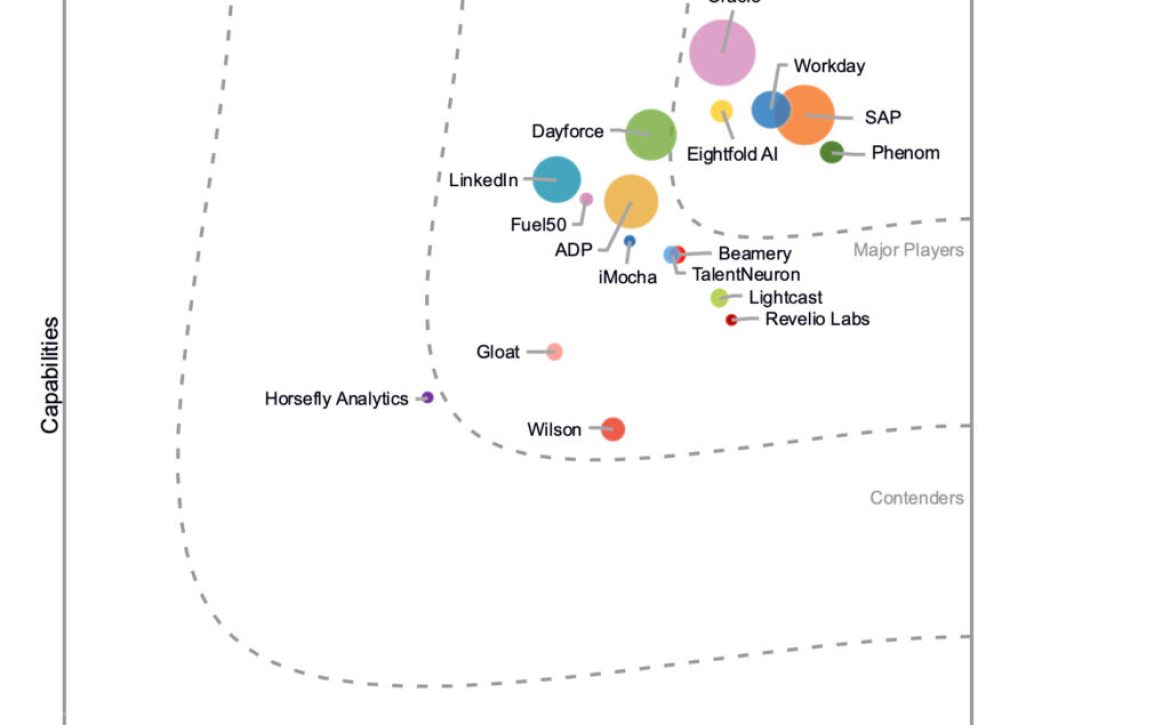
SAP Named a Leader in IDC MarketScape: Worldwide Business Automation Platforms 2025 Vendor Assessment

SAP is proud to be recognized as a Leader in the first-ever IDC MarketScape Worldwide Business Automation Platforms 2025 Vendor Assessment.

Automate end-to-end processes with leading iPaaS, process mining, and RPA solutions supported by generative AI

We believe this recognition is testament to SAP’s long-term vision of integrating all components required for strategic, continuous business process improvement and innovation.

According to the IDC MarketScape, “Business automation technologies have evolved from fragmented solutions into comprehensive business automation platforms (BAPs). These platforms enable enterprises to address diverse process improvement needs through a single system supporting multiple integrated automation technologies.”

Bringing together process analytics from SAP Signavio, user guidance from WalkMe, process integration and automation technology from SAP Business Technology Platform, and the latest Joule Agents allows organizations to significantly accelerate automation initiatives.

“IDC MarketScape Worldwide Business Automation Platforms 2025 Vendor Assessment”
by Maureen Fleming, Neil Ward-Dutton, Raghunandhan Kuppuswamy and Elena Semenovskaia, 
May 2025, IDC #US52034624

IDC MarketScape vendor analysis model is designed to provide an overview of the competitive fitness of ICT suppliers in a given market.  The research methodology utilizes a rigorous scoring methodology based on both qualitative and quantitative criteria that results in a single graphical illustration of each vendor’s position within a given market. The Capabilities score measures vendor product, go-to-market and business execution in the short-term. The Strategy score measures alignment of vendor strategies with customer requirements in a 3-5-year timeframe. Vendor market share is represented by the size of the circles. Vendor year-over-year growth rate relative to the given market is indicated by a plus, neutral or minus next to the vendor name.

Continuous business automation

Continuous business automation is at the heart of every commercial IT deployment, as it allows companies to simultaneously scale their operations while reducing costs.

But when business applications are augmented with disparate automation technologies – such as standalone AI agent frameworks, workflow systems, integration brokers, rules engines, and process mining tools – they can become fragmented and lack business context. This approach also often requires large amounts of data to be copied outside of the business applications, which increases latency, operational costs, and the risk for expensive data quality issues.

The framework provided by enterprise automation with SAP overcomes these issues by adding an integrated business automation toolset closely linked with SAP Business Suite.

SAP Integration Suite helps ensure seamless data flow between SAP and non-SAP applications to and from standardized services (APIs) and events. Using these services and events, SAP Build then allows orchestration of process flows to implement new automations or adapt existing ones. Then, SAP Signavio enables end-to-end process analytics and optimization with process mining and insights, providing improvement recommendations directly into SAP Build automations. On top, autonomous, AI-powered Joule Agents can then use these automations as “skills,” which allows them to execute standardized business activities. Additionally, users can be guided through complex interactions by WalkMe overlays while feeding back user journey insights into the process improvement cycle.

Enterprise automation with SAP – connect and automate end-to-end business processes

Customer success across industries

Thousands of organizations across geographies and industries rely on automation solutions from SAP to optimize their business processes across lines of business. Here are a few:

  • Italian publisher De Agostini offers a whole universe of hobbies and interests to a worldwide audience. But long before it gets collections and build-up models to customers, the company must first process its invoices with suppliers. Using SAP process automation solutions, De Agostini now manages to process more than 90 percent of its unstructured invoices, paper or PDF, automatically.
  • German Lufthansa Technik is a leading provider of aircraft maintenance, repair, overhaul, and modification services for commercial, VIP, and special-mission aircraft. As part of its digital road map, the company wanted to increase automation in the material logistics process for defective parts. SAP process automation solutions are used to coordinate component repair logistics across multiple IT systems, enabling an increase in transaction volume by more than 40 percent.
  • Canadian energy company Suncor believes it has a key role to play in providing secure access to affordable energy, supporting a vibrant Canadian economy, and improving environmental performance. Process automation solutions from SAP are used to improve automation of intercompany tax processes (ICT) and vendor invoice processing, leading to a 98 percent reduction in the time needed to reconcile ICT postings.

IDC MarketScape assessment

Business automation technology is advancing in big steps and enables companies to address an ever-increasing scale and complexity of automation projects. Learn more about the future of business automation from Maureen Fleming, program vice president of Worldwide Intelligent Process Automation Market Research and Advisory Service at IDC here. Read the report excerpt here.


Bharat Sandhu is chief marketing officer for SAP Business Technology Platform at SAP.

Get the latest news delivered straight to your inbox each week via the SAP News Center newsletter

New SAP Learning Journey: Discovering High-Value Use Cases for Agentic AI

On July 21, SAP will launch a new AI-related learning journey, “Discovering High-Value Opportunities for Agentic AI,” the next enablement chapter after providing the SAP Learning Journey “Applying a Human-Centered Approach to Identify and Define Business AI Use Cases” in November 2024.

Get introduced to a structured and collaborative method to identify high-value agentic use cases

This latest course will enable attendees to facilitate a new Joule Agent Discovery Workshop, guide workshop participants to identify appropriate use cases, and tailor the workshop format to the needs of different audiences.

But what are SAP solutions for agentic AI? What do they stand for?

Joule Agents are AI systems that autonomously plan and execute multi-step workflows, collaborating to connect departments, speed up decisions, and streamline processes.

Discovering high-value opportunities for agentic AI

In the format of an SAP Expert Lecture, this course introduces participants to the Joule Agent Discovery Workshop, a structured and collaborative method to identify high-value agentic use cases in an organization. Attendees will learn how to inspire and guide participants, prioritize ideas, and describe the selected opportunities in detail. The course also covers how to adapt the workshop to different timeframes, team sizes, and virtual settings. By the end, attendees will be able to guide participants in identifying where AI agents can make the biggest impact and lay the groundwork for their agentic journey.

In detail, learners will be able to: 

  • Understand the purpose and structure of the Joule Agent Discovery Workshop and how it can be used to identify high-value agentic use cases
  • Facilitate the workshop exercises, guiding participants from idea generation to prioritization and a detailed description of agentic use cases
  • Adapt the workshop format to different team sizes, virtual environments, and timeframes to fit organizational needs

There are no prerequisites for this course, but experience with SAP Design Thinking and workshop facilitation will be helpful. It is a good learning opportunity for a variety of roles such as support consultant, business user, and SAP rookie.

The creative mind behind SAP AppHaus methods and this learning journey

For many years now, Karen Detken, an expert user experience designer at the SAP AppHaus, has worked in customer co-innovation projects and has gotten firsthand experiences and feedback when developing and hosting a variety of workshop formats with different methods and tools. Early on, the team decided to share these best practices and their tools and templates in the openly accessible innovation toolkit.

Karen Detken, Expert User Experience Designer at SAP AppHaus

When the topic of artificial intelligence arose and SAP solutions started to include generative AI and large language models (LLMs) in their solutions, such as SAP Business AI, followed by the latest step up with agentic AI, such as Joule Agents, the SAP AppHaus team worked with customers on exploring appropriate business use cases to benefit from this very latest in technology. Based on these first experiences, the team started sharing helpful methods, as a co-innovation frontrunner, so that other teams, partners, and customers could drive their own exploration projects involving latest technologies.

For Detken, it is not only about enabling in and applying those technologies: “New technologies are developing very fast and are becoming widely accessible,” she said. “What is important is that we have a very clear picture of why we want to use the technologies. Because technology only has a value when you find the right purpose to use it. Customers and users need to be clear about the outcomes they want to have with that technology. This is the first thing you need to answer before using it. With the methods we provide, we intend to help people first understand what this technology can do for them, for the business, for the people.”

This awareness and very conscious use of technology also includes the consideration of responsible and ethical guidelines that every new solution needs to follow (see SAP’s principles laid out in the SAP AI Ethics Handbook).

Bringing innovation and technology into the hands of people

The SAP AppHaus team gets feedback from many different customer and partner teams. For the team of experienced co-innovation coaches, it is fulfilling to see workshop participants, along with attendees of enablement sessions, understand the new technology better. From this deeper understanding they help participants — along their human-centered approach — start generating ideas related to their business needs. They help them, as Detken puts it, “think of different ways how they can use AI to solve real problems.”

The latest SAP Learning Journey for agentic AI is a compilation of helpful exercises to help customers and partners explore and approach this field of technology while discovering meaningful business use cases. In parallel and probably not that obvious at first sight, this new course testifies the openness of the team for novel applications such as using an avatar as speaker. It was built based on video recordings with Detken.

When asked about her view on agentic AI in contrast to generative AI, Detken describes it as follows: “Generative AI uses an LLM as a kind of intelligent system or ‘brain.’ The same LLMs are used by an AI agent. The difference is that the agent can not only ‘think’ and use these large language models to generate content or analyze data and make decisions, but it also uses ‘tools’ or other applications to act upon these decisions or make changes autonomously. To put it as an example: with Gen AI, we only had the brain and now it’s the next step, we have the brain and the hands. Maybe in the future, we will have the entire body as well, which would probably be the robots.”

What are AI agents?

AI agents are artificial intelligence-based applications that make decisions and perform tasks independently with minimal human oversight. Backed by advanced models, agents can decide a course of action and employ multiple software tools to execute. Their ability to reason, plan, and act lets agents tackle a wide range of situations otherwise impractical or impossible to automate with preconfigured rules and logic.


Imke Vierjahn is the communications lead for SAP AppHaus.

Subscribe to the SAP News Center newsletter to get highlights delivered to your inbox each week

Images courtesy of SAP employee Viktor Georg

Strategy Update: The Next Evolutionary Step of SAP S/4HANA for EHS

For over 30 years, SAP has supported customers’ operational compliance with a substantial portfolio of environment, health, and safety (EHS) capabilities that increase safety performance and accuracy while reducing operational and compliance risks.

In recent years, amid the evolving regulatory landscape and interdependencies with other business areas, a new set of cross-process requirements have surfaced.

SAP’s answer is the shift from a reactive, centralized compliance management system to a proactive approach that adapts to an organization’s needs. We are transforming SAP Environment, Health, and Safety Management from a monolithic system of record into a modular and connected suite.

Environmental management: from static tracking to intelligence

SAP solutions for environmental management address the management of waste and emissions as well as water and wastewater.

Updates to EHS solutions are intended to assist users in completing tasks more quickly and efficiently. For example, intelligent permit management is possible thanks to automated regulatory requirement extraction, making permit management tasks less tedious. In the future, proactive regulatory intelligence will prepare customers for the impacts of changing compliance requirements.

By focusing on proactive document extraction and a single entry point for compliance, customers can expect to benefit from reduced compliance preparation time and enhanced audit readiness.

Workplace safety management: from reactive to proactive

The updated workplace safety process orchestrates and extends the individual capabilities of safety performance management, operational risk management, and incident management.

Previous Next
Close
Test Caption
Test Description goes like this