SAP NS2 Awarded as the 2024 AWS Federal Government Technology Partner of the Year

As the Federal Government continues to adopt a cloud-first strategy, SAP National Security Services (SAP NS2) is proud to share it has been selected as the winner of the 2024 Amazon Web Services (AWS) Federal Government Technology Partner of the Year award.

Improve citizens’ lives with cloud-based and AI-driven software for government from SAP

SAP NS2 is an independent, U.S. subsidiary of SAP, with a mission is to provide U.S. sovereign cloud services to highly regulated agencies. This award focused on top AWS partners with government competency that delivered innovative, mission-based wins for the Federal Government. In cooperation with AWS, we have continued to provide an avenue for the Federal Government to adopt leading technology while protecting their mission-critical data.

“SAP NS2 is honored to have received this award,” shared Harish Luthra, CEO of SAP NS2. “Our partnership with AWS supports our mission of delivering industry-leading technology to government agencies. This award is a testament to our work within the public sector thus far, and we look forward to continuously supporting the government’s cloud smart strategy.”

As the U.S. sovereign cloud provider of SAP software, the SAP NS2 secure cloud environment and delivery model protects Controlled Unclassified Information (CUI), Personally Identifiable Information (PII), HIPAA information, and other sensitive data. This empowers Federal Government agencies to adopt commercial innovation with government-grade security at the forefront.

Expanding even further, SAP NS2 has built strong relationships with SAP and AWS to successfully deliver leading enterprise SAP applications on AWS GovCloud infrastructure. This delivery model supports our government customers with elevated compliance needs, as it provides the innovation of SAP with U.S.-specific security controls.

In 2024, SAP NS2 and AWS have collaborated to bring new capabilities into our existing infrastructure—such as resilience testing tools and performance processors. These strategic conversations support the federal cloud computing strategy, as government agencies continue to transition mission-critical workloads to cloud-based applications. In 2025, we’ll begin to look at ways we can further modernize our offerings to the Federal Government through services such as AI.

In addition to the Federal Government award, SAP NS2 was named a finalist for the Public Sector North America Technology Partner of the Year. As our relationship with AWS continues to develop, we can further strengthen and improve the ways we deliver industry-tailored cloud solutions to our customers.

SAP NS2 is dedicated to being a cloud service provider that delivers innovative SAP solutions while addressing mission-critical security needs. This award, and our collaboration with AWS, helps us pave the path for highly regulated agencies to find their footing in a cloud-first world.

Learn more about securing your cloud with SAP NS2 here.


Lillian Chang is senior vice president of ,Product Strategy and Portfolio for SAP NS2.

Meet your security and compliance aspirations while maintaining adherence to regulatory and legal requirements

Vistex Introduces Excise Tax Tool as SAP Solution Extension

The SAP Solution Extension portfolio has grown with the introduction of Vistex’s Excise Tax Management solution, now available as part of SAP S/4HANA Cloud Private Edition. Vistex, a global provider of software solutions for pricing, trade, royalties, and incentives, aims to address the unique challenges of excisable goods management through this new solution. Businesses in […]

The post Vistex Introduces Excise Tax Tool as SAP Solution Extension appeared first on InsideSAP.

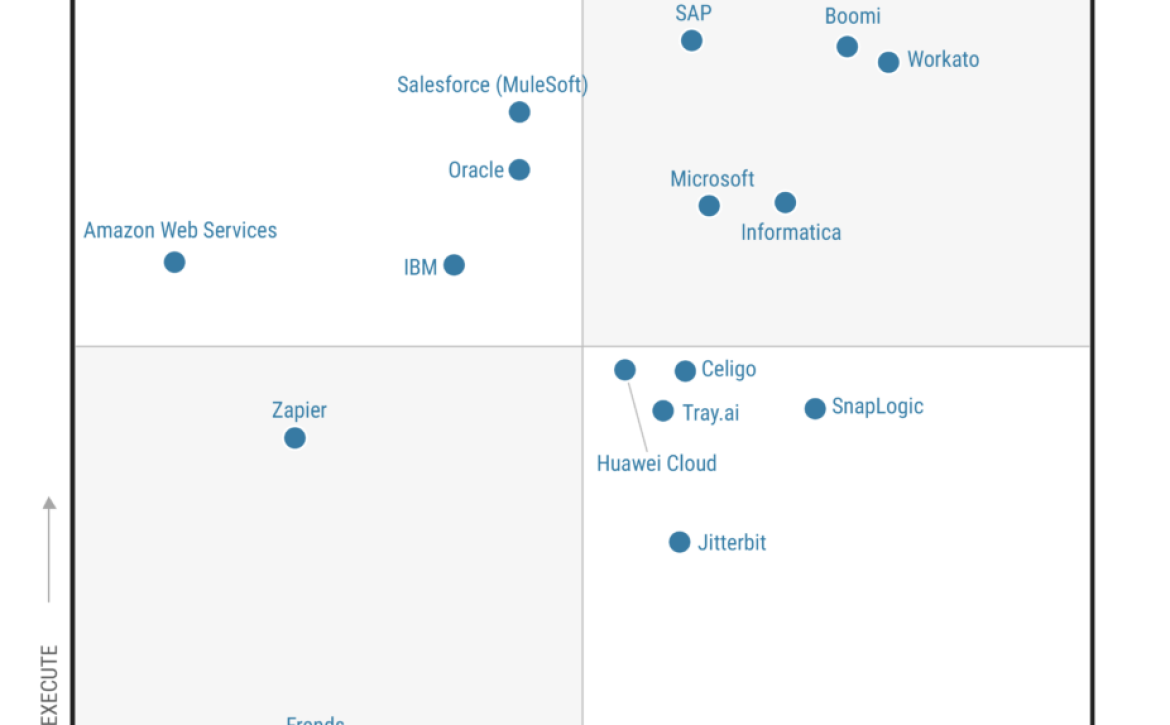
SAP Is a Leader in the 2024 Gartner® Magic Quadrant™ for Financial Planning Software

SAP has been recognized as a Leader in the 2024 Gartner® Magic Quadrant™ for Financial Planning Software.

SAP Analytics Cloud is the trusted choice for the most mission-critical organizations worldwide, redefining financial planning for enterprises globally by offering clients:

  •  95% reduction in time to generate on-demand access to financial metrics
  • 10x faster planning cycles via automating up to 70% of data entry points with artificial intelligence (AI)
  • Increased simulation and insight generation for better plan accuracy and improved business execution with reduced risk
SAP Analytics Cloud: Make decisions without doubt and unlock your full potential

Unlocking the Power of Extended Planning and Analysis

SAP has long championed the integration of planning, forecasting, and analysis across the enterprise, known as extended planning and analysis. By harmonizing diverse planning functions like supply chain, sales, and finance, SAP enables its customers to align departments and increase enterprise agility and performance. SAP customers call this “aligning operational planning with financial performance.”

SAP believes that our recognition as a Leader in the Gartner Magic Quadrant for Financial Planning Software highlights our strategic vision and operational excellence. SAP Analytics Cloud empowers enterprises with unified financial operations and data-driven decisions, driving agility and insight.

To learn more about SAP’s position as a Leader and see in-depth analysis of the financial planning software landscape from Gartner, read the 2024 Gartner Magic Quadrant for Financial Planning Software here.

For more information, visit the SAP Analytics Cloud area of sap.com.


Daniel Yu is senior vice president of Solution Management and Product Marketing for SAP Data and Analytics at SAP.

Gartner does not endorse any vendor, product or service depicted in our research publications and does not advise technology users to select only those vendors with the highest ratings or other designation. Gartner research publications consist of the opinions of Gartner research organization and should not be construed as statements of fact. Gartner disclaims all warranties, expressed or implied, with respect to this research, including any warranties of merchantability or fitness for a particular purpose.
GARTNER is a registered trademark and service mark of Gartner, Inc. and/or its affiliates in the U.S. and internationally, and MAGIC QUADRANT is a registered trademark of Gartner, Inc. and/or its affiliates and are used herein with permission. All rights reserved

How KUKA Found a Better Way to Pay for Robots

Organizations tend to stick with a good business model, once they find it. Why shake up a good thing, right?

“We have a good business model; we’re selling robots…so, why would we change it?” Christian Liedtke, head of Strategic Alliances at KUKA, said during a presentation at Hannover Messe 2024. “It’s not sufficient anymore; you have to look ahead.”

Enter outcome-based business, when usage determines how much you pay. And Augsburg, Germany-based intelligent robotics supplier KUKA has extensively analyzed data from its headquarters-adjacent plant to see where an outcome-based model might make better business sense than traditional payment schemes.

“How can we actually help our customers to be more successful?” said Liedtke, who is also chairman of the board for the Open Industry 4.0 Alliance. “Now, we have data – and with data, we can do something different.”

SAP IBP Solution Optimizes STIHL’s Business Processes

STIHL, a leader in power tools and outdoor equipment, has implemented the SAP IBP solution (SAP Integrated Business Planning for Supply Chain) to unify and optimize its global supply chain operations. Headquartered in southern Germany and founded in 1926, STIHL has evolved from a small enterprise into a global company, providing tools for forestry, agriculture, […]

The post SAP IBP Solution Optimizes STIHL’s Business Processes appeared first on InsideSAP.

SAP

The post SAP appeared first on InsideSAP.

New SAP Business AI Learning Journey Available Now

A new SAP Learning Journey called “Applying a Human-Centered Approach to Identify and Define Business AI Use Cases” launched in late November 2024. It enables learners to run customer workshops and explore, discover, and design SAP Business AI use cases to be built with SAP Business Technology Platform (SAP BTP).

With the rise of SAP Business AI solutions, the SAP AppHaus and SAP Solution & Innovation Experience teams joined forces to develop an SAP Learning Journey based on the existing SAP Business AI Explore and Design workshops, both available in the innovation toolkit. These formats were designed based on experiences gained in co-innovation projects with customers. In these projects, diverse teams of users, partners, designers, coaches, and enterprise architects worked on identifying use cases in their respective business scenario that could be enhanced and redesigned with the help of SAP Business AI.

As Karen Detken, SAP AppHaus strategic designer, puts it: “This journey aims to equip business executives, development teams, and innovation practitioners with a structured approach to identify and define AI use cases that benefit both the company and the end users. The collaborative exercises described in the journey are explained in detail to enable anyone, even those without extensive facilitation experience, to conduct these sessions on their own. Our ultimate goal is to bring innovation into the hands of people and make best use of the latest technologies.”

SAP Learning Journey: Applying a Human-Centered Approach to Identify and Define Business AI Use Cases

Who Are the Learners?

This journey is designed for anyone interested in finding meaningful use cases for AI that can benefit end users and businesses. Here are some scenarios on how different people at an organization can benefit from it:

Early Talent Anil Heads to a Customer-Facing Role

Anil just finished university and joined SAP as an early talent. His role is in the field organization and he would like to consult customers on innovative solutions built with SAP BTP. With this goal in mind, he took design thinking training at university.

The SAP Learning Journey’s course material, templates, and guidance will enable him to help customers identify use cases that offer great innovation potential when redesigned with SAP Business AI. For Anil, the journey is an opportunity to support his new customer account team in the context of the latest AI technology and work with the customer teams along well-described workshop steps.

What’s more, the acquired learning badge comes in handy and can be shared via social media.

Experienced Account Manager Sophie Relies on Continued Learning

To serve her customers best, account manager and business coach Sophie wants to be at the forefront of future-oriented learning. After completing trainings and gaining experience with generative AI applications, she is now happy to get hands-on help through this new SAP Learning Journey on how to work with customers and evaluate business challenges that can be turned into innovation opportunities with the help of SAP Business AI. She hopes to reach her ambitious goal of doing this customer-facing workshop with the customer team and identifying different use cases.

As one of the first attendees who completed the course, she happily adds the course badge to her different social and HR accounts as a kind of personal unique selling point, but not without first sharing a summary of her key takeaways on LinkedIn.

SAP Partner CEO Jacky Wants to Apply the Knowledge to Benefit Customers

In Jacky’s role as founder and CEO of one of SAP’s consulting partners, Jacky always looks for the latest enablement and training opportunities for the team. In the case of the new journey “Applying a Human-Centered Approach to Identify and Define Business AI Use Cases,” Jacky was very curious to participate early on. Based on his basic knowledge of generative AI as well as the intrinsic consequences of this new technology, legal regulations, and other factors to be considered in customer projects, this workshop added complementary material and guidance for customer-facing work. Right after completing the course, Jacky recommends the SAP Learning Journey to the entire global team.

What’s more, Jacky sets up a task force with three volunteers to plan a customer roadshow to share this knowledge. He sees this workshop format as a good way to pique customers’ curiosity regarding innovation potential that can be unlocked with the help of SAP Business AI. What’s more, this roadshow could also position his team as cutting-edge technology consultants and trusted AI advisors.

Developer and Enterprise Architect Lenny Wants to Learn How to Gather Requirements Early On and with Customers

After years in classical development roles, Lenny has grown her expertise and become an enterprise architect. She likes the exchange with customers and seeing how new SAP solutions improve their work and user experience.

In a recent meeting with her manager, Lenny heard about a new SAP Learning Journey on co-innovation workshops with customers where requirements for a new solution are gathered during the first two workshop sessions. As this directly complements her work as an enterprise architect working with customer and account teams on new solutions, she wants to start the journey right away. Lenny can’t wait to support customers in designing new solutions with the help of SAP Business AI built into the core business processes and existing SAP BTP landscapes.

Valuable Insights for Many Purposes

No matter if people are in a similar situation as Anil, Sophie, Jacky, or Lenny, or just curious about investigating around new AI solutions, the SAP Learning Journey can provide valuable insights for many different purposes.

When asked, what it is that sets this journey apart from others, both Mariam Lolua-Hessler, SAP Global Product and Solution Learning, and Sreekanth Sreedharan, SAP Partner Solution Enablement, replied: “Unlike most courses that dive deep into the techy side of AI, this journey really focuses on why we need AI in the first place. It’s more about understanding the reasons behind it, which makes this training stand out.”

What Do These Customers and Partners Have in Common?

What do Advanced Micro Devices, Inc. (briefly AMD), Beyond Technologies, a Syntax company, Henkel, IBM, and Mindset Consulting have in common? They all did the SAP Business AI Explore workshop hosted by the SAP AppHaus team, all for different purposes. Some of them identified and already implemented concrete AI use cases as innovation opportunities in their company, using SAP Business AI and building upon SAP Business Technology Platform. Others used the workshop experience for their own enablement, to roll it out to their customers and adapt the formats and methodologies to their own service portfolio.


Imke Vierjahn is SAP AppHaus communications lead at SAP.
Image courtesy of Karen Detken, SAP AppHaus strategic designer

Stay up-to-date by following SAP News on LinkedIn

Human Rights Day: Reflecting on SAP’s Progress and Lessons Learned

December 10th marks Human Rights Day around the world and commemorates the anniversary of one of the world’s most groundbreaking global pledges: the Universal Declaration of Human Rights (UDHR). With societal inequality, conflict, political polarization, and intensifying climate change on the rise, it is ever more important that businesses play their role in living up to this pledge. They should not infringe on human rights and respect the dignity and fundamental rights and freedoms of all individuals who are affected by their activities, products, or services.

I talked to Stephanie Raabe, human rights officer at SAP, and asked her three questions about SAP’s progress in embracing this role in the past 12 months.

Q: A year ago, you explained how SAP was working to take its human rights due diligence processes to the next level. The aim was to improve how SAP “knows and shows” where its actual and potential negative impacts on people are and what actions are taken to prevent or mitigate these. Was this achieved?

A: We are getting there step by step, but there will always be room for improvement. Together with all the teams that are part of our human rights due diligence program, we have further refined and harmonized our methodologies and processes to assess our impacts on people. This provides the basis for defining and fine-tuning appropriate measures.

We now have a deeper understanding of the salient human rights issues across our value chain – be it through the product and services we procure, our own business operations, or the products and services we sell and deliver. We now know better which risks are already well managed through effective policies and measures and where we still have to close gaps.

Q: What does this mean in practice? Can you specify what your findings were?

A: Absolutely! In this year’s assessment cycle, the following impacts were identified to be salient:

  • In our own operations: non-discrimination
  • In our direct and indirect supply chain: decent living wages
  • Related to products, services, and customers: non-discrimination and privacy
SAP is committed to respecting and advancing human rights across operations, supply chain, and product lifecycle

When breaking down these impact areas, we found that, firstly, in our own operations, many effective measures are already in place to address non-discrimination in our workforce, for example through SAP’s Global Anti-Discrimination Policy, mandatory anti-discrimination and anti-harassment training, or SAP’s comprehensive diversity and inclusion programs. The teams involved are doing such a great job that currently no additional measures are required.

Secondly, in SAP’s supply chain, SAP has established contractual assurances through its Supplier Code of Conduct, which also sets the expectation for suppliers to pay an adequate living wage. Yet, we recognized that further mitigation measures still need to be defined. We therefore conducted a hot spot analysis by country and industry for this topic. We started to discuss the results with relevant procurement category teams in dedicated workshops. The next steps will include identifying which suppliers to focus on first, engaging with them for better insights, and collaborating to improve the situation where necessary.

Thirdly, when we talk about human rights impacts in our downstream value chain, artificial intelligence (AI) is top of mind. While there is great positive societal potential that AI can help to unlock, it is a priority for SAP to handle AI responsibly and avoid negative impacts specifically in the areas of discrimination and privacy. This is why, many years ago, SAP launched its Guiding Principles for AI Ethics and implemented dedicated due diligence governance and processes. In 2024, SAP updated its Global AI Ethics policy to align with UNESCO’s “Recommendation on the Ethics of AI.” We further strengthened SAP’s commitment by establishing an AI ethics office consisting of two teams and maturing our AI ethics assessment process for all AI use cases. Finally, just last month, a new mandatory AI ethics training for all employees was launched.

Q: Looking back at the past year, are there any lessons learned that you can to share?

A: One key thing that I took away is that there is no silver bullet to human rights due diligence. While frameworks like the UN Guiding Principles on Business and Human Rights serve as a North Star, there are different approaches and methods on how to implement the principles in your day-to-day operations. Companies should not be afraid of making mistakes, even if there might not yet be any proven practices yet. This is one of the experiences we made when preparing for our first human rights report in line with the German Supply Chain Act this year. There is no point in waiting until you have found the perfect approach before taking action. Rather, it is important to be open to continuously revisit, challenge, and develop your approach. Exchanging with peers is very valuable in this context, which is why our human rights team engages strongly in networks such as the business and human rights groups in the UN Global Compact, Business for Social Responsibility, and econsense.

Another lesson learned for us was that it can’t be underestimated how important it is to engage internal stakeholders across diverse lines of business in an ongoing manner. We already started with role-specific trainings and capacity building but recognized that it needs time and multiple iterations until awareness, understanding, and mindset and behavior changes are established to truly integrate human rights considerations into business processes and decisions. Furthermore, our efforts have to extend to additional critical roles since, for example, it is not only important to get colleagues from SAP’s procurement organization onboard, but also all other decision-makers involved with supplier selection.


Christine Susanne Mueller is deputy human rights officer at SAP.

Get the latest SAP news delivered to your inbox once a week

Emerging Trends in Spend Management Shaping 2025

As we close out 2024, it’s time to reflect on the year’s developments in procurement, external workforce, business network, and travel and expense management. The past year has been marked by economic uncertainty, supply chain disruptions, and an increased focus on sustainability and social responsibility. Despite these challenges, businesses have shown remarkable resilience and adaptability.

Looking ahead to 2025, several key trends are poised to reshape the landscape, promising both challenges and opportunities for forward-thinking organizations. To gain insight into what lies ahead, we’ve reached out to Intelligent Spend and Business Network executives at SAP for their predictions.

The AI-Powered Procurement Revolution

Etosha Thurman, chief marketing officer for Intelligent Spend and Business Network at SAP, envisions a future where artificial intelligence (AI) takes center stage in procurement:

“In 2025, AI and cloud-based solutions will position procurement at the heart of data-driven decision-making, enabling real-time insights and freeing teams to focus on high-impact initiatives. The future belongs to procurement professionals who blend strategic thinking with relationship management and a combination of functional and technological expertise. These skills will be crucial in fostering cross-functional collaboration and advancing corporate goals, from supply assurance to compliance to sustainability. In the digital age, spend management expertise extends to not just supporting, but also steering the business.”

This prediction underscores the critical role that AI will play in transforming procurement from a support function to a strategic driver of business value.

Streamlining Processes Through Orchestration

Manoj Swaminathan, president and chief product officer for Intelligent Spend and Business Network at SAP, highlights the growing importance of process orchestration:

“The technology landscape is rapidly evolving, and organizations are grappling with a heterogeneous mix of solutions. Many companies now employ multiple systems to meet their end-to-end business needs, leading to siloed processes and confused employees. Procurement, in particular, often suffers from fragmented systems handling everything from purchase requests to supplier onboarding, creating inefficiencies and frustration.

To address this challenge, we’re seeing a shift toward process orchestration – a centralized approach that connects disparate systems, streamlining procurement inquiries and status updates. Our newest solution, SAP Ariba Intake Management, can tackle this head-on by automating request creation and providing a single point of entry so that organizations can empower employees to adhere to policies and regulations without the burden of manual corrections. This approach can not only save valuable time and resources but also drive user adoption and increase compliance and efficiency, positioning companies to thrive in an increasingly competitive landscape.”

The Rise of a New Generation of Procurement Leaders

Jeff Collier, chief revenue officer for Intelligent Spend and Business Network at SAP, predicts a significant shift in procurement leadership:

“In 2025, a shift will occur in the procurement landscape as a wave of fresh faces step into the chief procurement officer role. AI-driven procurement strategies, ever-evolving requirements, and changing demographics have created the perfect storm for new leaders to emerge. As the industry stands on the precipice of transformation, organizations must prioritize nurturing existing talent, upskilling their workforce, and attracting bright young professionals to the procurement function. The stage is set for junior procurement leaders, who have proven their mettle during the challenging COVID-19 years, to rise to the occasion, particularly those who can showcase tangible achievements in sustainability, AI integration, or risk management. Brace yourselves for a year marked by new names, fresh perspectives, and a reshaped procurement industry in 2025.”

The Power of AI Across Business Networks

Val Blatt, chief revenue officer for SAP Business Network, offers insights into how AI will transform business networks:

“In the near term, AI is already making waves by optimizing process efficiency and information sharing within and across companies in a supply chain. As we move into 2025 and beyond, we’ll see AI do more to synthesize intelligence and efficiency across areas like risk, demand, and inventory planning, as well as manufacturing and delivery. This evolution becomes even more relevant because no business does business alone, and AI can synthesize and be predictive across company boundaries. We’ll see AI decision support evolve into decision-making – and, ultimately, automated process execution. These advancements will occur as the need for AI to sense and predict situations with proposed planning recommendations grows, spanning across related functional areas and processes that involve trading partners in a supply chain.

In its Network Adoption Research Study* sponsored by SAP, IDC found that “Digital Champions” who use modern, cloud-based tools like AI, analytics, and business networks have grown over 140% in revenue and profit performance indices from 2016 to 2021. As AI capabilities expand to sense, predict, and execute across organizational boundaries, businesses will gain next-level efficiency, visibility, and compliance. This will enable them to maintain a resilient supply chain that delivers on customer promises, especially in times of disruption, by leveraging the collective intelligence of their entire business network.”

The Evolution of Travel and Expense Management

Christopher Juneau, SVP and head of SAP Concur Product Marketing, Intelligent Spend and Business Network Marketing & Solutions, shares his insights on the future of travel and expense (T&E):

“As leaders strive to position their company for growth in 2025, they will still attempt to maintain employee spending at 2024 levels. Inflation drove higher spending beginning in 2023, resulting in fewer trips in 2024. As inflation slows, many leaders are likely to expect that their T&E budget – even if flat year over year – will go further in 2025.

Meanwhile, finance teams and travel managers will adjust their T&E policies to account for AI as more tasks and processes become automated. Will managers need to approve every expense report? Will they need to review them at all? How can policies and rules be modified so that travelers spend as little time in T&E tools as possible? These are some of the questions they will start to ask in 2025.

Investments in technology innovation and security infrastructure will be top priorities. The risks associated with security and privacy incidents will only continue to grow, which means companies are looking for technologies that deliver greater value to customers with lower risk. It is really a balancing act to move fast without disregarding the very important aspects of security and privacy when architecting solutions – internally and for customers.”

Looking Ahead

As we look to 2025, it’s clear that the world of spend management and supply chain is on the brink of transformative change. The convergence of AI, sustainability imperatives, and interconnected business ecosystems will reshape how organizations operate and compete.

At SAP, we’re not just observing these trends – we’re actively shaping them, working to ensure our customers are well-equipped to navigate the complexities of tomorrow’s business landscape.

The future may be uncertain, but one thing is clear: those who embrace these emerging trends and technologies will be best positioned to thrive in the dynamic world of 2025 and beyond. As we continue to design and deliver spend management and business network solutions that drive efficiency, leverage AI responsibly, and create greater visibility for businesses of all sizes, we look forward to partnering with our customers on this exciting journey of transformation and growth.


Cindy McKendry is a director for Intelligent Spend and Business Network Corporate Communications at SAP.

*Source: “IDC Network Adoption Research Study eBook: Driving Best-in-Class Supply Chain Collaboration with a Business Network,” #US5084723, August 2023, page 18

Get the latest SAP news delivered to your inbox once a week

Just Tell SAP’s Mobile App What to Do, in Your Own Words

Where previously a few taps opened up access to business power, a simple question is now all it takes. SAP is integrating the AI copilot Joule into its increasingly popular SAP Mobile Start app, enabling users with smartphones or tablets to interact with SAP applications in natural language.

A chat with the AI copilot can reveal the latest numbers or allow the human counterpart to intervene directly, using their own words to work on approval or maintenance activities.

“This is the central entry point to SAP on steroids,” explains Markus Kopf, VP and head of Mobile Experience and Engineering at SAP, illustrating the combination of native mobile experience and generative AI for Apple or Android-based systems.

Experience unparalleled business power at your fingertips

Kopf uses his smartphone like a streaming remote control that listens to him. He asks about sales orders with an open delivery status, for example. What happens next seems to take place in the SAP Mobile Start app – that’s just the surface though. In the background, SAP Business AI recognizes the application from which the information must come and how it must be processed.

“And instantly, the AI agent delivers the results. A chat interface shows me the sales orders I have asked for. It also offers me to look into the details,” Kopf adds. According to him, this will radically change the way people work with SAP in many areas. Scenarios range from sales applications to human resources and supply chain processes. “Easy-to-use mobile devices will become the most popular point of interaction with a business system,” Kopf says. Even if the data sets and possibilities that make SAP so versatile and powerful might not suddenly become completely simple, the complexity behind will become more and more invisible to end users.

Since its launch a few years ago, SAP Mobile Start has been designed as a doorway to SAP’s range of business solutions. The mission: to provide centralized access to native mobile apps, cloud applications, and tools for decision-making and getting insights. The app allows a growing number of end users to complete tasks wherever their employees happen to be. SAP attached great importance to an attractive experience. Consistently designed user interfaces utilize the possibilities of each respective device platform.

The introduction of the new version of SAP Mobile Start with Joule goes one step further – from operating SAP “with your fingertips” to a natural conversation that should be possible completely hands-free in the near future.

To help people use the common voice assistants on their devices, SAP’s mobile developers have built so-called app intents that call specific SAP functions through voice commands. Apple iPhone users, for example, can activate SAP’s AI copilot by saying, “Hey Siri, ask SAP how many vacation days I have.”

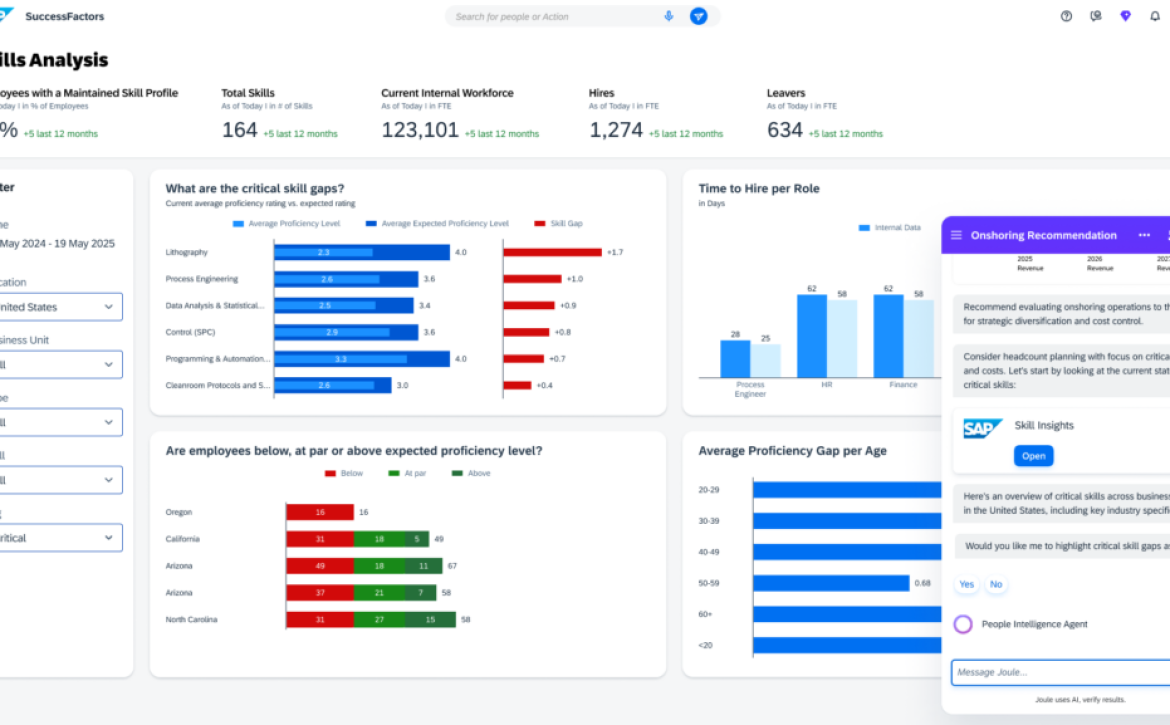
Examples of Joule in SAP Mobile Start: Help, transactional, and native integration with SAP SuccessFactors. Click to enlarge.

The prospect of business apps that can be used without clicks and keystrokes not only changes how people process certain tasks, but it will also make many jobs a lot safer. One prominent scenario will be working on machines at lofty heights with work clothing that makes it almost impossible to use equipment by hand.

SAP has massively expanded the capabilities of its AI copilot for more than 100 use cases. SAP CEO Christian Klein recently called Joule the “champion” of all AI business agents. In fact, practically no other company can offer its customers access to a comparable wealth of data and business process knowledge.

Benefiting from this, SAP mobile apps can be particularly quick and easy to adopt, especially for high-volume use cases. For more individual requirements, the SAP Build development and automation toolkit, which also works with SAP Business AI, can enable building further applications.

“Consider SAP Mobile Start as the future beginning and center for a fully AI-enabled mobile app suite,” Kopf says. “It’s exciting to see our vision becoming a reality now. The power of business AI and the latest mobile technology transform the way people engage with our applications, making it more natural and just better for all of us.”

The SAP Mobile Start app is available on:

  • The App Store for iPhone, iPad, Apple Watch, and Apple Vision Pro
  • Google Play for mobile devices running Android

Stephan Kamps is a corporate journalist and mobile product expert at SAP.

Connect with SAP News on LinkedIn to stay in the know

Previous Next
Close
Test Caption
Test Description goes like this