SAP Utilities Core Powers DEMANDO’s Transformation

SAP Utilities Core is at the heart of DEMANDO’s initiative to build a modern, cloud-driven platform that enhances agility and efficiency in the energy market. DEMANDO, an IT service provider founded in 2011 and based in Kaiserslautern, has embarked on an ambitious project to integrate SAP S/4HANA Utilities and the SAP Market Communication Cloud into […]

The post SAP Utilities Core Powers DEMANDO’s Transformation appeared first on InsideSAP.

How to Define a Business Service with CDS and SAP Fiori Elements

In this blog post, we’ll show you how to define, register in the system, and test the business service for a sample SAP Fiori application.

SAP Service Cloud Gains AI Capabilities via Coveo Partnership

SAP Service Cloud has been integrated with Coveo’s AI-driven search and recommendation capabilities as part of an expanded partnership between the two organizations. Coveo’s collaboration with SAP introduces a new SAP Endorsed App, Coveo AI Search and Recommendations for SAP Customer Experience, now available on the SAP Store. This latest offering marks Coveo’s second SAP […]

The post SAP Service Cloud Gains AI Capabilities via Coveo Partnership appeared first on InsideSAP.

A Fusion of Tradition and Future: SAP Signavio Boosts Kaiser’s Digitization

When Andreas Vehreschild took up his new position as Chief Digital Officer (CDO) at Kaiser Group in September 2022, he was given the challenging task of digitizing the over-100-year-old traditional provider of electrical installation products and systems. The Kaiser Group is a third-generation, family-run company and sees itself as both a pioneer and an innovation leader. Based in Schalkesmühle, Germany, the company has subsidiaries in Germany, Belgium, the Netherlands, and Switzerland.

The new CDO had two specific goals: first, to standardize processes across all subsidiaries and create a template for any newly acquired business to follow, and second, to upgrade Kaiser’s outdated legacy system to SAP S/4HANA.

He embraced the challenge, recognizing that comprehending the business processes was an essential first step for long-term success. He also was aware that this challenging task could only be accomplished with a strong partner, engaged contributors, and a powerful IT tool. This is where digital consultancy and SAP partner Valantic and the business process transformation portfolio SAP Signavio came into play.

What is Data Architecture

Explore the fundamentals of data architecture, the blueprint for your data strategy. This video outlines how data architecture provides the technical framework for storing, organizing, and securing data. From data models to integration pathways and governance, it highlights the critical role of a robust data architecture in ensuring data accessibility, reliability, and security. See how data architecture enables AI and advanced analytics, driving innovation and operational efficiency in your organization.

Learn how you can simplify your data landscape with SAP Datasphere, the foundation of a business data fabric architecture: https://sap.to/6051SiW0B

#sapbtp #dataarchitecture

From Learning to Earning: How Multistakeholder Partnerships Are Shaping the Future Workforce

An astute young person once said that while youth make up 25% of the population, they represent 100% of the future. This insight resonates when considering the challenges businesses face in developing the necessary skills for a sustainable, digitally transformed future. Empowering young people is crucial, not only for their own growth but for addressing critical challenges, such as climate resilience, and preparing them to lead in a rapidly evolving world.

The global skills and opportunity gap is a recurring topic at landmark events such as the World Economic Forum (WEF) in Davos and UN General Assembly and Climate Week in New York. This is no different at the current UN Conference of the Parties (COP29) in Baku, Azerbaijan.

That’s because today’s youth are the leaders, innovators, and problem-solvers of tomorrow. However, as these gaps remain, it’s important to accelerate active engagement and enhance collaboration across sectors. Ensuring that young people are adequately prepared to enter and excel in the workforce is an investment in their future and a strategic imperative for businesses and societies worldwide. Without adequate learning pathways, young people risk unemployment and businesses may struggle to compete in the burgeoning green and digital economies due to a widening talent shortage.

Human Capital and Youth Day

For this reason, November 18 has been designated as the COP29 theme day for Human Capital Development for Climate Resilience. The initiative underscores that addressing climate change requires a holistic approach supported by healthier, better educated, and adequately skilled young people.

SAP is powering equitable access to economic opportunity, education and employment, and the circular economy

The Human Capital Day serves as a reminder that tackling climate change requires societal transformation – and there is no better time than now. A key component of this shift is ensuring access to quality education and skill development opportunities for youth that lead to tangible employment opportunities. According to the International Labour Organization (ILO), global youth unemployment was 13% in 2023, with many young people facing limited prospects for stable and decent work. At the same time, the World Economic Forum found that 44% of businesses report difficulties in finding talent with the right skills to fill jobs.

At SAP, we believe in our responsibility to support the next generation of professionals and users with our best-in-class digital learning. We fully support the COP29 agenda for human capital and are actively involved with the global community of governments, financial institutions, and private sector entities.

SAP Education and Employment Programs

SAP has several programs and partnerships to help tackle the deepening mismatch between the supply of young job seekers and the demand for skilled talent. These initiatives focus on human capital development and provide valuable educational opportunities for youth:

  • SAP and UNICEF’s partnership in support of Generation Unlimited develops innovative solutions to global skilling challenges to help young people transition to earning. The goal is to generate inclusive opportunities for underserved young people worldwide, preparing them for decent work with the skills needed in the market. The program helps equip youth with essential skills and builds on UNICEF’s Generation Unlimited (GenU) signature program, the Youth Agency Marketplace (YOMA), a platform developed by young Africans to tackle labor market challenges. To date, the partnership reached more than 600,000 youth with foundational and digital skills that help young people unlock opportunities in the changing global economy.
  • SAP Educate to Employ is one of the learn-to-earn pathways on YOMA designed by SAP to equip youth with essential competencies for the digital economy. Implemented by a local social enterprise in South Africa called UMUZI, the free program focuses on developing skills, knowledge, attitudes, and values to help prepare and bring candidates into employment within the SAP ecosystem. More than 1,000 learners completed one or more foundational skills courses, while 165 learners completed over 550 hours of critical skills development training and earned an SAP technology consultant professional certificate. The next step is to secure meaningful employment opportunities within the SAP ecosystem and beyond.
  • The SAP University Alliances program includes over 2,700 members in more than 100 countries. It enables academia to educate the next generation on using intelligent AI-enabled technology, engage at SAP events, build industry partnerships, and prepare graduates for the SAP ecosystem. SAP University Alliances initiatives aim to empower youth to work in digitized enterprises, shape their futures, and have a meaningful impact on the world. During COP29, SAP will engage with students and faculty members from local university partners in Baku. Planned activities include an on-campus, gamified learning experience with a focus on sustainability, dialogue on learning and skills for sustainable youth development, and student visits to SAP’s booth in the Green Zone.

To further amplify youth empowerment, SAP actively collaborates with leading youth organizations. Through these partnerships, SAP brings young voices to the forefront of decision-making, fostering intergenerational collaboration and innovative solutions to pressing global challenges.

  • We Are Family Foundation (WAFF) is a non-profit organization that empowers youth and brings them to decision-making tables to share ideas and innovative solutions for global problems. For instance, at COP29, WAFF, in partnership with Care About Climate and Groundswell, launched the Universal NDC Youth Clause campaign – a global call to action for governments to integrate youth voices into their updated climate plans due in February 2025. By adopting this clause, governments pledge to work collaboratively with young people to achieve ambitious climate goals.
  • The SAP and World Scouting partnership examines the critical role that youth-led initiatives play in advancing environmental sustainability. It provides opportunities to share insights on successful youth-driven projects and discuss challenges and the support needed to scale efforts. The engagement is based on the premise that young people are at the forefront of environmental activism and are leveraging technology, creativity, and community engagement to make tangible impacts amid unprecedented environmental challenges.

As the world grapples with urgent challenges like climate change and digital transformation, SAP believes that investing in youth and human development has never been more crucial. SAP’s contribution to building a sustainable future through initiatives that equip young people with job-ready skills underscores the importance of a whole-of-society approach.

By collaborating with global multistakeholder partners and empowering the next generation, we can help bridge the talent gap, foster climate resilience, and ensure that today’s youth are prepared to lead us into a more sustainable and inclusive future.


Get the latest SAP news delivered to your inbox once a week

Customers Accelerate HR Journeys to Gain Edge on Efficiency and Skills

With 2025 just around the corner, HR leaders are looking for ways to drive results using powerful technologies like business AI to advance skills in the workforce, improve productivity, and deliver greater efficiency. Some organizations are accelerating outcomes from HR transformations by implementing AI-based capabilities in SAP SuccessFactors HCM to gain an edge over the competition. 

“We are on the brink of a revolution in HR technology,” SuccessFactors Chief Revenue Officer Maryann Abbajay said, speaking to customers recently at SuccessConnect. “AI and other new intelligent technologies are transforming the way we work. Organizations are acutely aware that having the right skills today and cultivating these skills for the future is crucial to stay ahead. So, we must focus on our people – and the technologies that enable them to bring out the best in themselves.”

SAP research found that the top three reasons why HR leaders want to use skills data across their people practices are to match people to opportunities, develop members of their organizations, and have workforce planning that makes sense based on skills. Additionally, a sample of more than 4,000 employees revealed that time savings, quality, and efficiency are the top three most desired outcomes when it comes to AI at work.

Speaking at SuccessConnect, HR leaders from five forward-thinking organizations – L’Oréal, Eurobank, BT Group, American Honda, and SAP – shared insights from their HR journeys and how new advancements in HR tech are putting people at the center of business.

L’Oréal Creates a Future-Fit Organization with Skills and Learning

Global beauty brand L’Oréal keeps its people strategy as forward-thinking as its brand. “This People Vision is to be the most inclusive, innovative, and inspiring people company,” said L’Oréal Deputy Chief Human Relations Officer Isabelle Minneci. “To remain forward-thinking, we leverage this unique people culture, which cares for each individual, and we embed diversity, equity, and inclusion as part of our HR fundamentals.”

L’Oreal’s HR community drives three actions to advance a challenger mindset within the workforce. It builds a skills-driven organization to foster people and business growth. It invents new ways of working and harnesses the best of tech to deliver inspiring people experiences. And it leads transformation for HR and rest of the organization to remain agile. 

L’Oréal uses cloud-based solutions from SAP SuccessFactors – including SAP SuccessFactors Learning – to inspire amazing people experiences. For a future-fit workforce, L’Oréal invests €120 million each year in learning as it continually reskills its employees to boost agility and innovation. “Thanks to SAP SuccessFactors,” Minneci said, “we have linked the skills with the jobs and with our learning program, which enables us to really offer personalized learning journeys for our employees and to make sure that we prepare the future.”

Eurobank Ensures Compliance and Empowers the Workforce

Eurobank is one of Greece’s largest employers, with about 6,500 employees and €81.5 billion in total assets under management. It uses cloud-based solutions from SAP SuccessFactors HCM to help ensure compliance with local labor legislation, support more strategic decision-making, and deliver on its promise of a great employee experience.

Eurobank began its journey with SAP SuccessFactors over six years ago, said Maria Tachataki, head of People Technology and Internal Communications, Eurobank SA. “We have increased efficiency and eliminated paper usage,” she said. “Most of all, we have enhanced our people empowerment by providing more accountability, responsibility, and work mobility. SAP SuccessFactors has been our ally and our companion in an ongoing journey of growth and transformation.”

In April 2022, a new Greek labor law required local banks to implement a digital work card that integrated with the Ministry of Labor’s platform for real-time monitoring of work schedules, shift planning, and overtime. Effectively, it meant Eurobank’s employees needed to clock in and out at their specific work times – or the bank would incur steep penalties. The company needed a digital solution that was accurate, reliable, efficient, and scalable. It had to have seamless integration with the SAP SuccessFactors platform, payroll, and the Ministry of Labor’s platform. And it needed to have very detailed monitoring and audit trails. Eurobank chose SAP SuccessFactors Time Tracking and leveraged SAP Business Technology Platform (SAP BTP) for flexibility and connectivity. As a result, it now reports 99% performance (an improvement of 75%) and 45% reduction in instances when employees forget to clock out. Read more here.

“For us the next move is AI and skills, in terms of more strategic workforce planning,” Tachataki said. “We aim to transition from merely filling positions with people to focusing on talent and strategic workforce planning based on upskilling, and skills taxonomy. This is our next big challenge.”

SAP SuccessFactors HCM utilizes AI to help optimize the way employees work, managers manage, and organizations adapt

BT Group Builds the Digital Colleague Experience

Global telecommunications company BT Group is accelerating its HR transformation with the infusion of AI to build its Digital Colleague Experience. Recently, the organization unified core HR by moving its UK payroll of 80,000 colleagues to SAP SuccessFactors Employee Central Payroll, using SAP BTP for extensibility and innovation. The launch of the AI copilot Joule and generative AI early adopt program is another highlight in what the company’s HR Technology Director Nick Hawkes described as an “incredibly busy 12 months.” As he noted, “This is an exciting phase for us. Those digital foundations within HR were really important. We’ve gone from four HR systems, three payroll systems, down to one, which was an important milestone.”

“We’ve been on the AI journey a little while now,” he continued, underscoring BT’s commitment to security through the establishment of a responsible AI team and guardrails to evaluate and implement acceptable AI use cases. Working collaboratively with BT’s legal teams, data governance, and SAP has given the company’s HR team an edge for advancing AI use cases that elevate the employee experience. “Having those levers to pull really allowed us to achieve a quick rollout,” he said, referencing SAP Business AI.

In the shift to becoming a skills-based organization, BT aims to implement the talent intelligence hub, which can provide organizations a centralized system for skills for SAP SuccessFactors solutions, to help drive better planning and strategic workforce planning across the organization. Hawkes is optimistic about how AI will enhance the BT’s Digital Colleague Experience: “We can see in the data a 40% increase in efficiency in terms of what Joule brings to the organization, so we’ll double down on that.”

American Honda Charts Digital Journey with People-Centric Focus

American Honda is on a journey to become a carbon-zero company by 2050 – in effect, evolving from a hardware-defined company to a software-defined company. “It’s a transformation we view internally as the second founding of Honda. That means digital experience is very important,” said Rich Richardson, senior vice president, Human Resources, American Honda, describing how the new strategic direction is leading to increased focus on the employee experience. “We have developed a plan to engage our associates on a digital journey that has a number of tenets critical to making sure our associates are at the center.”

In January 2023, American Honda went live with SAP SuccessFactors HCM to provide seamless access to HR information and opportunities for upskilling. To ensure the best outcomes for its AI journey, American Honda established a Responsible AI Council to govern AI usage, evaluate use cases, maintain standards, and foster communication and transparency across the organization.

This year, the company joined an SAP early adopter program to learn how AI can accelerate its vision for a future-ready workforce. “We have four use cases that we’re piloting right now with 850 associates. They’re around Joule, compensation insights, enhanced writing, and goal creation. We’ve been getting feedback along the way with those pilots, and we’ve seen some really good results,” Richardson said.

Employees in the pilot share overwhelming positive feedback on the AI-based innovations, reporting 80% favorable feedback overall. To ensure a great employee experience that benefits all employees, Richardson wants to further understand why employees might be hesitant to fully embrace the new AI-led tools: “When we can uncover that – whether its communication, change management, or on the technical side – we think we can have a really positive rollout of these use cases to our associate population and, ultimately, save time and energy and effort.”

SAP Accelerates a Skills-First Workforce with AI

For SAP, a global leader in enterprise applications and business AI, a strong people culture is integral to its mission to help the world run better and improve people’s lives. “At SAP, people are very close to our heart. And that goes back to our founder, Hasso Plattner,” said SAP Chief People Officer Gina Vargiu-Breuer, recalling Plattner’s observation that “we can be proud of our culture because our culture is very much one of customer-centricity, innovation, and people.” 

SAP’s People Agenda, essential to its transformation to a cloud-first company, comprises three pillars: SAP’s growth culture, a skills-led people ecosystem, and game-changing people technology. The People Agenda is underpinned by a strong foundation: a people-centric work environment that is nurtured by employee well-being, safety, and health as well as diversity and inclusion to create a feeling of belonging at SAP. 

To build a skills-led people ecosystem, SAP is using the AI capabilities of the SAP SuccessFactors HCM suite to gain visibility into the skills of the workforce and improve the employee experience. With the AI-powered growth portfolio in SAP SuccessFactors talent and learning solutions, SAP is currently focused on increasing skills transparency to help employees focus on growth and career opportunities.

“In the growth portfolio, we are relying on AI,” Vargiu-Breuer said. “Without having a market-centric skills taxonomy and without having skills transparency across the entire workforce, it’s very difficult to have, for example, personalized learning and career development opportunities. So, AI is absolutely essential.” 

Making Every Employee a Success Story

As these inspiring stories show, SAP customers are using HR technology to support their people agendas and drive HR transformation in their organizations. By advancing productivity and the employee experience, customers are harnessing the power of SAP SuccessFactors solutions to make every employee a success story.

Watch SuccessConnect Virtual on demand.


Get all the news and coverage out of SuccessConnect in 2024

How Kaeser Uses AI to Add Customer Value

When Kaeser Kompressoren started on a journey to improve its data quality, little did it know that artificial intelligence (AI) would become a major game-changer for its business.

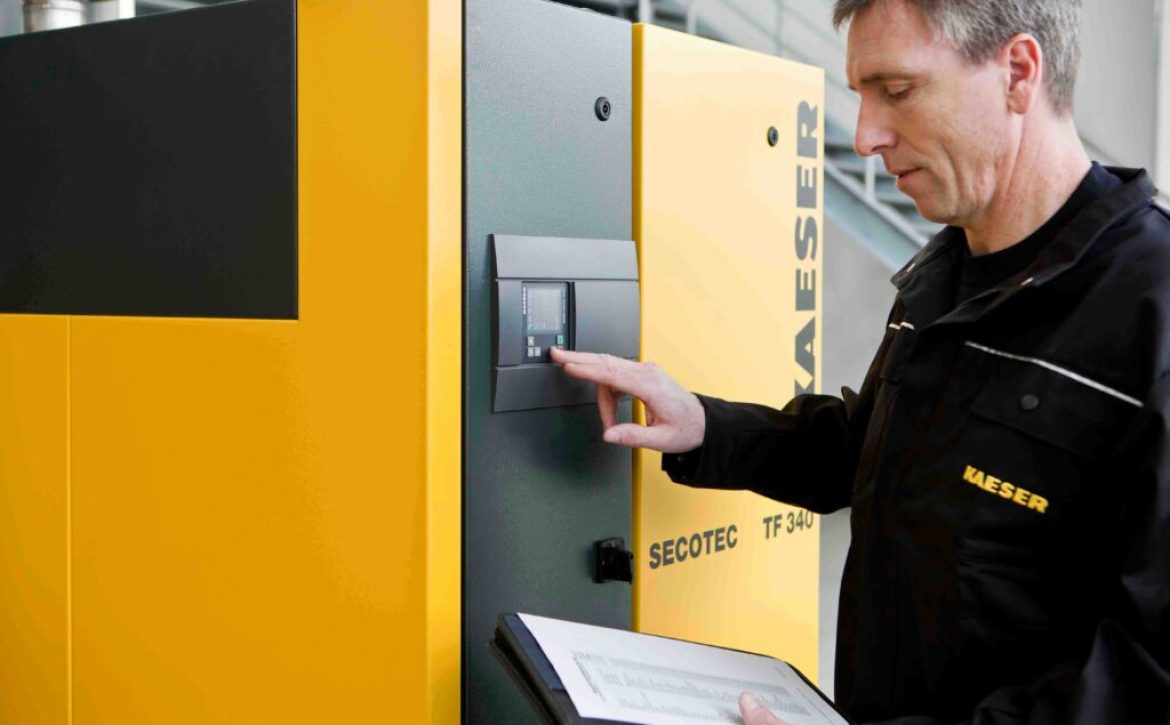
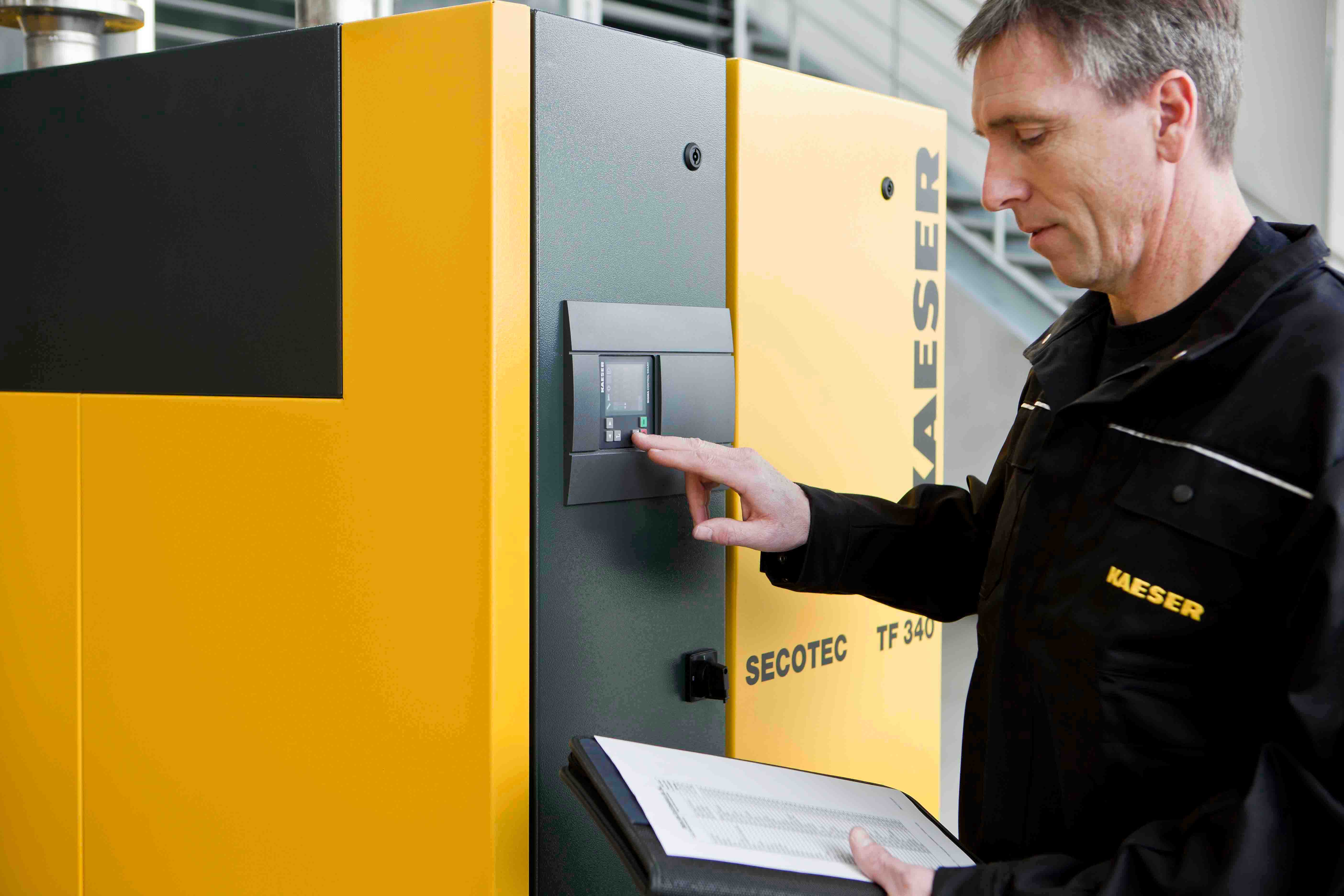
With a workforce of around 8,000 and a global sales and services organization operating in more than 140 countries, Kaeser is one of the world’s leading manufacturers and providers of compressed air solutions and services.

Based in Coburg, Germany, Kaeser considers itself both a pioneer in its industry and an innovator: the family-owned firm was one of the first to purchase SAP R/3 when it went to market over 30 years ago and currently has several SAP software projects running simultaneously. It recently reached another major transformation milestone when it migrated to RISE with SAP S/4HANA Cloud.

But the company’s digitization efforts were hampered by growing system complexity and a data volume that it was struggling to manage. “Poor data quality almost always held our projects back,” Kaeser CIO Falko Lameter says.

That’s why the company kicked off a three-year project in 2020 aimed at designing and implementing a new data strategy. Together with SAP, Kaeser wanted to improve data quality and optimize its core business processes.

“AI was on our radar screen back then, but it wasn’t our starting point,” recalls Dr. Norbert Enge, chief business consultant, SAP Business Transformation Services. “Our initial aim was to develop a data strategy road map.”

AI Comes into Play

To start, the project team looked at Kaeser’s master data. “Just to give you one example: our system contains a six-digit number of suppliers, at least two-thirds of whom were inactive,” Lameter says. Maintaining that data manually would have involved a disproportionate amount of effort, which is why many companies hesitate to tackle data projects of this size.

Achieve real-world results with embedded AI capabilities that leverage your data responsibly

Around the same time, business AI was rapidly gaining traction, so the team began to integrate AI into Kaeser’s data strategy.

The result was Predicting Inactive Suppliers, a custom AI use case based on one of the SAP AI Services – the Data Attribute Recommendation service – and SAP Analytics Cloud. This solution has enabled Kaeser to automate more than 80% of its data maintenance tasks, improve data accuracy, and achieve significant productivity gains.

“Given what I know now, I would say that you can’t maintain that amount of data manually – you can only do it with AI,” says Lameter. “The time for AI has come, and I’m convinced that the future will be data driven.”

Visual Spare Parts Search

The team’s main objective was to find AI use cases that would benefit the end customer. One of these scenarios concerns the search for spare parts. Due to the large number of variants of similar items, this was often a difficult and time-consuming task that created significant extra work for service personnel.

But now, Visual Spare Parts Search, a custom AI use case developed in cooperation with nyris, allows Kaeser service technicians to simply take a photo of the needed spare part. The embedded nyris Visual Search AI service uses image recognition to compare uploaded images against the spare parts database and identify the correct asset ID number.

This helps service technicians pinpoint spare parts much more quickly and enables customers to identify spare parts themselves.

Intelligent Product Recommendations

The most promising AI use case is the SAP Intelligent Product Recommendation application, which helps sales employees analyze customer requirements and processes and translate them into accurate product recommendations. Based on natural language prompts, the solution can analyze a customer’s requirements using machine learning and generative AI and recommend the most suitable compressors.

“Making product recommendations is an art,” Enge says. “If you have the technology to make better recommendations, that’s a real lever.”

There’s More to a Successful AI Project Than Tech

Implementing AI technologies is one thing. However, the team found that it’s just as important to get everyone on board and create the right environment. This includes providing employees with the software they need, training them, and discussing the ethical implications of AI.

Having management buy-in and alignment with other teams, such as research and development, marketing, sales, and service, also proved to be key to success. “Ultimately, it’s also about the impact on the people and the community in which you live and work, and I think it’s very important to take this into account,” Lameter says.

It’s at least a pentathlon, Enge says: “Some would say that it’s only a matter of having a good data scientist. That’s certainly a very important point, but you also need to understand business processes and data and, last but not least, you need to address people’s concerns and explain how you arrive at the results.”

Boundless Opportunities

As an IT pioneer, Kaeser was very open to the topic of using AI. “This is part of the company’s DNA,” Enge says. “Right at the very start of the project, we discussed which league we wanted to play in, and it was clear that AI should be part of the toolbox if we wanted to play in the premier league.”

The proportion of SAP Business AI in Kaeser’s data project rose from less than 10% in the first year to over 30% in the third. Today, the team is now 100% focused on SAP Business AI and has developed 12 specific use cases targeted at adding value for customers.

And there is more to come. Kaeser has developed a prototype application with the NVIDIA Omniverse platform for visualizing the intelligent product recommendation process, as SAP CEO Christian Klein demonstrated in his keynote at SAP Sapphire in 2024.

“Get your journey started and you will discover fascinating things,” Enge says. “The progress is huge, and everyone can share in it.”


Photos courtesy of Kaeser

Sign up to receive weekly news highlights from the SAP News Center

Previous Next
Close
Test Caption
Test Description goes like this