With sales to 86 countries, 450 employees from more than 30 nationalities, and production of vital vaccines against diseases such as diphtheria, tetanus, whooping cough, tuberculosis, and bladder cancer, AJ Vaccines is a significant player in global vaccine preparedness.
Since the Statens Serum Institut (SSI) sold its vaccine production in 2017 and it was taken over by AJ Vaccines, the organization has transitioned from a public entity to a private pharmaceutical company based in Copenhagen.
From legacy to cloud and compliance
After the divestment from SSI, AJ Vaccines inherited an SAP system from the late 1990s, which was designed more for a public health organization than a pharmaceutical company.
“We were left with an outdated system that didn’t really fit our needs as a private player in a global market,” Michael Kvistholm, head of IT at AJ Vaccines, said. “That’s why we decided to go all-in on a cloud solution with SAP S/4HANA Cloud. We carried out a pure standard implementation from scratch (greenfield) in a RISE with SAP setup and now have a modern, flexible, and scalable cloud ERP platform that supports our entire business.”
The decision was made to ensure a platform that matches the company’s needs and future growth.
“We have reduced our technological debt and consolidated our systems, gaining a more intuitive and user-friendly platform so we can work more efficiently and securely—while also meeting the high standards for quality, traceability, and documentation required in our industry,” he explained.
Everyday examples: efficiency and user-friendliness
Since implementing SAP S/4HANA Cloud in October 2025, AJ Vaccines has gained a unified platform that creates new opportunities to optimize and integrate processes across the company. The solution provides a solid foundation for better data quality and workflows, enabling improved management, increased transparency, and more effective decision-making.
The IT department has gained an overview and reduced complexity with SAP LeanIX, a tool for mapping and managing the company’s entire application landscape and ensuring governance across both SAP and non-SAP solutions. SAP Cloud ALM is used for project management and lifecycle management, so releases, testing, and documentation are handled efficiently, and compliance is always top-notch.
During the implementation, AJ Vaccines used SAP Signavio and based its approach on SAP standard processes, which brought several advantages.
“We’ve saved a lot of hours by using standard test cases from SAP Signavio, which is our platform for process mapping, modelling, and optimization,” said Kvistholm. “We’ll also use these tools for other projects across the company.”
At the same time, SAP Enable Now—for change management and end-user training—has made learning for existing staff and onboarding new employees easier.
“We’ve created over 100 training videos so all employees can quickly find answers and learn new workflows—it’s been a huge success,” Kvistholm confirmed.
Kvistholm also looks forward to early 2026, when the recruitment process will be digitized with SAP SuccessFactors. Finally, he and his team will carefully consider the new opportunities created by SAP Business Technology Platform. The platform enables rapid development and integration of new solutions and apps, allowing IT to support business needs flexibly, and, among other things, consolidate other platforms: “There’s really no reason to pay double,” as Kvistholm put it.
Change management and the foundation for the future
AJ Vaccines is focused on formalizing its superuser organization and strengthening governance around master data.
“We need to clean everything up and keep things in order,” Kvistholm said. “SAP has become the foundation for our continued digitalization. From now on, it’s about seeing how we can get SAP spread even more out throughout the company.”
Advice for other companies
Kvistholm emphasized the importance of management support and a narrow scope: “It’s about staying focused and achieving a fundamental implementation—and then continuously carrying out smaller improvement projects. That is and will be the key to our success.”
Ellen Vig Nelausen is an integrated communications expert for SAP Regional Communications.
Get the latest news and stories from the SAP News Center delivered to your inbox weekly
The need in Europe and elsewhere for sovereign cloud offerings is one of the hottest enterprise IT topics this year.
Recent geopolitical shifts and technological advancements have heightened the challenges for organizations responsible for society’s most critical functions, such as government, defense, and essential infrastructure.
As AI expands and global data exchange accelerates, the question of who controls the data that shapes economies and national strategies has become paramount, spurring interest in sovereign cloud offerings. Governments and industries need to know exactly where their data lives, because that determines what laws apply.
Sovereign clouds answer this need by providing the foundation of digital trust and national resilience. SAP pioneered the development of sovereign cloud services through its SAP Sovereign Cloud offerings, which address all four pillars of digital sovereignty: data, operational, legal, and technical architecture.
If you haven’t heard about AI agents, you might want to check if your Wi-Fi’s working, or maybe you really have been living under a rock. In just a short time, these digital co-workers—or assistants, copilots, and other nicknames—have taken center stage in tech. And the hype is real. Expectations for what AI agents can do are sky-high; some imagine they’ll soon run the whole show, making decisions for us while we sip our coffee. But do we really want them to do everything on their own? And can they actually do that?
As companies race to implement this new technology, they’re discovering it’s not all as smooth as envisioned. Following a recent Gartner report, high costs and fuzzy business value are creating speed bumps. As it turns out, the technology itself isn’t the problem, it’s how and why we use it. Like any shiny new gadget, AI agents only matter when they solve real problems that make people’s lives easier. So, what kinds of issues are they good at tackling? And how do we make sure we’re designing systems that serve actual humans and are not just chasing the latest tech trend?
That’s where things get interesting: deciding when you truly need an agent, how much freedom it should have, and what challenges and tasks it’s meant to address all while ensuring it genuinely helps people, instead of just ticking the “we use AI” box. The real magic happens when humans and agents team up, working side by side for the best results. How do we make the most of this human-agent partnership?
Create transformative impact with the most powerful AI and agents fueled by the context of all your business data
If you’re looking for a practical way to get started, the SAP AppHaus Joule Agent Discovery and Design workshops offer a hands-on approach to help tackle these exact questions. With a blend of human-centered design methods, these workshop formats put people first, working to ensure agentic systems aren’t just flashy but genuinely useful.
Want to try it out for yourself? Here’s how you can run your own workshops and define impactful agentic systems.
A toolkit to build human-centered agentic solutions
The Joule Agent workshops are offered as two different formats, each designed to guide you through a different stage of building effective agentic systems: the Joule Agent Discovery workshop and the Joule Agent Design workshop. Together, these workshops provide a hands-on, human-centered path for creating AI agents that can truly deliver value.
First stop: Joule Agent Discovery workshop
The Joule Agent Discovery workshop is a structured approach to uncover the most valuable opportunities for agentic technology. It focuses on real-world challenges and identifying where automation can make the biggest impact. In two to three hours, participants dive into questions such as: What specific inefficiency or challenge needs solving? What could be automated? Who would benefit most from automation? What needs to be achieved with the automation? How complex and variable is the problem at hand?
The workshop also introduces participants to agentic technology and examines how much the selected challenges would benefit from it. By the end of this workshop, participants identify one or more high-value use cases that are well-suited to agentic technology. This helps ensure that efforts are focused on meaningful improvements rather than adopting technology for its own sake.
Second stop: Joule Agent Design workshop
Next is the Joule Agent Design workshop, which brings together those closest to the process—end users and business experts—to define the details of the agent: its responsibilities, required skills, and how it will collaborate with people. The workshop follows a practical structure:
Define the focus area: Clarify what target users need to achieve within the selected process and identify which aspects would benefit most from automation.
Identify tasks to delegate: Use the metaphor of “hiring a super-specialist” to decide which responsibilities should remain with people and which can be assigned to agents. Exercises help determine how many agents are needed, the risks of automating certain tasks, and where consistency versus autonomy is required.
Describe the super-specialist job: Draft a job description for each agent, outlining necessary skills and responsibilities.
Instruct the super-specialist: Define the instructions or workflow, including information requirements, decision points, and where human involvement is needed.
By the end of the workshop, each agent is described in detail, including its tasks, required knowledge and tools, and an initial set of instructions. This forms the foundation for configuring the agent’s system prompt.
The workshop material also offers guidance on structuring the system prompt based on the gathered information, ensuring a smooth transition from workshop insights to practical implementation. The entire process is designed to be completed in a single day and can be conducted virtually in Mural.
Learning how to run these workshops
To help ensure that anyone can confidently run these workshops—no advanced degrees or secret codes required—a set of self-paced courses are available and can be completed at the individual pace of the learner:
Discovering High-Value Opportunities for Agentic AI: This course offers a comprehensive introduction to the Joule Agent Discovery workshop. It provides a clear, step-by-step guide, explains the exercises in detail, and gives practical advice on how to facilitate effective sessions. You’ll gain the skills to identify agentic opportunities and successfully lead your team through the process.
Spotting Agentic Opportunities in Practice: This short webinar also centers on the Joule Agent Discovery workshop, but it specifically highlights a practical method for assessing the agentic potential of automation ideas. Consider it your quick reference for making informed decisions about automation.
Designing Agentic Systems with a Human-Centered Approach: The latest addition to our curriculum, this course walks you through the Joule Agent Design workshop step by step. It covers each exercise, shares real-world examples, and offers facilitation tips. You’ll also learn how to adapt the workshop format for various time constraints and organizational needs.
All the resources required to facilitate these workshops are freely available on the innovation toolkit for AI website. Learners can simply visit the site, explore the materials, and start their agentic journey with confidence to turn ideas into new useful, human-centered AI solutions.
Karen Detken is an expert user experience designer at SAP AppHaus.
Sign up to receive weekly news highlights from the SAP News Center
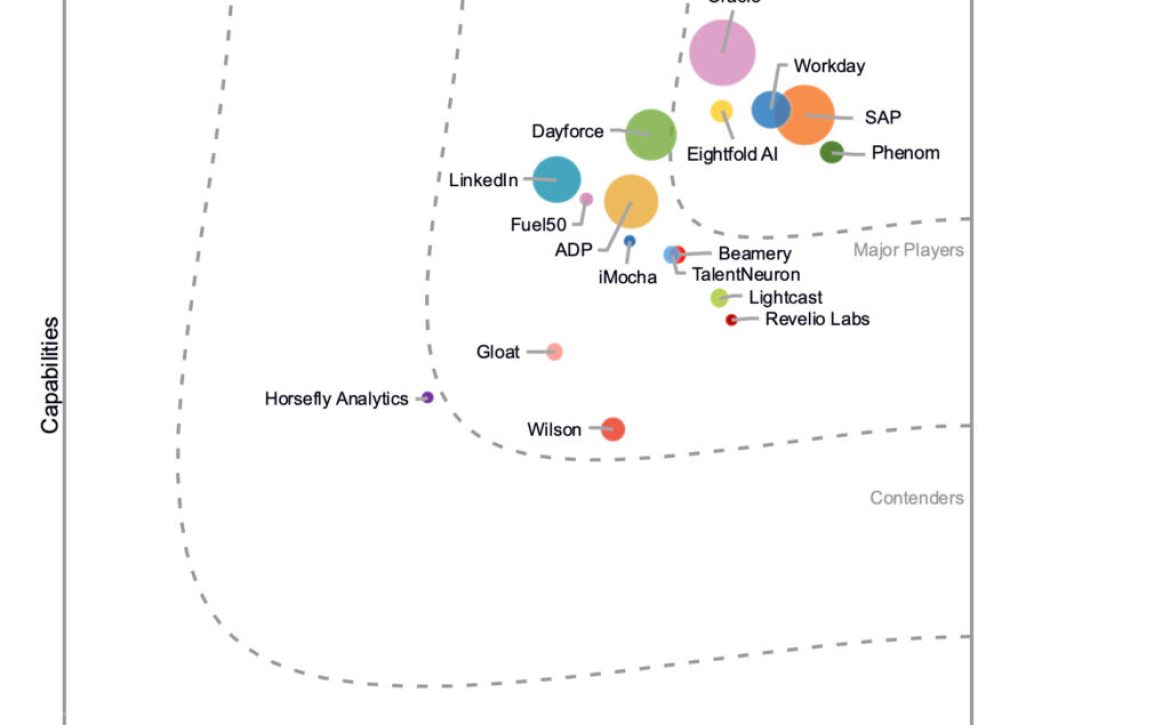
We’re thrilled that SAP has been named a Leader in the inaugural IDC MarketScape: Worldwide Talent Intelligence 2025 Vendor Assessment (doc #US52995425, November 2025). As organizations accelerate their shift to skills-based talent strategies, talent intelligence platforms are becoming mission critical to everything from workforce planning and hiring to mobility, development, and retention. We believe this recognition reflects SAP’s commitment to helping organizations build a dynamic, skills-driven workforce.
The IDC MarketScape for Worldwide Talent Intelligence evaluates vendors using the IDC MarketScape model, which incorporates quantitative and qualitative factors to assess vendors’ current capabilities and future road maps for delivering value to customers seeking talent intelligence. According to the report, SAP was recognized for strengths in “unified and integrated skills framework, embedded AI and analytics, and an open data ecosystem.”
IDC MarketScape vendor analysis model is designed to provide an overview of the competitive fitness of technology and suppliers in a given market. The research methodology utilizes a rigorous scoring methodology based on both qualitative and quantitative criteria that results in a single graphical illustration of each supplier’s position within a given market. The Capabilities score measures supplier product, go-to-market and business execution in the short-term. The Strategy score measures alignment of supplier strategies with customer requirements in a 3-5-year timeframe. Supplier market share is represented by the size of the icons.
Chasing innovation: powering the skills-based enterprise
At SAP, we have made consistent and strategic investments in skills, talent intelligence, and AI-driven workforce planning.
The talent intelligence hub is a unified skills framework embedded across the entire SAP SuccessFactors HCM suite. It empowers HR with an AI-driven, consistent skills foundation to help optimize talent processes, enrich personalized employee learning experiences, and accelerate skills development—enabling organizations to build an agile, future-ready workforce.
Make your workforce unstoppable with a flexible set of AI-powered applications
Building on this foundation, skills and intelligence capabilities can be leveraged across multiple product areas. SAP SuccessFactors Career and Talent Development helps transform career growth, internal mobility, and success into a single, AI-powered, skills-based solution, helping to give leaders clear visibility into workforce capabilities while guiding employees to personalized opportunities, so you can build, retain, and deploy the talent your strategy needs to win. SAP SuccessFactors Workforce Scheduling (generally available in 1H 2026) can enable optimized shift planning in manufacturing and production by helping to ensure the right people with the right skills are in the right place at the right time to help prevent the costly impacts of understaffing or overstaffing. And the People Intelligence package in SAP Business Data Cloud can bring together people, skills, and business data, from SAP SuccessFactors solutions and beyond, into actionable insights that help leaders make more informed people and business decisions.
We are also accelerating innovation with new Joule Agents to help automate repetitive tasks, guide employees with real-time, context-aware support, and enable accuracy across core HR processes, so that HR can focus on strategic people initiatives. The Performance and Goals Agent, now generally available, and the upcoming Career and Talent Development and People Intelligence Agents (both planned for 1H 2026) will deliver AI capabilities to help manage performance reviews, compensation planning, skills distribution, retention, personalized development, and succession. And with SAP’s acquisition of SmartRecruiters, we are strengthening our talent acquisition capabilities to deliver an even more unified, intelligence-driven hiring experience.
These innovations help organizations close skills gaps and empower employees with meaningful, data-driven growth opportunities, helping them thrive in an ever-changing workplace.
Customer insights: real outcomes from skills transformation
Our customers say it best when it comes to the impact of our skills-based innovations.
Capgemini, a global business and technology partner, is building a skills engine to support the employee lifecycle. “Skills are at the core of our company, as they support both clients and employees. Our promise to ‘get the future you want’ means thinking about future client needs and employee skills and career development. SAP SuccessFactors HCM is key in our skills-first approach to our people experience transformation,” Jihane Baciocchini, vice president and head of Talent Acquisition, Capgemini, said.
Grundfos, one of the world’s leading pump and water solutions companies, is utilizing the talent intelligence hub functionality of SAP SuccessFactors solutions to create a single source of skills information, enabling it to connect people and business needs in new ways. “There’s a consensus that what got us here won’t get us there: we need new skills and capabilities. And that’s where the talent intelligence hub in SAP SuccessFactors solutions comes in. It’s helping us build one skills foundation that feeds into critical decisions on talent—and transform skills into something we live and breathe every day,” Mads Kidmose, head of HR Technology and Data Foundation, Grundfos Holding A/S, said.
What’s next
This is a critical moment for HR leaders, as talent intelligence platforms are transforming how organizations hire, develop, and retain their workforce. Looking ahead to 2026, our focus remains on expanding skills-based capabilities and delivering AI solutions that can empower every organization to grow with confidence and thrive.
Learn how SAP SuccessFactors solutions can help turn skills into strategy and drive business success.
Lara Albert is chief marketing officer for SAP SuccessFactors.
Connect with SAP News on LinkedIn to stay up-to-date with all things SAP
In the business world, scale shapes every decision. For smaller companies, the path to growth is rarely paved with the same stones as their larger counterparts. Their requirements are distinct and often more immediate; they need solutions that are nimble and adaptable.
Rather than a one-size-fits-all approach, the SAP Business One solution was designed to empower small businesses and the lower midmarket with an ERP solution that can grow with them and meet their evolving needs as they grow and prosper.
Introducing SAP Business One
Today, more than 83,000 customers and 1.2 million users across more than 170 countries rely on SAP Business One, supported by a global network of 850 partners and over 500 industry and country-specific extensions.
Experience a single, affordable ERP solution for managing your entire company
“It’s designed to be easy to start with,” said Darius Heydarian, head of Partner Solution Enablement SAP Business One. “Organizations can begin with just a single user and scale up as their needs grow, whether that means adding more people, locations, or subsidiaries.” The solution can adapt to how smaller organizations work, offering both quick setups for remote sites and coordinated rollouts across regions. It helps provide a modern, browser-based experience and can integrate smoothly with SAP’s analytic solutions and automation tools.
The role of partners
SAP recently reaffirmed the strategic importance of SAP Business One within the SAP solution portfolio. SAP Chief Partner Officer Karl Fahrbach emphasized SAP’s continued commitment to SAP Business One, highlighting the crucial role of the partner ecosystem: “SAP continues to invest in the future of SAP Business One. Our partner ecosystem remains at the heart of this success—driving autonomy, resilience, growth, and winning new customers every day.”
Partners play a central role in the SAP Business One ecosystem. SAP works closely with a vast network of partners that are experts in implementing and supporting SAP Business One. These partners have the expertise to tailor solutions to each customer’s specific requirements, whether it’s industry functionality, localization, or regulatory compliance.
“Partners also contribute to the extensibility of SAP Business One, developing extensions and industry solutions that help customers address unique challenges,” Heydarian said. The collaboration between SAP and its partners helps ensure that customers benefit from both SAP’s technology and the specialized knowledge of local experts.
Customers in scope
“Recently, one of our partners shared a customer example with me that perfectly reflects the nature of companies in the market segment we are targeting with SAP Business One,” Heydarian said. “The business had three employees when they started using the solution. Over the years, they expanded and employ 250 people today—without outgrowing their software platform.”
A typical SAP Business One customer is a small or midsize company looking for an affordable, flexible, and scalable ERP solution. These organizations often need to manage a range of business functions—from accounting and financials to purchasing, inventory, sales, customer relationships, and reporting—all in one place. SAP Business One helps them gain control, streamline processes, and make strategic decisions based on real-time information.
The solution is customizable to meet evolving business needs and supports international expansion with 28 languages and 50 country-specific localizations. Local support is provided by over 850 partners, helping to ensure that customers can get help tailored to their specific requirements.
“We are proud of the fact that SAP Business One is part of SAP’s solution portfolio,” Heydarian said. “Three thousand net-new customers choose SAP Business One every year. On average, 10 customers select SAP Business One every day.”
In today’s digital workplace, HR is more than a service function; it’s the engine of organizational agility. Yet fragmented, IT-centric systems, limited insights into employee needs, and disconnected data models still hold many teams back.
SAP SuccessFactors Enterprise Service Management, purpose-built for HR, helps organizations break through those barriers by connecting AI, trusted data, and intuitive experiences to help transform HR service delivery from reactive support to proactive, human-centered impact.
From helpdesk to human impact
SAP SuccessFactors Enterprise Service Management gives HR teams a unified platform to help manage service requests, automate workflows, and deliver consistent, guided interactions that can build trust and compliance. By anticipating problems instead of reacting to them, HR can operate with speed, transparency, and insight, which enables the entire organization to work more efficiently.
Unlike IT-centric tools that treat employees as tickets, SAP SuccessFactors Enterprise Service Management brings together context, compliance, and connection—enabling HR to create experiences that feel personal, intelligent, and effortless.
Boost productivity and elevate experiences for employees and HR service teams
Automation is only as effective as the context behind it. Unlike standalone AI add-ons, Joule, SAP’s AI copilot, can make every interaction faster, smarter, and more human. Employees can ask questions in everyday language and receive contextual answers grounded in verified HR data and policies. HR teams benefit from AI-generated case summaries, pre-built templates, personalized e-mail drafts, intelligent case recommendations, and proactive insights that help reduce manual effort and speed resolution. With agentic AI, the system continuously learns from every interaction, automatically surfacing insights, suggesting next best actions, and driving service accuracy. HR teams don’t just automate tasks; they deliver smarter, compliant, and more personalized support all within a single, secure HR system.
Connected data that powers intelligent decisions
Unlike many platforms that rely on integrations or duplicated data to connect with HR systems, the SAP SuccessFactors portfolio is connected by design. Built on SAP SuccessFactors Employee Central, SAP SuccessFactors Enterprise Service Management can connect every transaction, service case, and policy into a single source of truth for HR. Combined with SAP HANA Cloud and SAP Analytics Cloud in SAP Business Data Cloud, this foundation can turn data into actionable intelligence: surfacing trends, predicting service demand, and improving quality with each interaction.
Experience that feels effortless
A great HR service experience isn’t just fast—it feels easy. SAP SuccessFactors Work Zone serves as the digital front door for SAP SuccessFactors Enterprise Service Management, SAP SuccessFactors Employee Central, and Joule. Employees can find answers, submit requests, and collaborate in the flow of work. Guided experiences and AI-powered knowledge searches can reduce case volume, while seamless integration with SAP Build Process Automation allows HR to extend workflows quickly without IT dependency or external tools.
Customer impact in action
Across industries, SAP customers are replacing fragmented, IT-led tools with a purpose-built HR service platform, creating measurable gains in employee satisfaction and HR efficiency.
“By moving to next-generation service requests with [SAP SuccessFactors] Enterprise Service Management, we’ve streamlined complex processes like 401(k) transfers and dramatically improved speed, compliance, and employee confidence.” – SAP customer, Technology
“Employees start in [SAP SuccessFactors] Work Zone with Joule, search knowledge first, and only create a case when needed. That reduces case volume and service rep workload.” – SAP customer, Consumer Goods
“We’re designing for consistency—using targeted forms aligned to service categories. Data duplication is minimized while the People Profile serves as the single source of truth.” – SAP customer, Manufacturing
“Our front door is multi-channel—e-mail, phone, and Teams chat—all anchored in the HR knowledge base with smart routing to the right teams.” – SAP customer, Aviation
“One feature that truly stood out for us was the timeline. Finding information in our old system used to be a challenge, but with [SAP SuccessFactors] Enterprise Service Management, the timeline view has been a game changer. It gives our teams instant visibility into every interaction and drives new levels of efficiency and clarity. – SAP customer, Banking
“The guided steps for HR service representatives have transformed how our team works. Instead of navigating complex processes, they now follow clear, intuitive paths that ensure every case is handled consistently and efficiently. It’s like having an intelligent assistant built right into the workflow.” – SAP customer, Telecommunications
“The [SAP SuccessFactors] Employee Central data mashup within case management has been an absolute game changer. Having real-time employee data visible directly in each case means no more switching between systems. Our HR team can make faster, more informed decisions with complete context at their fingertips.” – SAP customer, Manufacturing
From service efficiency to experience intelligence
By uniting AI, data, and experience within the SAP ecosystem, SAP SuccessFactors solutions can turn HR service delivery into a strategic engine that drives business results. Organizations can resolve issues faster, deliver personalized experiences at scale, and gain actionable insights that improve both HR efficiency and employee engagement.
In a world where agility and trust define competitive advantage, HR is no longer a back-office function—it’s a driver of workforce productivity, organizational resilience, and enterprise-wide success.
Imagine setting out to hike a vast mountain range. Your goal is clear: reach the summit. But without a map, you risk taking wrong turns and missing the best route. The same principle applies to corporate sustainability.
SAP’s goal is equally clear: enhancing our sustainability impact to help the world run better and improve people’s lives. The question is how do we navigate this complex terrain without losing our way?
Build a more compliant, sustainable, and resilient business and put sustainability at the core of your business with AI-driven solutions
The challenge: from sustainability metrics to actionable insights
Corporate sustainability reporting has evolved significantly in recent years. However, many organizations still face the fundamental challenge of translating complex environmental and social data into insights that drive strategic change.
Sustainability metrics such as “0.15 micrograms of fine dust per cubic meter” or “five liters of water consumed” are scientifically accurate but difficult to interpret, especially for decision-makers without deep sustainability expertise. Just as hikers need a reliable navigation system, businesses need a common language to translate diverse sustainability indicators into comparable, actionable insights.
This is where impact measurement and valuation (IMV) comes into play.
The approach: how IMV translates complexity into business-relevant insights
SAP’s IMV approach encompasses three steps.
Step one: A language everyone understands—translating societal impacts into monetary units
The IMV framework quantifies the costs and benefits of corporate activities to society and the environment. It builds on environmental, social, and governance (ESG) data that many companies already report and translates these into a single monetary metric, for example, Euros or U.S. dollars.
This is like moving from vague trail descriptions to precise GPS coordinates that everyone can understand. When sustainability indicators are expressed in a common unit, companies can clearly see where they stand, evaluate trade-offs between different sustainability dimensions, and compare them alongside financial impacts.
As a tangible example, the environmental impact of greenhouse gas (GHG) emissions can be monetized by multiplying a company’s reported emissions by the social cost of carbon, $244 per metric ton of CO₂e in 2025. This converts abstract data into a clear, actionable signal, allowing companies to compare impacts across different ESG and financial indicators. With this clarity, businesses can focus on the most impactful sustainability initiatives—those that deliver the greatest contribution to GHG reduction goals while evaluating both financial and sustainability return on investment.
Step two: Determining relative position—comparing performance to peers
Once you know your exact position, you need a reference point to understand how well you’re performing. It’s like trail runners who want not only to reach the summit, but also to understand their performance along the way. Your GPS shows you where you are, but to improve, you need to compare your data against other runners.
Impact benchmarks complement IMV by providing reference values that show how a company’s sustainability performance compares to industry peers. These benchmarks act like performance markers, helping businesses identify where they are ahead, behind, or on par—guiding decisions to improve toward maximum positive impact.
Step three: Identifying hotspots—focusing on maximum impact
The global sustainability agenda demands urgent, focused action. IMV and impact benchmarks together provide data-driven insights that pinpoint where a business has the greatest leverage to amplify positive and reduce negative impacts.
For example, in SAP’s human rights risk assessment and double materiality analysis, these insights helped narrow down the most material sustainability topics, critical value chain stages, and high-risk countries or industries. This approach uncovers opportunities where improved sustainability performance drives long-term competitive advantage and highlights risks such as supply chain vulnerabilities and regulatory exposure.
Navigating together: collaboration for sustainable impact
SAP has adopted this methodology as a founding member of the Value Balancing Alliance (VBA), a nonprofit coalition of multinational companies dedicated to establishing a globally accepted sustainability management accounting and steering system. In collaboration with the WifOR institute, a scientific research organization specializing in impact valuation, SAP has analyzed its societal impacts (step one), applied industry benchmarks to contextualize performance (step two), and integrated these insights into core reporting and steering processes (step three).
This collaborative approach ensures that the data guiding SAP’s sustainability strategy is independent, credible, and scientifically validated, enhancing both internal decision-making and transparency for investors and external stakeholders.
“Impact measurement and valuation provides the scientific foundation for sustainability steering, allowing organizations like SAP to understand their impacts holistically and prioritize decisions based on statistical evidence.”
Dr. Richard Scholz, Head of Impact Analysis at WifOR
The results: what SAP’s analysis reveals and how it drives strategic decision-making
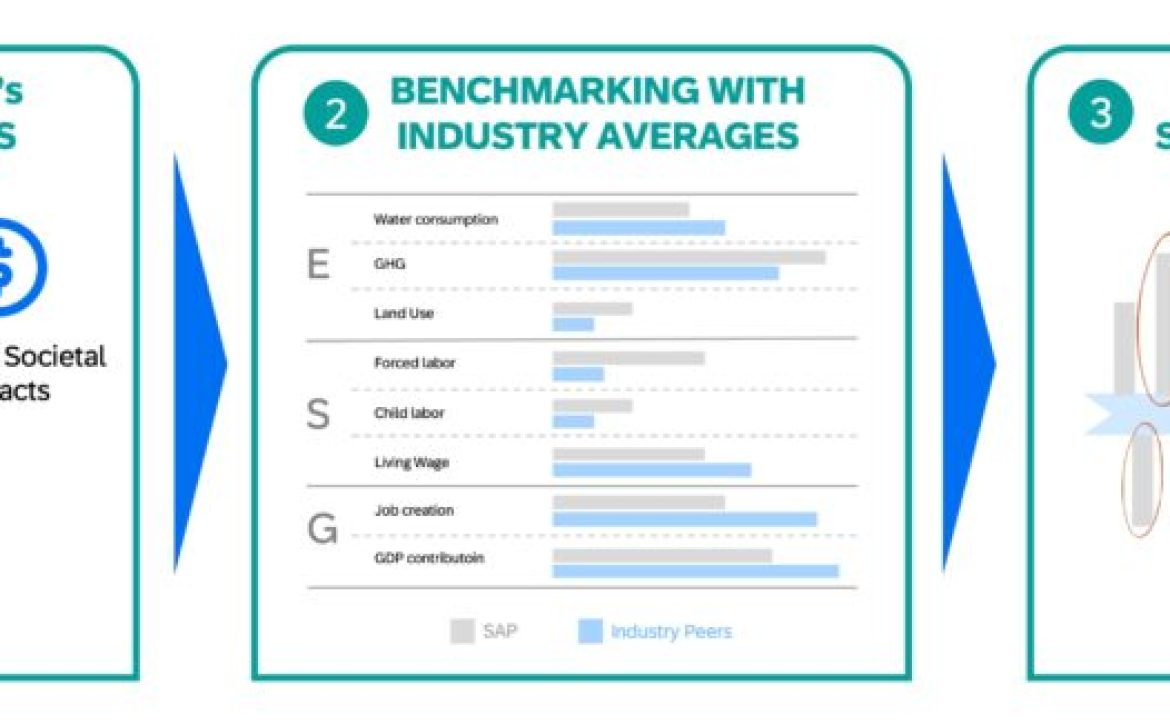
The graphic below illustrates SAP’s sustainability performance compared to industry benchmarks, the result of step two. The analysis covers SAP’s entire supply chain from direct suppliers to sub-suppliers as well as SAP’s own operations. A methodology for quantifying downstream impacts, such as the effects of software in use, is currently under development.
The analysis identifies both positive and negative impacts. Areas where SAP shows a higher negative impact than the industry average are highlighted in red, indicating priority areas for mitigation. In contrast, smaller negative or larger positive impacts indicate stronger ESG performance.
Key findings
Social performance: Supply chain data reveal mixed results regarding living wages. While most supply chain workers earn above living wage thresholds, reflecting positive impacts, the analysis also identified risk hotspots, enabling SAP to take targeted action. In response, the Human Rights team at SAP partnered with procurement, suppliers, and multi-stakeholder initiatives to develop and implement risk mitigation strategies. IMV data allowed these efforts to focus on the countries, industries, and vendors with the highest risk, ensuring that improvements are driven where they matter most.
Environmental performance: GHG emissions results reflect strong progress toward SAP’s net-zero goal, with positive results across both direct operations and upstream activities. While water consumption is not considered material for SAP at the group level, we address identified local hotspots through local environmental management programs, including site-specific water management measures to ensure responsible resource use.
Leading by example
As a global technology company supporting the majority of the world’s business transactions, next to enabling our customers on their positive impact journey through our solutions, we want to lead by example.
Our corporate sustainability approach creates positive economic, social, and environmental impact while respecting planetary boundaries and human rights.
To achieve these goals, SAP relies on tools such as IMV that help us assess and prioritize the measures with the greatest leverage—maximizing positive impacts and minimizing negative ones.
“Sustainable transformation is only possible when we base our decisions on reliable data. With IMV, we make sustainability measurable, comparable, and actionable. This enables us to create transparency, set clear priorities, and take responsibility. By focusing on areas where we can achieve the greatest positive business and sustainability impact, we ensure that our actions are both meaningful and effective.”
Matthias Medert, Global Head of Sustainability at SAP
The journey ahead
The climb toward impact-based decision-making continues. Just as hikers rely on navigation tools to traverse challenging terrain, we use IMV as our guide to ensure every step brings us closer to our sustainability goals.
Looking ahead, we aim to expand the methodology, contribute to cross-industry standardization, and foster multi-stakeholder collaboration to accelerate the adoption of impact-based decision-making across global value chains. Through SAP cloud solutions for sustainable enterprises, we support our customers in their own impact management journeys.
Our climb is guided by more than metrics; it’s driven by purpose. Clear insights from IMV keep us on the right path toward a future where sustainability and business success go hand in hand.
Iris Konrad is a senior sustainability specialist at SAP.
Subscribe to the SAP News Center newsletter to get stories and highlights delivered straight to your inbox each week
Every Human Rights Day underscores a simple truth: lasting progress for people and their rights starts with each of us and thrives on intention, accountability, and collaboration.
SAP is committed to respecting and advancing human rights
At SAP, we act on our purpose to help the world run better and improve people’s lives through a responsible, people‑first approach to business.
As a global technology leader, SAP recognizes that its operations, business relationships—including those with suppliers, partners, and customers—and the solutions it delivers can impact people and their rights. This impact can be both positive and negative as well as direct and indirect.
SAP has embedded human rights into its corporate sustainability strategy and in company governance, processes, policies, and engagement across the entire value chain.
From strategic commitment to culture
To ensure that SAP’s due diligence remains effective, the Human Rights Office within the Corporate Sustainability organization collaborates with the Human Rights Steering Committee and relevant Board areas. Ultimate oversight rests with the Executive Board of SAP SE.
This governance model provides the foundation for making human rights a shared, cross-functional responsibility rather than a standalone initiative. It translates into collaboration across the business: the central human rights team working with People & Culture organization to ensure that all employees receive a living wage or to embed safeguards against child and forced labor in recruitment and people management processes.
Beyond formal structures, it is essential that all employees embrace respect for people and their rights as part of SAP’s culture and as a guiding principle in interactions with colleagues, business partners, and the communities in which SAP operates. Tailored capacity-building for critical roles for example in procurement, complemented by awareness sessions for all employees, helps us to get there by strengthening the understanding that day-to-day business activities influence human rights and that any adverse human rights impacts must be proactively identified and addressed.
“What began as policy commitments is becoming part of how we operate: step by step. It takes time and effort to shift from focusing solely on ‘risks to SAP’ to adding the consideration of ‘risks to people’ in our strategic and daily business decisions.”
Stephanie Raabe, Office of Human Rights and AI Ethics, SAP
Respecting human rights across the value chain
Turning commitment into practice requires structure across the business. SAP operates within a global ecosystem—tens of thousands of suppliers, hundreds of thousands of customers, and millions of users—where every connection carries both opportunity and responsibility.
To meet this responsibility, SAP runs a human rights due diligence program aligned with the UN Guiding Principles on Business and Human Rights, designed to identify, prevent, mitigate, and remedy potential impacts on people across its operations and relationships. The program’s core components include:
Ongoing risk assessment to identify and prioritize potential impacts on people
Preventive and remedial action embedded in policies, business processes, supplier and partner requirements, training, and targeted engagement
Speak Out at SAP, an independent, multilingual reporting channel available 24/7 to employees and external stakeholders
Transparent communication through the SAP Integrated Report and, its Modern Slavery Statements, and other channels
Across the value chain, SAP focuses on its:
Supply chain, setting clear expectations and contractual requirements to uphold human rights and labor standards, applying responsible sourcing practices, and engaging with selected high-risk suppliers regarding living wages.
Operations, focusing on ensuring non-discrimination, providing an inclusive, safe, and health-promoting workplace, maintaining fair recruitment and employment practices, and safeguarding confidential channels to raise concerns.
Products and services, advancing ethical AI by applying the SAP Global AI Ethics policy, as well as requiring that every AI use case undergo an AI ethics assessment to help prevent discrimination and ensure alignment with its principles.
“AI unlocks great potential for businesses, governments, and society, but also creates economic, political, and societal challenges depending on how it is used. For that reason, the human rights-centered SAP Global AI Ethics policy sets clear ethical standards for developing and applying AI, ensuring we create human-centered solutions that respect people and augment human capabilities.”
Vikram Nagendra, Office of Human Rights and AI Ethics, SAP
Continuously striving for progress
Human rights due diligence is a journey of continual improvement. SAP regularly reviews the effectiveness of its human rights due diligence system to assess how well salient impacts are addressed.
While mitigation measures in SAP’s own operations have proven effective so far, these reviews have also highlighted the need to deepen our understanding of supply chain risks and to strengthen actions specifically aimed at addressing them. As a company, we also recognize the need to make our grievance channel more accessible to value chain workers, a challenge currently addressed through a pilot program.
Looking ahead: Human rights as a shared responsibility
In a rapidly evolving world, new regulations, emerging technologies, and rising societal expectations raise the bar for responsible business. Running an effective and efficient human rights due diligence system helps SAP stay ahead and mitigate legal, operational, and financial risks, while strengthening its reputation and leadership in ethical business practices. This approach builds trust with customers, partners, investors, and other stakeholders.
Most importantly, it empowers SAP to uphold and further human rights, a principle reaffirmed on this day.
“Human Rights Day 2025 is a moment to celebrate progress, but also to recognize that the journey goes on. With the ambition to foster a just and inclusive economy where people and technology thrive together, SAP will continue to engrain human rights into how we operate and innovate”
Matthias Medert, Global Head of Sustainability, SAP
Paola Eugenio is a member of the Corporate Sustainability team at SAP.
Get the latest news and highlights delivered each week via the SAP News Center newsletter
We believe this recognition reflects SAP’s continued commitment to innovation, customer success, and delivering extended planning and analysis solutions that empower organizations to thrive in today’s uncertain business environment.
The Gartner Magic Quadrant can help FP&A professionals assess which vendors are best suited for their purposes. The analyst firm defines financial planning software as solutions that enable FP&A transformation and cover planning, budgeting, forecasting, modeling, performance reporting, and agile insights.
SAP was recognized as a Leader by Gartner for its ability to execute and completeness of vision.
Unify business planning with SAP Business Data Cloud
SAP continues to build on its market leadership by accelerating its vision for unified business planning. With the introduction of SAP Business Data Cloud earlier in 2025, the company has brought together operational, financial, and strategic planning on a single, trusted data foundation. This benefits financial professionals and other strategic planners by eliminating silos and enabling real-time, AI-driven insights for intelligent planning across the enterprise.
SAP Analytics Cloud in SAP Business Data Cloud provides a powerful tool to customers that drive enterprise planning. Customers benefit from the following capabilities:
Intelligent planning: Machine learning and generative AI automate forecasting and predictive planning by simulating best, worst, and realistic “what-if” scenarios — and providing smart recommendations. This aligns with SAP’s agentic AI vision, in which agents continuously monitor internal and external data, proactively identifying risks and opportunities for planners.
Seamless planning: Deep integration with SAP Datasphere enables live access to governed, semantically-rich data without replication. This supports live reporting, collaborative planning and analysis, and data-driven decision-making with one tool for data preparation, modeling, planning, and analytics.
Extended planning and analysis: Customers can plan across all lines of business by combining transactions, analytics, and planning with SAP S/4HANA, SAP SuccessFactors software, SAP Integrated Business Planning for Supply Chain, and third-party data.
SAP Business Planning and Consolidation (SAP BPC) modernization: SAP BPC customers can modernize planning to a scalable, cloud-native environment with enhanced collaboration and AI capabilities.
SAP’s unified approach is already delivering measurable value for customers worldwide. By leveraging SAP Business Data Cloud and SAP Analytics Cloud for planning, organizations are achieving faster, more accurate forecasts, streamlined planning, and greater alignment between finance and operations.
Customers successful with SAP Analytics Cloud for planning include Blue Diamond Growers, BMW, Calleway Golf, Decathlon, Juniper Networks, Microsoft, Mondelez, Stihl, and many others across all industries.
Kemira Oyj, a global leader in sustainable chemical solutions, accelerated its digital transformation by deploying SAP Analytics Cloud for planning. Kemira simplified over 50 percent of legacy master data and harmonized data structures to the cloud across 400 plants in 37 countries within 15 months. This transformation enables real-time financial planning for more than 1,000 users, and enhances forecast accuracy, supporting agile decision-making, sustainability goals, and future-ready business models.
Taras Podbereznyj, CIO of Kemira Oyj, said, “Data is at the heart of our transformation program. It will continue to steer the company as the foundation for innovation and insights, supporting new digital business models and levels of agility and helping us become more competitive in the market.”
Looking ahead
As organizations navigate increasing uncertainty and volatility, SAP remains dedicated to helping customers turn data into action. Moreover, the company vision is clear: to provide the most comprehensive, intelligent, and trusted planning platform, helping every business make confident plans across the enterprise and perform at their best in the face of uncertainty.
Dan Yu is chief marketing officer of SAP Business Data Cloud.
Get SAP news, stories, and highlights from SAP delivered straight to your inbox each week
Gartner does not endorse any vendor, product or service depicted in its research publications, and does not advise technology users to select only those vendors with the highest ratings or other designation. Gartner research publications consist of the opinions of Gartner’s research organization and should not be construed as statements of fact. Gartner disclaims all warranties, expressed or implied, with respect to this research, including any warranties of merchantability or fitness for a particular purpose. GARTNER is a registered trademark and service mark of Gartner and Magic Quadrant is a registered trademark of Gartner, Inc. and/or its affiliates in the U.S. and internationally and are used herein with permission. All rights reserved.
Artificial intelligence (AI) is currently transforming the world of work. Investments are enormous and the technology is evolving rapidly—as we’re currently seeing with agentic AI.
Create transformative impact with powerful AI and agents
Beyond the technologies being deployed, the ability to use them meaningfully in daily work is becoming central. This is also seen as the major challenge of AI adoption. Developing AI skills has thus become a strategic priority.
For SAP customers and partners, the question is how to upskill their teams effectively. Because without the right skills and abilities, the best software is useless.
Here you’ll find seven tips for developing AI skills specifically for the SAP context.
1. Learn the fundamentals of AI
There are many learning resources for the basics in the form of e-learning courses or webinars. Some are even free, such as many courses from SAP. We’ve compiled key AI learning offerings here: on AI in general, Joule, and SAP Business AI, as well as the important topic of ethics and responsible AI.
2. Self-assessment: Where do I stand?
Everyone should understand the fundamentals of AI; after that, you can deepen your knowledge in targeted areas. The SAP Business AI self assessment can help with this self-reflection. Here you can rate yourself in the areas of awareness, m, knowledge, and application skills. The topic areas include Joule, including copilot and agents; embedded AI; machine learning services on SAP Business Technology Platform; SAP Build and Joule Studio; responsible AI; and implementation of SAP Business AI. First results show that many respondents show a high motivation, while technical application skills still need more improvement.
3. Deepening by topic and role: Which AI skills are still needed?
Once you’ve assessed yourself as a team or individual, the various SAP learning offerings—information also available here on the SAP AI Training page—can help you create your own learning plan. Looking at the relevant topic areas, your own role, and preferred learning formats makes orientation and selection easier.
4. Set learning goals and document successes
Many people find it helpful to set concrete learning goals and schedule specific learning times; for example, in their own calendar. Documenting and reflecting on learning progress and “aha” moments also helps you and others, whether through blogs on SAP Community, a personal learning journal in digital notes, or simply verbally within your team. AI certification like for generatice AI developers might also be a more formal way to check and document your skills.
5. Learn from and with others
In peer learning, you learn through barcamps, workshops, discussion rounds, communities, study groups, networking meetups, or promptathons, a type of hackathon where small groups solve challenges from their daily work using AI tools. Along with SAP, companies like Deutsche Telekom and Continental are already using this format.
Learning through exchange in communities—such as the SAP Community on SAP Business AI with its many blogs and discussions—is another format for learning with peers. SAP Learning Hub also offers numerous AI live sessions led by SAP experts where you can ask questions.
6. Learn through experience and doing
With such generic technologies as AI, it’s important for everyone to explore for themselves where AI can help them and to try things hands-on. Whether in learning projects where you experiment with and reflect on new AI tools, or in team workshops. For workshops, the SAP AppHaus innovation toolkit with templates can help—including for Joule agent discovery, AI agent design, SAP Business AI design, and SAP Business AI exploration. Discovery and exploration should happen at the strategic level, but it’s also very helpful at the team level. The practice systems in SAP Learning Hub can also assist with hands-on practice as you see Joule and embedded AI features in many training systems.
7. Regularly review and update your AI skills: How can I keep up to date?
The field of AI is evolving rapidly, so regular learning, updating, and trying out new tools is essential. Podcasts, the resources mentioned in this article, SAP’s AI newsletter, and the diverse array of SAP events can help with this. Or why not build your own news-update agent for your own context?
Summary and outlook
AI learning in the SAP ecosystem is a business-critical, continuous task. You only understand AI by applying it and actively engaging with it. Additionally, it’s important to adapt to these new technologies—or even to completely rethink tasks and processes. Complete a self-assessment, create a learning plan by yourself and with your peers, and book the learning offerings relevant to you today.
Thomas Jenewein is a business development manager at SAP.
Drive success with in-demand SAP skills and achieve your goals faster with learning solutions from SAP