SAP Launches New Innovation Hub in Munich, Bringing Together and Enabling Experts Dedicated to Defense

SAP has launched our new defense innovation hub, a dedicated environment designed to accelerate secure, mission-ready results across the defense ecosystem.

The hub brings together startups, academia, industry leaders, and defense organizations to co-create solutions that strengthen digital sovereignty, operational resilience, and readiness in response to threats to safety and security.

Maintain mission readiness using intelligent solutions for ERP with advanced supply chain management

The launch comes at a pivotal moment. Defense organizations worldwide are shifting from traditional modernization to full digital transformation, with missions increasingly dependent on secure data flows, resilient supply chains, and systems that remain trusted even under stress. In addition, digital sovereignty has become a core component of readiness, requiring architectures that ensure customers maintain full control of their data and operations.

The launch took place in Munich, a new “Silicon Valley” for defense innovation, and featured customers, partners, academics, government officials, and representatives from SAP. The city offers a uniquely powerful foundation for the hub, gathering a fast-growing community of startups, leading research institutions such as the Technical University of Munich (TUM), and established aerospace and defense leaders. The hub unifies the strengths of these experts, connecting them so that they can coordinate their capabilities to meet defense needs rapidly and efficiently.

More than just a physical space, the hub introduces a new framework that breaks down silos and enables a powerful ecosystem that drives defense innovations. Creative startups, leading industry experts, government organizations, academia, and researchers can come together to make ideas mission-ready more quickly and securely, while maintaining the digital sovereignty necessary to protect information and maintain trust.

SAP's launch of the defense innovation hub in Munich

As a leading technology provider for the hub, SAP acts as an enabler, not just an operator. Through our contributions, we have reaffirmed our role as a neutral technology partner, delivering secure digital platforms while leaving mission decisions entirely in customers’ hands.

Our long-standing experience and time-tested technology have proved the ability to perform under uncertainty and stress, a must for the readiness that defense demands, providing cyber-resilient architectures and real-time visibility into logistics during crises, as well as full governance and transparency.

Our cloud operations model, auditability frameworks, and strict access controls keep mission-critical systems secure, verifiable, and compliant.

With SAP’s involvement and support, the hub represents a significant step forward for defense innovation, serving as an important catalyst in a location with the potential to become a global center for the defense industry.


Andre Bechtold is president of SAP Industries & Experiences.

Sign up for the SAP News Center newsletter to get stories and highlights each week

Photography courtesy of Norbert Steinhauser.

Royal Greenland CIO: “We Want to Consume Standardized AI, Not Invent It”

The goal is clear for Royal Greenland and its more than 40 plants and factories along the coast of Greenland and Atlantic Canada: a more standardized, cloud‑based landscape with significantly lower complexity, and a technological foundation that can support future AI initiatives.

SAP Cloud ERP: An out-of-the-box enterprise management solution

Headquartered in Nuuk and 100% owned by the Government of Greenland, Royal Greenland is modernizing its SAP platform and moving from on premise to cloud ERP in order to future‑proof core processes and unlock embedded AI across its SAP business applications.

“We are moving from our existing setup to SAP Cloud ERP and SAP Business Data Cloud because we want access to the capabilities you can consume on a cloud platform,” said Lars Bo Hassinggaard, CIO at Royal Greenland for more than 25 years.

The company brings high‑quality wild‑caught fish and shellfish from the North Atlantic and Arctic Ocean to consumers worldwide. It has been running SAP since 1998 but is now embarking on its most significant transition to date: migrating SAP ERP Central Component to SAP Cloud ERP while simultaneously elevating its business intelligence (BI) landscape into SAP Business Data Cloud and later transforming BI into SAP Datasphere.

The project follows the structured RISE with SAP framework, which consolidates platform transformation, operations, and the innovation cycle into one contract.

Lean, selective data transition: 90% fewer data to move

As part of the migration, Royal Greenland is reducing its data volume significantly using the “Lean Selective Data Transition” method.

“We are keeping 10 years of data and cleaning up, so we avoid outdated company codes and historical data that no longer create value,” Hassinggaard explained. “We’ve achieved a 90% reduction in what needs to be stored and migrated. The method combines data analysis, scoping, and standardized mapping objects in a guided process, ensuring that Royal Greenland only carries forward what is truly necessary, making the financials of the transformation more predictable and avoiding unnecessary complexity.”

Technology first, innovation next

Go‑live is planned for March 1, 2027. The year 2026 is dedicated to the platform lift itself. From 2027, Royal Greenland will begin building business‑driven improvements on top of the standardized core—for example, new user interfaces and process optimization using small AI agents within finance and administration.

“Royal Greenland and SAP have worked together since 1998, and we look forward to getting started on the technical part of the platform uplift this January,” Hassinggaard shared. “We’re keeping the transformation as simple as possible for now and will use 2027 to activate the benefits, such as improved data analysis, better user experience, and more efficient work processes.”

Royal Greenland is following a classic waterfall approach and has already established a “golden shell” as the basis for further configuration and retrofitting.

SAP is responsible for implementing the cloud solution, which will run on Microsoft Azure, initially in Sweden, with the option to move later to a Danish data center. External advisor Spektra Analytics has supported contract validation.

From in‑house experiments to standardized, “consumed” AI

Although Royal Greenland has already successfully experimented with its own AI solutions, including vision‑based projects in production, the strategic direction ahead is to leverage embedded, standardized AI data products from SAP and models built on the SAP Business Data Cloud and its semantic data layer.

“We are a company that prefers to tap into existing AI solutions rather than invent them ourselves,” Hassinggaard said. “It’s far more efficient for us. There is no reason for us to spend resources reinventing what SAP already provides. The initial focus will be on process optimization within administrative functions such as finance—small AI agents that can streamline daily work.”

Advice to others: Allocate more time, and understand your method

Hassinggaard is clear that the RISE with SAP contract, methodology, and preparation work require time and organizational maturity. His advice to other companies facing a similar cloud ERP decision: “Do it thoroughly—and allocate more time than you think. Study the methodology, pricing, and contracts. And bring a competent advisor on board.”


Ellen Vig Nelausen is an integrated communications expert for SAP Regional Communications.

SAP Business Data Cloud: Amplify the value of AI with your most powerful data

Why Customer-Specific AI Will Define the Next Era of the Automotive Ecosystem

The automotive industry has always been a bellwether for technological change. From mass production to lean manufacturing, from embedded software to connected vehicles, each wave of innovation has reshaped not just cars but entire ecosystems. Today, artificial intelligence is doing the same—quietly, decisively, and at scale. While much of the public conversation around AI in automotive focuses on autonomous driving or in-car experiences, the real transformation is unfolding behind the scenes, in how vehicles are designed, launched, serviced, and sustained over their lifecycle.

According to industry estimates, auto executives expect AI to boost product value by 22% and digital service value by 37% within three years. As vehicle portfolios expand—electric, hybrid, software-defined, and increasingly customized—the operational complexity for automakers and suppliers has risen sharply. Nowhere is this more evident than in service parts management and new product introduction (NPI).

Solve business challenges with innovations aligned with suite-first and AI-first strategies

Service parts planners sit at the intersection of engineering, supply chain, manufacturing, and customer service. Their task is deceptively simple: ensure the right parts are available at the right time and place across a vehicle’s lifecycle. In reality, they grapple with fragmented data, limited inventory visibility, unpredictable demand signals, and compressed timelines—especially as new models and components are introduced at unprecedented speed. High data quality, tight orchestration across systems, and rapid decision-making are no longer nice to have, they are business-critical.

This is where customer-specific AI becomes transformative. Instead of treating NPI as a linear, manual, and reactive process, AI agents can fundamentally reimagine how service parts planning is executed. By embedding AI directly into the planning workflow, service parts planners are supported—not replaced—by intelligent systems that operate with full contextual awareness. These AI agents can monitor real-time data across inventories, supplier readiness, historical demand patterns, external risk factors, and engineering changes, as well as orchestrate the NPI process end to end.

In practice, this means planners move from firefighting to foresight. AI agents can automate sequential NPI steps, flag potential bottlenecks before they materialize, and dynamically adjust plans as conditions change. A single, unified dashboard provides transparency across the entire process, while built-in what-if simulations allow planners to test scenarios—supplier delays, demand spikes, geopolitical disruptions—before decisions are locked in. Crucially, humans remain firmly in control. AI augments judgment, improves speed, and enhances confidence, rather than operating in a silo.

Platforms like SAP Business Technology Platform (SAP BTP), combined with Joule and the agent builder capability in Joule Studio, can enable this multi-agent approach at enterprise scale. By integrating AI seamlessly with core business processes, automakers can ensure that intelligence flows across functions, rather than being trapped in silos. The result is not just automation, but orchestration—where systems, data, and people work in concert.

The impact is tangible. Automakers can significantly reduce planning cycle times and improve time-to-market for new products. Planning risk is lowered through continuous what-if analysis that incorporates both internal and external variables. Service readiness improves, ensuring that customers experience continuity and reliability even as product complexity increases. At an ecosystem level, this translates into greater resilience, lower costs, and higher customer satisfaction.

More broadly, this use case points to a shift in how we should think about customer-specific AI in automotive. The future will not be defined solely by smarter vehicles, but by smarter enterprises—where AI agents support decision-making across the value chain, from product inception to end-of-life service. In an industry under pressure to innovate faster, operate leaner, and remain sustainable, AI-driven operations are fast becoming a competitive necessity. The automotive ecosystem is evolving. Those who embrace AI not just as a technology but as a new operating model will be best positioned to lead it.


Sindhu Gangadharan is head of Customer Innovation Services and managing director for SAP Labs India.

Get the latest SAP news delivered to your inbox once a week

Female IT Engineer Works on Her Desktop Computer in Government Surveillance Agency. In the Background People at Their Workstations with Multiple Screens Showing Graphics.

From Strategy to Readiness: SAP Launches Defense Innovation Hub to Strengthen Digital Resilience in Security and Defense

MUNICH  SAP SE (NYSE: SAP) today opened its defense innovation hub in Munich, Germany, underscoring its long-term commitment to strengthening digital readiness as a core element of modern defense capability. This comes at a time of growing geopolitical pressure, hybrid threats and rising demands for interoperability.

Maintain mission readiness using intelligent solutions for ERP with advanced supply chain management

The hub is launched as armed forces and security institutions face increasing pressure to manage complex missions across allies, domains and supply chains while maintaining resilience, transparency and control. At the defense innovation hub, SAP brings together software, data, AI and industry expertise to demonstrate how integrated digital systems translate strategic requirements into operational readiness. This enables comprehensive integration across key areas such as personnel readiness, logistics, procurement, manufacturing, training and maintenance. Together, these capabilities form the digital backbone required for real-world defense operations.

“Defense readiness today is no longer defined by equipment alone: It is defined by how well people, processes and partners are connected,” said Thomas Saueressig, member of the Executive Board of SAP SE, Customer Services & Delivery. “In an increasingly volatile security environment, armed forces need systems they can trust—systems that are resilient, interoperable and sovereign. With our defense innovation hub, SAP is demonstrating how digital platforms can strengthen operational readiness while preserving control, compliance and freedom of action.”

A Hub Built on Munich’s Defense and Technology Ecosystem

Munich’s strong defense and technology ecosystem, combining innovative startups, established industry leaders, academic excellence and public institutions, provided the ideal setting for the new hub. Supported by the Technical University of Munich’s academic excellence and the presence of key government institutions, the Munich region is uniquely positioned for cross-sector collaboration. At today’s launch, the setting provided a fitting backdrop for hands-on demonstrations translating innovation into operational reality. Attendees experienced hands-on scenarios illustrating how SAP for Defense & Security solutions connect people, assets and supply chains in a unified, more secure operational picture.

“The Technical University of Munich is pleased to collaborate with SAP in translating advanced research into operational security and defense capabilities,” said Chiara Manfletti, head of the Aerospace and Geodesy Department at TUM and scientific lead of the newly launched TUM Security and Defense Alliance. “As technological innovation accelerates, strategic partnerships such as this ensure that cutting-edge scientific developments can be rapidly deployed to strengthen operational readiness.”

The launch also served as a lead-in to this week’s Munich Security Conference, where questions of resilience, interoperability and technological sovereignty will dominate the agenda. Throughout the week, SAP will continue engaging with policymakers and partners on how digital innovation can support security and defense in an increasingly fragmented world.

Visit the SAP News Center. Get SAP news via LinkedIn and Bluesky.

Media Contact:
Dana Roesiger, +49 6227 7 63900, dana.roesiger@sap.com , CET
SAP Press Room; press@sap.com

This document contains forward-looking statements, which are predictions, projections, or other statements about future events. These statements are based on current expectations, forecasts, and assumptions that are subject to risks and uncertainties that could cause actual results and outcomes to materially differ.  Additional information regarding these risks and uncertainties may be found in our filings with the Securities and Exchange Commission, including but not limited to the risk factors section of SAP’s 2024 Annual Report on Form 20-F.
© 2026 SAP SE. All rights reserved.
SAP and other SAP products and services mentioned herein as well as their respective logos are trademarks or registered trademarks of SAP SE in Germany and other countries. Please see https://www.sap.com/copyright for additional trademark information and notices.

Welcome to the (Process) Conversation: Joule with SAP Signavio Solutions Now Generally Available

Meet your new process companion! Joule with SAP Signavio solutions is now generally available, helping users, analyze, and manage business processes using natural language.

Better navigate constant change by turning business transformation into a core capability

Joule is an AI solution that turns siloed data and tasks into intelligent, connected workflows that help improve decisions, speed up end-to-end processes, and create a unified AI experience across SAP and non-SAP systems. With AI agents for all core functions, powered by SAP business process expertise, an AI strategy scales faster and wider.

In this context, the unique value of combining Joule with SAP Signavio is the powerful combination of deep process context from SAP Signavio and orchestration across SAP applications, including but not limited to SAP S/4HANA, SAP Business Technology Platform (SAP BTP), and SAP SuccessFactors solutions.

After months of successful collaboration with customers in the SAP Early Adopter Care program, this launch marks a major step toward delivering a conversational experience, making it easier than ever to explore, understand, manage, and transform processes with SAP Signavio solutions.

But how does this work in practice? Let’s look at an example.

Joule in action

Imagine accessing SAP Signavio Process Collaboration Hub, an organization’s single source of truth for process alignment, in order to understand more about a particular process, order-to-cash. What once might have taken hours of investigation can now happen in minutes through a simple conversation.

Asking Joule, “Who is the process owner of the order-to-cash process?” prompts Joule to suggest the process that most closely matches the query, then retrieve the owner information from the process diagram attributes.

Following up with “Provide me with a description of the process flow” means Joule skills convert the process visual into a clear process description. You can dive deeper into the process as well, perhaps by comparing the difference in process execution in different regions. Just ask, and Joule skills provide a textual summary that highlights the key differences between the two process models.

Joule offers a connected user experience across SAP and non-SAP systems, allowing employees to ask questions and interact with Joule from anywhere. In other words, while working in SAP Signavio, users can interact with data and capabilities from other systems, or while in other systems, users can access SAP Signavio capabilities.

Simple and seamless

This connectivity and seamless access is designed to simplify day-to-day tasks in multiple ways, and Joule with SAP Signavio offers skills across three use cases: informational, navigational, and transactional. Plus, additional analytical capabilities are planned for future releases. As a summary, these use cases—or interaction patterns—comprise the following:

  • Informational: Joule acts as an intelligent assistant, helping users understand how to perform specific tasks or generating a textual comparison between processes. For example, ask Joule: “What’s the difference between draft and published process models?” or “How can I set up a dashboard?”
  • Navigational: Joule simplifies content navigation across SAP Signavio solutions and guides users through the SAP Signavio Process Collaboration Hub to access various assets such as process and journey models, and value accelerators. For example, prompt Joule: “Open the Order-to-Cash process model published for EMEA” or “Find accelerators for the Financial Process”
  • Transactional: Joule enables users to perform actions conversationally, such as creating and deleting assets within the SAP Signavio Process Transformation Suite, including processes, journey models, and dictionary items. For example, tell Joule: “Create a new dictionary term and link it to the Returns process.” or “Delete the journey model called Sales Process.”

Unlocking value with agentic AI

Right now, Joule works across SAP applications as a process companion, meaning that SAP Signavio process context and intelligence is accessible to the user across all Joule-compatible applications, including, among others, SAP S/4HANA, SAP SuccessFactors solutions, and SAP BTP. But this is just the beginning.

SAP is developing Joule Agents embedded into every business function and accessed with role-based assistants, which use SAP’s process expertise to automate complex workflows and deliver AI value at scale. Joule Agents for SAP Signavio solutions can help accelerate content discovery and process analysis, create value cases, and enhance user onboarding.

Read the SAP Community blog to learn more about Joule Agents for SAP Signavio solution, and see how to can sign up for the beta program.

The age of AI brings an expectation of immediate insights and context-based support when and where you need it, and Joule with SAP Signavio solutions means process navigation and execution is no exception.

For clearer decision-making, seamless integration, and enhanced automation, visit the Joule capabilities page to learn how to activate Joule and get your own conversation started.


Lucas de Boer is Global Marketing program lead for SAP Signavio.

Get news and stories about SAP delivered straight to your inbox each week

SAP Helps Berry Producer Naturipe’s Exponential Growth

Naturipe Farms knows berries. The grower-owned company produces sustainably grown berries including strawberries, raspberries, blackberries, blueberries, and cranberries, and delivers them worldwide every day.

Naturipe has been an SAP customer since 2008, and while initially it was not very proactive with software upgrades, the company’s philosophy has changed over time. Today, Carol McMillan, Naturipe’s senior IT director, emphasizes the importance of upgrading and upskilling the team regularly.

“There’s actually more of a risk not upgrading the product and not upskilling your team than there is being more aggressive with that timeline,” she says. Since migrating to SAP S/4HANA in 2018, the company has undergone three upgrades, including RISE with SAP.

“We migrated to RISE with SAP, and we are looking at how we use those tools to optimize our supply chain and to create a better user experience for our workforce. Our workforce is constantly changing, and technology needs to change with the workforce,” McMillan says.

Access continuous innovations by modernizing your on-premise ERP

She says it’s also important to stay at the forefront of technology in order to solve business problems efficiently, and notes that technological advancements have been crucial in managing the company’s exponential growth: “You can’t have linear growth in technology when you have exponential industry growth.”

McMillan says the Naturipe team uses SAP’s technology to prioritize its people and customers, improve workplace happiness, and give users a better experience. “We use technology to make sure that we’re running as optimally as possible,” she says. “We look at process improvements and try to be at the forefront of technology. So, keeping up with the upgrades on a regular basis helps us be prepared for when business problems need to be solved, that way we already have the technology there to be able to solve them.”

Delivering the freshest, highest-quality products to customers 365 days a year requires constant agility—especially in a category influenced by weather variability and the complexity of a highly time-sensitive supply chain. “Berries have a very short shelf life, so getting the best quality to our customers as quickly as possible is essential,” she says.

To support this commitment, Naturipe Farms has invested in advanced logistics and supply chain technologies that enhance speed, visibility, and decision-making. These investments help ensure timely delivery of fresh products while also supporting employee satisfaction and work-life balance through wellness programs and flexible work arrangements.

Looking ahead, Naturipe wants to further enhance the user experience with more powerful tools and learn how to make better use of all the tools that come with RISE with SAP.  McMillan also identifies the potential of AI and the adoption of tools like Joule to improve Naturipe’s operations. “We really want to make the best use of AI and to give our users the best experience possible,” she says.

Her advice for other organizations in the agricultural industry includes the importance of putting people first, using technology to drive strategic growth, and not being a prisoner to risk. “It’s just as risky to not upgrade your technology as it is to have an aggressive timeline and have the tools that you need in order to drive that exponential growth,” she says.


Get the latest SAP news delivered to your inbox once a week

Bearded Manhattan businessman using smart phone after work

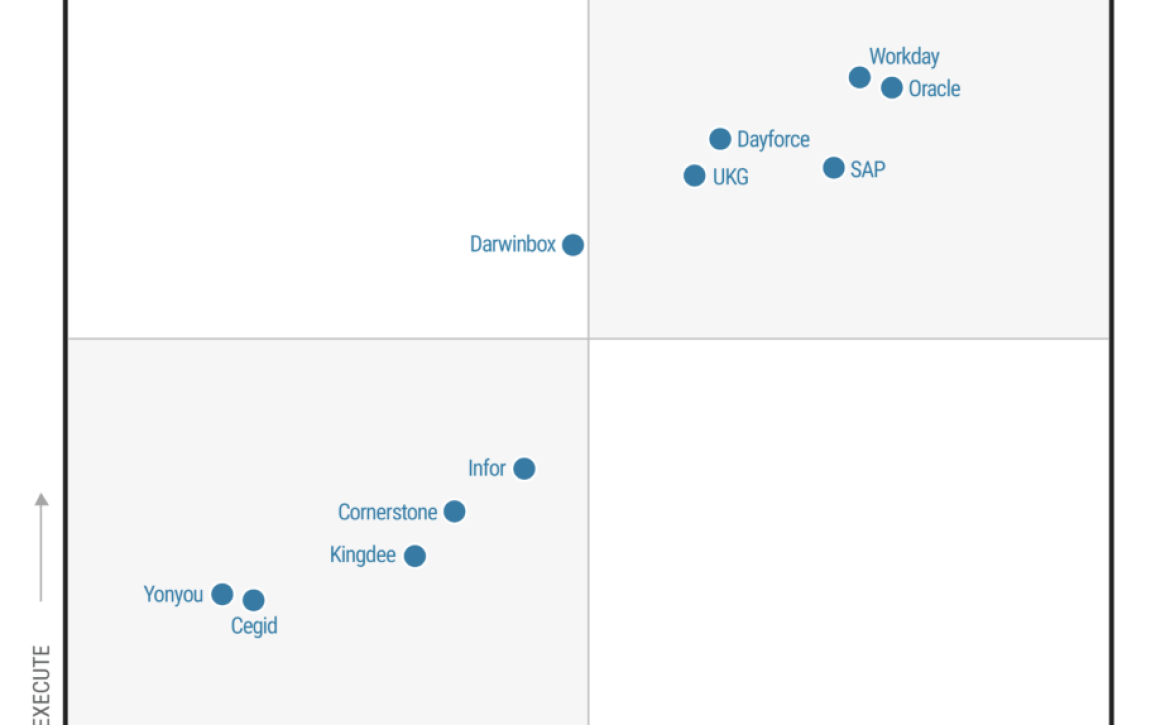
SAP Named a Leader in the 2026 Gartner® Magic Quadrant™ for Personalization Engines

SAP has been recognized as a Leader in the 2026 Gartner Magic Quadrant for Personalization Engines for the seventh time in a row.

We believe this recognition reflects the continued momentum of SAP Engagement Cloud in helping enterprises orchestrate real‑time, AI‑powered engagement at a global scale, connecting data, channels, and experiences to drive measurable business impact.

2026 Gartner Magic Quadrant for Personalization Engines; SAP appears in upper right quadrant
This graphic was published by Gartner, Inc. as part of a larger research document and should be evaluated in the context of the entire document. The Gartner document is available upon request from SAP.

Helping brands scale AI-powered engagement across channels

Leading brands—including Ferrara, John Frieda, PUMA, and Gibson—use SAP Engagement Cloud to deliver connected, personalized journeys that increase engagement, accelerate growth, and build long-term customer loyalty.

According to the report, SAP’s ability to support enterprise‑grade, real‑time engagement across channels remains a key differentiator. SAP’s personalization capabilities are powered by advanced segmentation, embedded AI decisioning, and intelligent triggering to deliver timely, relevant, and consistent experiences.

Organizations using SAP continue to see measurable outcomes, including improved customer loyalty, higher conversion rates, and increased average order value.

Driving measurable business impact with event‑based and behavior‑led orchestration

We believe this year’s placement also reflects SAP’s strength in orchestrating engagement using real‑time behavioral, transactional, and operational signals across the business.

With SAP Engagement Cloud, brands can activate journeys triggered by events occurring across their business to:

  • Boost retention through timely, context‑aware engagement
  • Increase conversions with more relevant, personalized interactions
  • Strengthen loyalty through connected, lifecycle-driven touchpoints

These results demonstrate SAP’s ability to move enterprises beyond channel execution toward true omnichannel orchestration.

Unifying customer experiences with native SAP integration

SAP Engagement Cloud connects marketing, commerce, service, loyalty, sales, and operational data, creating a unified, real-time customer view that powers intelligent engagement across every touchpoint.

This bi‑directional flow of data gives every customer‑facing team access to the same real‑time customer view, helping brands drive revenue impact, reduce churn, and improve service outcomes.

Global scale, flexibility, and trust

SAP’s long‑standing global footprint and enterprise-ready architecture continue to support its leadership positioning. With a cloud‑native, composable foundation, embedded privacy and compliance capabilities, and a robust partner ecosystem, SAP enables organizations to securely and reliably scale personalized engagement across regions and business models.

Whether operating in five markets or 50, enterprises rely on SAP to deliver personalized experiences with confidence.

Customer success reflecting real‑world impact

Customers on Gartner® Peer Insights™ continue to recognize SAP for ease of integration, deployment support, and customer partnership. Recent examples include:

  • Grupo Axo, which uses SAP for CRM and marketing automation that supports interaction and communication with customers to increase buyback, retention, and loyalty. This includes CRM ads, push notification apps, personalization campaigns, e-mail and SMS campaign execution, and website and app personalization and recommendations.
  • Molton Brown, which increased sales by 30% in three years by using SAP solutions, to interact directly with customers within highly personalized omnichannel journeys.
  • CHRIST, which saw a more than 40% increase in CRM revenue and more than 150% in commerce traffic during the holiday season by using SAP Customer Experience solutions that empower CHRIST to put customers at the center of everything the company does.

These results highlight the tangible value organizations are achieving with SAP’s AI-powered personalization capabilities.

We feel SAP’s recognition as a Leader in the 2026 Gartner Magic Quadrant for Personalization Engines underscores the strength of its strategy and continued innovation across SAP Engagement Cloud. SAP remains committed to helping brands activate data, personalize interactions, connect experiences, and scale engagement with confidence.

Visit SAP Engagement Cloud area of sap.com to download the full 2026 Gartner Magic Quadrant for Personalization Engines report.


Sara Richter is CMO of SAP Emarsys.

Sign up for the SAP News Center newsletter to receive regular updates

Gartner and Magic Quadrant are trademarks of Gartner, Inc., and/or its affiliates.
Gartner, Magic Quadrant for Personalization Engines, By Penny Gillespie, Jason Daigler, Michael Ro, Ross Cosner, 3 February 2026
Gartner does not endorse any vendor, product or service depicted in its research publications and does not advise technology users to select only those vendors with the highest ratings or other designation. Gartner research publications consist of the opinions of Gartner’s Research & Advisory organization and should not be construed as statements of fact. Gartner disclaims all warranties, expressed or implied, with respect to this research, including any warranties of merchantability or fitness for a particular purpose.

AI, Sustainability, and the New Blueprint for Supply Chain Resilience in 2026

As we enter 2026, volatility and uncertainty have accelerated rather than eased, which puts additional pressure on global supply chains. At the same time, we are hearing from so many of our customers that technology is no longer just part of the supply chain story, but the solution to some of its toughest challenges. From geopolitical uncertainty to rising customer expectations, supply chain leaders are facing mounting pressure to deliver resilience, agility, and sustainability. The good news is that innovations like agentic AI and advanced analytics are no longer theoretical; they’re transforming workflows today, at scale.

The past few years have taught us that disruption is the new normal. Whether it’s global conflicts, raw material shortages, or sudden demand spikes, supply chains need to pivot faster than ever. That’s why this year, the conversation isn’t about incremental improvements—it’s about reimagining processes with intelligent technologies that anticipate, adapt, and act autonomously.

From complexity to clarity: how agentic AI changes the game

Agentic AI is reshaping supply chains, and we’re already seeing real value in practice:

Listen to the Future of Supply Chain podcast interview to learn more
  • Supplier onboarding in hours, not weeks: Companies can drive substantial efficiencies by collaborating more deeply with their suppliers, such as material or logistics providers. AI agents autonomously validate supplier credentials, check compliance, and integrate them into your network, cutting onboarding time by up to 50%.
  • Predictive maintenance and service that prevents downtime: Instead of reacting to failures, AI agents monitor equipment health and trigger proactive service, reducing unplanned outages by 30%.
  • Autonomous disruption handling: When short-term disruptions or opportunities arise to demand or supply levels, AI agents evaluate events and alerts, model scenarios, and drive action while keeping humans in the loop. If critical inventory needs to be shifted for example, agents place orders automatically, optimizing stock levels and reducing lead times by 25%.

These aren’t distant possibilities—they’re real scenarios already piloted by SAP Supply Chain customers. AI isn’t replacing people; its amplifying human decision-making, freeing teams to focus on strategy rather than firefighting.

Why this matters: analyst rankings tell the story

SAP solutions underpin strategies that earned recognition in major 2025 analyst reports, including:

These accolades aren’t just badges of honor. They validate the trust our customers and partners place in SAP and the impact we deliver together. They also reinforce a critical truth: supply chain excellence is now a boardroom priority.

Sustainability: from obligation to advantage

Sustainability isn’t just a compliance checkbox; it’s a competitive edge. More than 25% of global emissions are already taxed or regulated by trading systems. Circularity and carbon accountability have become core KPIs for supply chain leaders because responsible practices deliver measurable benefits. Meeting environmental, social, and governance (ESG) standards lowers regulatory and reputational risk, while optimizing logistics for lower emissions often translates into fewer miles traveled and reduced fuel costs. At the same time, customers and investors increasingly favor brands with transparent sustainability metrics, making it a powerful differentiator in the market.

SAP solutions help companies measure emissions, enable ESG compliance, and embed sustainability data deep into operational decision-making for procurement, logistics, dispatching, and planning. This turns sustainability into a lever for growth rather than a reporting exercise. In fact, companies recognized in Gartner’s rankings often cite sustainability as a driver of resilience and profitability. When businesses can prove carbon accountability and circularity, they’re not just meeting regulations, they’re building trust and unlocking new market opportunities.

Looking ahead: our 2026 roadmaps

In 2026, our priorities center on enabling supply chains that are more intelligent, more connected, and more resilient. We are deepening our investment in agentic AI to support end-to-end value streams such as integrated business planning, sales and operations execution, digital manufacturing, and logistics execution. The goal is to bring AI directly into processes where decisions are made so planning becomes more predictive and execution becomes more automated. Over time, organizations will entirely redesign workflows and decision-making processes for the true step-change in agentic AI.

We are also advancing our capabilities in supply chain orchestration. As global supply chains operate increasingly across networks, companies need a coordinated layer that unifies planning, procurement, manufacturing, and logistics with partner ecosystems. This year, we will continue strengthening how our solutions identify risks in the n-tier network of complex supply chains by synchronizing data, prescribing decisions and actions across the enterprise and the broader network, and helping customers manage disruptions end‑to‑end with greater speed and clarity.

Finally, we remain focused on data excellence. Reliable, harmonized data is essential for AI-driven decisions and for orchestrating the supply chain. In 2026, we are continuing to enhance master data consistency, improve network-wide data quality, and support AI‑ready data models that help ensure our customers can trust and operationalize their insights at scale.

Together, these areas form the backbone of the innovations we are delivering this year, with a clear aim of helping customers move from reactive operations to intelligent, proactive orchestration. But technology alone isn’t enough. The real magic happens when we collaborate with our customers and our partners, turning complexity into opportunity.

The takeaway: 2026 is about action at scale

The supply chain landscape is evolving faster than ever. Agentic AI, sustainability, and intelligent automation aren’t optional, but essential. Companies that embrace these technologies to truly evolve how they operate and take even complex decisions will lead in resilience, efficiency, and responsibility. Those that hesitate risk falling behind in a world where adaptability is the ultimate competitive advantage.

Don’t wait for disruption to force your hand. Build the capabilities now that will carry you through uncertainty and position you for growth. Learn more about SAP’s AI-powered solutions here.


Dominik Metzger is president and chief product officer of SAP Supply Chain Management.

Get the latest SAP news delivered to your inbox once a week

*IDC MarketScape: Worldwide Multi-Enterprise Supply Chain Commerce Network 2025 Vendor Assessment, November 2025, IDC #US53010225
**IDC MarketScape: Worldwide AI-Enabled Asset-Intensive Enterprise Asset Management Applications 2025–2026 Vendor Assessment, December 2025, IDC ID # US52977525
***IDC Magic Quadrant for Cloud ERP for Product-Centric Enterprises, October 2025, IDC ID# G00826212

SAP Is a Leader in the 2025 Gartner® Magic Quadrant™ for Configure, Price, and Quote Application Suites

We are pleased to share that for the eighth consecutive year, Gartner has named SAP a Leader in its Magic Quadrant for Configure, Price, and Quote Application Suites.

SAP CPQ enables organizations—however complex, across however many channels, and regardless of which CRM they run—to produce quick and accurate quotes, accommodating the most advanced configuration and pricing requirements, resulting in a better sales experience and faster sales cycles.

2025 Gartner Magic Quadrant for CPQ Application Suites; SAP appears in upper right quadrant
This graphic was published by Gartner, Inc. as part of a larger research document and should be evaluated in the context of the entire document. The Gartner document is available upon request from SAP. Click to enlarge.
2025 Gartner Magic Quadrant for Configure, Price, and Quote Application Suites

Gartner evaluated 16 vendors and named SAP a Leader based on our Ability to Execute and Completeness of Vision. We believe this recognition serves as an acknowledgment of SAP’s ongoing commitment to providing customers with a CPQ solution that can meet and exceed their needs. 

SAP CPQ is an essential component of the SAP product portfolio that help automate the quote-to-cash process, which enables organizations to convert sales opportunities into profitable repeat customers. SAP customers can transform to “everything-as-a-service” with innovative revenue models, quickly adapt to market changes, support multiple sales channels, and support regulatory compliance with end-to-end automation.  

Our customers are the reason we do this, and they participated in the Gartner Peer Insights process by providing reviews that included: 

  • “It just makes the whole sales cycle move faster.”
  • “It was relatively simple to onboard when I was a new user” platforms and creating value for customer.”
  • “We had a very positive experience with SAP, the platform is scalable, stable.”
  • “An intuitive user interface that simplifies configuration, robust integration capabilities. Powerful customization options.”
  • “SAP CPQ is amazingly stable and consistent product with the ability to connect with different platforms and creating value for customer.”

Customer case studies provide descriptions of specific value. For example, EXFO Inc, has increased the number of quotes created per month by 70 percent. 

“You basically give the salesperson one to two days of their week back by using SAP CPQ,” noted Dominic Kasten, director of Sales Technologies for Cleaver-Brooks. “When you give time back to salespeople, you are encouraging them to sell solutions to customers instead of just reacting to specifications.”

Hear from other customers and learn more about how SAP helps to automate quote-to-cash with SAP CPQ, SAP Billing and Revenue Innovation Management, SAP Subscription Billing, and SAP S/4HANA Cloud at sap.com.


David Imbert is head of Product Marketing for Finance at SAP. 
Lawrence Martin is chief product officer for Finance at SAP. 

Get news and stories delivered each week via the SAP News Center newsletter

Gartner, Magic Quadrant for Configure, Price, and Quote Application Suites, Luke Tipping, Mark Lewis, January 22, 2026 
Gartner does not endorse any company, vendor, product or service depicted in its publications, and does not advise technology users to select only those vendors with the highest ratings or other designation. Gartner publications consist of the opinions of Gartner’s business and technology insights organization and should not be construed as statements of fact. Gartner disclaims all warranties, expressed or implied, with respect to this publication, including any warranties of merchantability or fitness for a particular purpose.
Gartner and Magic Quadrant are a trademark of Gartner, Inc., and/or its affiliates. This graphic was published by Gartner, Inc. as part of a larger research document and should be evaluated in the context of the entire document. The Gartner document is available upon request from SAP. 

SAP Introduces New Capabilities to Advance Pay Equity and Help Ensure EU Pay Transparency Compliance

It’s no secret that organizations with fair and transparent pay practices earn greater employee trust and a stronger brand reputation. According to the latest Mercer Global Pay Transparency Report, when prospective candidates and current employees have clear visibility into how compensation decisions are made, organizations typically see increased engagement, enhanced productivity, and improved talent attraction and retention.

To date, many employers have approached pay equity at their own pace, but a new era is beginning, one that will redefine pay practices and workplace culture for organizations across the European Union (EU). Set to take effect across EU Member States in 2026, the EU Pay Transparency Directive (EU Directive 2023/970) strengthens the principle of “equal pay for equal work or work of equal value” as enshrined in EU law, requiring employers to adopt transparent pay practices and close gender pay gaps or face potential legal and financial consequences.

SAP SuccessFactors HCM can provide a single source of truth for the critical data-driven insights needed to help organizations meet EU pay transparency requirements. Today, SAP is announcing new capabilities that can make it even easier for organizations to meet their requirements across EU countries.

Launching in 1H 2026, EU Pay Transparency Insights is a new capability within the People Intelligence package in SAP Business Data Cloud (SAP BDC), an intelligent, AI-powered application that can deliver ready-to-use, actionable insights to help leaders make more informed decisions. EU Pay Transparency Insights enables organizations to analyze compensation, identify outliers, and address pay gaps, helping them meet reporting requirements while unlocking the workforce and business performance benefits of achieving true pay equity.

Make your workforce unstoppable with a flexible set of AI-powered applications that bring your people, data, and processes together

Three requirements every employer must meet—and how SAP SuccessFactors HCM supports them

The EU Pay Transparency Directive represents one of the most sweeping changes to workplace compensation in decades. To meet its requirements, organizations will need to reassess their current HR data management capabilities and processes and begin planning now. As countries move toward putting the directive into law by June 2026, some obligations may already apply, with others set to take effect as soon as national laws are enacted. And because pay gap reporting deadlines vary by organization size—starting in 2027 for employers with 150 or more employees and based on 2026 workforce data—organizations must act now to be ready. 

SAP SuccessFactors HCM is uniquely positioned to support organizations in addressing the three key requirements outlined in the directive—gender pay gap reporting, employee pay transparency, and candidate pay transparency—with several capabilities already available today and advanced analytics for gender pay gap reporting delivered through EU Pay Transparency Insights in 1H 2026.

1. Gender pay gap reporting

Once national laws are in place, employers will be required to disclose their gender pay gaps on a predefined schedule, and any gap of 5% or more must be explained or mitigated with a joint pay assessment. With EU Pay Transparency Insights within People Intelligence in SAP BDC, organizations will be able to access rich workforce insights to analyze compensation and identify drivers behind pay gaps, giving them the information they need to generate actionable reports with a complete view of workforce equity in a single place.

Screenshot of outlier analysis and compliance reporting charts in EU Pay Transparency Insights

2. Employee pay transparency

In accordance with the directive, employees have the right to request information on average pay levels by gender for comparable roles. By leveraging the powerful document generation capabilities in SAP SuccessFactors HCM, employers can provide employees with a self-service experience to display individual pay transparency statements directly from the People Profile in SAP SuccessFactors Employee Central. These statements can give clear insight into the employee’s annual pay and the average pay of the same worker category broken down by gender.

Screenshot showing document generation of individual pay transparency information reports

3. Candidate pay transparency

Employers will be required to disclose pay ranges in job advertisements or before interviews. They will also be prohibited from asking applicants about salary history. SAP SuccessFactors solutions help enhance pay transparency by enabling employers to display pay ranges directly within job postings published through SAP’s recruiting solutions, including SAP SuccessFactors Recruiting and SmartRecruiters.

Screenshot showing compensation range transparency in job posting

In addition to these SAP SuccessFactors capabilities, SAP continues to work with our vast partner ecosystem to support pay parity and pay transparency efforts.

An opportunity to lead with accountability

The EU Pay Transparency Directive sets a new baseline for accountability in how organizations manage and disclose pay. By preparing early and partnering with SAP, organizations can deliver transparent compensation insights, empowering employees with a clear view of their total rewards and career journey and supporting HR professionals in making consistent and measurable decisions with confidence. With continuous innovation and trusted localized expertise, SAP helps organizations stay on top of changes and build a sustainable, employee-centered approach to pay equity across the EU.

Learn more about how SAP SuccessFactors HCM can help your organization stay compliant with the EU Pay Transparency Directive in the “Ready on Day One: Confidently Navigate the EU Pay Transparency Directive” webinar.


Dan Beck is general manager and chief product officer for SAP SuccessFactors.

Sign up to receive weekly news highlights from the SAP News Center

Previous Next
Close
Test Caption
Test Description goes like this