How SAP and Google Cloud Are Advancing Enterprise AI Through Open Agent Collaboration, Model Choice, and Multimodal Intelligence

AI is increasingly embedded everywhere in business operations, powering automation, insight, and decision-making across systems and workflows. As part of our ongoing partnership with Google Cloud, SAP is enabling the next wave of enterprise AI by contributing to the new Agent2Agent (A2A) interoperability protocol, which establishes a foundation for AI agents to securely interact and collaborate across platforms.

Boost productivity with the most powerful AI and agents fueled by the context of all your business data

This work is complemented by two additional areas of progress: first, the expansion of Google Gemini models in SAP’s generative AI hub on SAP Business Technology Platform (SAP BTP); second, the use of Google’s video and speech intelligence capabilities to support multimodal retrieval-augmented generation (RAG) for video-based learning and knowledge discovery in SAP products.

Together, these efforts reflect a shared commitment to deliver enterprise-ready AI that is open, flexible, and deeply grounded in business context.

Bringing AI agents together: laying the groundwork for interoperability

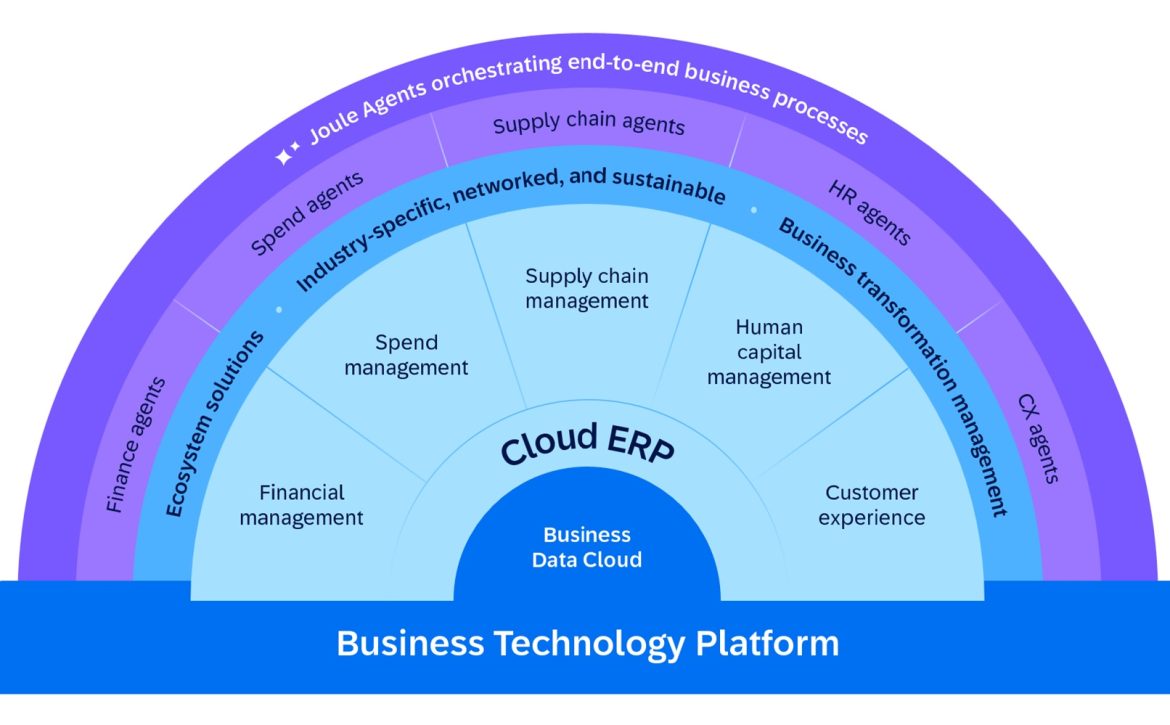
The future of work is agentic. Businesses are increasingly deploying AI agents that assist with real tasks — resolving customer issues, managing approvals, and collaborating across business functions. This is why SAP is delivering a collaborative agent architecture with Joule to support cross-functional agentic workflows across SAP Business Suite.

But for these agents to deliver real value, they cannot operate within a single vendor landscape. They must be able to collaborate across various platforms, securely exchange information, and coordinate actions across complex enterprise workflows.  This need for seamless interaction underscores why the A2A protocol represents a significant step beyond simple API integrations or enhanced tooling.

That’s why SAP has joined Google Cloud and other enterprise leaders as a founding contributor to the new A2A protocol. This open standard is designed to ensure agents from different vendors can interact, share context, and work together—enabling seamless automation across traditionally disconnected systems.

Consider a customer dispute resolution scenario: a representative receives a billing inquiry via Gmail. Instead of toggling between tools, they can invoke Joule directly from the email. Joule, acting as an agent orchestrator, initiates a dispute resolution process, engaging another Google agent that connects to Google BigQuery, where relevant transactional warehouse data resides. Together, the agents validate the issue, retrieve insights, and recommend a resolution — without manual system switching, data reconciliation, or context loss.

This is the kind of cross-platform collaboration the A2A protocol is designed to enable: AI agents working together to accelerate business outcomes, reduce friction, and enable people to focus on more strategic work. It also reinforces SAP’s vision for Joule as an agent orchestrator working across enterprise workflows: interoperable, proactive, and deeply connected to business context.

Expanding access to Google models in generative AI hub

Beyond agent interoperability, SAP is furthering its commitment to openness and flexibility by expanding access to Google models in the generative AI hub, a key capability of the AI Foundation on SAP BTP.

Through the generative AI hub, customers gain enterprise-grade access to a curated portfolio of leading foundation models. That portfolio now includes Google Gemini 2.0 Flash and Flash-lite, which join the existing support for Gemini 1.5 models already available through the hub.

This expanded model choice gives customers the flexibility to build and extend AI-driven solutions using high-performance, low-latency models optimized for enterprise workloads — while staying within SAP’s secure, business context-rich environment.

By combining Google’s model innovation with SAP’s deep understanding of enterprise processes, we enable customers to apply generative AI in ways that are not only powerful, but also practical, trustworthy, and fully aligned with how businesses operate.

Unlocking multimodal understanding with Google Video Intelligence

As part of our continued collaboration with Google Cloud, SAP is also advancing multimodal RAG, a highly requested capability among SAP customers, especially for video-based learning content.

Multimodal RAG enhances information retrieval and generation by integrating multiple data modalities — text, images, audio, and video — into a single, structured process. This approach enriches knowledge sourcing and elevates how users interact with training and support materials.

To address the complexity of extracting meaningful insights from video content, SAP leverages Google Video Intelligence for on-screen text detection across video frames, and Google’s Speech-to-Text API for accurate transcription of spoken audio. During the indexing process, these outputs are stored with corresponding timestamps, creating a structured foundation for retrieving relevant video segments with precision.

By grounding audio and visual content with time-aligned metadata, SAP enables users to search and retrieve specific, contextually relevant moments within a video, making the learning experience more intuitive, accessible, and impactful.

“As agentic AI evolves, seamless handling of multi-modal data — text, voice, enterprise videos, and images — becomes paramount,” said Miku Jha, director of AI/ML and Generative AI at Google Cloud. “This introduces significant challenges for agent interoperability. An open protocol like A2A is therefore indispensable, providing the necessary framework and flexibility for agents to effectively communicate and collaborate across these diverse modalities. Multi-modality is not simply a capability; it is a foundational requirement driving the next generation of interconnected agentic systems.”

This is another example of how SAP is integrating Google’s AI capabilities into business-relevant scenarios, helping customers unlock more value from their unstructured content and elevate the way knowledge is delivered across the enterprise.

Shared vision for business AI

These efforts reflect a broader strategic alignment between SAP and Google Cloud: a shared belief in AI that is open, composable, and grounded in real business context. Whether it’s shaping emerging standards for agent collaboration, providing choice through best-in-class models, or making unstructured content actionable, we are focused on helping our customers innovate with confidence — today and into the future.

To learn more about how SAP and Google Cloud are shaping the future of enterprise AI, visit sap.com/ai and explore our session at Google Cloud Next to see these innovations in action.


Walter Sun is senior vice president and head of AI at SAP.

Subscribe to the SAP News Center newsletter and get stories and highlights delivered straight to your inbox each week

SAP Named a Leader in Sales Performance Management by IDC MarketScape

SAP has been named a Leader in the IDC MarketScape: Worldwide Sales Performance Management 2025 Vendor Assessment.* We believe this recognition reflects our continued focus on helping customers drive business outcomes with intelligent, integrated, and data-driven sales performance management (SPM) solutions.

Empower your sales team with the tools they need to create effective sales experiences

Sales organizations today are under pressure to hit ambitious targets while navigating constant market change. As the IDC MarketScape report notes, “According to IDC’s October 2024 Worldwide C-Suite Tech Survey, 39% of C-suite sales leaders identified SPM as their top technology initiative for the coming year (i.e., 2025).”

A modern SPM solution is not just about compensation; it’s about real-time visibility, accurate forecasting, and strategic sales planning.

Sales performance management solutions from SAP help businesses automate and streamline everything from incentive compensation and quota planning to territory management and AI-powered forecasting. By integrating sales data across systems and surfacing it through real-time dashboards and predictive insights, SAP helps organizations optimize sales operations and boost performance — without spreadsheets or manual workarounds.

Why SAP was named a Leader

The IDC MarketScape noted the following strengths for SAP:

  • “Comprehensive. SAP’s sales performance management software offers a comprehensive suite of tools for optimizing sales processes and driving revenue growth. Key strengths include seamless integration with other SAP systems, providing a unified platform for sales data and operations. SAP’s broad product portfolio and robust integration capabilities also enhance its end-to-end performance management capabilities and its market reach.”
  • “Industry expertise. SAP brings deep industry expertise to sales performance management, leveraging decades of experience across diverse sectors. Its solutions are tailored to meet the unique compensation challenges of highly regulated and complicated industries such as manufacturing, healthcare, and financial services.”
Source:  "IDC MarketScape: Worldwide Sales Performance Management 2025 Vendor Assessment", By Michelle Morgan, February 2025, IDC #US52419925
Source:  “IDC MarketScape: Worldwide Sales Performance Management 2025 Vendor Assessment”
By Michelle Morgan, February 2025, IDC #US52419925

IDC MarketScape vendor analysis model is designed to provide an overview of the competitive fitness of ICT suppliers in a given market.  The research methodology utilizes a rigorous scoring methodology based on both qualitative and quantitative criteria that results in a single graphical illustration of each vendor’s position within a given market. The Capabilities score measures vendor product, go-to-market and business execution in the short-term. The Strategy score measures alignment of vendor strategies with customer requirements in a 3-5-year timeframe. Vendor market share is represented by the size of the circles. Vendor year-over-year growth rate relative to the given market is indicated by a plus, neutral or minus next to the vendor name.

Supporting sellers and strategy, together

SPM solutions from SAP support both sales leaders, with the tools to drive strategy and planning, and sales reps, by increasing trust, transparency, and motivation. From automated payouts to real-time quota tracking and intuitive performance dashboards, the solutions enable sellers to focus more on what they do best: selling.

Seeing the impact of sales performance management

Customers globally and across industries are modernizing their sales operations and driving better outcomes with SPM solutions from SAP.

Kyndryl, one of the world’s largest IT infrastructure services providers, recently adopted SPM solutions to replace manual, spreadsheet-based processes. With the implementation, the company has accelerated compensation cycles, improved transparency for sales reps, and streamlined its global operations.

Heartland Dental, the largest dental support organization in the U.S., turned to SAP to consolidate its compensation systems as it rapidly scaled. With SPM solutions, Heartland has gained improved accuracy, faster payouts, and greater agility in managing complex sales incentives across a growing network.

Looking ahead

As the sales performance management market rapidly evolves, SAP is committed to continuously innovating in areas like AI, scenario modeling, and sales forecasting so customers can stay ahead of the curve—and ahead of their quotas.

Read the IDC MarketScape excerpt here and learn more about sales performance management solutions from SAP here.


Rob Hartsough is general manager and senior vice president of SAP Sales Performance Management at SAP.

Subscribe to the SAP News Center newsletter to get stories and highlights delivered straight to your inbox each week

*Doc #US52419925, February 2025

SAP Business Network, Promote Subscription Makes It Easier Than Ever for Suppliers to Shine

In today’s fast-paced business world, suppliers often face significant challenges growing their business. The process can be time-consuming, expensive, and fraught with obstacles.

Get noticed, increase sales, and grow relationships with SAP Business Network, promote subscription

SAP’s game-changing solution, SAP Business Network, promote subscription, is now available globally to help suppliers overcome these hurdles.

This innovative commercial offering is designed to amplify a supplier’s discoverability and provide a comprehensive suite of value-added features. The promote subscription empowers suppliers to differentiate themselves on SAP Business Network, attract new customers, and ultimately grow their business in ways previously unimaginable.

Building trust, streamlining procurement

At the heart of this new offering is the understanding that trust is paramount in any new business relationship. Suppliers that opt for the promote subscription can verify their company details, establishing a solid foundation of trust for buyers seeking new sources of supply. This verification process not only enhances credibility, but also sets the stage for more meaningful and productive business interactions.

The promote subscription goes beyond traditional supplier discovery methods by seamlessly integrating with buyers’ SAP procurement applications. This integration enhances and simplifies the entire procurement process, creating a more streamlined and efficient experience for all parties involved. Moreover, the subscription leverages leading technology, including two generative AI features, to take supplier visibility and effectiveness to new heights.

Key features

Let’s delve into some of the features that make the promote subscription standout in the world of B2B commerce.

  • Verified status and profile badge: Subscribers gain a competitive edge by showcasing a verified badge on their company profile within SAP Business Network. This badge appears in search results and SAP procurement applications, such as SAP Ariba Sourcing and SAP Ariba Supplier Management, instantly boosting credibility and attractiveness to potential buyers.
  • Dedicated insights and analytics: The subscription provides suppliers with powerful tools to enhance their catalog performance. Through contextual calls to action, suppliers can leverage keyword recommendations, track profile traffic, and gain insights into the types of buyers viewing their company. This data-driven approach allows suppliers to increase their visibility in search results by taking actions, such as verifying their profile with targeted keywords and sustainability ratings.
  • Enhanced network catalog tools: Promote subscribers can effortlessly respond to inquiries, receive new orders, and upload their full suite of products and services onto the SAP Business Network catalog. This comprehensive catalog becomes searchable by SAP buyers, dramatically increasing exposure. Additionally, subscribers gain access to generative AI for enhancing product descriptions and summaries, as well as open APIs for automatic loading and maintenance of network catalogs.
  • Match and respond to qualified leads: The subscription enables suppliers to match with leads from SAP Business Network Discovery, SAP’s intelligent matchmaking solution. Suppliers can swiftly respond to requests for information by using generative AI to create their responses. They can also track performance with new discovery insights and take advantage of contextual calls to action, such as updating recommended keywords for better matching.

Revolutionizing supplier-buyer connections

The global availability of the promote subscription represents a significant leap forward in SAP’s commitment to fostering meaningful connections between suppliers and buyers. With this offering, SAP is improving the procurement process by leveraging generative AI to enhance supplier profiles and product descriptions. This provides valuable insights and analytics while creating a trusted environment where verified suppliers can showcase their offerings to potential buyers.

With millions of companies conducting more than $6.3 trillion in commerce annually on SAP Business Network, the promote subscription presents a substantial opportunity for suppliers worldwide to accelerate growth and expand their reach. As of now, all suppliers can easily access the new network storefront and add the promote subscription to their account with the simple click of a button. This annual subscription empowers suppliers with enhanced visibility and tools to boost their presence on SAP Business Network, regardless of their geographical location.

By simplifying complex processes, leveraging AI technology, and providing crucial insights, we’re not just facilitating transactions — we’re fostering lasting business relationships on a global scale. As we continue to fuel the largest B2B network in the world, we invite suppliers to join us in this exciting new chapter of digital commerce, where opportunities are boundless and success is within reach for businesses of all sizes.


Val Blatt is chief revenue officer for SAP Supply Chain Management.

Sign up for the SAP News Center newsletter and get stories and highlights delivered straight to your inbox each week

SAP Business AI: Release Highlights Q1 2025

When we said 2024 was only the beginning, we meant it. This year will be the most ambitious year for SAP Business AI yet, with a target of 400 embedded AI use cases across our cloud portfolio.

Get more done faster with AI that actually understands all your business processes and data

Customers are already doing so much with SAP Business AI, from easing the burden on public authorities for aid distribution to revolutionizing procurement in the energy sector. In 2025, we will build on these achievements with the same razor-sharp focus: providing our customers with unparalleled business value.

Joule already offers customers a unified experience across our suite’s end-to-end business processes. Now, as we enter the era of AI agents, Joule will equip customers with agents that genuinely understand their business context and collaborate across all functions. AI agents that alleviate manual supplier and contract checks before creating purchase orders or automatically classify and direct millions of service tickets to the right team. These AI agents are impactful because they are grounded in what makes our customers’ businesses unique – their processes, tools, and data – thanks to SAP Business Data Cloud and SAP Knowledge Graph.

When it comes to AI agents, our customers are just getting started. That’s because the possibilities are endless with Joule’s agent builder. Customers can create and deploy custom agents that, like our out-of-the-box agents, are uniquely grounded in their business processes and data. We are excited to see how our customers drive business value in 2025 and beyond.

Before diving into the complete updates below, here are some of the highlights from Q1 2025:

  • Joule is gaining a host of new capabilities, including support for 11 languages: English, German, French, Spanish, Portuguese, Japanese, Korean, Chinese, Vietnamese, Greek, and Polish. Strict filters are also coming for precise, personalized answers tailored to each user’s context. Joule’s responses are now streamed for real-time feedback during processing. This eliminates frustrating delays and ensures a smooth, interactive experience, even with complex queries. Joule is fully integrated into SAP S/4HANA Cloud Public Edition for enhanced context and effortless navigation. In Q1 2025, Joule’s unified experience is reaching more customers across more SAP solutions, so be sure to explore everything Joule in the sections below.
  • Less manual work and democratized access are the name of the game for SAP Business AI in business transformation management. Joule for developers is front and center with code generation and optimization across ABAP, SAP Build Code, and SAP BTP Cockpit. SAP Signavio Process Manager and SAP Signavio Process Intelligence let customers use natural language to create process diagrams (“text-to-process”) or generate analytical dashboards (“text-to-widgets”). SAP LeanIX has a new AI-assisted inventory builder that automates IT landscape documentation. There is so much more to check out about AI in Joule for developers, SAP LeanIX, and SAP Signavio below.
  • A lot is happening in SAP Business AI for finance and spend. AI-assisted enterprise search, personalized “My Home” page features, situation handling, and error explanations are all coming to SAP S/4HANA Cloud Public Edition. Joule also expands to S/4HANA Cloud Private Edition, automating journal uploads, service initiations, trade classifications, and more. Plus, additional AI updates are coming to Concur Expense. Dive into everything below.
  • SAP Business AI for procurement and supply chain are flush with new AI enhancements. Joule joins SAP Ariba and SAP Field Service Management for natural language navigation and task completion. SAP Ariba Category Management offers AI-assisted category recommendations to help streamline strategic planning. SAP Green Token introduces AI-powered declaration image analysis for automatic data extraction from supplier declarations. There is much more to see, so check out procurement and supply chain below.
  • SAP Business AI for IT and developers has a range of exciting tools that will increase productivity and efficiency. SAP Datasphere gets AI-powered content generation and natural language search, further evolving into our overall data strategy with SAP Business Data Cloud. Generative AI Hub in SAP AI Core and SAP AI Launchpad offers new large language models (LLMs) to ensure the best fit for customized AI use cases. Its new model library feature simplifies LLM discovery and selection with detailed model cards and one-click deployment and its grounding management feature simplifies the management of grounding pipelines, enabling developers to create, modify, and search repositories using natural language. The new SAP HANA knowledge graph engine enhances LLM responses by grounding them in business-specific knowledge. This is just the tip of the iceberg; jump into everything and more below.

The first quarter is off to a strong start, but 2025 will see us deliver more use cases — on top of the more than 200 features already available — across our entire range of solutions. Customers can stay updated with forthcoming SAP Business AI releases here.

SAP Business AI for business transformation management

SAP BTP, ABAP environment
SAP S/4HANA Cloud Public Edition
Joule for developers, ABAP AI capabilities
General availability

With Joule, developers can quickly generate precise, contextualized code snippets and explanations. Joule uses purpose-built LLMs designed for SAP workloads. The ABAP LLM, for example, powers code predictions and explanations, helping developers work more efficiently.

Joule can also provide developers with real-time, context-aware support for code completion and optimization and create automation pipelines that understand the customers’ application environment, development project artifacts, and SAP-specific syntax.

Key capabilities include:

  • Predictive code completion based on context, comments, and project heuristics
  • Code explanations of core data services view entities, classes, interfaces, and functional modules
  • AI-powered assistance for documentation, best practices, and new concepts
  • Workflow development and decision assistance based on processes, API specifications, and connected systems

With these ABAP AI capabilities in Joule, developers can expect up to a 20 percent*​ reduction in time and effort spent writing ABAP code and a 25 percent​* reduction in time and effort spent testing ABAP code.

In addition, the introduction of the ABAP AI SDK, powered by intelligent scenario lifecycle management, serves as an AI toolbox for ABAP developers. It allows them to use LLMs available through the generative AI hub in SAP AI Core and seamlessly infuse AI capabilities into their custom ABAP applications.

Beyond the Omnibus Headlines: How Businesses Should Respond

The recent EU Omnibus package may propose to ease the reporting burden for companies in the EU, but many headlines have in fact triggered uncertainty and alarm.

If we can cut through the noise, proactive business leaders can not only prepare for these changes but seize the opportunity to drive strategic business value and even transformation.

My key takeaways for business:

  • Large companies still have to report, while SMEs can gain an advantage through voluntary reporting
  • Streamlined and integrated data management remains key for compliance and business value creation
  • Get ahead by starting today

Sustainability regulations have been on a rollercoaster ride lately. To address concerns about the administrative burden, harmonization, and competitiveness, EU lawmakers have undertaken critical reviews of key policies, most notably the Corporate Sustainability Reporting Directive (CSRD).

Put sustainability at the core of your business with AI-driven solutions from SAP

Initial reactions to the Omnibus package ranged from celebratory to cautionary, with some media outlets pointing out “costly confusion” and even “catastrophic changes.” The slightest changes to any regulatory framework can spark confusion, but there is no need to panic. While still subject to final approval, the Omnibus package should provide companies extra time to prepare and reduced metrics to track.

Despite these proposed changes, business leaders should ensure their data management systems are equipped to handle the required sustainability metrics. Systems and processes for data management need to be instituted, KPIs identified, stakeholders managed — all of which takes time. As a rule of thumb, auditors recommend two years of preparation time before a reporting deadline hits. From automated collection and reporting to insights that drive measurable business value, an integrated data system has the potential to make sustainability data so much more than a mere component of compliance.

What are the changes in the Omnibus?

The Omnibus adjusts compliance thresholds, shifts reporting timelines, and removes the burden of CSRD reporting for small and midsize enterprises. Proposed changes include:

  • Companies not yet required to report on FY 2024 will have a two-year delay (until 2028) before they must report with the CSRD
  • Companies must have 1,000 employees and €50 million net turnover, or €25 million balance sheet to meet CSRD reporting threshold
  • Limited assurance requirements are implemented in place of reasonable assurance
  • Sector-specific reporting mandates have been eliminated
  • Value chain data is only required from suppliers that also meet the reporting threshold
  • Corporate Sustainability Due Diligence Directive (CSDDD) due diligence intervals increased from each year to every five years

All proposed changes are still subject to final approval.

What remains untouched in the Omnibus proposals?

Large European companies — those that were required to report with the Non-Financial Reporting Directive (NFRD) — are still required to report with the CSRD this year for FY 2024, and are required to continue reporting despite the proposal. The pool of companies required to report will still expand, but now with a two-year delay and the timeline for non-EU parent companies has not changed. Companies with a two-year delay will still need to start preparing at least 12 months ahead of their new reporting deadlines.

Supply chain emissions, double materiality assessments, KPI identifying and tracking, and transition planning are all still fundamental to the CSRD. Supply chain data insights are still requirements of the CSDDD and the Carbon Border Adjustment Mechanism (CBAM).

The metrics on which companies are required to report are likely to be reduced and simplified, but regulatory compliance still remains a data challenge that requires integrated solutions. For companies that are no longer required to report, voluntary reporting can prove beneficial if data insights are deployed strategically. With the right solutions, sustainability data can unlock valuable insights to improve business performance.

How can sustainability data improve business performance?

With all the new compliance measures businesses have to navigate, it can be easy to get reporting tunnel vision and lose sight of the wider goal: sustainable business outcomes and value creation for the business.

Rigorous sustainability reporting should drive operational efficiency. Combined with a wealth of sustainability data, supply chain scrutiny and systems analysis lay the groundwork for deriving strategic business value. For example, sustainability data supports effective risk management through visibility into risks and their strategic and financial impacts, lowers costs by creating efficiency gains, and provides the insights needed to take action.

Collecting and managing data to comply with sustainability regulations requires data management software. The bare bones solution is the helpful, yet error-prone, Excel spreadsheet, while at the opposite end of the data management spectrum is the ERP-centric system.

The spreadsheet might manage to painstakingly serve the compliance function, but it lacks the ability to provide real-time insights that align sustainability goals with financial goals. What’s worse is that after data is collected and reported, it lives — and dies — on the spreadsheet, offering no added value, and certainly driving no business transformation.

In contrast, by using an ERP-centric system, data needed to comply with sustainability regulations can be pulled, aggregated, and integrated into business systems like finance, procurement, and HR. In fact, an ERP-centric system can provide access to as much as 85 percent of the quantitative data required for CSRD compliance.

ERP systems are the catalyst for strategic business transformation and streamlined regulatory compliance. ERP combined with SAP Sustainability solutions can provide access to sustainability data that permeates all business functions. Business leaders obtain the necessary insights to reduce carbon and material usage, accelerate CSRD compliance, and accurately measure the financial and sustainability impact of their decisions.

Get ahead by starting today

To stay ahead of current and upcoming regulations, streamlined and integrated management of data from operations and supply chain is essential. An ERP-centric approach can drive both sustainability and financial performance, with compliance being just the tip of the iceberg for ERP-centric sustainability data benefits.

Even with CSRD timelines extended for some companies, forward-thinking businesses have much to gain by continuing CSRD-aligned sustainability reporting now. This delay offers an opportunity to develop a strategic, technology-enabled approach to sustainability reporting that drives long-term business value.

Take action now and leverage SAP Sustainability solutions to transform your data management and sustainability reporting, ensuring your business not only complies but thrives in the evolving regulatory landscape. To learn even more about the Omnibus changes and how an ERP-centric system can benefit your business, read SAP’s latest white paper on mastering CSRD.

How to master the EU CSRD with SAP Sustainability solutions: New insights from the Omnibus proposal

Sophia Mendelsohn is chief sustainability and commercial officer at SAP.

Freight Trains

SAP Named a Leader in 2025 Gartner® Magic Quadrant™ for Transportation Management Systems

For the 11th consecutive year, SAP has been recognized as a Leader in the 2025 Gartner Magic Quadrant for Transportation Management Systems.

Build and maintain a sustainable, risk-resilient supply chain with integrated transportation management

We believe this recognition represents SAP’s unwavering commitment to building sustainable, risk-resilient supply chains capable of withstanding the ever-shifting landscape of logistics operations.

A Gartner Magic Quadrant is a culmination of research in a specific market, offering a wide-angle view of the relative positions of the market’s competitors. SAP’s positioning as a Leader is based on our ability to execute and completeness of vision.

Our winning strategy

As global logistics continues to face complex and volatile conditions, companies require a 360-degree view of their operational processes. Businesses are now managing more data and disruptions than ever before while simultaneously striving to meet sustainability goals. At SAP, we understand the critical need for greater visibility to effectively manage demand shifts, evolving consumer expectations, and local regulations. Our transportation management strategy takes into account key trends affecting businesses, enabling us to deliver innovative solutions tailored to their needs.

SAP Transportation Management is a holistic, end-to-end solution that empowers businesses to efficiently manage their transportation operations. In an environment where many factors are beyond your control, you need a solution that can adapt to changes in routes, carriers, or demand, putting the power back in your hands. To achieve this level of control and agility, SAP Transportation Management leverages AI and a single-view, panoramic platform.

Innovative AI use cases
Data-driven insights, powered by AI, lead to faster decision-making and increased efficiency. Our AI-first strategy helps businesses remain responsive and proactive, ensuring a smooth flow of goods even — and especially — in the face of disruption. From automated goods receipts processing to conversational planning, AI drives new avenues for growth while providing improved productivity for transportation operations.

Supply chain convergence strategy
SAP’s logistics portfolio orchestrates processes between SAP Transportation Management, SAP Extended Warehouse Management, SAP Yard Logistics, and SAP Business Network for Logistics on a cohesive cloud platform. This single view across the logistics function helps eliminate blind spots and reduce complexity. With the power of SAP Business Network, businesses can maintain a constant understanding of the operational landscape and collaborate with carriers in real time. 

Why companies choose SAP

Today, companies worldwide and in dozens of industries trust SAP Transportation Management to enhance their logistics management strategy.

Unparalleled partner ecosystem
Digital collaboration is key to building relationships with implementation and technology partners. Our unmatched partner ecosystem enables point-to-point connection at every step. The ecosystem includes implementation and technology partners in every region of the world, providing support for SAP Transportation Management customers. Furthermore, SAP Business Network for Logistics allows businesses to transact on a continuously expanding network of partners, tapping into collective expertise and resources to ensure on-time delivery of goods while meeting sustainability goals. The true power of the network lies in streamlined communication and collaboration.

End-to-end visibility
Risk identification and mitigation is only possible with a comprehensive view across every point of the supply chain. SAP Transportation Management provides crucial data to other parts of the organization, from warehousing to customer service and accounting. Its planning capabilities allow organizations to promptly respond to disruptions such as production delays, carrier shortage, or delays at suppliers. Additionally, organizations can model constraints to ensure that transportation operations adhere to relevant laws and regulations, from customs to environmental regulations. Lastly, in combination with SAP Business Network, SAP Transportation Management includes visibility to goods in transit, providing stakeholders the necessary information to drive performance and customer satisfaction.

Recent innovations

The latest releases of SAP Transportation Management include new capabilities, such as:

  • Generative AI in the transportation cockpit, leveraging natural language for conversational planning, providing more human-centric work environment, and adapting to individual user needs
  • AI-assisted goods receipt analysis for faster freight receiving, reducing manual efforts and waiting times and improving productivity
  • Freight planning based on not just cost or time constraints, but also on minimizing CO2 emissions with the ability to allocate CO2 data down to the item level
  • Expanded 3D load planning capabilities
  • Continued enhancement of advanced shipping and receiving, orchestrating communication between SAP Transportation Management and SAP Extended Warehouse Management
  • Industry-specific innovations expanding on integration for just-in-time (JIT) and just-in-sequence (JIS) processes

Learn more about transportation management solutions from SAP.


Till Dengel is global head of Product Marketing for Logistics and Asset & Service Management at SAP.

Subscribe to the SAP News Center newsletter and get stories and highlights delivered to your inbox each week

Gartner does not endorse any vendor, product or service depicted in its research publications, and does not advise technology users to select only those vendors with the highest ratings or other designation. Gartner research publications consist of the opinions of Gartner’s research organization and should not be construed as statements of fact. Gartner disclaims all warranties, expressed or implied, with respect to this research, including any warranties of merchantability or fitness for a particular purpose.
GARTNER is a registered trademark and service mark of Gartner, Inc. and/or its affiliates in the U.S. and internationally, and MAGIC QUADRANT is a registered trademark of Gartner, Inc. and/or its affiliates and are used herein with permission. All rights reserved.

Entrepreneur explaining to colleague while sitting in office

The Transformative Power of SAP Business Network


New research from IDC shows how SAP Business Network can speed up product and order delivery, accelerate go-to-market speed, and deliver significant ROI to drive procurement success.


In today’s interconnected business landscape, procurement and supply chain management have evolved from back-office functions to strategic drivers of success. As organizations seek to build resilient, efficient, customer-centric supply chains, the adoption of innovative technologies becomes crucial. Enter SAP Business Network—a game-changing platform that’s revolutionizing how companies procure products and services and manage their end-to-end supply chains.

A recent IDC white paper, sponsored by SAP, titled “The Business Value of SAP Business Network—for Buyer Organizations,” reveals the remarkable impact of SAP Business Network on buyer organizations. The findings, based on in-depth interviews with existing customers across various industries, showcase the impressive improvements in efficiency, cost savings, and revenue growth. Let’s delve into the transformative power of this technology and how it’s reshaping the procurement landscape.

Accelerating revenue growth through agility and transparency

When organizations can better monitor and share global trend data across teams, they can respond to market demands quicker and accelerate their go-to-market strategy. According to the research, SAP Business Network empowered these organizations to:

  • Launch products and services 30% faster than before
  • Monitor global trends and redirect stock to high-demand areas with agility
  • Share real-time data and analytics across teams for quicker market responses

The result? An average annual revenue gain of $66 million, or $1.2 million per 100 trading partners. This impressive growth contributes to an average three-year ROI of 404% for organizations using SAP Business Network, with a payback period of just 14 months.

Maximizing efficiency from partner onboarding to order processing

Global supply chain success relies on making repetitive, but essential, tasks as efficient as possible. The respondents indicated that SAP Business Network delivered substantial improvements in this area:

  • Partner onboarding time reduced by 70% (from 54 days to 16 days)
  • Invoice processing time cut by 59% (from 16.3 days to 6.7 days)
  • Percentage of invoices processed without exception increased from 64% to 89%
  • 60% reduction in full-time equivalents (FTEs) responsible for invoice-related processes
No business does business alone: Connect across companies to build stronger supply chains

These efficiency gains were particularly significant given that procurement team sizes have remained steady despite increased focus on business strategy and execution. By automating repetitive tasks and providing real-time data for informed decision-making, SAP Business Network freed up team members to focus on strategic initiatives.

Similar effects were felt in procurement and supply chain planning, where respondents reported the number of FTEs necessary for these activities decreased by 19% and 47%, respectively.

Realizing millions in total cost savings

SAP Business Network provides capabilities to help streamline operations, reduce manual interventions, and optimize resource allocation across various functions. The result, as found through the research, was significant cost savings across departments for interviewed companies.

  • IT maintenance: Average annual savings of $6.59 million
  • Warehouse and logistics: Cost reductions totaling approximately $6.5 million annually
  • Inventory management: Optimized stock levels, with one pharmaceutical respondent reducing on-hand safety stock by 50%

In total, respondents experienced average annual cost savings of $13.58 million through reduced operational costs and improved efficiency.

Streamlining operations for enhanced performance

The impact of SAP Business Network on operational efficiency was truly impressive:

  • Unified IT infrastructure: Elimination of multiple systems, leading to streamlined operations
  • Enhanced supplier collaboration: Freeing up team members for strategic tasks
  • Improved order tracking and shipment utilization
  • Better demand forecasting and stock management

Real-world success

The transformative power of SAP Business Network is best illustrated through the experiences of its users. One pharmaceutical company reduced its on-hand safety stock by half, while others reported significant improvements in transportation processes and demand forecasting.

These success stories underscore the network’s ability to deliver tangible benefits across various industries and business functions. Real-time data and analytics helped companies respond to shifting market demands and capitalize on new opportunities, allowing organizations to launch products and services and get to market on average 30% faster than they did previously.

The findings from the IDC white paper paint a compelling picture of the potential of SAP Business Network to revolutionize procurement and supply chain management. By enabling faster go-to-market strategies, improving operational efficiency, and delivering substantial cost savings, the network is helping organizations thrive in an increasingly complex business environment.

As we look to the future, it’s clear that platforms like SAP Business Network will play a crucial role in shaping the next generation of procurement and supply chain excellence. Organizations that embrace this technology stand to gain a significant competitive advantage, driving growth and innovation in ways previously unimaginable.

Next steps

Ready to explore the potential impact of SAP Business Network on your organization? Here are some resources to help you get started:

Stay tuned for upcoming insights that will highlight the benefits of SAP Business Network specifically for suppliers, complementing the buyer-focused insights presented here. The future of procurement is bright, and SAP Business Network is leading the way in unlocking procurement and supply chain management potential and driving business success.


Tony Harris is SVP and head of Marketing & Solutions for SAP Business Network.

Sign up to receive weekly news highlights from the SAP News Center

Unleashing Manufacturing’s Potential: SAP’s Vision for an Adaptive, AI-Driven Future

In an era of rapid technological advancement and increasing complexity, the manufacturing industry faces unprecedented challenges. Companies worldwide must adapt to market changes while maintaining highly cost-efficient and productive supply chains. To thrive in this dynamic landscape, businesses need innovative strategies and technologies that go beyond isolated efficiency gains.

At SAP, we believe in empowering manufacturers to bring out their best. By connecting processes beyond the silos of individual functions and by converging and contextualizing critical data, we are laying the foundation to leverage cutting-edge technologies like generative and agentic AI. This strategy helps businesses build more sustainable, resilient networks that are adaptive to overcome unforeseen risks and seize bold new opportunities.

This vision will be on full display at Hannover Messe 2025, the world’s leading trade fair for industry, where we will showcase how SAP is revolutionizing manufacturing through the following key areas.

To learn more, tune into this recent episode of the Future of Supply Chain podcast: AI & Manufacturing: Smart Technologies for a New Era of Industry

New paths with SAP Business Suite

SAP Business Suite offers a comprehensive solution that transcends traditional ERP systems. By leveraging seamlessly integrated, end-to-end supply chain processes in the cloud, supported by context-rich business data and real-time analysis, artificial intelligence and predictive algorithms, we help companies manage their supply chains efficiently while responding to new requirements with agility.

In an era of mass customization, this agility is crucial for maintaining competitiveness. Transparent access to manufacturing data allows companies to manage their production capacities more flexibly and recover from short-term supply disruptions better. We empower companies to meet new customer requirements promptly and efficiently, reducing costs and shortening time-to-market for new products.

One example is Siemens Energy digitalizing service operations with SAP Field Service Management. This optimization of the entire service order process — from customer demand to spare parts planning and finally technician and tool planning, dispatching, and execution — allows manufacturers to streamline their operations and enhance overall efficiency in a single, unified experience.

Applications that drive excellence

In manufacturing, downtime is costly. That’s why our digital applications play a key role in vertically connecting machines and devices through critical manufacturing data with enterprise processes. By optimizing production processes, reducing downtime, and increasing transparency, we’re turning reactive maintenance into a predictive strategy.

SAP Digital Manufacturing provides manufacturers with the ability to coordinate complex and short-term changes to customer orders on the shop floor across multiple functions, ensuring smooth operations. Our new embedded IoT technology based on our partnership with Cumulocity AG in SAP Asset Performance Management allows operators to monitor asset health with plug-and-play simplicity. Meanwhile, the integration of SAP S/4HANA for product design and sourcing and SAP Integrated Product Development for collaborative product data management is enhancing collaboration with direct material suppliers, orchestrated through the SAP business network.

Real-world success stories, like SMA Solar Technology AG, demonstrate the tangible benefits of our solutions. SMA Solar achieved a 15 percent increase in supply chain workforce productivity, 10 percent improvement in overall supply chain planning costs, and 10 percent lower inventory carrying costs and stock turnover rate using SAP Digital Manufacturing for electronics manufacturing.

The power of data

To enable automation in mass production with individualized requests, companies need real-time integration of operational, sustainability, and business data. SAP provides real-time access to data-driven insights, eliminating delays and silos with instant access to unified data across SAP and non-SAP systems. This enterprise-wide operational alignment connects supply chain data with finance, human resources, and other business areas, streamlining processes and reducing costs.

SAP Business Data Cloud further enhances this capability by providing a comprehensive platform for data management and analytics. Moreover, our AI-powered predictions and insights help improve sustainability by optimizing energy consumption, eliminating waste, and minimizing environmental impact.

Integrating AI for greater efficiency

Companies today need to redefine their business management by integrating automation and AI-driven decision intelligence into their business processes. SAP solutions enhance productivity and efficiency across all business processes, from product development to execution and continuous process improvement.

SAP Integrated Business Planning (SAP IBP) offers planning analytics, what-if simulations, and real-time information for sustainable and risk-resilient decision-making. The new AI-assisted planning capabilities with SAP’s co-pilot Joule in SAP IBP allow supply chain planners to customize Excel add-in planning views using natural language commands, streamlining daily tasks and strategic decisions.

Joule revolutionizes SAP IBP by introducing intuitive conversational search, navigation, and transactional capabilities. By harnessing natural language processing, it effortlessly interprets user queries and instantly retrieves relevant information, significantly enhancing overall user productivity. This ability allows even highly experienced planners to understand the outcome of complex optimization and machine learning-based planning algorithms revolutionizing their user experience and ultimately increasing user adoption of these advanced AI-based technologies.

In SAP Digital Manufacturing and SAP Asset Performance Management, machine learning-guided visual inspection enables the execution of multiple inspection tasks such as for production and maintenance quality or even automates the process entirely, reducing human errors, improving product quality, and lowering operational costs.

Joule in SAP Integrated Product Development facilitates help-content discovery with conversational access to development documentation, covering idea-to-market processes such as collaboration, formulation, and handover. Users can inquire naturally, access relevant documentation, and receive concise summaries, enhancing efficiency and decision-making.

For the manufacturing industry, SAP Field Service Management with AI provides technicians quick access to equipment service history and key job details, improving diagnostics and first-time fix rates. This increases operational efficiency, reduces downtime, and enhances customer satisfaction.

Lastly, the integration of Joule with SAP Business Network Freight Collaboration allows transportation planners to use simple natural language searches to find order details and reduce manual errors by autonomously cross-referencing multiple data sources.

Join SAP at Hannover Messe 2025

Visit SAP in Hall 15, booth C19 at Hannover Messe 2025 to discover how our modern manufacturing, supply chain, and cloud ERP solutions can help your business, regardless of its size. Experience firsthand how we’re maximizing the impact of technology, running resilient and sustainable supply chains, and unlocking the power of business networks.

Meet our experts and industry-leading partners to learn how manufacturing and supply chain processes in the cloud can help you succeed in an AI-enabled world. Together, let’s bring out your best and shape the future of intelligent, sustainable manufacturing.


Dominik Metzger is president and chief product officer for SAP Supply Chain Management at SAP.

Design risk out of your supply chain from design to operate

SAP Named a Leader in Gartner Magic Quadrant for Source to Pay Suites

As the chief product officer for our spend management solutions, I am proud to share that Gartner has recognized SAP as a Leader in the 2025 Gartner® Magic Quadrant™ for Source to Pay Suites.

Manage all sources of spend for increased control and business resilience

This recognition, we believe, is a testament to our unwavering commitment to delivering innovative, comprehensive solutions that empower businesses to optimize procurement processes and enhance bottom-line results.

We feel it serves as validation for the strength of SAP Ariba offerings, and our continued focus on delivering experiences premised on data, intelligence, and suite.  We believe that in a dynamic and unpredictable world, a partner with the breadth and depth of SAP is uniquely positioned to unleash success on these principles across your business, and we are humbled by this recognition.

SAP’s source-to-pay offerings and investment focus areas

SAP Ariba has been a leader in the development of cloud-based technologies that help buyers and suppliers collaborate to unleash the power of procurement. As the first product to offer these services in a multitenant cloud framework, SAP Ariba has developed deep functionality to handle complexity, while its focus on user experience has enabled simplicity.  This has allowed an offering that can span all industries, all geographies, and all spend types. Our global customer base is proof of this achievement.

Our future focus is on ongoing innovation and improvement across our portfolio. Building use cases for intelligence is at the heart of our product strategy and defines the next generation of user experience for our products. Unparalleled applications in spend management have enabled our globally diverse customers to bring all spend under management: direct, indirect, MRO, and services.  This provides the world’s largest, unmatched dataset for procurement and is the fuel for the delivery of an unrivaled AI roadmap.

SAP’s AI copilot Joule simplifies complex tasks across the source-to-pay process. Each use case has been built to enhance productivity, allowing procurement organizations to achieve more with less. Joule’s agentic AI framework will be directly applicable and available for spend applications from SAP, allowing customers to build agents that can operate on data from across their business landscape.

While companies today are sometimes told to mind their business, SAP realizes that no business does business alone. Our product road map is predicated on collaborative trading partner experiences through SAP Business Network, the largest supplier network in the industry, operational in 190 countries. This is exemplified by SAP Ariba Category Management, a new product built with an AI-first mindset. Its category agents have value because they are business network-aware and process-aware; the product is integrated across the network and source-to-pay suite, as it helps develop a category strategy and then monitors execution.

SAP Spend Control Tower offers comprehensive visibility across all spend systems, with zero integration effort for data originating from SAP cloud ERP solutions, SAP Ariba solutions, SAP Fieldglass solutions, or SAP Concur solutions. Broadly speaking, this is fundamental to the overall strategy for SAP Business Data Cloud, ensuring all business applications speak the same language and enabling an unrivaled AI roadmap for the SAP Business Suite.

At the same time, SAP recognizes that the world of software applications is heterogenous. Our own application partner network is continuously expanding. And while SAP won’t develop capabilities to solve every problem, our customers still want an orchestrated suite experience, even when non-SAP products are involved in the workflow. That is why we have invested in the development of SAP Ariba Intake Management. Businesses need to automate procurement requests with one common workflow, regardless of how many applications are involved. And where SAP applications are involved, this suite experience is increasingly in-built, again with zero effort required for integration. Capabilities from SAP Fieldglass and SAP Taulia are being directly embedded into SAP Ariba to provide a unified experience.

Real-world impact

The power of source-to-pay solutions from SAP is best illustrated through the experiences of our customers. American Eagle Outfitters (AEO), a global specialty retailer, faced challenges in managing its high volume of suppliers and invoices. By implementing SAP Business Network and SAP Ariba solutions, AEO achieved 85 percent purchase order compliance (five percent above target), 75 percent invoice-count compliance for 48,000 annual invoices, and over $780 million in spend transacting on SAP Business Network.

Nick Bonacci, senior manager of Procure-to-Pay Services at AEO, noted, “SAP Ariba solutions and SAP Business Network help AEO simplify our procure-to-pay processes in several key ways. Through the use of SAP’s intuitive applications, compliant purchasing protocols are now embedded into our broader organization, helping us maximize cost savings, optimize working capital, and strengthen vendor relationships.”

Similarly, Adani Enterprises Limited, implemented SAP Business Network and SAP Ariba solutions, achieving 94 percent first-time-right invoices in digital channels, 4,000 hours saved in one year in processing invoices, and over 8.5 million pieces of paper saved in one year with supplier digitalization.

Mukesh Ralhan, group head of Business Excellence and Strategic Initiatives at Adani, commented, “We process close to 100,000 purchase orders every year, with more than US$20 billion of spend. That’s huge for a company. Without SAP software such as SAP Ariba solutions supporting a single platform, that would not be possible.”

Looking ahead

SAP remains dedicated to delivering solutions that help businesses navigate the complexities of modern procurement. Our focus on customer success, coupled with our deep industry expertise and innovative technology, positions us to continue leading the way in source-to-pay solutions.

Learn more about source-to-pay solutions from SAP here.

Read the full Gartner Magic Quadrant for Source to Pay Suites report.


Manoj Swaminathan is president and chief product officer for SAP Intelligent Spend Management and Application Foundation Services at SAP.

Subscribe to the SAP News Center newsletter and get stories and highlights delivered straight to your inbox each week

Gartner does not endorse any vendor, product or service depicted in its research publications, and does not advise technology users to select only those vendors with the highest ratings or other designation. Gartner research publications consist of the opinions of Gartner’s research organization and should not be construed as statements of fact. Gartner disclaims all warranties, expressed or implied, with respect to this research, including any warranties of merchantability or fitness for a particular purpose.
GARTNER is a registered trademark and service mark of Gartner, Inc. and/or its affiliates in the U.S. and internationally, and MAGIC QUADRANT is a registered trademark of Gartner, Inc. and/or its affiliates and are used herein with permission. All rights reserved.
This graphic was published by Gartner, Inc. as part of a larger research document and should be evaluated in the context of the entire document.
The Gartner Magic Quadrant for Source to Pay Suites report document is available here.

Efficient Quality Management in the Automotive Industry with Catena-X and SAP

Managing recalls in the automotive industry is often costly and a logistical nightmare. German car manufacturers alone set aside reserves of €1.4 to €1.8 billion per year for such cases. However, thanks to a collaboration between SAP and Catena-X, significant cost savings can be achieved, and the efficiency of recalls can be drastically improved or avoided.

Enable next-generation processes with Catena-X-ready solutions tailored to automotive industry requirements

Catena-X is a collaborative data ecosystem developed specifically for the automotive industry as part of the Manufacturing-X program. It enables companies along the entire supply chain to exchange data securely without giving up their data sovereignty.

“Quality management is traditionally one of the areas where data exchange is associated with the greatest inhibitions,” explains Hagen Heubach, global vice president and head of Discrete Industries at SAP and a member of the Catena-X e.V. Executive Board.  “Neither manufacturers nor suppliers like to talk about possible defects. Therefore, this was an obvious use case in the context of industrial data exchange with Catena-X, which also has significant financial implications.”

A concrete example of the success of this collaboration is a recall action in which a preliminary analysis showed that 1.4 million vehicles were affected. However, after the exchange of field and production data made possible by Catena-X, it turned out that only 14 vehicles actually had to be recalled. This precise error analysis was made possible by comparing field data provided by the OEM manufacturer and production data from the suppliers of the individual parts.

By using Catena-X and SAP Quality Management, errors can be detected early and recall actions carried out more precisely, leading to significant cost savings.

This bilateral exchange also strengthens the trust relationship between OEMs and suppliers. The technical requirements of Catena-X allow each partner within the ecosystem to make its data available to any other partner for a specific purpose and for a limited time. The sovereignty over the data remains with the one who shares it. Field data, or the data produced by the vehicle on the road, are particularly valuable for suppliers as they allow conclusions to be drawn about how their parts perform under different conditions on the road.

Previous Next
Close
Test Caption
Test Description goes like this