WALLDORF — SAP SE today announced its financial results for the second quarter and half-year 2025.
At a glance
Current cloud backlog of €18.1 billion, up 22% and up 28% at constant currencies
Cloud revenue up 24% and up 28% at constant currencies
Cloud ERP Suite revenue up 30% and up 34% at constant currencies
Total revenue up 9% and up 12% at constant currencies
IFRS operating profit of €2.5 billion; non-IFRS operating profit of €2.6 billion, up 32% and up 35% at constant currencies
Outlook 2025 unchanged
Q2 2025 I in € millions, unless otherwise stated
Christian Klein, CEO:
“We have delivered yet another quarter of outstanding results. AI innovations such as Joule becoming available ‘everywhere and for everything’ and SAP Business Data Cloud as a powerful accelerator of AI make our portfolio ever stronger. Enterprise operations are about to enter a new era, and SAP is best positioned to benefit from that evolution.”
Dominik Asam, CFO:
“We achieved a very good Q2, with accelerating total revenue growth, strong profitability and free cash flow. Our performance was supported by continued customer demand and disciplined cost control. As we move into the second half, we remain cautiously optimistic, keeping a close eye on geopolitical developments and public sector trends.”
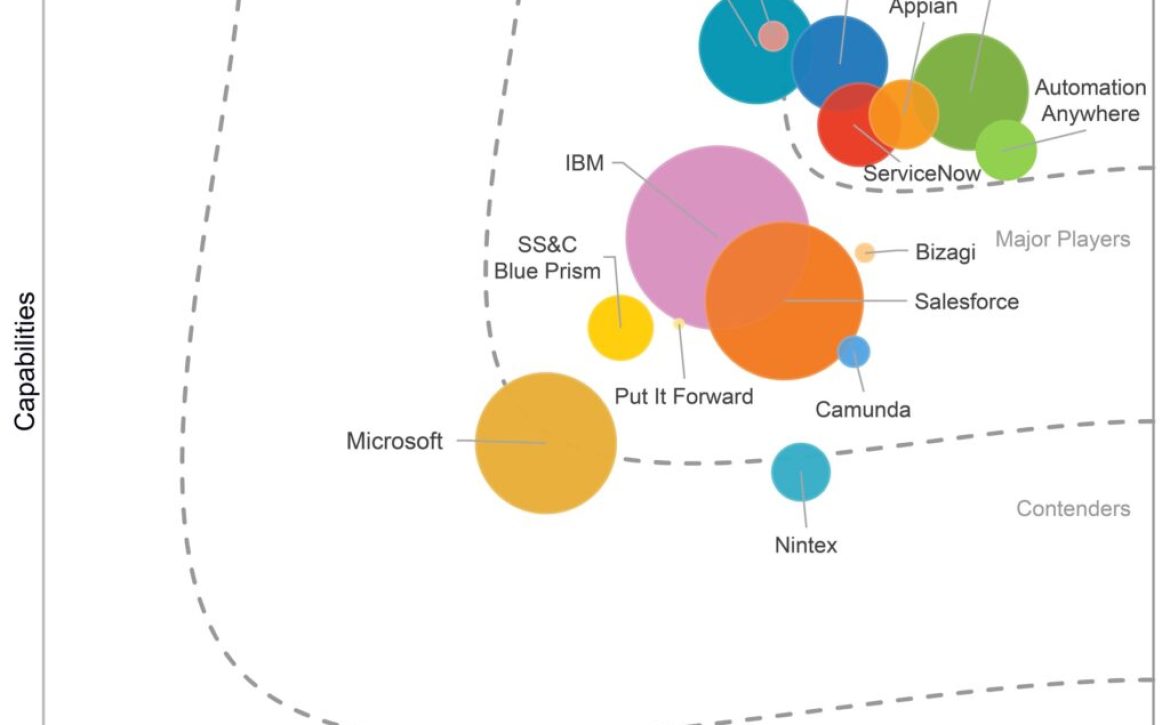
We believe this recognition is testament to SAP’s long-term vision of integrating all components required for strategic, continuous business process improvement and innovation.
According to the IDC MarketScape, “Business automation technologies have evolved from fragmented solutions into comprehensive business automation platforms (BAPs). These platforms enable enterprises to address diverse process improvement needs through a single system supporting multiple integrated automation technologies.”
Bringing together process analytics from SAP Signavio, user guidance from WalkMe, process integration and automation technology from SAP Business Technology Platform, and the latest Joule Agents allows organizations to significantly accelerate automation initiatives.
“IDC MarketScape Worldwide Business Automation Platforms 2025 Vendor Assessment” by Maureen Fleming, Neil Ward-Dutton, Raghunandhan Kuppuswamy and Elena Semenovskaia, May 2025, IDC #US52034624
IDC MarketScape vendor analysis model is designed to provide an overview of the competitive fitness of ICT suppliers in a given market. The research methodology utilizes a rigorous scoring methodology based on both qualitative and quantitative criteria that results in a single graphical illustration of each vendor’s position within a given market. The Capabilities score measures vendor product, go-to-market and business execution in the short-term. The Strategy score measures alignment of vendor strategies with customer requirements in a 3-5-year timeframe. Vendor market share is represented by the size of the circles. Vendor year-over-year growth rate relative to the given market is indicated by a plus, neutral or minus next to the vendor name.
Continuous business automation
Continuous business automation is at the heart of every commercial IT deployment, as it allows companies to simultaneously scale their operations while reducing costs.
But when business applications are augmented with disparate automation technologies – such as standalone AI agent frameworks, workflow systems, integration brokers, rules engines, and process mining tools – they can become fragmented and lack business context. This approach also often requires large amounts of data to be copied outside of the business applications, which increases latency, operational costs, and the risk for expensive data quality issues.
The framework provided by enterprise automation with SAP overcomes these issues by adding an integrated business automation toolset closely linked with SAP Business Suite.
SAP Integration Suite helps ensure seamless data flow between SAP and non-SAP applications to and from standardized services (APIs) and events. Using these services and events, SAP Build then allows orchestration of process flows to implement new automations or adapt existing ones. Then, SAP Signavio enables end-to-end process analytics and optimization with process mining and insights, providing improvement recommendations directly into SAP Build automations. On top, autonomous, AI-powered Joule Agents can then use these automations as “skills,” which allows them to execute standardized business activities. Additionally, users can be guided through complex interactions by WalkMe overlays while feeding back user journey insights into the process improvement cycle.
Enterprise automation with SAP – connect and automate end-to-end business processes
Customer success across industries
Thousands of organizations across geographies and industries rely on automation solutions from SAP to optimize their business processes across lines of business. Here are a few:
Italian publisher De Agostini offers a whole universe of hobbies and interests to a worldwide audience. But long before it gets collections and build-up models to customers, the company must first process its invoices with suppliers. Using SAP process automation solutions, De Agostini now manages to process more than 90 percent of its unstructured invoices, paper or PDF, automatically.
German Lufthansa Technik is a leading provider of aircraft maintenance, repair, overhaul, and modification services for commercial, VIP, and special-mission aircraft. As part of its digital road map, the company wanted to increase automation in the material logistics process for defective parts. SAP process automation solutions are used to coordinate component repair logistics across multiple IT systems, enabling an increase in transaction volume by more than 40 percent.
Canadian energy company Suncor believes it has a key role to play in providing secure access to affordable energy, supporting a vibrant Canadian economy, and improving environmental performance. Process automation solutions from SAP are used to improve automation of intercompany tax processes (ICT) and vendor invoice processing, leading to a 98 percent reduction in the time needed to reconcile ICT postings.
IDC MarketScape assessment
Business automation technology is advancing in big steps and enables companies to address an ever-increasing scale and complexity of automation projects. Learn more about the future of business automation from Maureen Fleming, program vice president of Worldwide Intelligent Process Automation Market Research and Advisory Service at IDC here. Read the report excerpt here.
Bharat Sandhu is chief marketing officer for SAP Business Technology Platform at SAP.
Get the latest news delivered straight to your inbox each week via the SAP News Center newsletter
This latest course will enable attendees to facilitate a new Joule Agent Discovery Workshop, guide workshop participants to identify appropriate use cases, and tailor the workshop format to the needs of different audiences.
But what are SAP solutions for agentic AI? What do they stand for?
Joule Agents are AI systems that autonomously plan and execute multi-step workflows, collaborating to connect departments, speed up decisions, and streamline processes.
Discovering high-value opportunities for agentic AI
In the format of an SAP Expert Lecture, this course introduces participants to the Joule Agent Discovery Workshop, a structured and collaborative method to identify high-value agentic use cases in an organization. Attendees will learn how to inspire and guide participants, prioritize ideas, and describe the selected opportunities in detail. The course also covers how to adapt the workshop to different timeframes, team sizes, and virtual settings. By the end, attendees will be able to guide participants in identifying where AI agents can make the biggest impact and lay the groundwork for their agentic journey.
In detail, learners will be able to:
Understand the purpose and structure of the Joule Agent Discovery Workshop and how it can be used to identify high-value agentic use cases
Facilitate the workshop exercises, guiding participants from idea generation to prioritization and a detailed description of agentic use cases
Adapt the workshop format to different team sizes, virtual environments, and timeframes to fit organizational needs
There are no prerequisites for this course, but experience with SAP Design Thinking and workshop facilitation will be helpful. It is a good learning opportunity for a variety of roles such as support consultant, business user, and SAP rookie.
The creative mind behind SAP AppHaus methods and this learning journey
For many years now, Karen Detken, an expert user experience designer at the SAP AppHaus, has worked in customer co-innovation projects and has gotten firsthand experiences and feedback when developing and hosting a variety of workshop formats with different methods and tools. Early on, the team decided to share these best practices and their tools and templates in the openly accessible innovation toolkit.
Karen Detken, Expert User Experience Designer at SAP AppHaus
When the topic of artificial intelligence arose and SAP solutions started to include generative AI and large language models (LLMs) in their solutions, such as SAP Business AI, followed by the latest step up with agentic AI, such as Joule Agents, the SAP AppHaus team worked with customers on exploring appropriate business use cases to benefit from this very latest in technology. Based on these first experiences, the team started sharing helpful methods, as a co-innovation frontrunner, so that other teams, partners, and customers could drive their own exploration projects involving latest technologies.
For Detken, it is not only about enabling in and applying those technologies: “New technologies are developing very fast and are becoming widely accessible,” she said. “What is important is that we have a very clear picture of why we want to use the technologies. Because technology only has a value when you find the right purpose to use it. Customers and users need to be clear about the outcomes they want to have with that technology. This is the first thing you need to answer before using it. With the methods we provide, we intend to help people first understand what this technology can do for them, for the business, for the people.”
This awareness and very conscious use of technology also includes the consideration of responsible and ethical guidelines that every new solution needs to follow (see SAP’s principles laid out in the SAP AI Ethics Handbook).
Bringing innovation and technology into the hands of people
The SAP AppHaus team gets feedback from many different customer and partner teams. For the team of experienced co-innovation coaches, it is fulfilling to see workshop participants, along with attendees of enablement sessions, understand the new technology better. From this deeper understanding they help participants — along their human-centered approach — start generating ideas related to their business needs. They help them, as Detken puts it, “think of different ways how they can use AI to solve real problems.”
The latest SAP Learning Journey for agentic AI is a compilation of helpful exercises to help customers and partners explore and approach this field of technology while discovering meaningful business use cases. In parallel and probably not that obvious at first sight, this new course testifies the openness of the team for novel applications such as using an avatar as speaker. It was built based on video recordings with Detken.
When asked about her view on agentic AI in contrast to generative AI, Detken describes it as follows: “Generative AI uses an LLM as a kind of intelligent system or ‘brain.’ The same LLMs are used by an AI agent. The difference is that the agent can not only ‘think’ and use these large language models to generate content or analyze data and make decisions, but it also uses ‘tools’ or other applications to act upon these decisions or make changes autonomously. To put it as an example: with Gen AI, we only had the brain and now it’s the next step, we have the brain and the hands. Maybe in the future, we will have the entire body as well, which would probably be the robots.”
What are AI agents?
AI agents are artificial intelligence-based applications that make decisions and perform tasks independently with minimal human oversight. Backed by advanced models, agents can decide a course of action and employ multiple software tools to execute. Their ability to reason, plan, and act lets agents tackle a wide range of situations otherwise impractical or impossible to automate with preconfigured rules and logic.
Imke Vierjahn is the communications lead for SAP AppHaus.
Subscribe to the SAP News Center newsletter to get highlights delivered to your inbox each week
For over 30 years, SAP has supported customers’ operational compliance with a substantial portfolio of environment, health, and safety (EHS) capabilities that increase safety performance and accuracy while reducing operational and compliance risks.
In recent years, amid the evolving regulatory landscape and interdependencies with other business areas, a new set of cross-process requirements have surfaced.
SAP’s answer is the shift from a reactive, centralized compliance management system to a proactive approach that adapts to an organization’s needs. We are transforming SAP Environment, Health, and Safety Management from a monolithic system of record into a modular and connected suite.
Environmental management: from static tracking to intelligence
SAP solutions for environmental management address the management of waste and emissions as well as water and wastewater.
Updates to EHS solutions are intended to assist users in completing tasks more quickly and efficiently. For example, intelligent permit management is possible thanks to automated regulatory requirement extraction, making permit management tasks less tedious. In the future, proactive regulatory intelligence will prepare customers for the impacts of changing compliance requirements.
By focusing on proactive document extraction and a single entry point for compliance, customers can expect to benefit from reduced compliance preparation time and enhanced audit readiness.
Workplace safety management: from reactive to proactive
The updated workplace safety process orchestrates and extends the individual capabilities of safety performance management, operational risk management, and incident management.
How the RISE with SAP Validated Partner recognition enables partners to unlock the power of SAP Business Suite
Businesses today rightly expect faster value realization, streamlined implementations, and solutions that are flexible, scalable, and embedded with intelligent technologies, such as AI.
SAP partners help you get the most from your software while enabling a smooth deployment
With the launch earlier this year of SAP Business Suite, a unified system integrating applications, data, and AI to seamlessly connect and optimize every business function, customers can benefit from a continuous cycle of value and unlock innovation faster and easier than ever before.
By embarking on the RISE with SAP journey, existing SAP ERP customers can modernize with a cloud ERP landscape and realize the full potential of SAP Business Suite. To ensure businesses have the foundation needed to fully leverage the suite’s capabilities, a successful implementation is crucial.
Our RISE with SAP project delivery is undergoing a profound shift, empowering our service partner ecosystem to meet these heightened expectations with innovative methodologies, comprehensive tools, and validation programs.
The new paradigm: customer priorities in SAP projects
Today’s organizations grapple with complex legacy processes, siloed data, and highly customized systems. They seek:
Speed to value: Building a resilient digital backbone that delivers measurable benefits within weeks or months
Industry-standard solutions: Minimizing costly customizations to enable faster deployment, simplified upgrades, and easier maintenance
Reusable intellectual property: Configurations over modifications ensure portability and scalability
Operational modernization: Leveraging automation and standardized processes to reduce redundancies and risks and improve data access
Embedded AI and automation: Accelerating decision cycles, reducing manual efforts, and enhancing accuracy
SAP’s response: enabling partners to drive customer success
SAP recognizes that delivering on these expectations requires a strategic partnership approach, combining the future-proof cloud and AI innovations with disciplined governance, clear ownership and accountability, and best practices. Our approach centers on the RISE with SAP Methodology, complemented by an integrated toolchain and a dedicated focus on partner capability enhancement.
RISE with SAP Methodology: framework for agile transformation
The RISE with SAP Methodology provides a comprehensive pathway that emphasizes a clean core architecture, standardized best practices, and collaborative implementation strategies. Included are:
Standardized framework: Building scalable, repeatable project road maps that cater to diverse industry requirements, from streamlined deployments to complex, multinational programs
Integrated toolchain: Enabling seamless collaboration with SAP tools, such as SAP Cloud ALM, SAP Signavio, SAP LeanIX, and SAP Build — powered by AI — to ensure data consistency and process automation
Expert guidance: From discovery to deployment, SAP and qualified partners guide projects, focusing on value creation and risk mitigation
The results speak for themselves. Customer outcomes include:
Up to 30 percent reduction in transformation costs
Up to 35 percent faster realization of benefits
Up to 70 percent increase in business agility
Up to 40 percent acceleration in innovation cycles
RISE with SAP Validated Partner recognition: elevating our service partner ecosystem
SAP is committed to ensuring our partners have the necessary skills and certifications to stay aligned with this evolving landscape. To that end, we’ve introduced the RISE with SAP Validated Partner recognition. Launched in 2024, this program recognizes partners that demonstrate excellence in delivering SAP large and complex cloud ERP projects with consistency and quality.
Qualified partners that accept SAP’s invitation must adhere to clear guidelines, including:
Global adoption of RISE with SAP Methodology: Ensuring consistency across all delivery teams and regions
Focus on clean core quality gates: Partner projects must document the respective clean core quality gates in SAP Cloud ALM
Enhanced toolchain utilization: A strong emphasis on automation, collaboration, and project governance through SAP’s integrated platform suite
Professional certifications: Equipping key roles — project managers, developers, architects, consultants — with updated, in-demand skills aligned with SAP’s cloud and AI innovations
Ensuring partner success: tools, training, and innovation
The RISE with SAP Validated Partner recognition is underpinned by a close alignment between qualified partners and SAP teams throughout all engagements, from sales to delivery, ensuring early identification of any potential barriers, to success.
To help customers harness the full potential of AI to drive value, partners must apply tools like Joule to effectively automate and optimize processes for superior outcomes. SAP Joule for Consultants empowers consultants to work smarter, automate routine tasks, and focus on strategic activities. Given its grounding in terabytes of both public and proprietary data, SAP Joule for Consultants can accelerate customer project delivery by up to 14 percent.
Looking ahead
By aligning with SAP’s proven methodologies, leveraging our integrated toolchain, and maintaining high standards of certification and expertise, our RISE with SAP Validated partners are uniquely positioned to deliver solutions that truly meet customer expectations in today’s fast-paced, digitally driven environment.
Together, SAP and its service partners are committed to driving innovation, accelerating time-to-value, and enabling sustainable transformation — ensuring our customers remain competitive in a rapidly changing world.
Karl Fahrbach is chief partner officer at SAP.
Get the latest news and stories delivered straight to your inbox each week via the SAP News Center newsletter
Artificial intelligence is a transformative force across industries, but many enterprise architectures remain stuck in silos. Vector search lives in one service, relational databases in another, and knowledge graphs in yet another. Every layer adds more complexity, latency, and cost.
It’s time to rethink what a modern AI-ready database should look like.
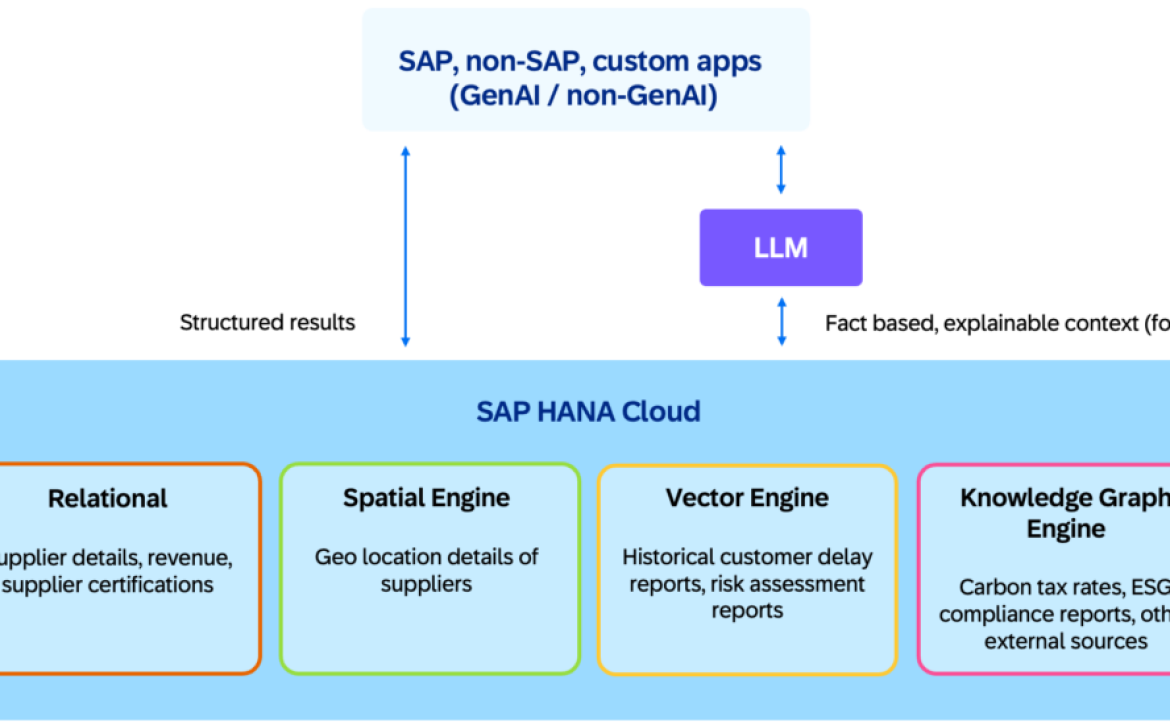
SAP HANA Cloud solves this exact challenge with its single, multi-model platform that brings together vector, graph, text, spatial, and relational data natively. It enables developers and data teams to build smarter, more context-aware AI solutions — directly on operational data.
SAP HANA Cloud: Power mission-critical solutions with multi-model engines and enterprise-grade performance and reliability
One database, every model: native support for complex AI workloads
SAP HANA Cloud uniquely supports:
Vector data for semantic and similarity search
Graph data for explicit relationship modeling and knowledge graphs
Text and spatial data for real-world context
Relational data for structured operations and analytics
Rather than sending data across disparate services, you can store and process all of it in one place, accelerating time-to-value while reducing the risk of misalignment.
This is multi-model done right, and it is the foundation for powerful AI workloads that scale.
Semantics + similarity: combining vector search with knowledge graphs
Traditional semantic search engines can tell you what documents are similar, but they cannot tell you why. On the other hand, knowledge graphs can express rich, explicit relationships, but often lack the ease of retrieval.
With SAP HANA Cloud, you don’t have to choose; you get both. Bringing together SAP HANA Cloud vector engine and SAP HANA Cloud knowledge graph engine empowers developers to build context-aware, intelligent queries that go far beyond keyword matching.
Imagine asking: “Find thenearest warehouse in Germany(~ 50 km radius of Frankfurt) for suppliers that are ISO 9001 certified, have low carbon tax rates, and are not flagged for customs delays.”
We can conduct a multi-model query to find the warehouses that fit the above criteria.
Here, we are using a SPARQL table within SAP HANA knowledge graph engine to filter the suppliers that comply to the following conditions: ISO 9001 certified, low carbon tax rates, not flagged for customs delays.
We can further combine the SPARQL_EXECUTE function in SAP HANA knowledge graph engine with vector-based semantic filtering and spatial constraints to identify suppliers that are located within “~ 50 km of Frankfurt” and whose past custom report narratives align with “no custom delays.” This hybrid query leverages SAP HANA Cloud vector engine, SAP HANA Cloud knowledge graph engine, and spatial engine to rank nearby suppliers not only by distance, but also by their trustworthiness and performance signals.
After running these queries, we have the following supplier warehouses as our best match:
This is the power of semantics plus structure, and it is built into the core of SAP HANA Cloud.
Unified queries: SQL, SPARQL, and vector search side by side
Developers must often stitch together multiple tools and languages: SQL for relational data, SPARQL for RDF, and separate APIs for vector stores.
SAP HANA Cloud removes that complexity. You can write a single SQL query that brings together relational data, semantic reasoning via SPARQL (embedded in SQL), and vector similarity search, using native SQL functions — all in one go: no ETL, no separate infrastructure, just one unified, in-memory engine.
This approach not only speeds up development, but enables new types of AI applications that were not previously practical in siloed environments.
Built for generative AI and RAG: GraphRAG, VectorRAG, HybridRAG
Large language models (LLMs) are only as good as the data they can reason over. That is why retrieval-augmented generation (RAG) has emerged as a critical pattern for enterprise generative AI.
We have brought in new capabilities into SAP HANA Cloud, whether you are grounding an LLM in unstructured text (VectorRAG), structured knowledge graphs (GraphRAG), or both simultaneously (combination of VectorRAG and GraphRAG).
SAP HANA Cloud ensures transparency, traceability, and performance throughout the generative AI pipeline with all the database management qualities. You get explainable answers and full control over how you retrieve, rank, and assemble information, which is vital for regulated industries.
Real-world impact across industries
Enterprises across industries are already leveraging the multi-model capabilities of SAP HANA Cloud for transformative outcomes:
Supplier matching and environmental, social, and governance (ESG) scoring: Blend structured supplier data with document similarity and relationship insights to identify ideal partners
Compliance monitoring: Connect and query policies, regulations, and audit trails with natural, semantic inputs
Fraud detection: Analyze transactional data, behavioral signals, and known fraud patterns — all in real time
Life sciences research: Integrate clinical trials, publications, and patient outcomes using hybrid semantic and structured queries
These are use cases where meaning is distributed across formats, systems, and relationships.
Developer experience: simplicity without compromise
SAP HANA Cloud offers developers:
One platform for all data models: Combined structured, unstructured, and semantic data without stitching together multiple systems
Built-in support for modern AI workloads: Enable use cases like RAG without external vector stores or pipelines
Tight integration with SAP and open ecosystems: Leverage SAP Business Technology Platform and popular open-source tools with minimal setup
Focus on innovation, not infrastructure: Eliminate the need to manage and maintain separate triplestores, search engines, or vector databases
The result is faster prototyping, cleaner architecture, and lower operational complexity.
Conclusion: It’s time to rethink your database
In the AI-first enterprise, data is not just a backend concern; it’s the front line of innovation. And innovation requires infrastructure that is flexible, intelligent, and unified.
SAP HANA Cloud provides building blocks to create the infrastructure for AI apps in a way that is easy to consume. It doesn’t just support AI workloads; it accelerates them, with a single platform that brings together semantics, similarity, and structure in real time.
AI needs more than just access to data and SAP HANA Cloud delivers that, natively.
Key takeaways
Unified multi-model: Vector, graph, spatial, text, and relational data all in one platform
Smart queries: Compose intelligent queries using SQL, SPARQL, and vector search — side by side
Generative AI-ready: Built for GraphRAG, VectorRAG, and HybridRAG with full explainability
Reduced complexity: No need for separate vector stores or knowledge graph engines
More information
Ready to see it in action? Explore how SAP HANA Cloud can unify and elevate your AI architecture in SAP Discovery Center:
Philipp Herzig is CTO, chief AI officer, and a member of the Extended Board of SAP SE. Stefan Baeuerle is senior vice president and head of SAP BTP/SAP HANA & Persistency at SAP.
Subscribe to the SAP News Center newsletter and get stories and highlights delivered straight to your inbox each week
AI is everywhere today, but it can be difficult for enterprises to cut through the hype to understand how to leverage the latest innovations to gain a real, measurable competitive advantage.
I addressed this challenge in a conversation with Dan Newman at The Six Five Summit: AI Unleashed 2025, hosted by The Futurum Group and Moor Insights and Strategy. We spoke about the blockers that leaders face when determining where to apply generative AI to move their businesses forward and what SAP Business AI is uniquely bringing to market to help.
Flowing from that conversation, here are four steps you can take, among others we touched on, that will help you become an AI front-runner.
1. Prioritize use cases with the most promise
First, focus on areas of your business in which you can use AI to deliver fast, measurable value. Finance, HR, supply chain, and customer experience are among those AI front-runners often start with. As you assess your options, set aside the idea of a “proof of concept.” Instead, develop “proofs of value” by using your and your team’s expertise, data, and imaginations to find areas where more value can be unlocked using automation or AI agents.
By the way, the term “proof of value” was first coined by AI front-runner Philippe Lalumiere, vice president of IT at Cirque du Soleil, in reference to an AI agent for accounts payable that his team designed in partnership with SAP. The key is to pinpoint what outcomes matter most to your business and choose use cases that quickly prove the value.
Create transformative impact with the most powerful AI and agents fueled by the context of all your business data
2. Deploy intelligent agents to simplify complex tasks
Another practice of AI front-runners is the use of AI agents that span departments and systems to solve end-to-end problems. Their autonomous abilities to handle whole processes is one of the differences between an AI skill and an AI agent. A skill is a single ability, such as the ability to write a message or analyze a spreadsheet and trigger actions from that analysis. An agent independently handles complex, multi-step processes to produce a measurable outcome. We recently announced an expanded network of Joule Agents to help foster autonomous collaboration across systems and lines of business. This includes out-of-the-box agents for HR, finance, supply chain, and other functions that companies can deploy quickly to help automate critical workflows.
AI front-runners, such as Ericsson, Team Liquid, and Cirque du Soleil, also create customized agents that can tackle specific opportunities for process improvement. Now you can build them with Joule Studio, which provides a low-code workspace to help design, orchestrate, and manage custom agents using pre-defined skills, models, and data connections. This can give you the power to extend and tailor your agent network to your exact needs and business context.
3. Embed AI into daily workflows
To truly become an AI front-runner, you need AI woven seamlessly into how your teams work every day. You also need to ensure it works across your broader technology ecosystem. Because of these critical business needs, we created Joule to be your natural language AI interface, built right into your SAP systems. And we’re adding a new Joule action bar to make it even more context-aware and better integrated with third-party tools like ServiceNow and Microsoft Copilot. It doesn’t wait for you to tell it what you need. Instead, it can proactively follow your behavior and suggest helpful next actions in context across multiple SAP and non-SAP applications. This helps remove friction, so your team members don’t have to toggle between tools or relearn interfaces.
4. Foster an ecosystem of interoperable, leading AI tools
Another way to become an AI front-runner is to tackle fragmented tools and solutions by putting in place an open, interoperable ecosystem. After all, what good is an innovative AI tool if it runs into blockers when it encounters your other first- and third-party solutions? This is why we recently announced a tighter integration with Microsoft Copilot for productivity and partnerships with Mistral AI and Perplexity for flexible access to leading AI models. These, and many other partnerships, help teams combine multiple AI capabilities, share trusted data across systems, and drive business outcomes faster, without the headache of manual connections.
WALLDORF — SAP SE (NYSE: SAP) will release its full results for the second quarter of 2025 on Tuesday, July 22.
SAP CEO Christian Klein and CFO Dominik Asam will host a virtual analyst conference to present second quarter financial figures, as well as an outlook on the current financial year.
Media representatives may listen in on the virtual analyst conference via Webcast at 11:00 p.m. CEST/ 5:00 p.m. ET.
Subscribe to the SAP News Center newsletter to get the latest news and stories delivered to your inbox weekly
In today’s rapidly evolving workforce, onboarding new employees efficiently has become a critical competitive advantage. Every extra week it takes to train an employee is a week of lost productivity.
SAP Learning Hub: Everything you need to boost business success with continuous learning
The rise of AI is an opportunity not just to speed up learning, but to drive lasting organizational efficiency. A 2024 global survey by consulting firm Cegos found that 44 percent of employees already use AI-based learning, and 81 percent of HR leaders are integrating or planning to implement such technologies. This underscores the widespread adoption of AI in corporate learning, but it also raises a vital question: How can organizations ensure that the speed of learning does not come at the expense of depth and sustainability?
Time to competency matters
In corporate learning, time to competency is a central concept. It refers to the time it takes for employees to acquire the skills, knowledge, and confidence to perform their job effectively and independently. It is a critical metric, as shortening time to competency can boost productivity, reduce training costs, and provide a competitive edge. However, accelerated learning may prove counterproductive if the acquired knowledge is superficial or unsustainable.
AI is reshaping the learning experience
Whereas the human ability to learn has developed over millennia, AI capabilities have been developing in leaps and bounds over just a few years. When properly aligned with the best practices in how we learn, AI can transform the learning experience through three key dimensions: personalization, practice, and measurement. Consider, for instance, how field enablement for new sales employees demonstrates these dimensions in practice.
Personalized learning journeys drive engagement
First, AI-powered personalization drives higher engagement. Generative AI tools can help learners explore complex topics based on individual knowledge gaps. In the case of sales professionals, AI can analyze performance patterns and knowledge levels to create customized learning paths that focus precisely on the skills each individual needs to develop — whether product knowledge, negotiation techniques, or objection handling. This personalized approach leads to significantly greater knowledge retention and application as learning experiences become directly relevant to the role.
Accelerating skill development through simulated practice
Second, practice-based learning accelerates onboarding and skill acquisition. For example, sales professionals can use AI-powered simulators to practice customer conversations with virtual buyers who respond naturally to different pitches and approaches, while receiving instant feedback on their communication style, value proposition clarity, and response to objections. These simulated interactions build confidence before real customer engagements, drastically shortening ramp-up time.
Measuring and sustaining competency
Third, measurement ensures the knowledge truly sticks. Sustainable learning requires more than speed. It must embed deep understanding and long-term applicability. AI learning platforms track not just completion, but actual competency development through ongoing assessments. Repetitive, on-the-job training and immersive experiences can help reinforce knowledge. For instance, sales teams can utilize AI tools that analyze real customer interactions post-training, measuring how effectively new techniques are being applied and providing ongoing microlearning refreshers precisely when skills begin to fade — ensuring the investment in sales training delivers lasting performance improvement.
From skill gaps to strategic learning
Yet, even with these tools, learning and development professionals face challenges. The Cegos study reports that nearly half of HR professionals have difficulties adapting their training offerings quickly enough to meet actual needs. Employees, meanwhile, often feel their training needs are addressed too late. AI can close this gap by using learning analytics to identify skill gaps early and deliver timely interventions.
The real opportunity lies in balancing fast-track learning with long-term capability building. Companies must not only measure how fast employees reach competency, but also ensure the competency is durable. Key strategies include microlearning, adaptive content, mentorship, and integration of practical phases — all aimed at anchoring knowledge deeply while reducing unnecessary delays.
Ensuring lasting impact
To truly accelerate time to competency while ensuring deep, lasting understanding, companies need structured, scalable learning solutions. One such solution is SAP Learning Hub, which offers broad access to expert-led resources to both obtain and maintain SAP Certifications. Structured learning journeys support individualized pacing and continuous development, allowing employees to engage in professional growth without disrupting their daily responsibilities. By integrating SAP learning into everyday workflows, organizations can foster sustainable learning habits and equip employees with the skills needed for long-term performance.
In short, AI won’t replace human learning; it will enhance it, but only if we apply it with purpose. As leaders, we must measure success not just in speed, but in sustained capability.
Markus Marsch is global head of Product and Solution Learning for SAP Industries & Experiences.
Get the latest news delivered to your inbox each week via the SAP News Center newsletter
This year’s London Climate Action Week was less about reaffirming action, and more about accelerating it. Now in its seventh year, this is Europe’s largest city-wide climate event, bringing together policymakers, investors, NGOs, and technologists to accelerate plans ahead of COP30 in Belém, Brazil. Three major themes stood out across the week.
1. Decarbonize and build resilience
Business leaders and policymakers are focused on scaling decarbonization while also confronting the reality of escalating physical risks. From industrial heat to infrastructure retrofits, the message was clear: climate disruption is now a core business risk. As resilience is becoming synonymous with competitiveness, organizations are embedding climate data into board decisions and using it to guide strategy.
This shift is urgent: climate-driven losses are no longer theoretical, and businesses should treat physical risk with the same granularity and urgency as margin forecasting.
SAP has focused on turning physical climate risk into actionable intelligence for customers. By integrating sustainability metrics with financial models, companies can frame adaptation investments as cost-avoidance with measurable return on investment.
2. Mobilize climate finance
The gap between climate capital and real-economy transformation remains wide, especially in emerging markets. But momentum is building. London’s mayor announced a new climate finance task force aimed at crowding in public-private investment, while investors discussed blended finance models and sustainability-linked instruments. To stay investable, companies must present decision-grade sustainability data and show credible transition plans.
SAP is working with customers to bridge the divide between macro-level climate finance signals and operational decisions. That means using our systems to unify environmental data with financial and risk metrics, so sustainability reporting isn’t just about compliance, but about surfacing value. With green bonds and adaptation finance accelerating, businesses that can connect site-specific risk to capital expenditure planning will be best placed to access new funding streams.
We’re helping customers uncover the hidden costs of climate disruption — whether that’s increased cooling, transport volatility, or water constraints — and link them to balance sheet impacts. The result is a stronger business case for resilience investments, and more relevant data for financial partners.
3. Digital innovation and AI
A wave of sessions focused on the power of digital tools to accelerate climate action. SAP and fellow sustainability leaders highlighted how AI is enabling everything from emissions forecasting to supply chain optimization, while digital twins are helping companies and cities simulate disruption, model trade-offs, and optimize resources in real time.
Central to this story is responsible AI. At London Climate Action Week, SustainableIT.org recognized SAP with the Responsible AI Impact Award for its cross-functional work to embed ethical, human-centered AI into enterprise systems, driving outcomes that are not only efficient, but also equitable and sustainable.
This approach is guided by SAP’s Global AI Ethics Policy, which is grounded in the UNESCO recommendations on the Ethics of AI, and shapes how we build and deliver AI across all our sustainability and business solutions.
At SAP, we’re designing AI to assist, not replace, human activity — to scale climate action with integrity. We are focused on delivering embedded business AI tools that turn complexity into clarity, while preserving transparency and auditability.
Applying SAP’s tech lens: from insight to impact
London Climate Action Week 2025 made one truth unavoidable: climate leadership now hinges on trusted data and innovative technology, including human-centred AI. Across sessions, AI and unified data were repeatedly cited as the accelerants of climate progress, whether mapping Scope 3 emissions or modelling extreme weather scenarios.
Drawing on these insights, businesses can look to three main areas to boost their sustainability efforts:
Make sustainability data first-class business data: SAP Green Ledger posts auditable carbon and financial entries side by side, turning emissions into actionable profit and loss drivers. When linked with site-level climate risk data, SAP Green Ledger allows businesses to understand the cost of disruption — from heatwaves to resource scarcity — and align sustainability with enterprise planning.
Augment teams with responsible AI: With SAP Green Token, AI-assisted declaration image analysis automates thousands of supplier documents; with SAP Sustainability Footprint Management, AI-assisted emission factor mapping links thousands of materials to high-quality emission factors in minutes. In SAP Sustainability Control Tower, AI now also supports environmental, social, and governance (ESG) report generation, using best-practice templates to draft audit-ready reports, complete with data visualizations. This frees up sustainability teams to focus on strategy while increasing speed, accuracy, and regulatory confidence.
Unify processes, finance, and sustainability in the cloud: SAP Sustainability Control Tower will become an intelligent application within SAP Business Data Cloud later this year, which will unify sustainability data and business operations on a single platform, enabling consistent reporting, deeper insight, and smarter decision-making across the enterprise.
By breaking down silos among sustainability, finance, procurement, and operations, SAP is enabling businesses to act faster on everything from climate disclosure to adaptation investment. When ESG data is managed like financial data — with rigor, governance, and relevance — it becomes a strategic asset.
Together, these capabilities turn the rallying cry of London Climate Action Week 2025 “from morality to materiality” into a practical playbook: embed sustainability where business happens and use responsible AI to scale impact without compromise. From emissions to adaptation to finance, the future of climate leadership is not just digital, it’s enterprise-deep.
Monica Molesag is global head of Sustainability Communications at SAP.
Sign up for the SAP News Center newsletter to have stories and highlights delivered to your inbox each week