Coming Soon: A Smarter, More Transparent Feedback Experience

At SAP, customer feedback has always been part of how we build our software. Our first products were developed in close collaboration with customers, and that same principle is still true today: we need to listen, understand the context, and turn feedback into product improvements that create real value.

The challenge is not whether we receive enough feedback—we receive a lot of it. The real challenge is making sure feedback reaches the right teams, with the right context, so it can create impact and customers can see where it goes.

What’s changing

On October 6, 2026, we are launching an enhanced Customer Influence experience, making feedback easier to submit, easier to follow from submission to resolution, and easier for SAP teams to act on. We’re also improving our feedback ecosystem by connecting customer feedback, usage insights, research, and market signals, so we can make better-informed decisions across SAP products.

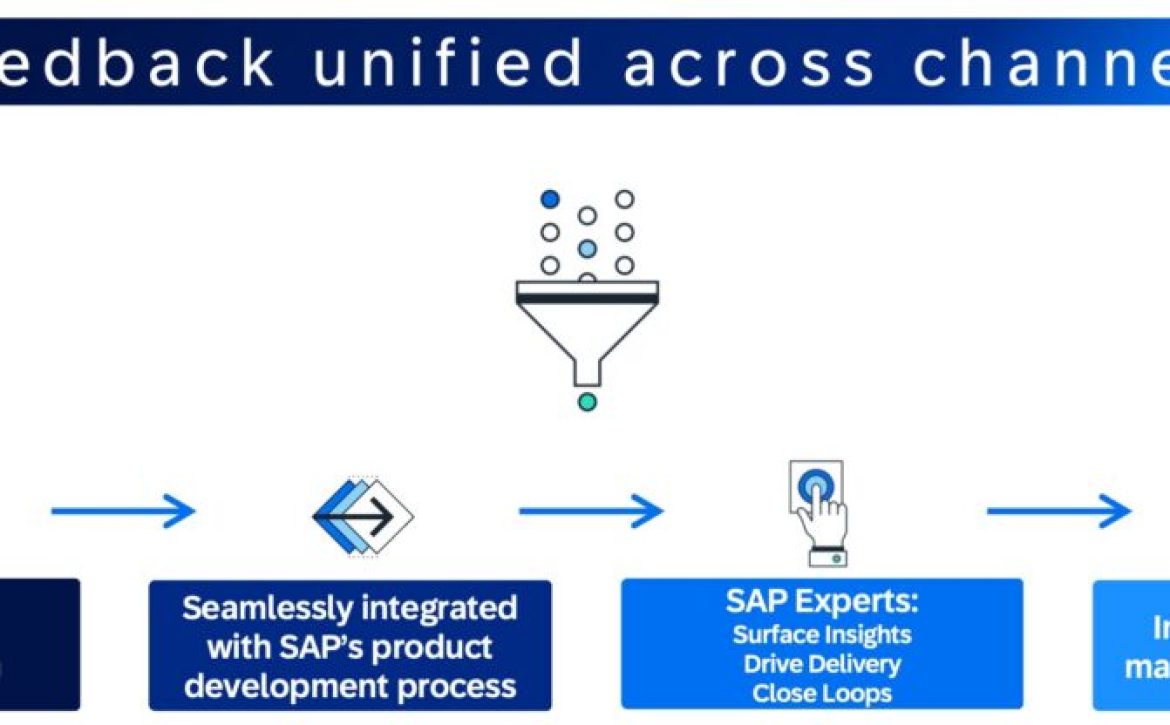
From feedback to innovation in the SAP feedback ecosystem 

Simpler access to customer influence

Soon, it will be easier than ever to dive into influencing SAP products via Customer Influence. S-users will find the feedback tool in the SAP for Me portal they already know, while P-users will enjoy direct access to the feedback system via an updated influence.sap.com.

A more intuitive experience

More intuitive navigation helps remove friction from the process while clear visibility into outcomes shows how your input drives innovation.

Real-time view of request status and voting 

How it works

Advances in AI, automation, and real-time data processing create an opportunity to work with feedback differently than in the past. Now we can identify patterns and route feedback to the right teams faster and at a much greater scale. Individual signals become collective insight that drives more meaningful, relevant improvements grounded in real-world feedback. That means our experts can spend less time processing information and more time acting on it and delivering outcomes that matter to your business.

Meanwhile, consistent, company-wide guidelines bring a standardized approach to handling, responding to, and acting on feedback across SAP’s portfolio, tools, processes, and teams.

While AI helps us meet customer needs more efficiently, people remain accountable for understanding the context, making prioritization decisions, and deciding what we build. That is important because feedback is not only data. It reflects human experiences behind real business challenges, and it takes human judgment to turn those signals into outcomes that genuinely matter.

What changes for you

These enhancements are about clear value—not replacing what works. All five Customer Influence services you know today continue within the improved feedback experience. For example, in SAP Continuous Influence, you can find your existing improvement requests in the new experience and use any existing bookmark links you have.

Here’s what you can expect:

  • Effortless feedback experience: simplified navigation, a more intuitive journey, and direct feedback service access for SAP for Me users
  • Clearer line of sight: transparency from submission to resolution, with progress tracking at every step and consistent updates
  • More influence: greater visibility into how your feedback shapes the SAP road map and contributes to product improvements
  • The right products: unified feedback, market analysis, and user research helping SAP deliver more of what matters most

The conversation continues

The momentum doesn’t stop here. We’re also exploring agentic assistance that helps customers structure feedback, suggests clearer wording, and guides them toward the most impactful way to share what they’re experiencing—making the act of sharing feedback feel less like a task and more like a conversation.

As the relaunch of Customer Influence approaches, look for more information about the release on influence.sap.com, including access and enablement resources.

In the meantime, you can explore current Customer Influence services and continue submitting your feedback at influence.sap.com.

This is a next step, not a final one—we are still building, and the feedback you continue to share will help us get this right.


Florian Heretsch is SVP and global head of SAP Product Experience.
Sign up to receive weekly news highlights from the SAP News Center

Calling All Innovators: Submissions Officially Open for 2027 SAP Innovation Awards

Every executive I talk to is navigating the same fundamental challenge: how to execute faster and make smarter decisions while operating in an unpredictable market. Shifted demand, supply chain constraints, and margin pressure are no longer temporary disruptions—they are standard operating conditions.

To adapt, businesses are increasingly moving toward the vision of an Autonomous Enterprise. Achieving this requires connected, intelligent cloud systems that provide immediate operational clarity and give their teams the confidence to act.

For 13 years, SAP Innovation Awards have celebrated organizations turning transformation into reality

When organizations get this right, the results go far beyond internal efficiency. They set new standards for their entire industry, deliver exceptional value to customers, and solve critical economic, environmental, and social challenges.

That is the driving force behind the 2027 SAP Innovation Awards. Every year, the awards recognize organizations that take on tough business challenges, leverage modern SAP technology, and deliver measurable outcomes that push their organizations—and our global community—forward.

Why participate?

Recognizing your team’s hard work is just the beginning. SAP Innovation Awards are designed to elevate your success story on a global stage and provide tangible benefits for your organization:

  • Global visibility and marketing: Winners gain high-profile exposure, including a dedicated feature on the SAP News Center, cross-channel promotional campaigns, and potential placement on the SAP.com homepage.
  • Event access and speaking opportunities: Winners receive a complimentary pass to SAP Sapphire (or a $1,000 charity donation voucher) and an invitation to celebrate at the SAP Sapphire reception. Top innovators may potentially secure coveted speaking slots at the event to share their journey directly with industry peers.
  • Official recognition: To properly celebrate your team’s achievements, winners receive official, physical trophies and finalists and winners receive kits to showcase their success internally and externally.

A streamlined experience: focus on your story

Operational agility should apply to recognition, too. We have updated the submission process for 2027 to make sharing your story straightforward and fast.

You no longer need to figure out which category fits your project.

Instead of asking you to navigate a complex list of options, we want you to focus entirely on what matters most: telling your story. Simply submit your entry detailing the business problem you set out to solve, the SAP technologies you deployed, and the tangible business results you achieved.

Once submitted, our review committee will evaluate your entry and automatically assign it to the most relevant category. Because transformative work rarely stays in a single silo, your entry will also be considered across multiple applicable categories to maximize your team’s recognition.

Recognizing excellence across the enterprise

The 2027 awards framework recognizes breakthrough achievements across 14 core solution areas:

  • AI Excellence
  • Autonomous Enterprise Orchestrator
  • Business Network Luminary
  • Cloud ERP Champion
  • Emerging Growth Leader
  • Supply Chain Catalyst
  • Financial Futurist
  • Procurement Visionary
  • People Experience Pioneer
  • Customer Experience Innovator
  • Technology Pathfinder
  • Transformation Impact
  • Services Superstar
  • Sustainability Hero

Additionally, every entry is automatically evaluated for our Industry Leader awards, recognizing organizations that are building new business models across five key sectors:

  • Consumer Industries
  • Discrete Industries
  • Energy & Natural Resources
  • Public Services
  • Financial Services

Showcase your progress

Real innovation rarely happens in one massive leap. It happens when focused, pragmatic teams use technology to solve everyday problems, make better decisions, and build momentum day by day.

If your team is using SAP solutions to drive real value, we want to celebrate your work and share your success with our global ecosystem.

Submissions are open now. I encourage you to submit your story for the 2027 SAP Innovation Awards today!


Eric van Rossum is chief marketing officer for Autonomous Suite Product Marketing and Learning at SAP.

Get weekly updates from the SAP News Center, delivered straight to your inbox

SAP and NVIDIA OpenShell: Working Toward Governance and Security for Auditable AI Agents in Enterprise Systems

Together with NVIDIA, SAP is helping shape and strengthen the execution layer for enterprise agentic AI.

The new AI-first experience for building agents, apps, and workflows

Today, alongside the announcement of NVIDIA Open Agent Safety Platform and the broad availability of NVIDIA OpenShell, we’re deepening our collaboration with NVIDIA to help make enterprise AI agents safer, more governable, and easier to audit by design.

As announced this year at SAP Sapphire, SAP and NVIDIA have a deep technical collaboration, with plans to bring SAP Business AI Platform together with OpenShell, an open-source secure runtime for autonomous AI agents. This is more than a planned integration, it reflects a shared effort to help define what “enterprise-grade” means for autonomous AI systems.

As part of our ongoing co-development activities, SAP engineers are contributing directly to the OpenShell codebase and embedding OpenShell within SAP Business AI Platform. Joule Studio, an AI-first development environment, provides a complete execution and governance stack for enterprise AI agents, while OpenShell supports deploying agents with a focus on safety and security.

SAP and NVIDIA are also working to:

  • Help harden the OpenShell runtime for enterprise-scale deployment, including in regulated industries with strict security and compliance requirements
  • Connect OpenShell’s runtime isolation with the business governance layer of Joule Studio runtime, linking technical execution boundaries to enterprise authorization models, IAM frameworks, and audit trails
  • Work toward FedRAMP, FIPS, and regulated-industry enablement on a committed road map
  • Advance open research and AI safety through the Open Secure AI Alliance, of which SAP and NVIDIA are both founding members alongside other industry leaders

Joule Studio runtime: Governance above the execution layer

Joule Studio runtime helps determine whether an action should execute at all—applying business authorization, role-based policy, and process context before a request in action reaches the runtime. OpenShell provides an open-source runtime boundary designed to help build and deploy autonomous, self-evolving agents more safely. It governs how the agent executes, what it can see and do, and where inference goes. Together, the two aim to give enterprise customers execution containment and business accountability in a single integrated stack.

SAP engineering contributions to NVIDIA OpenShell

SAP engineers are contributing to four areas of the OpenShell project. On platform architecture, SAP has helped drive decomposition of the runtime into independently deployable components, separating the supervisor and agent execution layers so they can scale independently. For Kubernetes-native operations, contributions include operator support, image pull secret management for private container registries, custom volume claim templates, and foreground deletion of sandbox resources. SAP has also worked to minimize the gateway image footprint and extend compute driver support for heterogeneous enterprise infrastructure. Contributions to supervisor health monitoring and structured log-level configuration bring the runtime to enterprise observability standards.

Joule Studio runtime is available free for SAP customers and partners through October 2026—start building today


Andre Lamego is senior vice president and chief product officer for SAP Business AI Platform Fabric at SAP.

SAP Connect: Discover how to maximize SAP solutions across every line of business

SAP Named a Leader in the 2026 IDC MarketScape for AI-Enabled Direct Spend

SAP has been positioned in the Leader Category of the 2026 IDC MarketScape for AI-Enabled Direct Spend Vendor Assessment.*

Optimize procurement and invoicing processes through supplier collaboration

We believe this recognition reflects SAP’s long-term investment in helping manufacturers connect sourcing, engineering, planning, and supplier collaboration on a single foundation.

Direct materials procurement doesn’t get enough credit for how hard it actually is. Unlike indirect spend, direct materials sit at the intersection of engineering, planning, finance, and supplier relationships—often all at once. A design change triggers a sourcing event. A commodity price spike ripples into contract terms. A supplier quality issue lands on the production floor before procurement even knows it happened.

The organizations that manage this well don’t just have good sourcing tools. They have connected systems, trusted data, and the ability to act quickly when conditions change. Solving for that complexity is what SAP’s direct spend portfolio is built to do.

Connecting design, sourcing, and execution

SAP’s direct spend offering is built with an industry-specific lens. A cookie-cutter approach to procurement business processes does not work for direct materials.

An engineering-oriented industry like automotive or aerospace, where a design change can trigger a sourcing event, has fundamentally different needs than a brand- or asset-oriented industry such as consumer goods or chemicals, where commodity exposure and supplier scale dominate. SAP builds for both, with purpose-built offerings tuned to how each actually works.

What our offerings share is a single, unbroken data model running from new product introduction through sourcing, contract award, and purchase order execution, all within SAP Business Suite: no bolt-on connectors, no manual handoffs between systems.

This matters more than it might seem. Data fragmentation across the design-to-source-to-settle workflow remains one of the biggest barriers to AI delivering real value in direct spend. When procurement decisions are connected to engineering, planning, supplier, and financial data on a shared foundation, AI has meaningful context to work with.

A network and ecosystem that extends the core

The sourcing suites are the center of gravity, but what surrounds them is equally important for manufacturers managing complex, multi-tier supply chains.

SAP Business Network connects millions of trading partners across roughly 190 countries, with more than US$7.7 trillion in annual commerce flowing through it. The network supports forecast collaboration, purchase order execution, inventory management, logistics visibility, quality processes, and supplier communication. For global manufacturers managing complex supply chains, that scale can be operationally significant.

Customers are already seeing the benefits of a more integrated approach to direct spend. For example, global automotive supplier Multimatic selected SAP’s direct materials sourcing solution because of its close integration with core ERP processes, including bill of materials management, production planning, and cost calculation. By connecting sourcing more closely to product development and manufacturing workflows, the company is helping procurement, engineering, and suppliers work from the same foundation throughout the product life cycle.

Additional SAP capabilities extend the process further across product development, commodity management, supply planning, supplier collaboration, financing, and analytics. Together, these capabilities help organizations manage direct spend as part of an integrated process that spans from early design collaboration through supplier payment, supported by a unified data foundation.

Taken together, these capabilities span a much broader scope than traditional sourcing software, from early design collaboration through supplier payment, all governed on SAP Business Data Cloud as a unified analytics foundation.

Where AI stands today, and where it’s going

Today, SAP delivers AI-powered supplier and item recommendations, invoice data extraction, category strategy insights, supplier risk scoring, and Joule capabilities embedded throughout the suite. These are production capabilities already helping customers streamline procurement processes.

Looking ahead, SAP plans to expand its AI capabilities across the direct spend life cycle, with new agentic experiences focused on areas such as market intelligence, supplier discovery, RFx orchestration, negotiation support, contract authoring, and supply chain impact analysis. These innovations will be delivered through Joule Work and Joule Studio 2.0, a no-code/low-code environment built on SAP Business AI that enables organizations to create and manage agents grounded in live business data and end-to-end process context.

The foundation underneath this road map is what makes it credible. Agents are only as good as the data and process context they can access. When that foundation is fragmented across disconnected systems, AI adds noise as often as it adds value. When it’s unified, agents can execute with greater relevance and accuracy.

Who this is built for

The SAP Ariba offering foo direct spend works with any ERP backend, with the added benefit of integrating out of the box with SAP Cloud ERP. For aerospace and defense customers with data sovereignty requirements, SAP offers deployment options for sovereign cloud that few vendors in this space support. For brand- and asset-oriented enterprises, a consolidated source-to-pay platform spanning both direct and indirect spend can simplify governance while reducing complexity.

For manufacturers operating complex global supply chains, the value of a natively integrated approach is straightforward: fewer manual handoffs, better visibility across functions, faster response to disruptions, and AI that can draw on connected business data rather than isolated point solutions.

What this recognition means to us

We’re grateful to the customers and partners whose real-world feedback shapes how we build these products. We believe an IDC MarketScape recognition reflects their experiences as much as it reflects our road map, and we don’t take that lightly.

This recognition energizes us. For more than 50 years, SAP has helped organizations run their most critical business processes, and direct spend is one of the areas where that experience comes together most clearly. We’ll continue investing in deeper integration, broader network capabilities, trusted AI, and the industry expertise our customers rely on. We’re grateful to the customers and partners that continue to help shape these solutions and help us deliver meaningful innovation across the direct spend life cycle.


Fang Chang is executive vice president and chief product officer for SAP Procurement and External Workforce Solutions at SAP.
Baber Farooq is chief marketing officer for SAP Spend Management.

Sign up for our newsletter to receive weekly news and highlights from the SAP News Center

*IDC MarketScape: Worldwide AI-Enabled Direct Spend 2026 Vendor Assessment, IDC #US54900426, September 2026.

What Implementation Teams Wish Organizations Knew About Enterprise RFPs

RFPs are common in the world of enterprise software. Truly successful ones, less so. 

Well-run RFPs get right to the heart of requirements, match enterprises with the right solutions, and build solid plans to launch those solutions. Disorganized RFPs significantly lengthen the decision-making process without adding the intended value. 

So what separates an effective RFP from the rest?  

Let’s delve into a systems integrator’s perspective of what can go right, what can go wrong, and what purposes the whole process can actually serve. 

Throughout this article, “RFP” means the document a business creates to solicit responses from vendors. “RFP response” means the reply to an RFP from a vendor.

Why do organizations still run RFPs? 

According to Michael Andrion, account executive and partnerships for BASE1, “There are really three different reasons for running an RFP: to select a vendor, to describe the problem that needs to be solved, and to end up with a well-scoped plan for solving it.”  

Let’s break that down in a bit more detail:  

  • Select a vendor: You’d be surprised at how many RFPs end without a vendor decision being made. An RFP may fail to result in a decision for multiple reasons, including an unexpected business acquisition, a change in budget, timeline issues, and more. Thorough preparation and buy-in from stakeholders can help ensure a successful outcome.  
  • Describe the problem that needs to be solved: An RFP can be a highly effective tool for internal interrogation, so you can clarify what problems stakeholders truly want to address.  
  • Build a well-scoped plan for solving it: When done well, the RFP process will give you answers to questions about timelines, pricing, and staffing. 

RFPs can be driven by compliance requirements or internal governance, but can also act as useful early discovery activities. Organizations use RFPs as a sort of first gate, or first hurdle, to see which vendors are worth having deeper discussions with.  

What makes a good RFP, and what makes a bad one? 

Find the right martech vendor. Get the sample questions.

What often separates a good RFP from a bad one is finding the right level of detail.  

If the RFP questions are completely generic, the business might not learn what it actually needs to know. Simultaneously, too many questions can easily result in counter-productive situations where RFPs written by AI receive responses written by AI, which are then summarized by AI.  

You need well-crafted questions that are unique to your business. That way vendors can supply responses that your experts will actually read, helping them reach the right decision for your business.  

How can an RFP achieve a level of open communication? 

Open communication between a business and prospective vendors creates better outcomes. 

However, there’s a challenge that comes with finding the right level of detail: highly detailed, nuanced questions often invite exactly the kind of deeper, looser discussion that a formalized RFP process precludes. To whatever degree possible (and that degree varies for good reasons, especially for regulated industries), think about whether the formality of the process is preventing the kind of honest dialogue that ultimately leads to better decisions. 

Two tips when it comes to RFPs:  

  1. Ask yourself and your stakeholders whether you really need to go through the complete RFP process or whether 1:1 meetings and demos may be the right route.  
  2. If you do go through the RFP process, plan on doing a follow-up question and answer session afterward, and/or down-select to vendors from which you’d like a more personalized demonstration.   

What does a business need to know before starting an RFP process? 

RFPs run more smoothly when the issuing company has already done some data gathering.  

Come to the table with: 

  • Key metrics 
  • Expectations around SLAs 
  • A ballpark sense of budget 

With this information, you’ll be able to qualify (and disqualify) the right candidates more efficiently and effectively.  

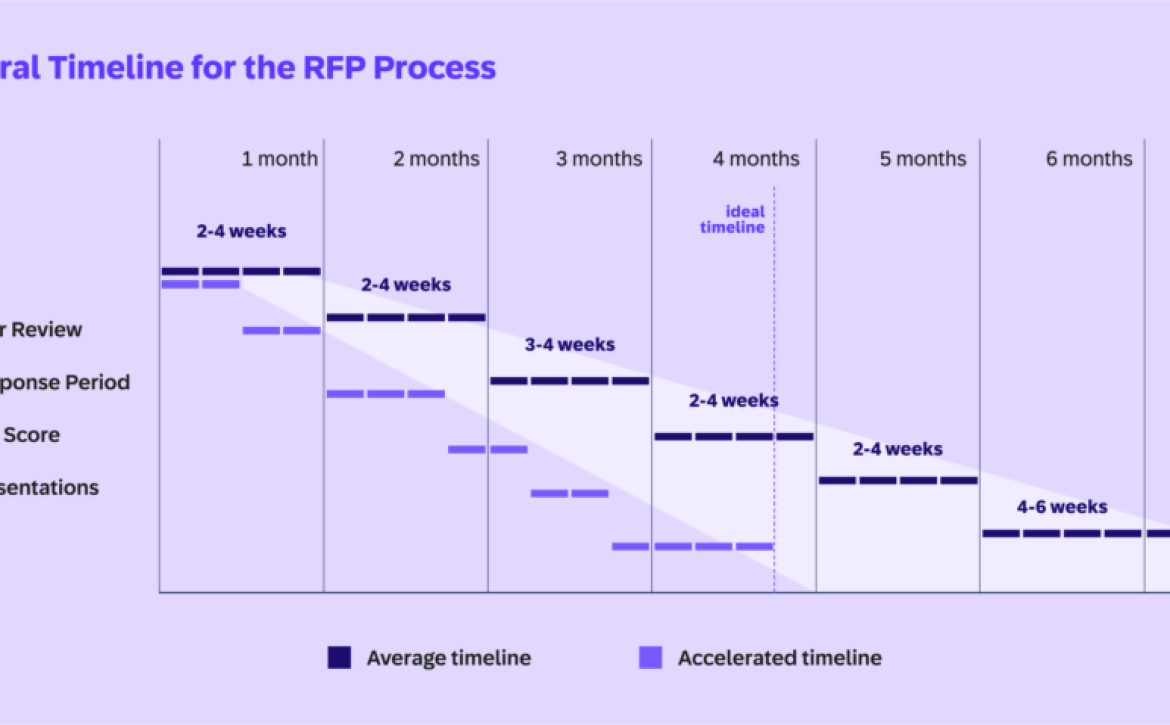
Before starting an RFP, be sure you have time to run one. It’s a time-consuming process, so start with your preferred go-live date and work backwards from there. Here’s a general timeline from the Martech RFP Guide:  

Do all RFPs have to follow the traditional format? 

In the past couple of years, there’s been an interesting trend in the field: namely reversing or inverting the traditional RFP process. Rather than beginning with a detailed spreadsheet of requirements before moving to a demo phase, organizations first hold short demonstrations, introductory meetings, and high-level pricing discussions.  

This demo-first approach allows both sides to evaluate cultural fit, communication style, technical dealbreakers, and business understanding before investing significant time in detailed documentation. 

What distinguishes a strong vendor? 

After the RFP response comes the evaluation. The right vendor isn’t just the one who ticks all the functional and technical boxes and the lowest price tag, important as those factors are.  

The right vendor is willing to become a student of your business and dig into a day in the life of your stakeholders. A well-structured RFP can show you which vendors are willing to do exactly that and to step outside of their comfort zones when and where you’ll need them to. 

Ask yourself if the vendor just went through the motions, or if they actually understand your unique business needs.

What distinguishes a strong implementation partner? 

The strongest implementation partners demonstrate a clear understanding of the customer’s business before tying those requirements to any specific technology.  

Here are the green flags to look for in a strong implementation partner. The partner should:

  • Arrive prepared 
  • Ask thoughtful questions 
  • Share relevant customer stories 
  • Focus on being true partners rather than rote order-takers 

If you’re involving partners in your RFP process, challenge them to do some real analysis. Challenging questions are a good indicator that the business is truly invested in making the implementation a success. 

Final takeaway: it never hurts to ask a question! 

At its best, an enterprise CX RFP is an opportunity to improve communication, surface assumptions, encourage honest dialogue, and make better-informed decisions before implementation begins. Enter the process with eyes open and schedule planned, gather your key data and metrics before kicking off, and build a core set of meaningful questions. 

Have deeper discussions as soon as they’re relevant. Don’t be afraid to ask for numbers. And to whatever degree you’re able, shape the process to your organization’s specific priorities. Asking the right questions goes a long way toward getting the best possible answers. 

For even more insights, watch this podcast session, and for more RFP process best practices and sample questions, check out the Martech RFP Guide.  


Joe Devine is partnerships and alliance manager for SAP Engagement Cloud.
Drew Messinger-Michaels is head of Sales at BASE1.

Get the latest SAP news delivered to your inbox once a week

SAP AppHaus Network Partner Bluestonex Builds the Bridge: From Inspiration to Hands-On AI Innovation

With so many new opportunities brought about by artificial intelligence, companies need to make informed decisions, prioritize, and invest wisely in new AI technology. Not everything that is possible today makes sense in their specific business reality. That is why customer enablement is a crucial part of the global SAP AppHaus Network and its partners. Here’s a recent example of customer enablement provided by SAP AppHaus Network partner Bluestonex.

In early July 2026, SAP AppHaus Network partner Bluestonex invited customers to an immersive hands-on workshop day at the Bluestonex AppHaus Oswestry, Shropshire, UK. The focus was placed on two industries: retail and supply chain. During the event, attendees watched inspiring demos of new SAP AI capabilities powered by the SAP Experience Center and took part in interactive sessions to experience industry innovation and learn along the pragmatic, human-centered innovation approach.

Experience a new way of working with the Autonomous Enterprise

Different showcases for retail and supply chain

Two different showcases shed light on different applications and scenarios from the retail and supply chain industries.

The first showed how data can be surfaced and acted on meaningfully via the use of AI and smart application functions including SAP Business Data Cloud (SAP BDC) and Bluestonex’s flagship master data management and governance solution, Maextro. The second showed different supply chain and warehouse use cases from the retail and manufacturing industry, where the participants could experience the demo with physical mobile devices and interactive stock movements as if they were in the warehouse setting itself.

Two work streams to explore AI-infused innovation

After learning about the art of the possible brought about by the latest SAP Business AI solutions of the Autonomous Enterprise, the workshop attendees split into two work streams to explore different aspects of AI-infused innovation:

  1. The first group went through a process of rapid ideation and prototype development with a fast-paced innovation approach. Participants got hands-on, creating both low-fidelity and high-fidelity designs. To do so, they were shown how different AI tools, such as Joule Studio, are changing the way applications are built.
  2. To explore the skills needed for successful AI adoption and to address the culture shift, the second session used LEGO® Serious Play® and explored the human side of AI transformation. The method is used for skill-building exercises to then tackle a central challenge: building a model that represents how AI could fundamentally change an existing business. The participants learned a set of guiding principles for AI that they can apply in their day-to-day business.

SAP AppHaus Network partners acting as front-runners

The workshop is a good example of how SAP partners such as Bluestonex act as front-runners when it comes to exploring the Autonomous Enterprise and adopting AI in a meaningful way. During the workshop, experts helped customer teams identify appropriate use cases, design a concept for an AI agent, and create a real business solution that can be built with the latest SAP technology, encouraging and enabling them to conquer this new environment with all its opportunities. The guiding workshop principle was to create value in their respective company context.

The feedback given by some of the participants seems to acknowledge that:

  • “Wow. Mind blown! Great team showing the art of the possible. Excellent.”
  • “Really great day overall. I always love the real-world scenarios. The hands-on sessions were a highlight, and it’s a great visual display of what’s possible.”
  • “Great way to generate ideas, meeting other people, engaging format. The real-world scenarios stood out.”
  • “The space itself—the Bluestonex church—was a highlight. Love the SAP Experience Center content on the big, beautiful screen.”

Looking back from two perspectives

Workshop scene at Bluestonex AppHaus Shropshire, UK, with Dan Barton, Bluestonex co-founder, and Tobias Gollwitzer, SAP AppHaus.

Richard Henry, head of Growth, SAP BTP, Data, & Innovation at Bluestonex, looks back: “The addition of the latest demo content powered by the SAP Experience Center to Bluestonex’s industry workshop model marks another step in our mission to help customers realize the Autonomous Enterprise. By combining the latest innovation stories, industry experiences, and SAP Business AI with proven SAP AppHaus methodologies, we move beyond inspiration to action. Through hands-on workshops, design thinking, and immersive experiences, organizations can explore, validate, and prioritize real business opportunities. In the end, our focus remains the same: we want to turn innovation with the latest SAP solutions into practical outcomes and adoption, all for the benefit of our customers.”

Tobias Gollwitzer, senior director and regional lead EMEA, SAP AppHaus Walldorf, concludes: “This workshop is just another proof of the exceptional agility, the dynamic approach, and attitude of our SAP AppHaus Network partner in the UK. The team invites and motivates SAP customers to be among the first to conquer new SAP industry-specific technologies, grasp and move towards SAP’s Autonomous Enterprise solutions to their best advantage.”


Imke Vierjahn is communications lead for SAP AppHaus Network.

Get weekly updates from the SAP News Center, delivered straight to your inbox

The Autonomous Enterprise, Unfiltered: Lessons From 16 Executive Conversations

Since SAP Sapphire in May, SAP CEO Christian Klein has positioned the Autonomous Enterprise as the operating model for organizations that will lead the decade ahead, a model in which AI agents reason, decide, and execute inside the workflows that run the business.

For many enterprise leaders, however, the gap between strategic ambition and operational reality has remained frustratingly wide. That gap is exactly what the Autonomous Enterprise podcast set out to close.

SAP Recognized as a Leader in the Inaugural Gartner® Magic Quadrant™ for Workforce Management Technology

Organizations today face growing pressure to navigate labor shortages, evolving employee expectations, changing skills requirements, and increasing operational complexity. As these challenges converge—across factory floors, service centers, project teams, and global operations—workforce management is becoming more than an operational necessity. It’s becoming a strategic foundation for workforce transformation. Gartner predicts that by 2030, 70% of organizations will adopt AI-enabled workforce management technology to decrease managers’ administrative workload by an average of four to six hours per week, optimize operations, and enhance employee experience.

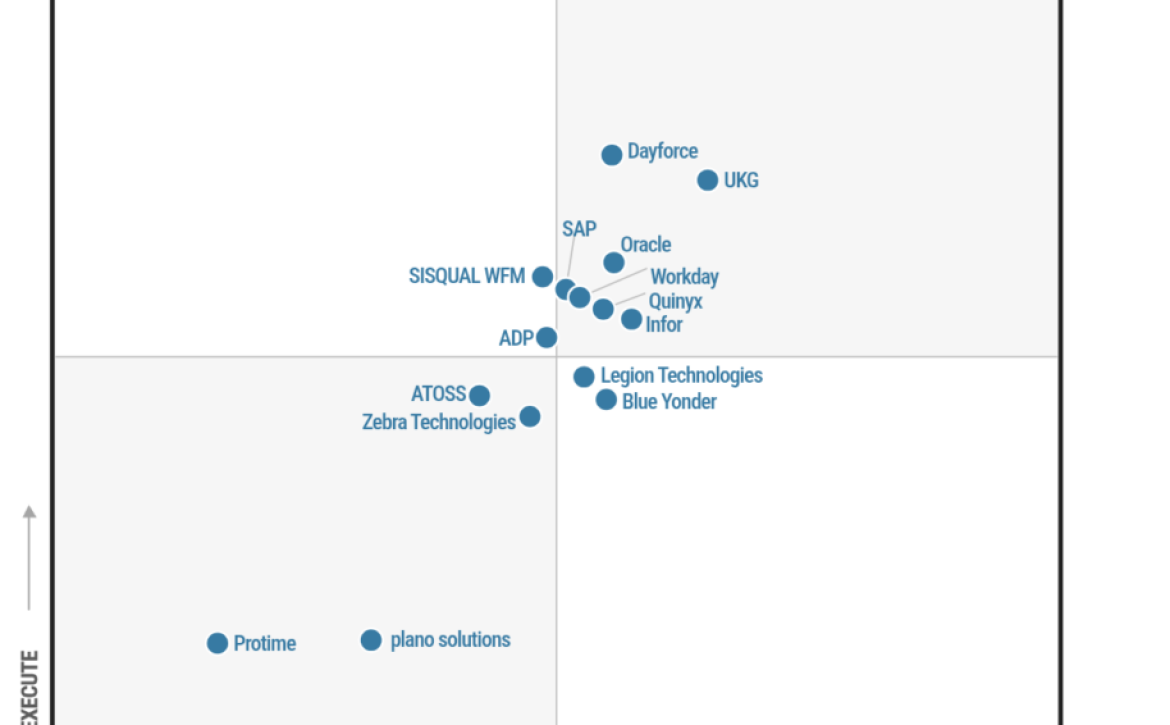
That’s why we’re proud that SAP has been recognized as a Leader in the inaugural Gartner® Magic Quadrant™ for Workforce Management Technology.

We believe this recognition reflects SAP’s commitment to helping organizations connect workforce operations, workforce intelligence, and business outcomes through a unified human capital management (HCM) platform. 

This graphic was published by Gartner, Inc. as part of a larger research document and should be evaluated in the context of the entire document. The Gartner document is available upon request from www.sap.com/products/hcm/workforce-management.html.

Workforce management in the era of Autonomous HCM 

As organizations prepare for the next era of work, leaders need more than scheduling tools and time systems. They need a connected understanding of their workforce. 

Who is available? What skills are needed? Where are emerging labor gaps? How can workforce decisions better support business priorities? 

These questions sit at the intersection of workforce management and workforce strategy. 

That’s why workforce management plays an important role in SAP’s vision for Autonomous HCM. At its core, Autonomous HCM is about helping organizations move more quickly from workforce insight to action.

Workforce management plays a critical role in that vision by providing the operational data and workforce visibility needed to make more informed decisions. 

By bringing workforce management together with core HR, payroll, talent management, and workforce planning, SAP SuccessFactors solutions help organizations gain a more connected view of their workforce, streamline operations, and make more informed workforce decisions. 

Simplify and enhance your everyday workforce operations with SAP SuccessFactors solutions

Advancing workforce management 

SAP continues to invest in capabilities that help organizations connect scheduling, absence management, time and attendance, workforce planning, and workforce decision-making. Recent innovations include the general availability of SAP SuccessFactors Workforce Scheduling, helping manufacturing and production organizations align labor demand, workforce availability, employee skills, and compliance requirements within a more connected scheduling experience. 

We also recently introduced a new Workforce Management Assistant, which helps employees and managers complete common workforce management tasks—like automatically pre-filling time sheets, validating entries against compliance requirements in real time, and answering policy questions—cutting employee time sheet completion effort by up to 40% and HR service tickets by up to 20%. 

For professional services organizations, this focus on streamlining time extends further. The new consolidated timesheet experience across SAP S/4HANA Cloud Public Edition and SAP SuccessFactors Time Tracking helps unify project time and HR attendance in a single flow from resource planning to revenue recognition.  

From frontline workers on the production floor to project professionals, these capabilities reflect SAP’s commitment to industry-specific depth in workforce management. 

Beyond workforce operations, SAP recently introduced new workforce planning capabilities within SAP Enterprise Planning, helping leaders connect workforce decisions directly to HR, business, and financial priorities through a unified planning foundation.  

In addition, AI-enabled organizational modeling capabilities can support scenario planning and impact analysis, enabling business and HR leaders to evaluate organizational changes and workforce decisions before they are implemented. 

Together, these innovations help organizations connect workforce operations, workforce planning, and workforce decisions in new ways, supporting SAP’s broader vision for Autonomous HCM. 

Delivering meaningful outcomes 

Organizations across more than 126 countries and 29 industries are using SAP SuccessFactors workforce management solutions to help improve workforce visibility, streamline time and scheduling processes, strengthen compliance, and create better experiences for employees and managers. 

Eurobank deployed SAP SuccessFactors Time Tracking to comply with new labor regulations requiring detailed workforce scheduling and time management. The organization achieved 99% clock-in and clock-out compliance, reduced neglected clock-outs by 44%, and decreased data-uploading errors by 25%, helping improve workforce visibility, compliance, and operational efficiency.  

Ocean Network Express (ONE) implemented SAP SuccessFactors Time Tracking, SAP SuccessFactors Employee Central, and payroll solutions to support a global workforce of 10,000 employees. By automating time management, overtime calculations, and payroll processes, the company achieved 40% operational savings, improved compliance, and delivered greater flexibility across HR and workforce operations. 

These examples illustrate how workforce management is becoming a strategic capability that helps organizations connect workforce operations with broader business priorities. 

Looking ahead 

We believe our recognition as a Leader in the Gartner® Magic Quadrant™ for Workforce Management Technology reflects SAP’s continued investment in helping organizations build more connected, agile, and resilient workforces—and the trust of our customers, partners, and teams whose collaboration and innovation help shape what’s next. 

With many organizations actively reviewing their workforce management technology, there’s never been a better time to see what SAP can offer. 

Discover why SAP is recognized as a Leader in the Gartner® Magic Quadrant™ for Workforce Management Technology and learn more about SAP SuccessFactors workforce management solutions.

Get the latest SAP news delivered to your inbox once a week

Gartner, Magic Quadrant for Workforce Management (WFM) Technology, By Sam Grinter, Ranadip Chandra, Kelsie Marian, Anand Chouksey, 14 September 2026
Gartner does not endorse any company, vendor, product or service depicted in its publications, and does not advise technology users to select only those vendors with the highest ratings or other designation. Gartner publications consist of the opinions of Gartner’s business and technology insights organization and should not be construed as statements of fact. Gartner disclaims all warranties, expressed or implied, with respect to this publication, including any warranties of merchantability or fitness for a particular purpose.
Gartner and Magic Quadrant are trademarks of Gartner, Inc., and/or its affiliates.

The AI Governance Gap: Why Responsible AI Drives Adoption

In conversations with customers across industries, trust is the barrier to AI adoption that comes up more often. Leaders and organizations need confidence that AI systems will perform reliably and remain accountable for suggested business actions, protecting sensitive data and treating people fairly. Ethical AI deployment closes that gap. When a system is technically robust, legally aligned, and ethically governed, customers, partners, and employees can scale it with confidence rather than caution.

SAP is dedicated to delivering relevant, reliable, and responsible AI solutions

SAP has updated the SAP Global AI Ethics policy to version 3.0, reflecting the fast-changing AI landscape and lessons drawn from deep-dive interviews with more than 50 international experts. The revision reflects concrete changes made to strengthen the ethical safeguards, accountability, and safety measures within enterprise AI adoption, addressing the substance of business leaders’ concerns, not just the perception of them.

Our approach to AI rests on three words: relevant, reliable, and responsible. For SAP, ethical deployment isn’t a regulatory checkbox or a marketing layer; it’s the foundation that makes the Autonomous Enterprise possible, where intelligent agents coordinate and execute complex workflows while humans remain firmly in control.

Three disciplines for responsible AI

Ethics sit at the very center of SAP’s broader social sustainability agenda, where responsible AI depends on three disciplines working together, not in isolation:

  1. Ethics define our values. We set clear moral boundaries for how technology should serve humanity.
  2. Security protects our systems and data. We safeguard core enterprise assets against emerging cyber threats and vulnerabilities.
  3. Compliance ensures legal alignment. We are proactively preparing for global regulatory standards like the EU AI Act.

Together, they help teams assess whether an AI use case should proceed, what safeguards it requires, and who is accountable for its performance after deployment, ensuring that as business processes become automated, human dignity, fairness, and agency remain intact.

Ethics underpin the Autonomous Enterprise

As AI shifts from assisting people to acting on their behalf, the governance question becomes more urgent. The Autonomous Enterprise represents a repositioning where AI agents no longer just make recommendations, but execute business processes end-to-end, across finance, supply chain, procurement, HR, and customer experience. As CEO Christian Klein put it, “For the mission-critical processes of our customers, ‘almost right’ just isn’t good enough.”

That’s precisely why ethics and governance can’t be an afterthought bolted onto agentic AI. They have to be the foundation it runs on. Every action an SAP agent takes is logged and traceable, so organizations can always know what an agent did, why it did it, and what data it used. Autonomy without that foundation is just an experiment; autonomy built on it is an operating model organizations can trust at scale.

Translating principles into practice

The SAP Global AI Ethics policy, grounded in UNESCO’s Recommendation on the Ethics of Artificial Intelligence, governs the development, deployment, use, and sale of every AI system across the company. SAP’s updated AI Ethics Handbook translates these principles into day-to-day practice. It helps give engineering and product teams a one-stop reference for applying the policy’s guiding principles, from fairness and non-discrimination to human oversight and sustainability.

To bridge the gap between high-level principles and day-to-day engineering, we embed strict operational checkpoints into our product life cycle:

  • Mandatory AI ethics impact assessments: Every SAP AI use case must undergo a rigorous evaluation before reaching deployment, based on 10 AI ethics principles. Use cases receive a risk score and the SAP’s AI Ethics Office helps product teams enforce mitigation measures and safeguards in place. Depending on the risks involved, some use cases go through several review steps and may be escalated to the SAP Global AI Ethics steering committee for a final decision.
  • Human oversight by design: SAP systems are built to ensure humans remain in control of critical decisions.
  • Internal accountability: Compliance is non-negotiable across SAP. All employees acknowledge the policy, and the rules apply universally, including to internal, self-developed AI applications built using tools like Hyperspace AI or Claude Code.

The process provides clear guardrails that are visible to SAP’s stakeholders, including customers and employees.

Leading the industry in AI governance

The demand for transparent governance is urgent, and independent evaluations highlight significant gaps in corporate readiness worldwide. In benchmark research by the Thomson Reuters Foundation and UNESCO assessing 2,972 companies, SAP was among the only 12.4% found to maintain an explicit policy ensuring human oversight in AI systems.

SAP’s leadership in ethical AI has earned external recognition: the company was named a leading positive example in the Collective Impact Coalition for Ethical AI Progress Report. SAP is also an active participant in the World Economic Forum’s Global Coalition for AI and Social Innovation, convened by the Global Alliance for Social Entrepreneurship in partnership with the Schwab Foundation. Working alongside leading technology companies and social innovators, SAP is helping shape responsible AI deployment to accelerate social impact and extend the benefits of enterprise AI to organizations tackling the world’s most complex challenges.

The broader landscape shows how much ground the industry still has to cover. Data from the S&P Global Corporate Sustainability Assessment (CSA) shows that only 36% of responding companies have a dedicated or integrated AI policy. Research from BSI paints a similar picture: just 27% of global businesses currently factor their AI footprint into their broader sustainability strategies, a notable gap given the surging energy demands of AI data centers.

Unlocking sustainable growth

Ethical AI goes beyond risk mitigation and regulatory readiness—it drives tangible economic value. By ensuring fairness, transparency, and robust data privacy, organizations protect their brand reputation while empowering their workforce to perform at their highest level.

When AI coordinates, executes, and optimizes routine business processes within an ethical context, employees are freed from manual tasks to focus on strategy, creativity, and human connection. This synergy between human potential and artificial intelligence forms the backbone of sustainable enterprise growth.

Organizations that understand this will reap the rewards as regulations tighten and societal expectations increase. However, ethical AI only becomes a reality when we work together. We look forward to continuing to work alongside our customers and partners as we embrace one of the most important challenges and competitive advantages in the AI era.

Read the SAP Global AI Ethics policy version 3.0. Find out more about the Autonomous Enterprise.


Matthias Medert is head of Sustainability at SAP.

Subscribe to the SAP News Center for the latest SAP news each week

Can Agentic AI Bridge the Gap with Trusted Enterprise Data?

As artificial intelligence moves beyond providing information and recommendations, enterprise software is becoming more capable of reasoning, making decisions, and taking action across business processes.

SAP Reltio in SAP Business Data Cloud: Build a trusted system of context

It’s a noticeable shift that could fundamentally change how enterprises operate. But according to Manish Sood, CEO of Reltio, an SAP company, and co-author of Agentic Intelligence, it also exposes a challenge companies have wrestled with for decades: fragmented, inconsistent, and poorly connected data.

“There is tremendous enthusiasm around agentic AI right now, and for good reason,” said Sood. “Almost every company is experimenting with it in some form or the other. But there is a very significant gap between ambition and underlying readiness.”

Research conducted by Harvard Business Review Analytic Services underscores that readiness gap: 94% of organizations surveyed are exploring or implementing agentic AI, while only 15% believe their data foundation is truly ready.

“An AI demo can tolerate a lot of imperfections and gaps in the data,” said Sood. “An AI agent operating inside a real business context cannot. The moment we give software the ability to make decisions or to take action, the quality, timeliness, and context of underlying data becomes much more consequential.”

AI highlights legacy data challenges

Sood believes fragmentation, trust, and governance are three recurring barriers when it comes to AI adoption. Because data remains scattered across hundreds or even thousands of enterprise systems, governance models built for traditional enterprise systems must evolve for an environment in which AI agents can initiate actions.

While these are familiar challenges, the speed and autonomy AI introduces is much different.

Historically, humans have compensated for fragmented systems via tapping into institutional knowledge. Employees know which spreadsheet to check, which colleague to call, or which exception to make. AI agents do not inherently possess that organizational context.

“If a human has incomplete information, we can often recognize it, ask another question, or find someone who knows the history,” said Sood. “In comparison, an autonomous agent may simply act.”

The question for enterprises therefore shifts from whether they can build an AI agent to whether they can trust the environment in which that agent operates.

From digital filing cabinets to connected intelligence

Many organizations still operate around what Sood refers to as the “filing cabinet” model. When businesses digitized, individual functions created their own systems for marketing, finance, sales, supply chain, service, and human resources. Moving those systems to the cloud did not necessarily eliminate the underlying silos.

“The intelligence age requires us to move from storing information to connecting that information,” he said.

This connected foundation supports what Sood and his co-author describe as “co-agency,” a new relationship between people and intelligent machines.

Historically, enterprise technology followed a relatively simple model: humans made decisions and machines executed them. AI changes that equation. Machines can contribute speed, scale, pattern recognition, and continuous operation, while people provide judgment, experience, accountability, and an understanding of nuance.

“If the human sees one version of the customer and the agent sees another, you don’t have co-agency; you have conflict,” said Sood.

Turning insight into action

These implications extend beyond technology architecture as agentic intelligence requires companies to rethink strategy, investment, workflows, governance, and the relationship between people and machines. It’s a notable shift that moves from insight to action.

“Insight by itself does not create economic value. Action does,” Sood shared.

For example, predicting that a piece of industrial equipment is likely to fail can provide valuable information. But an intelligent system capable of coordinating maintenance, locating the necessary parts, and scheduling service before the failure occurs can potentially transform that insight directly into a business outcome. In order for this to happen, however, trusted information needs to be available when and where decisions happen.

According to Sood, four responsibilities are necessary for organizations preparing for this environment:

  1. Connect critical enterprise data.
  2. Contextualize it with relationships, history, policies, and interactions.
  3. Operationalize that trusted context at the point of decision.
  4. Govern how AI agents act.

“Define where an agent can act, where a human needs to intervene, how decisions are traced, and how systems learn from mistakes,” Sood explained. “The goal isn’t simply to make more data available to AI. The goal is to make the enterprise understandable through AI.”

Building for the intelligence age

As AI models continue to improve, Sood believes competitive advantage will increasingly come from proprietary data, business context, workflows, processes, and feedback mechanisms surrounding them.

Trust will also become more consequential as organizations delegate greater authority to AI. As a result, companies will need confidence not only in what an agent knows, but where its information came from, how current it is, and what boundaries govern its actions.

“The companies that win won’t simply be the companies with the most sophisticated AI,” said Sood. “They will be the companies that create environments in which AI can understand the business, operate with trusted context, and act responsibly.

Subscribe to the SAP News Center newsletter to receive highlights, stories, and updates each week

Previous Next
Close
Test Caption
Test Description goes like this