SAP Business Data Cloud: Trusted Data for Enterprise AI

Discover how SAP Business Data Cloud turns trusted business data into AI-ready insights, connected workflows, and intelligent business outcomes.
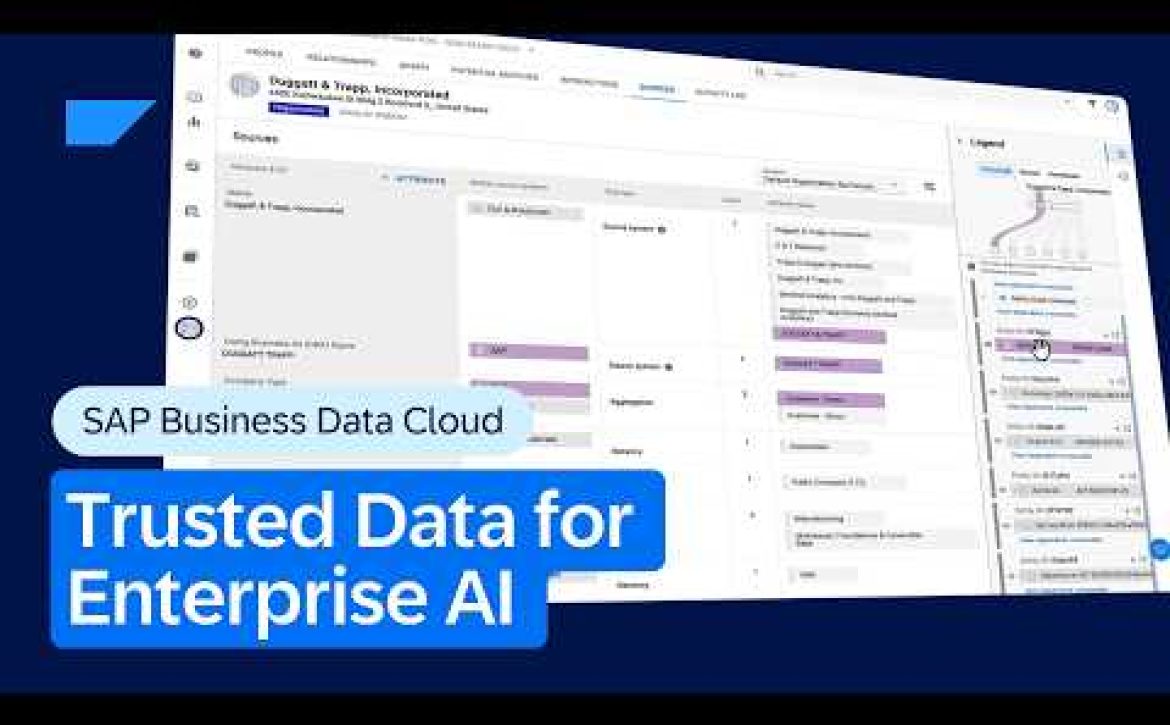
Enterprise AI needs more than access to data. It needs to understand how your business operates. SAP Business Data Cloud provides the trusted data foundation for enterprise AI by preserving the business context, meaning, rules, and relationships built into your SAP systems over time.

In this video, explore how SAP Business Data Cloud transforms enterprise data into reliable, reusable, business-ready data products that help organizations unlock greater value from their existing information. Discover hundreds of prebuilt data products available across lines of business, ready to deploy from a centralized catalog. See how Joule helps teams create, customize, and govern their own data products, making trusted business information more accessible and actionable.

Learn how SAP Business Data Cloud enables organizations to share business knowledge across clouds, platforms, applications, and AI agents, regardless of where the underlying data resides. By connecting data with its essential business context, it helps ensure that AI systems operate from a consistent understanding of the enterprise. This enables AI to reason, recommend, and coordinate business workflows with greater confidence.

As the trusted data layer powering SAP Business AI Platform, SAP Business Data Cloud helps organizations move from disconnected information toward coordinated, AI-driven business processes. It provides the foundation for the Autonomous Enterprise, where people set the direction and AI supports intelligent execution across business functions.

Whether you’re a CIO, data leader, enterprise architect, or business transformation professional, discover how a unified data foundation can help your organization prepare for enterprise AI, accelerate innovation, and support more autonomous ways of working.

Explore SAP Business Data Cloud and discover how trusted, business-ready data can help your organization scale enterprise AI and enable more intelligent business processes:
https://sap.to/6054BHV4PA

Follow us on social:
LinkedIn: https://sap.to/6057BHV4Ph
Instagram: https://sap.to/6058BHV4u6
Facebook: https://sap.to/6059BHV4uB
Threads: https://sap.to/6050BHV4u8

About SAP:
As a global leader in enterprise applications and business AI, SAP stands at the nexus of business and technology. For over 50 years, organizations have trusted SAP to bring out their best by uniting business-critical operations spanning finance, procurement, HR, supply chain, and customer experience. For more information, visit: https://sap.to/6051BHV4uD

#SAPBusinessDataCloud #BusinessAI #EnterpriseAI
Is AI Making Leadership More Human? | AI Voices, Episode 6

Is AI making leadership more human? Discover why empathy, trust, and a growth mindset are becoming essential leadership skills in the age of AI.

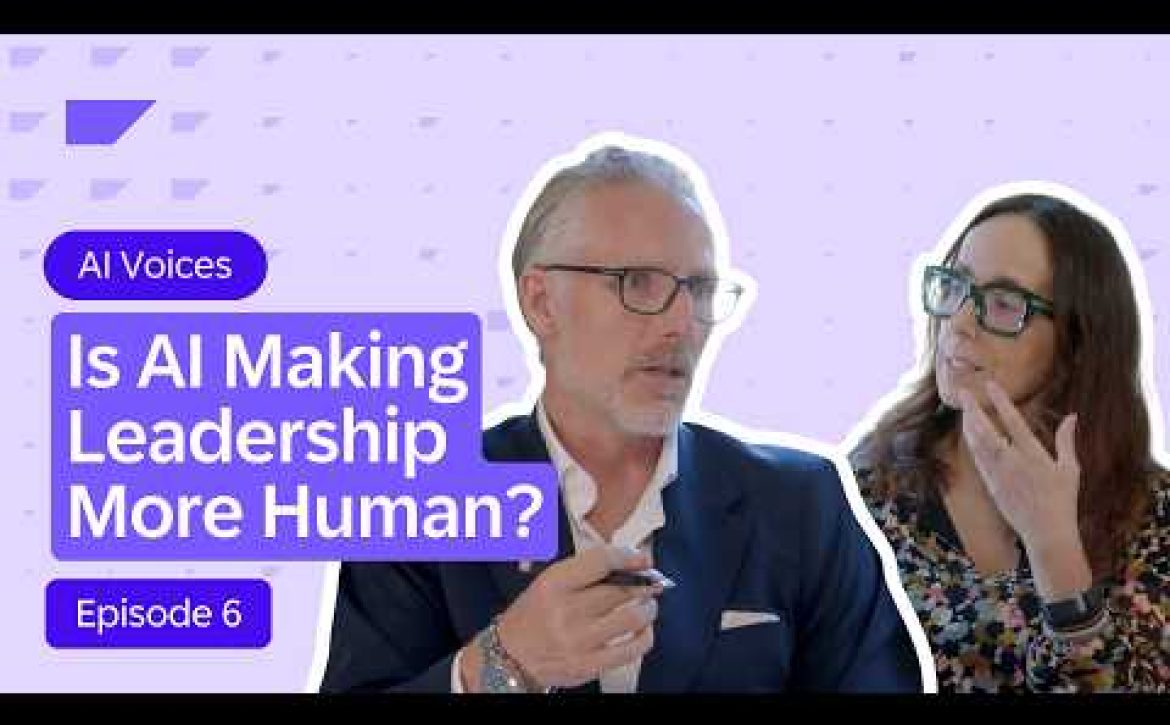
In Episode 6 of AI Voices, host Jesper Schleimann, Head of Business AI at SAP EMEA, sits down with Sofia Tenreiro, CEO of Siemens Portugal, to explore how artificial intelligence is transforming leadership, business operations, and the way people work. As AI adoption accelerates, what does it take to lead teams through change while keeping people at the center?

Drawing on Siemens’ experience with industrial AI, Sofia explains how AI is moving beyond personal productivity to create real-world business value. From industrial automation and digital transformation to sustainability, the conversation explores why trusted data, reliability, and security matter when AI connects with the physical world. Sofia also shares how Siemens and Heineken used digital twin technology and AI to support a major sustainability project.

But successful AI transformation isn’t just about technology. It’s about people. Jesper and Sofia discuss why leaders must build trust, address employees’ concerns, and embrace a growth mindset to become “comfortable with the uncomfortable.” They explore how leading by example, encouraging collaboration, and investing in continuous learning can help organizations navigate rapid technological change.

Key takeaways from this episode include:

• Why AI is making human-centered leadership more important than ever
• How industrial AI differs from consumer AI and creates business value
• Why empathy, trust, and continuous learning are essential for AI adoption
• How leaders can model new behaviors and turn uncertainty into opportunity
• Why the “jagged edge of AI adoption” calls for personalized employee training rather than a one-size-fits-all approach
• How partnerships and cross-functional collaboration can accelerate innovation

Whether you’re a business executive, technology leader, or responsible for organizational transformation, this conversation offers practical perspectives on developing people, building confidence in AI, and leading with purpose.

Chapters
00:00 – Why People Are at the Center of AI
00:26 – Meet Sofia Tenreiro, CEO of Siemens Portugal
01:24 – Siemens’ AI Journey and Industrial Innovation
04:25 – Industrial AI vs. Consumer AI
07:40 – The Future of AI and Business Transformation
13:42 – AI, Digital Twins, and Sustainability
16:49 – Why AI Leadership Must Become More Human
19:32 – Building a Growth Mindset and Embracing Change
20:35 – Collaboration and Partnerships in the AI Era
22:14 – Why Leaders Must Lead by Example
23:43 – Continuous Learning and Personalized AI Adoption
26:09 – Final Thoughts on Leadership and AI

Explore how SAP Business AI helps organizations connect AI with real business context and processes: https://sap.to/6059BHTlD7

Follow us on social:
LinkedIn: https://sap.to/6050BHTlDC
Instagram: https://sap.to/6051BHTlDh
Facebook: https://sap.to/6052BHTlE6
Threads: https://sap.to/6053BHTlEB

About SAP:
As a global leader in enterprise applications and business AI, SAP stands at the nexus of business and technology. For over 50 years, organizations have trusted SAP to bring out their best by uniting business-critical operations spanning finance, procurement, HR, supply chain, and customer experience. For more information, visit: https://sap.to/6055BHTlED

#SAP #BusinessAI #AILeadership

What Is Interoperability in Sustainability Reporting?

Learn how interoperability helps organizations align sustainability data across ESG frameworks, regulations, systems, and value chains.

Global organizations are facing a wave of sustainability reporting requirements, from Europe’s Corporate Sustainability Reporting Directive to California’s climate disclosure laws. But the real compliance challenge is not only the number of regulations. It is that they often use different definitions, metrics, and reporting requirements.

In this video, we explain what interoperability means in sustainability management and why it matters for organizations operating across multiple jurisdictions or managing complex global supply chains. Sustainability interoperability helps organizations align, compare, and trust sustainability data regardless of the framework, system, or value chain it comes from. Rather than waiting for one universal standard, businesses need a data foundation that can translate and connect requirements across multiple frameworks.

Without an interoperable foundation, organizations may face duplicated effort, rising reporting costs, conflicting metrics, and reduced trust in their sustainability data. SAP Sustainability solutions help harmonize data across the value chain by unifying applications, sustainability data, and enterprise information on a single foundation. This helps organizations automate reporting across multiple global frameworks and turn raw data into decision-ready insights.

Regulated sustainability reporting is not going away. But managing it should not stall business growth. Build an interoperable data foundation and turn compliance into a strategic advantage.

Explore SAP Sustainability solutions:
https://sap.to/6056BHzR4k

Chapters
00:05 – The rise of sustainability reporting requirements
00:24 – What sustainability interoperability means
00:36 – Why one universal framework is unlikely
00:57 – Who needs an interoperable data foundation
01:28 – The risk of disconnected sustainability data
01:55 – Integrating sustainability with core systems
02:04 – How SAP Sustainability solutions can help
02:22 – Turning compliance into strategic advantage

Follow us on social:
LinkedIn: https://sap.to/6058BHzR4w
Instagram: https://sap.to/6059BHzR4b
Facebook: https://sap.to/6051BHzR4d
Threads: https://sap.to/6054BHzR4g

About SAP:
As a global leader in enterprise applications and business AI, SAP stands at the nexus of business and technology. For over 50 years, organizations have trusted SAP to bring out their best by uniting business-critical operations spanning finance, procurement, HR, supply chain, and customer experience. For more information, visit: https://sap.to/6056BHzR4i

#SAP #Sustainability #ESG

What Is ESG Investing?

Learn how ESG investing helps investors assess environmental, social, and governance performance alongside financial metrics.

The strongest balance sheets do not just attract capital. They attract the right capital on the best terms. ESG investing is changing how organizations are evaluated, and which businesses benefit from that shift.

In this video, we explain what ESG investing means, why it matters, and how it is reshaping access to capital. ESG investing evaluates companies through environmental, social, and governance factors alongside traditional financial metrics. These factors can include emissions, energy use, labor standards, governance practices, and long-term risk management.

For institutional investors, asset managers, pension funds, and financial institutions, ESG performance is increasingly part of how companies are screened, compared, and valued. For businesses that rely on external capital, ESG criteria can influence investor confidence, borrowing costs, portfolio inclusion, and access to funding. Strong ESG performance can signal operational quality, transparency, and long-term resilience.

To prepare, organizations need to identify the ESG factors most material to their business and integrate those metrics into financial systems rather than managing them separately. SAP Sustainability solutions connect ESG and financial data across the enterprise and help automate reporting against major sustainability frameworks. This gives organizations verified, transparent performance data that investors can use with confidence.

ESG investing is reshaping how capital flows. Organizations that build credible, data-driven ESG performance now will be better positioned to attract investors on stronger terms.

Explore ESG investing:
https://sap.to/6054BHzRIE

Chapters
00:05 – Why ESG investing matters
00:20 – What ESG investing means
00:48 – How investors use ESG data
01:38 – Building credible ESG performance
02:06 – How SAP Sustainability solutions can help

Follow us on social:
LinkedIn: https://sap.to/6058BHzRIy
Instagram: https://sap.to/6050BHzRIK
Facebook: https://sap.to/6051BHzRIz
Threads: https://sap.to/6052BHzRIM

About SAP:
As a global leader in enterprise applications and business AI, SAP stands at the nexus of business and technology. For over 50 years, organizations have trusted SAP to bring out their best by uniting business-critical operations spanning finance, procurement, HR, supply chain, and customer experience. For more information, visit: https://sap.to/6053BHzRI3

#SAP #Sustainability #ESG

What’s New in SAP HANA Cloud | Deep Dive with Product Experts | Q3 2026

Explore the latest SAP HANA Cloud innovations released in Q3 2026, from agentic AI and intelligent data discovery to performance, scalability, and database management updates.

Join Andrea Miranda and SAP HANA Cloud product experts for a guided look at the newest capabilities in SAP HANA Cloud. This release overview covers innovations designed to help database administrators, developers, data engineers, and analytics professionals optimize performance, simplify administration, build AI-powered applications with trusted enterprise data, and strengthen business continuity.

In this Q3 2026 update, you’ll learn about SAP Agent Memory Service, enhanced Database Object Discovery and Data Retrieval Tools, new AI capabilities through SAP AI Core integration, GeoSPARQL support in the Knowledge Graph Engine, and AI-assisted calculation view modeling. The session also explores Analytics Advisor, Partition Advisor enhancements, expanded instance sizes on Amazon Web Services, SAP Sovereign Cloud availability, SAP HANA Cloud data lake integration with SAP Business Data Cloud, multi-region disaster recovery for database tenants, tenant migration, and simplified SAP HANA Deployment Infrastructure (HDI) APIs. Through expert explanations and practical demonstrations, discover how these innovations can support more efficient data operations and intelligent applications.

Use the chapters below to jump directly to the topics most relevant to your role.

Chapters:
00:00 – Introduction
01:35 – General Update
06:36 – Agentic AI, Data Discovery & Knowledge Graph
24:08 – AI-Powered Calculation View Modeling Updates
45:00 – Multitenancy, Disaster Recovery & Tenant Migration
54:49 – SAP HANA HDI Updates: Simplified API
01:01:00 – Further Content and Resources

👉 Learn more about SAP HANA Cloud: https://sap.to/6055BHRF1X
👉 Read Thomas Hammer’s blog post on the latest SAP HANA Cloud innovations: https://sap.to/6059BHRF1b
👉 Join the SAP HANA on-premises and cloud database community: https://sap.to/6053BHRF15

Follow us on social:
LinkedIn: https://sap.to/6054BHRF1g
Instagram: https://sap.to/6055BHRF19
Facebook: https://sap.to/6056BHRF1i
Threads: https://sap.to/6057BHRF1c

About SAP:
As a global leader in enterprise applications and business AI, SAP stands at the nexus of business and technology. For over 50 years, organizations have trusted SAP to bring out their best by uniting business-critical operations spanning finance, procurement, HR, supply chain, and customer experience. For more information, visit: https://sap.to/6058BHRF1Y

#SAPHANACloud #SAPBusinessDataCloud #DataAndAI

What Is the Global Reporting Initiative (GRI)?

Learn how the Global Reporting Initiative helps organizations communicate sustainability performance with reliable, audit-ready data.

What if your sustainability performance could speak for itself in a language investors, regulators, and partners already understand? That’s what the Global Reporting Initiative, or GRI, standards help make possible.

In this video, we explain what GRI is, why it matters, and how organizations use GRI standards to report on environmental, social, and governance impact. GRI provides a comprehensive framework for sustainability reporting, covering topics such as carbon emissions, water use, labor conditions, and anti-corruption policies. The goal is to help stakeholders understand a company’s real-world impact, supported by consistent and reliable data.

GRI reporting is used by organizations around the world and increasingly referenced in regulatory frameworks, procurement requirements, and investor conversations. For businesses, credible GRI reporting can help signal transparency, accountability, and stronger governance. It can also help turn sustainability data into a business asset, supporting better decisions, stronger stakeholder trust, and new opportunities for capital and partnerships.

But preparing GRI disclosures can be complex. Organizations need to identify material topics, understand which GRI standards apply, and collect consistent, auditable data from finance, HR, operations, and supply chain systems. SAP Sustainability solutions help bring that data together in one governed platform with AI-enabled automation, so organizations can create accurate, consistent, and audit-ready sustainability reporting.

Done well, GRI reporting helps organizations build credibility, attract capital, and communicate sustainability performance with confidence.

Explore the Global Reporting Initiative:
https://sap.to/6051BHzRs9

Chapters
00:06 – Sustainability performance stakeholders can understand
00:19 – What GRI standards are
00:45 – Why GRI matters globally
01:08 – Building trust with credible reporting
01:40 – Preparing for GRI disclosure
01:59 – Making reporting audit-ready with SAP
02:18 – Turning sustainability data into a business asset

Follow us on social:
LinkedIn: https://sap.to/6053BHzRsc
Instagram: https://sap.to/6054BHzRsY
Facebook: https://sap.to/6055BHzRsl
Threads: https://sap.to/6056BHzRsm

About SAP:
As a global leader in enterprise applications and business AI, SAP stands at the nexus of business and technology. For over 50 years, organizations have trusted SAP to bring out their best by uniting business-critical operations spanning finance, procurement, HR, supply chain, and customer experience. For more information, visit: https://sap.to/6057BHzRsW

#SAP #Sustainability #ESG

What Is Carbon Accounting?

Learn how carbon accounting helps organizations measure greenhouse gas emissions, understand carbon impact, and manage climate-related risk.

Emissions are no longer just an environmental metric. They are increasingly connected to cost, risk, performance, and long-term enterprise value. Carbon accounting, also known as greenhouse gas accounting, is the structured process organizations use to measure, track, and report the emissions tied to their business activities.

In this video, we explain what carbon accounting is, why it matters, and how organizations can use it to make emissions data visible across operations. You’ll learn how globally recognized standards such as the Greenhouse Gas Protocol categorize emissions into Scope 1, Scope 2, and Scope 3, from direct operations and purchased energy to the full value chain.

As regulations such as the Corporate Sustainability Reporting Directive and the Carbon Border Adjustment Mechanism reshape business requirements, organizations need more accurate, audit-ready emissions data. Manual data collection, siloed spreadsheets, and generic industry averages can create risk because they may not reflect actual operations or meet the expectations of regulators, investors, and customers.

SAP Sustainability solutions help organizations build a stronger foundation by embedding carbon data into core ERP processes and connecting emissions insights with financial and operational workflows. With real-time transactional data, businesses can calculate and analyze product carbon footprints at scale and manage carbon data with the same structure, controls, and discipline as financial data.

Treat carbon with the same rigor as cash, understand its true cost, and build a more resilient enterprise.

Explore carbon accounting:
https://sap.to/6055BHzR0V

Chapters
00:05 – Why emissions now affect business performance
00:23 – What carbon accounting means
00:42 – Scope 1, Scope 2, and Scope 3 emissions
01:08 – Regulations and financial implications
01:30 – The risk of disconnected emissions data
02:00 – Integrating carbon into business processes
02:18 – Product carbon footprints at scale
02:34 – Treating carbon with the same rigor as cash

Follow us on social:
LinkedIn: https://sap.to/6058BHzR0k
Instagram: https://sap.to/6051BHzR0b
Facebook: https://sap.to/6053BHzR0d
Threads: https://sap.to/6054BHzR0e

About SAP:
As a global leader in enterprise applications and business AI, SAP stands at the nexus of business and technology. For over 50 years, organizations have trusted SAP to bring out their best by uniting business-critical operations spanning finance, procurement, HR, supply chain, and customer experience. For more information, visit: https://sap.to/6056BHzR0g

#SAP #Sustainability #ESG

The Future of the Shop Floor Is Personalized 🛍️ | SAP Connect 2026

AI is helping manufacturers create more personalized operator experiences while improving quality and performance across the shop floor.

In this short video, Manoel Costa shares how AI can adapt to worker skills and preferences, identify issues before they become defects, and help teams resolve problems faster.

See how SAP Manufacturing Assistant can support smarter, more responsive manufacturing operations with AI-powered assistance built for the realities of the shop floor.

Learn more: https://sap.to/6059BHJVpd

#SAPConnect #BusinessAI #SAP

Autonomous Product Development ✨ | SAP Connect 2026

What if product changes could flow more smoothly across teams, processes, and systems?

In this short video, Sean Laughlin shares why autonomous product development is one of the most exciting opportunities for teams looking to reduce rework, speed decisions, and keep product changes moving with greater confidence.

See how SAP Product Design Assistant can help streamline product development with AI-powered support across design and change processes.

Learn more: https://sap.to/6059BHJp0d

#SAPConnect #BusinessAI #SAP

Product Data Powers the Autonomous Supply Chain 🚀

The autonomous supply chain is no longer a future concept.

AI agents are already helping organisations across manufacturing, logistics, product development, and operations. But it all starts with one thing: product data. Learn more about SAP’s solutions for PLM on our website: https://sap.to/6051BHJRX5

#SAPConnect #SAPBusinessAI #AutonomousEnterprise

Previous Next
Close
Test Caption
Test Description goes like this